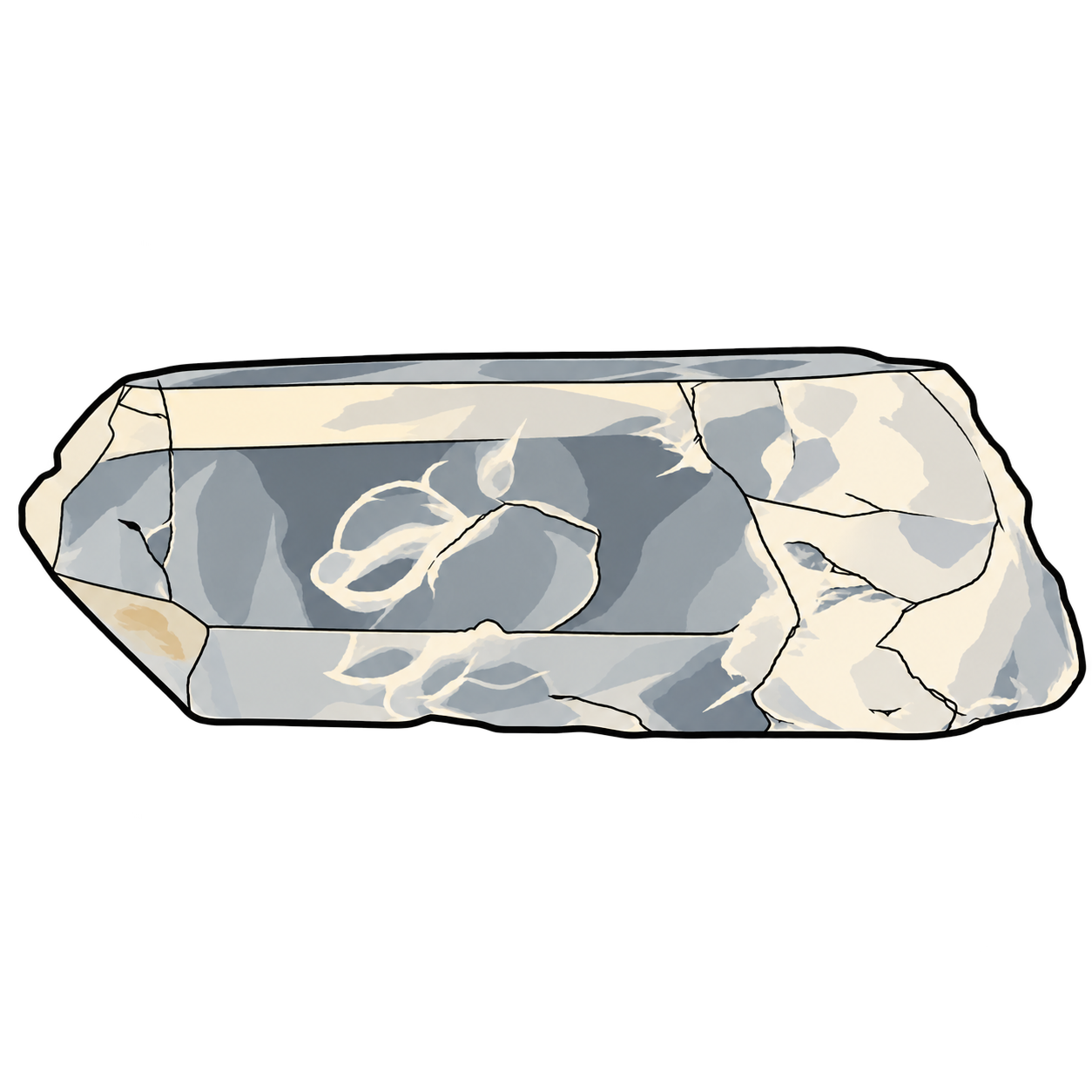
Rock Crystal
Clear Quartz
Quartz, crystalline silica (SiO2).
Clear quartz is the colorless variety of crystalline quartz, also known as rock crystal.
Read the specimen guideLoading this page…
Return homePlease wait while the next page arrives.


The mineral atlas
Explore 105 crystals, rocks and gem materials through their formation, identifying features, documented human uses and attributed spiritual traditions.
105 specimens · Geology, history, and spiritual attributes
105 specimens
Rock Crystal
Quartz, crystalline silica (SiO2).
Clear quartz is the colorless variety of crystalline quartz, also known as rock crystal.
Read the specimen guide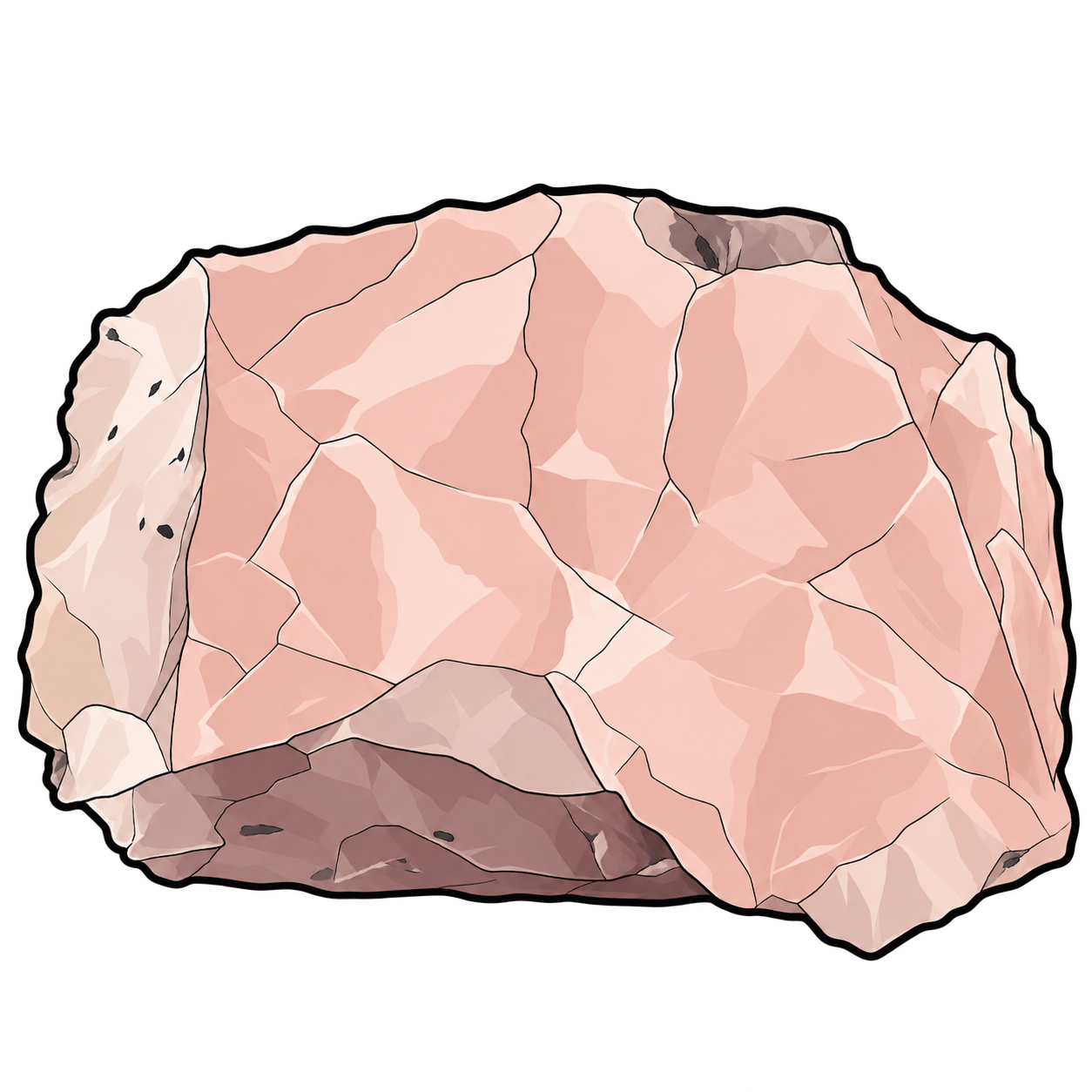
Pink quartz for carving, jewelry and collecting
Pink massive quartz / silicon dioxide
Rose quartz is the familiar pink variety of quartz, usually encountered as cloudy masses rather than sharply pointed natural crystals.
Read the specimen guide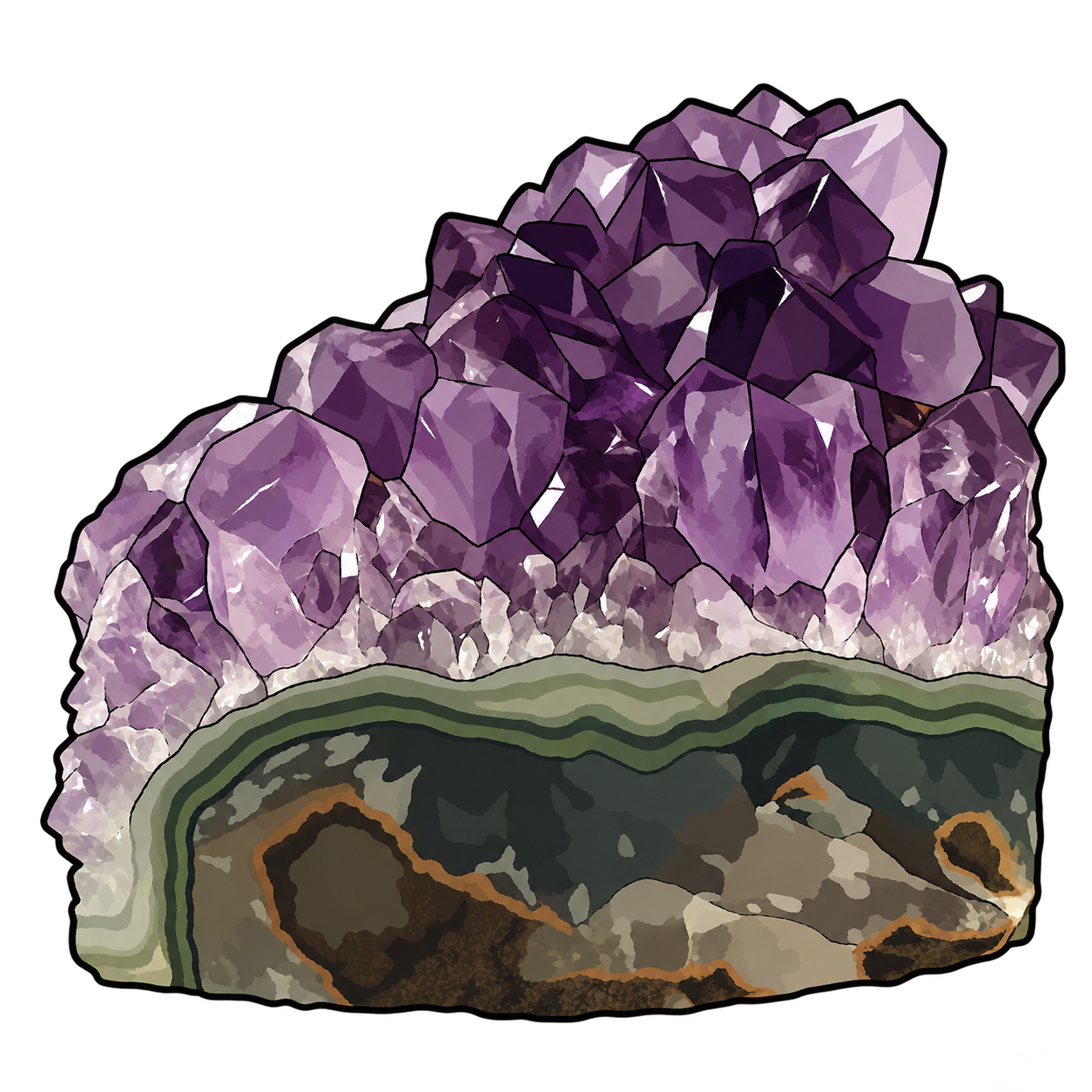
Violet quartz, from crystal-lined cavities to carved and faceted gems
Purple quartz.
Amethyst is purple quartz.
Read the specimen guide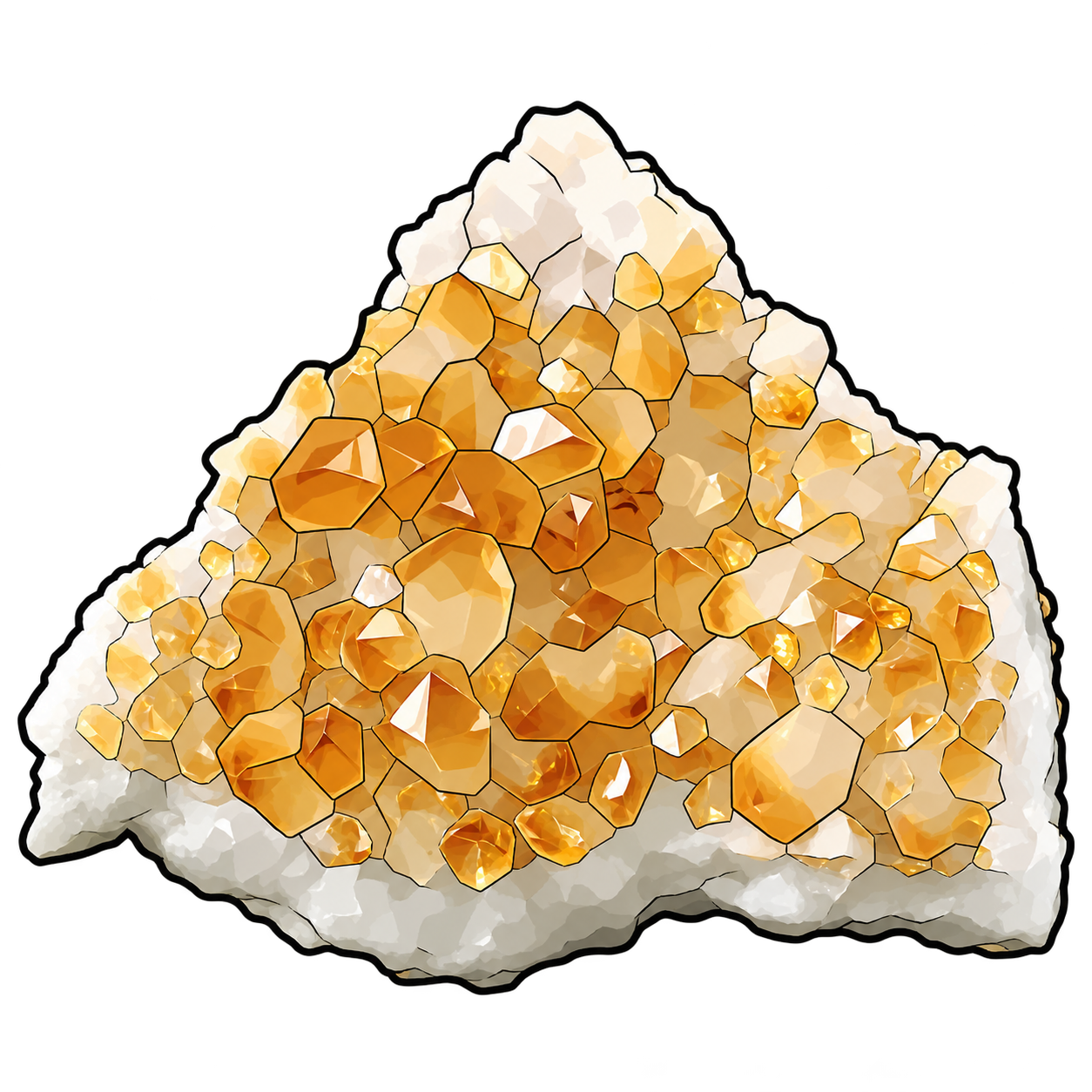
Yellow and orange quartz, with a color history worth knowing
Yellow to orange quartz.
Citrine ranges from pale yellow to warm orange and brownish orange.
Read the specimen guide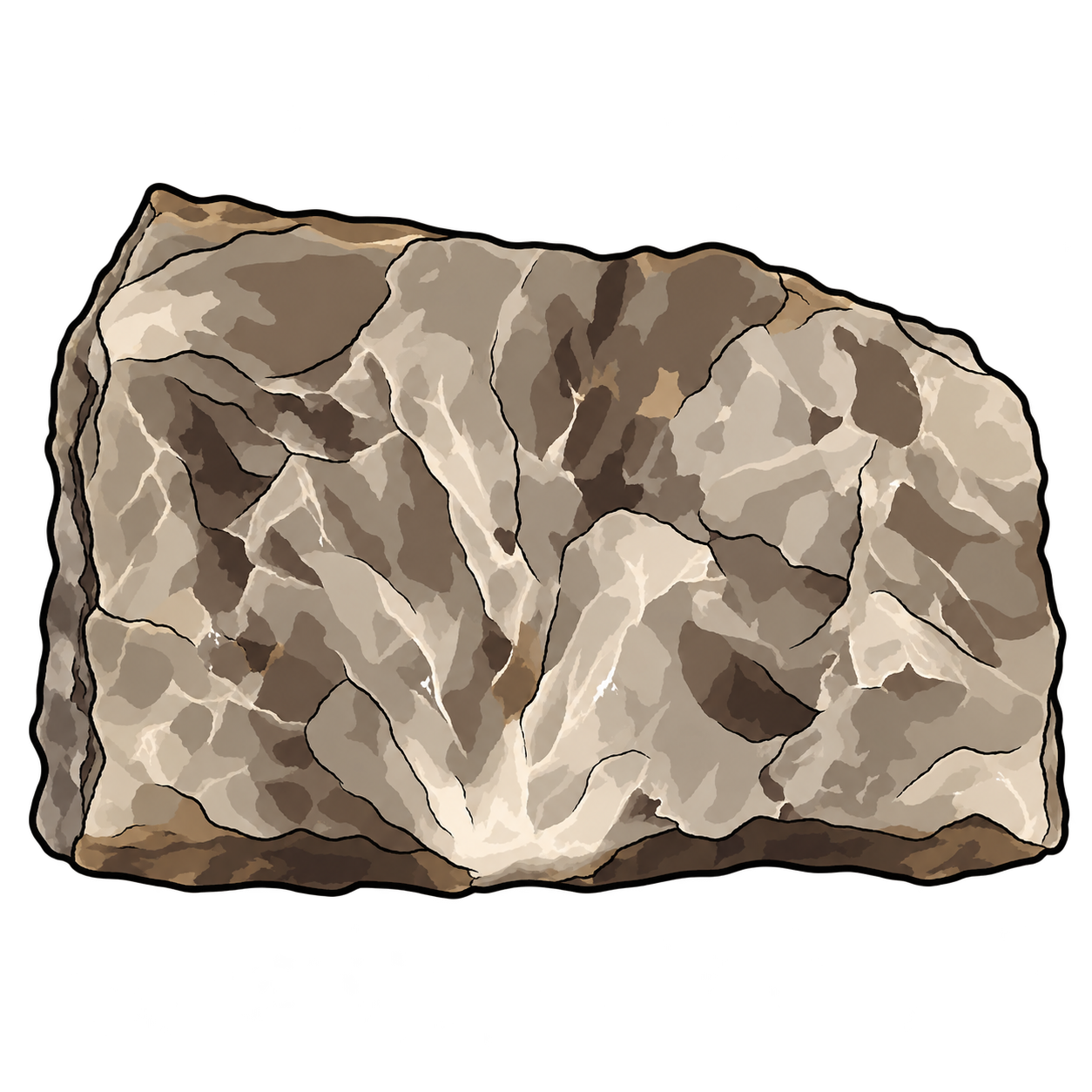
Gray and brown quartz shaped by crystal chemistry and irradiation
Brown to near-black quartz.
Smoky quartz ranges from a faint gray-brown tint to a depth that looks nearly black.
Read the specimen guide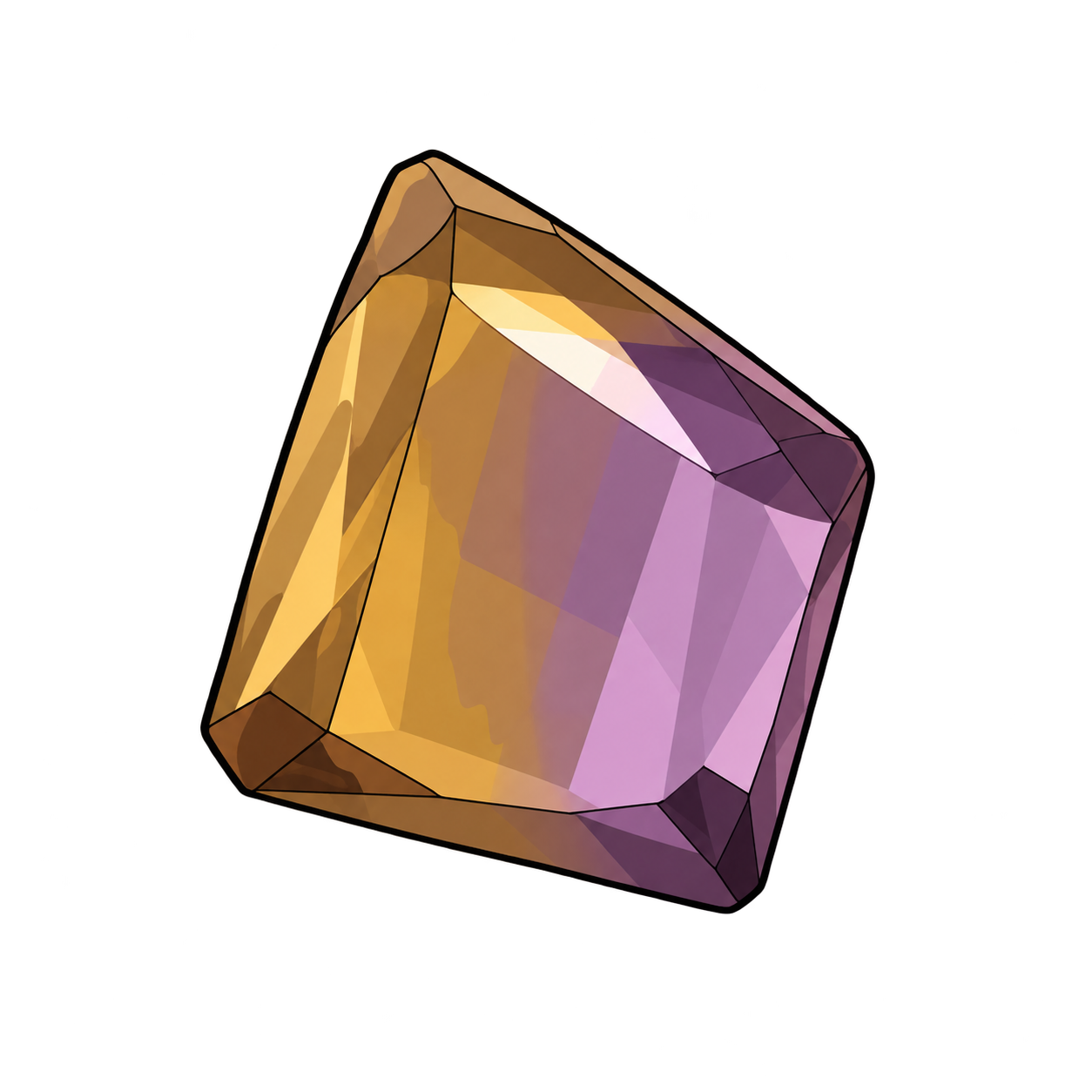
Purple and golden quartz within one crystal
Quartz combining amethyst-purple and citrine-yellow/orange zones.
Ametrine combines the purple of amethyst with the yellow or orange of citrine in a single quartz crystal.
Read the specimen guide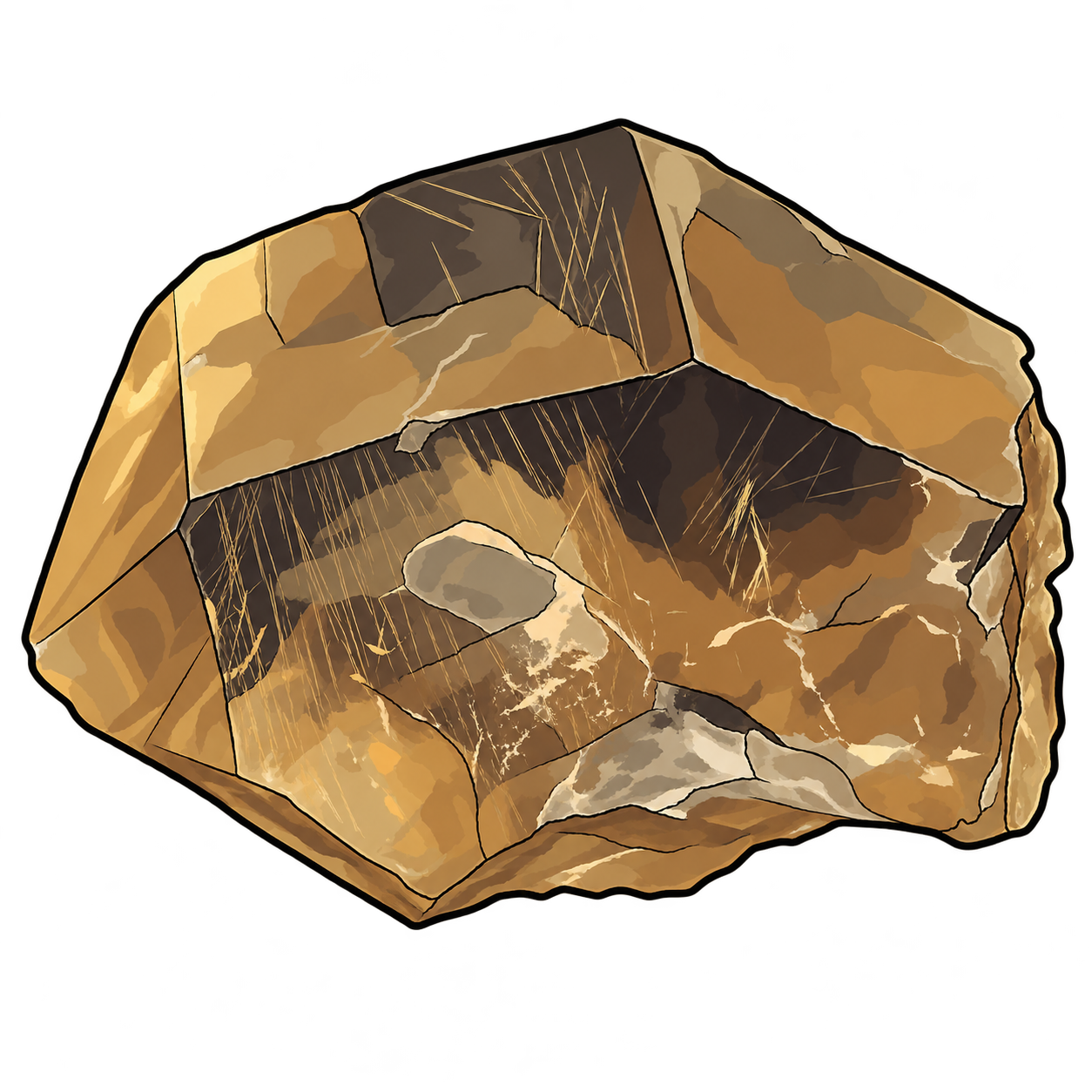
Mineral needles, growth outlines and trapped fluids within quartz
Quartz containing other minerals or visible growth features.
Included quartz is a collecting category rather than a single mineral variety.
Read the specimen guide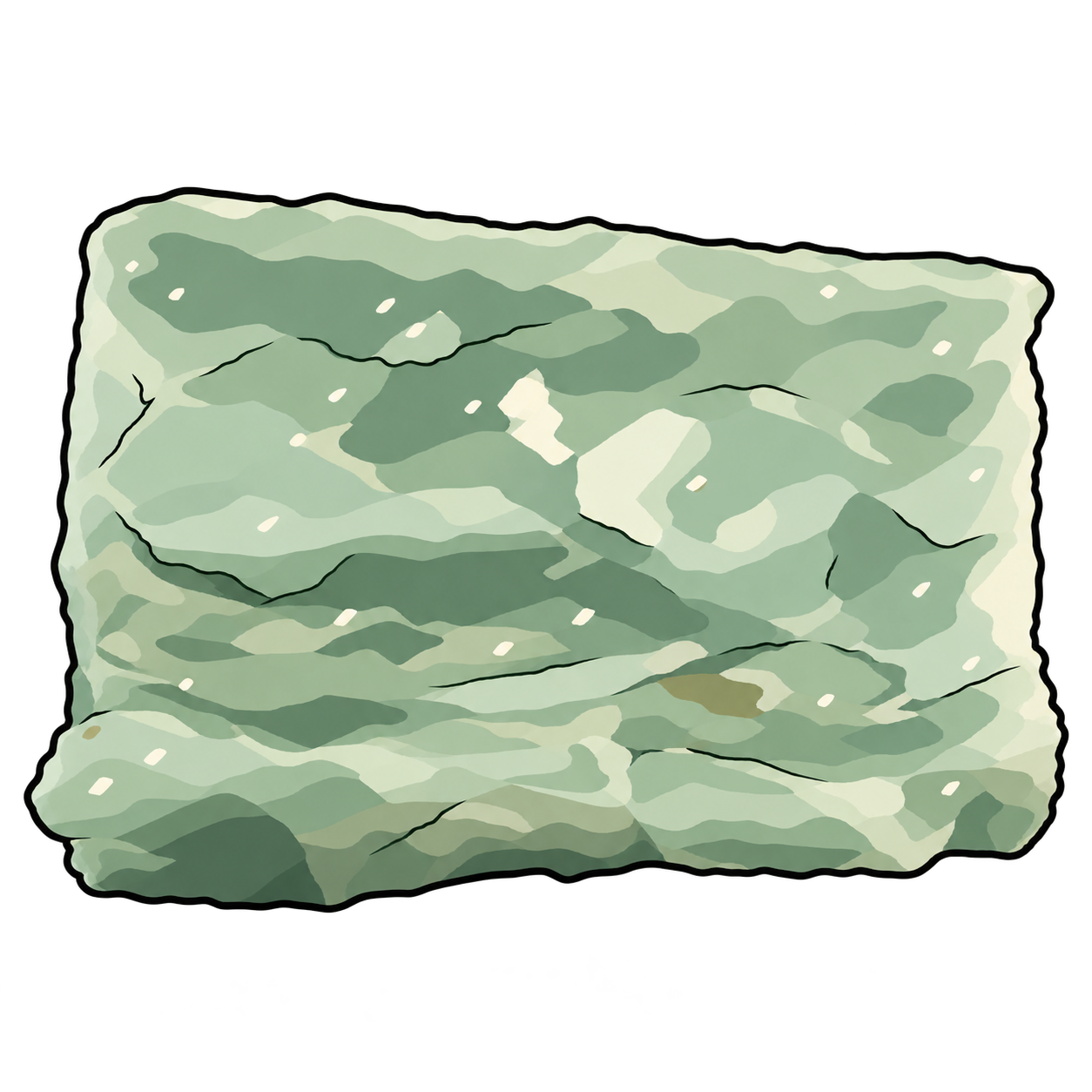
Quartz with Reflective Mineral Inclusions
Aventurescent quartz-rich material with reflective inclusions.
Aventurine is a quartz-rich material distinguished by small flashes from enclosed mineral flakes.
Read the specimen guide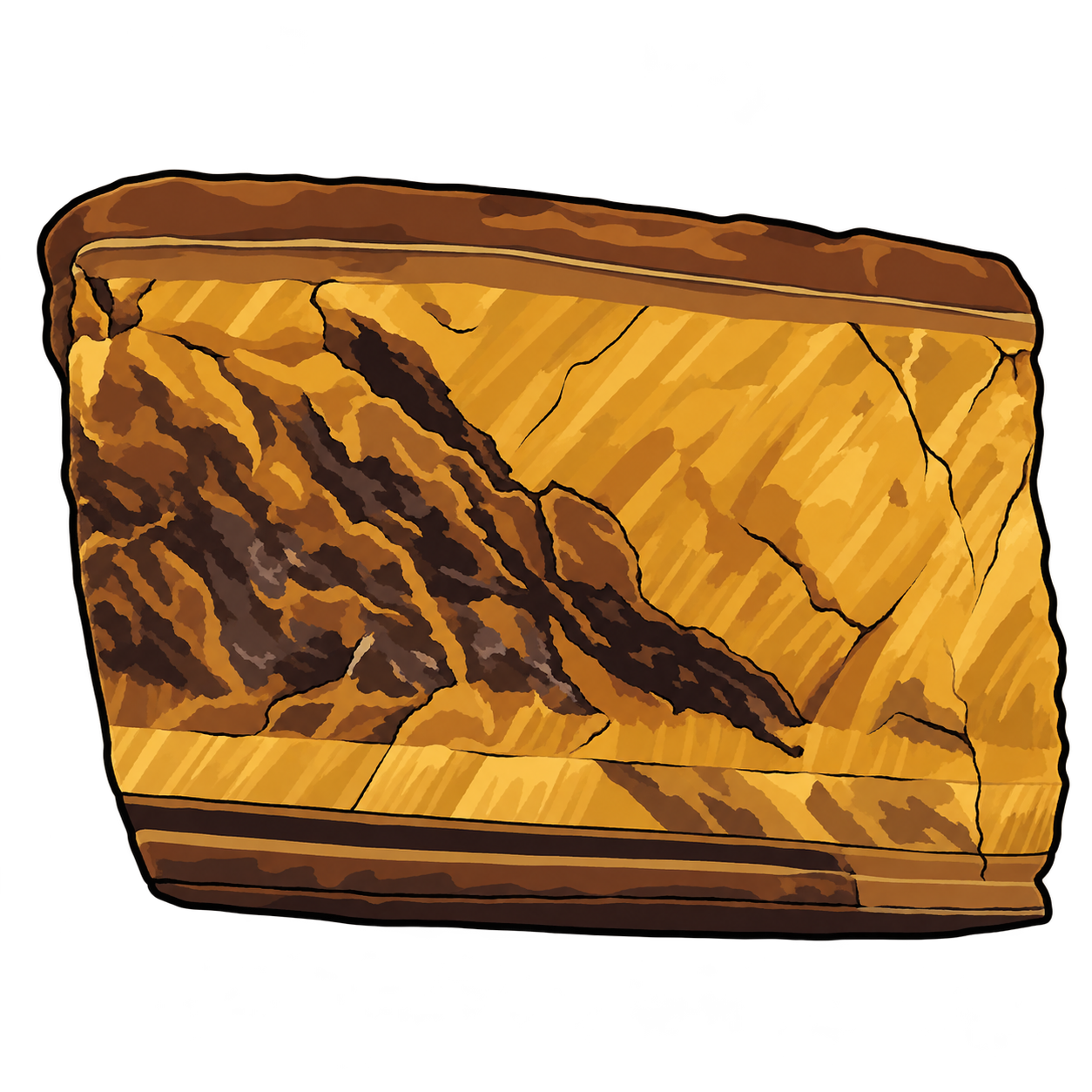
Chatoyant Quartz
Chatoyant quartz-rich material associated with fibrous amphibole textures.
Tiger's-eye is a quartz-rich ornamental stone whose golden-brown bands carry a moving, silky reflection.
Read the specimen guide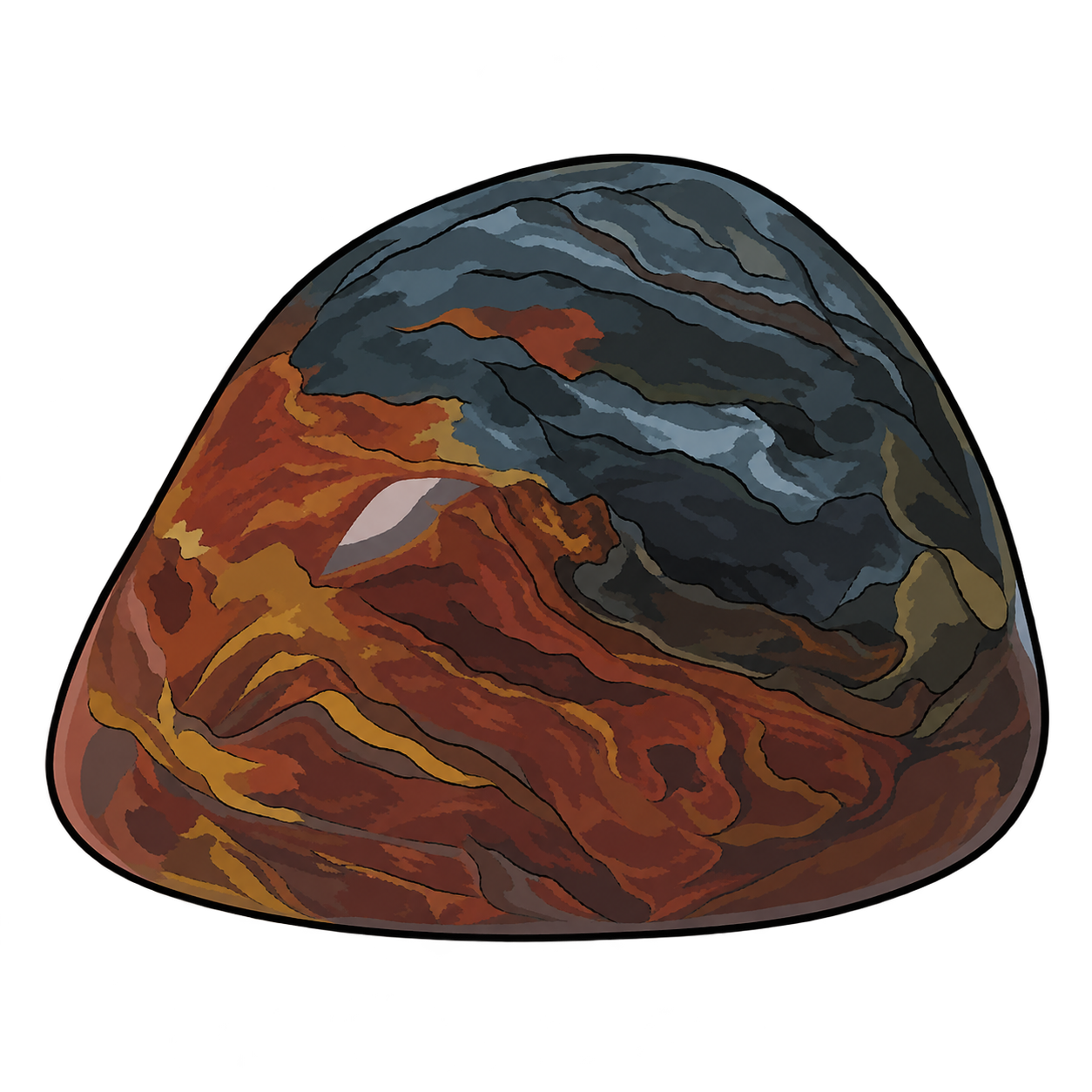
Chatoyant Silica with a Patchwork Texture
Trade material with chatoyant fibrous inclusions in microcrystalline quartz.
Pietersite is a silica-rich ornamental material whose blue-gray, gold and reddish-brown patches carry a shifting sheen.
Read the specimen guide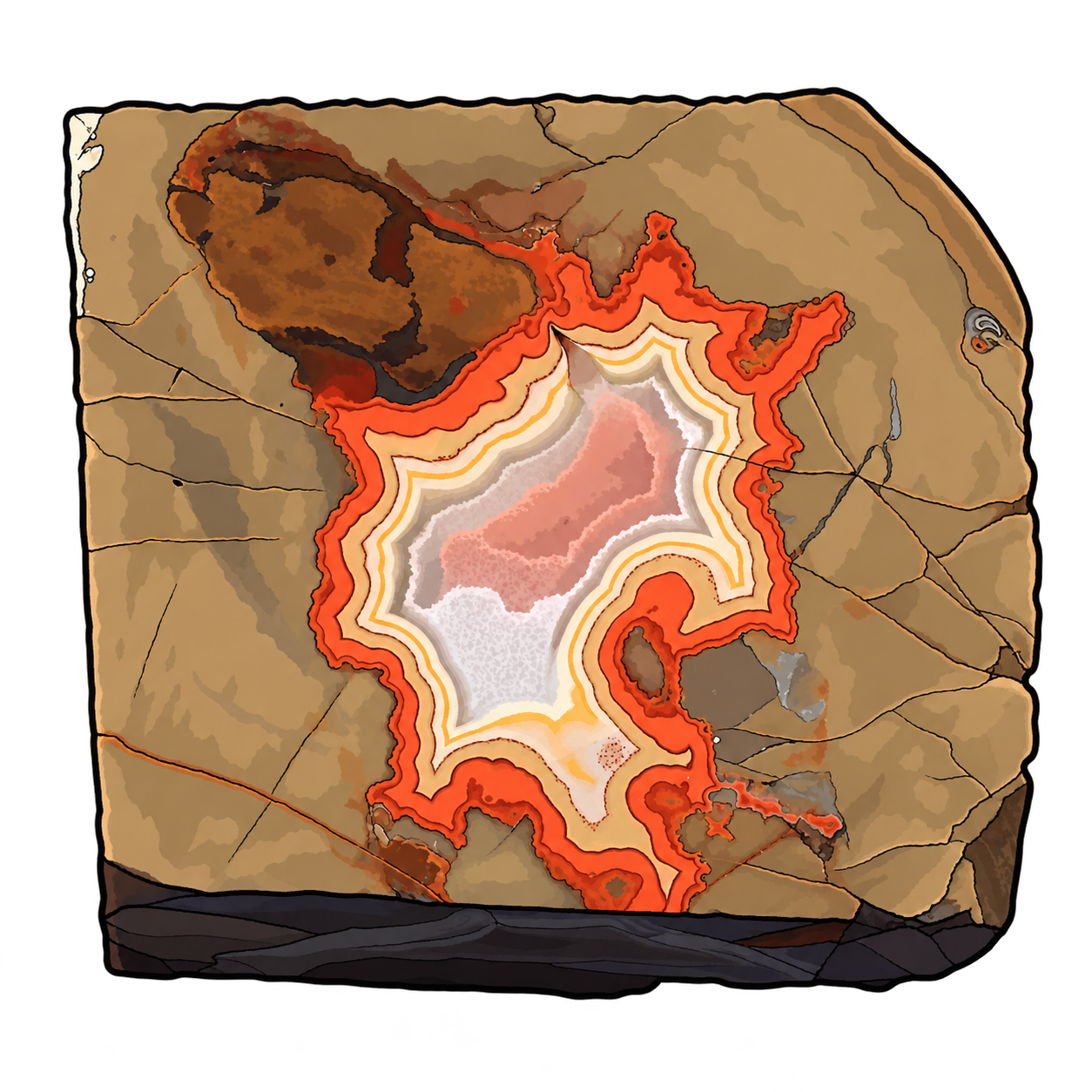
Bands, Cavities and the Architecture of Silica
Patterned, commonly banded chalcedony, a fine-grained silica material.
Agate is a patterned variety of chalcedony, not a separate mineral species.
Read the specimen guide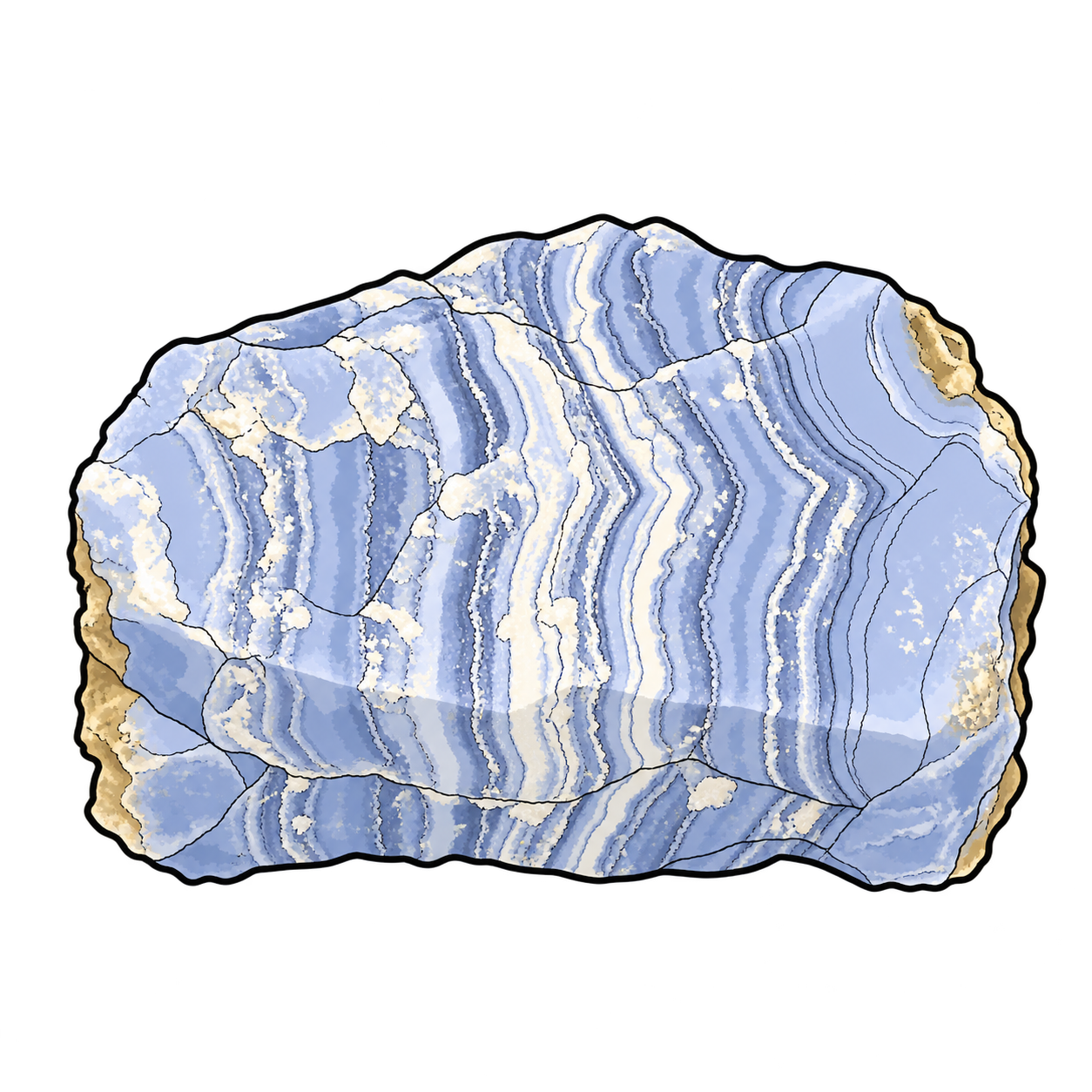
Pale Banded Chalcedony from a Complex Vein System
Pale blue-and-white banded chalcedony.
Blue lace agate is recognized by pale blue and white bands that curve, branch and fold across a cut surface.
Read the specimen guide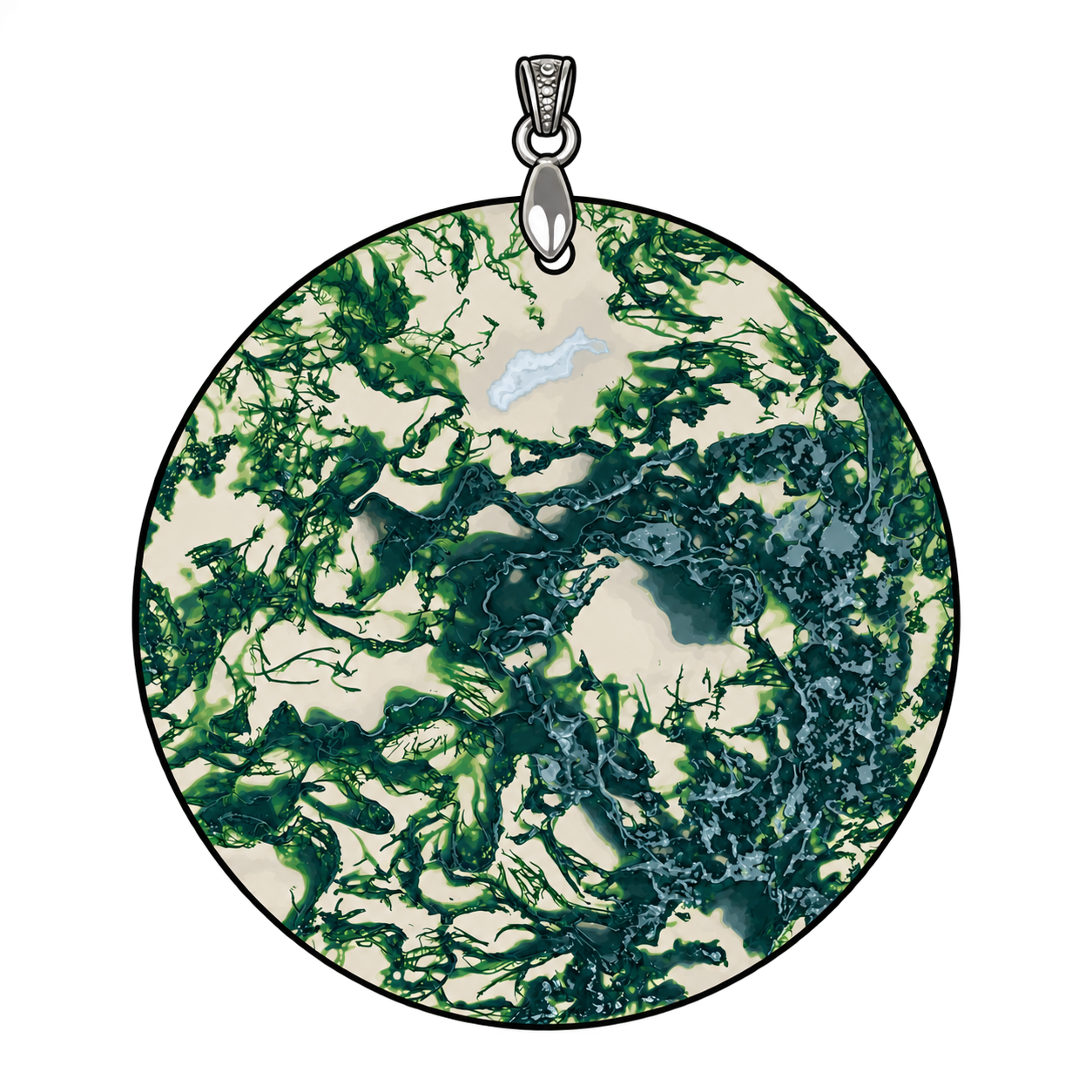
Mineral Landscapes in Fine-Grained Silica
Chalcedony with mineral inclusions resembling moss or branches.
Moss agate contains inclusions that resemble branching plants, tangled foliage or small landscapes.
Read the specimen guide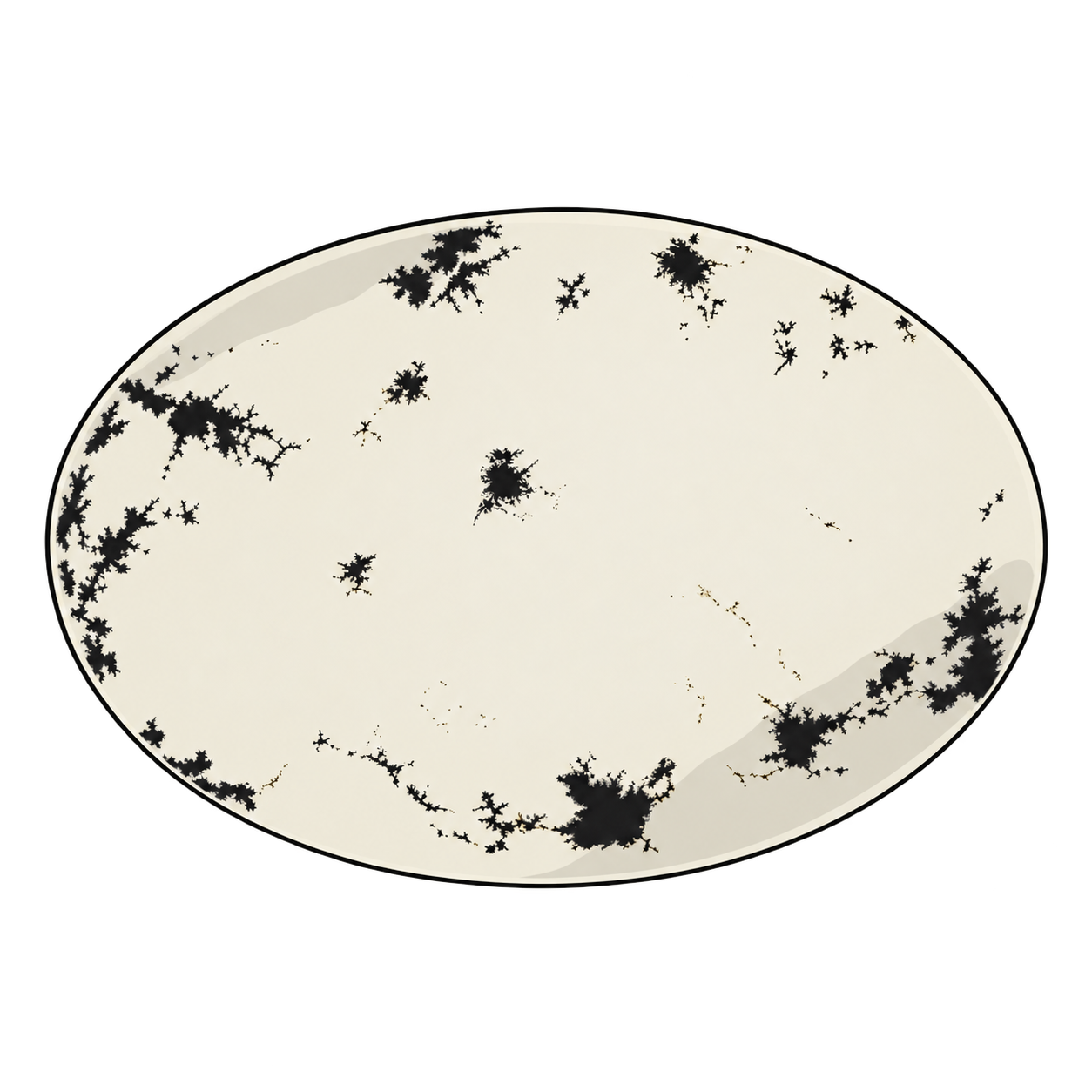
Branching Mineral Patterns in Chalcedony
Chalcedony with branching mineral inclusions.
Dendritic agate contains dark, branching inclusions that can resemble ferns, roots or distant trees.
Read the specimen guide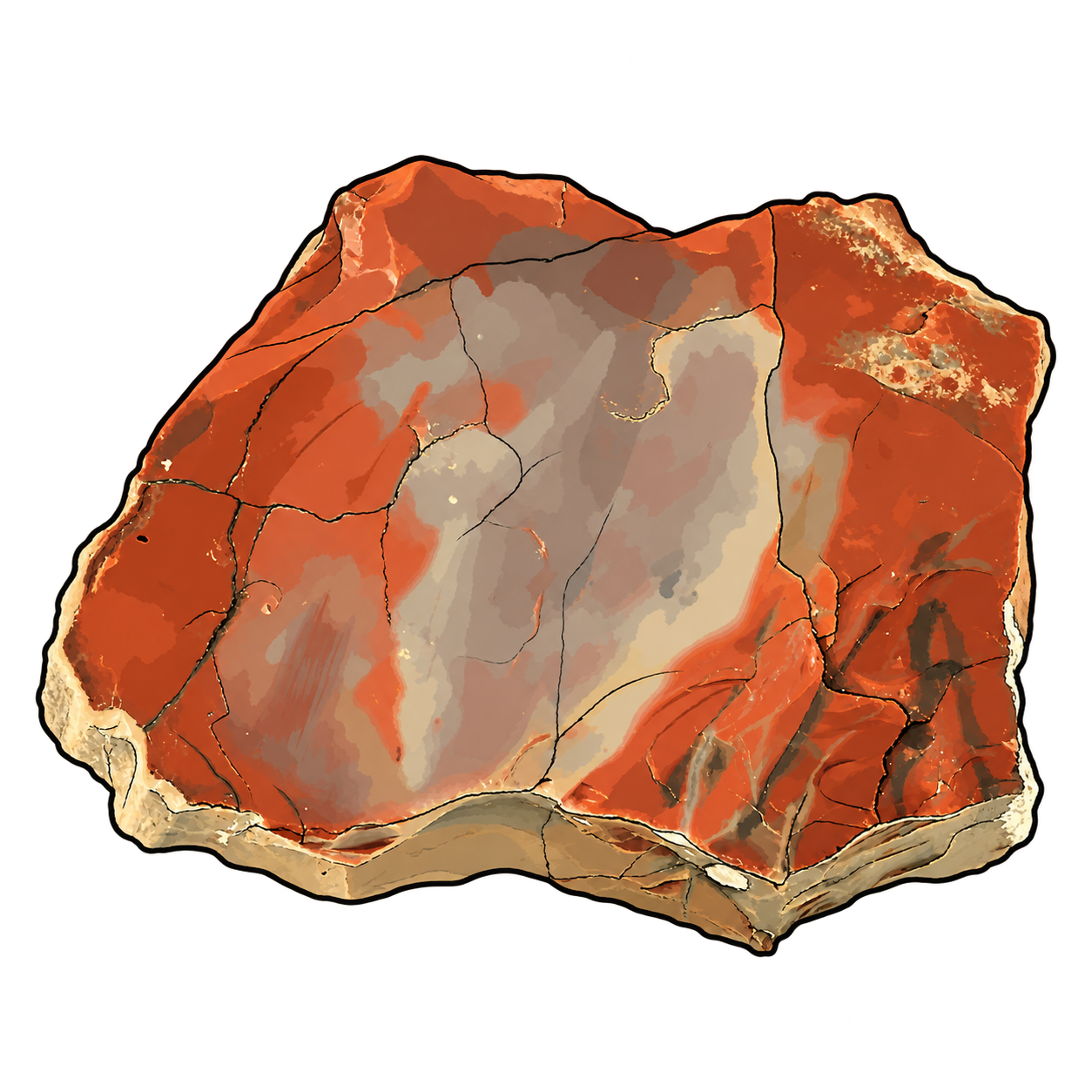
Warm-Colored Chalcedony, Carved and Worn Across Centuries
Orange to reddish chalcedony.
Carnelian is the orange to reddish-brown member of the chalcedony family.
Read the specimen guide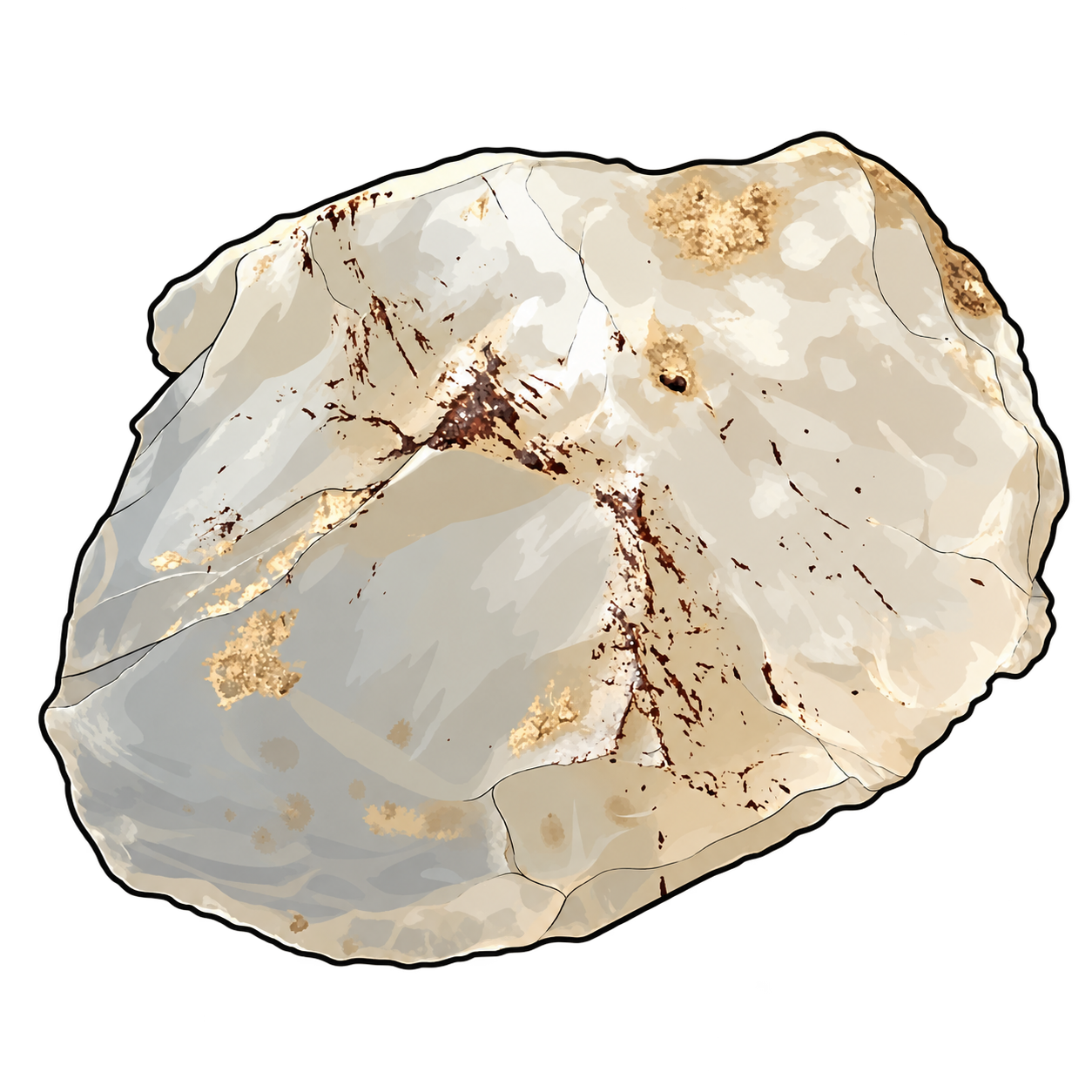
The Fine Structure Behind a Family of Gemstones
Microcrystalline/fibrous silica aggregate; includes many named gem varieties.
Chalcedony connects stones that can look entirely unlike one another: pale blue cabochons, orange carnelian, banded agate and green chrysoprase.
Read the specimen guide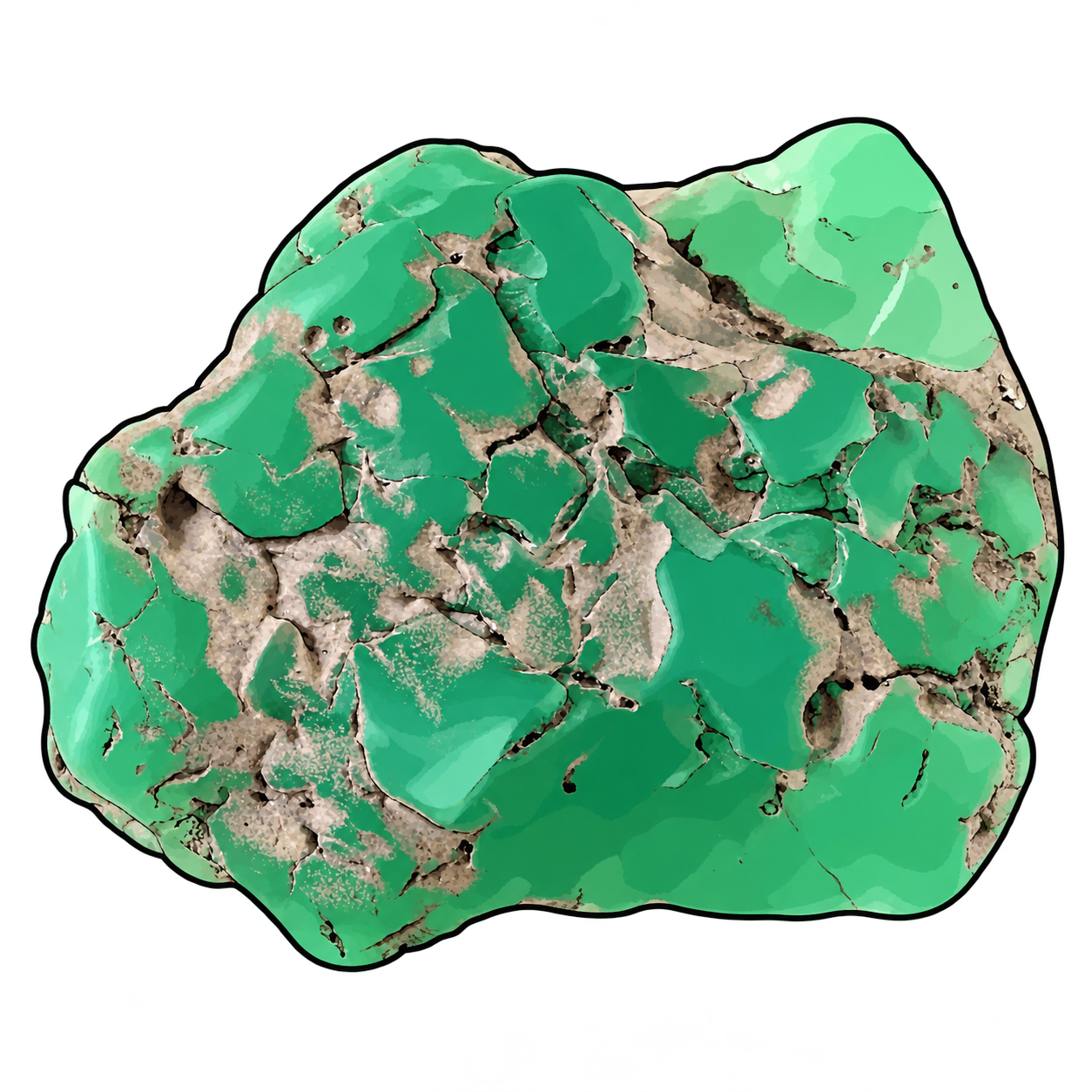
Nickel's Green Signature in Chalcedony
Nickel-colored green chalcedony.
Chrysoprase is green chalcedony whose color is associated with nickel-bearing material dispersed through its fine silica structure.
Read the specimen guide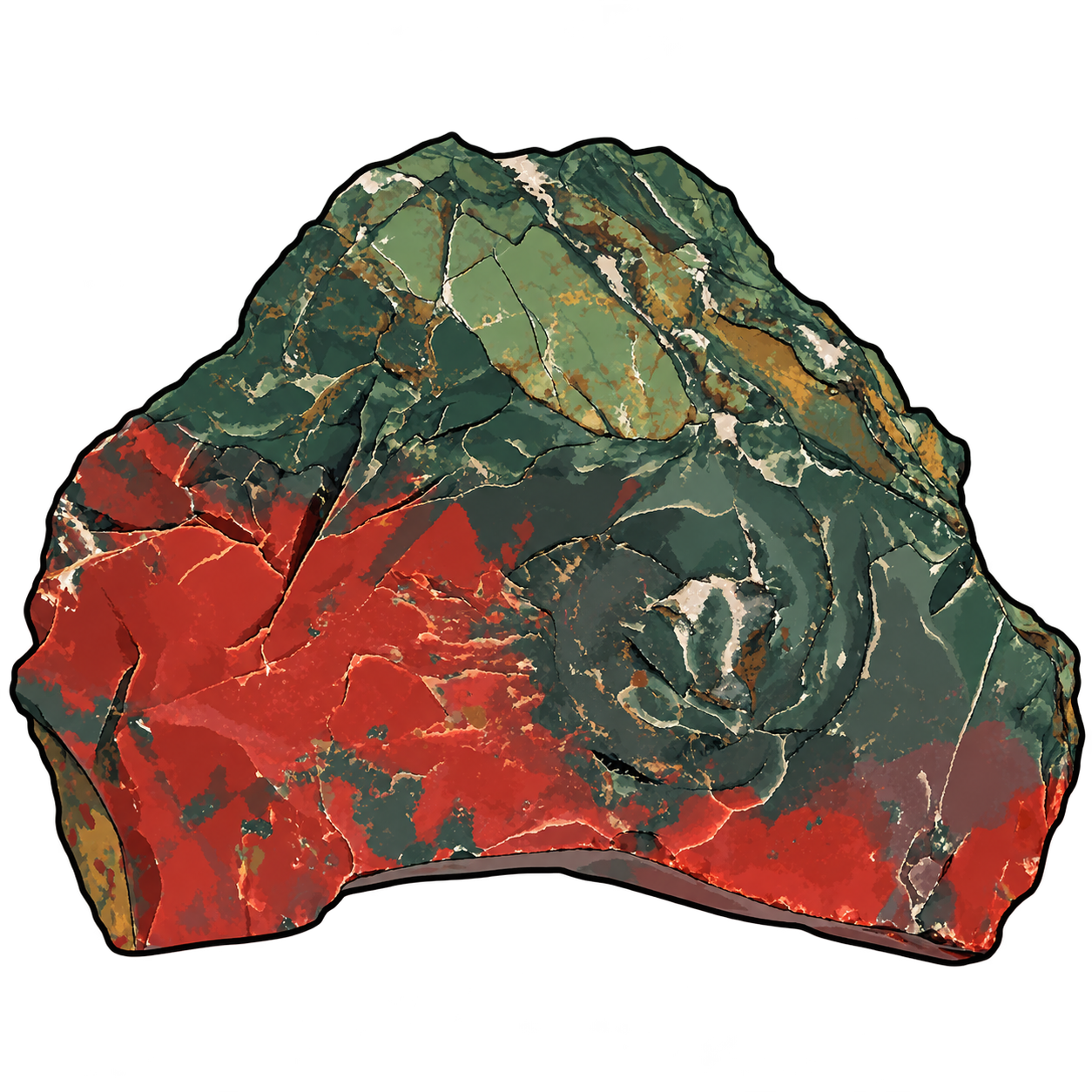
Green Silica Marked by Iron-Red Inclusions
Green chalcedony/jasper material with red markings.
Bloodstone, or heliotrope, is green chalcedony marked by red iron-oxide inclusions, commonly hematite.
Read the specimen guide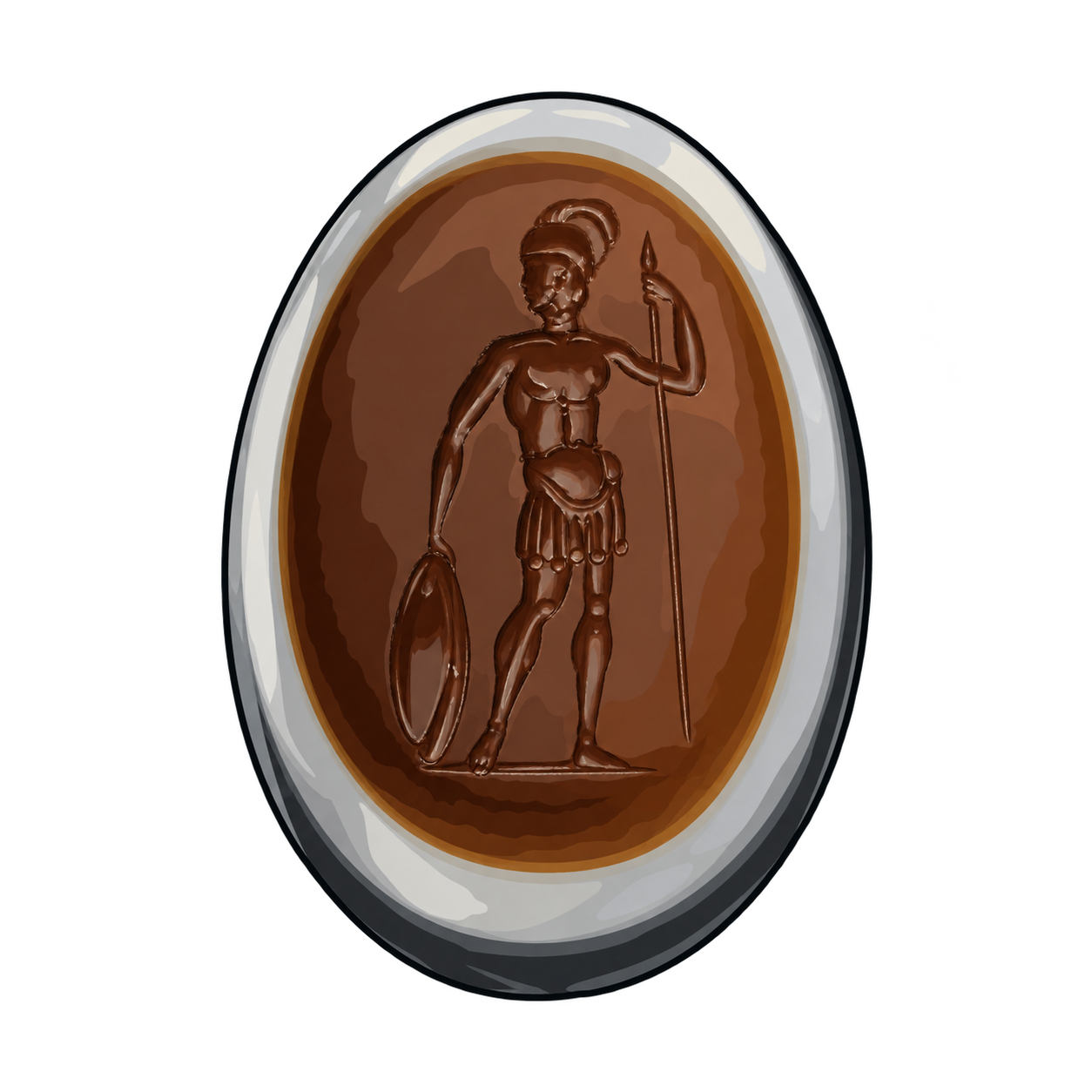
Layered Chalcedony for Seals, Cameos and Contrasting Color
Parallel-banded chalcedony; sardonyx includes sard-colored bands.
Onyx and sardonyx turn mineral layering into a design material.
Read the specimen guide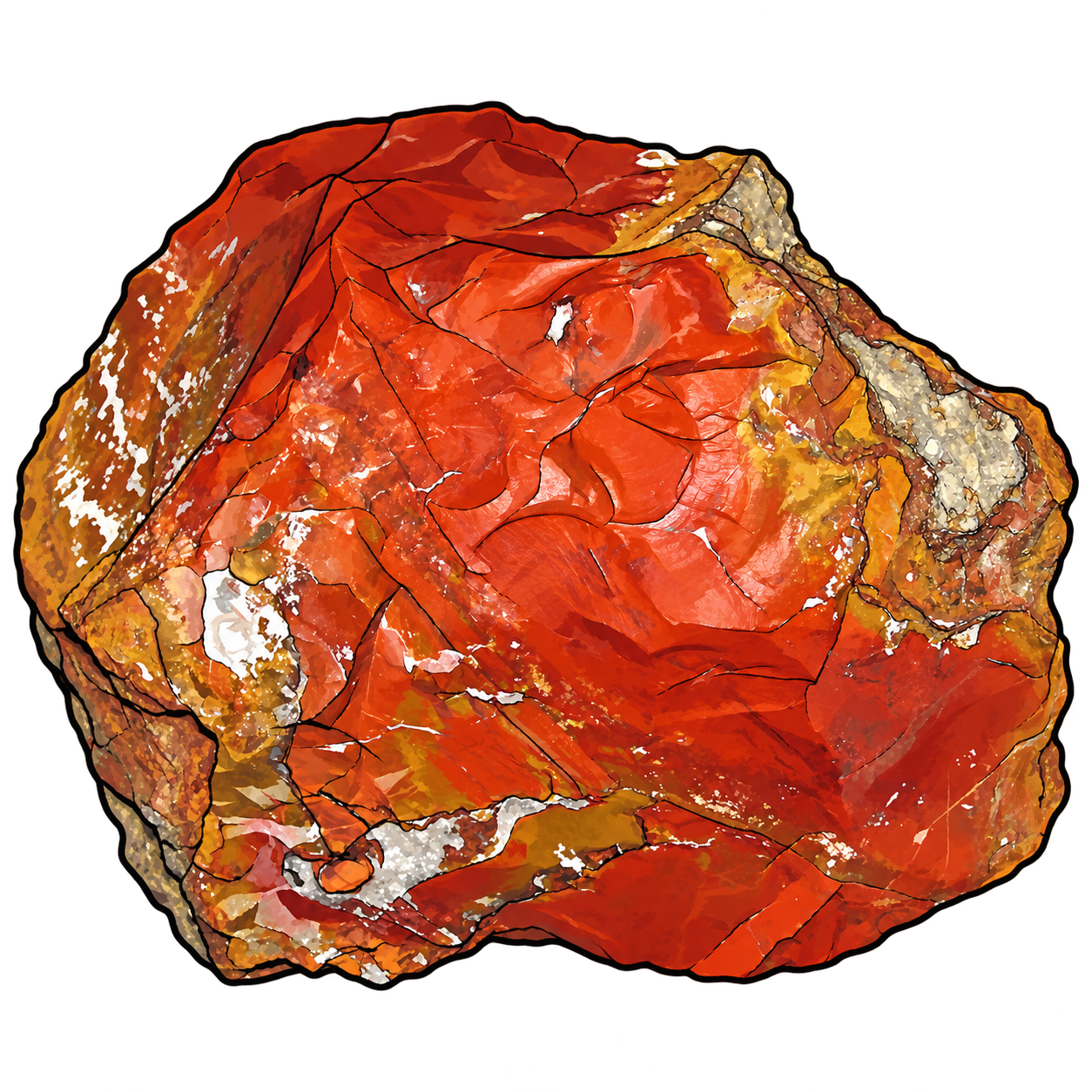
Opaque Silica in Color, Pattern and Geological Context
Opaque, impure, fine-grained silica-rich material; retail use of the name is broader.
Jasper is a broad name for opaque, fine-grained silica-rich material selected for its color and pattern.
Read the specimen guide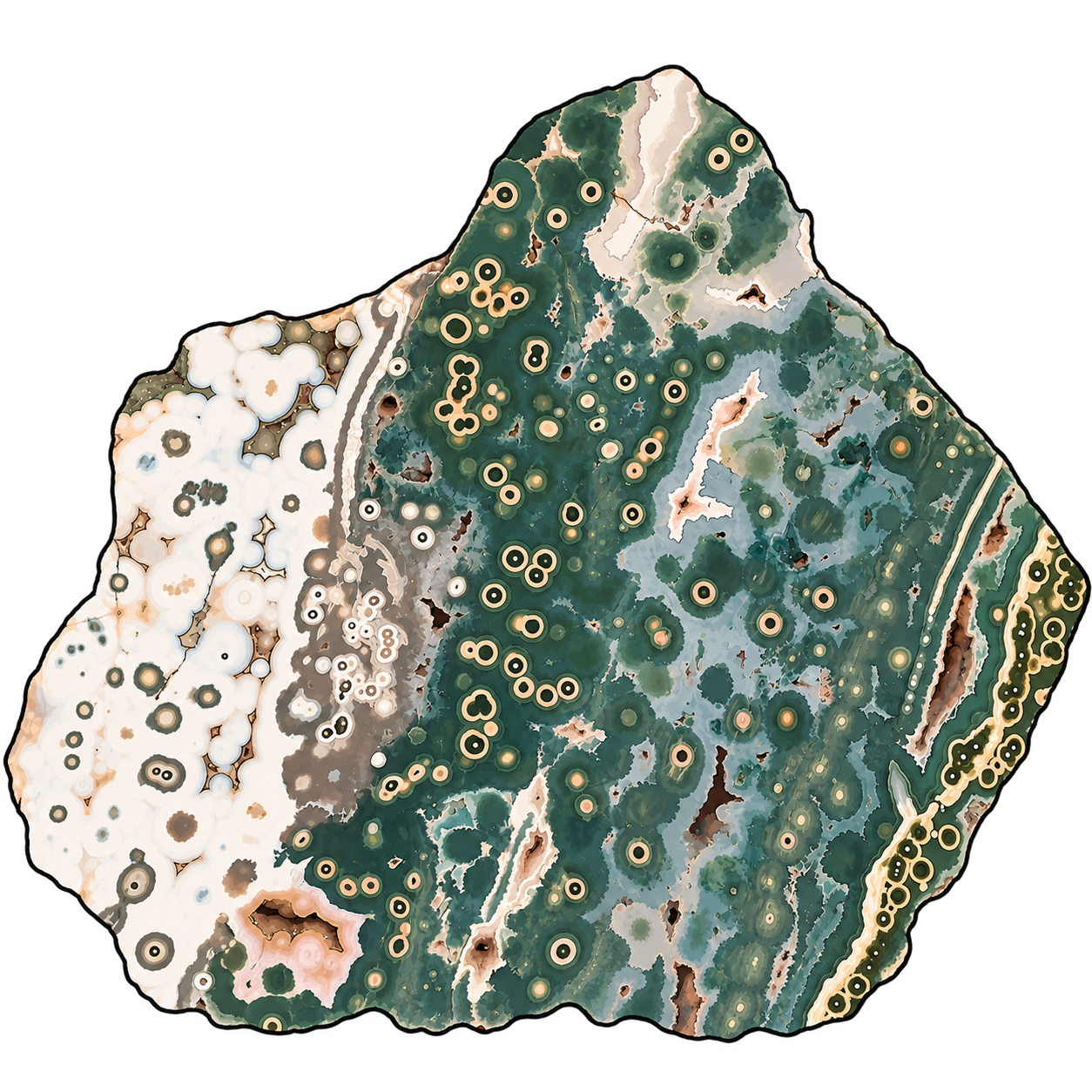
Orbicular Chalcedony from Madagascar
A lapidary trade name associated with orbicular silica-rich material from Madagascar.
Ocean Jasper is a trade name for patterned, silica-rich material from northwestern Madagascar.
Read the specimen guide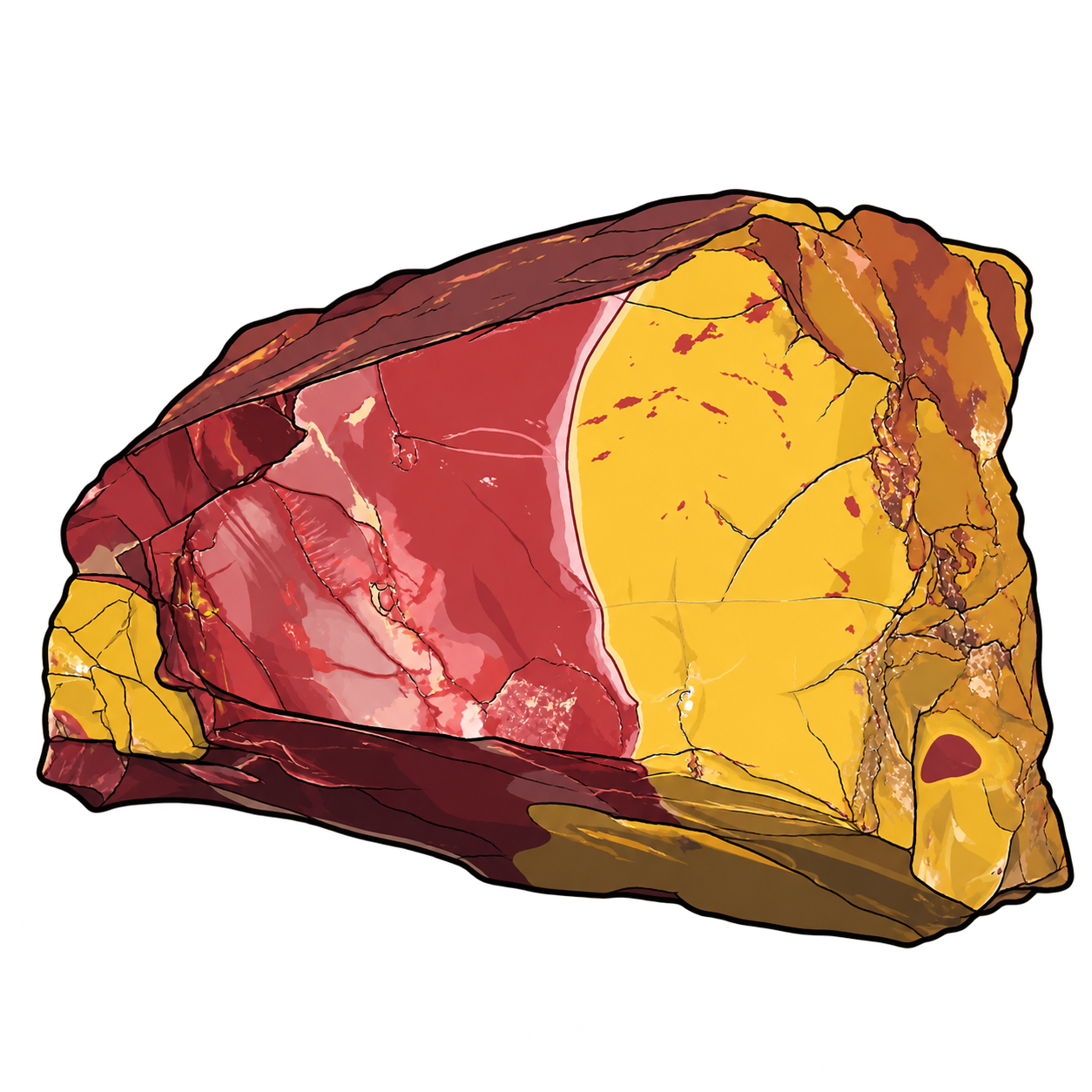
Western Australia's Radiolarian Stone in Red, Ochre and Cream
Silicified radiolarian sedimentary material from Western Australia.
Mookaite is a decorative rock from Western Australia, valued for broad fields of mustard yellow, cream, red and wine-purple.
Read the specimen guide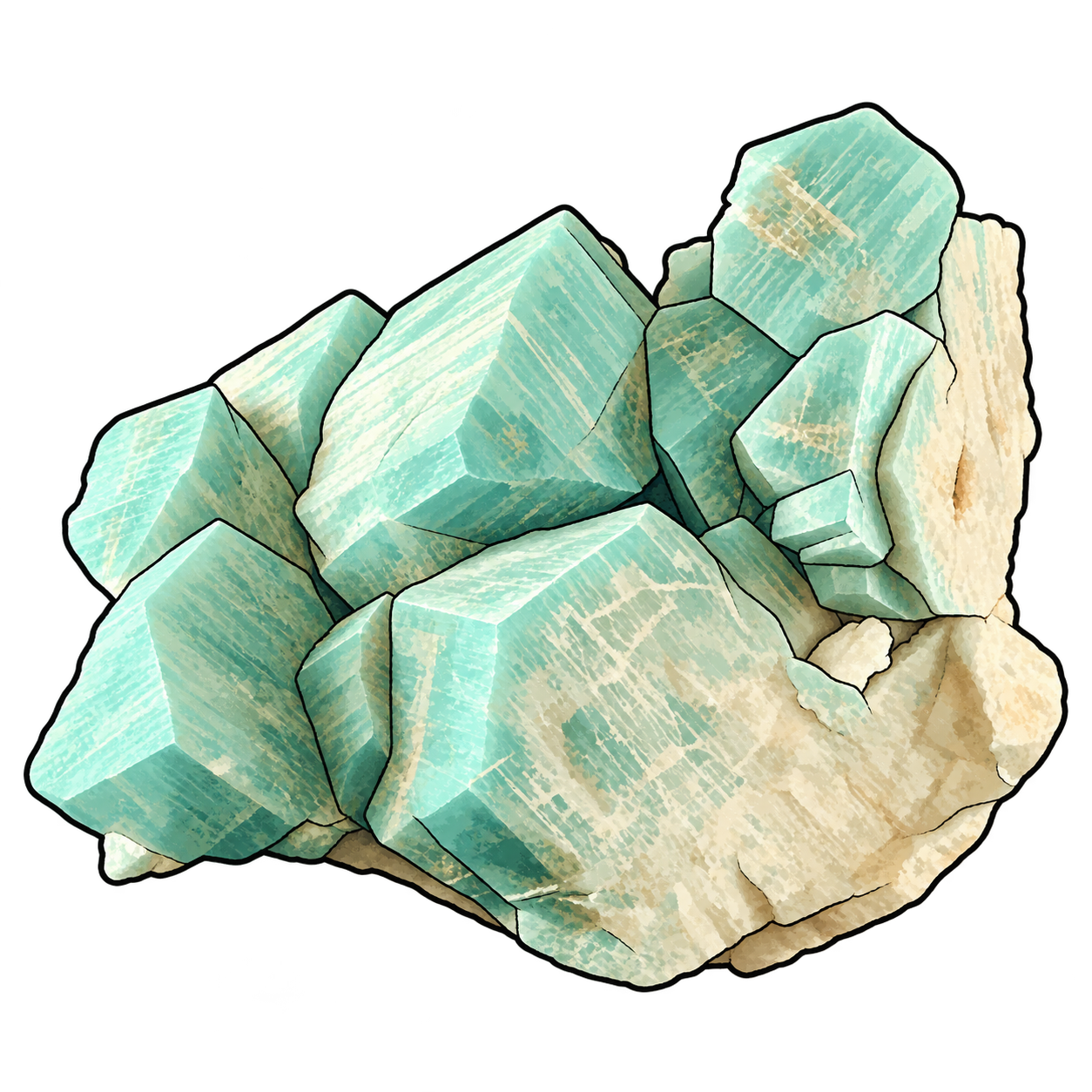
Blue-Green Microcline
Green to blue-green microcline feldspar.
Amazonite is the blue-green variety of microcline feldspar.
Read the specimen guide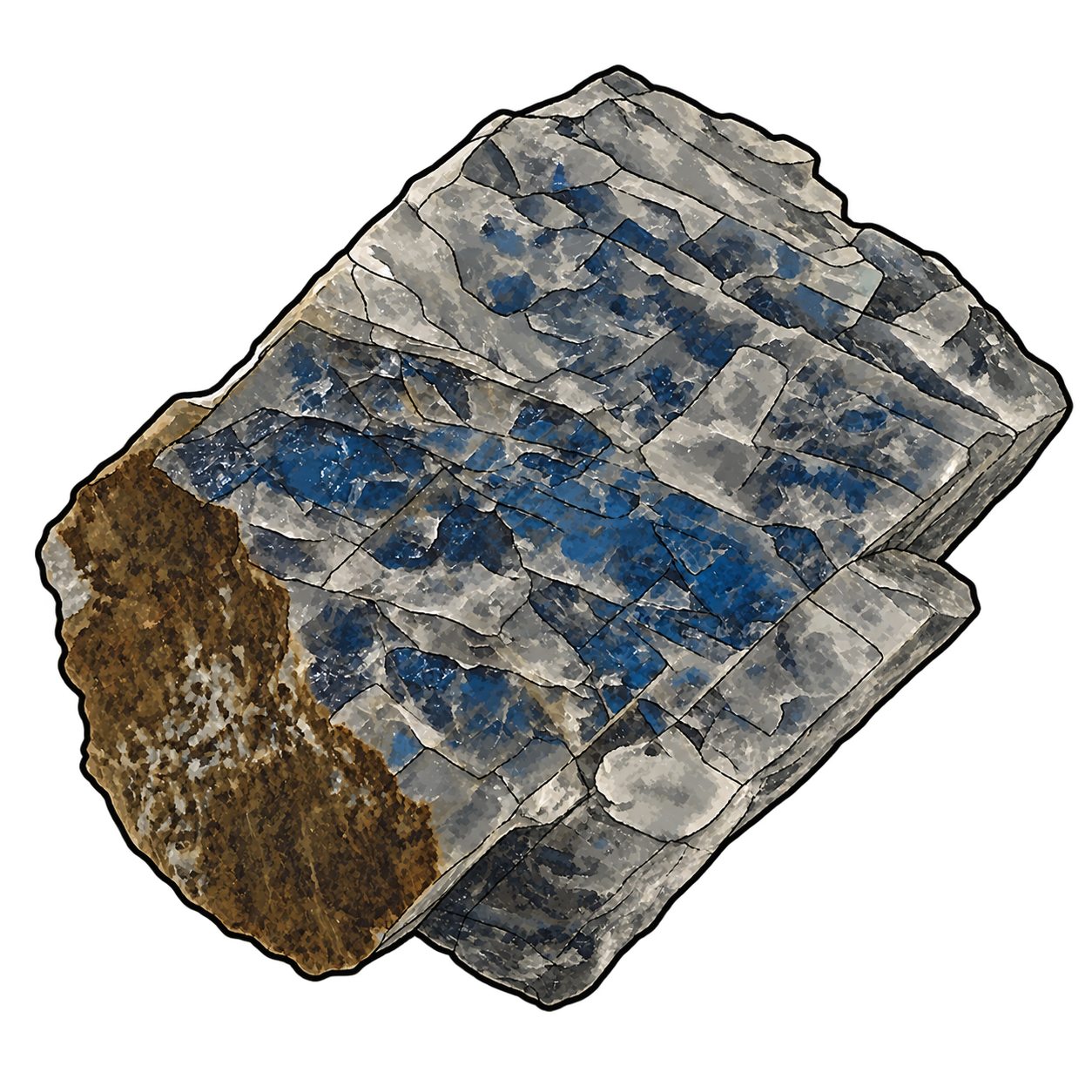
Iridescent plagioclase feldspar
A plagioclase feldspar variety known for labradorescence.
Labradorite is a feldspar best known for broad flashes of blue, green, gold and other colors that appear as the stone turns in the light.
Read the specimen guide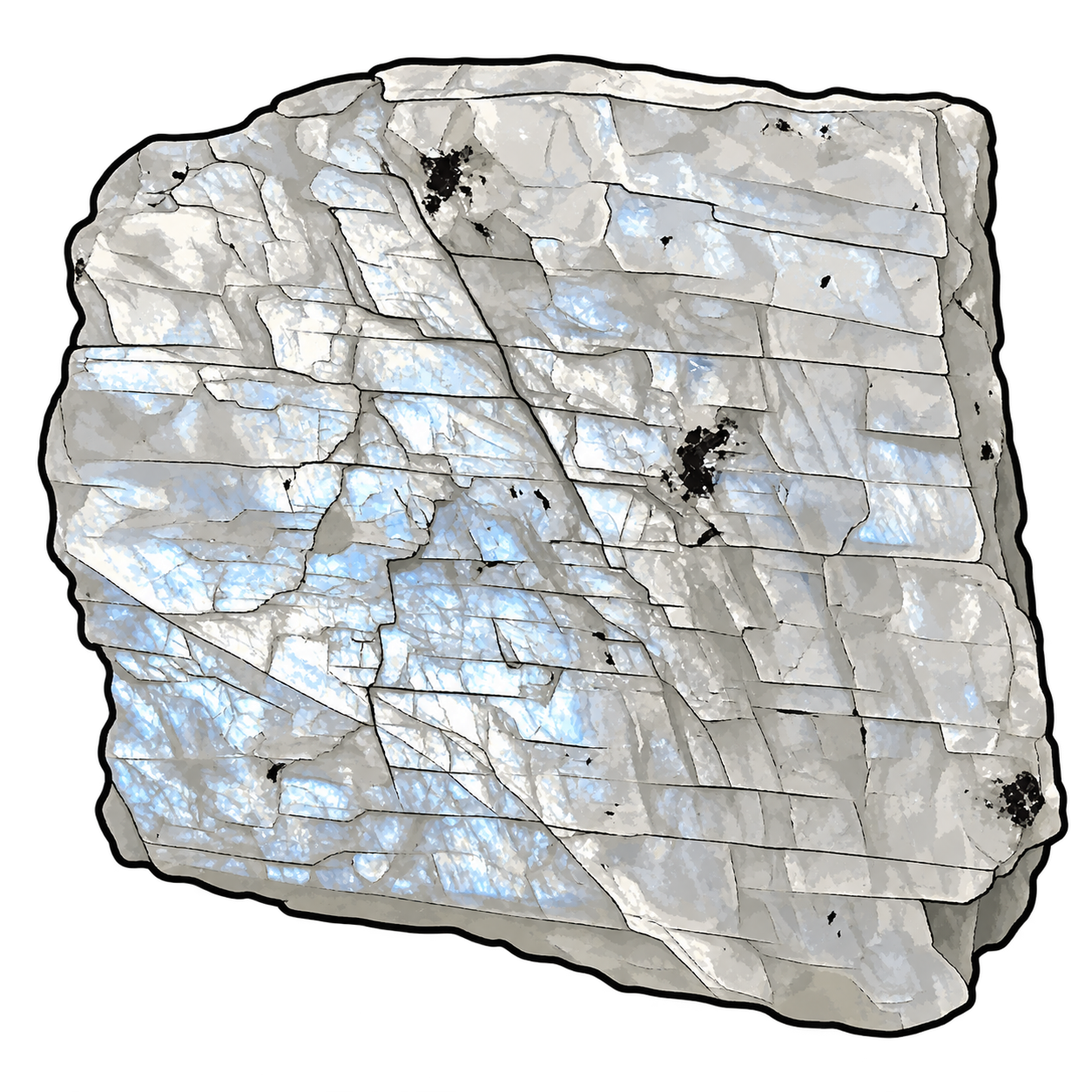
Feldspar with Adularescence
Adularescent feldspar material, classically intergrown alkali feldspars.
Moonstone is admired for a moving sheen that seems to float within or just above its surface.
Read the specimen guide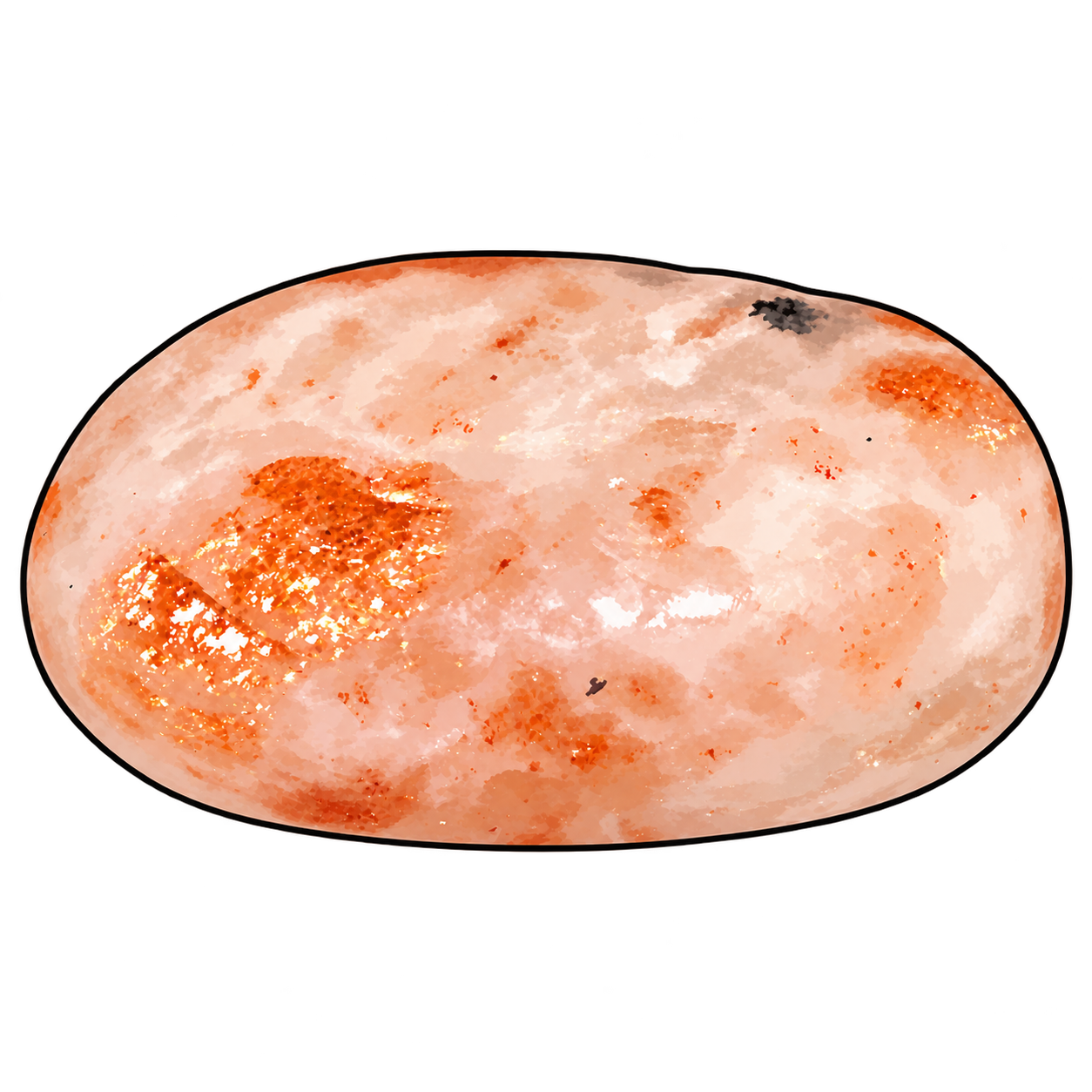
Feldspar with Reflective Inclusions
Feldspar gem material with reflective inclusions, sometimes showing aventurescence.
Sunstone ranges from softly sparkling peach-colored material to transparent red, green and multicolored gems.
Read the specimen guide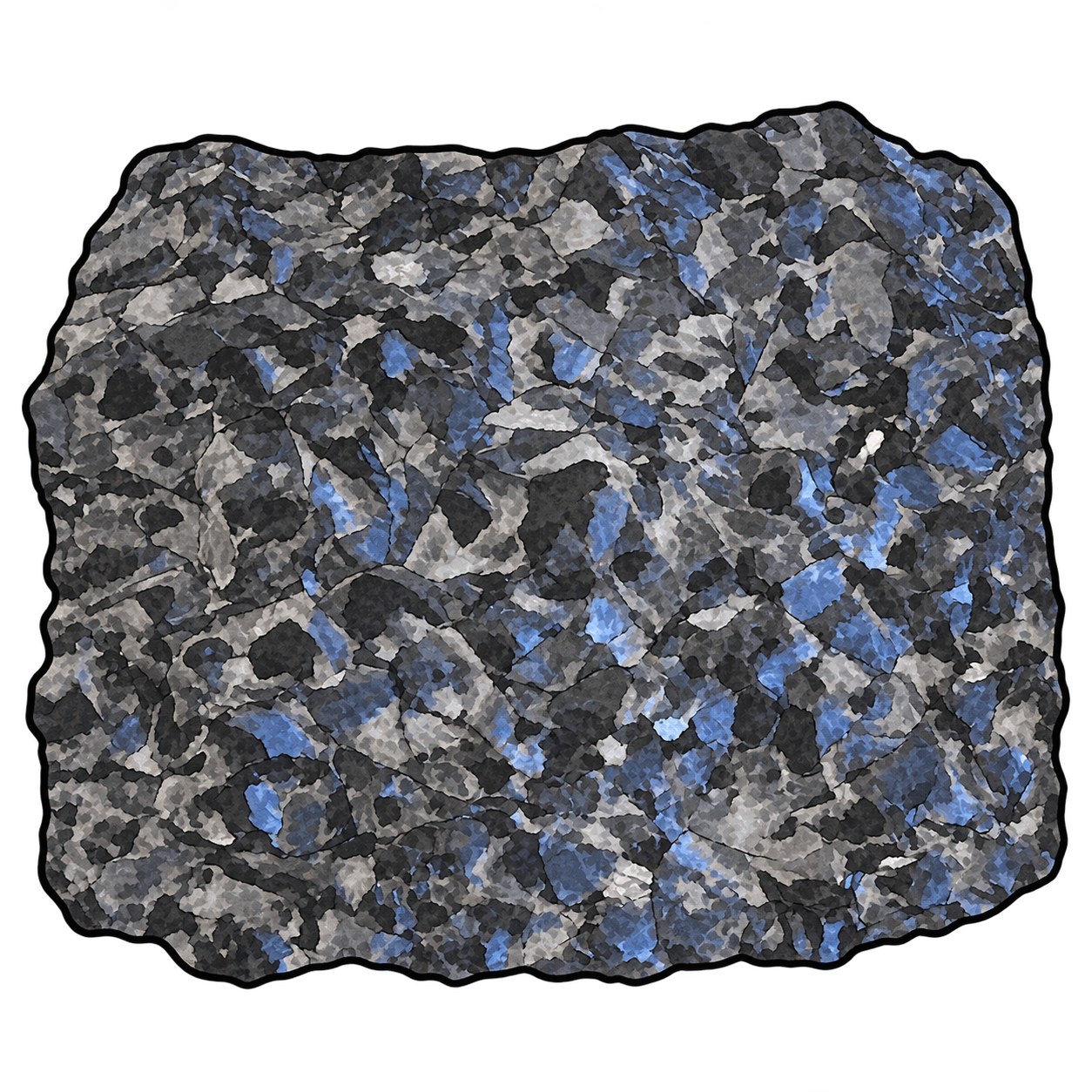
Norway's Blue-Flashing Ornamental Rock
Norwegian igneous rock rich in feldspar that can show blue-silver iridescence.
Larvikite is a coarse-grained igneous rock whose gray feldspars can flare blue or silver when the light catches them.
Read the specimen guide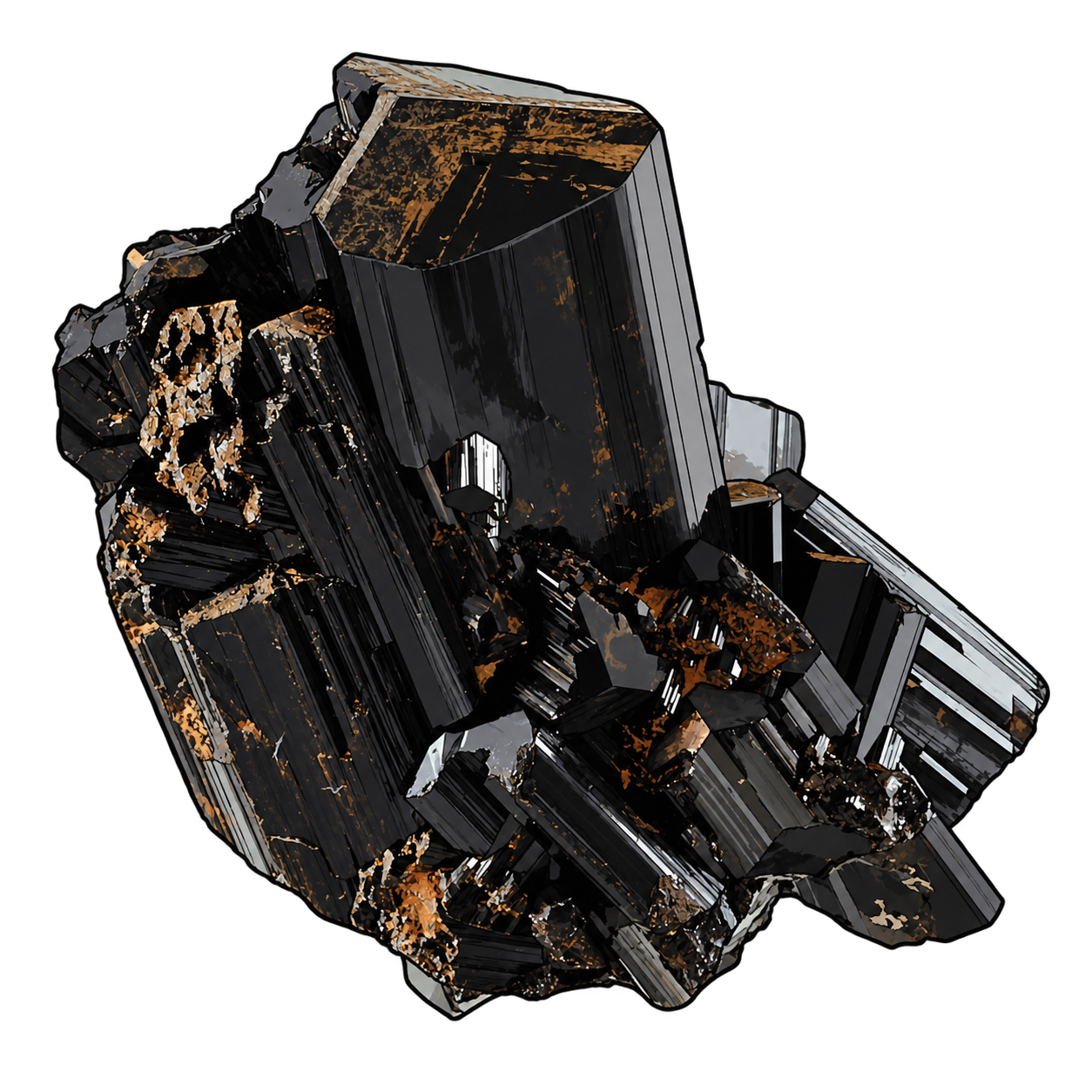
A Mineral Family in Many Colors
Borosilicate mineral supergroup / black tourmaline focus
Tourmaline encompasses a family of boron-bearing silicate minerals rather than a single composition.
Read the specimen guide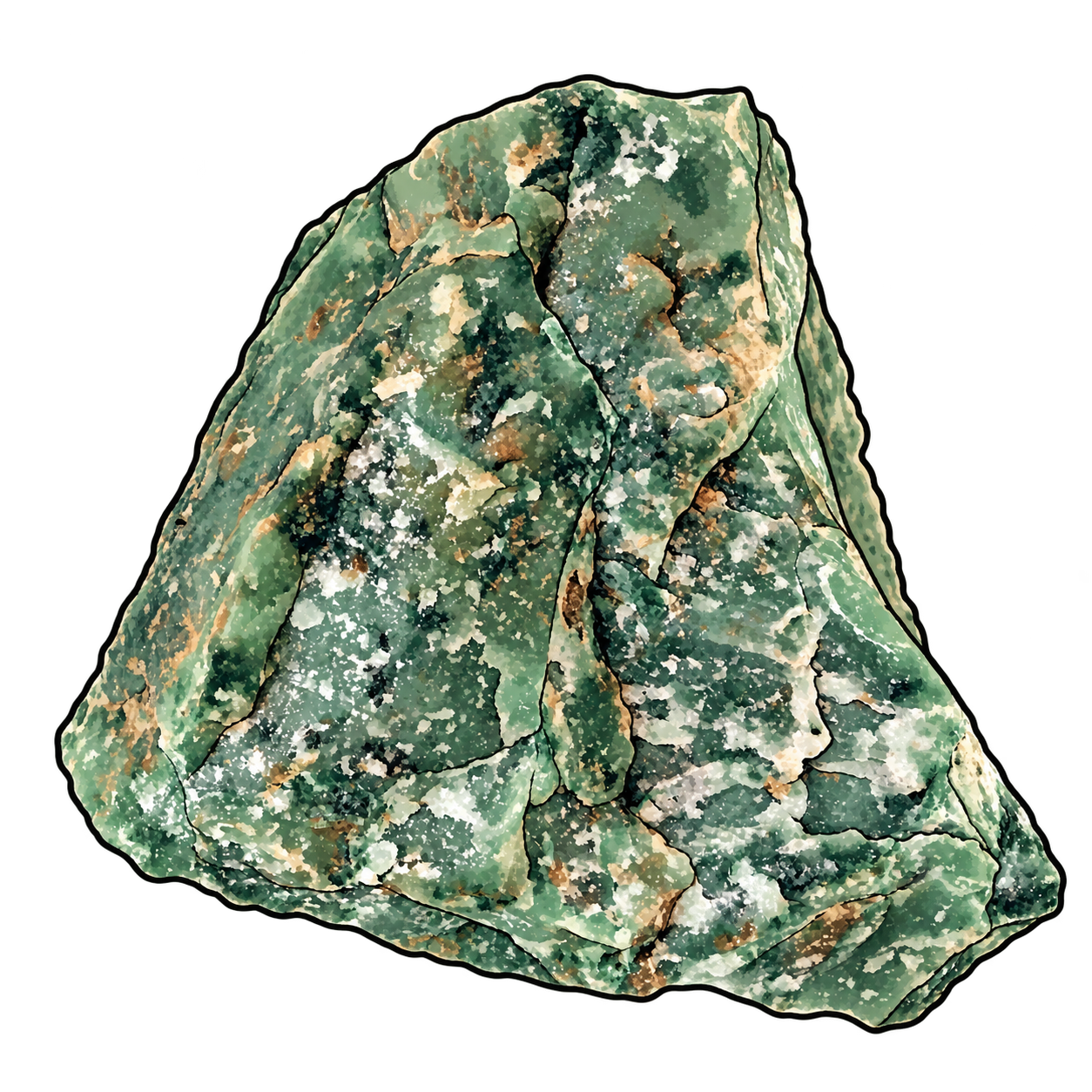
Interlocking Minerals, Enduring Craft
Jadeite jade and nephrite / a material umbrella
Jade is valued not only for color but for the dense mineral fabric that allows it to become a fine-edged carving, a smoothly rounded bangle or a luminous cabochon.
Read the specimen guide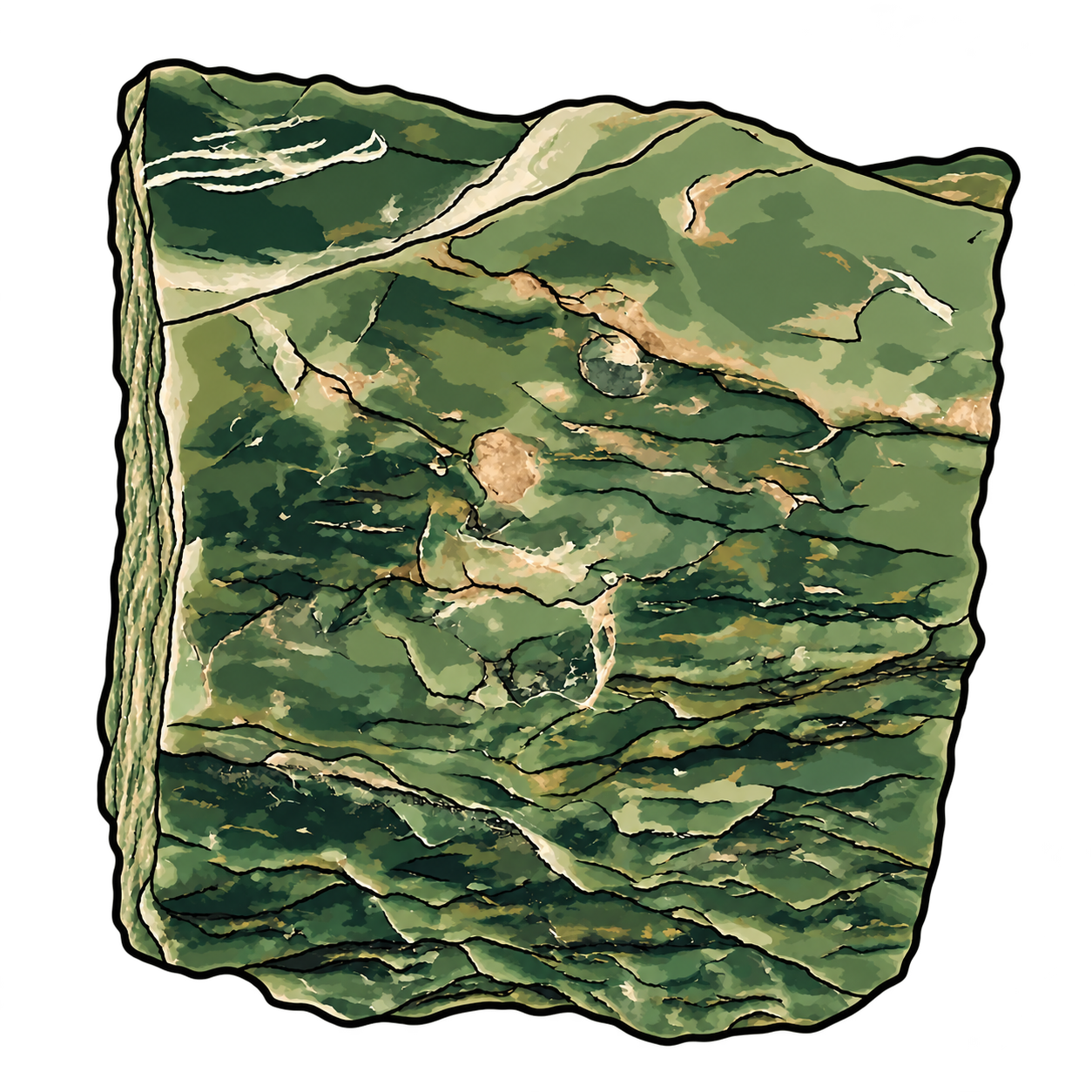
Green Minerals Formed Through Transformation
Serpentine-group minerals and serpentine-rich rock
Serpentine is a group of hydrous magnesium silicate minerals; serpentinite is a rock composed largely of them.
Read the specimen guide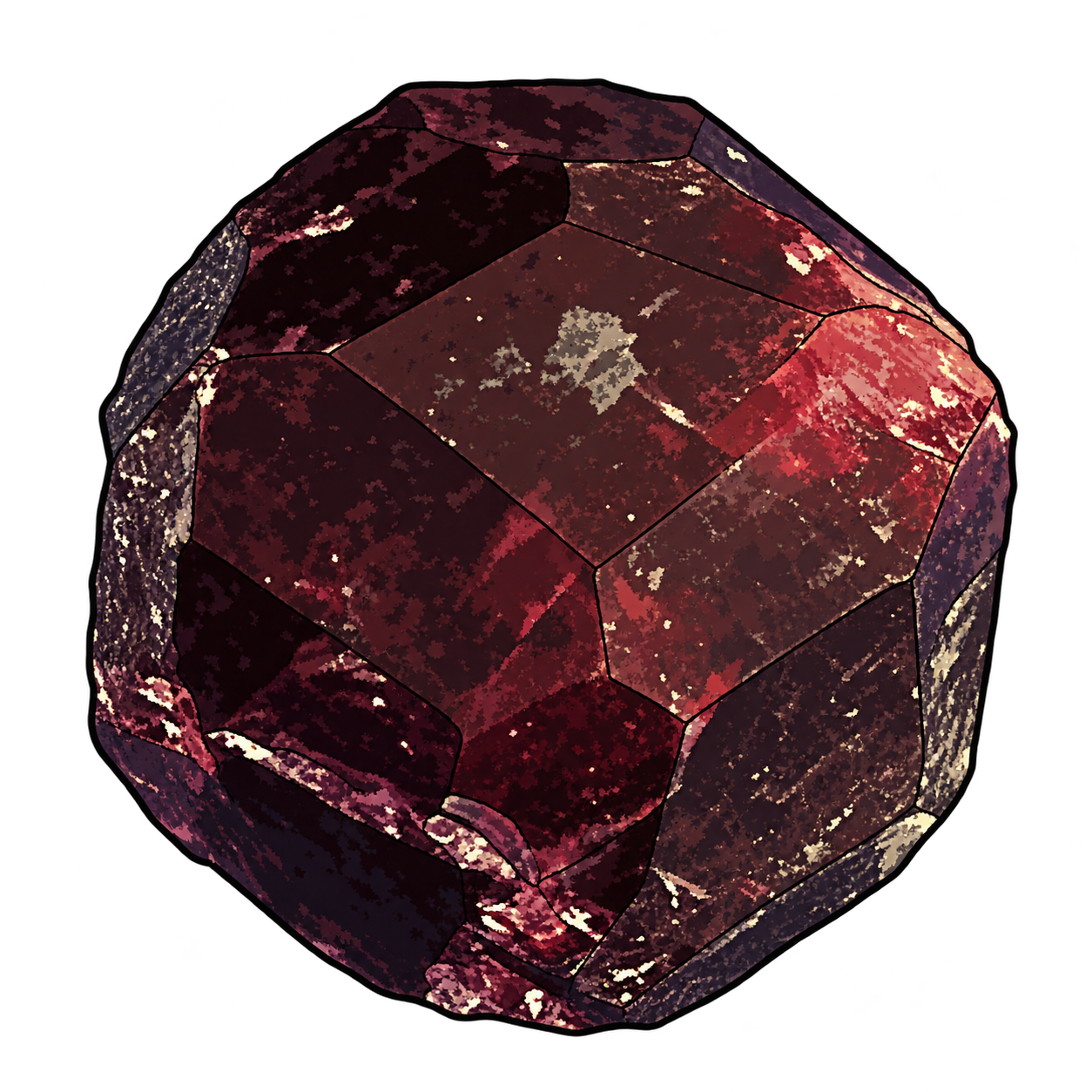
A Shared Structure, a Remarkable Palette
A group of related silicate minerals.
Garnet is a mineral family, not a synonym for dark red.
Read the specimen guide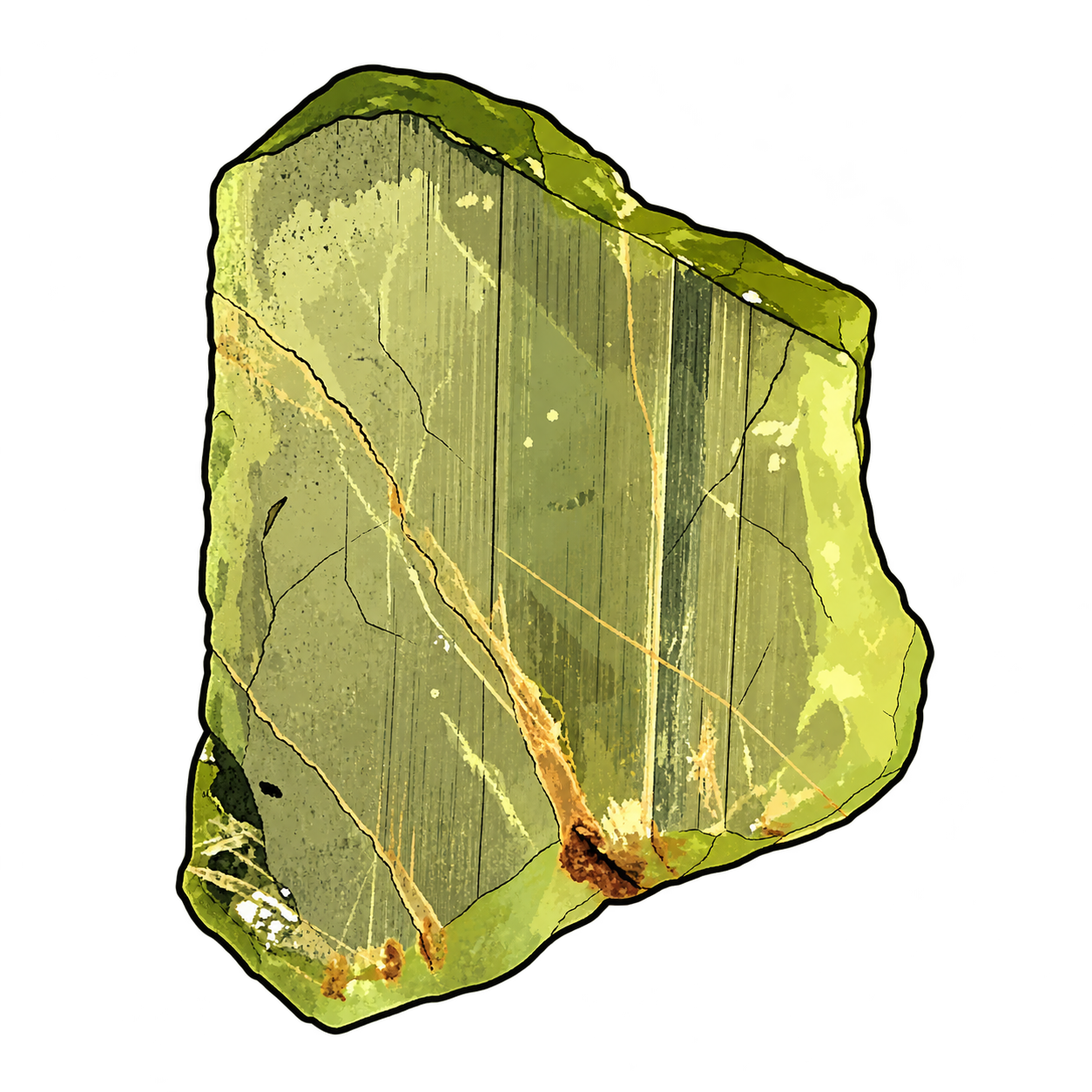
Green from the Earth's Interior
Gem-quality olivine, usually magnesium-rich.
Peridot is the transparent, gem-quality form of olivine, a magnesium–iron silicate.
Read the specimen guide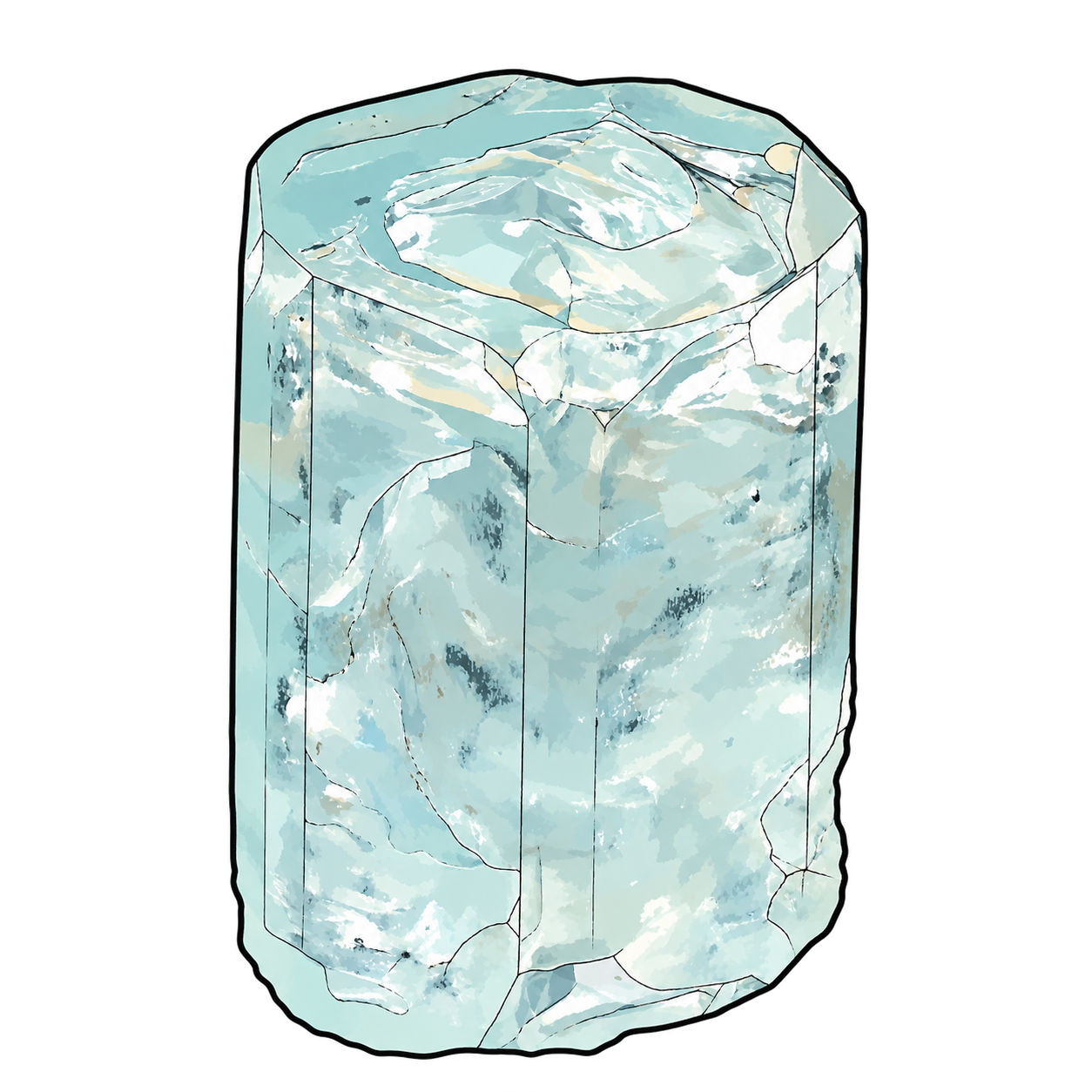
The Sea-Blue Variety of Beryl
Blue to blue-green beryl.
Aquamarine ranges from delicate greenish blue to a more concentrated blue.
Read the specimen guide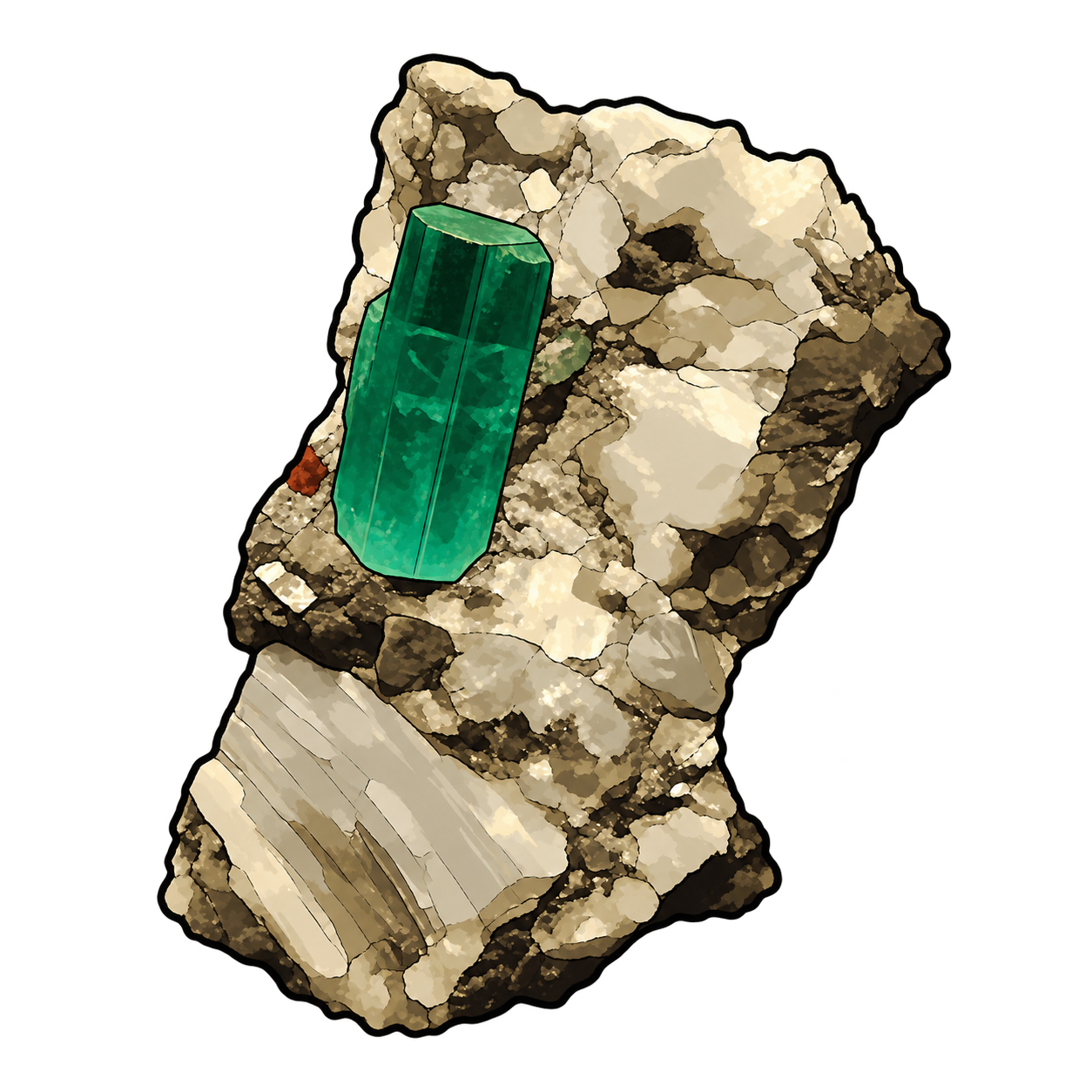
Green Beryl, Revealed Within
Green beryl in the gemological emerald range.
Emerald is the green to bluish-green variety of beryl.
Read the specimen guide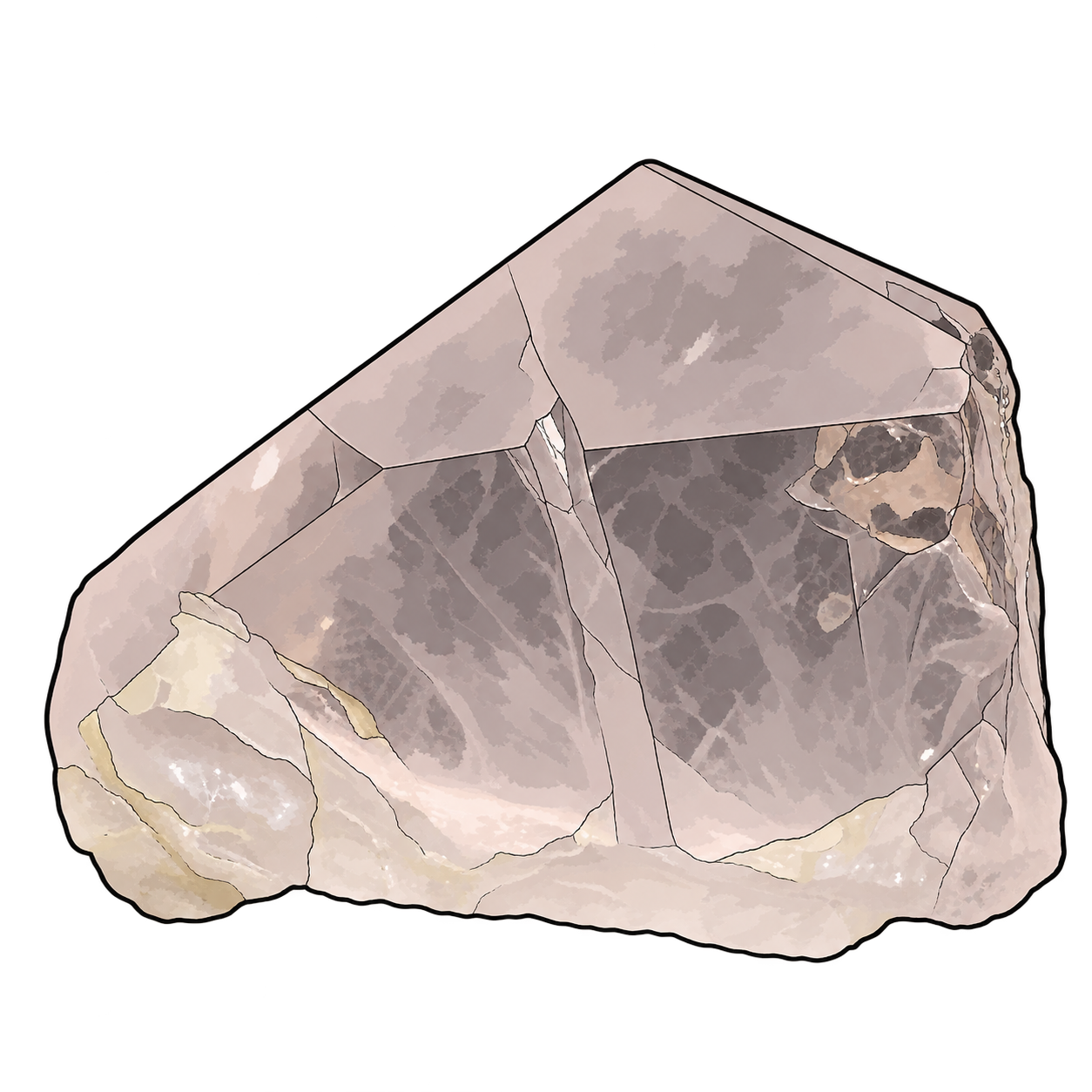
Pink Beryl, from Crystal to Jewel
Pink to orange-pink beryl.
Morganite is beryl in shades of pink, rose, peach and pale violet.
Read the specimen guide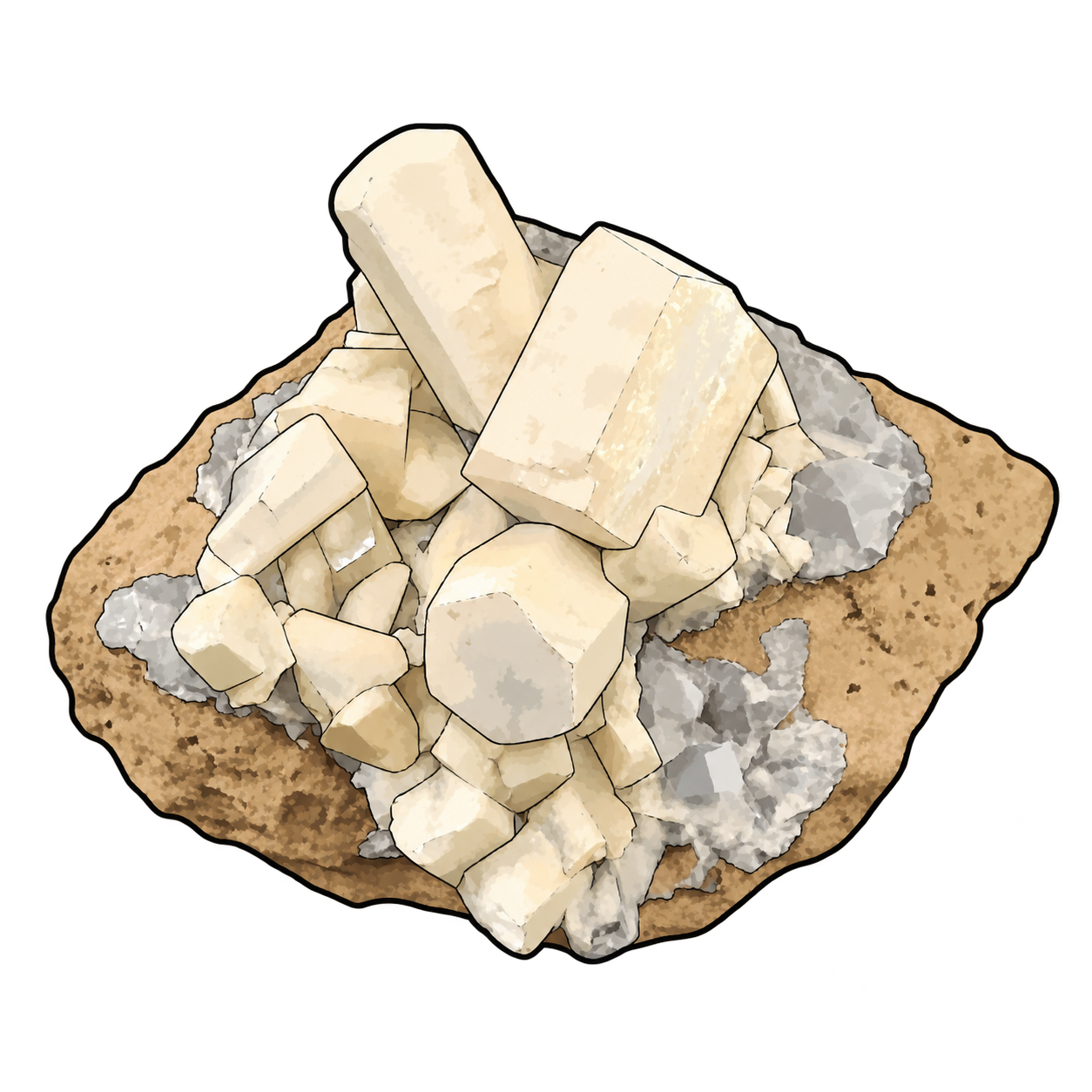
Goshenite, heliodor and the mineral behind a spectrum of gems
Beryl family material outside the dedicated aquamarine, emerald and morganite pages.
Beryl is the mineral species; emerald, aquamarine, morganite, heliodor and goshenite are names used for particular appearances within it.
Read the specimen guide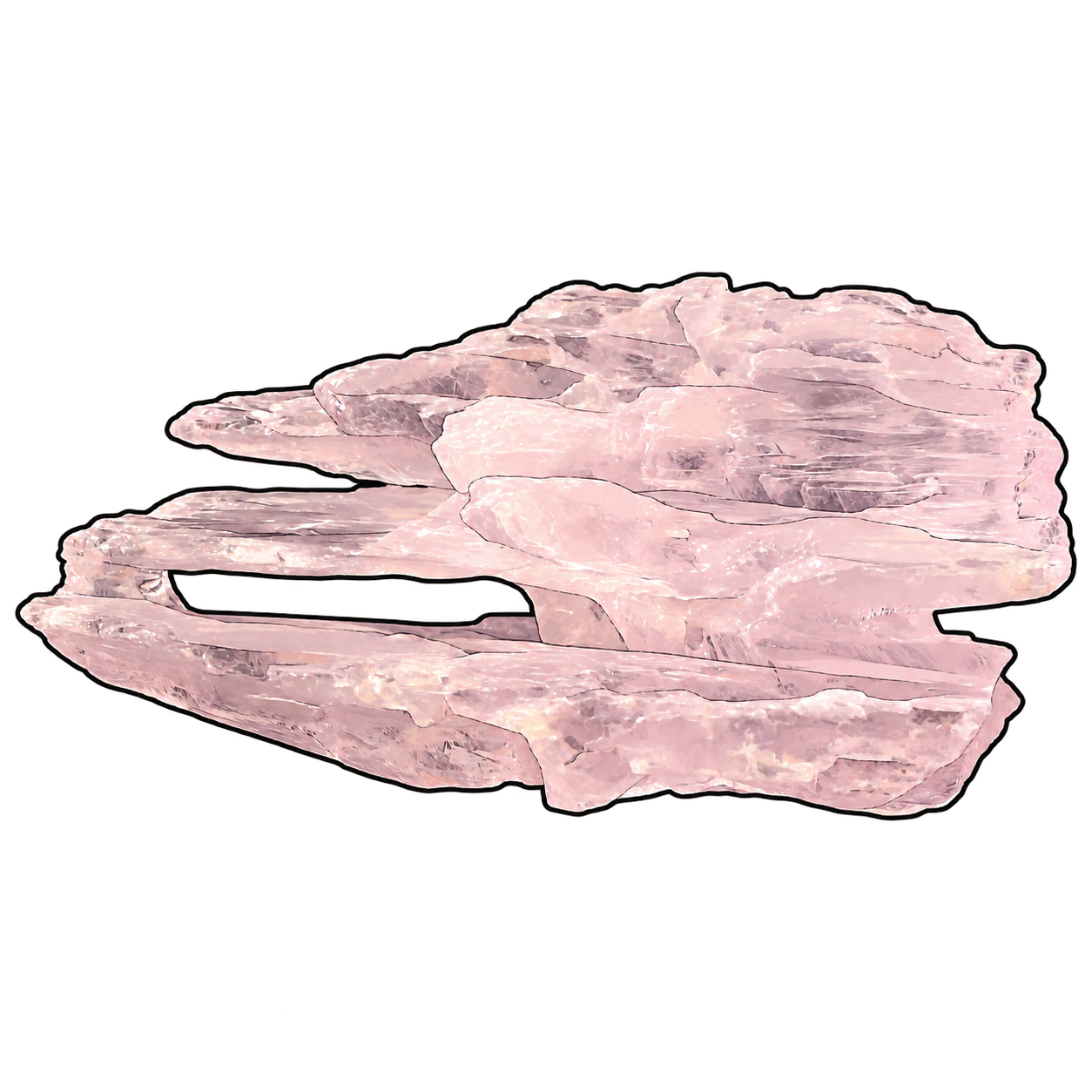
Pink and green spodumene, with color that deserves a precise name
Colored varieties of spodumene.
Spodumene is a monoclinic pyroxene, commonly forming flattened, elongated crystals with lengthwise striations.
Read the specimen guide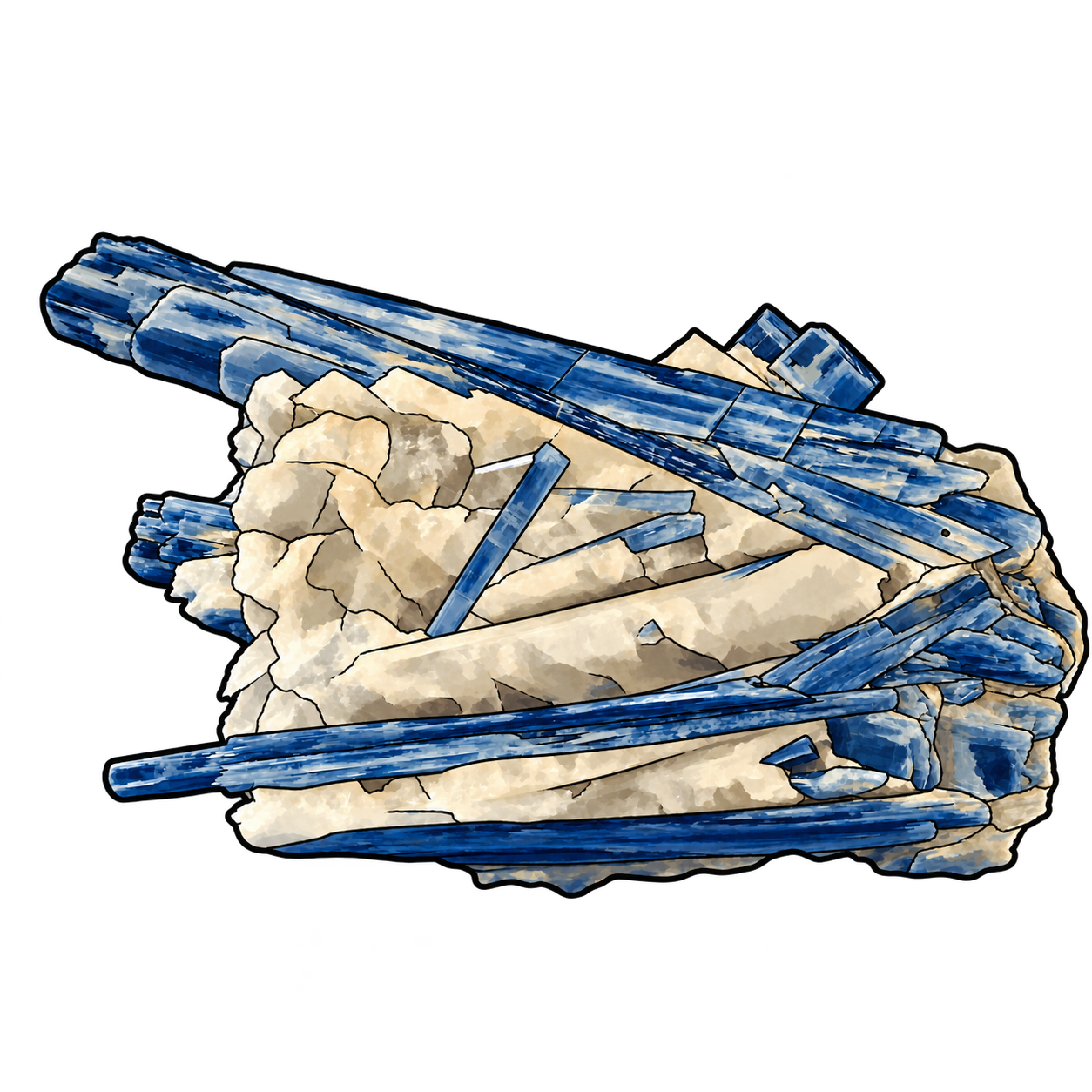
Blue blades that reveal the importance of direction
Aluminium silicate mineral, polymorphous with andalusite and sillimanite.
Kyanite is triclinic and frequently grows as flattened blades, sometimes bent or intergrown.
Read the specimen guide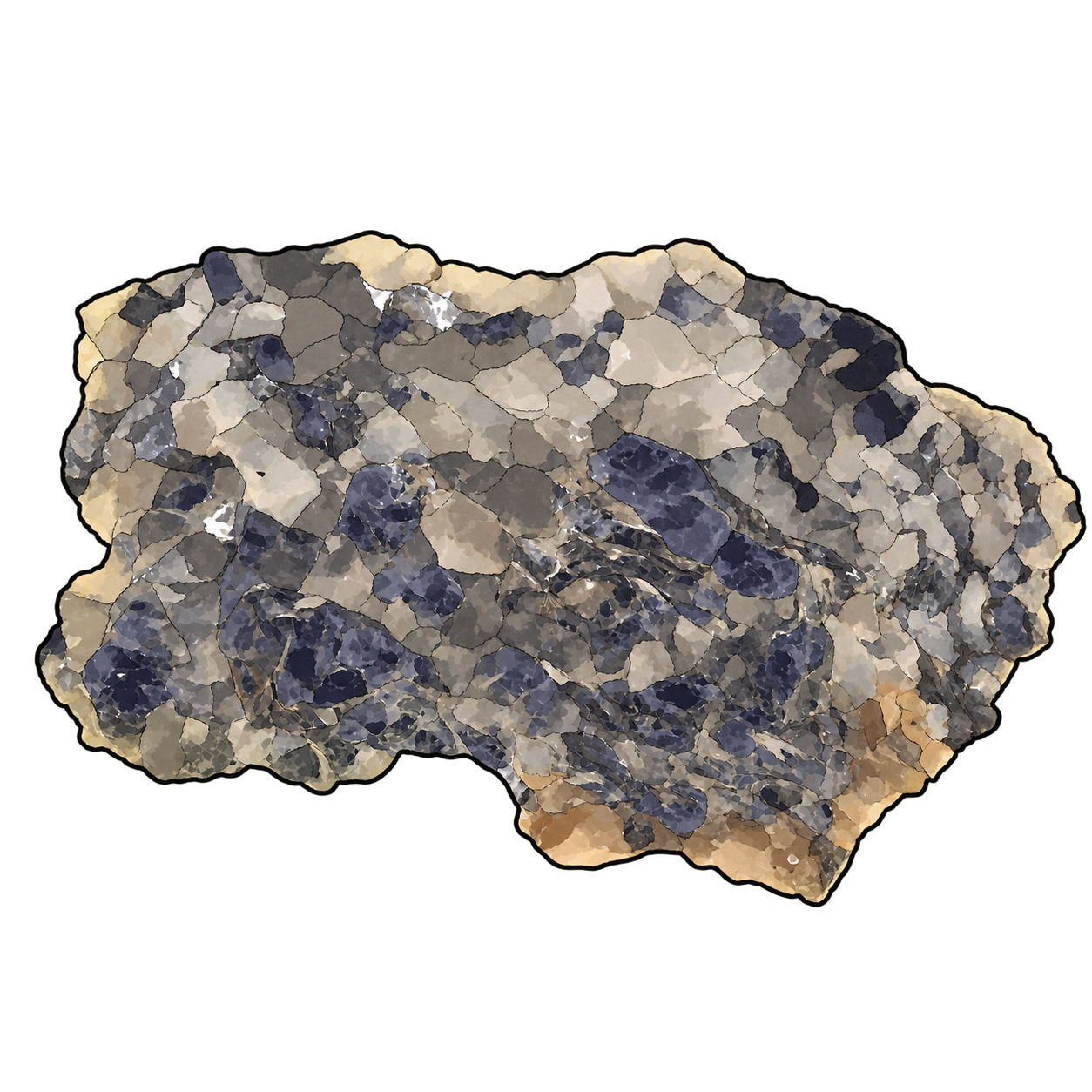
Violet-blue cordierite and the art of changing perspective
Gem-quality cordierite, often violet-blue and strongly pleochroic.
Iolite is gem-quality cordierite, an orthorhombic mineral that often occurs as granular or compact masses rather than conspicuous free-standing crystals.
Read the specimen guide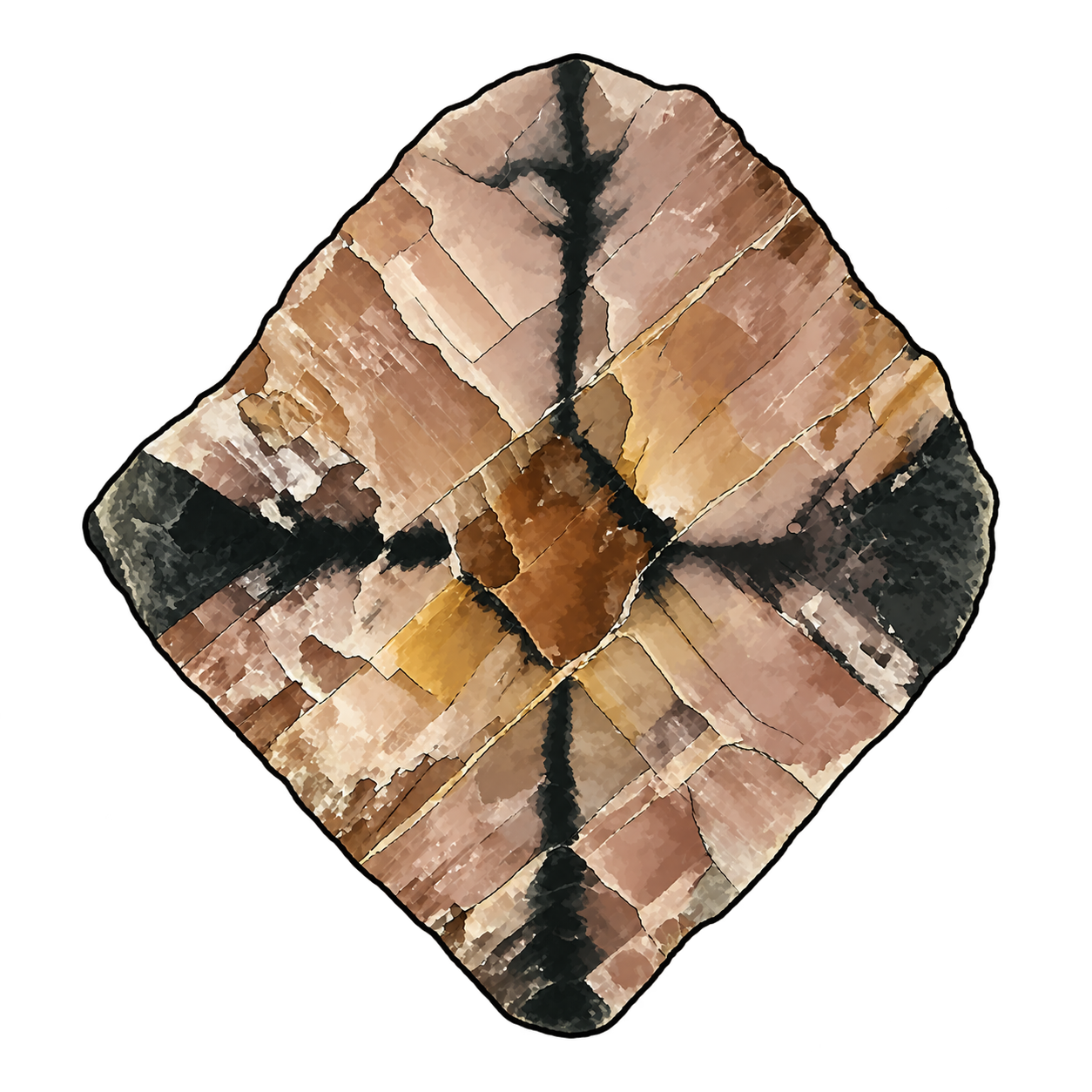
Color in three directions; a cross within the crystal
Andalusite; chiastolite is the cross-patterned inclusion variety.
Andalusite shares the composition Al2SiO5 with kyanite and sillimanite, but their atoms occupy different structures.
Read the specimen guide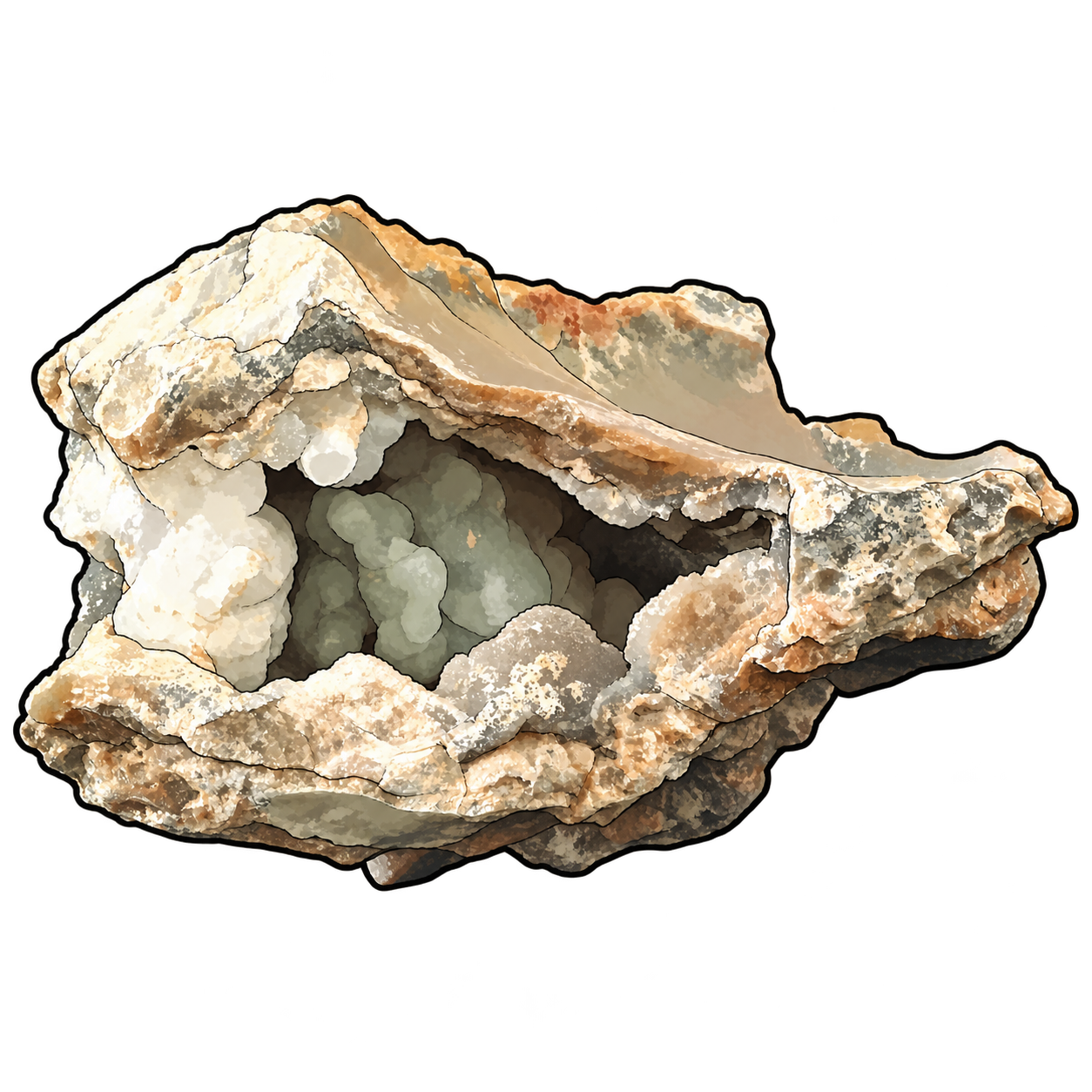
Pale green growth within the spaces of older rock
Calcium aluminium silicate, often pale green and botryoidal.
Prehnite is a distinct mineral, not a pale kind of jade or quartz.
Read the specimen guide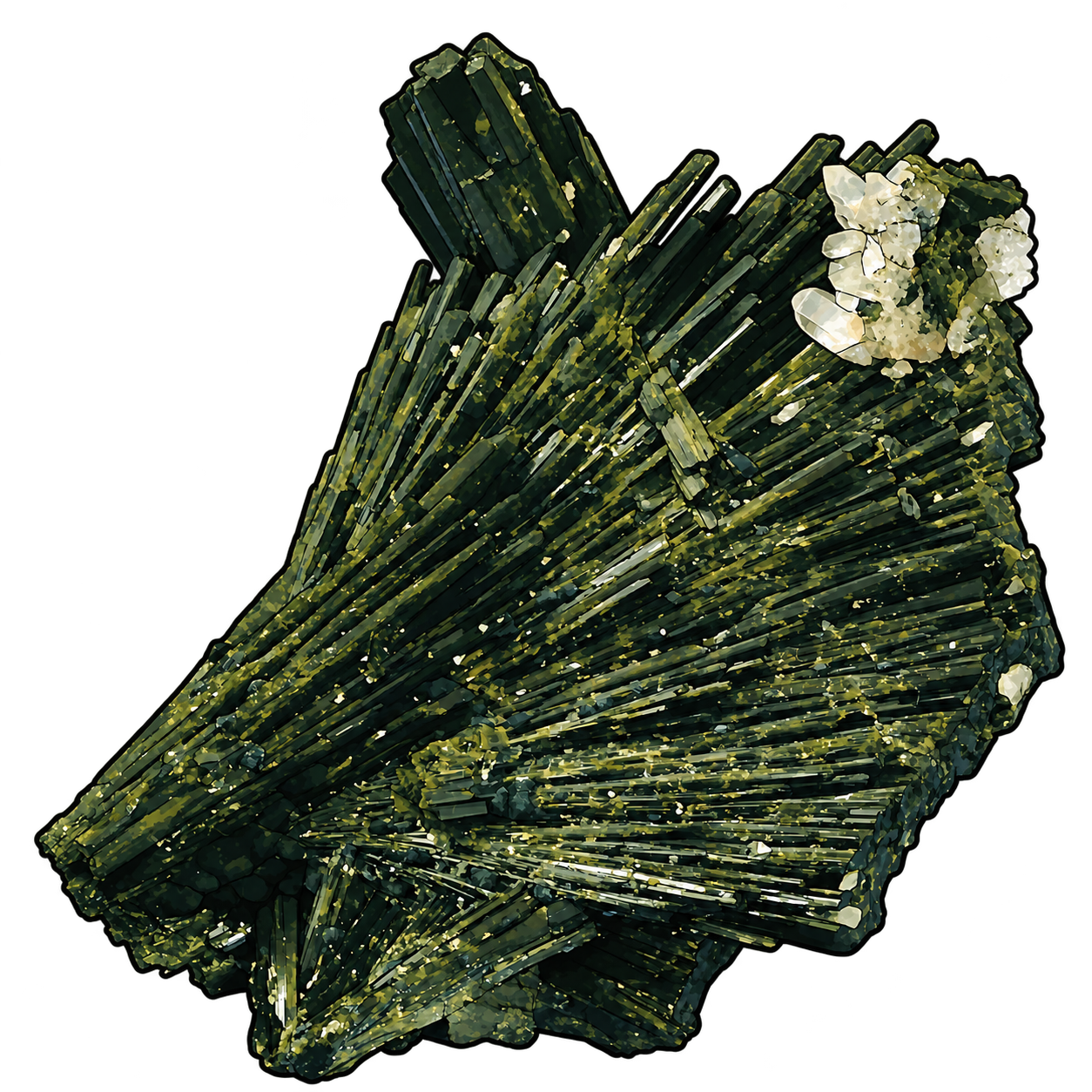
Dark prisms, green interiors and the evidence of alteration
Calcium aluminium iron silicate in the epidote group.
Epidote contains calcium, aluminum, ferric iron, silicon, oxygen and hydroxyl.
Read the specimen guide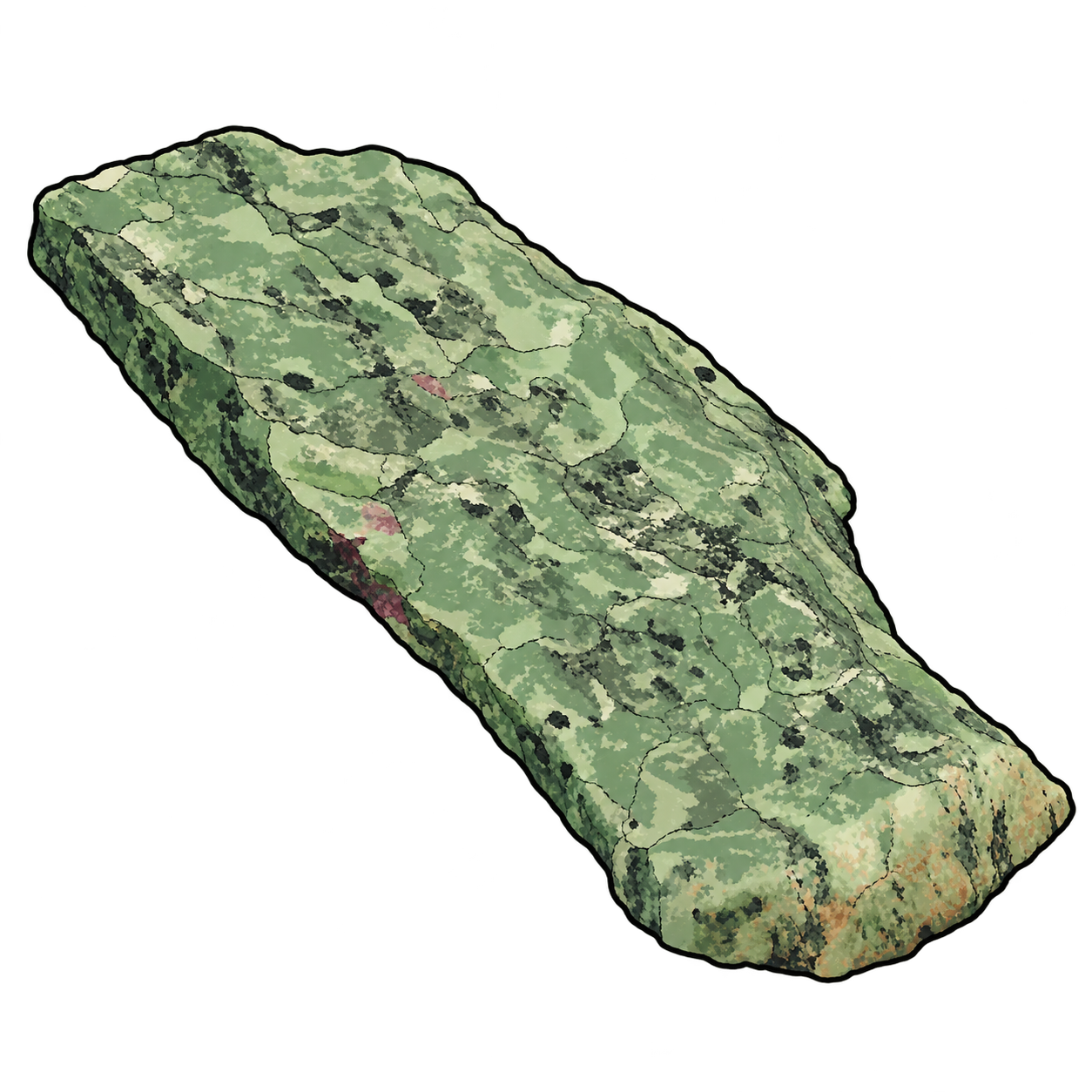
One mineral species, several distinctive expressions
Zoisite mineral; tanzanite is blue-violet gem zoisite.
Zoisite is an orthorhombic calcium–aluminum silicate containing hydroxyl.
Read the specimen guide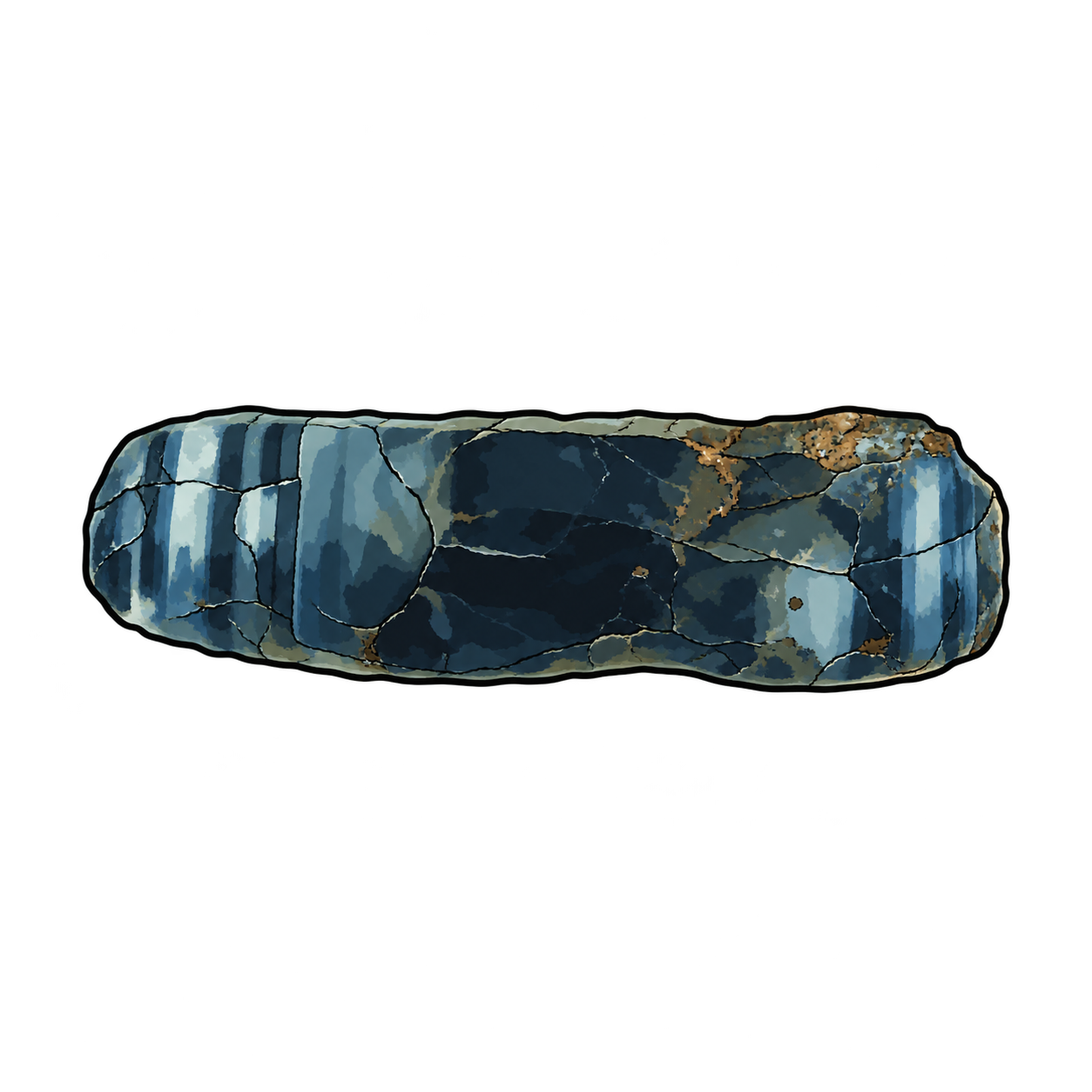
Corundum's colors, histories and hidden distinctions
Red and other colored gem varieties of corundum.
Corundum is aluminum oxide.
Read the specimen guide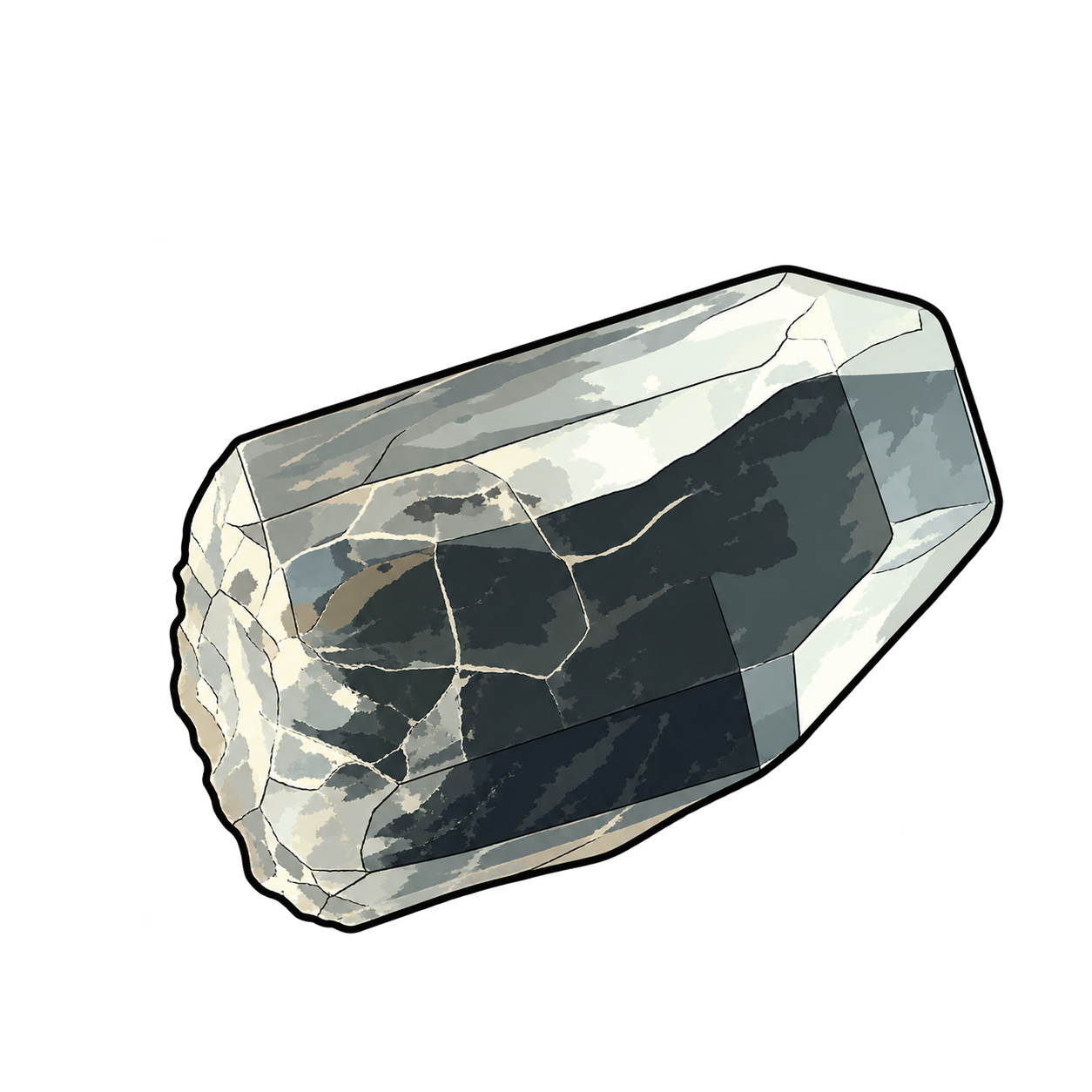
More than a familiar blue
Aluminium fluorine/hydroxyl silicate mineral.
Topaz is an aluminium silicate containing fluorine and hydroxyl.
Read the specimen guide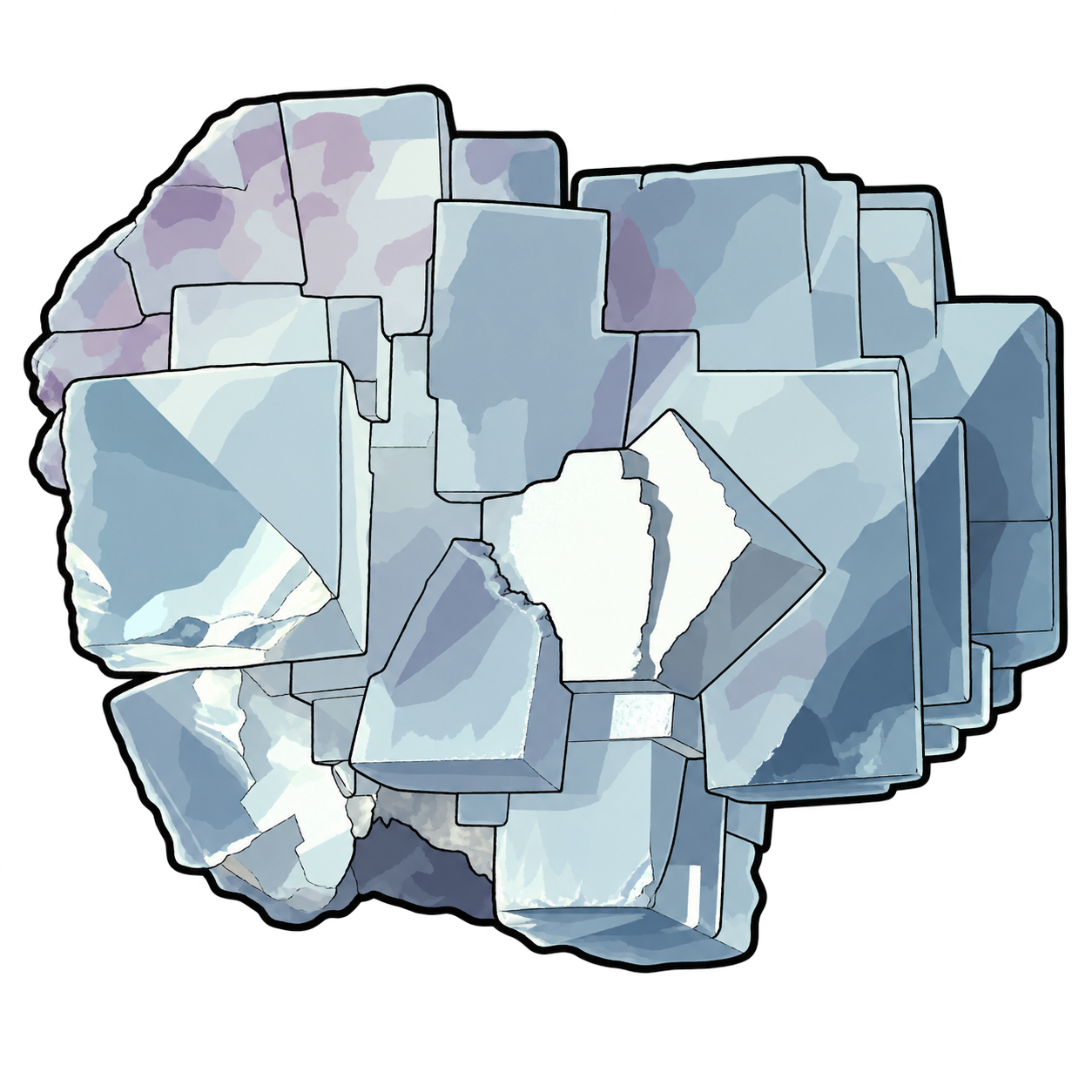
Color with an architectural edge
Calcium fluoride (CaF2).
Fluorite is calcium fluoride, a halide rather than a silicate.
Read the specimen guide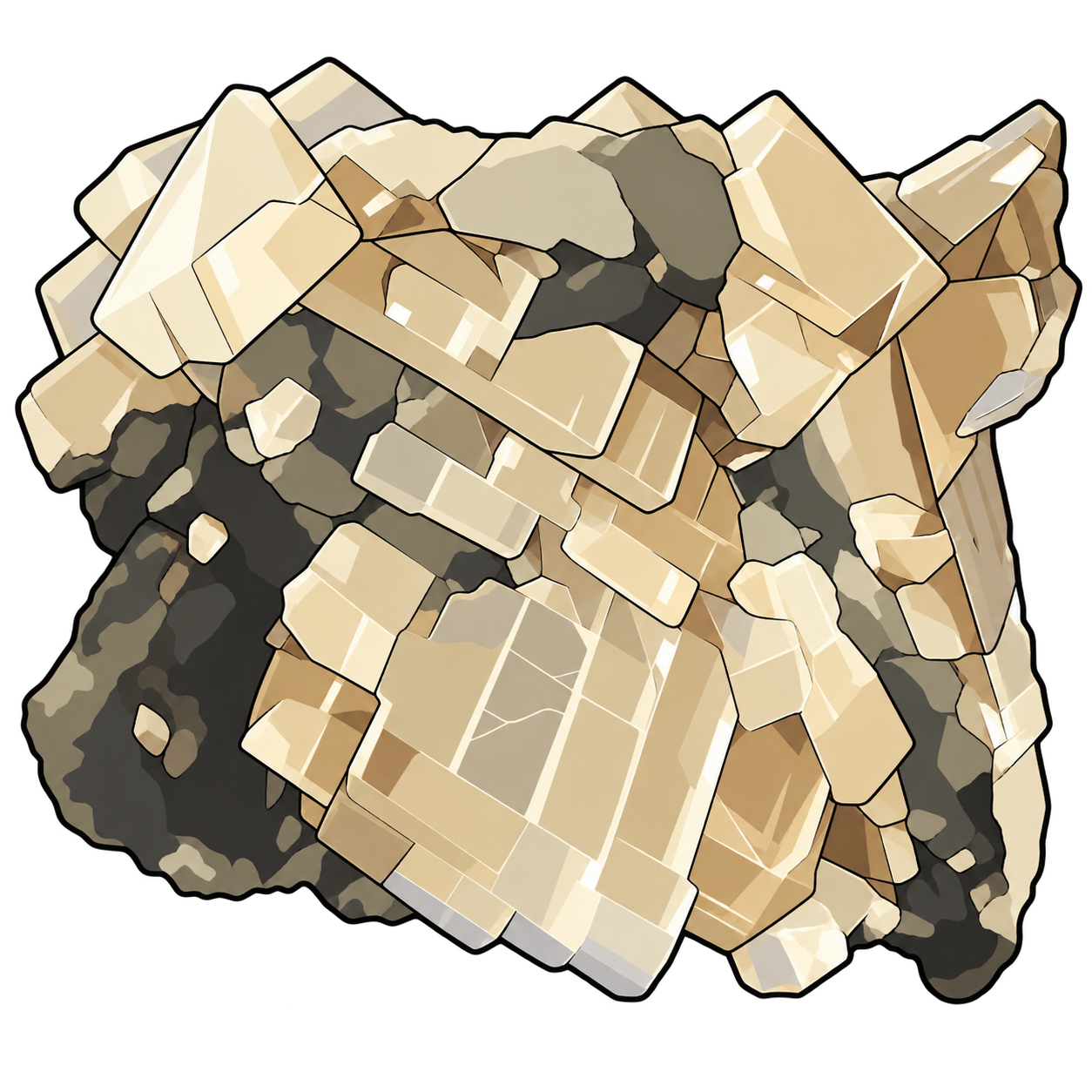
The mineral that makes a double image
Calcium carbonate (CaCO3).
Calcite is calcium carbonate with a trigonal structure.
Read the specimen guide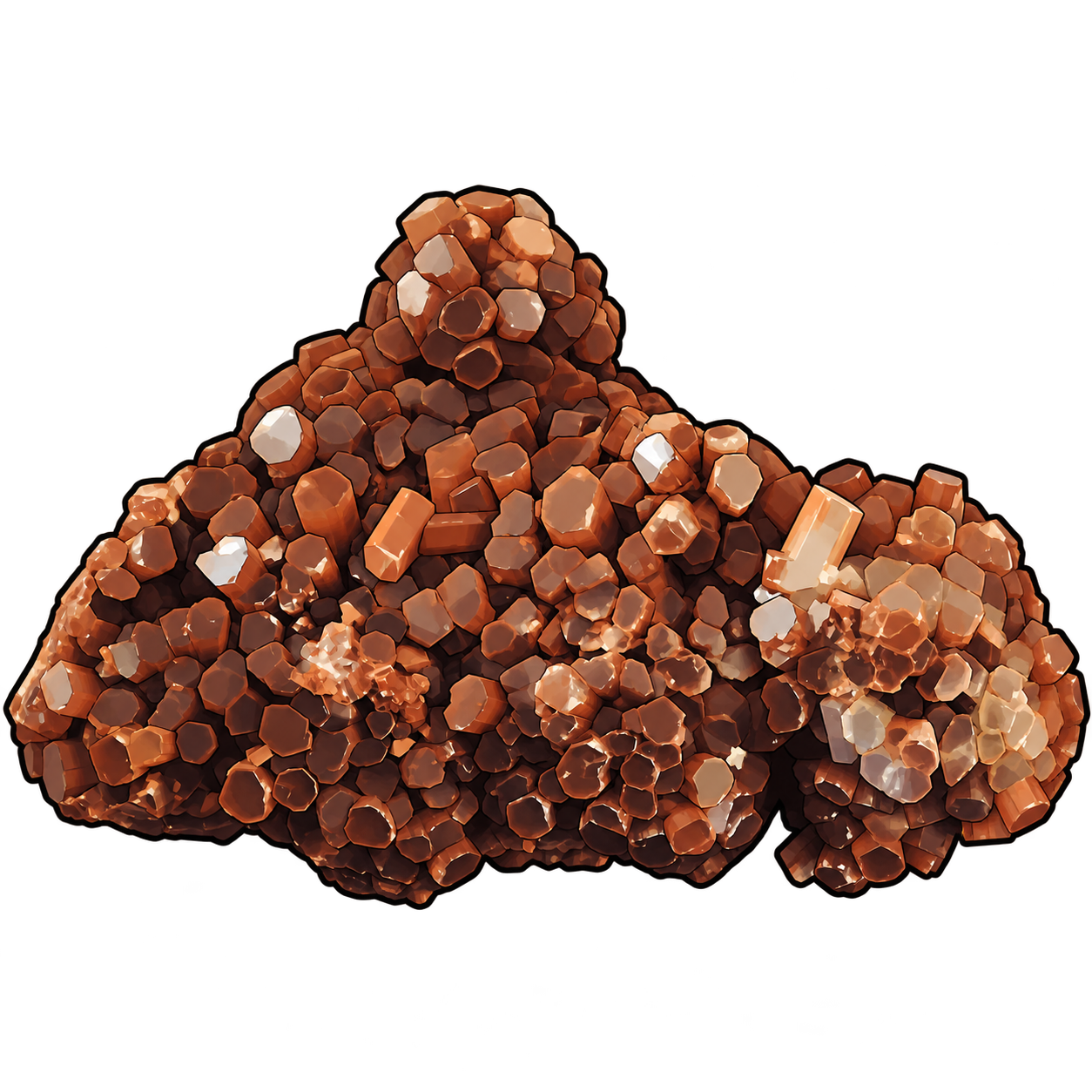
The carbonate that builds in another way
A calcium-carbonate polymorph distinct from calcite.
Aragonite and calcite have the same chemical formula but different atomic arrangements.
Read the specimen guide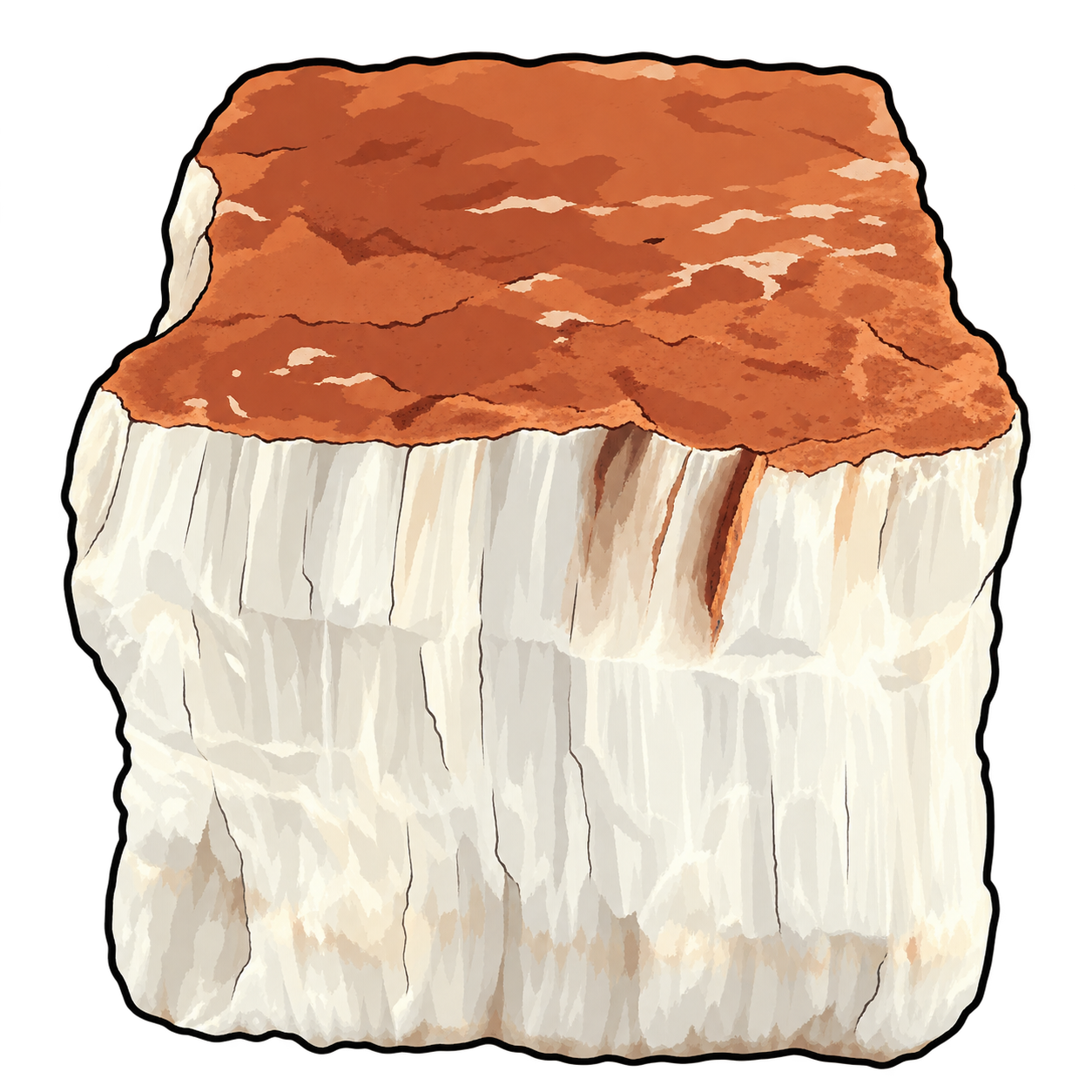
Clear plates, silken fibers and carved stone
Hydrated calcium sulfate (CaSO4·2H2O).
Gypsum contains water as part of its crystal structure: the formula includes two water molecules for each calcium sulfate unit.
Read the specimen guide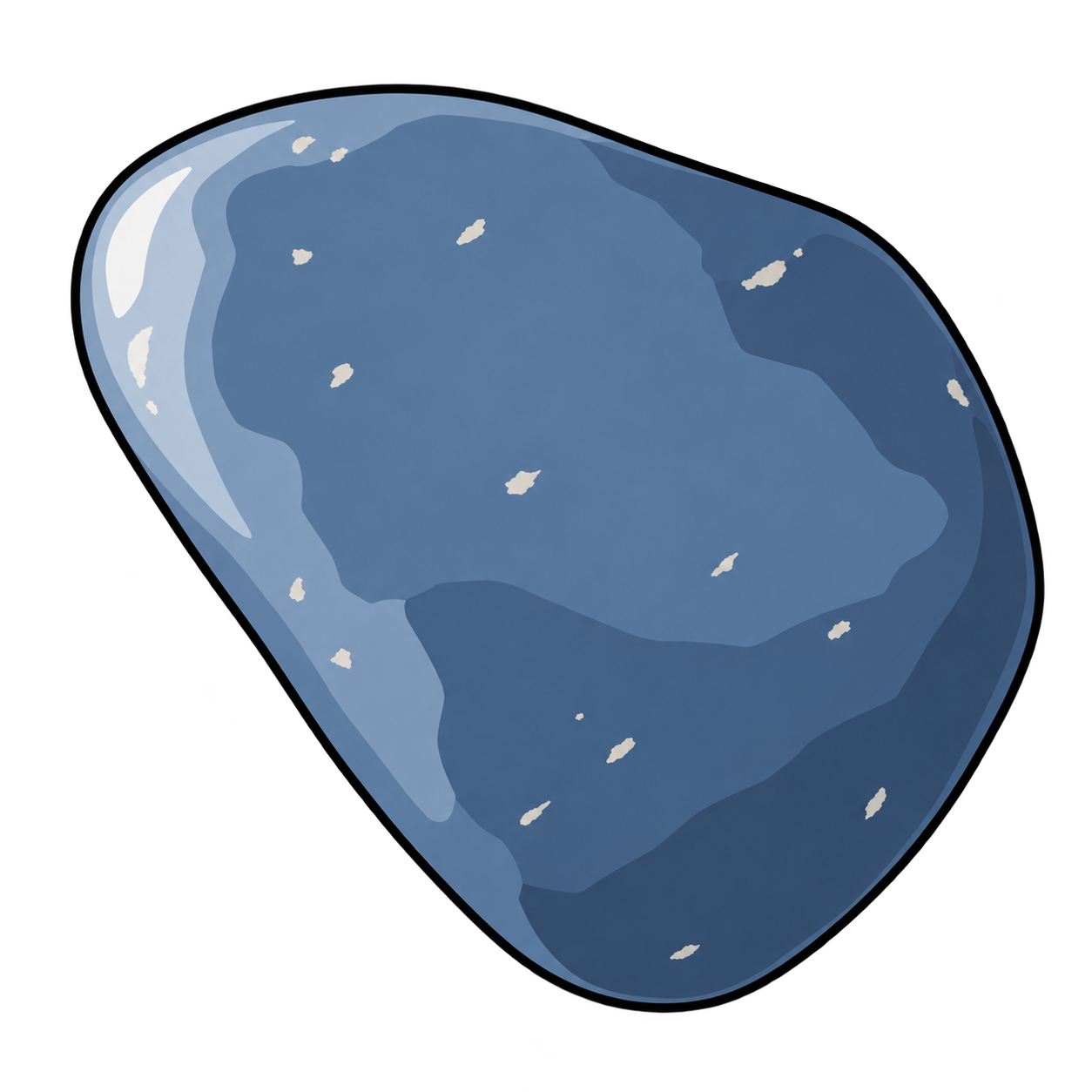
A blue stone with two histories
Trade name for blue-grey massive anhydrite.
Angelite is blue anhydrite rather than a separate mineral species.
Read the specimen guide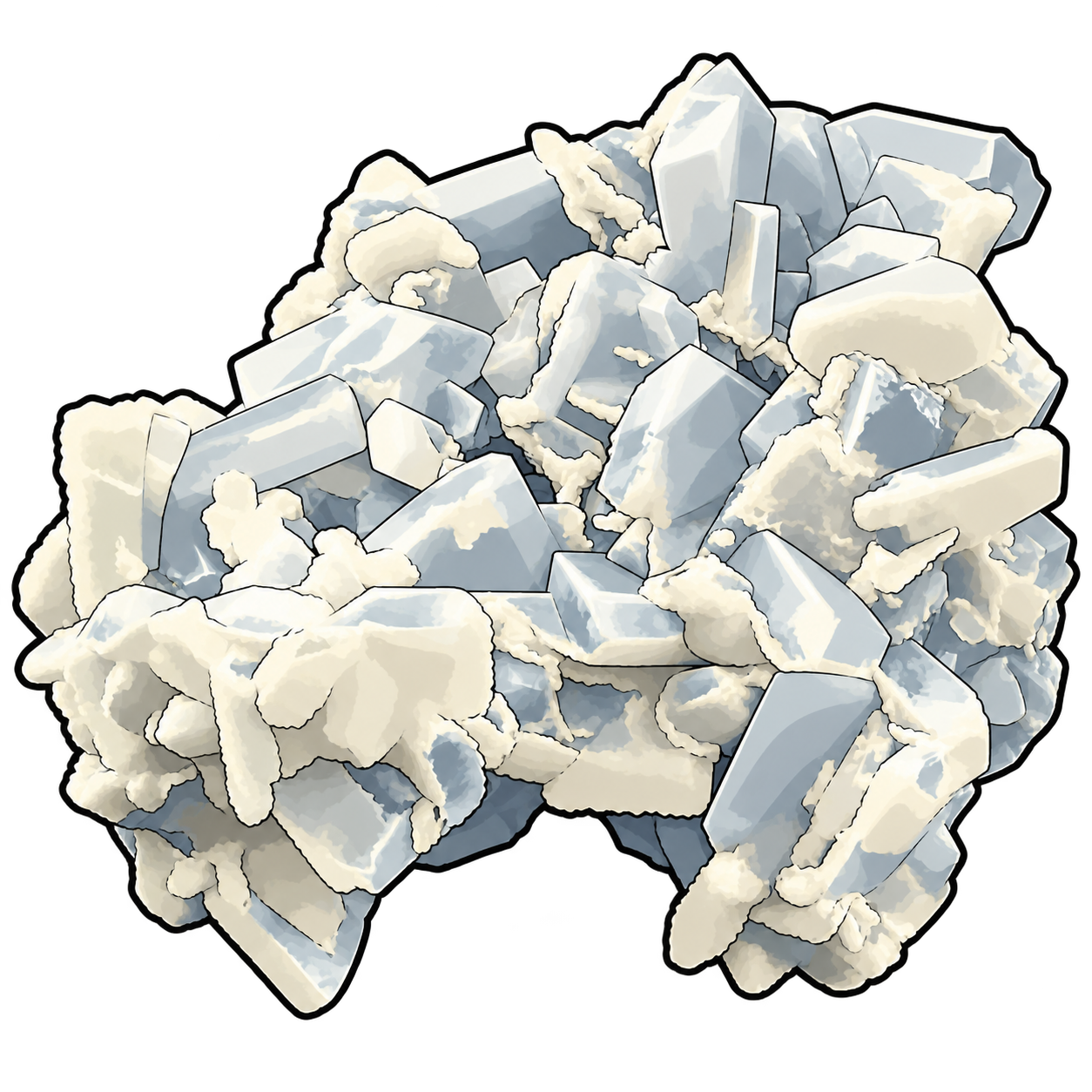
A chamber of pale blue light
Strontium sulfate (SrSO4).
Celestine is orthorhombic strontium sulfate, SrSO₄, in the barite group.
Read the specimen guide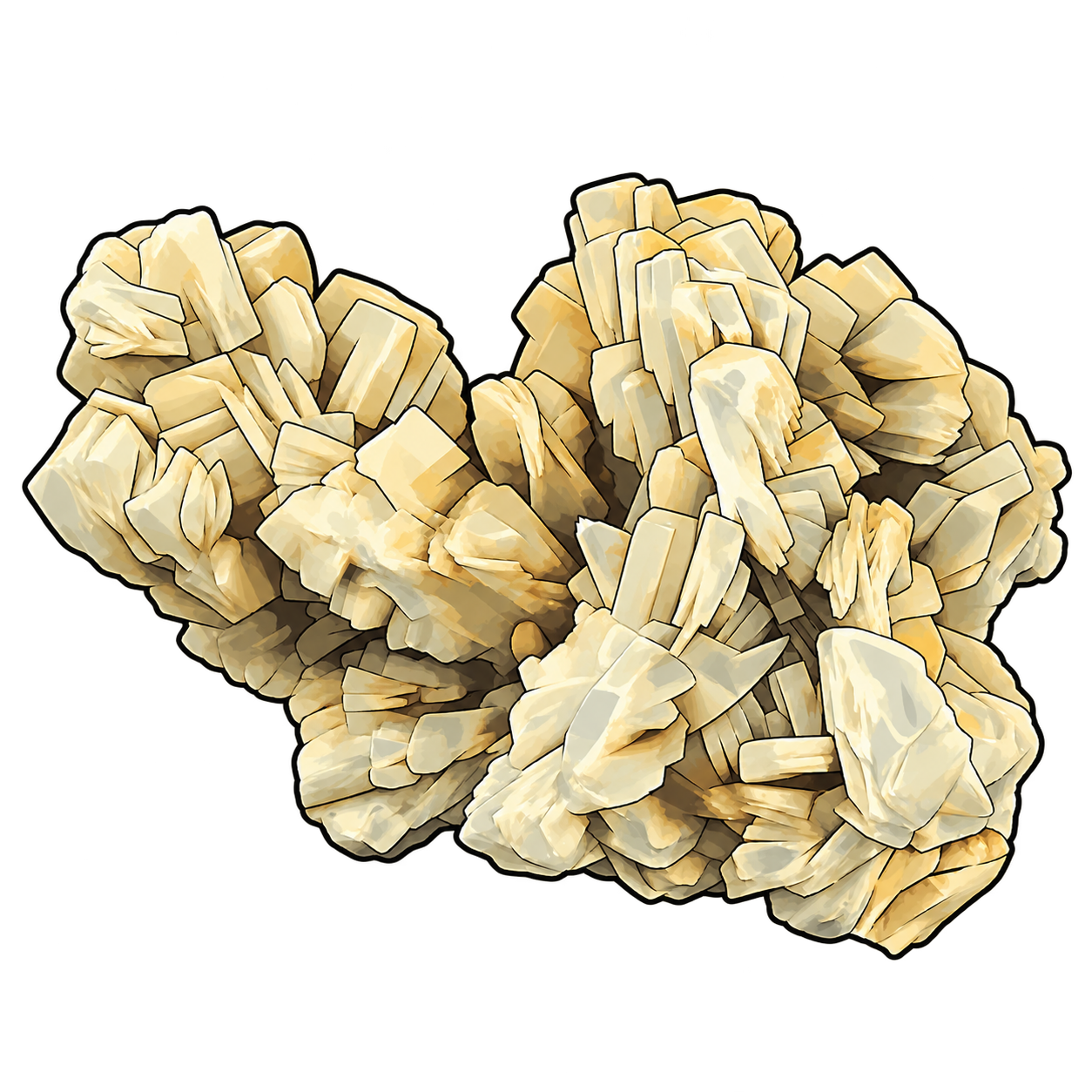
Delicate forms with unexpected weight
Barium sulfate (BaSO4).
Barite is barium sulfate, BaSO₄.
Read the specimen guide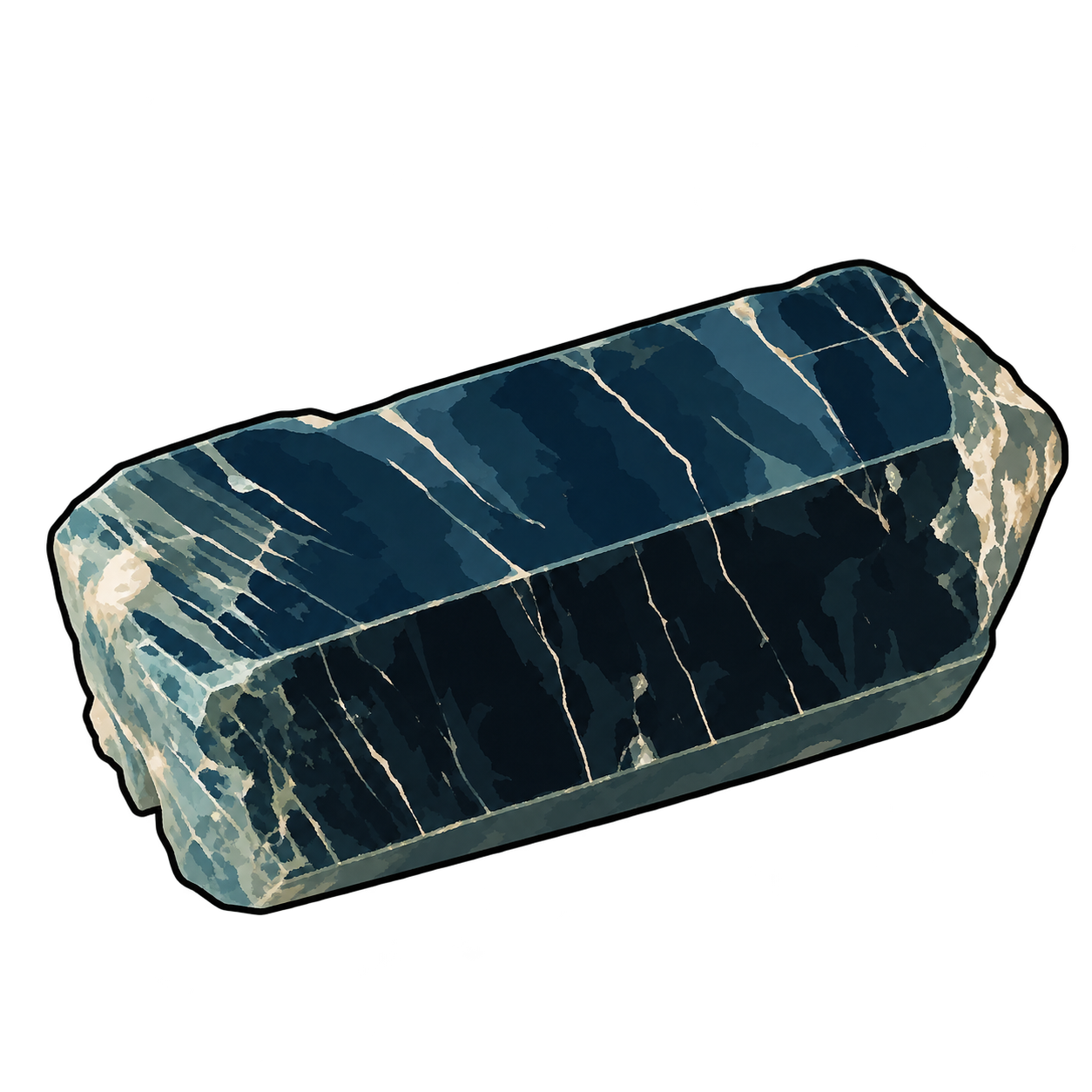
A familiar name for a varied mineral family
A mineral-group name; much gem material is fluorapatite.
Apatite is a group name rather than one colour or one fixed composition.
Read the specimen guide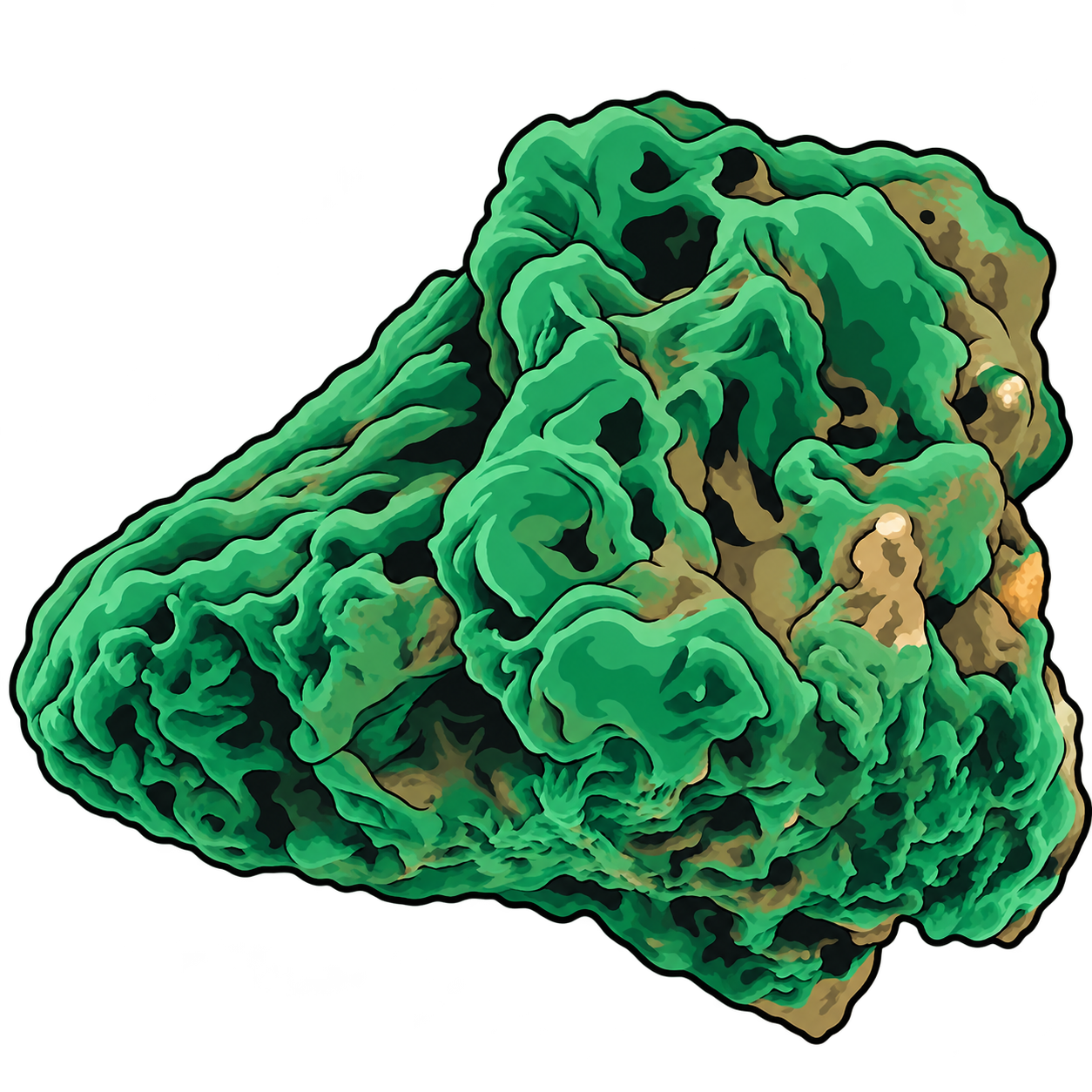
Green Copper Carbonate
Copper carbonate hydroxide.
Malachite is a copper mineral whose green color is part of its chemistry, not an occasional variation.
Read the specimen guide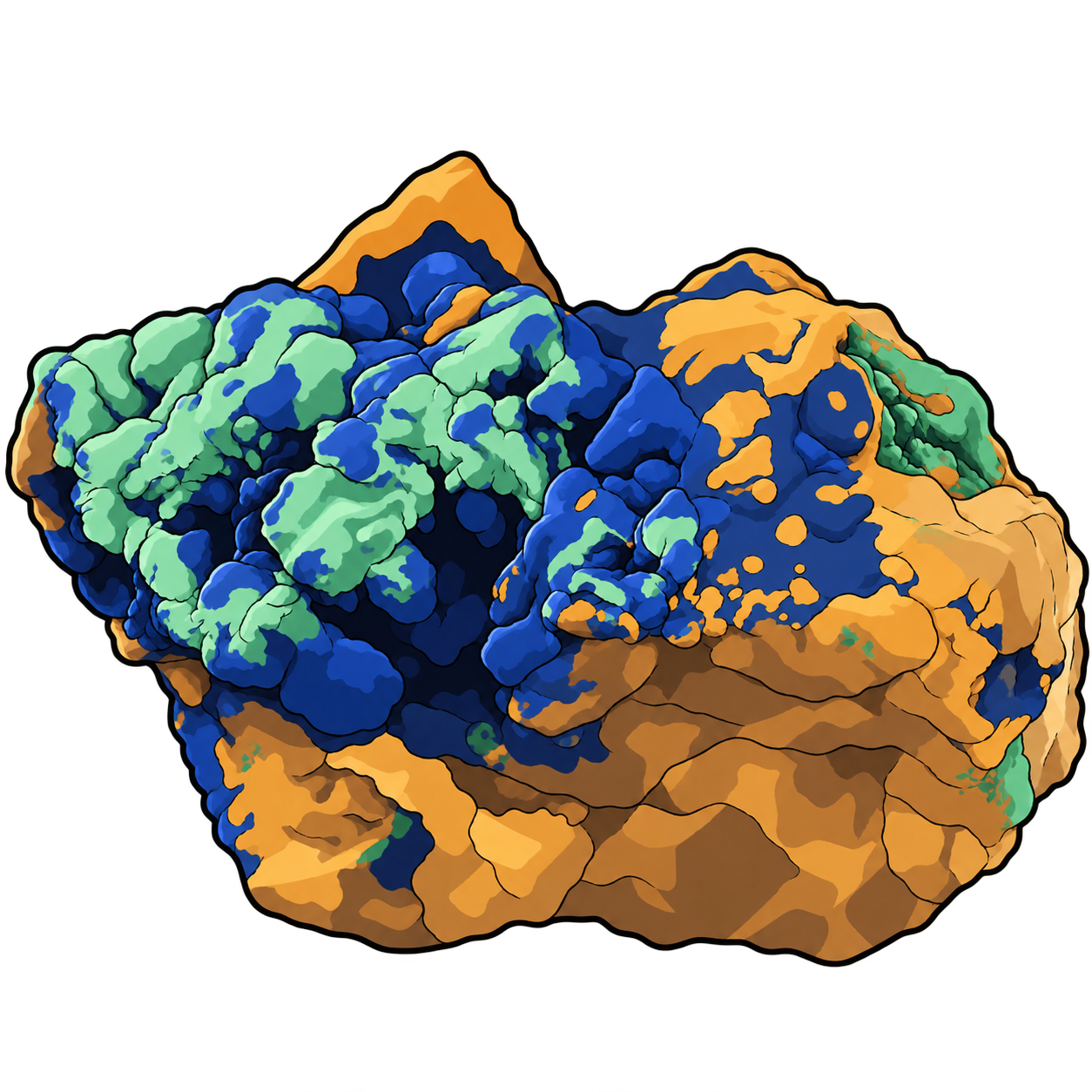
Blue Copper Carbonate
Blue copper carbonate hydroxide.
Azurite ranges from a pale powder-blue crust to intensely blue crystals that can seem almost black until their faces catch the light.
Read the specimen guide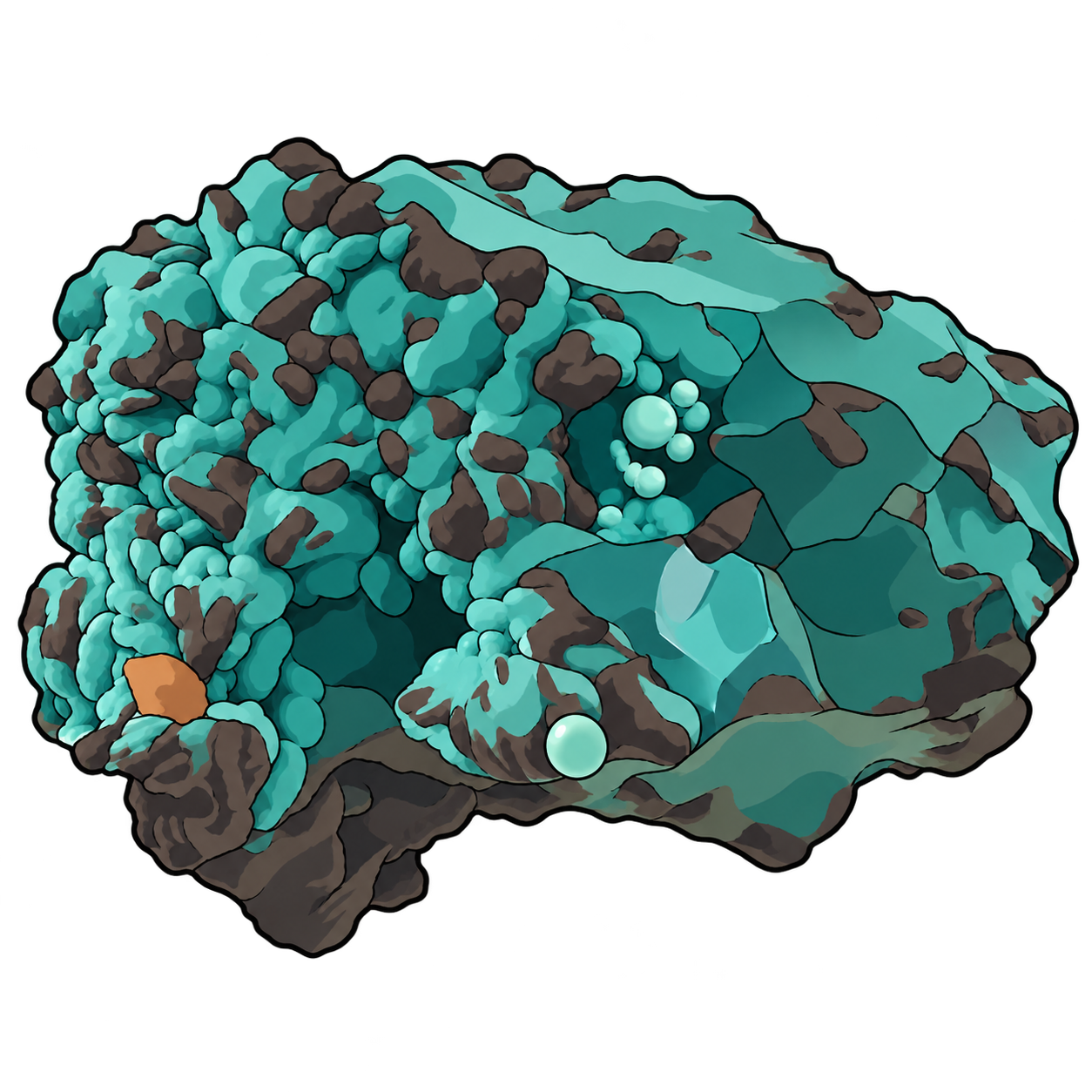
Blue-Green Copper Silicate
Copper-bearing hydrated silicate material, often intermixed with other minerals.
Chrysocolla brings blue and green to weathered copper deposits, as coatings, crusts or material enclosed in harder silica.
Read the specimen guide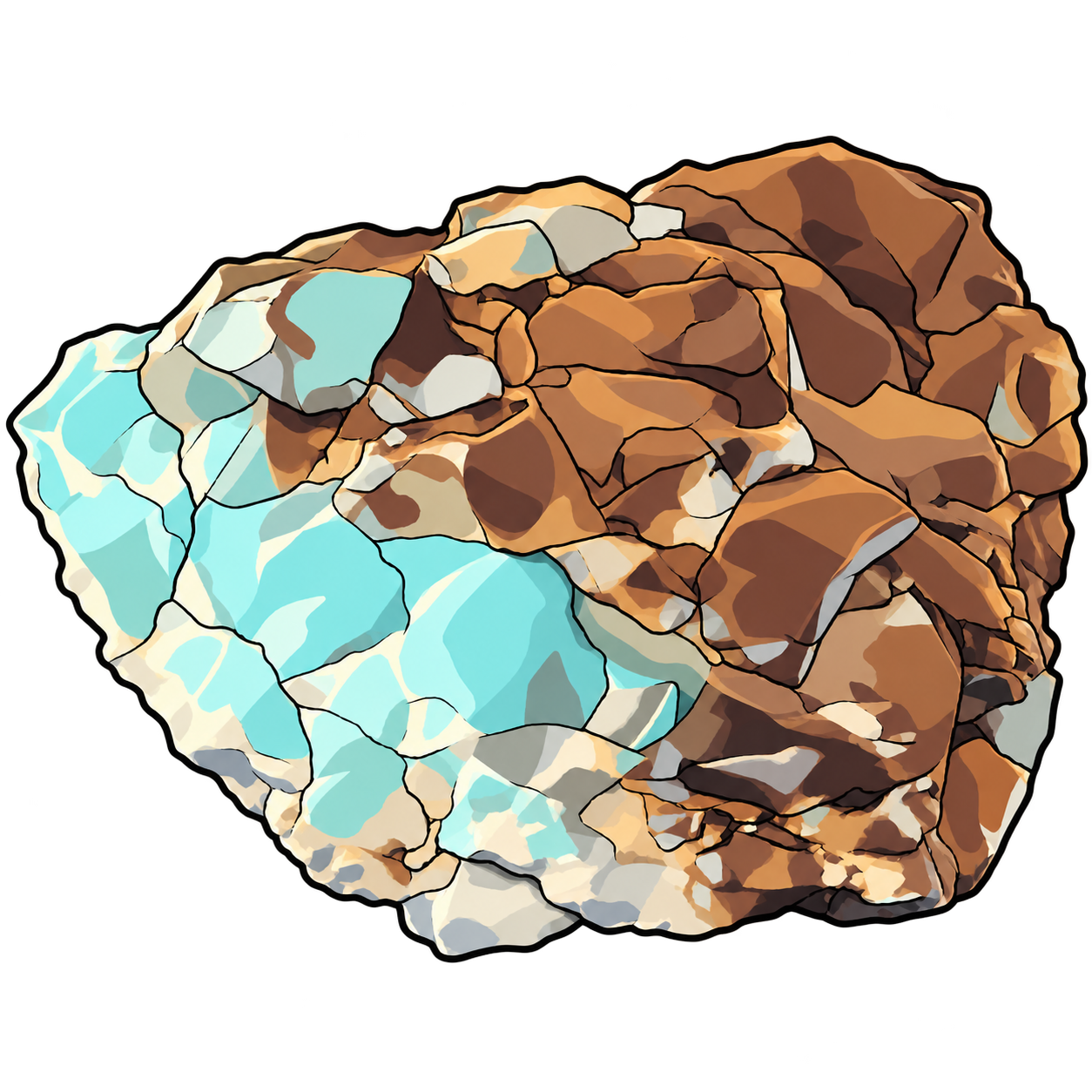
Blue-Green Copper–Aluminum Phosphate
Hydrated copper aluminium phosphate.
Turquoise is an opaque to semitranslucent gem whose appeal lies in color, texture and the pattern of its surrounding rock.
Read the specimen guide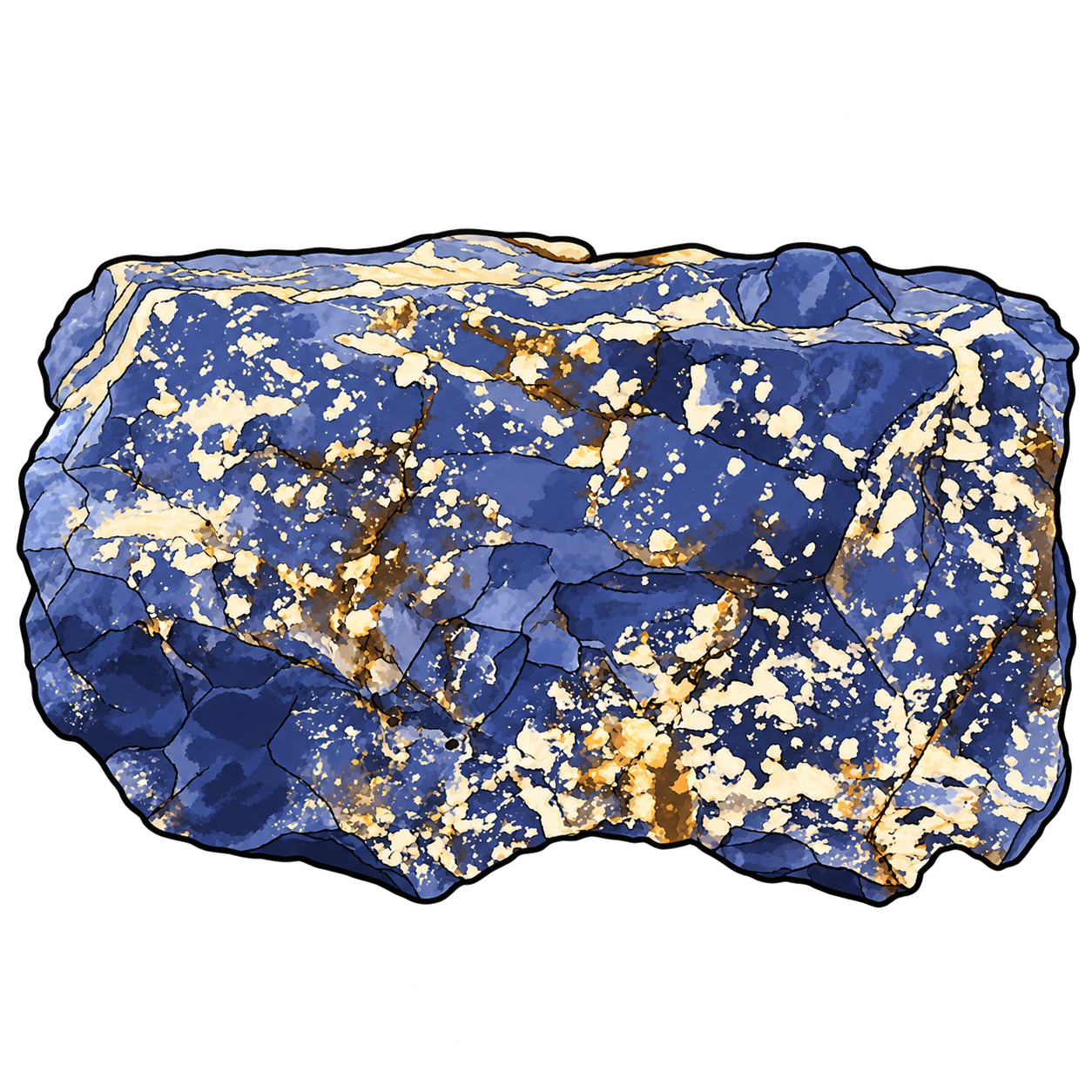
Blue Feldspathoid and Light-Responsive Varieties
A blue to variable-colored feldspathoid mineral.
Sodalite is familiar in blue, pale-veined ornamental rocks, but the mineral has other colors too.
Read the specimen guide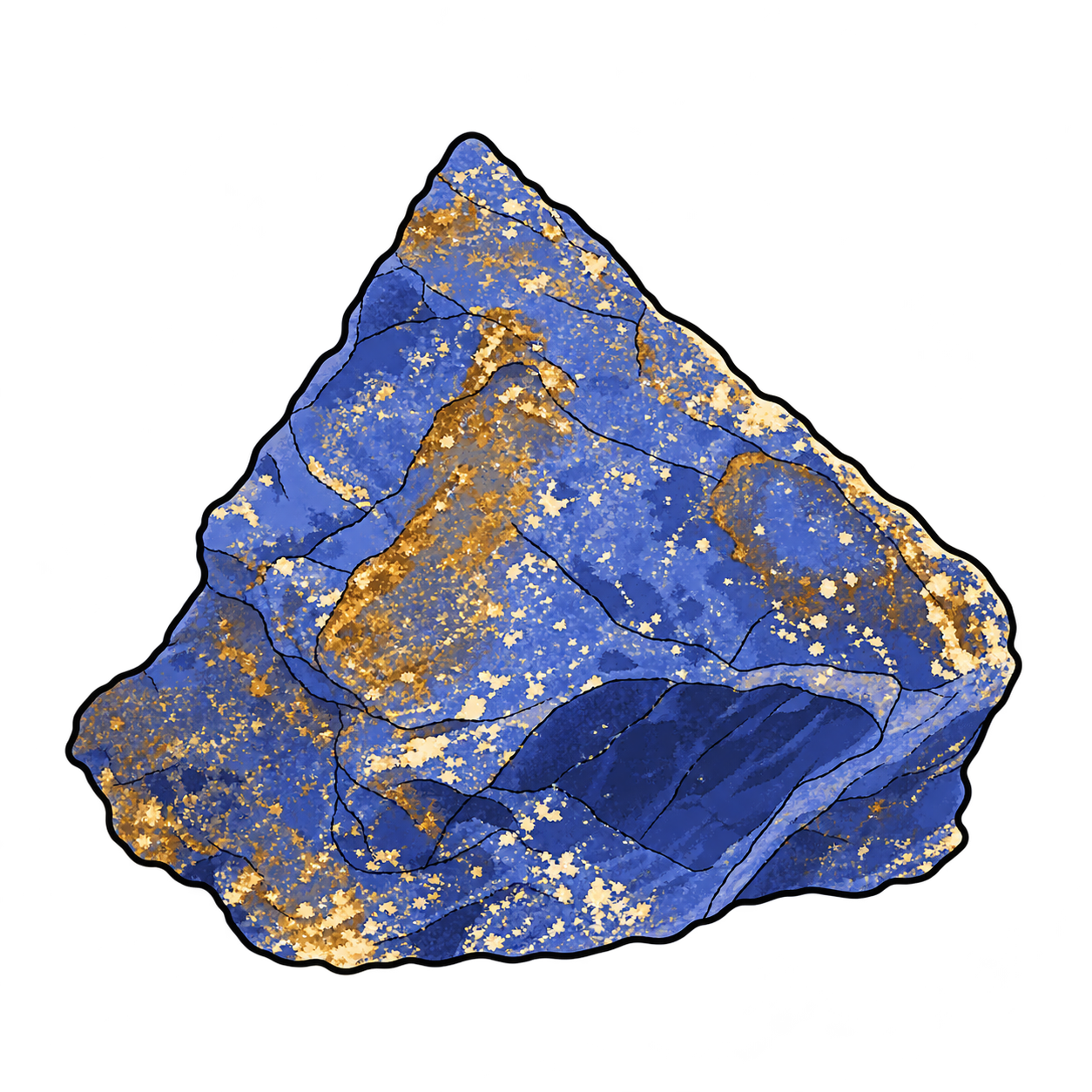
A blue ornamental rock
A rock containing blue lazurite with variable calcite, pyrite and other minerals.
Lapis lazuli is an opaque blue rock used for jewelry, carving, inlay and pigment.
Read the specimen guide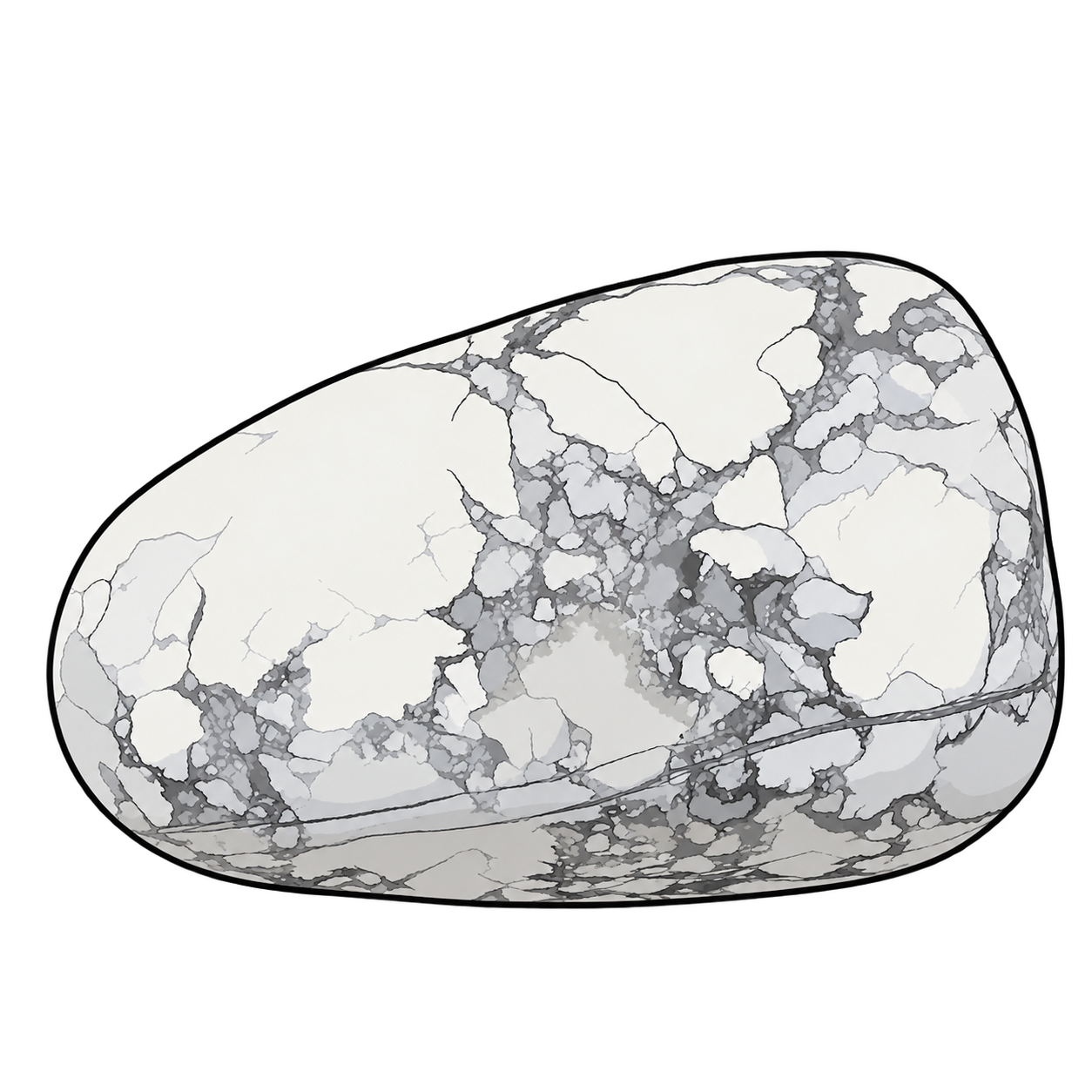
White borate, branching veining, and a modern association with patience
Calcium borosilicate hydroxide, commonly white with dark veining.
Howlite is a white calcium borosilicate hydroxide, often crossed by gray markings.
Read the specimen guide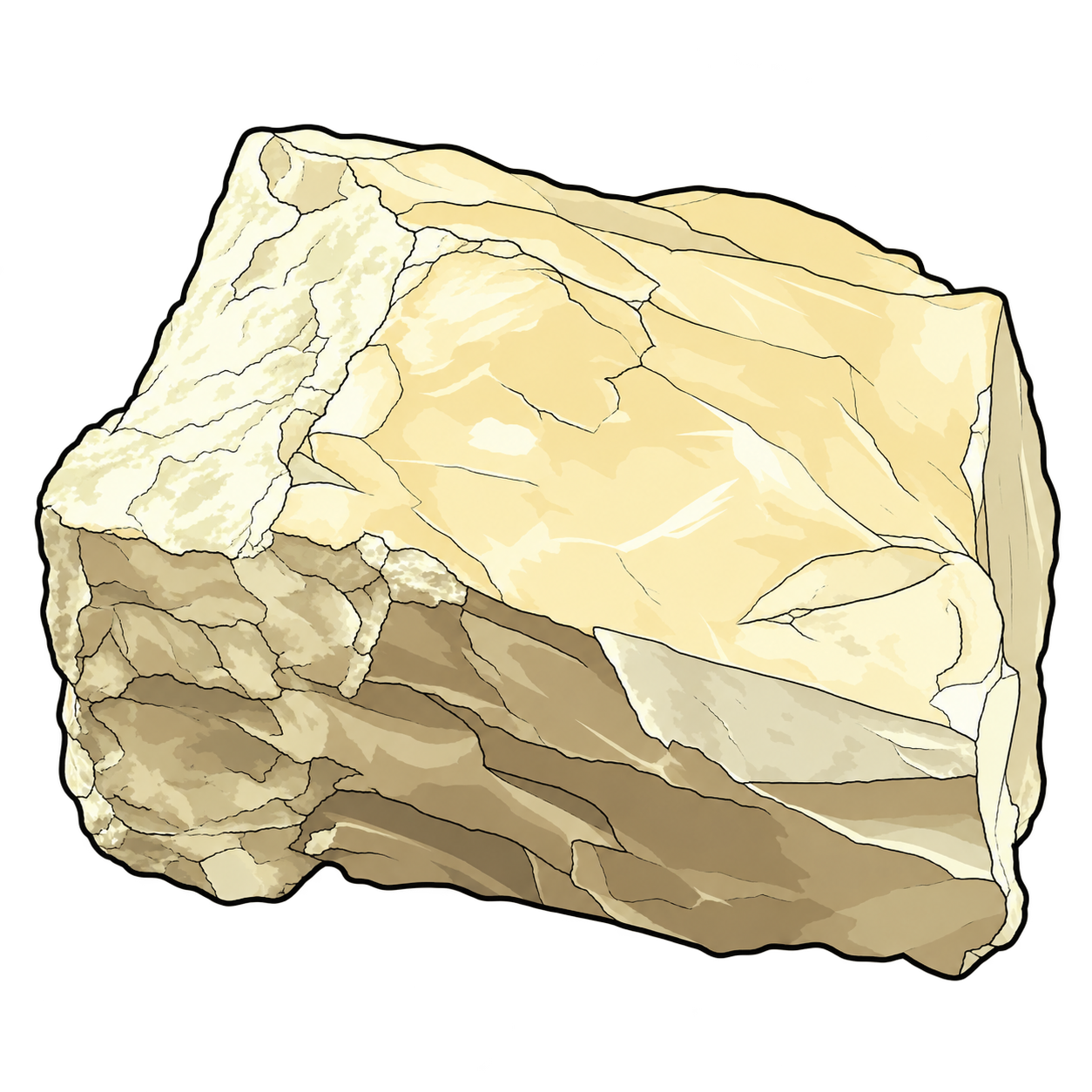
Magnesium carbonate, from pale ornamental stone to an industrial mineral
Magnesium carbonate (MgCO3).
Magnesite ranges from white nodules to well-formed crystals.
Read the specimen guide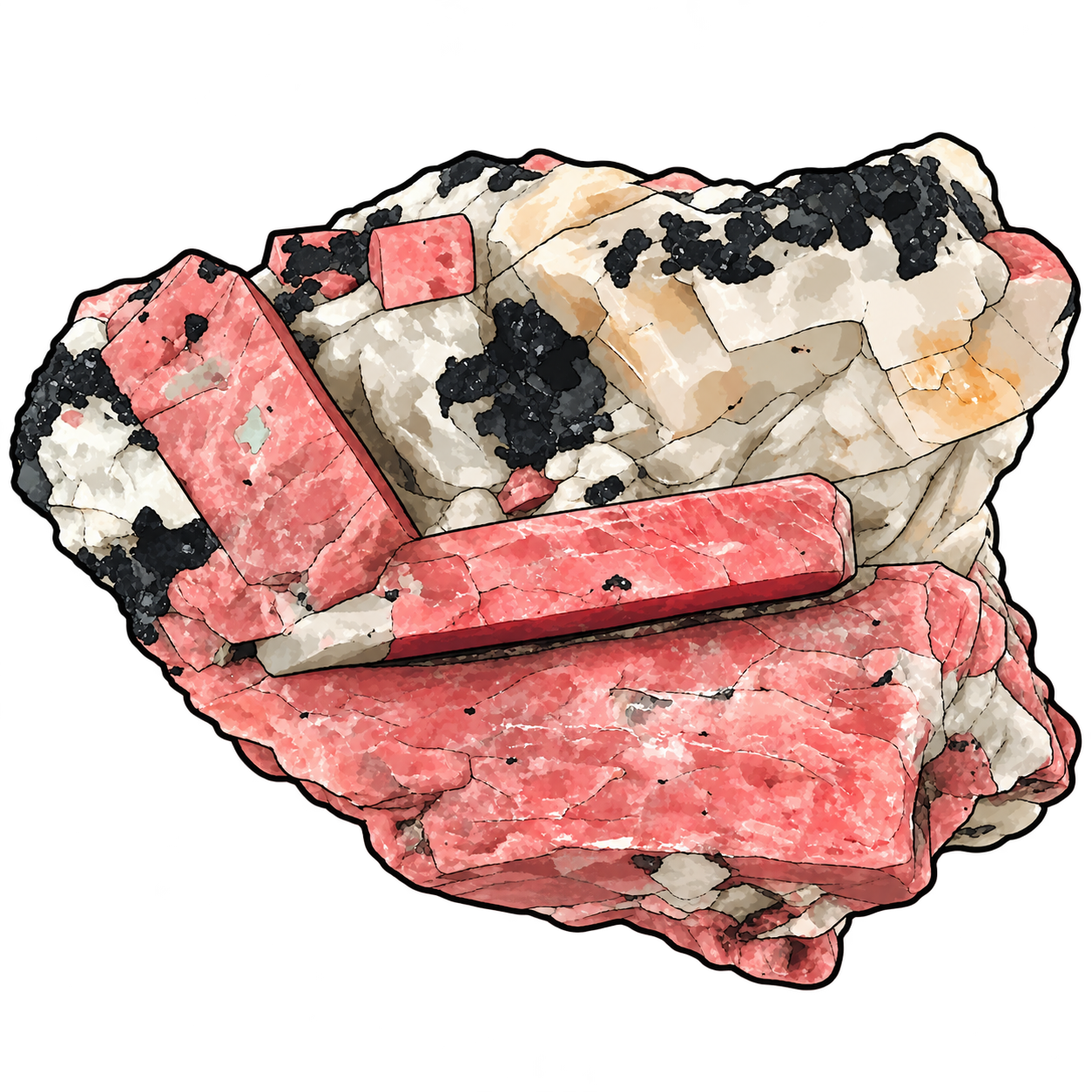
Rose-colored manganese silicate, with a complex mineral story behind the pink
Manganese-rich silicate material, often pink with dark manganese oxides.
Rhodonite appears in pink-and-black aggregates and transparent red crystals.
Read the specimen guide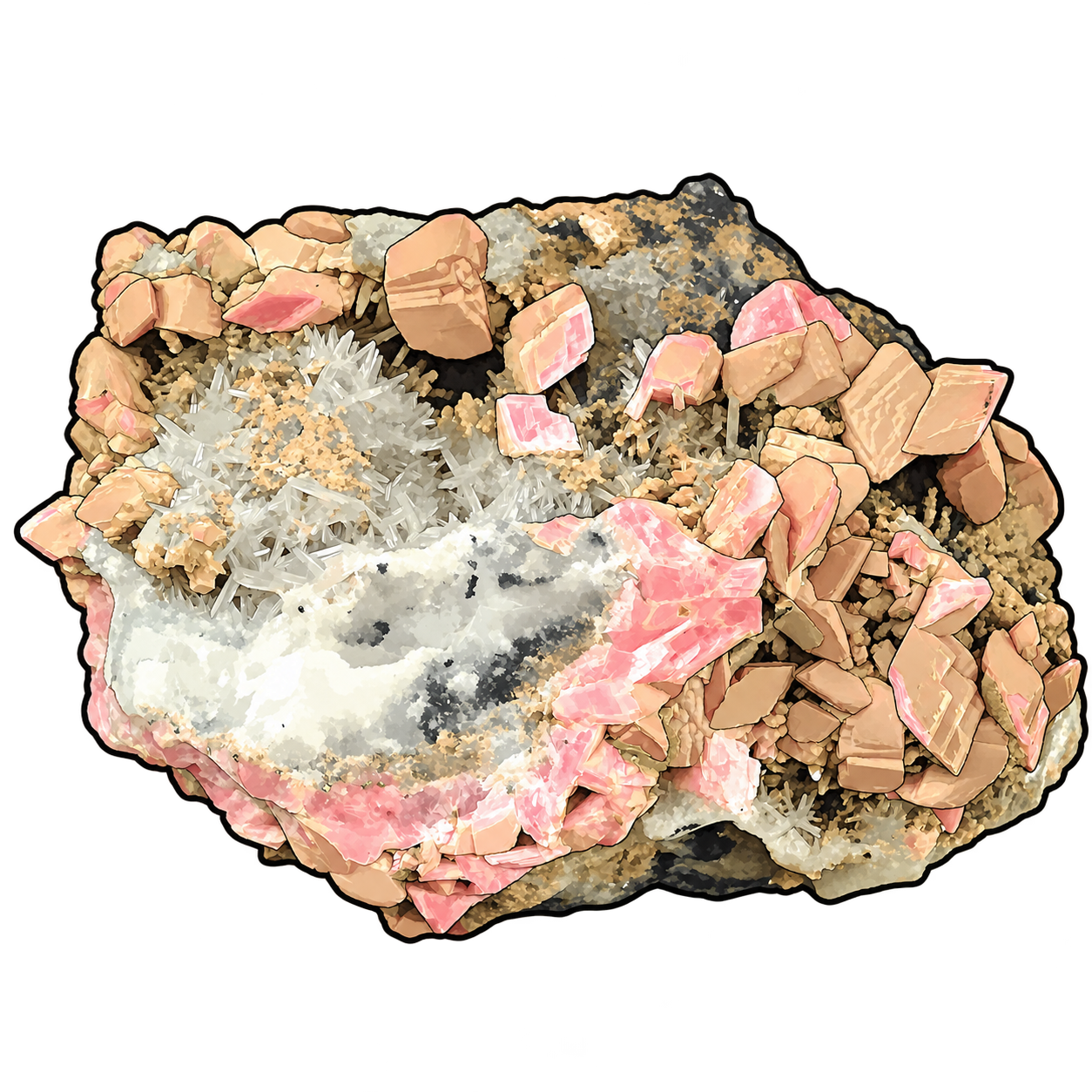
Manganese carbonate in rose-colored bands and exceptional red crystals
Manganese carbonate (MnCO3).
Rhodochrosite ranges from pink-and-white banded aggregates to transparent red crystals.
Read the specimen guide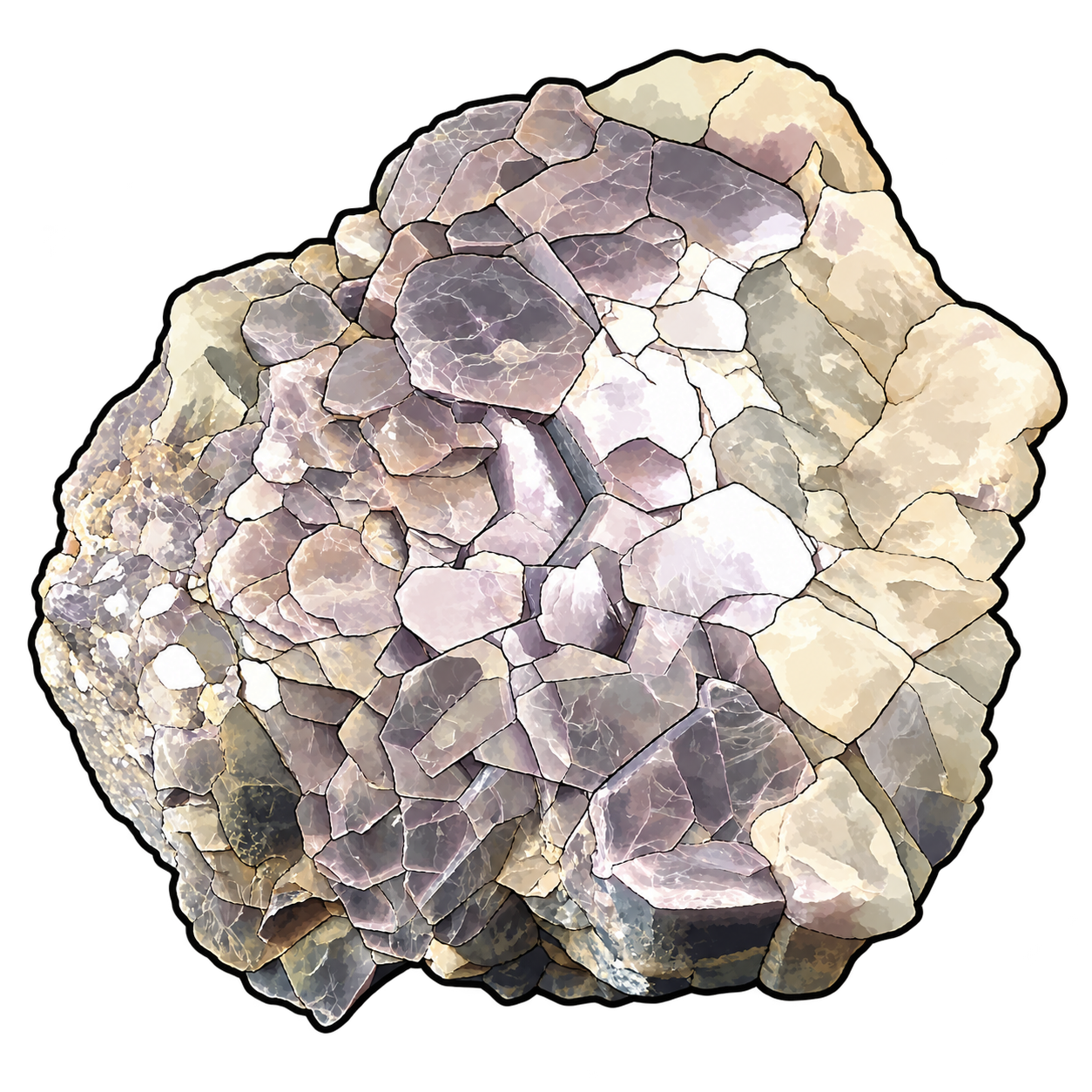
Lithium-rich mica, layered sparkle, and the importance of a precise name
Field/trade name for lithium-rich micas, not one accepted mineral species.
Lepidolite is the familiar name for lithium-rich mica material often seen in lilac or pink, with a sheen produced by many thin plates.
Read the specimen guide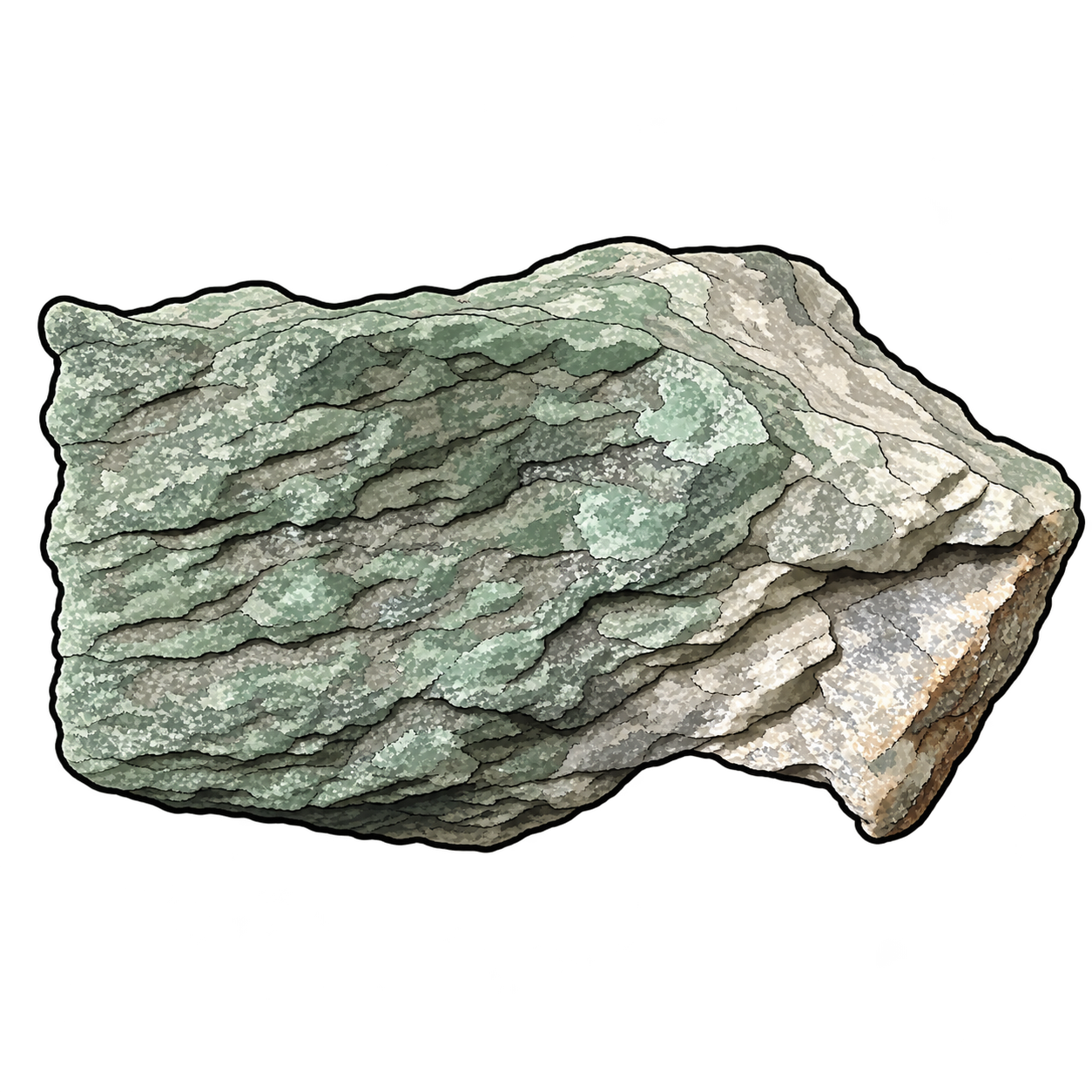
Chromium-green mica, layered light, and the different stones hidden behind one name
Chromium-bearing green muscovite variety.
Fuchsite is chromium-colored green muscovite.
Read the specimen guide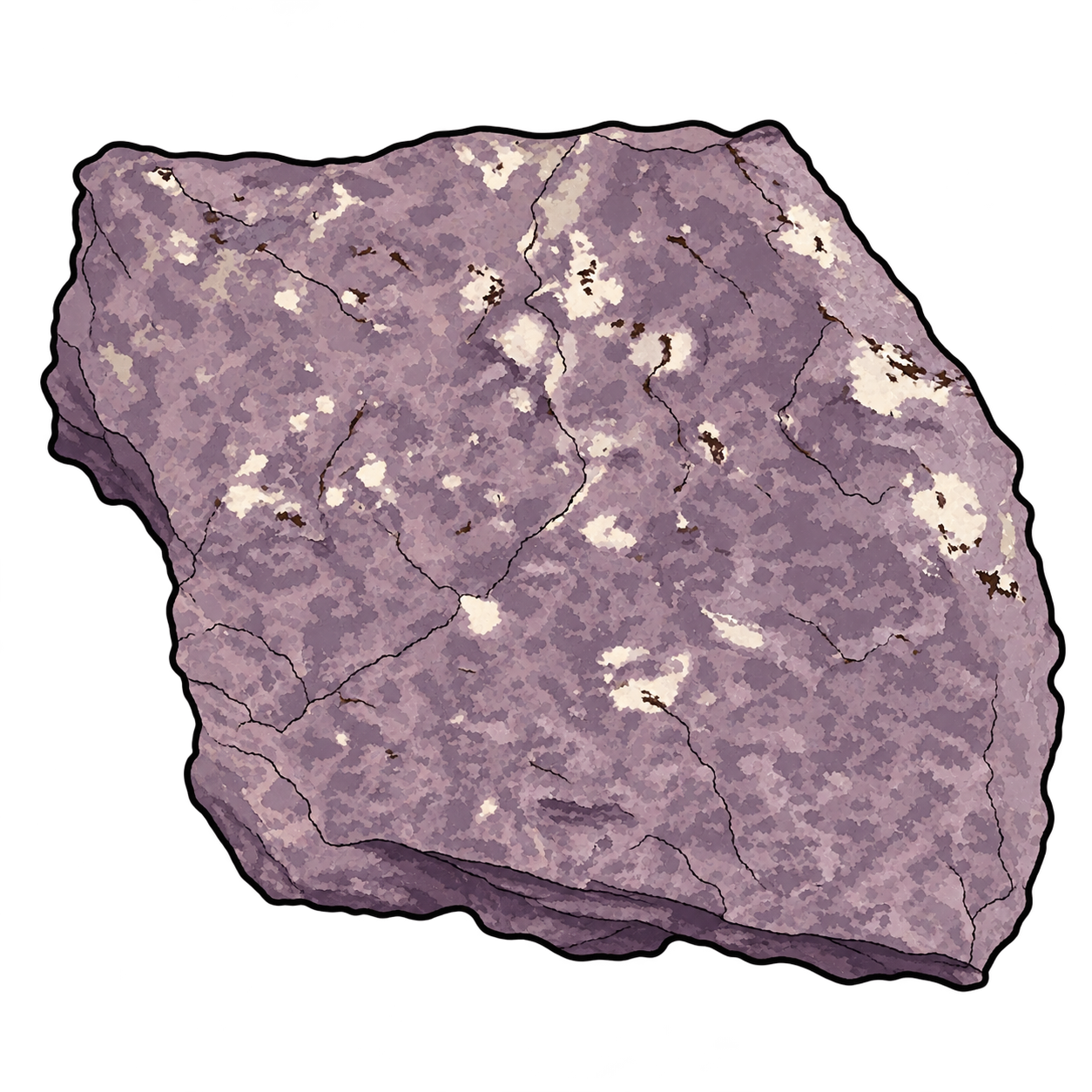
Blue mineral fibers, quartz landscapes, and a history beyond ornamental stone
Aluminium borosilicate, commonly encountered in quartz-rich material.
Dumortierite is an aluminum borosilicate occurring in fibrous masses and as needles within quartz.
Read the specimen guide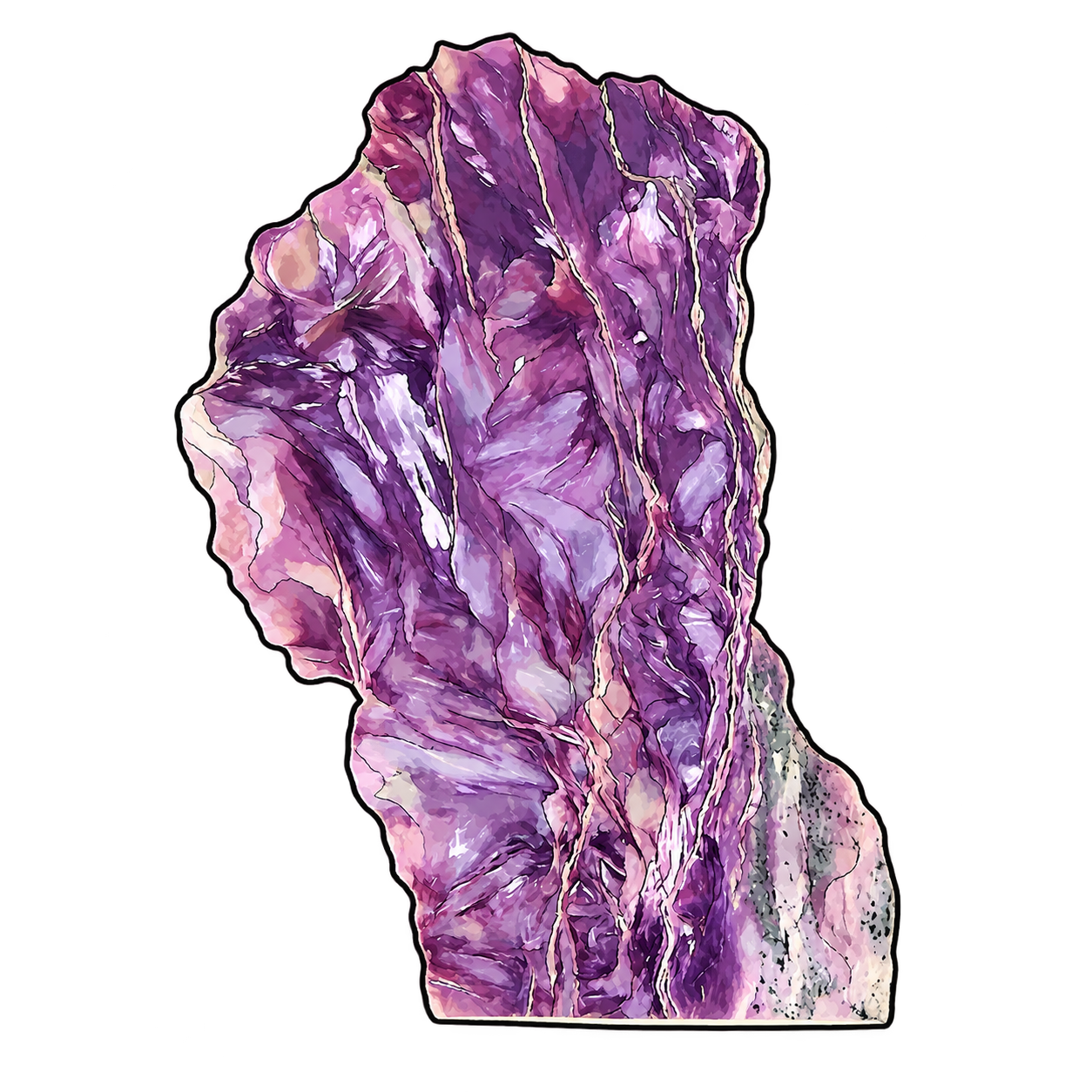
Violet mineral fibers and a remarkable Siberian rock
Complex silicate mineral usually sold as purple charoite-bearing rock.
Charoite's appeal is not simply that it is purple.
Read the specimen guide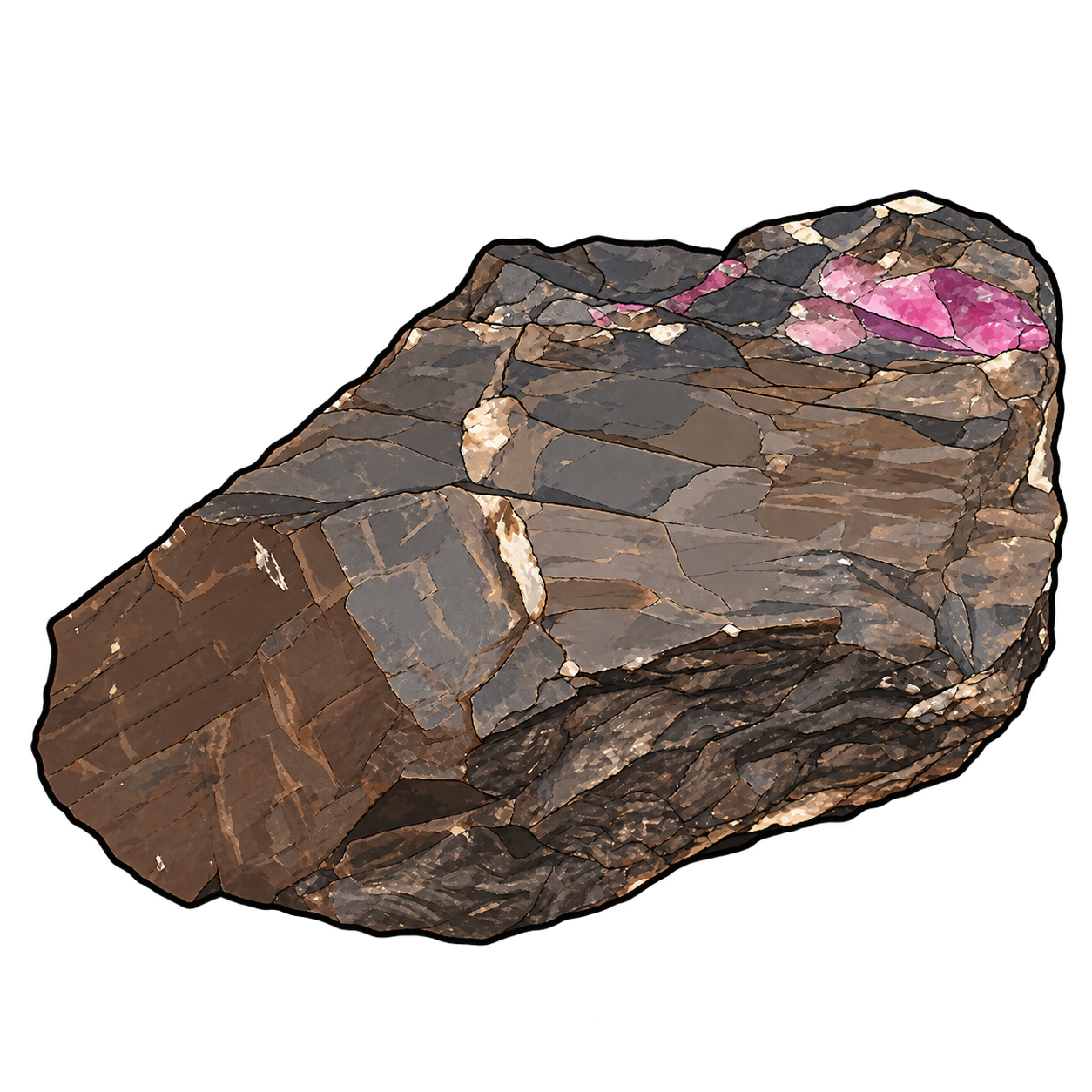
Purple silicate, mixed mineral textures, and the importance of genuine identity
A complex potassium-sodium lithium silicate mineral, often sold in mixed massive material.
Sugilite includes brownish-yellow material from Japan and the purple manganese-bearing South African material familiar in jewelry.
Read the specimen guide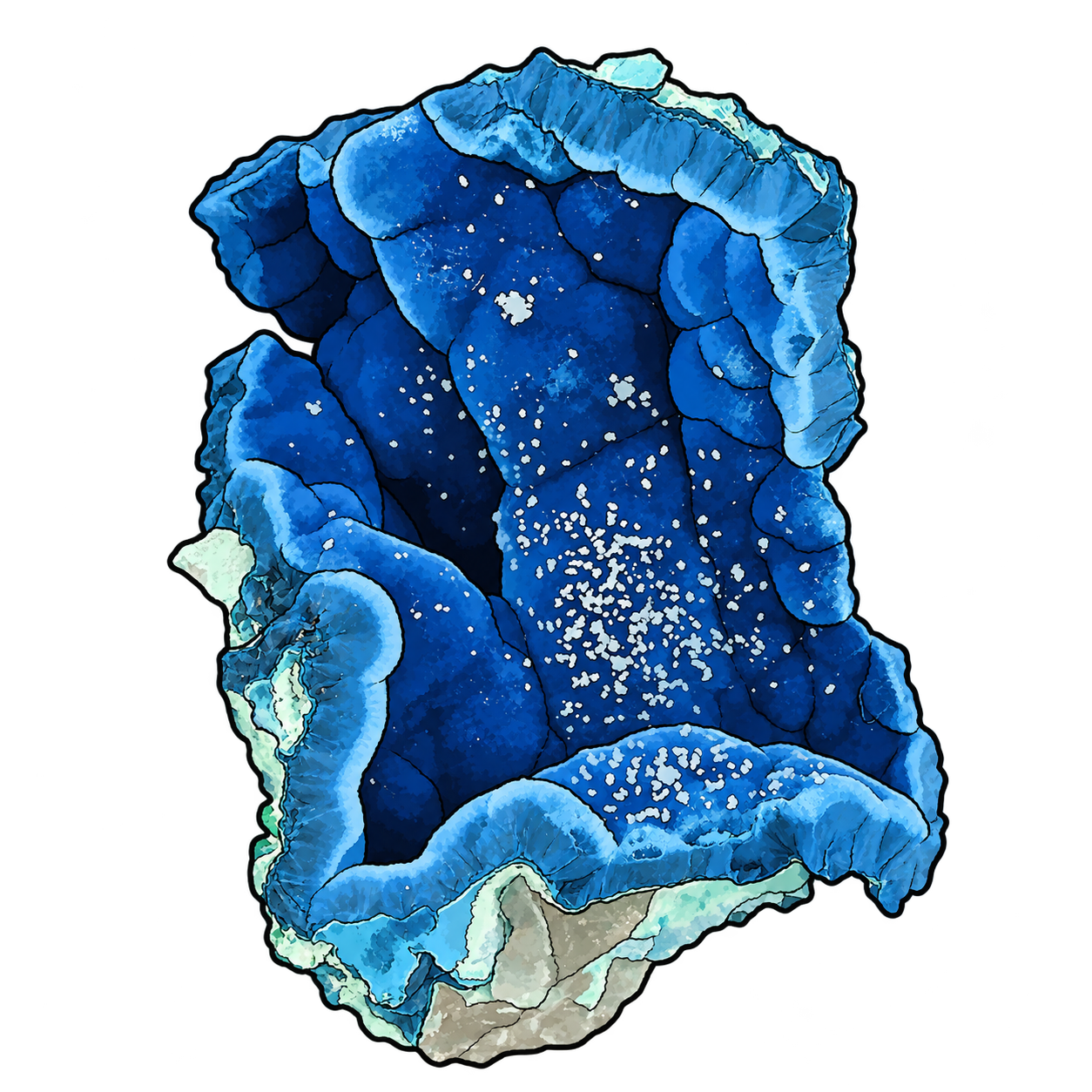
Deep blue copper silicate, delicate fibers, and quartz that preserves a growth history
A copper silicate hydroxide mineral, often present in blue-green mixed rocks.
Shattuckite brings an intense blue to the oxidized zones of copper deposits.
Read the specimen guide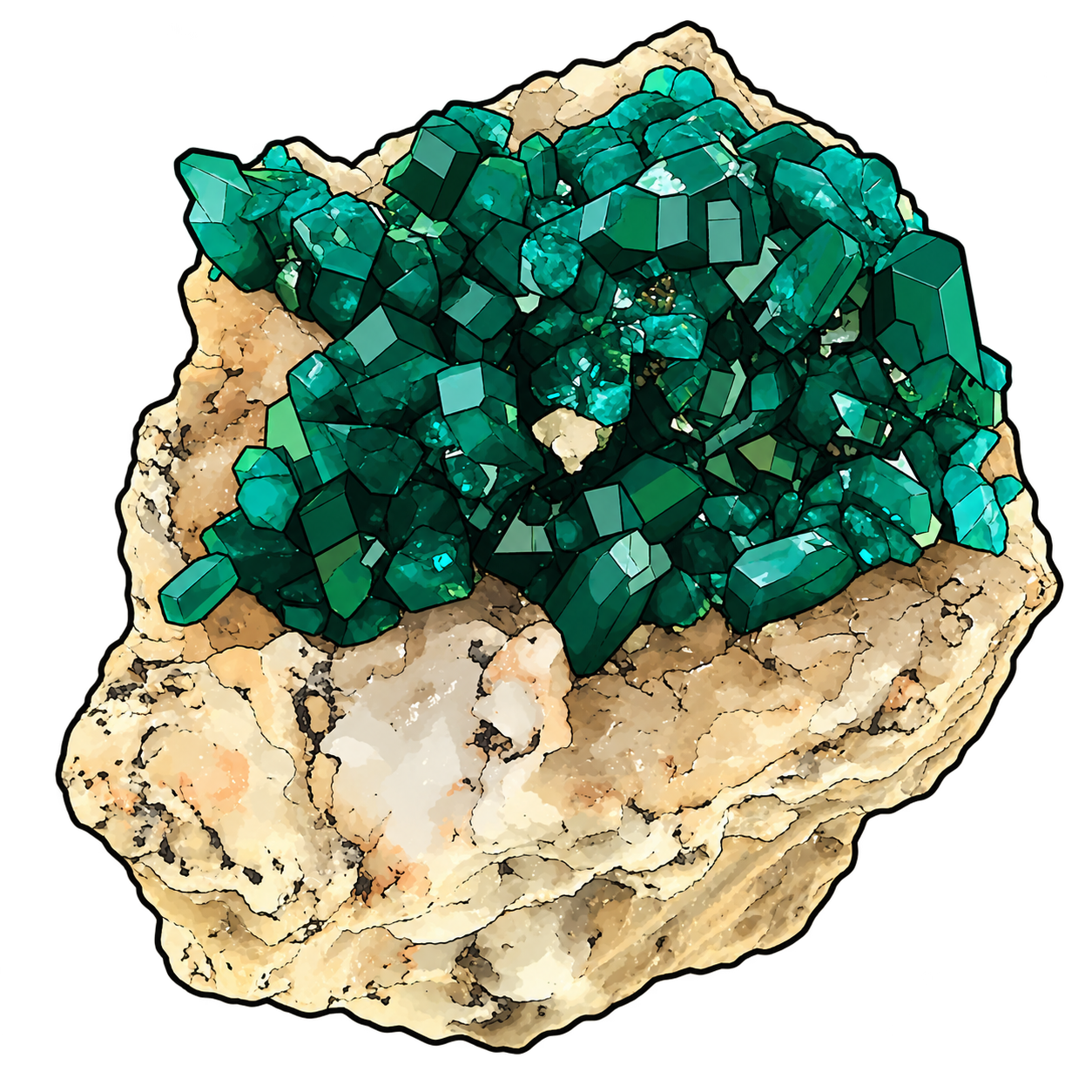
Vivid copper-green crystals with an intricate structure and vulnerable edges
Hydrated copper silicate, often emerald green.
Dioptase's vivid green invites comparison with emerald, but it is hydrated copper silicate, not beryl.
Read the specimen guide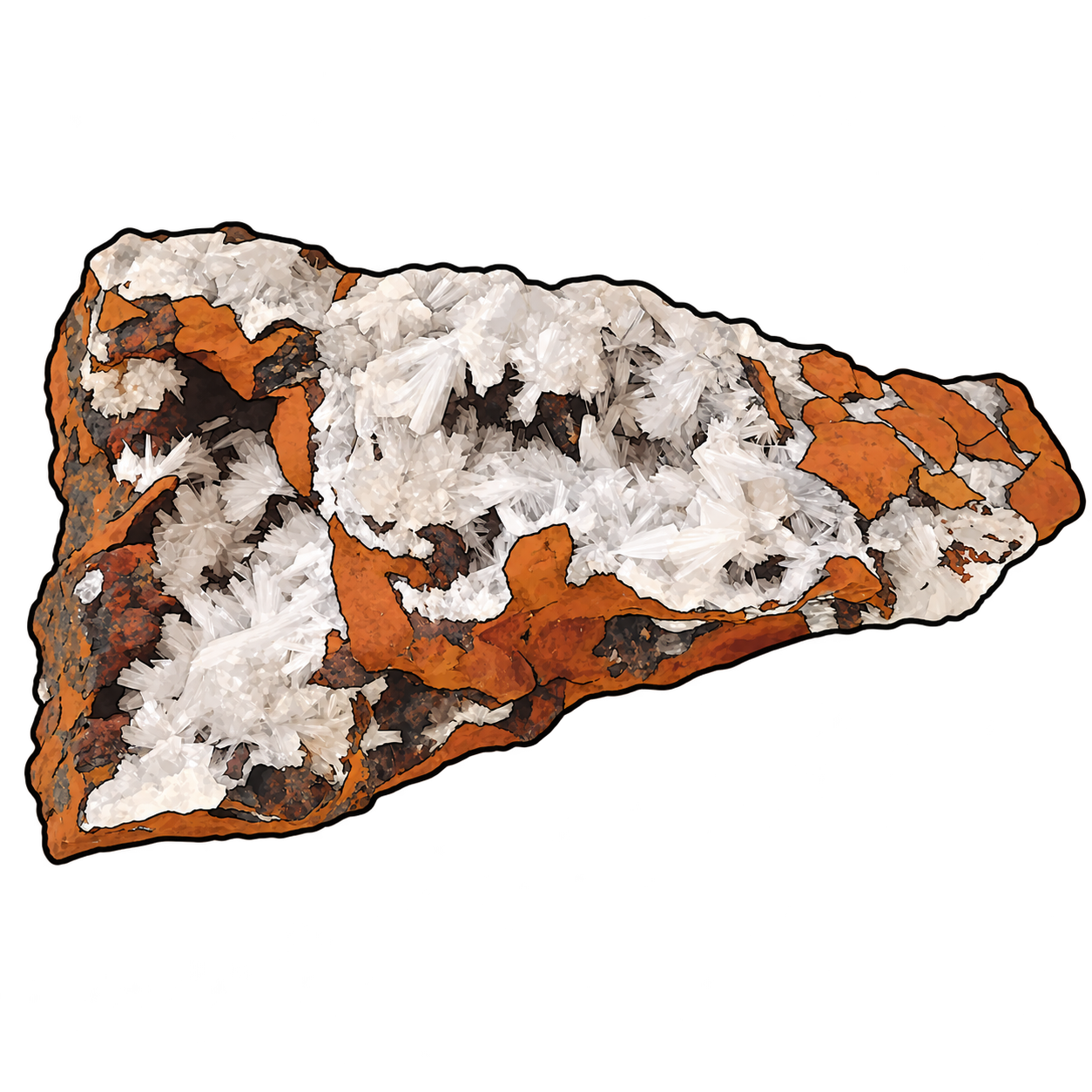
Unlike crystal ends, zinc-rich origins, and a surprisingly varied appearance
Hydrated zinc silicate.
Hemimorphite forms pale crystal fans and rounded blue crusts.
Read the specimen guide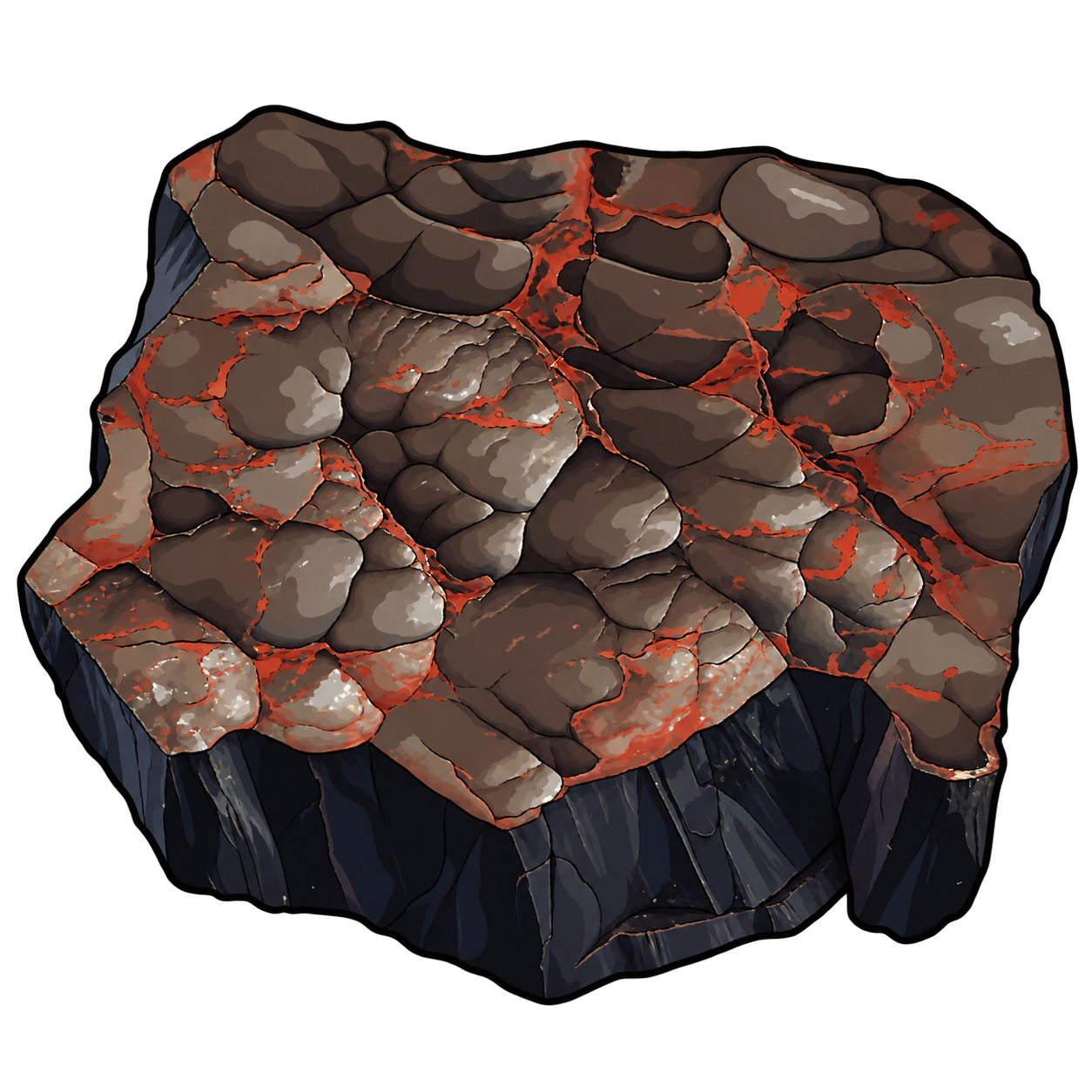
The red mineral beneath a metallic surface
Iron oxide (Fe2O3).
Hematite can be a polished dark mirror, a cluster of steel-gray plates, a rounded brown mass, or a fine red earth.
Read the specimen guide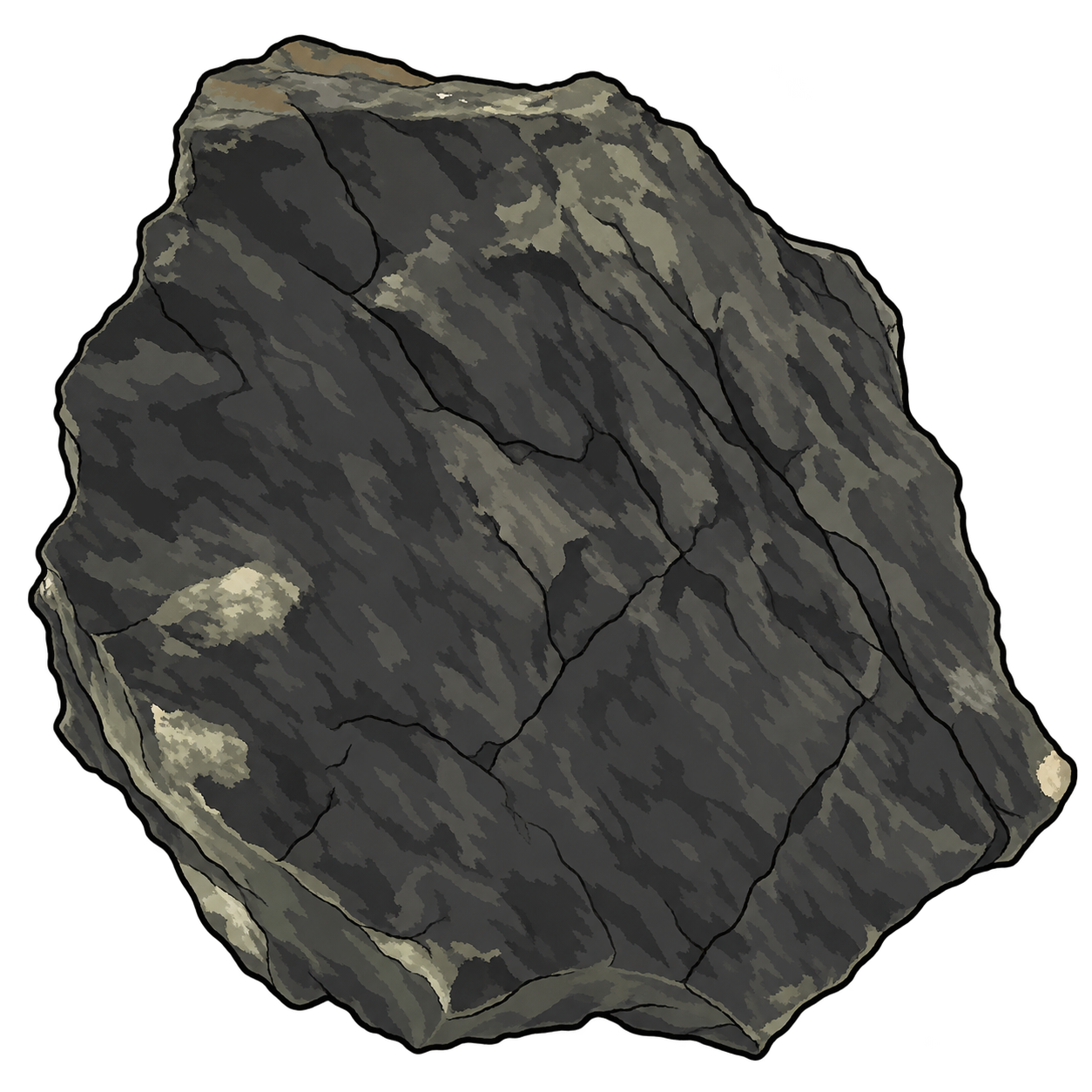
Iron oxide, natural magnetism, and the cultural life of lodestone
Magnetic iron oxide, distinct from hematite.
Magnetite is a black iron oxide whose magnetic response can be more striking than its appearance.
Read the specimen guide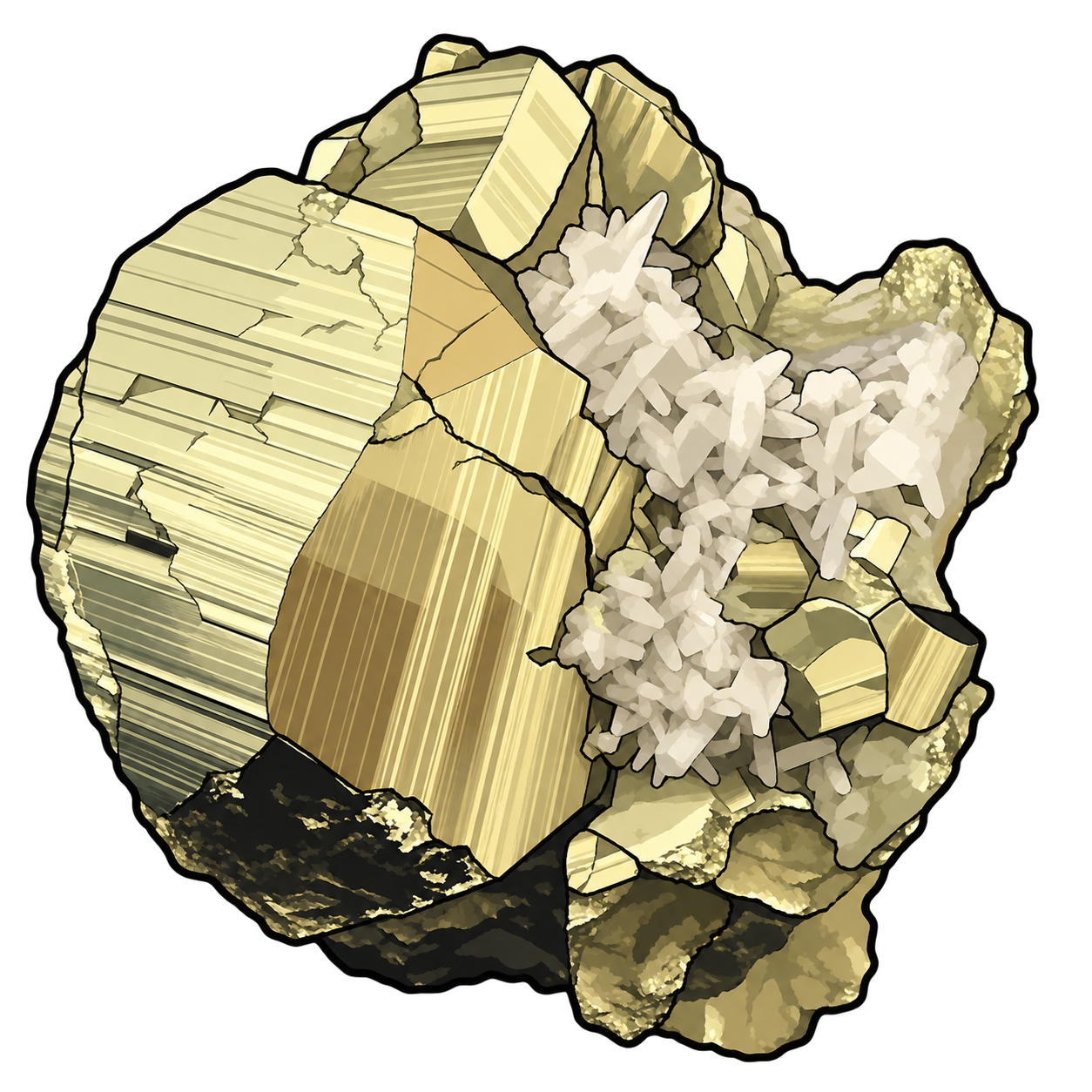
Brass-colored geometry, reflective history, and a mineral that rewards careful storage
Iron sulfide (FeS2).
Pyrite's cubes can look manufactured, but their geometry belongs to natural crystal growth.
Read the specimen guide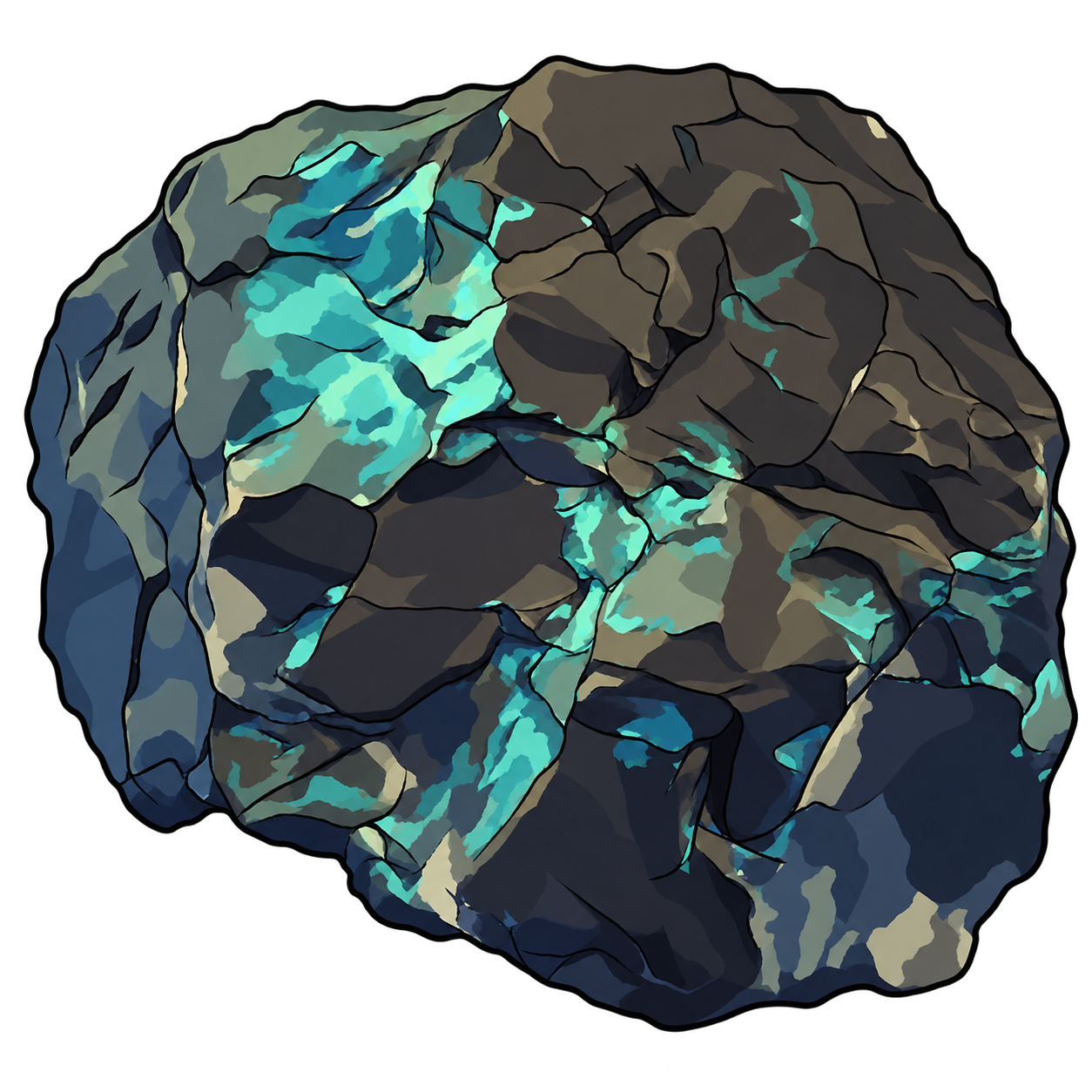
Iridescent copper minerals beneath a shared trade name
A retail label commonly applied to iridescent copper-iron sulfides.
Peacock ore is a name for an appearance, not a single mineral species.
Read the specimen guide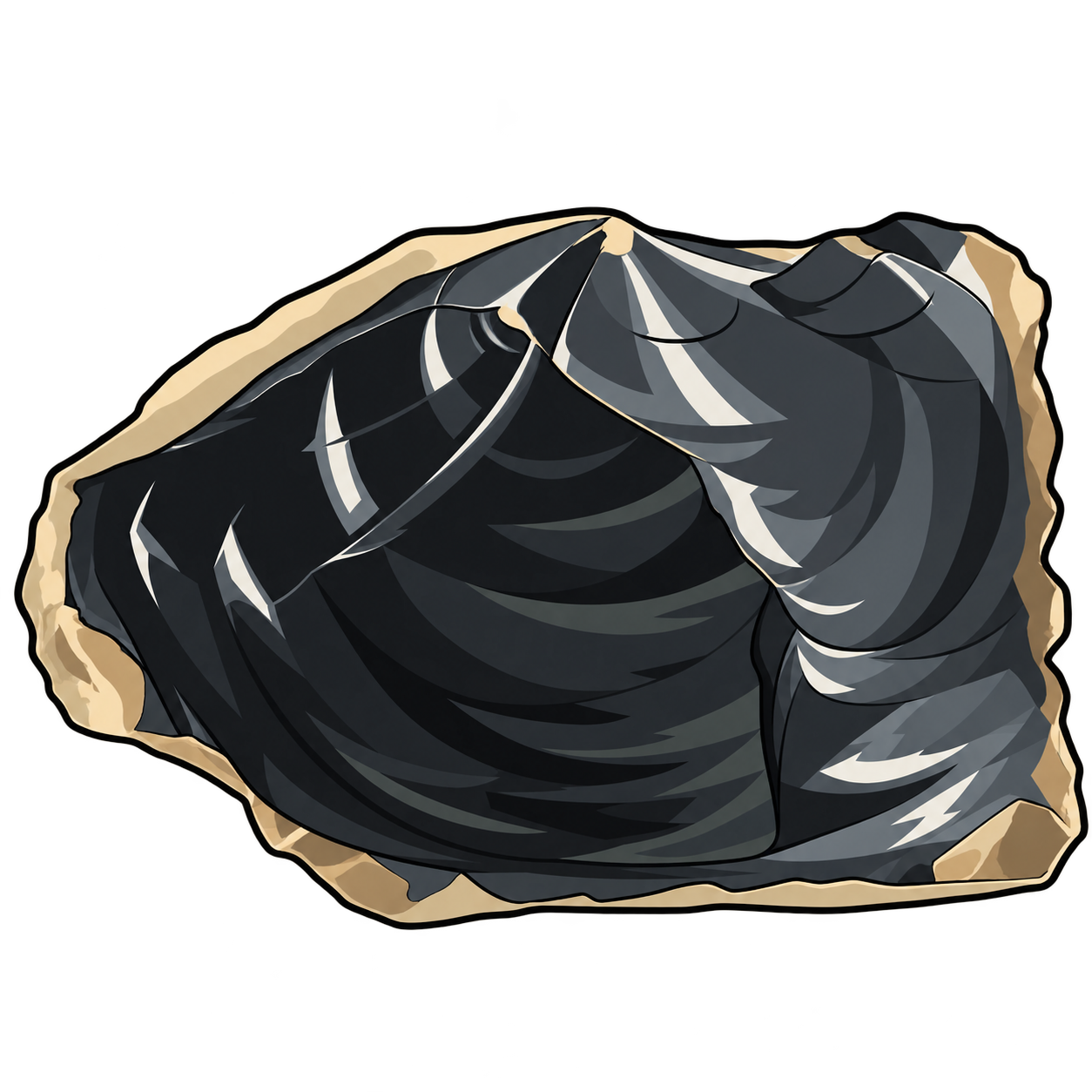
Volcanic Glass, Sharp Edges and Reflective Depth
Natural volcanic glass, not a crystalline mineral.
Obsidian preserves a different outcome of cooling magma: glass rather than a framework of interlocking mineral grains.
Read the specimen guide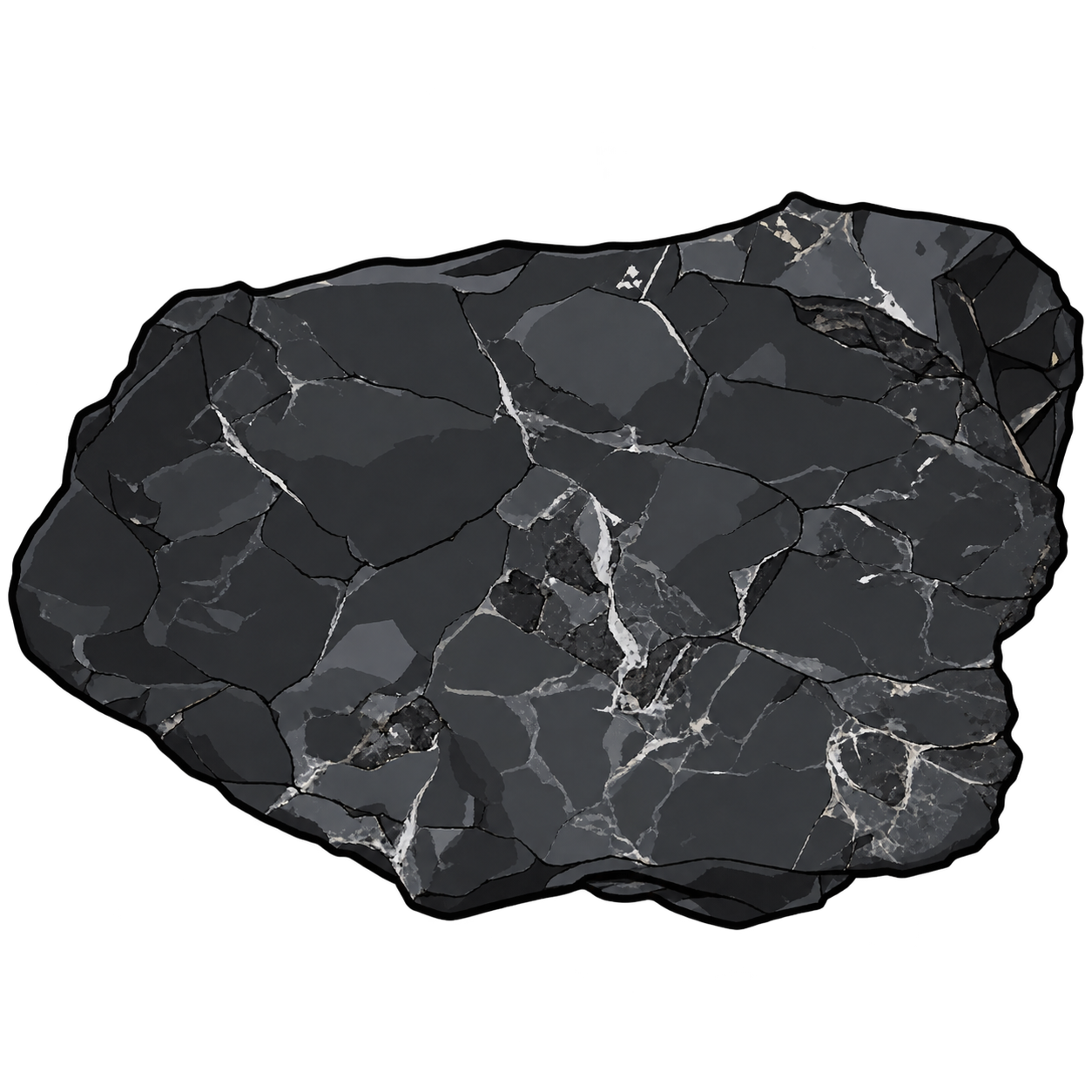
Ancient carbon-rich rock with a complex microscopic identity
Name used for carbon-rich mineraloid and carbon-bearing rock from Karelia.
Shungite belongs to a family of dark, carbon-bearing rocks rather than to one simple, uniform crystal species.
Read the specimen guide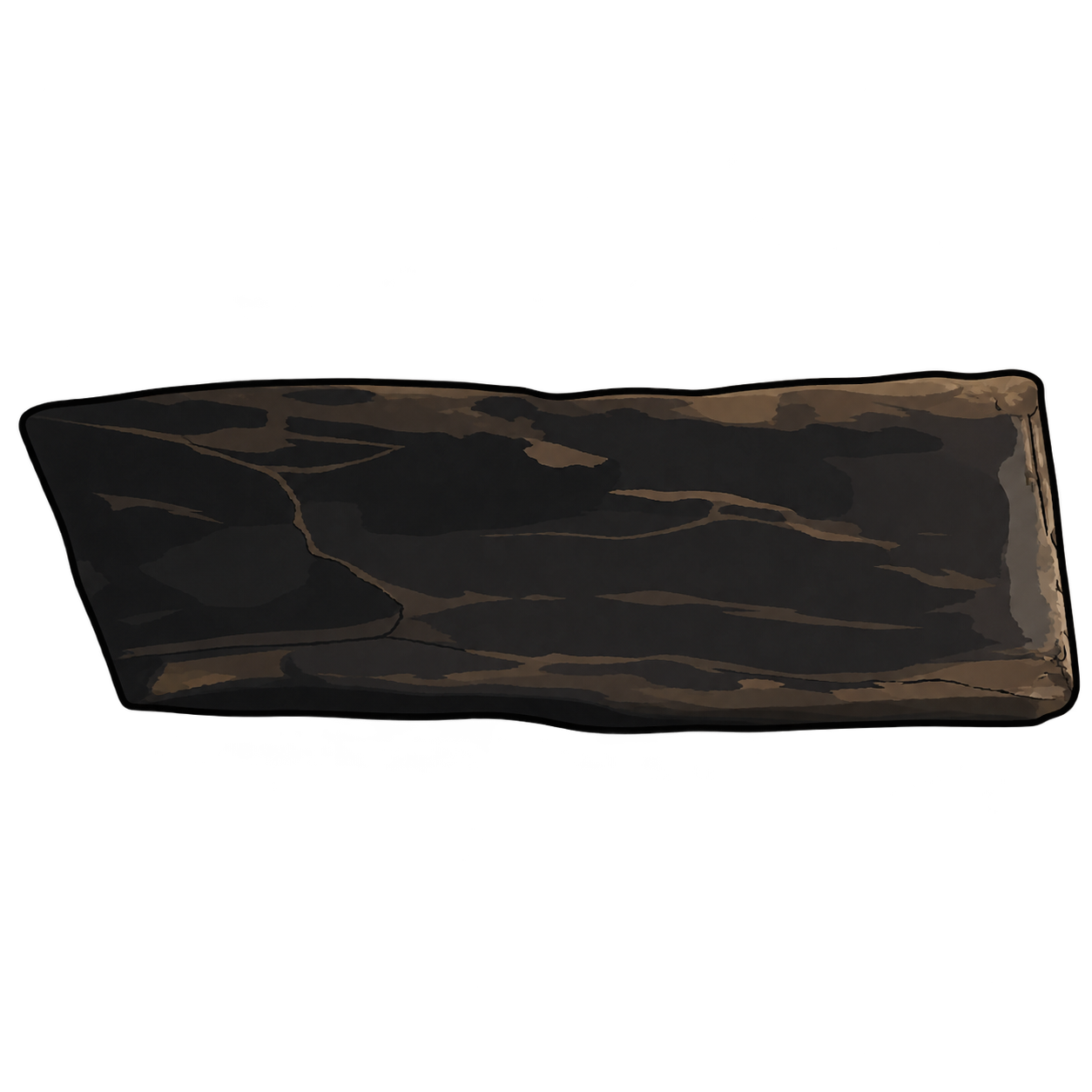
Fossil wood transformed into a jewel of deep black
Organic gem material derived from fossil wood, not obsidian or anthracite by default.
Jet offers a different kind of beauty from a transparent crystal: a dense black surface that can be carved into delicate relief and polished until it reflects like still water.
Read the specimen guide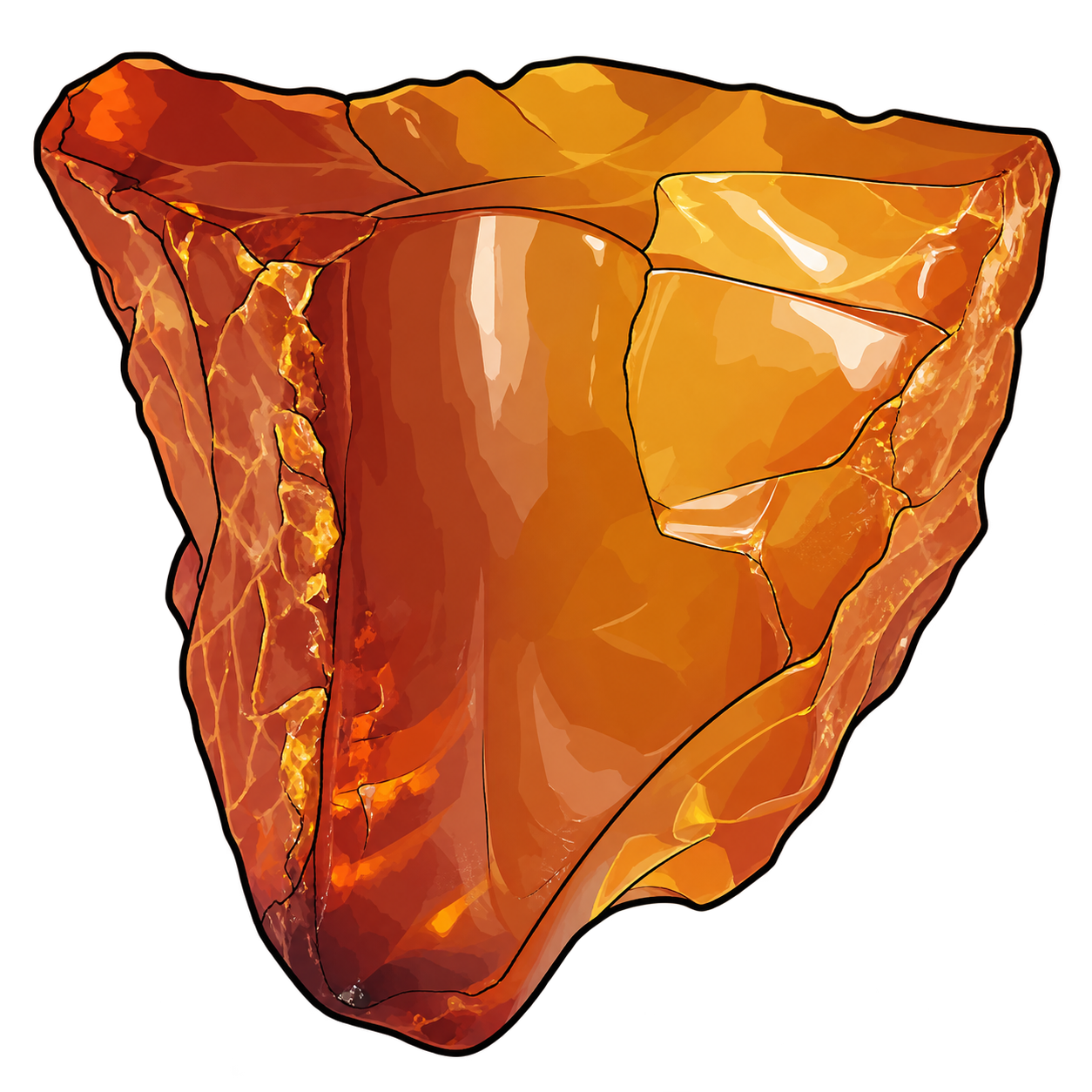
Fossil resin and a record of ancient forests
Fossilized resin, an organic gem rather than a crystalline mineral.
Amber is fossilized tree resin, valued for its warm color, light weight and ability to preserve traces of ancient life.
Read the specimen guide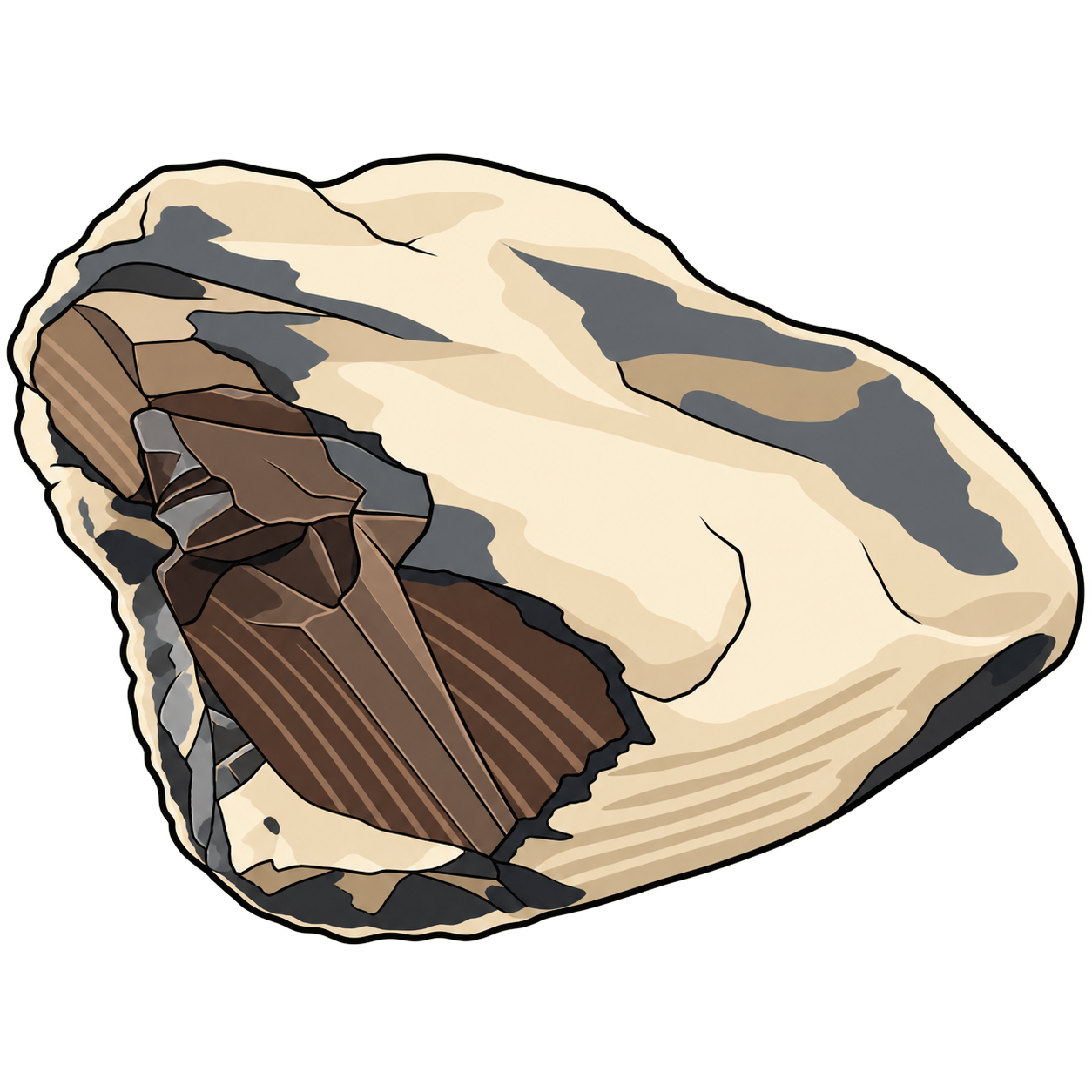
The architecture of a tree preserved in mineral form
Fossil wood preserved by mineral infilling/replacement, often silica.
Petrified wood retains the organization of something that once grew.
Read the specimen guide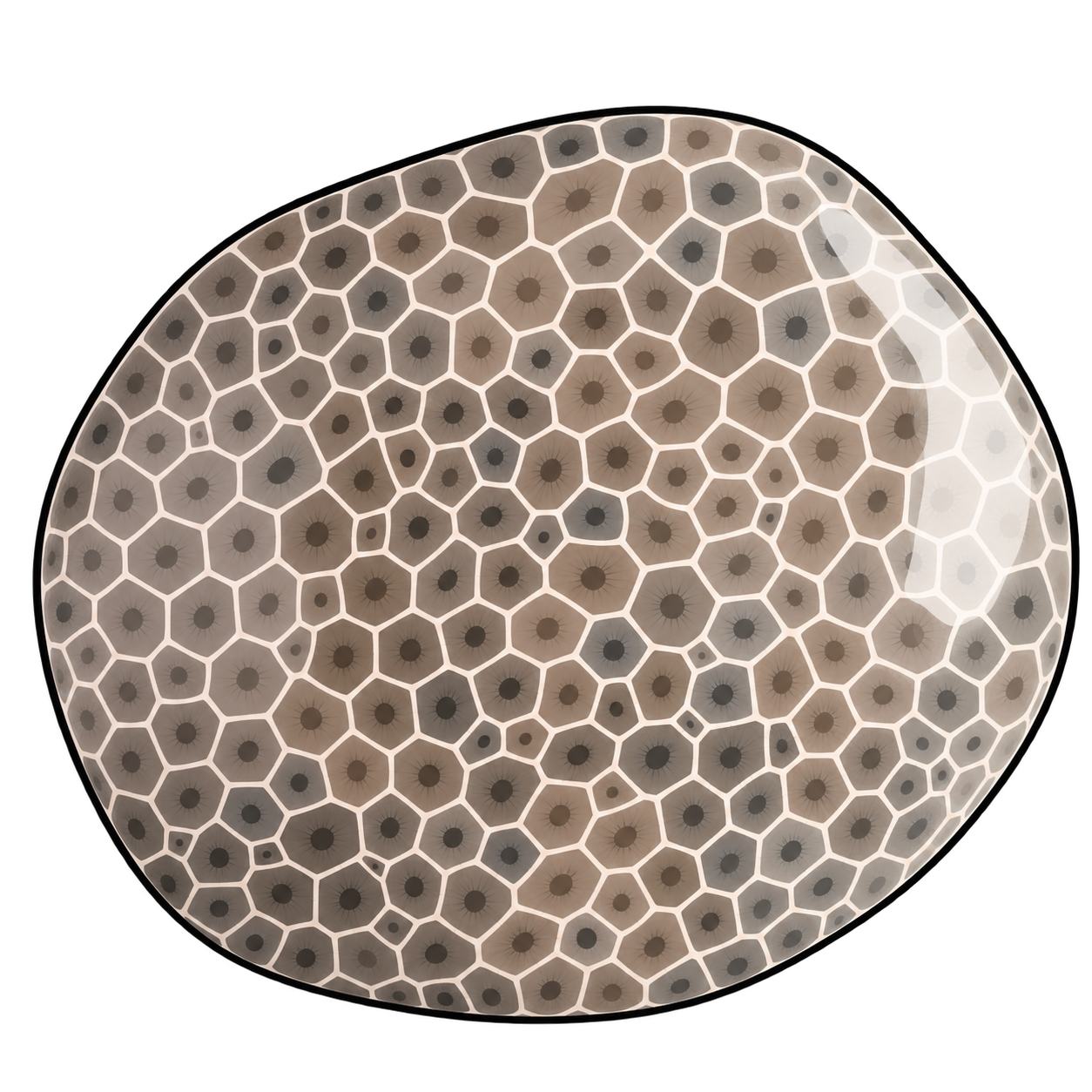
Ancient marine structures preserved in stone
Fossil coral material, sometimes replaced by silica.
Fossil coral brings the architecture of ancient animals into view.
Read the specimen guide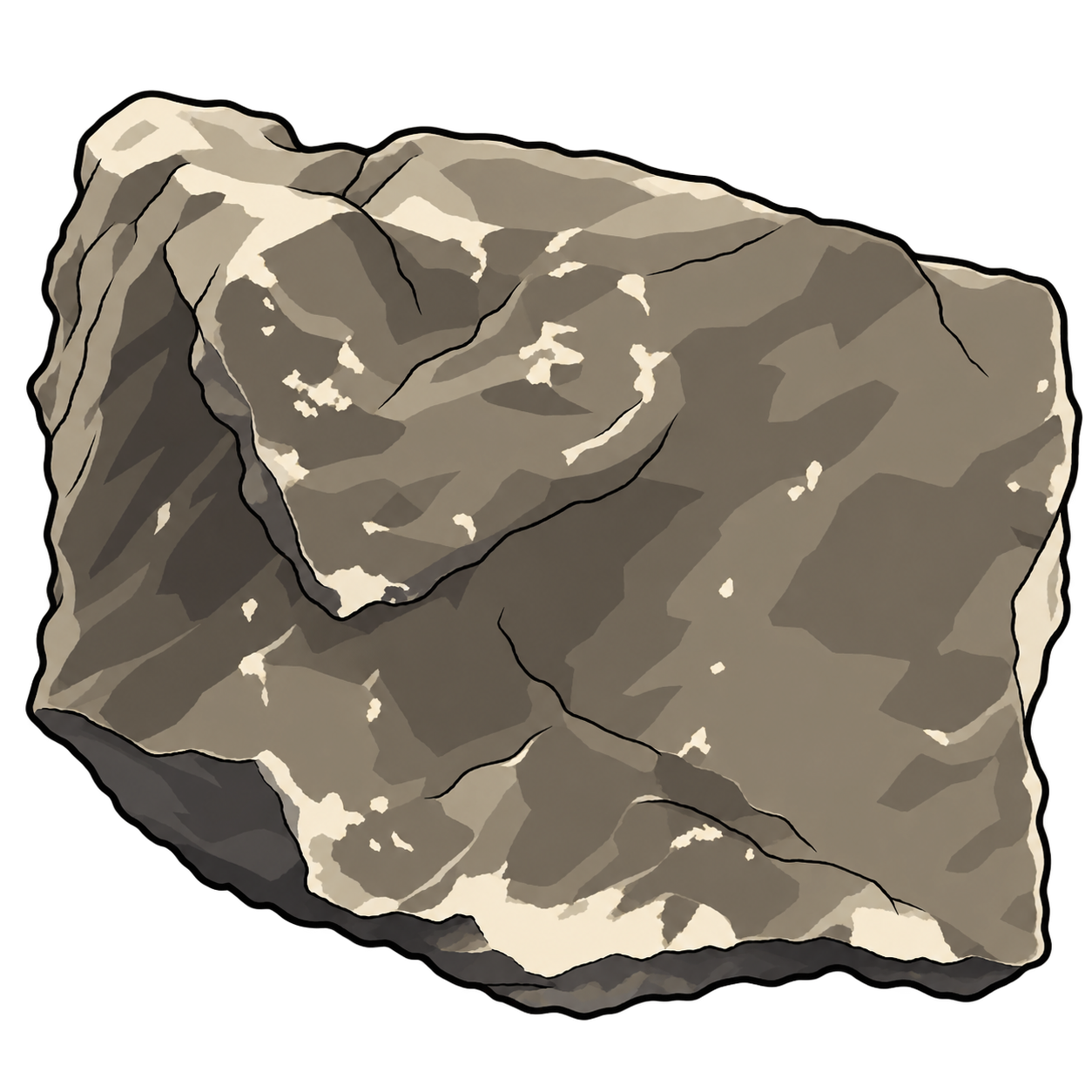
Ancient marine life preserved within carbonate rock
Carbonate rock containing visible fossils.
Fossil limestone holds the remains of organisms within the stone that accumulated around them.
Read the specimen guide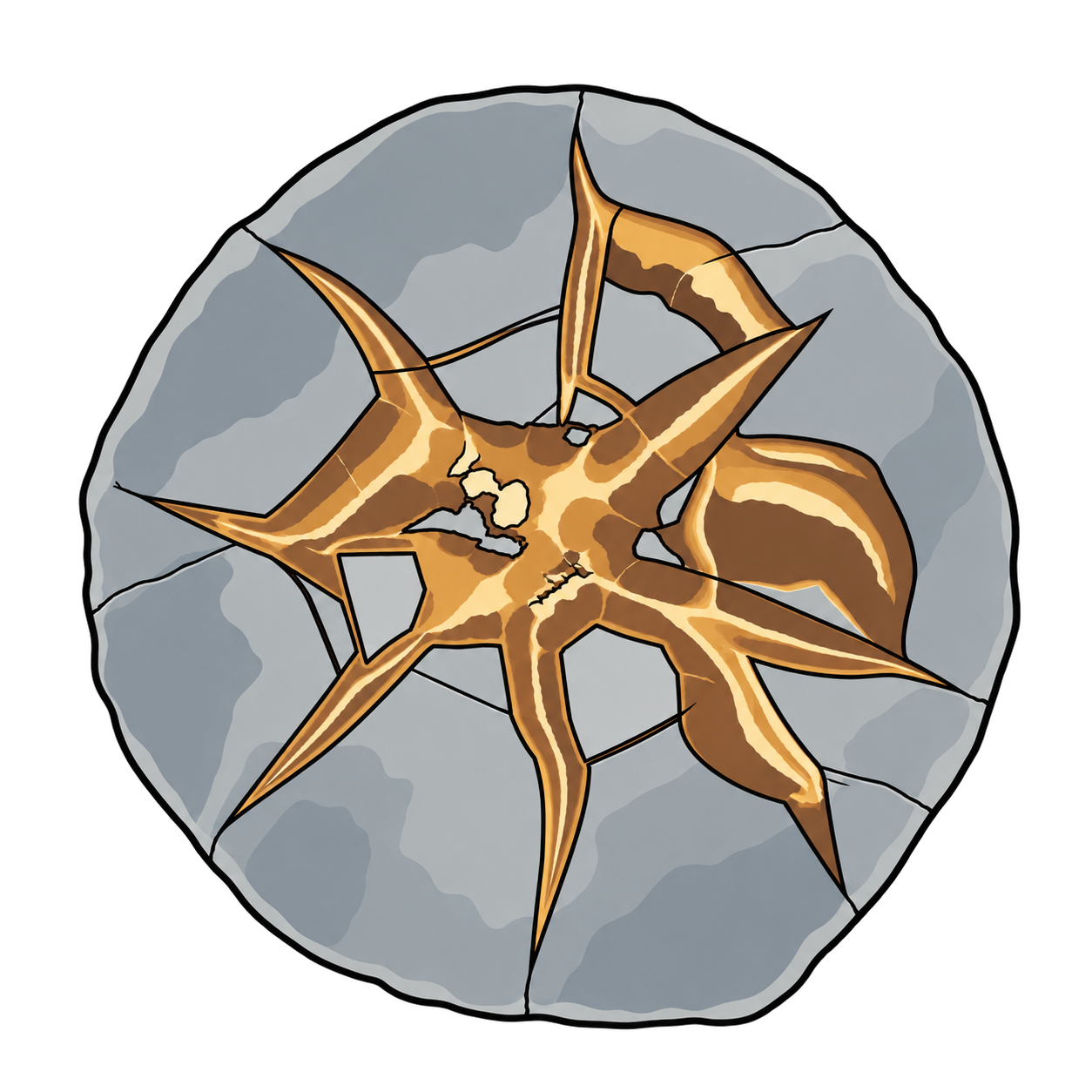
Mineral-filled fractures within a sedimentary concretion
Concretions with internal cracks and later mineral fillings.
Septarian is a name for a patterned concretion, not a separate mineral species.
Read the specimen guide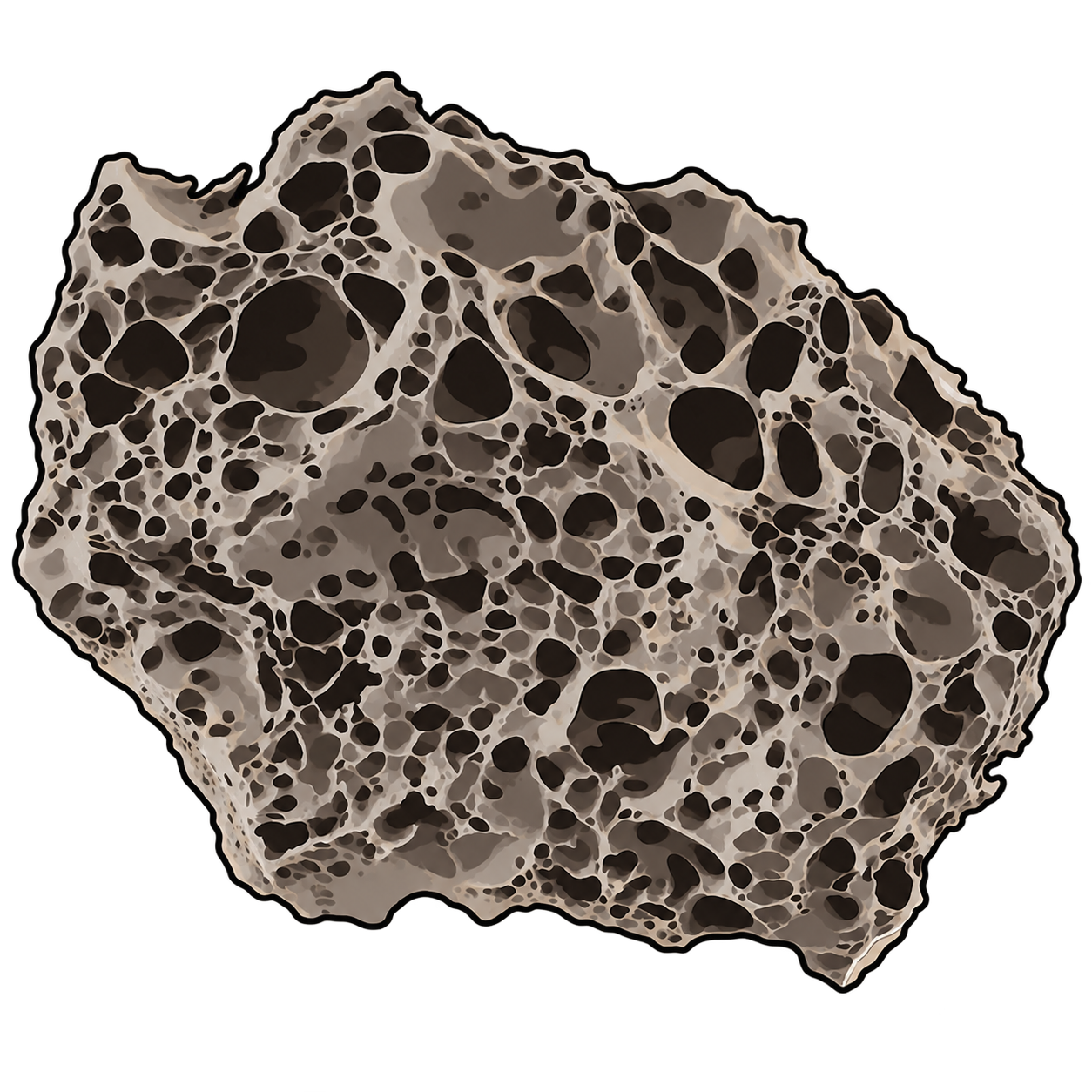
Porous volcanic rock shaped by escaping gas and cooling melt
Broad retail name, usually for vesicular volcanic rock.
“Lava stone” is a broad commercial description rather than a precise mineral name.
Read the specimen guide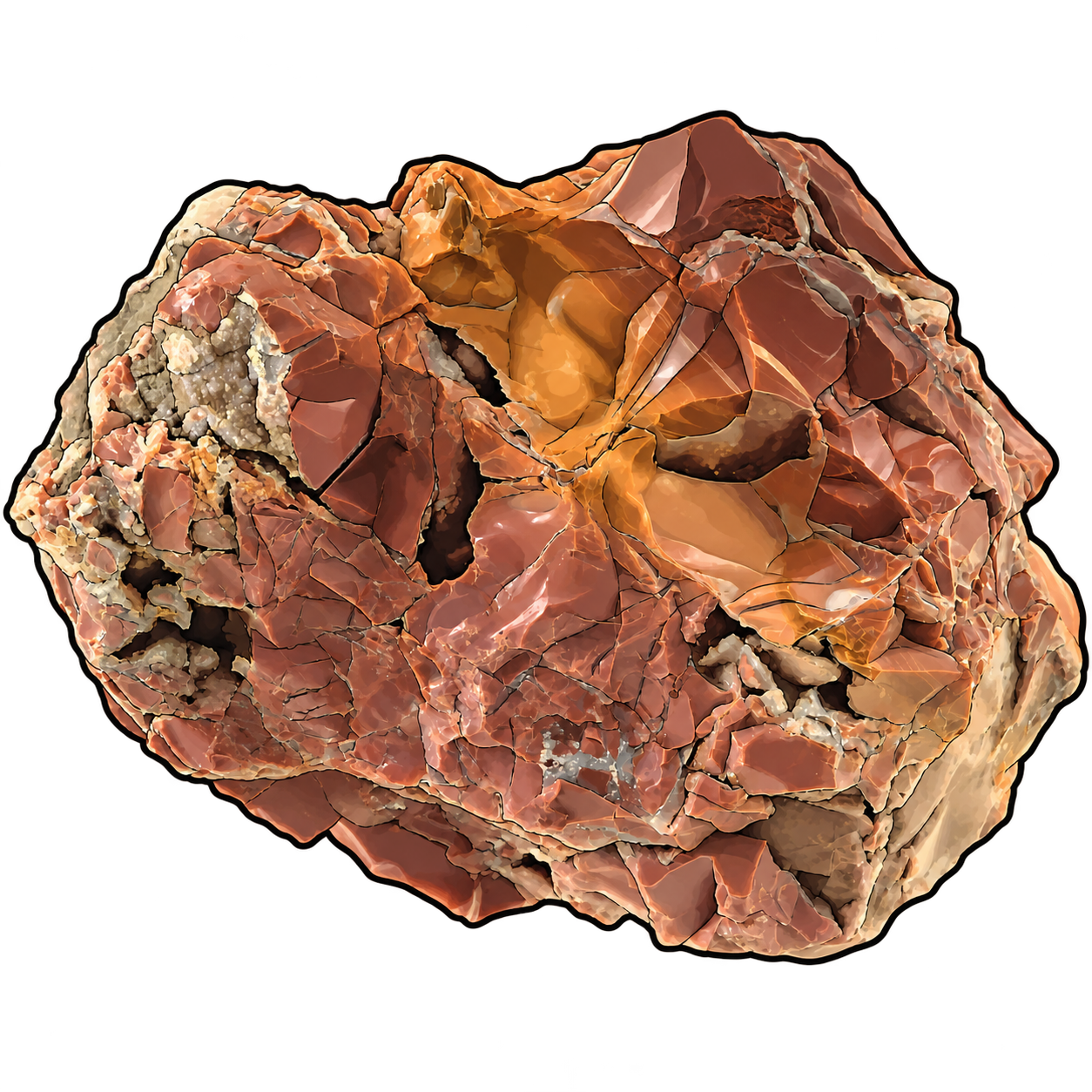
Hydrated Silica, Moving Color and Preserved Worlds
Hydrated silica material; precious opal shows play-of-color and common opal does not.
Opal can carry shifting spectral color, a quiet milky translucency or a rich brown body with no rainbow at all.
Read the specimen guide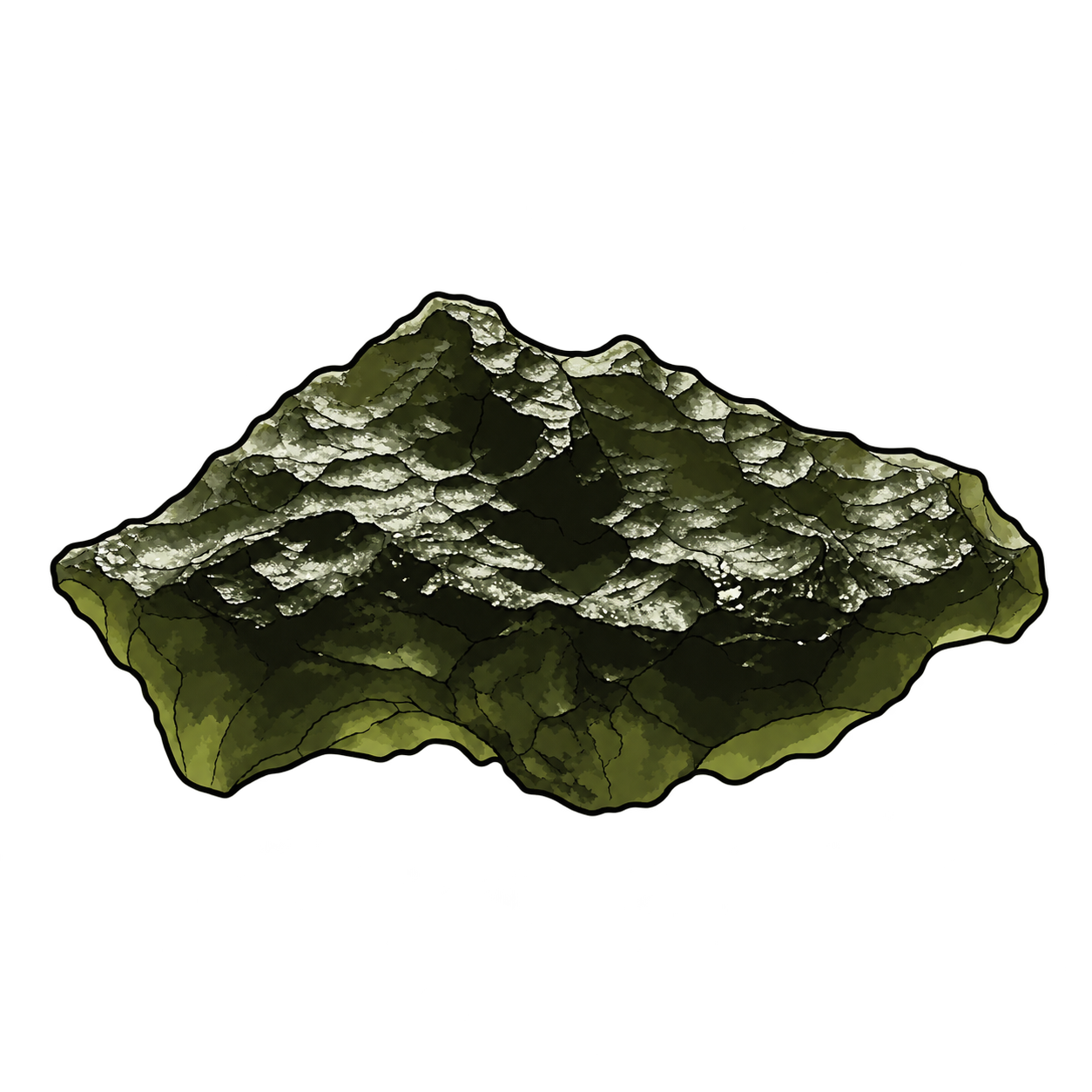
Earthly Glass from an Extraordinary Impact
Natural impact-generated glasses derived from terrestrial material.
Moldavite is associated with a collision from space, but its glass is transformed terrestrial material—not a green fragment of the incoming meteorite.
Read the specimen guide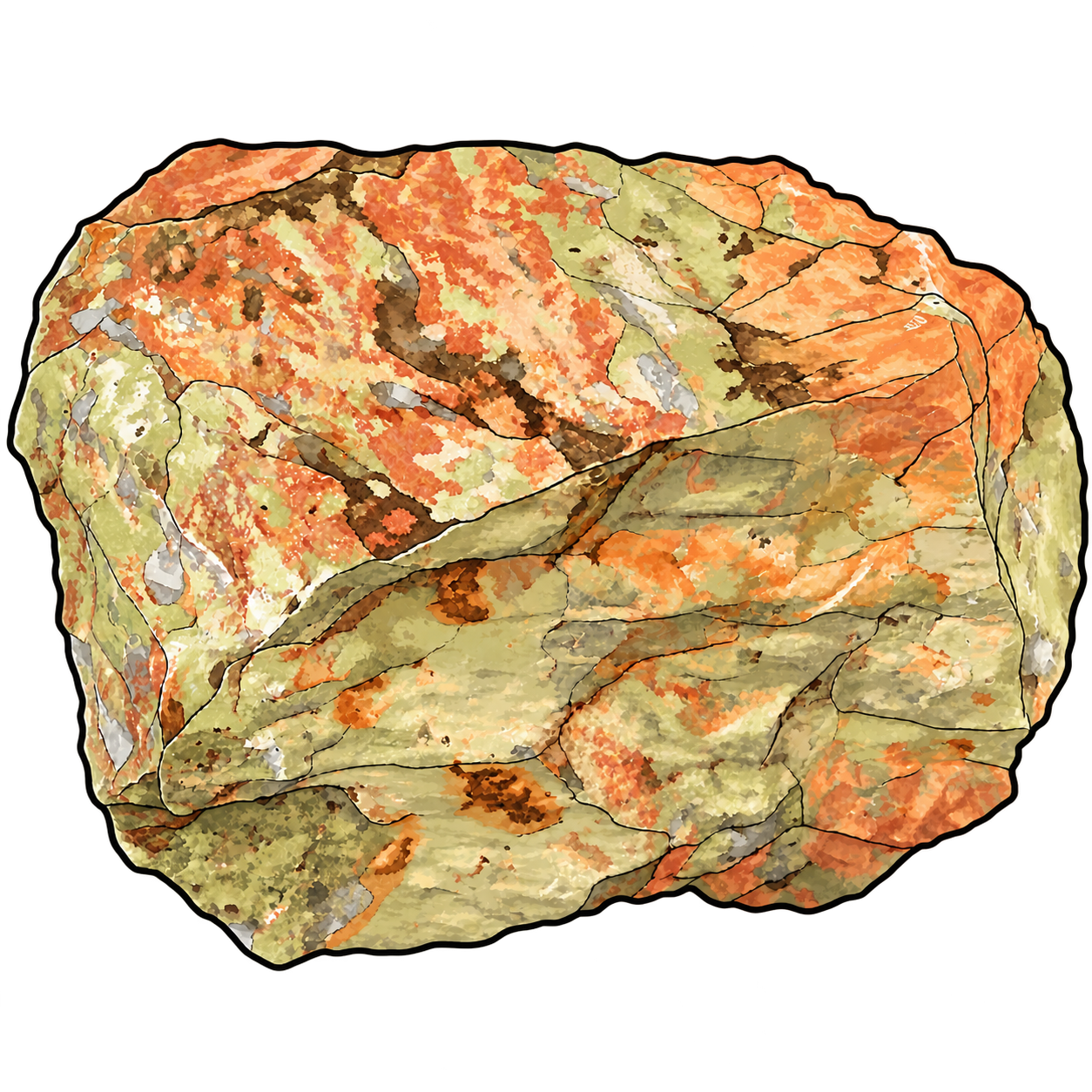
Pink feldspar and green epidote in an altered granitic rock
Altered rock combining feldspar, epidote and commonly quartz.
Unakite's pink-and-green pattern belongs to a rock assembled from contrasting minerals.
Read the specimen guide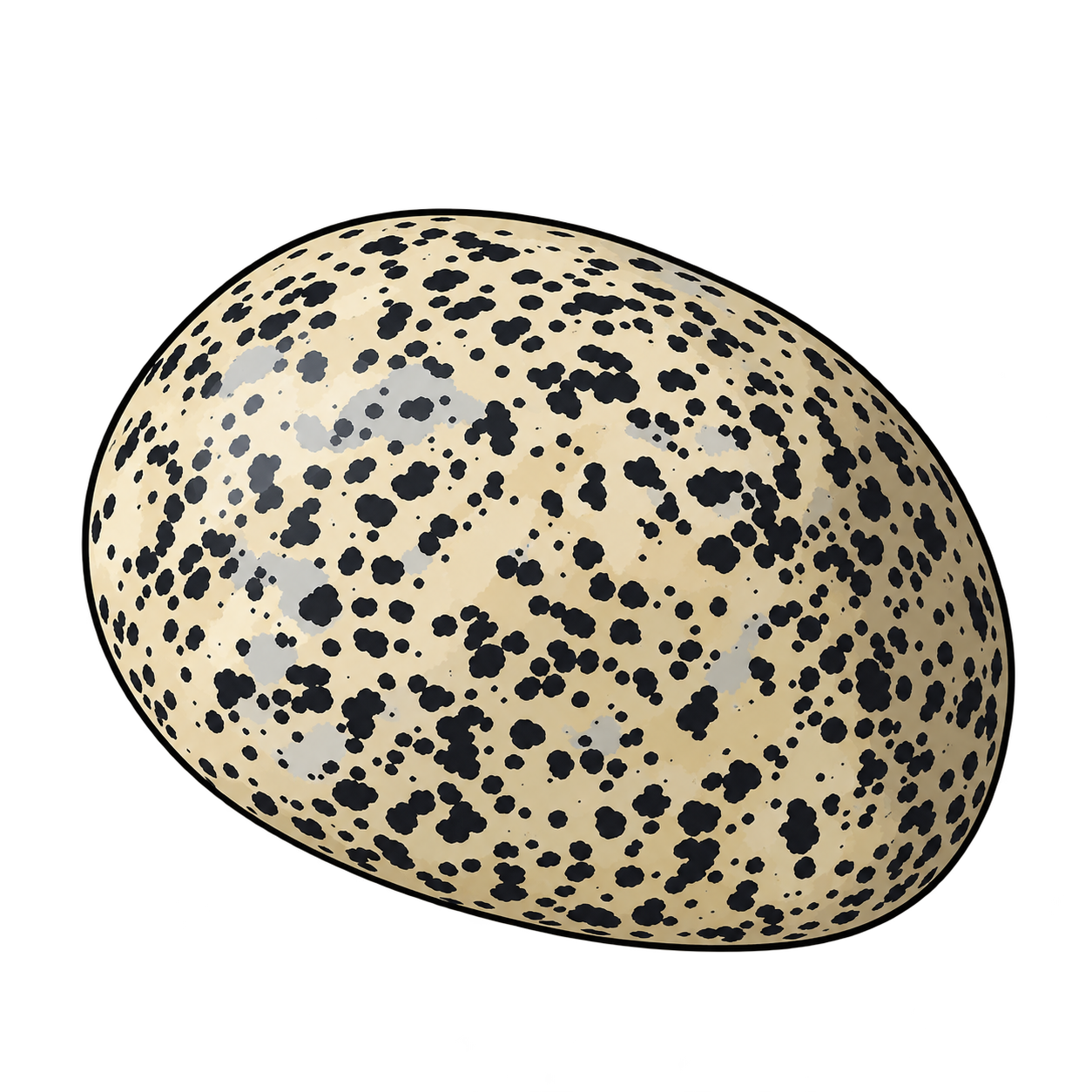
A pale feldspar-rich rock patterned with dark amphibole spots
Spotted ornamental rock; analyzed trade samples contain a feldspar-quartz matrix with arfvedsonite-rich dark areas.
Dalmatian stone is recognized by the contrast between its light groundmass and scattered dark spots.
Read the specimen guide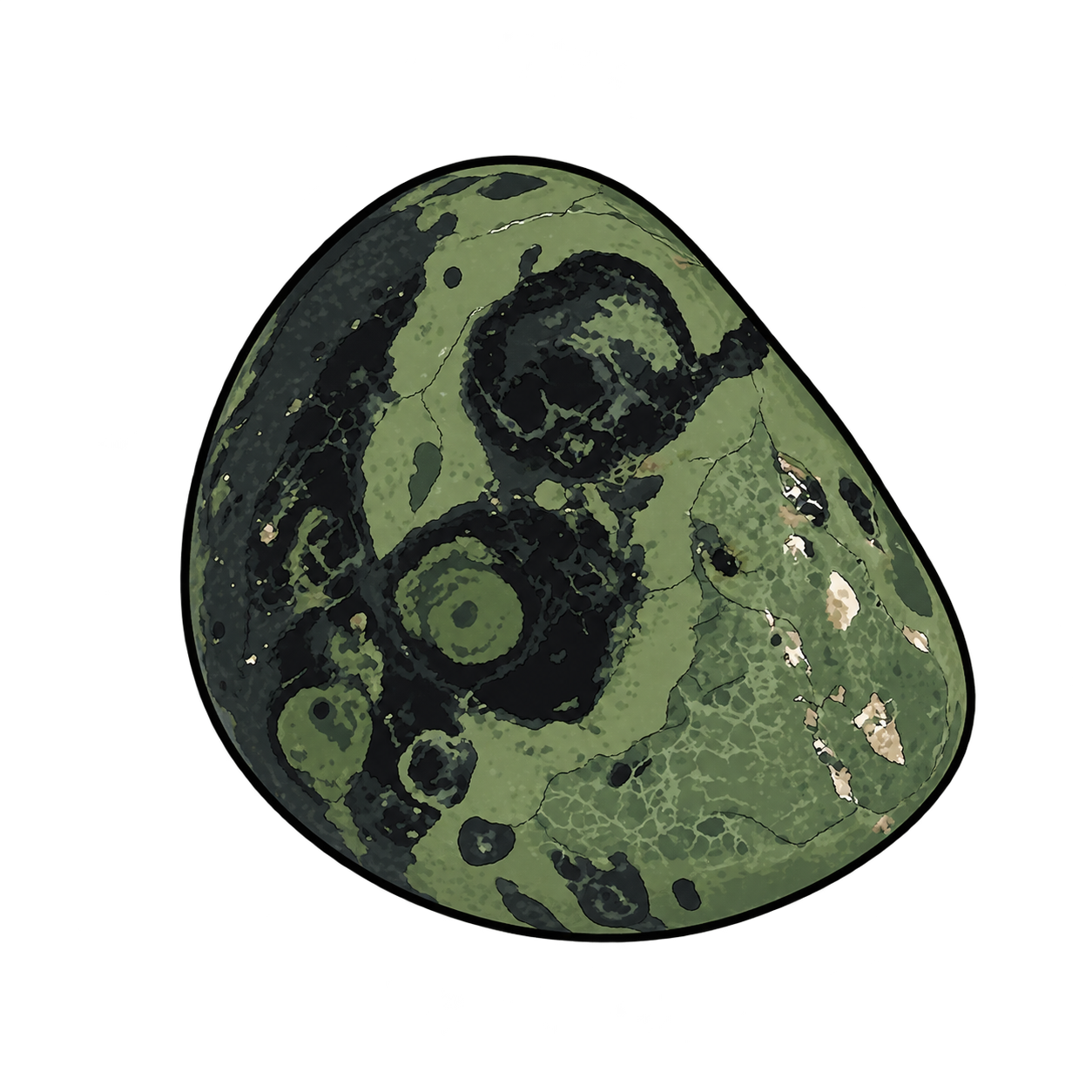
Green Orbicular Volcanic Rock
Green-and-black orbicular rhyolitic rock in the documented trade material.
Kambaba stone's dark rings and olive-green ground make it distinctive.
Read the specimen guide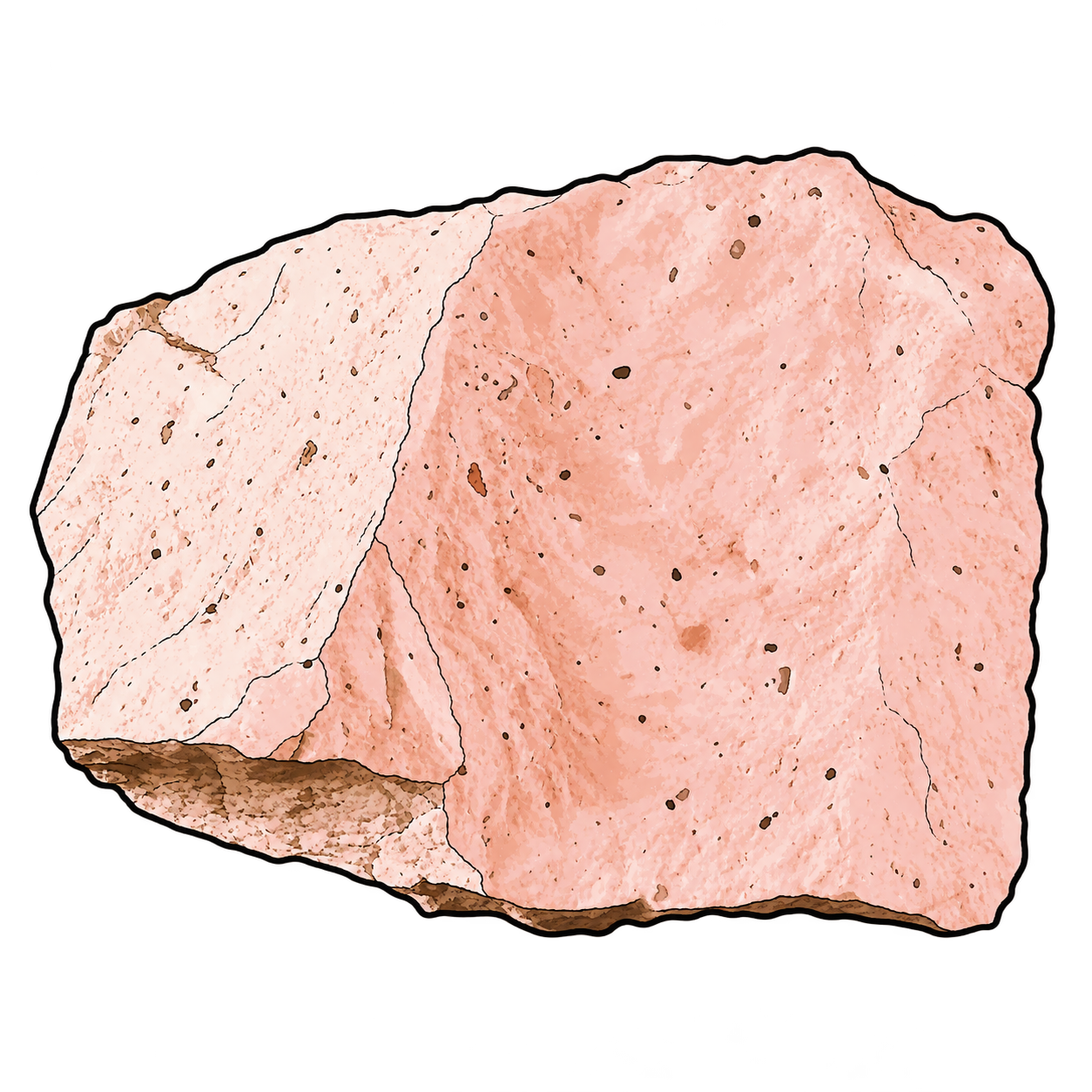
Silica-Rich Volcanic Rock
Silica-rich volcanic rock, with varied textures and mineral mixtures.
Rhyolite is a volcanic rock whose composition is rich in silica.
Read the specimen guide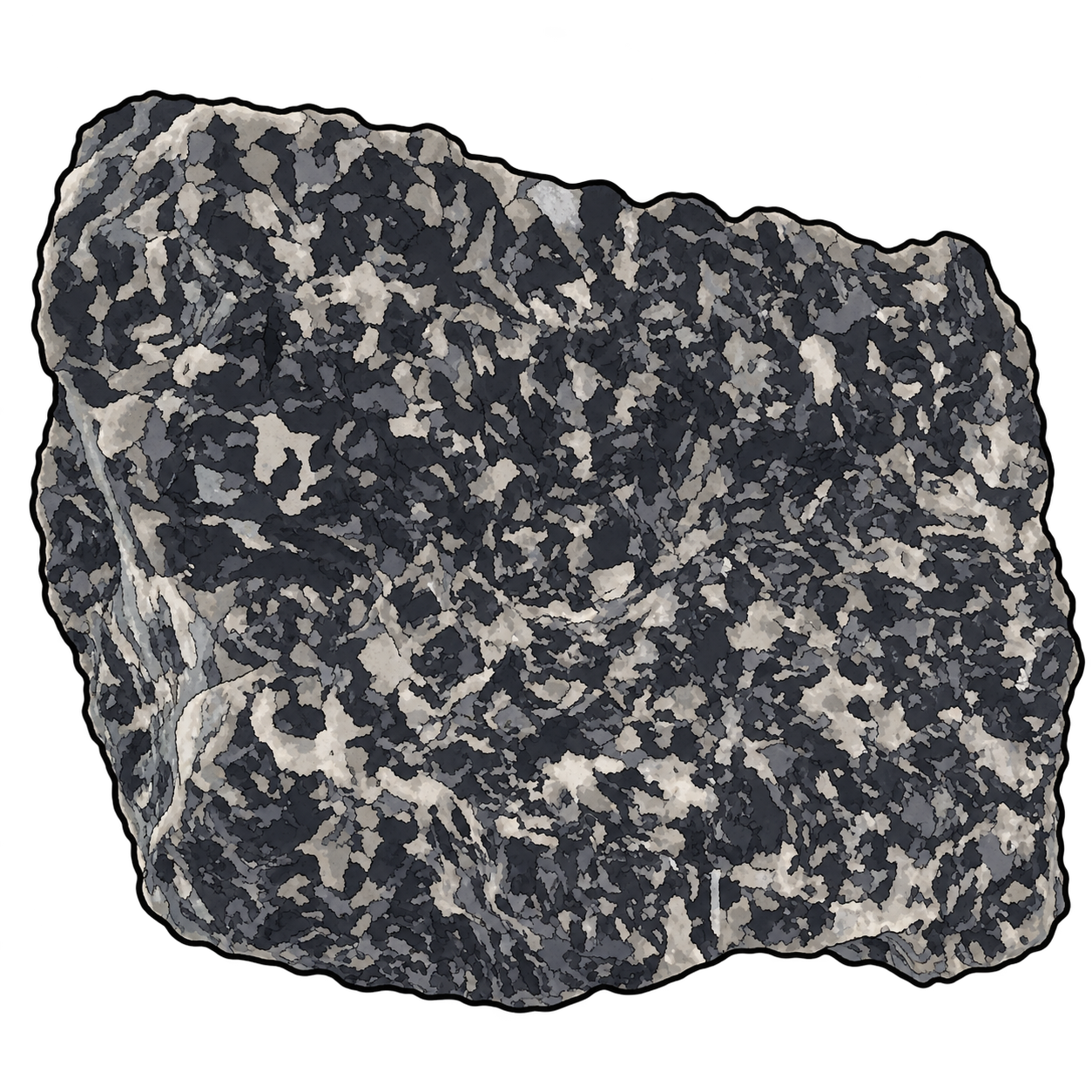
A Coarse-Grained Igneous Rock
Gabbro is a coarse-grained mafic igneous rock; indigo gabbro is a trade label.
Gabbro is a dark, coarse-grained rock formed as mafic magma crystallizes below the surface.
Read the specimen guide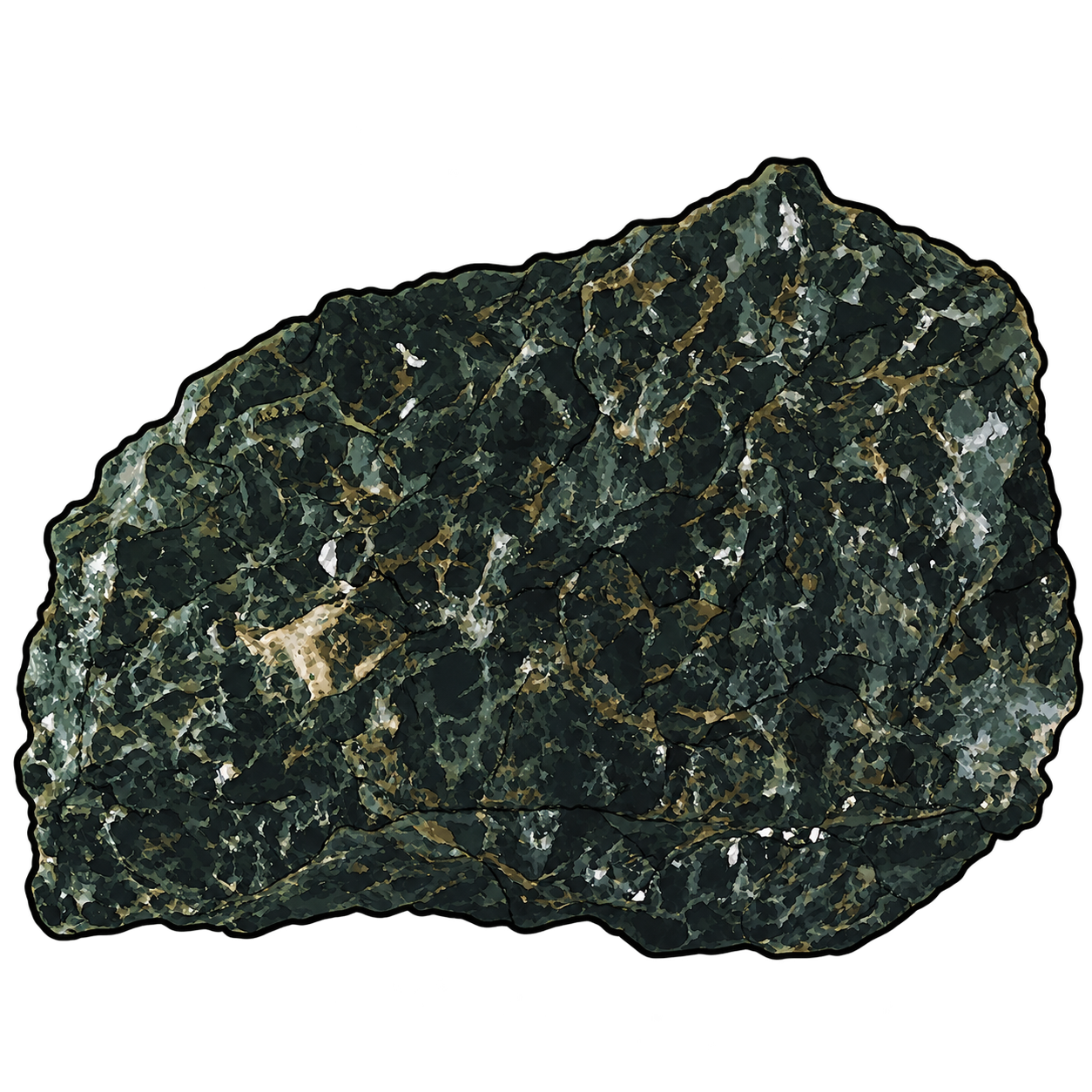
Bronzy Iron-Bearing Orthopyroxene
Bronzy-shimmering orthopyroxene material associated with the enstatite–ferrosilite series.
Bronzite names iron-bearing enstatite with a bronze-like reflection.
Read the specimen guide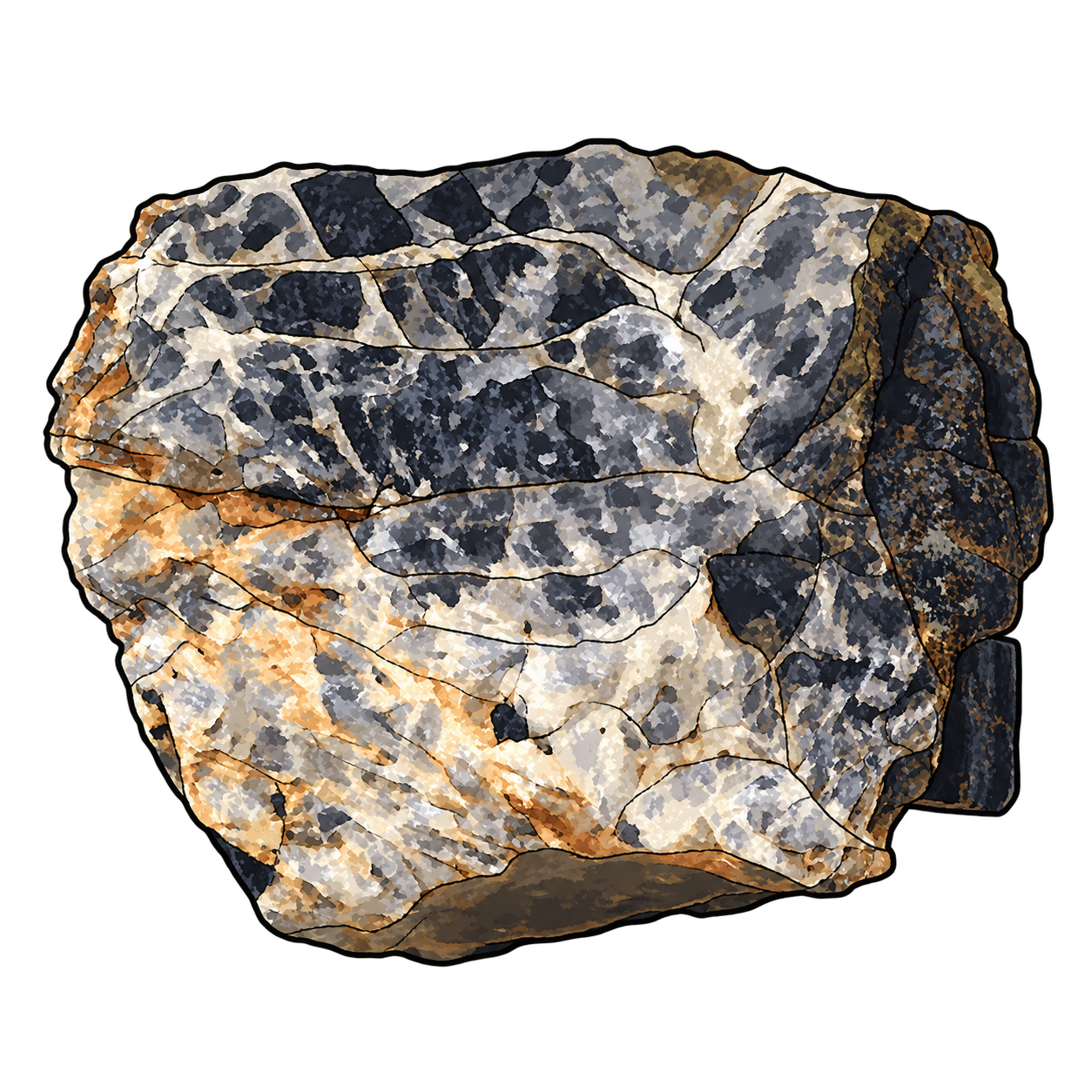
A Legacy Name for Iron-Bearing Orthopyroxene
Legacy name within the enstatite–ferrosilite series, retained in gem trade.
Hypersthene is a historical name for iron-bearing orthopyroxene, now classified within the enstatite–ferrosilite series.
Read the specimen guide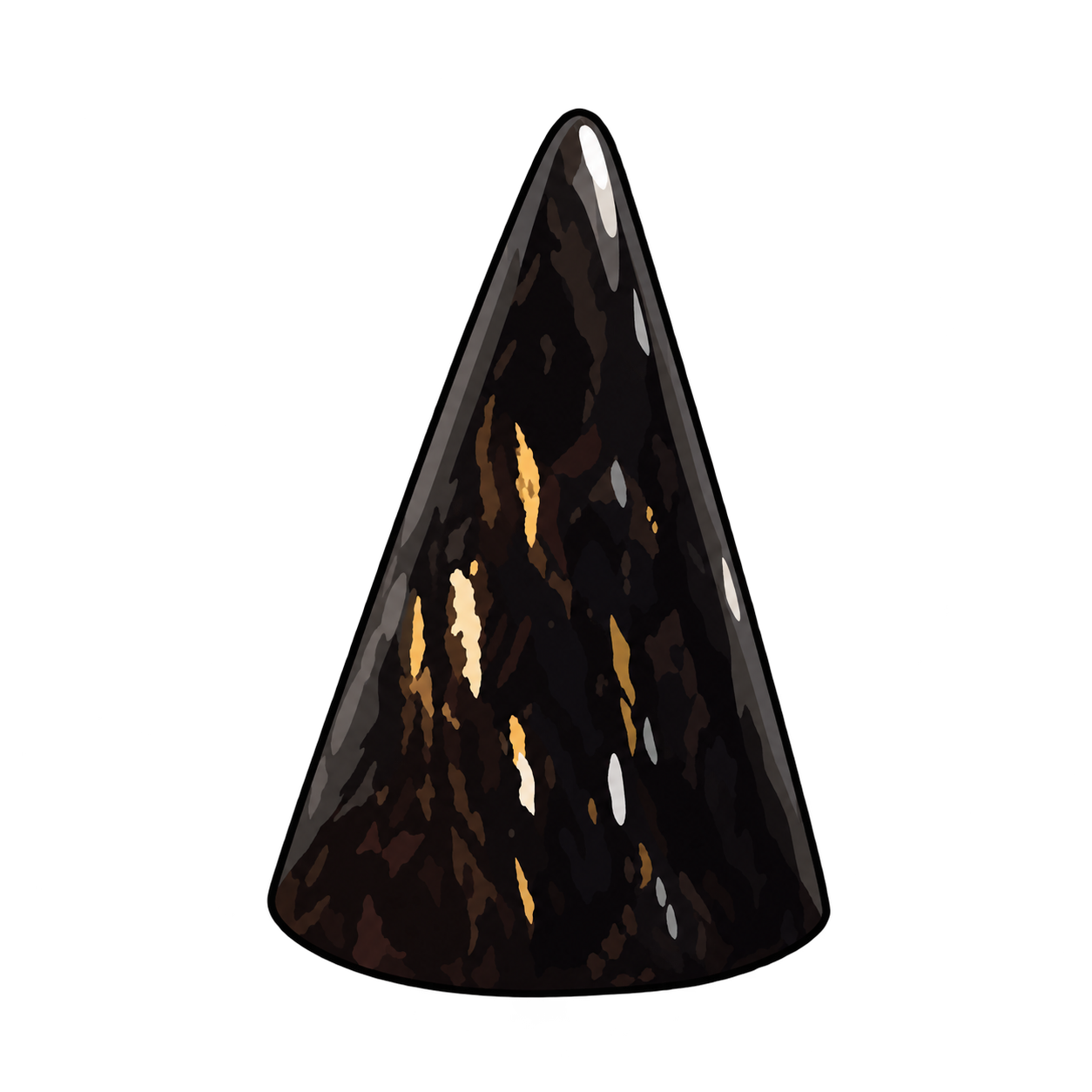
An Amphibole Rock with Hidden Iridescence
Iridescent amphibole-bearing metamorphic rock associated with Nuuk, Greenland.
Nuummite is a dark ornamental rock whose polished surface can reveal narrow flashes of gold, bronze, blue or violet.
Read the specimen guide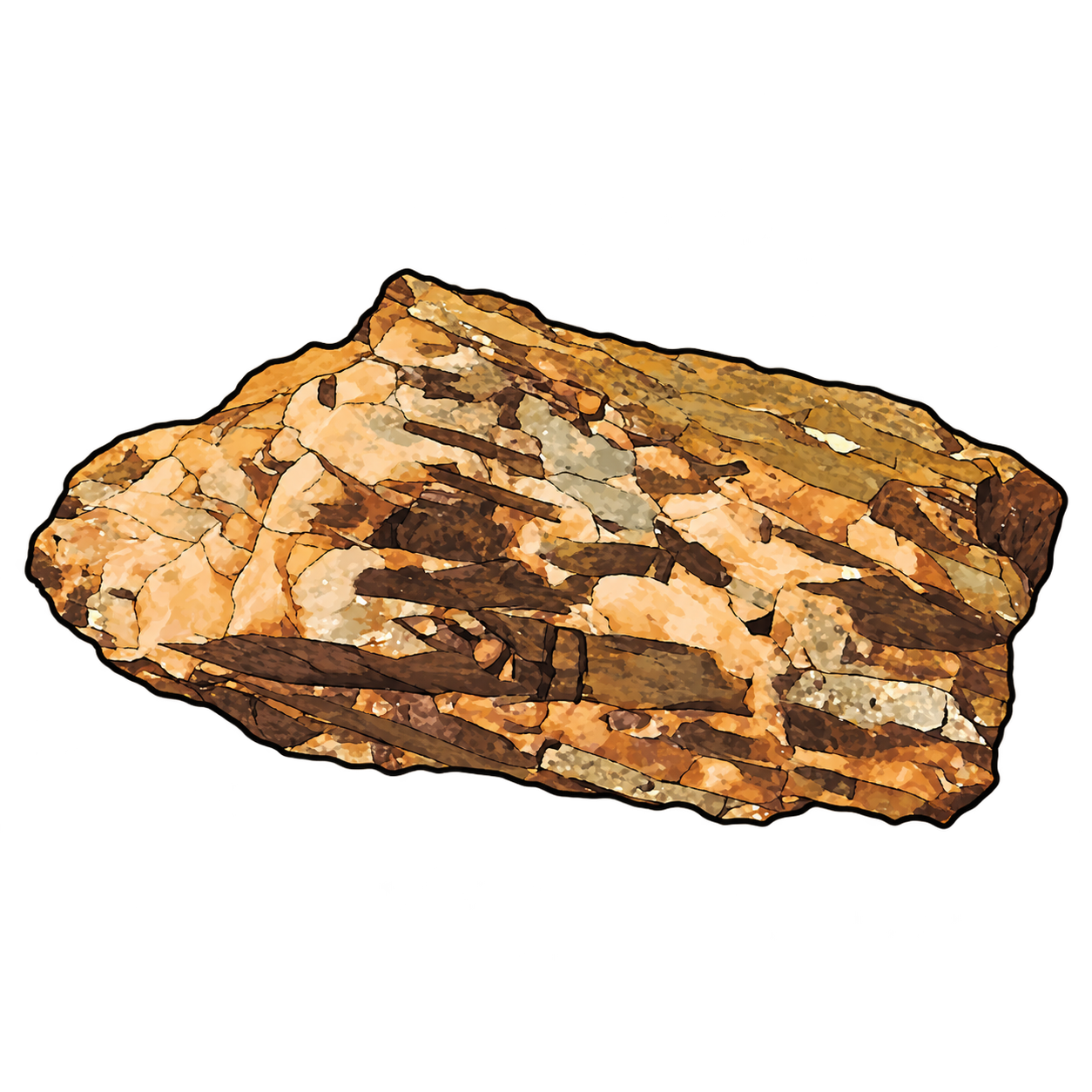
Bronze Blades in Pale Stone
Titanium-bearing silicate mineral with often radiating golden-brown blades.
Astrophyllite is a titanium-bearing silicate best known for bronze and golden-brown blades that spread through a contrasting host rock.
Read the specimen guide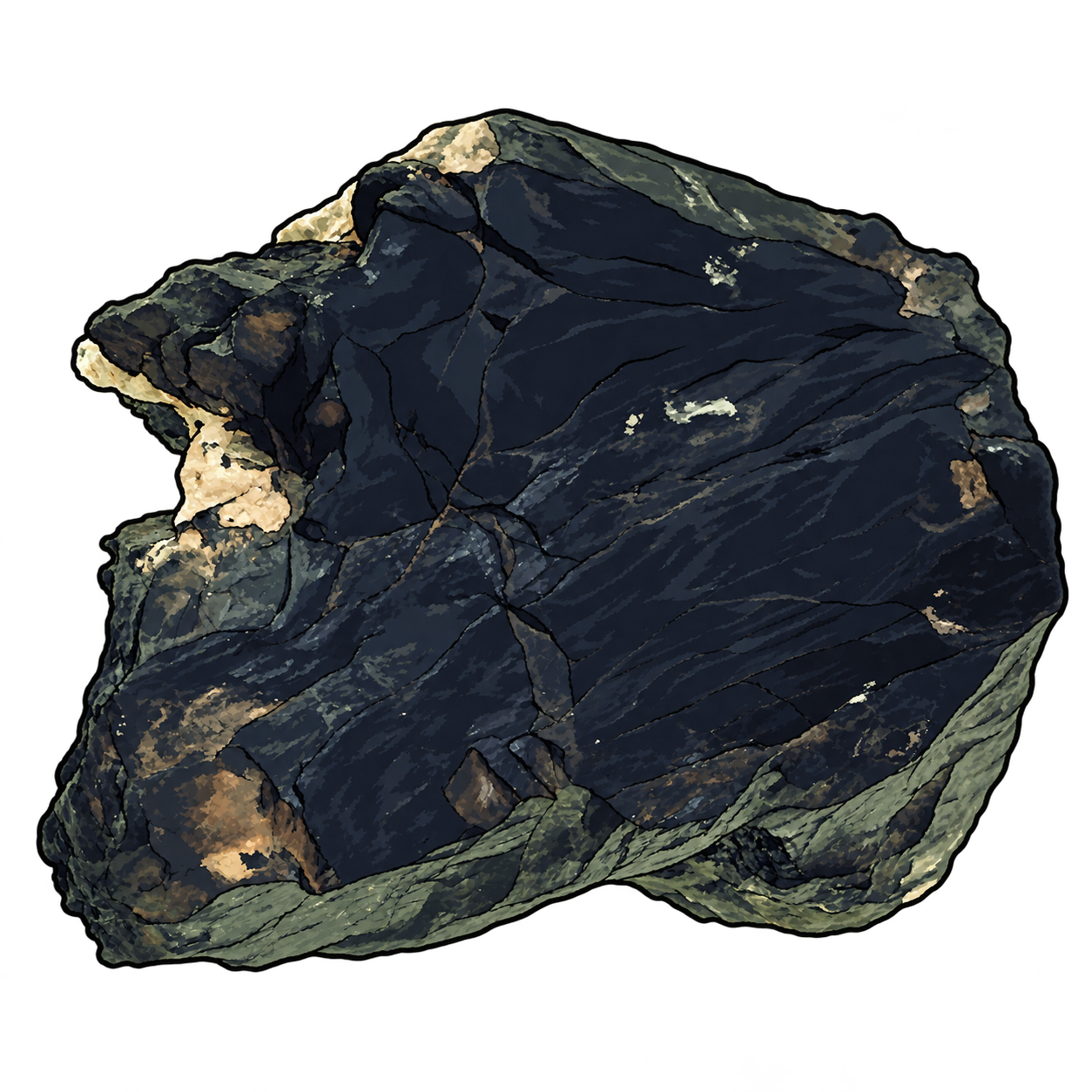
A Dark Amphibole with a Complex Interior
Sodium-rich amphibole mineral commonly in alkaline igneous rocks.
Arfvedsonite is a sodium-iron amphibole found in alkaline igneous rocks.
Read the specimen guide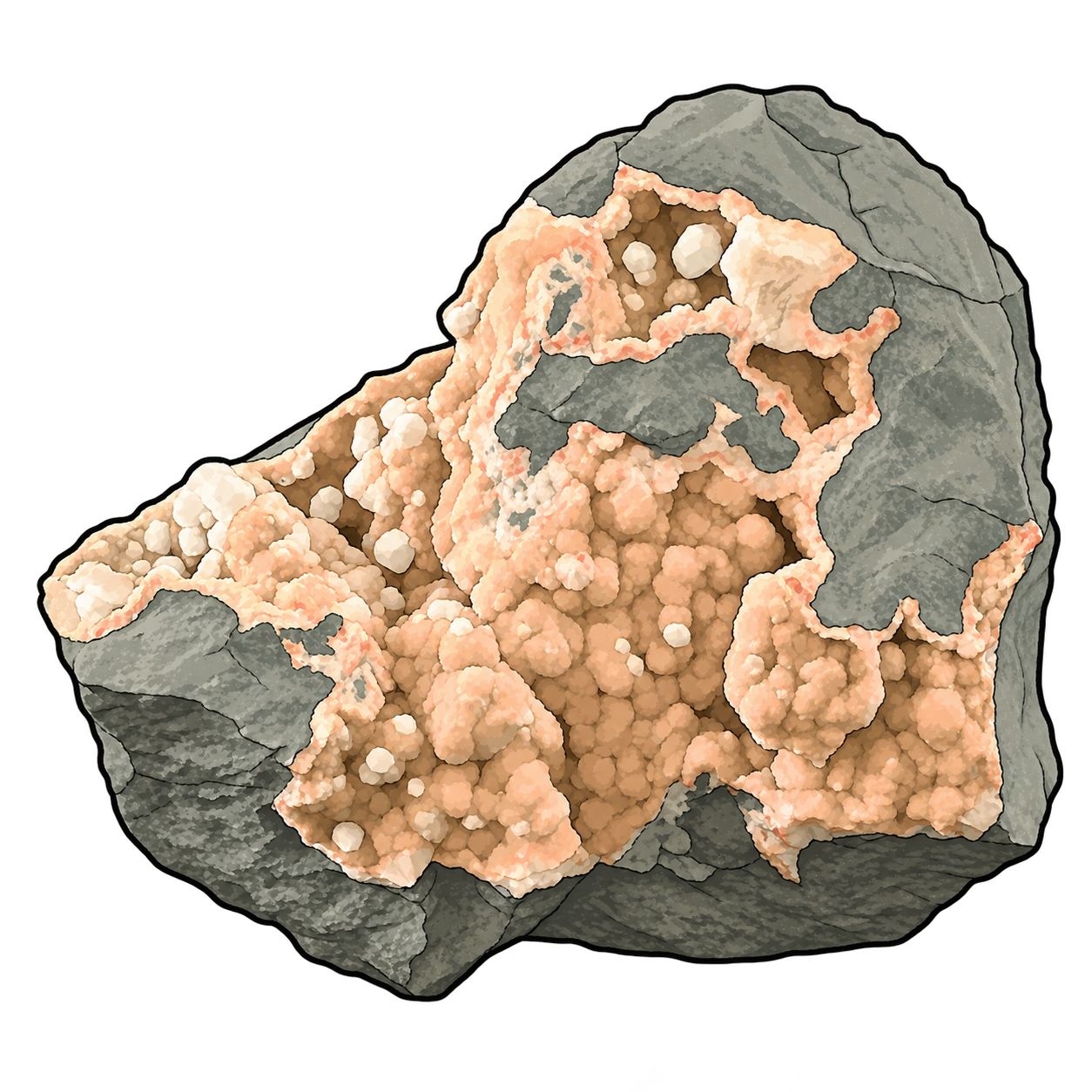
Clear Geometry in Mineral-Lined Cavities
A group of hydrous silicate minerals.
Apophyllite names a group of hydrated silicates whose reflective, blocky or pointed crystals often line mineral cavities.
Read the specimen guide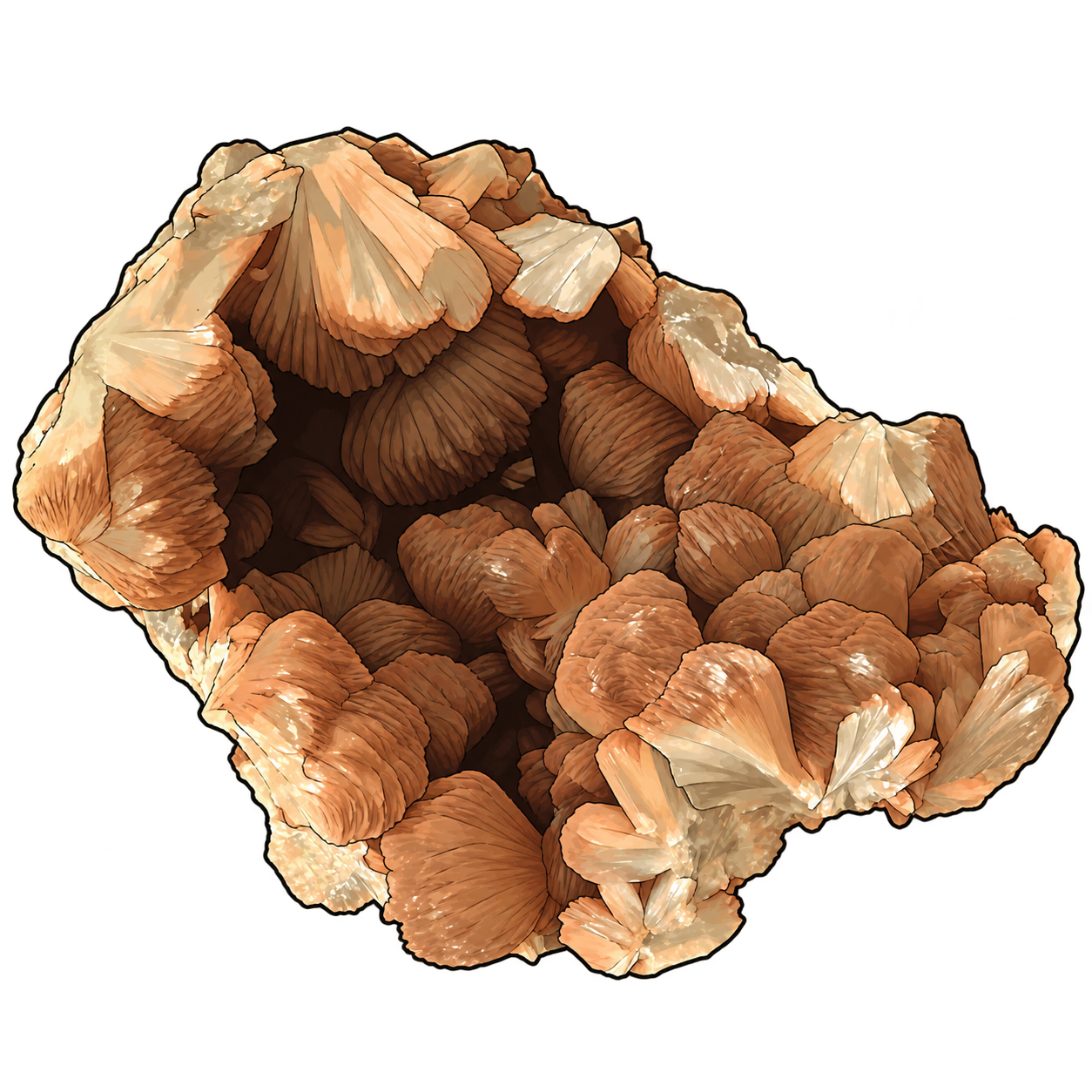
Open Frameworks, Fans and Fine Crystal Sprays
A family of hydrated aluminosilicates; species differ.
Zeolites are a family of minerals, not one stone with one formula.
Read the specimen guide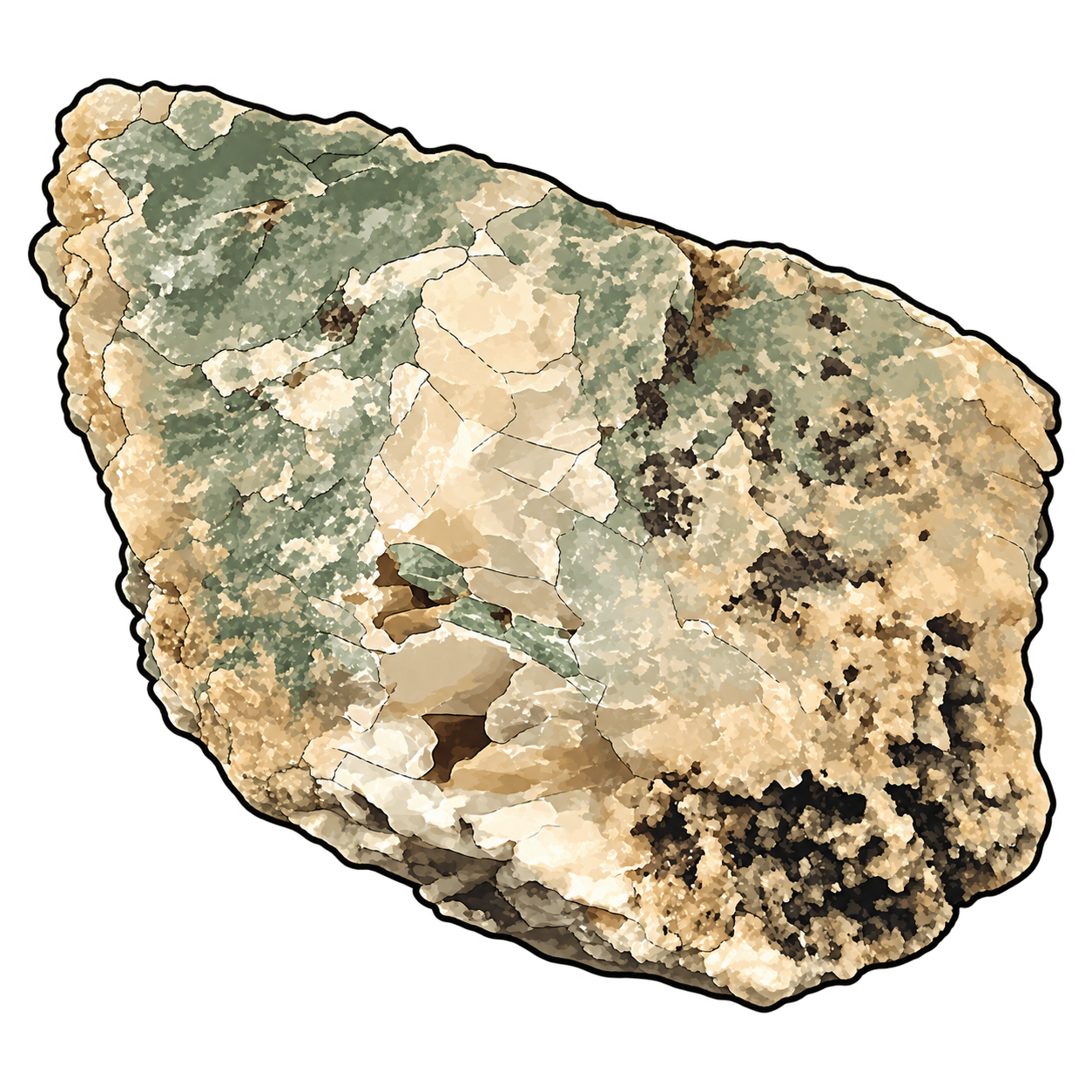
A Borosilicate of Clear Crystals and Quiet Color
Calcium borosilicate mineral.
Danburite occupies an interesting space between mineral cabinet and jewelry case.
Read the specimen guide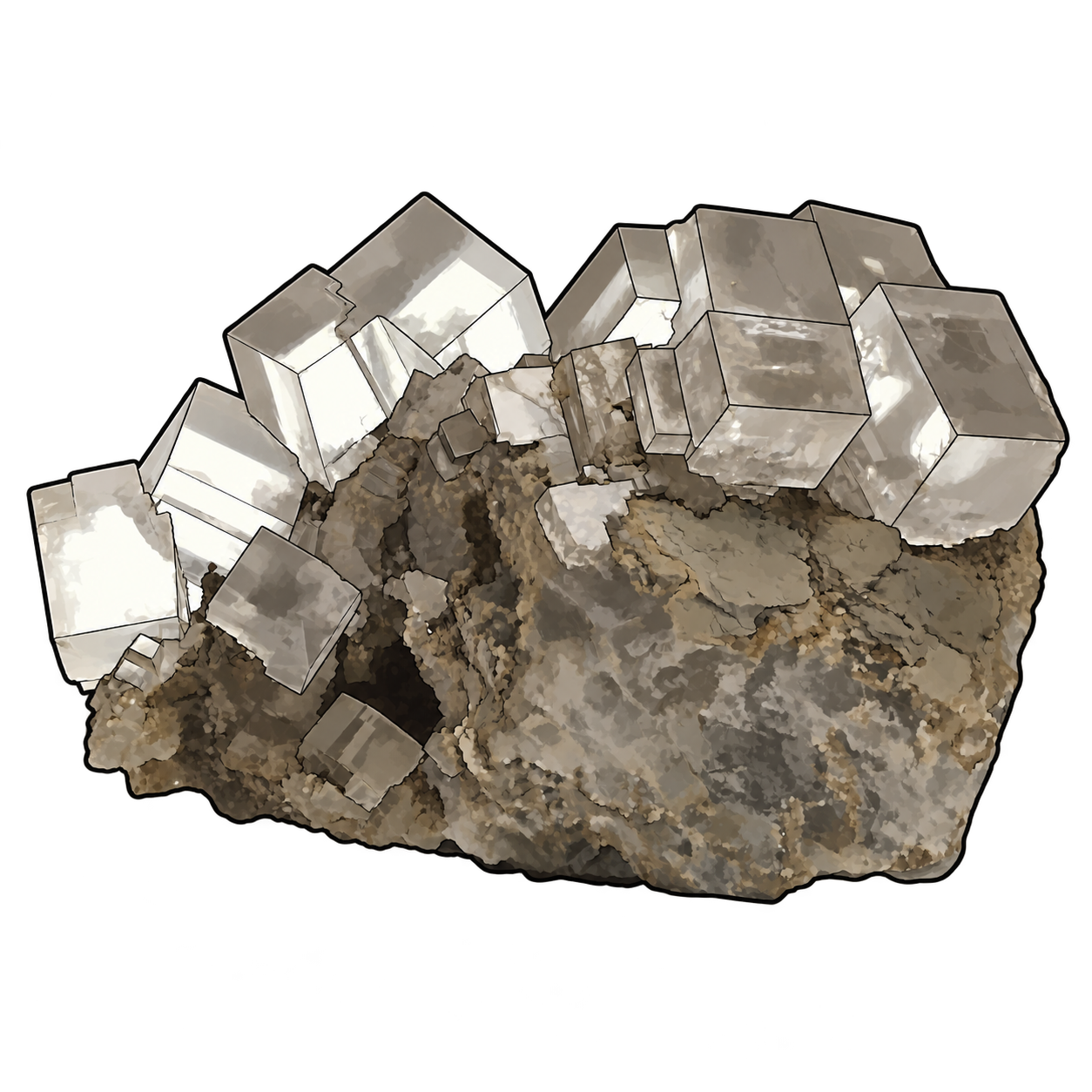
Salt Crystals, Vanished Waters and Preserved History
Sodium chloride mineral, occurring in evaporite deposits.
Halite is sodium chloride in mineral form.
Read the specimen guide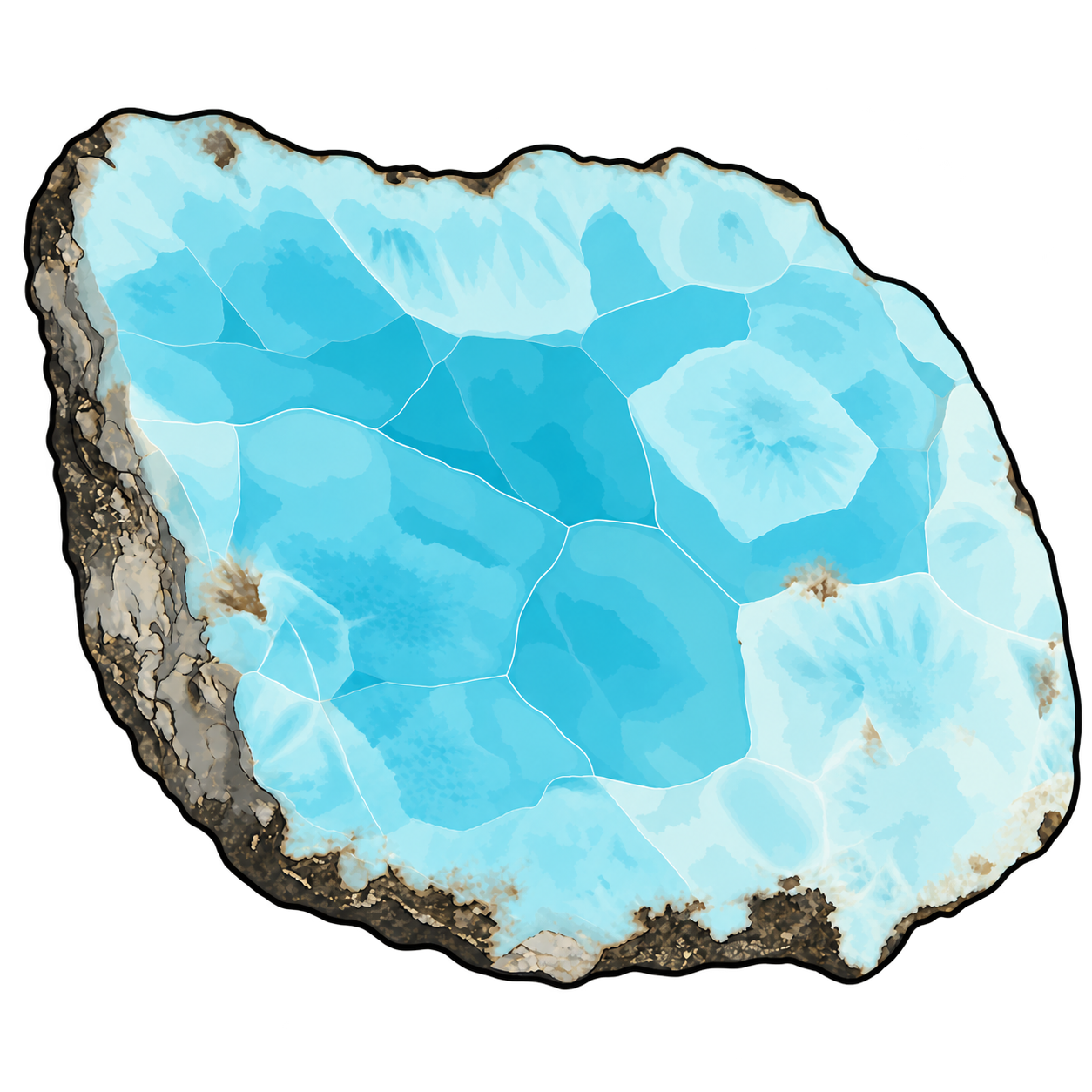
Blue Pectolite from the Dominican Republic
Blue pectolite trade material from the Dominican Republic.
Larimar's blue-and-white pattern can resemble light moving over shallow water.
Read the specimen guide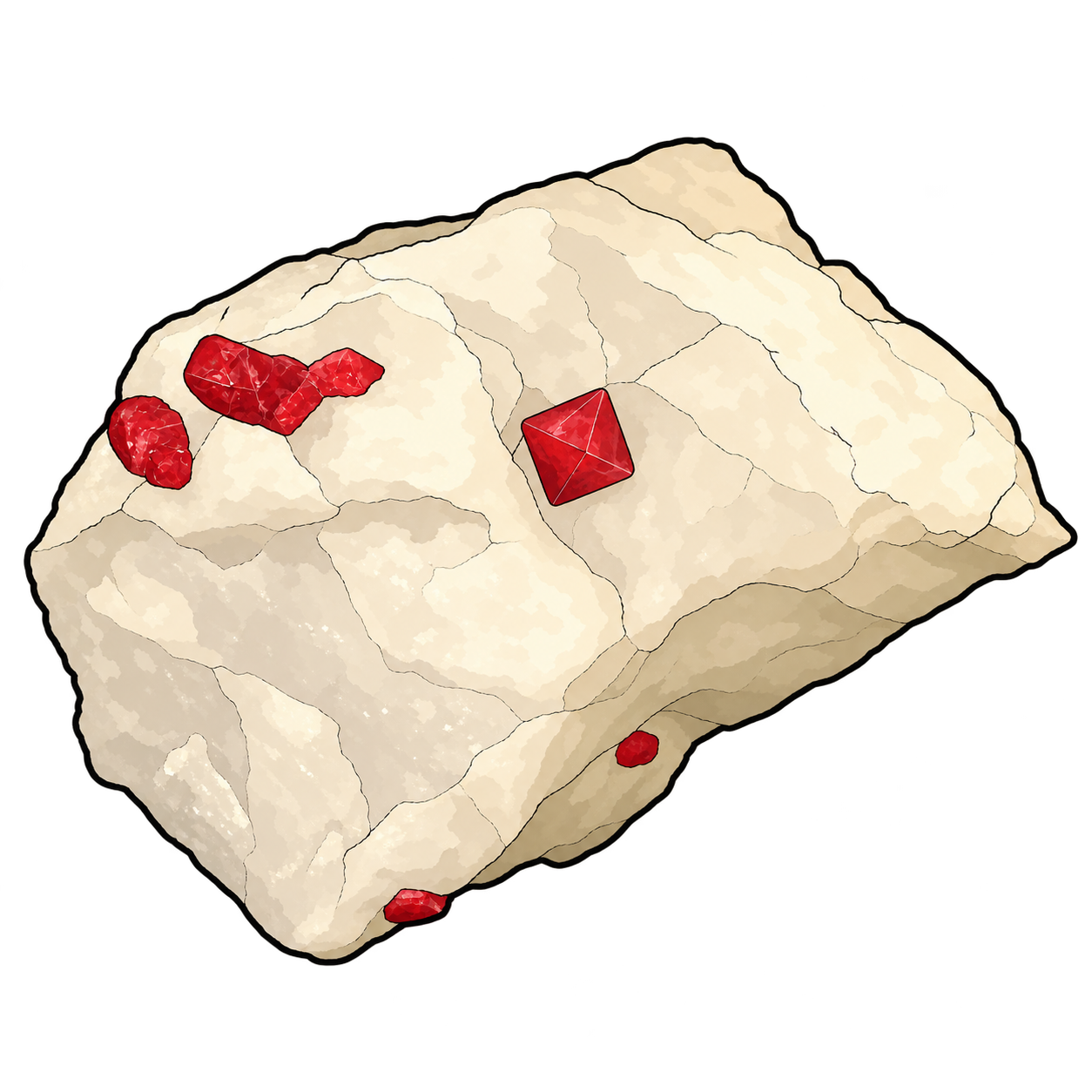
A Gem with a History Beyond Ruby
Magnesium aluminium oxide mineral.
Spinel does not need to borrow another gemstone's reputation.
Read the specimen guide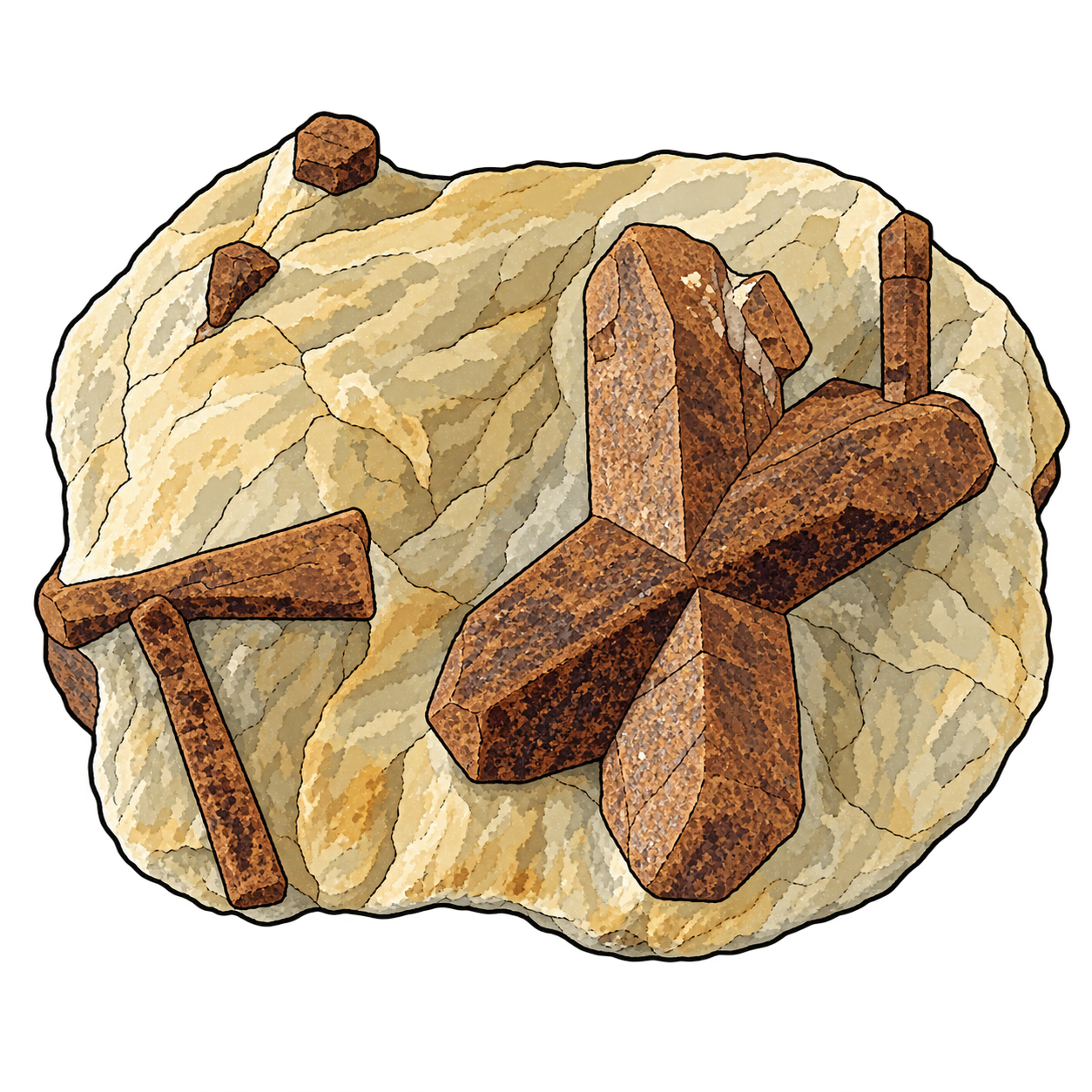
Natural Crosses in Metamorphic Rock
Iron-rich aluminium silicate, sometimes naturally twinned into cross-like forms.
Staurolite's crossed crystals are among the most recognizable shapes in a mineral collection.
Read the specimen guide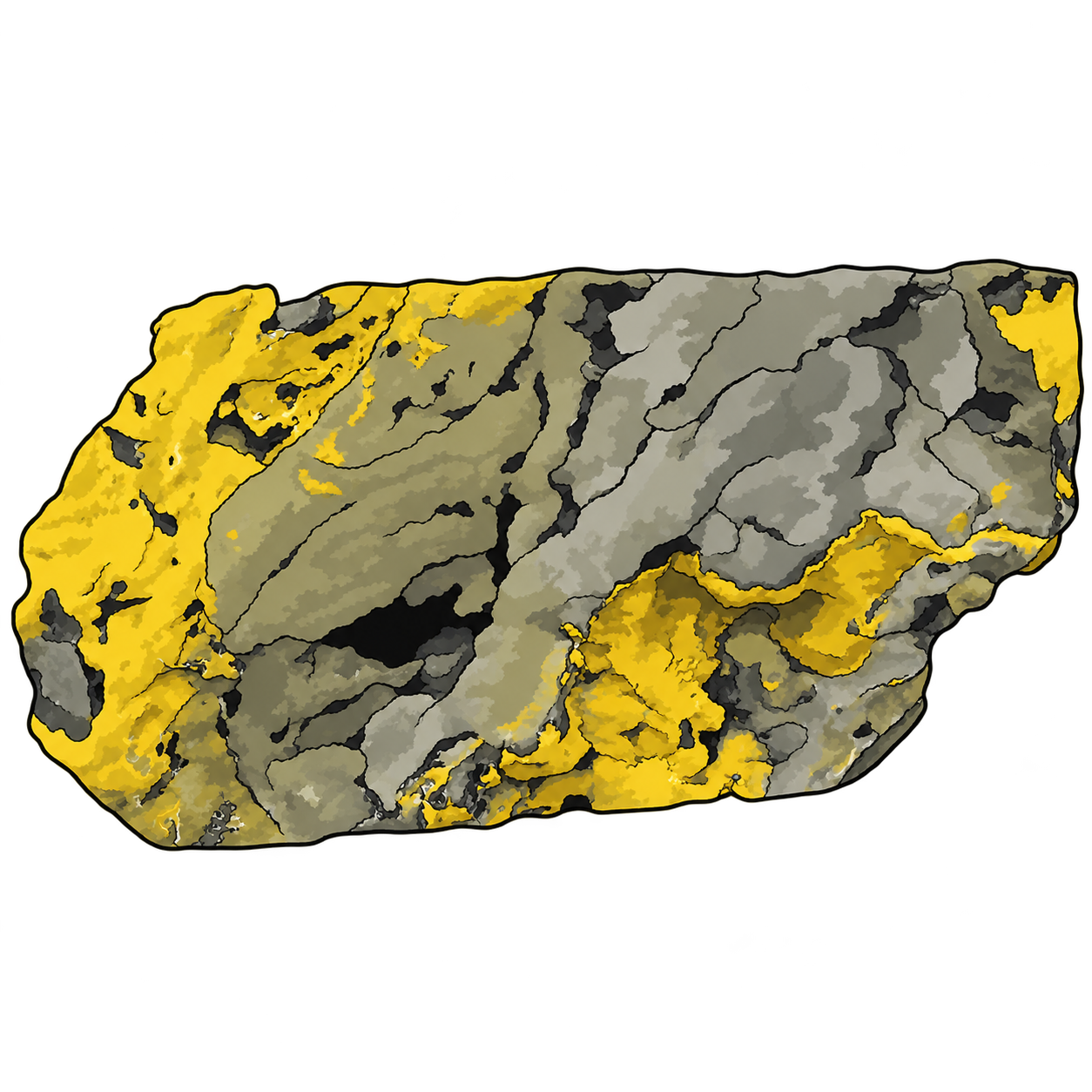
Carbonate, Sulfide Pigments and Striking Bands
Carbonate-rich Indonesian decorative rock, despite the common jasper label.
Bumblebee stone takes its trade name from the contrast of yellow, orange, gray and black.
Read the specimen guide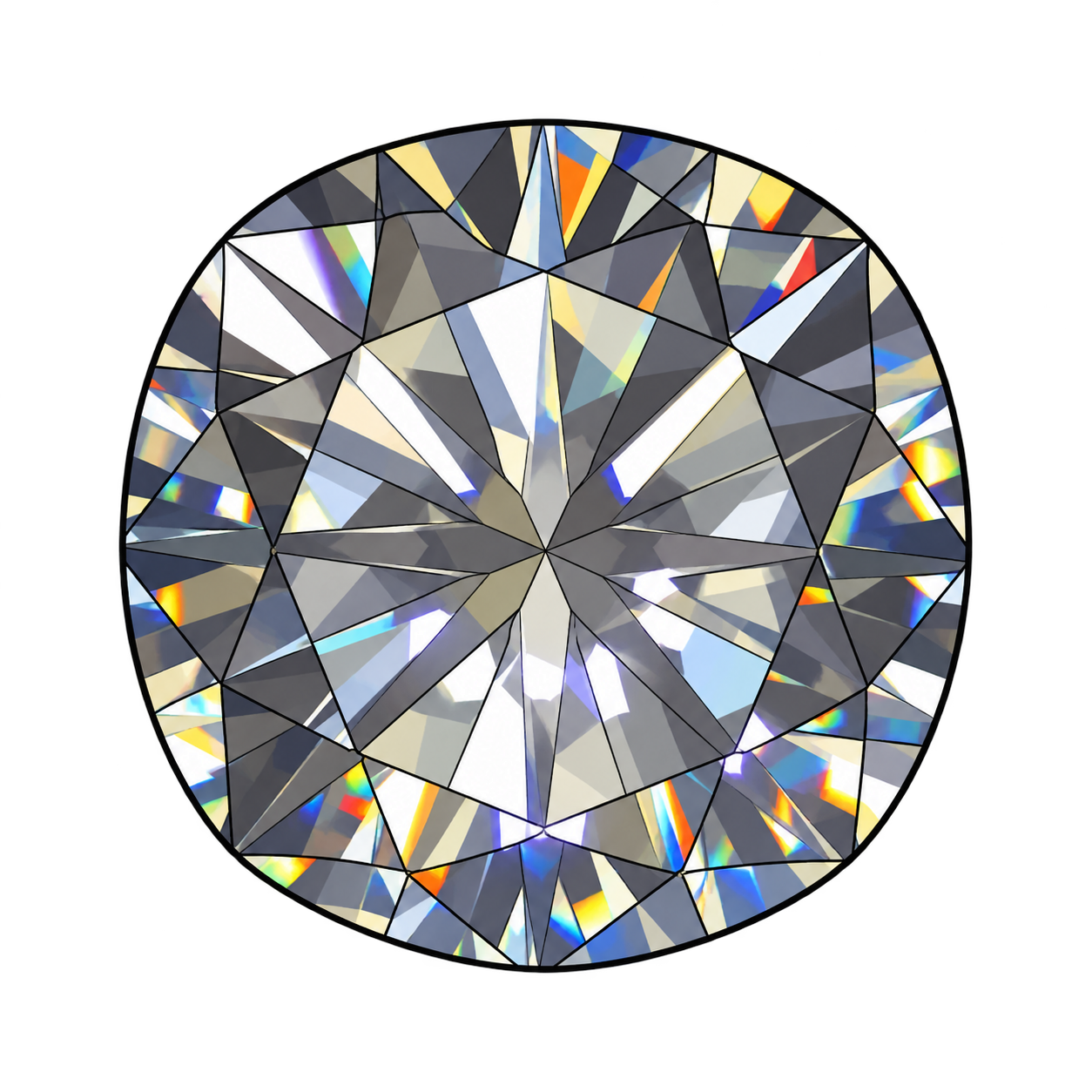
Silicon Carbide, Natural Rarity and a Grown Gem's Fire
Silicon carbide (SiC); rare natural mineral, with laboratory-created material supplying the gem trade.
Moissanite brings together two different stories: rare natural silicon carbide and deliberately grown crystals made into brilliant jewelry.
Read the specimen guide