Corundum's colors, histories and hidden distinctions
Ruby and Sapphire
Red and other colored gem varieties of corundum.
Corundum mineral species with gem color and optical varieties
Loading this page…
Return homePlease wait while the next page arrives.


Corundum's colors, histories and hidden distinctions
Red and other colored gem varieties of corundum.
Corundum mineral species with gem color and optical varieties
Corundum is aluminum oxide.
Geology · Human history · Spiritual attributes
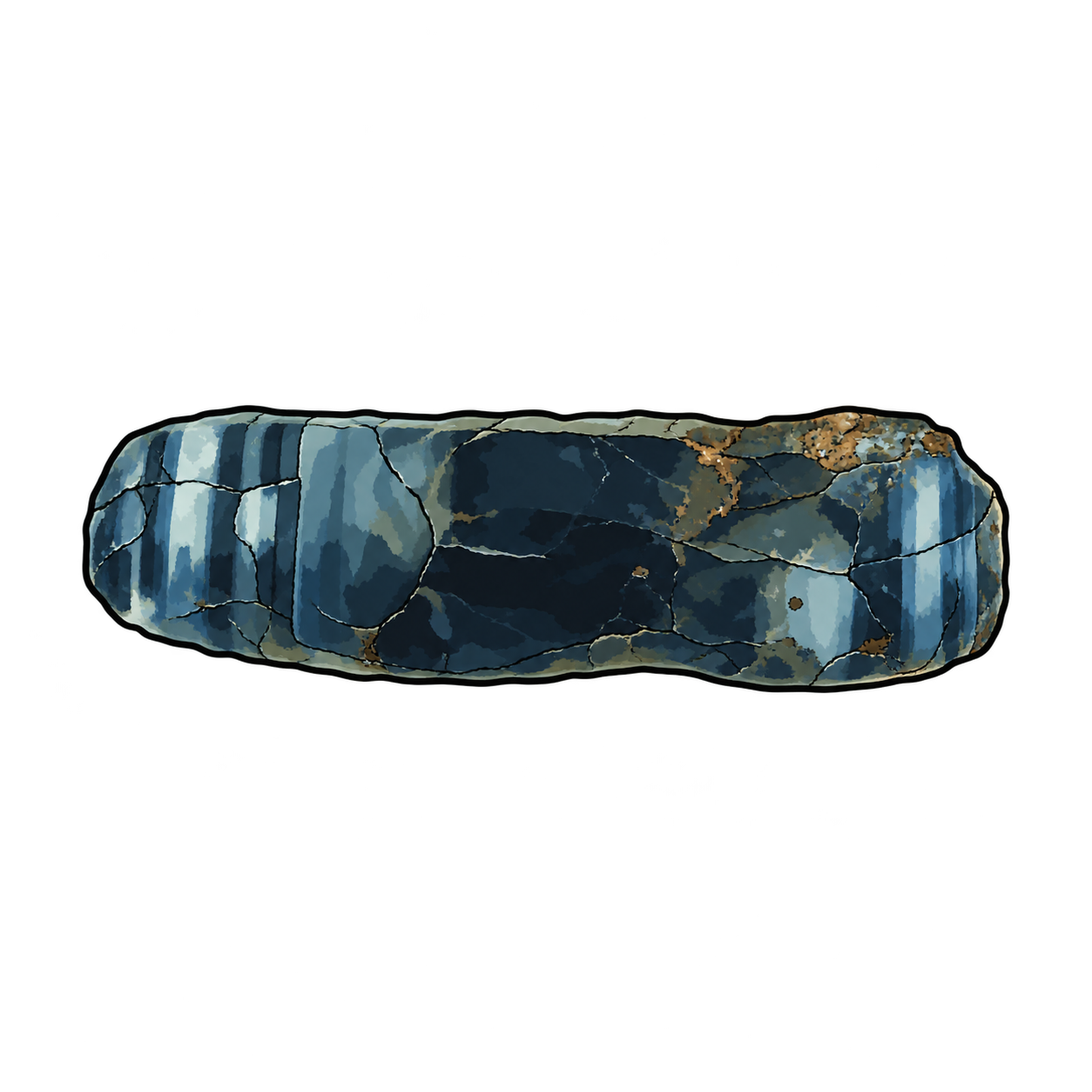
Ruby and sapphire share a mineral identity but have distinct symbolic lives. The Crystal Council associates ruby with courage and purposeful action, and blue sapphire with insight and thoughtful expression. These are contemporary spiritual meanings rather than demonstrated effects of corundum. [1,2]
Corundum is aluminum oxide. Its crystals can be tabular, barrel-shaped or elongated, with growth striations and twinning that may remain visible in rough material. Its Mohs hardness of9 makes it highly scratch-resistant, and its specific gravity is close to4. Hardness does not mean that a fractured crystal is unbreakable. [5]
Corundum lacks ordinary cleavage, but parting may occur along particular structural planes, and existing fractures can still propagate. A compact, sound gem can be exceptionally durable while a cracked specimen of the same mineral requires careful handling. That distinction is more useful than treating all ruby and sapphire as mechanically identical. [5]
Pure corundum is colorless. Trace constituents and structural defects modify the wavelengths it absorbs. Chromium produces ruby's red and can also create red fluorescence. Iron can suppress that fluorescence, helping explain why some rubies appear to glow more strongly than others under the same illumination. A vivid appearance is not, by itself, a reliable geographical fingerprint. [6]
Blue sapphire's color commonly involves iron and titanium. Sapphire also includes pink, yellow, green, orange, violet and colorless stones. Some contain distinct color zones, called parti-color when contrasting regions contribute visibly to the finished gem. The word sapphire is therefore broader than the familiar blue jewel. [7]
Corundum deposits have diverse geological histories. Giuliani and Groat's review distinguishes primary deposits, where gems remain associated with their formation environment, from secondary deposits produced by weathering and redistribution. Both magmatic and metamorphic settings contribute to the story. Basalt can transport crystals formed elsewhere rather than being the place where every associated gem crystallized. [8]
Resistant corundum can survive the breakdown of its host and accumulate in gravels. The location where a gem is recovered is consequently not always its original growth site. This is one reason origin determination combines inclusions, chemistry and geological comparison rather than relying on a country's name or the appearance of rough alone. [8]
Marble-hosted ruby provides a more specific example. GIA describes ruby in metamorphosed carbonate rocks from parts of Asia; these environments often produce relatively low-iron material with noticeable red fluorescence. Other settings yield different chemical combinations. The relationship between host geology and gem appearance is informative, but individual stones still need examination. [6]
A star ruby or star sapphire presents a moving optical effect, usually six-rayed, produced when oriented inclusions reflect light through a suitably cut curved surface. The cutter's orientation and dome shape help reveal the phenomenon. A star is not a painted mark, and its presence alone does not distinguish natural from laboratory-grown corundum. [7]
Color-change sapphire is different: its overall color impression changes between light sources. Color zoning is different again, consisting of regions within the crystal. Distinguishing these phenomena prevents several visually striking but physically unrelated effects from being described simply as “shifting color.” [7]
The value of an inclusion depends on the question being asked. An inclusion may interrupt transparency, create a star or preserve evidence of formation and treatment. A gemological report is an identification document with specific findings; it is not a substitute for judging whether a particular jewel's color and appearance appeal to its owner.
GIA records traditions in which ruby represented life-force, protection, status and devotion, including an Indian account of offerings to Krishna and European beliefs surrounding prosperity and love. These are reported historical associations, not instructions or proven effects. Their settings matter: a devotional gift and a protective jewel were different uses of the same red material. [3]
Sapphire's medieval association with Heaven helped make it suitable for clerical jewelry, while its symbolism of sincerity and fidelity continues in modern engagement rings. GIA also notes that the ancient word sappheiros probably referred to lapis lazuli. Historical names cannot always be mapped directly onto modern mineral species. [4]
Three questions should remain separate: what mineral is it, where did it grow, and what happened to it afterward? Laboratory-grown corundum is corundum, whereas a glass imitation is not. A natural ruby may still have been heated or filled. None of those distinctions is resolved by the word “real.”
Treatment can have practical consequences. GIA explains that lattice-diffusion color may penetrate to different depths; recutting or surface damage can remove shallow treated color. Glass filling reduces the visibility of fractures but introduces material that is more chemically vulnerable than corundum. A heavily filled stone must not be cared for as though its durability were determined solely by a hardness of9. [9]
For sound untreated or ordinarily heat-treated corundum, mild soapy cleaning is generally suitable. Filled or dyed material needs a more cautious approach: GIA recommends a damp cloth and warns that even mild acids such as lemon juice can damage some glass fillers. The stone's treatment, condition and mounting should be checked before professional ultrasonic or steam cleaning. [9]
Store ruby and sapphire separately from softer gems so their edges cannot scratch neighboring pieces. For rough specimens, preserve natural faces and any attached matrix; do not perform scratch tests on an object whose condition or history matters. Durable mineral chemistry is a reason for confident, informed use—not careless handling.
thecrystalcouncil.com · Reference for the accompanying text · Reference recorded October 15, 2026
thecrystalcouncil.com · Reference for the accompanying text · Reference recorded October 15, 2026
4cs.gia.edu · Reference for the accompanying text · Reference recorded October 15, 2026
gia.edu · Reference for the accompanying text · Reference recorded October 15, 2026
handbookofmineralogy.org · Reference for the accompanying text · Reference recorded October 15, 2026
gia.edu · Reference for the accompanying text · Reference recorded October 15, 2026
gia.edu · Reference for the accompanying text · Reference recorded October 15, 2026
gia.edu · Reference for the accompanying text · Reference recorded October 15, 2026
gia.edu · Reference for the accompanying text · Reference recorded October 15, 2026