Clear plates, silken fibers and carved stone
Gypsum: Selenite and Satin Spar
Hydrated calcium sulfate (CaSO4·2H2O).
Hydrated calcium sulfate mineral species with crystalline, fibrous and massive forms
Loading this page…
Return homePlease wait while the next page arrives.


Clear plates, silken fibers and carved stone
Hydrated calcium sulfate (CaSO4·2H2O).
Hydrated calcium sulfate mineral species with crystalline, fibrous and massive forms
Gypsum contains water as part of its crystal structure: the formula includes two water molecules for each calcium sulfate unit.
Geology · Human history · Spiritual attributes
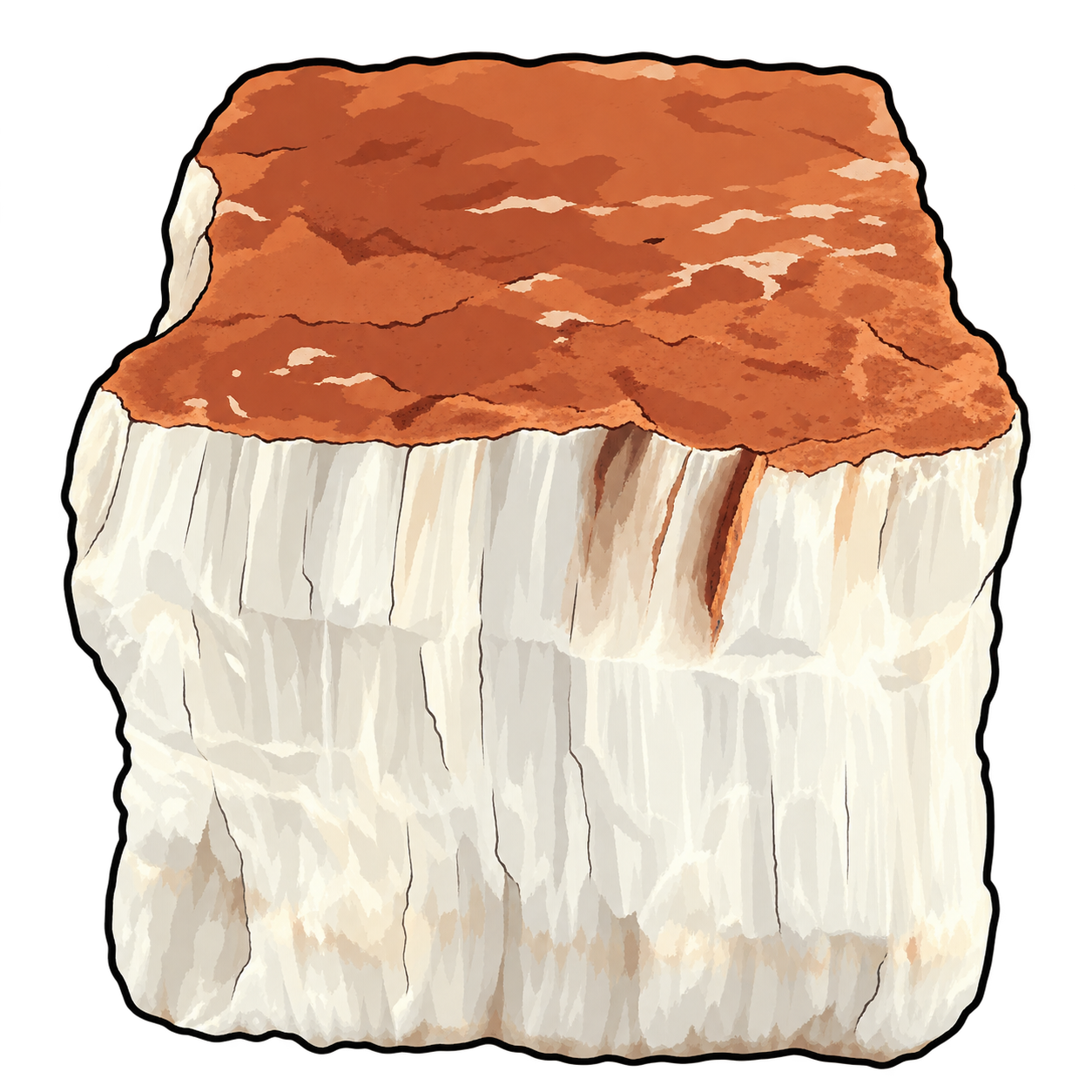
Selenite occupies a prominent place in modern cleansing rituals. The Crystal Council associates it with clearing a space, renewing other crystals and focusing awareness through the crown and third-eye chakras. These are attributed spiritual functions, distinct from the mineral's measurable physical properties. [1]
The clear or luminous appearance supplies a recognizable visual language for these meanings. Transparent selenite admits light; fibrous satin spar carries a moving sheen. Both can suggest clarity while remaining different textures of gypsum. In a crystal-cleansing arrangement, placing harder stones beside gypsum rather than directly on it protects its easily scratched surface. Spiritual cleansing should not be confused with disinfecting an object or removing hazardous substances.
Gypsum contains water as part of its crystal structure: the formula includes two water molecules for each calcium sulfate unit. It belongs to the monoclinic system and can form plates, prisms, needles, fibres, rosettes or massive deposits. Twinning sometimes produces recognizable V-shaped or swallowtail-like forms. [2]
Gypsum is very soft, at Mohs 1.5–2, with density about 2.31 g/cm³. Perfect cleavage produces thin sheets that can bend without springing back. Lustre varies from glassy to pearly or silky, with impurities introducing colour. [2]
Selenite commonly denotes clear crystalline gypsum, especially transparent plates. Satin-spar gypsum consists of closely aligned fibres that produce a directional, silky sheen. Gypsum alabaster is fine-grained massive material suited to carving. These names distinguish texture and presentation within one mineral species. [4]
The name alabaster also has a broader historical life and has been applied to carbonate stone. A museum's material identification is therefore more precise than the name alone. Likewise, much modern crystal-shop material labelled selenite is fibrous satin spar. Describing a piece as clear-plated or silky-fibrous gypsum preserves the useful visual distinction without treating either as a different mineral species. [1,4]
Gypsum commonly forms in evaporating waters and can also develop through the hydration of anhydrite or reactions in other sulfate-producing environments. Its occurrence in salt deposits, caves and soils reflects several routes to the same mineral. [2]
At White Sands National Park, water dissolves gypsum from the surrounding mountains and carries it into the closed Tularosa Basin. Evaporation allows crystals to form again near Lake Lucero. Wind and water break down crystals into sand, and wind assembles the grains into dunes. The landscape depends on both chemical transport in solution and physical movement of solid grains. [3,5]
Gypsum's behaviour also underlies familiar building materials. Controlled heating removes some structural water to produce plaster material; adding water allows gypsum to form again as the mixture sets. This manufactured transformation differs from simply carving a natural alabaster block, even though gypsum is central to both. [3]
The enormous gypsum crystals at Naica, Mexico, grew in mineral-bearing water under remarkably stable conditions. A 2011 study by Alexander Van Driessche and colleagues measured extremely slow growth using natural waters from the mine. At conditions close to equilibrium, the difference between growth and dissolution was small enough to require unusually sensitive measurement. [6]
Dissolving anhydrite supplied calcium sulfate while gypsum continued to grow. The important feature was sustained growth under near-equilibrium conditions, not a sudden burst of crystallization. The research connects the chamber's spectacular scale with slow processes operating over long periods. Its experimental rates also depend on temperature and water chemistry; a single universal age cannot be read from crystal size alone. [6]
The Metropolitan Museum of Art's Cypriot alabaster mortar or deep bowl provides a different view of gypsum. The museum identifies its material as gypsum alabaster and tentatively dates it to about 1600–1050 BCE. A flat base, three lugs and a small pouring spout give the object a practical shape, while marks on the exterior retain evidence of the tools that worked it. [7]
Such an object draws on the mineral's softness rather than overcoming it through faceting. The maker could cut and refine a continuous mass into a useful vessel. The surviving tool marks make that work legible: the material records both its natural texture and decisions made by the person who shaped it. [7]
Keep gypsum dry, cool and protected from abrasion. Dust gently and support plates or fibres across their body; avoid soaking or scrubbing. [2,3]
Store it separately from harder minerals. A carved bowl may look sturdy while retaining the same low scratch resistance as a delicate crystal. Stable support and restrained handling preserve both the natural sheen and the details of any worked surface.
thecrystalcouncil.com · Reference for the accompanying text · Reference recorded October 15, 2026
handbookofmineralogy.org · Reference for the accompanying text · Reference recorded October 15, 2026
nps.gov · Reference for the accompanying text · Reference recorded October 15, 2026
repository.si.edu · Reference for the accompanying text · Reference recorded October 15, 2026
nps.gov · Reference for the accompanying text · Reference recorded October 15, 2026
pmc.ncbi.nlm.nih.gov · Reference for the accompanying text · Reference recorded October 15, 2026
metmuseum.org · Reference for the accompanying text · Reference recorded October 15, 2026