Magnesium carbonate, from pale ornamental stone to an industrial mineral
Magnesite
Magnesium carbonate (MgCO3).
Mineral species; ornamental specimens may include other minerals
Loading this page…
Return homePlease wait while the next page arrives.


Magnesium carbonate, from pale ornamental stone to an industrial mineral
Magnesium carbonate (MgCO3).
Mineral species; ornamental specimens may include other minerals
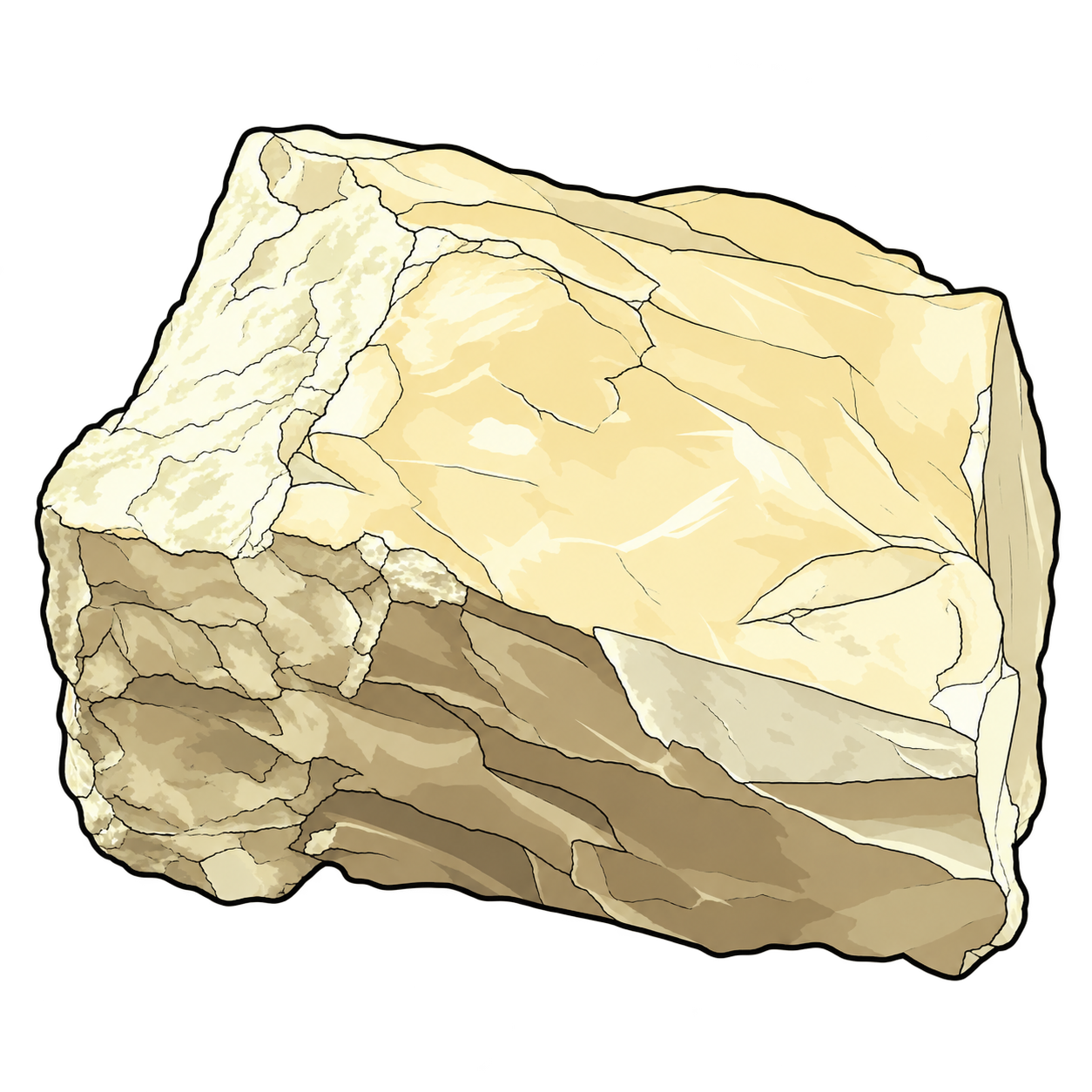
Magnesite ranges from white nodules to well-formed crystals.
Geology · Human history · Spiritual attributes
In her 2019 Glossary of Gemstone and Crystal Correspondences, Benebell Wen assigns magnesite a protective role around meditation and astral-travel practice, including its use in talisman bags. This is a named contemporary correspondence, not a property demonstrated by mineral analysis. [4]
For a nonliteral practice, magnesite can serve as a visible reminder that a particular period is reserved for reflection. The object does not have to be credited with repelling a measurable force for that ritual to be meaningful. Nor should the mineral's magnesium content be treated as a nutritional or therapeutic benefit of carrying it. A mineral specimen is not a prepared supplement.
Magnesite is a trigonal carbonate in the calcite structural group. Typical hardness is 3.5–4.5 on the Mohs scale, with density close to 3.0 g/cm³. It has perfect rhombohedral cleavage and is brittle. Pale color is common, though clear crystals and pinkish, yellowish, or brownish material occur. The two principal refractive indices are approximately 1.509 and 1.700, producing strong birefringence. [1]
The distinction between hardness and cleavage matters when choosing an object. Hardness describes resistance to scratching; cleavage concerns preferred directions of splitting. A polished magnesite piece can therefore be scratched by a harder neighbor and can also break along internal structural planes. Its apparent solidity does not remove either risk.
In dense, fine-grained ornamental material, the individual crystals may be too small to see. The surface then tells less about the mineral's internal structure than a transparent crystal would. “Massive” describes that aggregate habit; it does not mean an object is synthetic or unusually large.
Magnesite has more than one geological route. It occurs in sedimentary settings and can form through alteration or metamorphism of magnesium-rich rocks such as serpentinite and peridotite. It is also recorded in some hydrothermal and igneous environments. Well-known crystal occurrences include Brumado in Brazil and Sunk in Austria; major deposits need not produce the same kind of showy crystal. [1]
This distinction is useful in reading a locality label. A mine important for industrial output and a locality famous among collectors answer different questions. The first concerns a usable deposit; the second may depend on exceptional crystal shape, color, or associated minerals. Neither is a reason to infer a provenance from a pale polished stone without records.
The U.S. Geological Survey identifies magnesite among the principal commercially important magnesium minerals. Magnesium compounds—especially magnesium oxide—are used in furnace linings for steel, other metals, glass, and cement production. Other supplies come from sources such as brines and seawater, so industrial magnesium compounds do not all begin as mined magnesite. [2]
Industrial processing transforms the raw mineral into a different usable material. A furnace lining and a decorative specimen represent distinct stages and uses of the same resource.
Magnesite is not howlite. Both can appear as pale ornamental stones and both have been used as turquoise substitutes, but they have different compositions and diagnostic properties. A seller's color name cannot resolve that distinction.
A GIA laboratory note from 1985 examined a blue bead whose pale interior prompted further testing. Its optical measurements and density suggested magnesite, and X-ray diffraction confirmed the identification. Importantly, the laboratory could not remove the dye with the tested solvent swab. The example shows why “the color did not rub off” is not proof of natural color. [3]
GIA's 1986 Gem News also documented dyed magnesite necklaces offered at Tucson. Such reports establish a real trade practice, not a reason to assume every blue or white bead has the same identity. [5]
Do not use acid, heat, or scratching as casual shopping tests. These can damage the object and still leave an ambiguous answer. If identity materially affects the purchase, request a clear written description and, when warranted, independent gemological examination.
For crystals, examine whether the surfaces are natural faces, cleavage surfaces, or damaged edges. For carvings and beads, look for open cracks, weakened drill holes, surface coatings, and uneven polish. Ask whether the color has been added and retain any locality or treatment information with the piece.
Store magnesite separately from harder stones and protect thin edges from knocks. A soft dry cloth is the most conservative routine cleaning method for an object with unknown treatment. Obtain maker-specific advice before using cleaners, immersion, or solvents. A fragile mineral aggregate and a stabilized polished bead may require different handling, even when sold under the same name.
handbookofmineralogy.org · Reference for the accompanying text · Reference recorded October 15, 2026
usgs.gov · Reference for the accompanying text · Reference recorded October 15, 2026
gia.edu · Reference for the accompanying text · Reference recorded October 15, 2026
benebellwen.com · Reference for the accompanying text · Reference recorded October 15, 2026
cms.gia.edu · Reference for the accompanying text · Reference recorded October 15, 2026