The architecture of a tree preserved in mineral form
Petrified Wood
Fossil wood preserved by mineral infilling/replacement, often silica.
Mineralized biological fossil material
Loading this page…
Return homePlease wait while the next page arrives.


The architecture of a tree preserved in mineral form
Fossil wood preserved by mineral infilling/replacement, often silica.
Mineralized biological fossil material
Petrified wood retains the organization of something that once grew.
Geology · Human history · Spiritual attributes
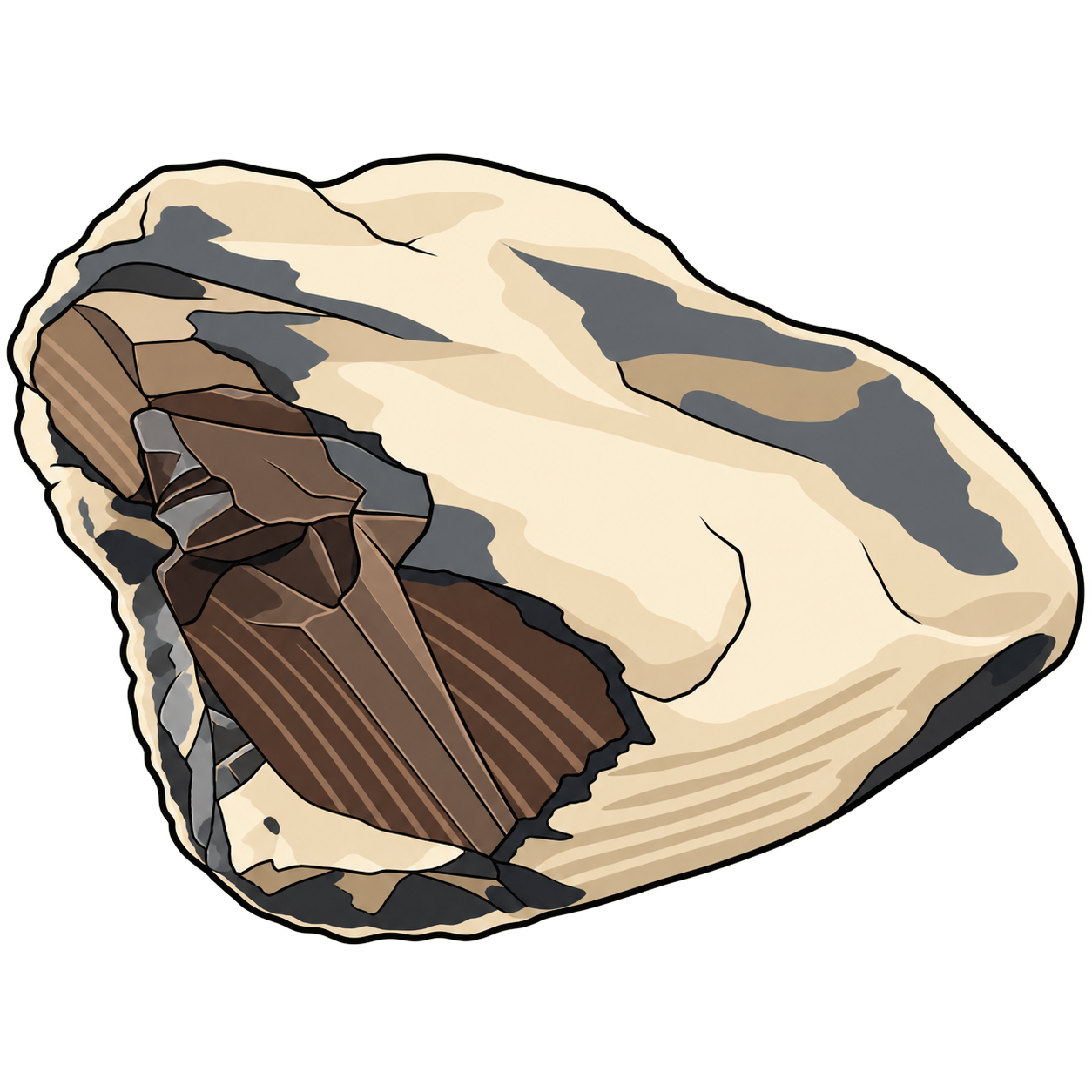
Fossil wood preserved through mineral infilling, replacement or both. [1]
Fossil material; commonly silicified, but not necessarily pure quartz. [1]
Wood-like structure in varied mineral colors, sometimes with crystalline cavities. [1]
Grounding, patience, connection with nature and reflection on ancestral continuity in contemporary practice. [4]
Petrified wood retains the organization of something that once grew. Grain, cellular structure or the curve of a trunk may survive even when minerals make up most of the object. Its appeal is not simply that it resembles wood: it connects biological structure with the geological processes that preserve and transform it.
The Crystal Council associates petrified wood with grounding, patience, ancient knowledge and connection to nature. It also describes past-life practices; that is a spiritual belief, not a conclusion available from examining a fossil. Root and third-eye chakra associations belong to the same contemporary framework. [4]
The preserved structure of a tree makes continuity a particularly understandable symbolic theme. A specimen can prompt reflection on slow growth, endurance and the relationship between change and survival. Such reflection does not require the fossil to store human memories or provide a therapeutic effect. Its actual geological history is already a powerful setting for thinking about time.
The National Park Service distinguishes two processes often grouped together under petrification. Permineralization fills natural pores with minerals; replacement substitutes mineral matter for material that has been lost. They can occur separately or together. The distinction explains how a fossil can preserve three-dimensional detail without every part of the original tissue following the same chemical path. [1]
Silica is common in fossil wood, but petrified wood is not the name of one mineral. Depending on the deposit, different forms of silica and other minerals may be involved. Some specimens retain traces of original organic material. A formula of SiO2 describes quartz, not the complete history or necessarily the entire composition of every piece labeled petrified wood. [1]
Consequently, durability depends on the actual material and its condition. Dense silicified wood may take a fine polish, while a fractured or partly mineralized specimen can be vulnerable. A fossil's scientific value also need not correspond to its ability to become a glossy ornament.
At Petrified Forest National Park, ancient river systems transported and buried logs in sediment. Silica-bearing water, including silica derived from volcanic ash, entered the wood and contributed to its preservation. Iron, manganese and carbon-bearing constituents help explain the varied colors of the local material. The present colors should not be read as a literal reconstruction of the tree's living wood. [2]
Burial is only one chapter. The surrounding rocks were later uplifted and eroded, bringing the preserved logs back toward the surface. The National Park Service explains that many apparently cut segments are natural fractures produced by stress in brittle mineralized trunks. Their regular-looking breaks are not evidence that someone sawed an ancient forest into lengths. [2]
That sequence—growth, burial, mineralization, later deformation and exposure—helps distinguish the age of a tree-bearing formation from the timing of every change that occurred within it. Petrification is a process, not a single moment that can be inferred from a polished face.
Look first for organized structure: repeated lines, changes between inner and outer tissue, or patterns consistent across more than one face. A transverse cut and a lengthwise cut can make the same wood look very different. Color bands alone are not enough to establish wood identity, and attractive patterns do not by themselves identify a tree species.
A useful collection record separates what is visible from what is documented. “Polished fossil wood with longitudinal structure” is an observation; a species name and formation should come from a reliable identification and locality record. When that information is missing, preserving an honest broad label is better than attaching a familiar prehistoric tree name to an unknown specimen.
The 1906 proclamation establishing Petrified Forest National Monument recognized the scientific interest of the fossil deposits and protected them from unauthorized appropriation or injury. This is a concrete chapter in the history of petrified wood: the material was valued not only as an ornament but as evidence worth keeping within its landscape. [3]
For a collector, context matters. A fossil detached from its locality and stratigraphic information may still be beautiful, but some scientific information has been lost. Keep the original label and acquisition details. Before collecting in the field, check the current rules for the specific land; the availability of loose pieces does not establish permission to remove them.
Support large slabs across a stable base rather than balancing their weight on a narrow edge. Existing fractures can matter more than surface hardness. For an unknown or repaired specimen, a soft dry brush is a cautious starting point; avoid aggressive chemicals and prolonged soaking. Polishing an already prepared ornamental surface is different from altering a scientifically significant fossil, and further preparation should be considered deliberately.
Petrified wood rewards close looking rather than a single spectacular view. A small surviving structure can connect an ordinary fragment with a living tree and the much longer geological history that followed it.
nps.gov · Reference for the accompanying text · Reference recorded October 15, 2026
nps.gov · Reference for the accompanying text · Reference recorded October 15, 2026
nps.gov · Reference for the accompanying text · Reference recorded October 15, 2026
thecrystalcouncil.com · Reference for the accompanying text · Reference recorded October 15, 2026