Fossil wood transformed into a jewel of deep black
Jet
Organic gem material derived from fossil wood, not obsidian or anthracite by default.
Organic gem material derived from fossil wood
Loading this page…
Return homePlease wait while the next page arrives.


Fossil wood transformed into a jewel of deep black
Organic gem material derived from fossil wood, not obsidian or anthracite by default.
Organic gem material derived from fossil wood
Jet offers a different kind of beauty from a transparent crystal: a dense black surface that can be carved into delicate relief and polished until it reflects like still water.
Geology · Human history · Spiritual attributes
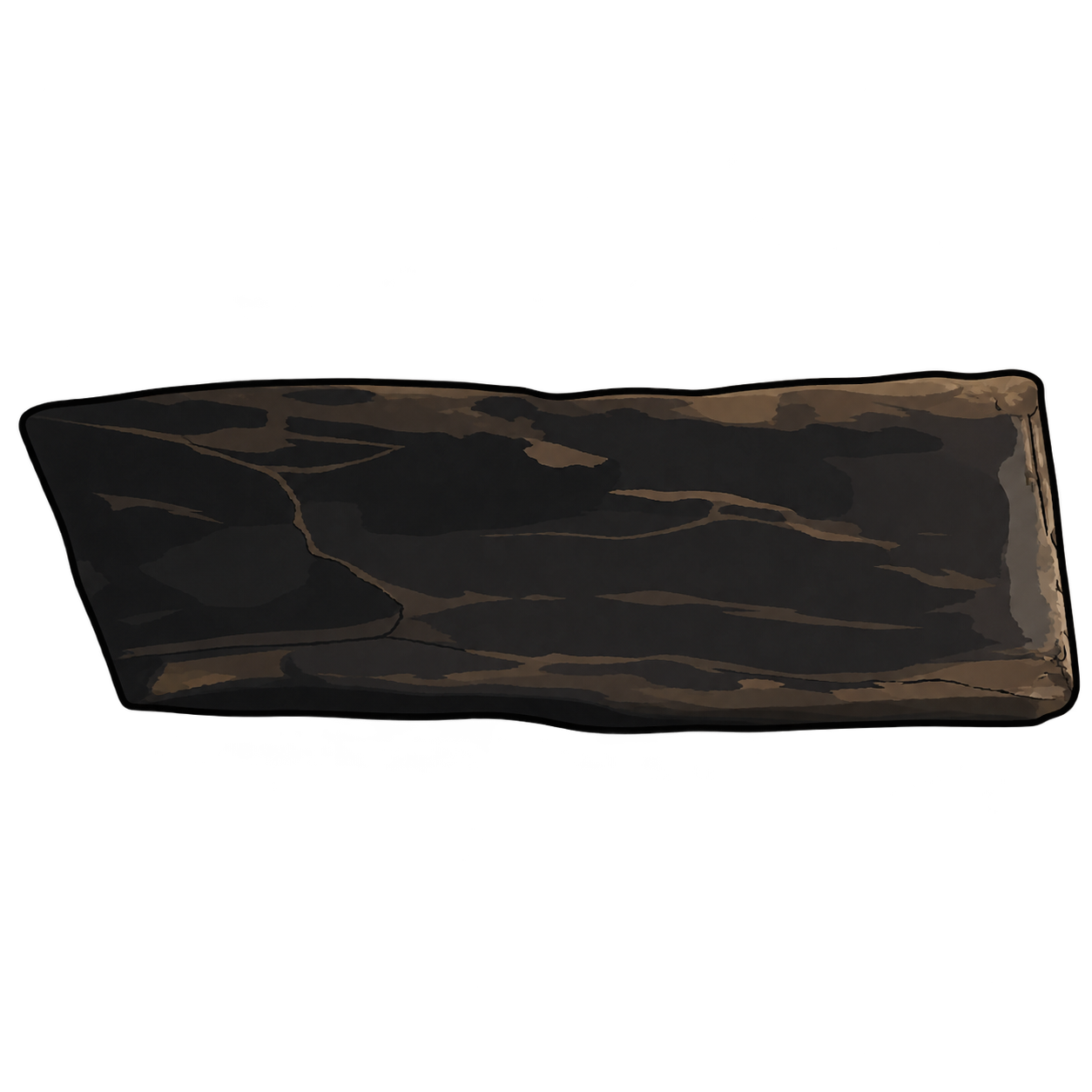
Organic gem formed from altered fossil wood. [1]
Carbonaceous materials; not crystalline quartz or volcanic glass. [1]
Deep black, matte to highly polished, often carved or faceted. [1]
Grounding, protection, purification and transformation in contemporary practice; remembrance in its documented jewelry history. [4]
Jet offers a different kind of beauty from a transparent crystal: a dense black surface that can be carved into delicate relief and polished until it reflects like still water. It is an organic gem material, related to altered wood rather than a mineral with a regular crystal structure. Its history moves between geological preservation, skilled carving, protective amulets and the public language of mourning.
The Crystal Council associates jet with grounding, protection and the symbolic clearing of unwanted energy. Its account emphasizes connection with Earth and transformation, and links the material with the root and third-eye chakras. These are modern practitioner interpretations rather than mineral properties. [4]
Jet's documented use in mourning jewelry offers another, historically grounded association: remembrance. A carved pendant or inherited brooch can carry a personal connection to someone absent without requiring a claim about supernatural efficacy. Contemporary spiritual use and historical mourning customs can coexist, but neither should be substituted for the other. Not every black Victorian ornament was jet, and not every object made from jet was a mourning object.
Whitby Museum describes its local jet as altered driftwood with a secondary contribution of bituminous material. The classic Yorkshire deposits are Lower Jurassic, approximately 183 million years old. [1]
Unlike silicified petrified wood, jet is an organic gem rather than wood structure preserved in silica. Whitby material is light, with specific gravity near 1.3, and takes a high polish—useful qualities in elaborate wearable ornaments. [1]
The word black describes appearance, not identity. Obsidian is volcanic glass, onyx is a quartz material, and black glass or molded polymers can resemble polished jet. A knowledgeable identification considers the object as a material, not just its color.
Malton Museum records a small carved jet bear excavated in 1929 beside an infant burial near the Roman fort. The burial also contained a jet bead, a copper-alloy bracelet and an early third-century coin. The museum interprets comparable bear figures from infant burials as possible guardians. That is an archaeological interpretation of particular objects, not proof that every Roman owner assigned the same meaning to jet. [2]
The same collection includes jewelry and unfinished pieces that indicate local working. Material, craft and belief meet here: a small carving required an available raw material, a maker able to shape it and a social setting in which the finished object mattered. The survival of an artifact establishes use; interpreting the intention behind that use requires additional care. [2]
The nineteenth-century industry became closely associated with Whitby, where workshops supplied a growing market for black ornaments. Queen Victoria's mourning after Prince Albert's death in 1861 strengthened an existing fashion rather than inventing the use of jet. [1]
The Victoria and Albert Museum demonstrates how finish itself could carry meaning. Its roughly 1875 flower brooch has a subdued matte surface associated with an earlier stage of mourning, while a polished necklace of around 1870 presents a brighter appearance. The difference is not simply one of better and worse workmanship: surfaces participated in a recognizable social code. [3]
The V&A also connects the industry's growth with railway tourism and souvenir collecting. A piece of jet could therefore signify a place visited as well as a person remembered. That broader context keeps its history from being reduced to a single royal anecdote. [3]
“French jet” commonly refers to black glass rather than geological jet. Whitby Museum also documents substitutes such as vulcanized rubber and other molded materials. Their presence matters when interpreting an antique: an old object may be historically interesting even when it is not jet, but its material should be described accurately. [1]
Avoid using a hot needle, flame or solvent to test a finished object. Such tests can leave permanent damage, and a mixed-material antique may include vulnerable adhesives or mounts. For a valuable carving or inherited ornament, an experienced gemologist or conservator can select an appropriate examination. Provenance and construction details should be kept with the object rather than discarded after a tentative identification.
Treat jet as a relatively delicate carved material, especially where narrow projections, drilled holes or old repairs are present. Support the whole piece when lifting it. Begin with a soft dry cloth rather than an aggressive jewelry-cleaning routine, and avoid steam, ultrasonic cleaning and prolonged immersion when the object's construction is uncertain.
A glossy finish is not an instruction to repolish every matte surface. On a historical object, the original finish may be part of its meaning. Preserving that difference is often more valuable than making the object look uniformly new.
whitbymuseum.org.uk · Reference for the accompanying text · Reference recorded October 15, 2026
maltonmuseum.co.uk · Reference for the accompanying text · Reference recorded October 15, 2026
vam.ac.uk · Reference for the accompanying text · Reference recorded October 15, 2026
thecrystalcouncil.com · Reference for the accompanying text · Reference recorded October 15, 2026