Loading Luminary Oddities
Please wait while the next page arrives.
Loading this page…
Return homePlease wait while the next page arrives.


Wonder at the edge of the known
Creatures, Spirits & Folklore from Around the World
A thread offers a way out of the Minotaur’s labyrinth. A stolen sealskin lies hidden in a human home. A great bird carries its dead parent to a sanctuary of the sun. Across 127 manuscripts, encounters unfold in forests and kitchens, royal courts and rough seas. Meet the creatures through their stories, the people who recorded them, and the objects that carried their forms to new generations.
Search by name, place or tradition, or use the filters to explore a group of creatures.
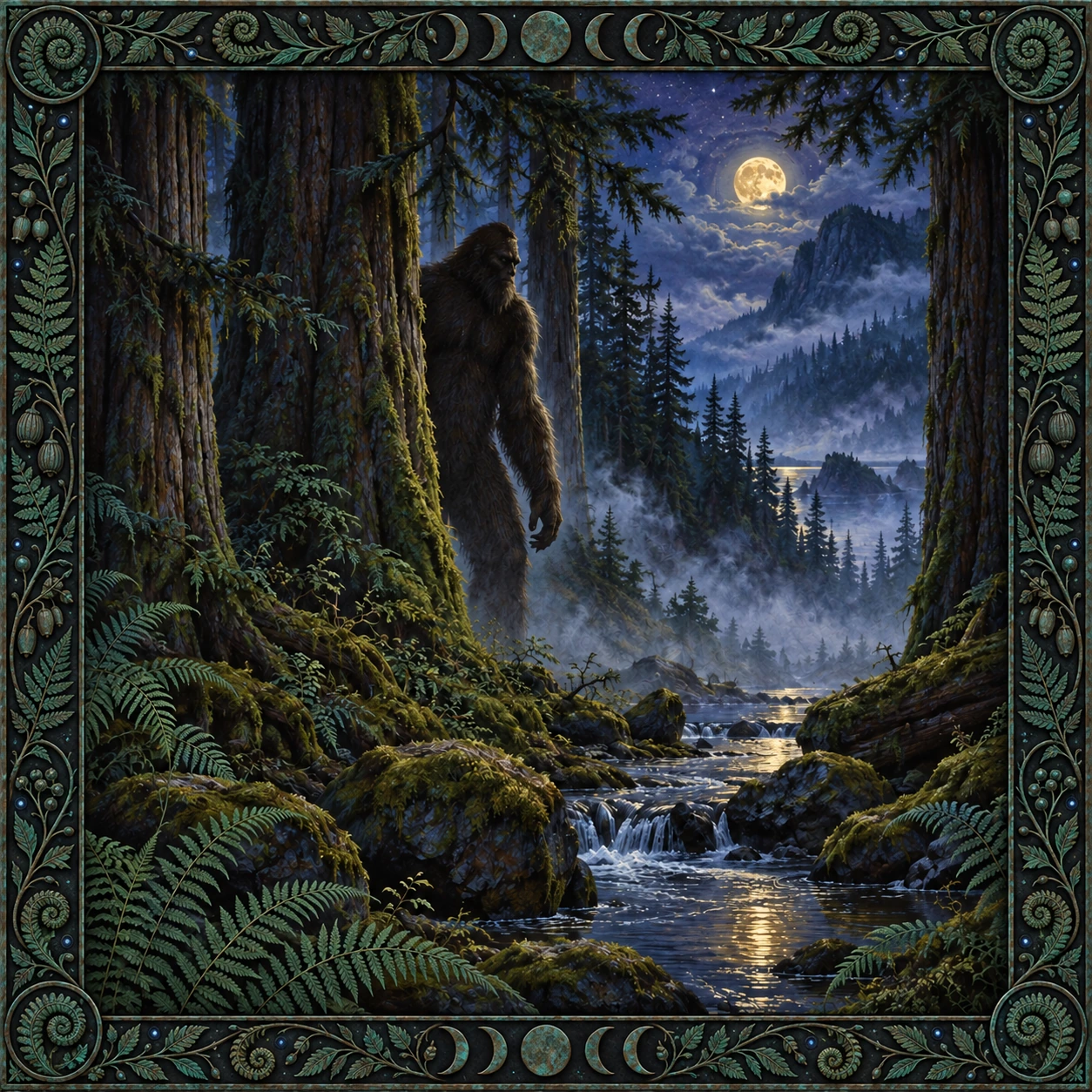
Bigfoot is a large, hairy, upright figure reported in North American forests, often known through enormous tracks and brief, unsettled encounters.
About fifteen hairs, still attached to a scrap of skin, were enough to prompt Peter Byrne to write to the FBI. He had spent years looking for evidence of Bigfoot and could not identify this sample. In November 1976, he asked the laboratory to look at it. The surviving letters let the investigation run all the way to an answer.
Read the manuscript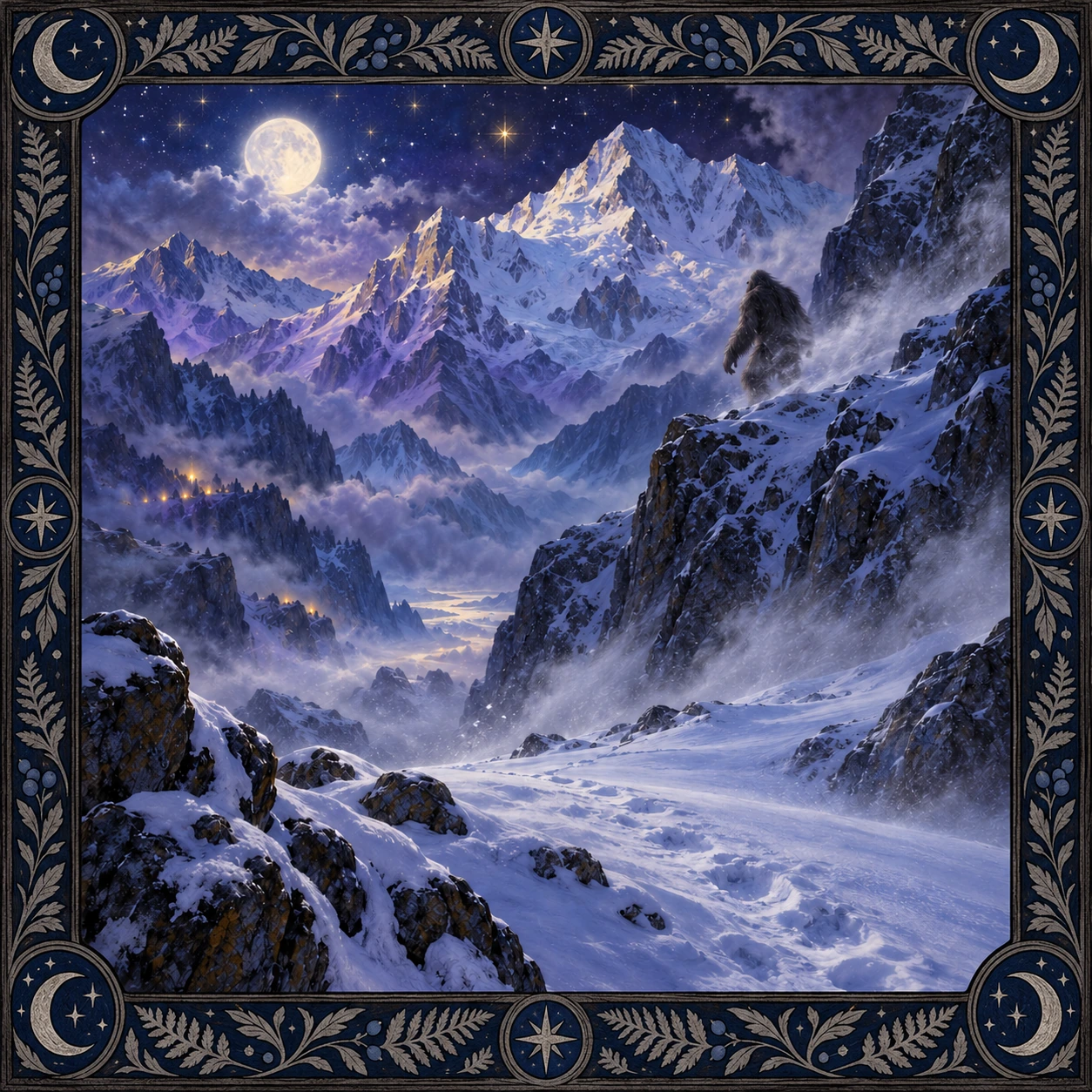
The Yeti is a shaggy, humanlike mountain being of Himalayan stories, associated with elusive appearances and puzzling tracks in snow.
At dawn on 22 September 1921, an Everest expedition climbed toward a high pass. Among recognizable hare and fox tracks lay a mark that looked unsettlingly human. The party continued upward; the print began a different journey, into stories that its finder would barely recognize.
Read the manuscript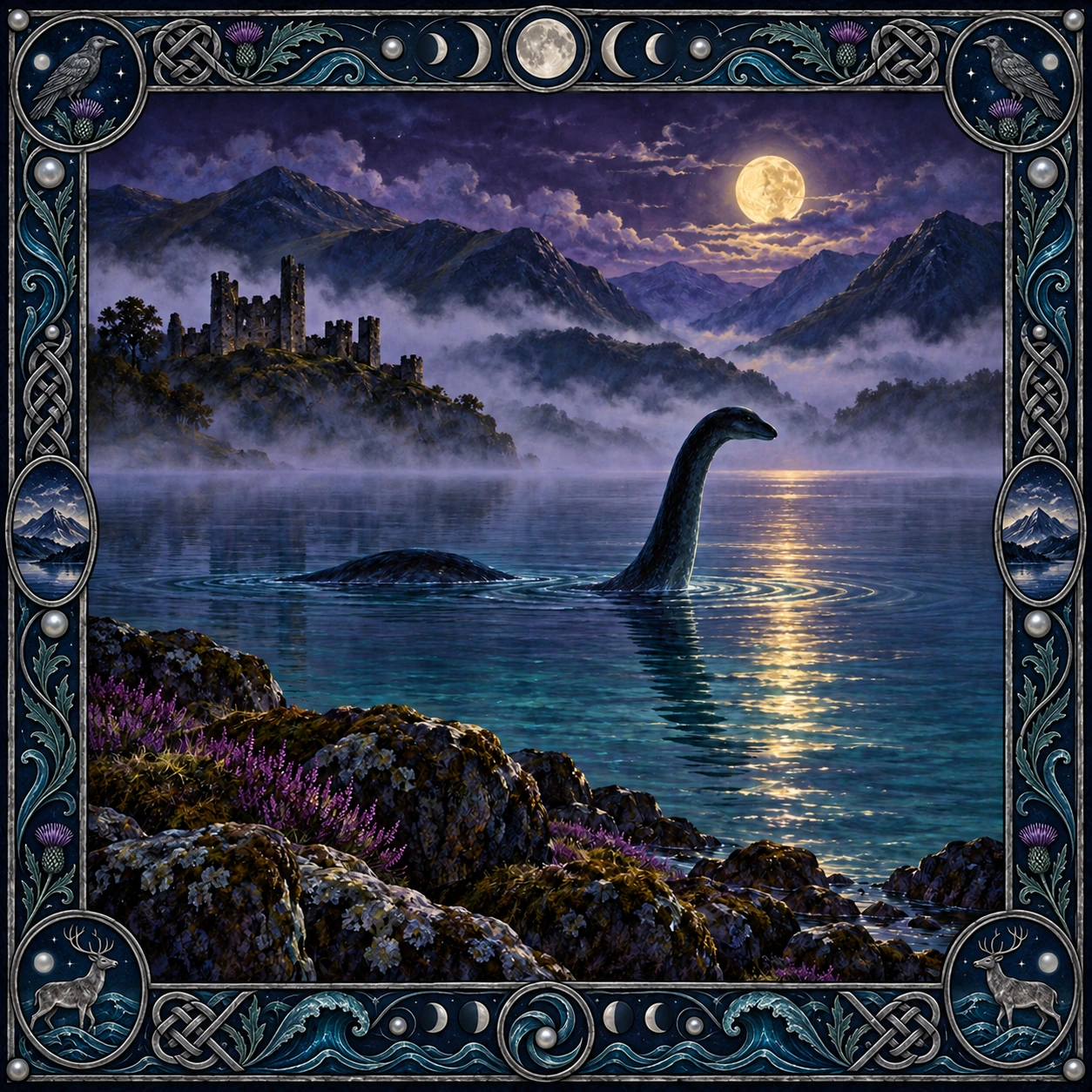
Nessie is the elusive creature reported from Scotland’s Loch Ness, known for a long-necked silhouette and appearances that vanish before observers can examine them.
The water had been calm. Then a whale-like body rolled near the shore, plunged into foam and disappeared. The couple in the Inverness Courier’s 1933 account waited almost half an hour for another glimpse. That brief encounter left a question later photographs, sonar fleets and DNA sampling would approach in very different ways.
Read the manuscript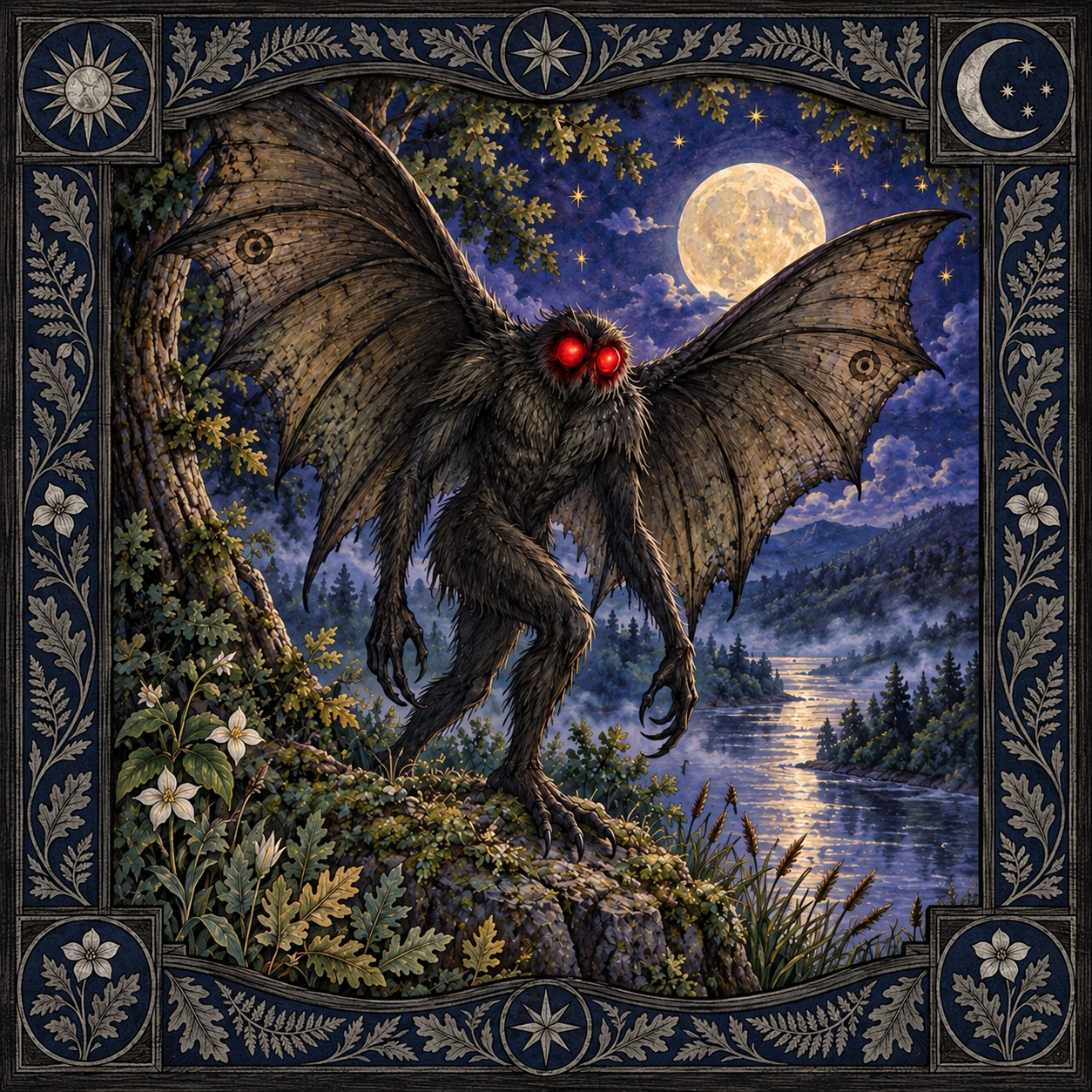
Mothman is a winged figure reported near Point Pleasant, West Virginia, whose red-eyed image grew from roadside encounters into a celebrated local legend.
Roger Scarberry drove away from the old power plant, but the winged thing appeared to follow. The next day’s Point Pleasant Register could offer only a string of uncertain names: bird, creature, something. A search found nothing. The report nevertheless gave other people a place to go looking.
Read the manuscript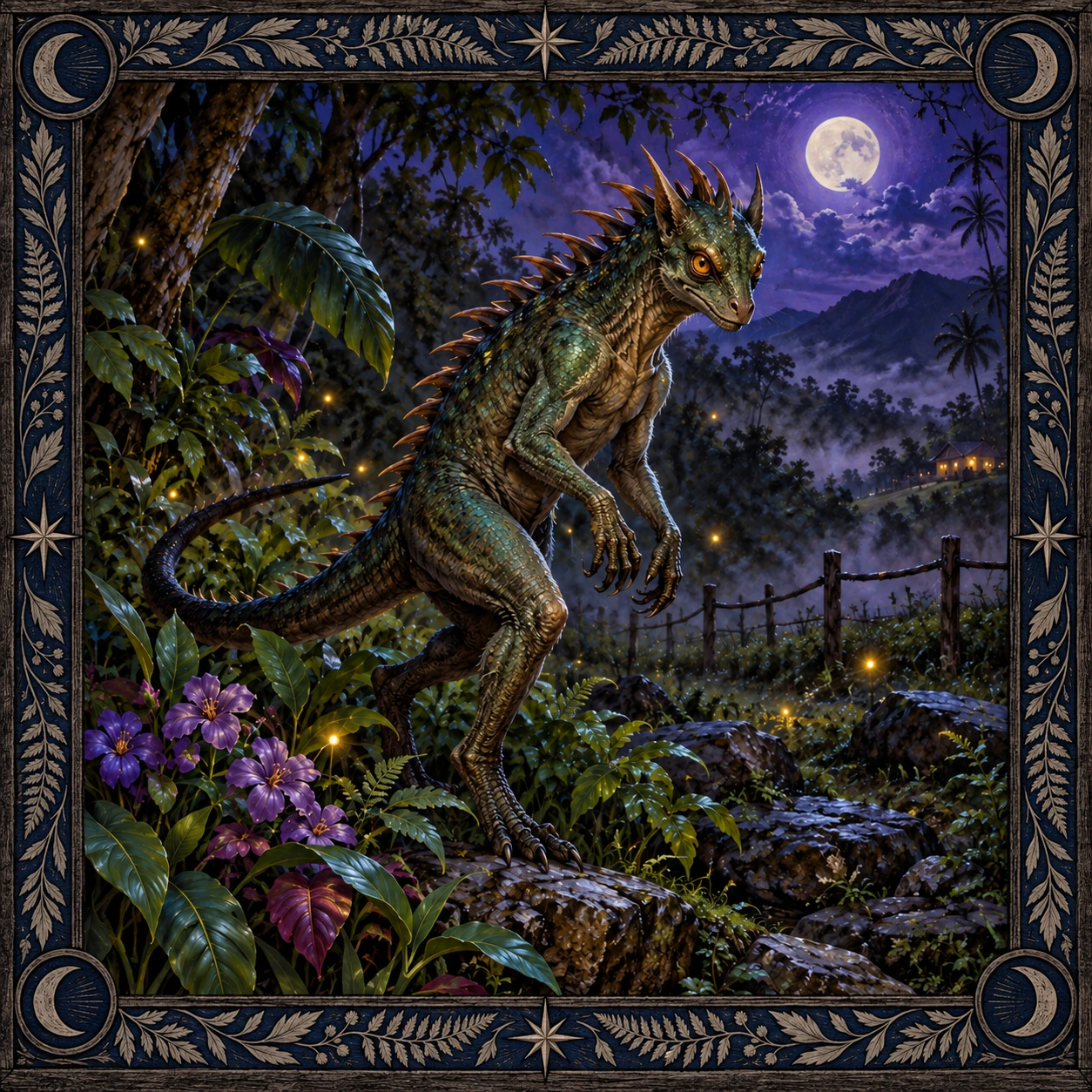
The Chupacabra is a reported blood-drinking predator, first famous in Puerto Rico, with spined, upright and later doglike forms.
Phyllis Canion kept the strange animal’s head in her freezer. Outside Cuero, Texas, an encounter legend had acquired something a laboratory could test: tissue from the supposed predator itself.
Read the manuscript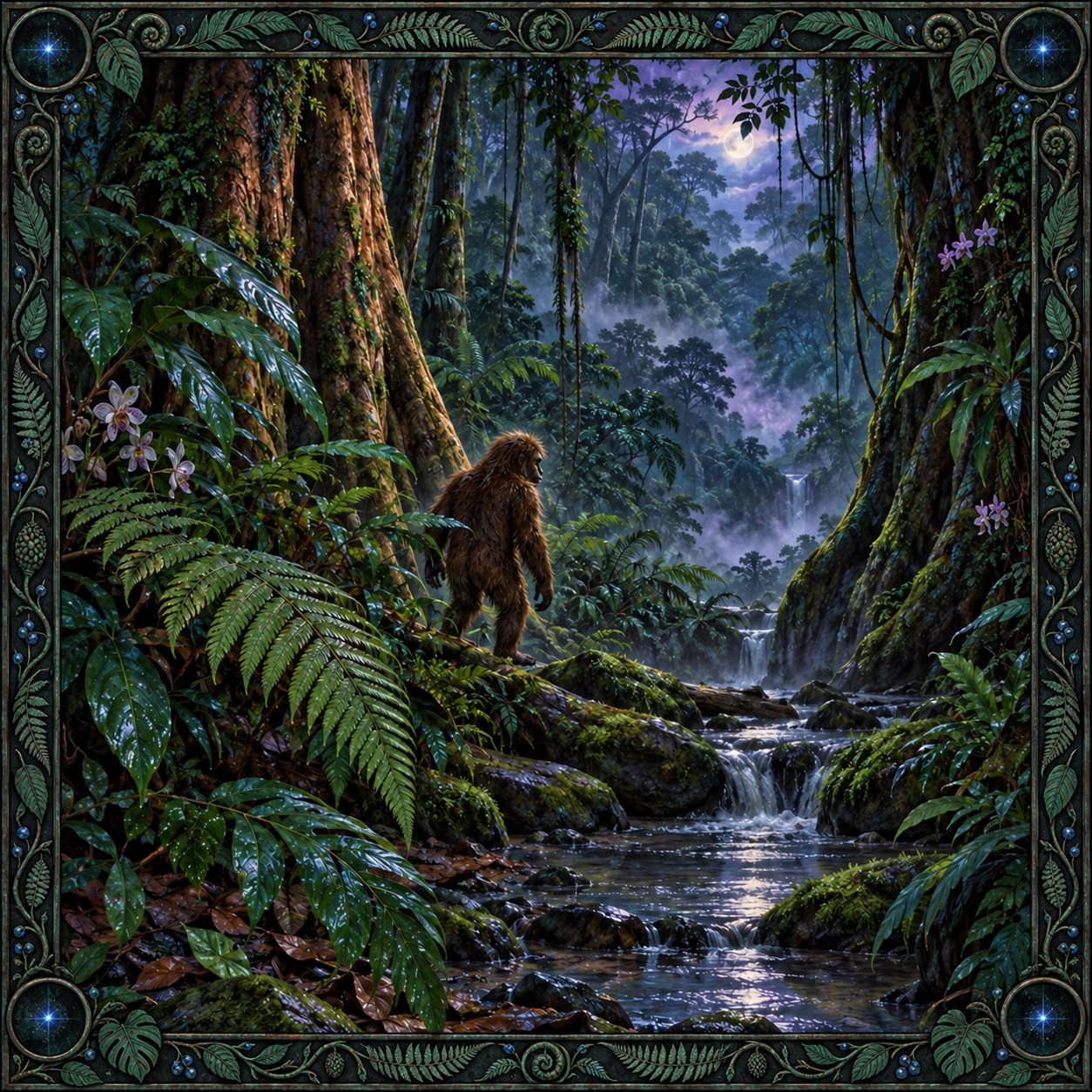
Orang Pendek is a small, upright forest figure reported in Sumatra, sometimes described as shaggy and apelike, sometimes as an unfamiliar human presence.
For two evenings, Kalin returned to his forest shelter to find the cooked rice almost gone. On the third day he hid nearby. Four visitors approached; one carried the pot outside, ate and put it back. His account would enter a museum investigation whose most revealing clues lay in a set of teeth and a few surviving hairs.
Read the manuscript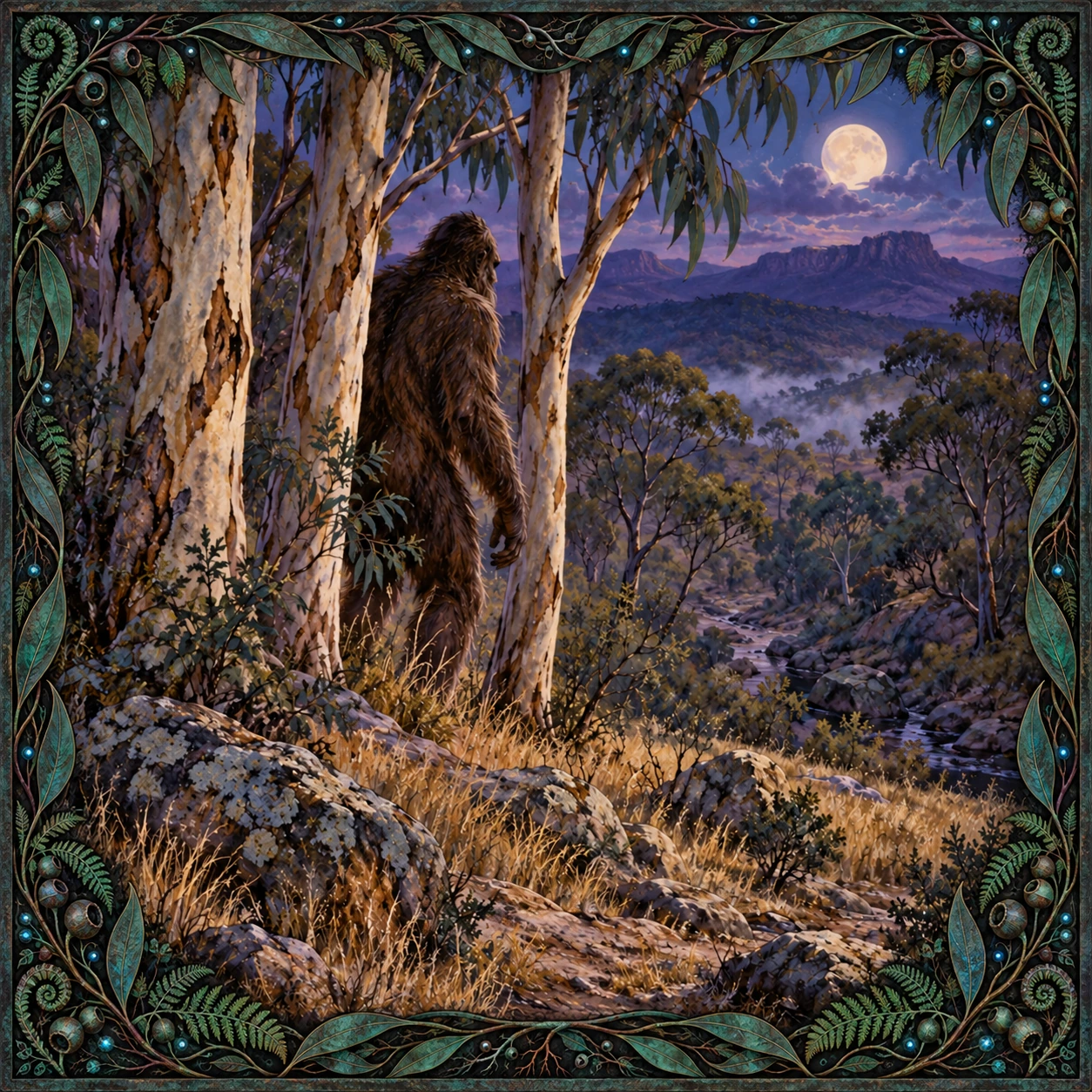
A large, hairy figure walking upright through the Australian bush appears in modern Yowie encounter stories.
A map offered two possible routes through the forest. David Taylor remembers looking up and seeing something cross ahead of him. In three steps it was gone.
Read the manuscript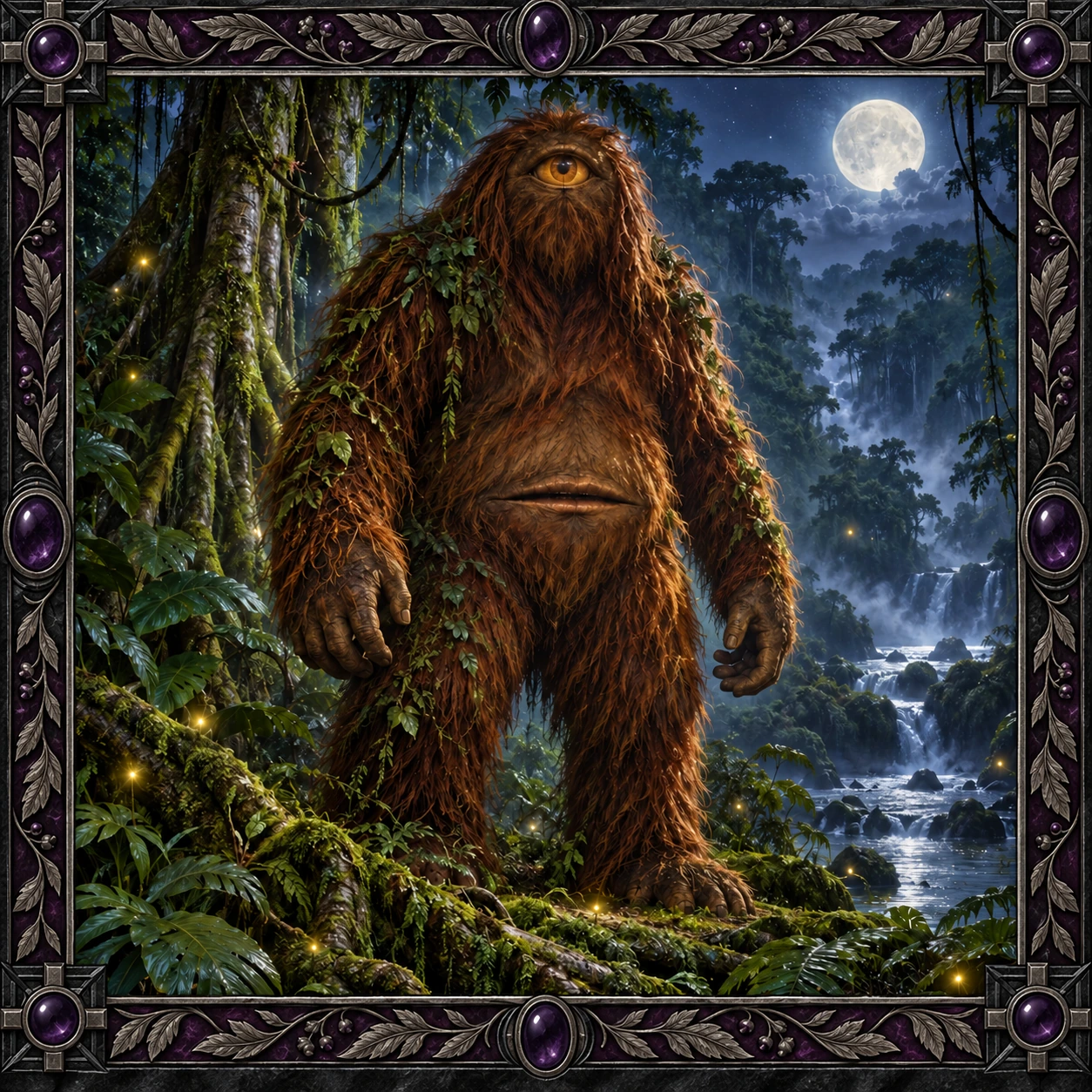
Mapinguari is a fearsome Amazonian forest being, often described as a hairy giant that resists hunters’ weapons and devours people.
In Saldanha’s recollection, timber worker Ponciano has an axe and a machete when the hairy figure faces him. He has no gun.
Read the manuscript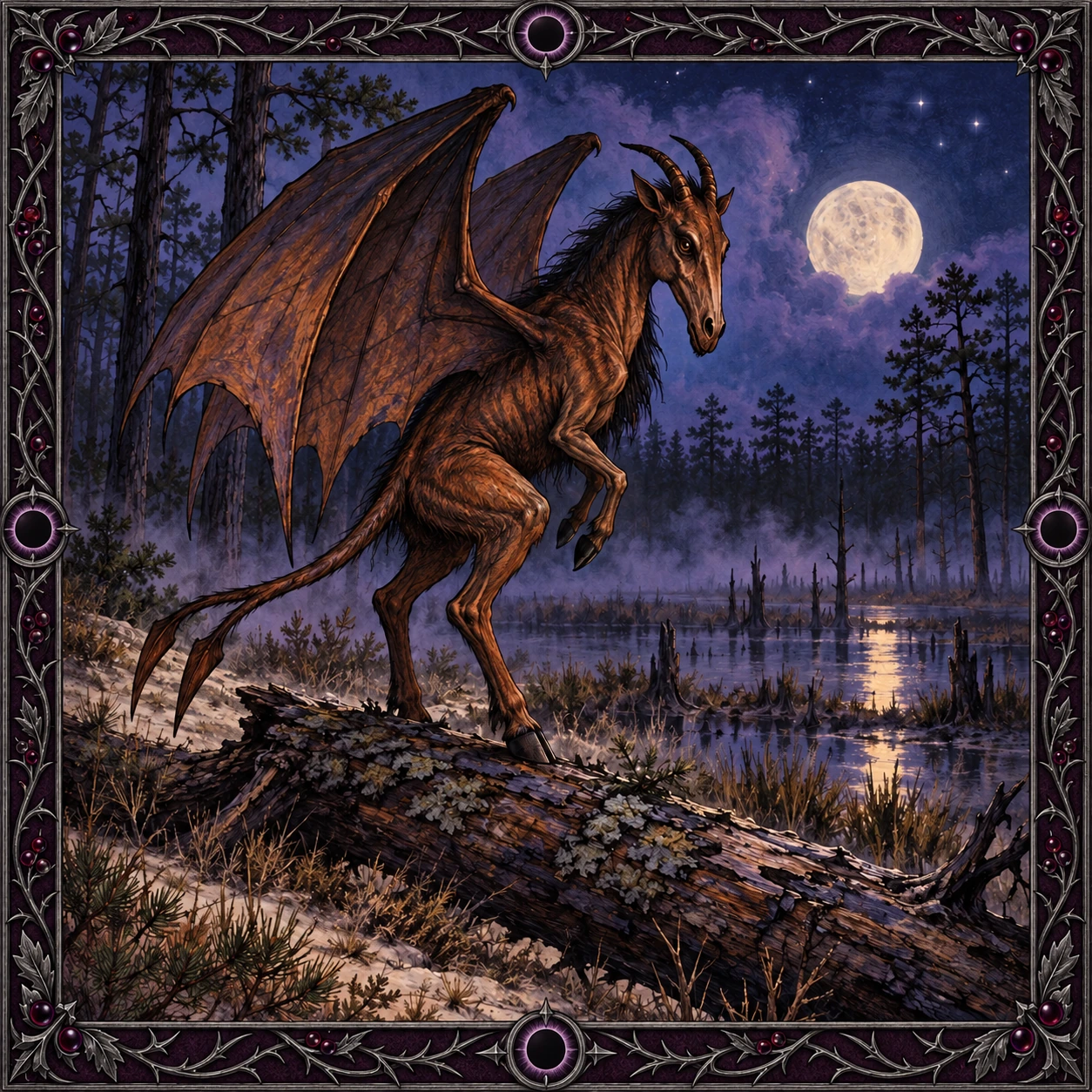
The Jersey Devil is a winged creature of New Jersey’s Pine Barrens, often given a horse-like head and remembered through monstrous birth stories, strange cries and tracks.
Hannah Butler began to remember a storm like the night she had seen Leeds’s devil. Her nephew interrupted: what good could come of naming something that might be beside them? The visitor left without her account. That unfinished exchange in an 1859 travel essay is one route into New Jersey’s most familiar forest figure; a transformed child and a waiting campfire audience offer others.
Read the manuscript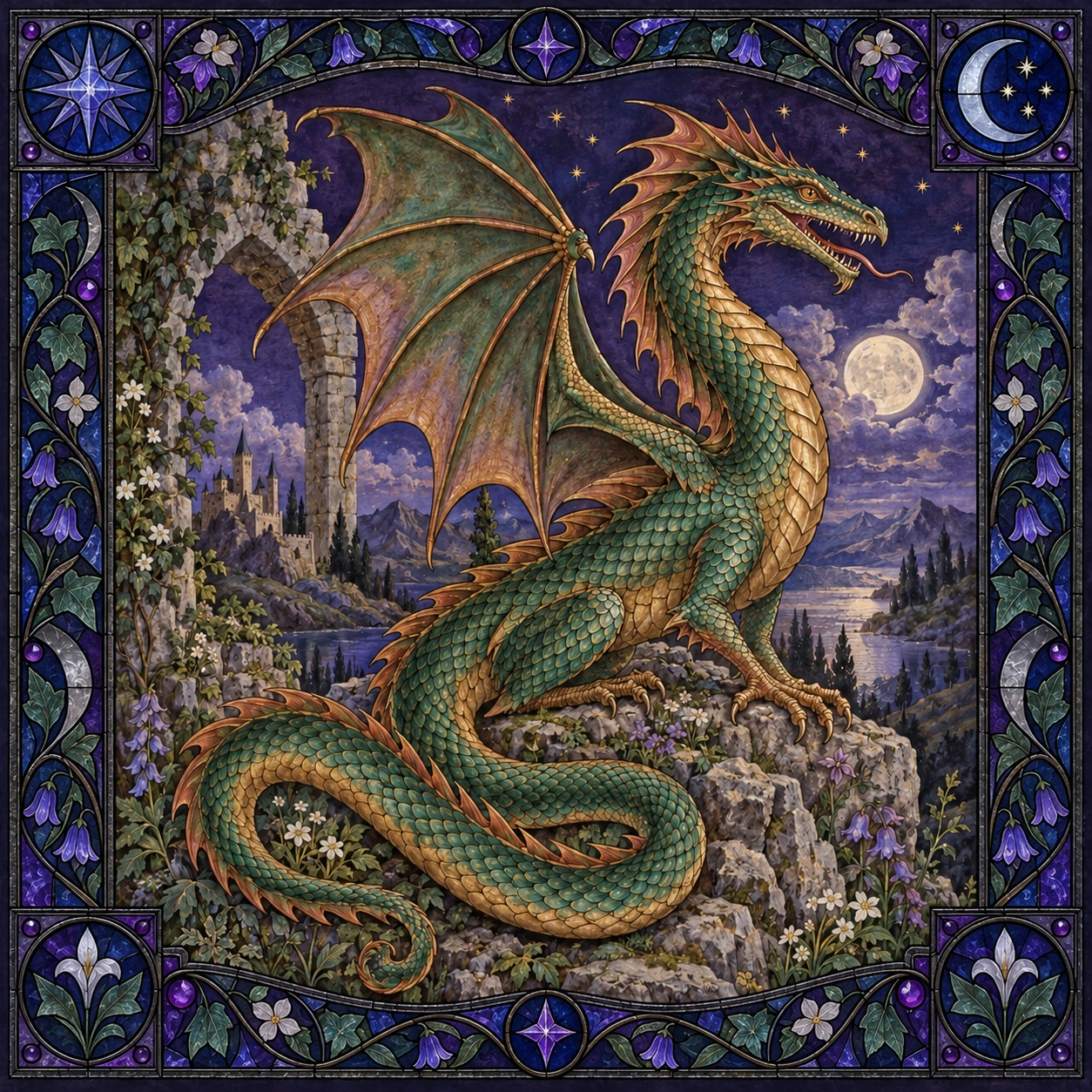
European dragons are legendary serpents and winged monsters that guard treasure, confront saints and heroes, and embody the fortunes of kingdoms.
One cup is missing. The dragon circles its barrow, searching for the intruder who passed its sleeping head. Finding no one, it waits for night. In Beowulf, the escape of a frightened man is about to become a calamity for a kingdom.
Read the manuscript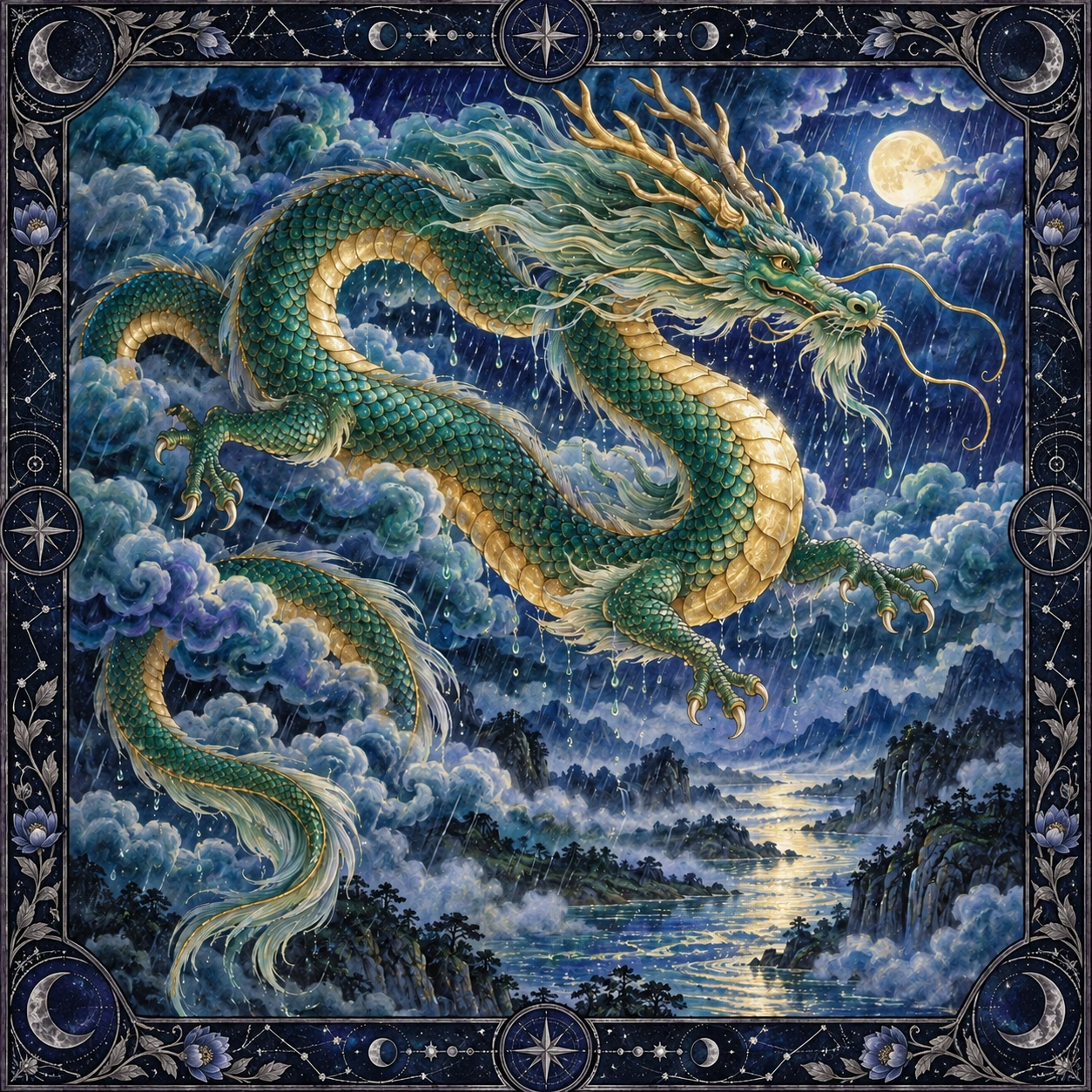
The lóng is a Chinese dragon of water and clouds, a sign of imperial rank and a powerful being whose stories mingle generosity, anger and family obligation.
A young woman tending sheep asks a passing traveller to carry a letter home. Only then does he learn that her father is a dragon king and the flock consists of thunder rams. In “The Disowned Princess,” reaching the family beneath Dongting’s waters will be easier than containing its response.
Read the manuscript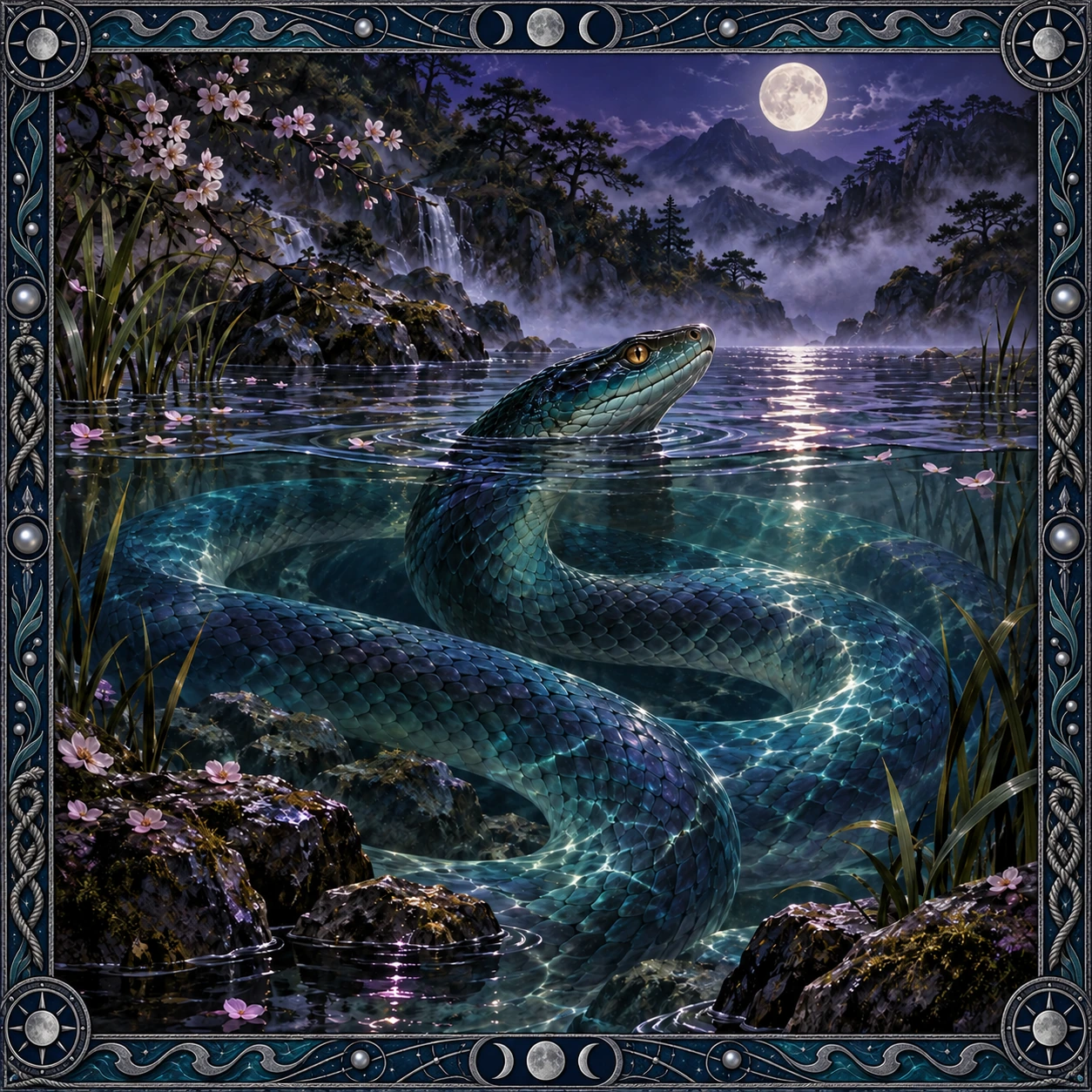
Imugi are Korean serpentine beings whose stories connect rain, human kindness and the possibility of becoming a dragon.
The rain has come, and the fields are saved. Now a heavenly messenger stands in the temple courtyard, demanding the being who brought it. Boyang has hidden his companion beneath a desk. In front of them grows a pear tree.
Read the manuscript
Nāgas are serpent beings of Asian religious traditions, capable of sheltering the Buddha, guarding sacred teaching or carrying the earth itself.
For seven days, rain falls out of season. A serpent king leaves his dwelling and coils around the meditating Buddha, raising his hood against the weather. When the sky clears, the great body unwinds. Before the Buddha now stands a young man, his hands folded in reverence.
Read the manuscript
The basilisk is the little king of classical and medieval serpent lore, whose breath, venom or gaze can kill before an enemy reaches it.
Murrus has struck the serpent with his lance. In Lucan’s epic, that should have been the end of the danger. Instead, poison runs up the weapon toward his hand. A Roman soldier who has survived the desert now has only a moment to act.
Read the manuscript
Inkanyamba is a great snake associated with deep pools and storms in southern African accounts, appearing as a dangerous presence, a rain animal or an expected household visitor.
At a shaded river pool near Thendele, a fisherman saw what looked like a sheep. He moved closer. Lightning struck from an otherwise clear sky, and he fled without his rod. Michael Francis’s collected account begins with that bewildering interruption; the fisherman’s wife would return to the pool and see something different.
Read the manuscript
Taniwha are powerful beings in Māori traditions, some protecting particular communities and places, others threatening the people who cross their paths.
Both ends of the road have an explanation for the missing travellers. One household thinks they have not set out; another thinks they are prolonging a visit. In William Colenso’s 1878 account, the danger becomes clear only when people from Rotorua and Taupō compare who has failed to arrive.
Read the manuscript
Uktena is a great horned serpent of Cherokee stories, with glittering scales and a brilliant crest upon its forehead.
A captive offers to bring back the blazing crest of Uktena if his captors will spare his life. They warn him that meeting the serpent means death. He begins his search anyway, passing creatures that send everyone else running.
Read the manuscript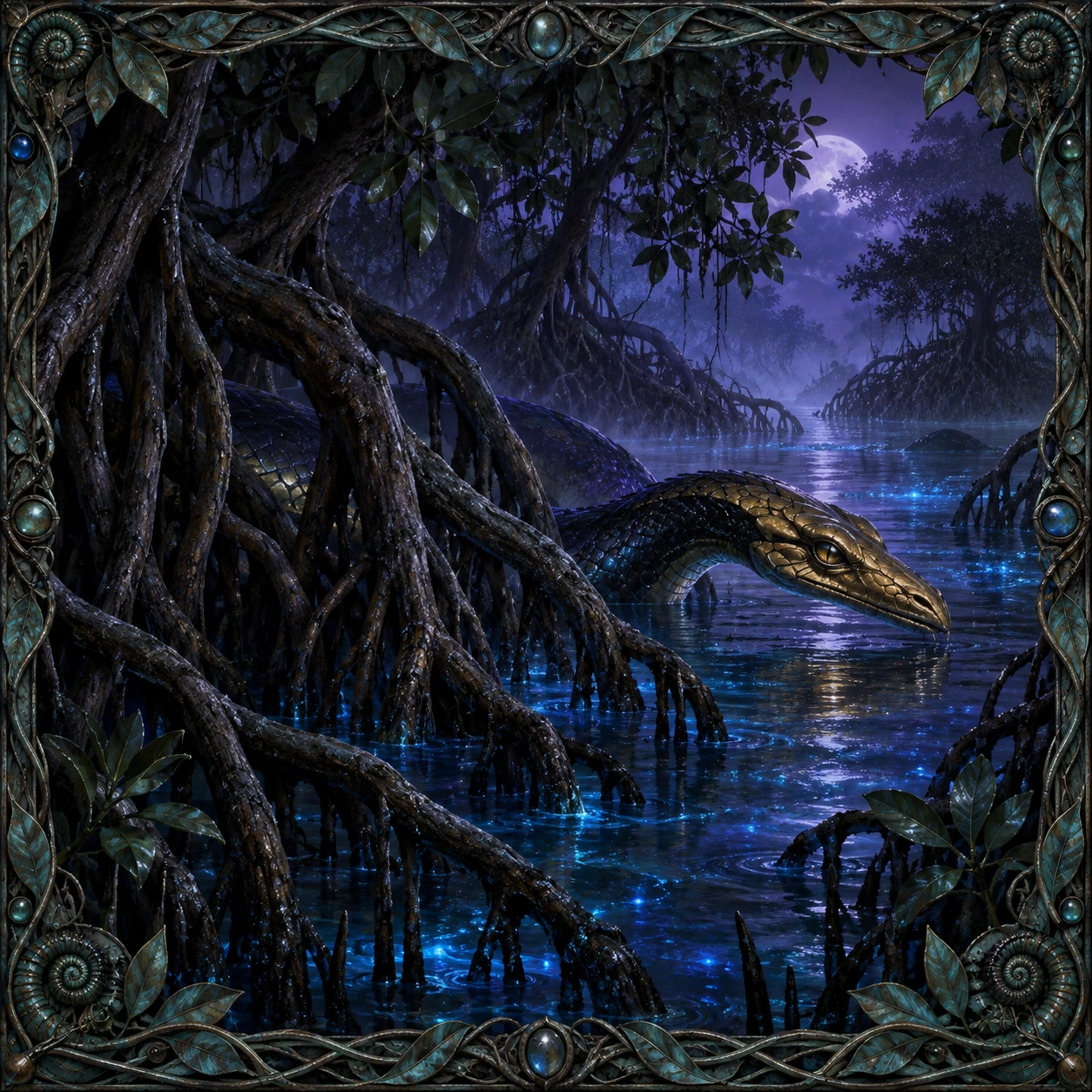
Ninki Nanka haunts Gambian river creeks; neighbouring accounts describe golden serpents, dangerous gifts and a bride whose dazzling husband conceals a monstrous appetite.
An enormous creature leaves the mangrove mud after dark and devours whatever crosses its path. M. D. W. Jeffreys printed that Gambian description in 1944, adding that older fishermen told terrifying stories once they trusted their listener. The surviving notice never gives one fisherman’s name. Its few lines leave the creature emerging from the mud while the people who told of it remain just beyond view.
Read the manuscript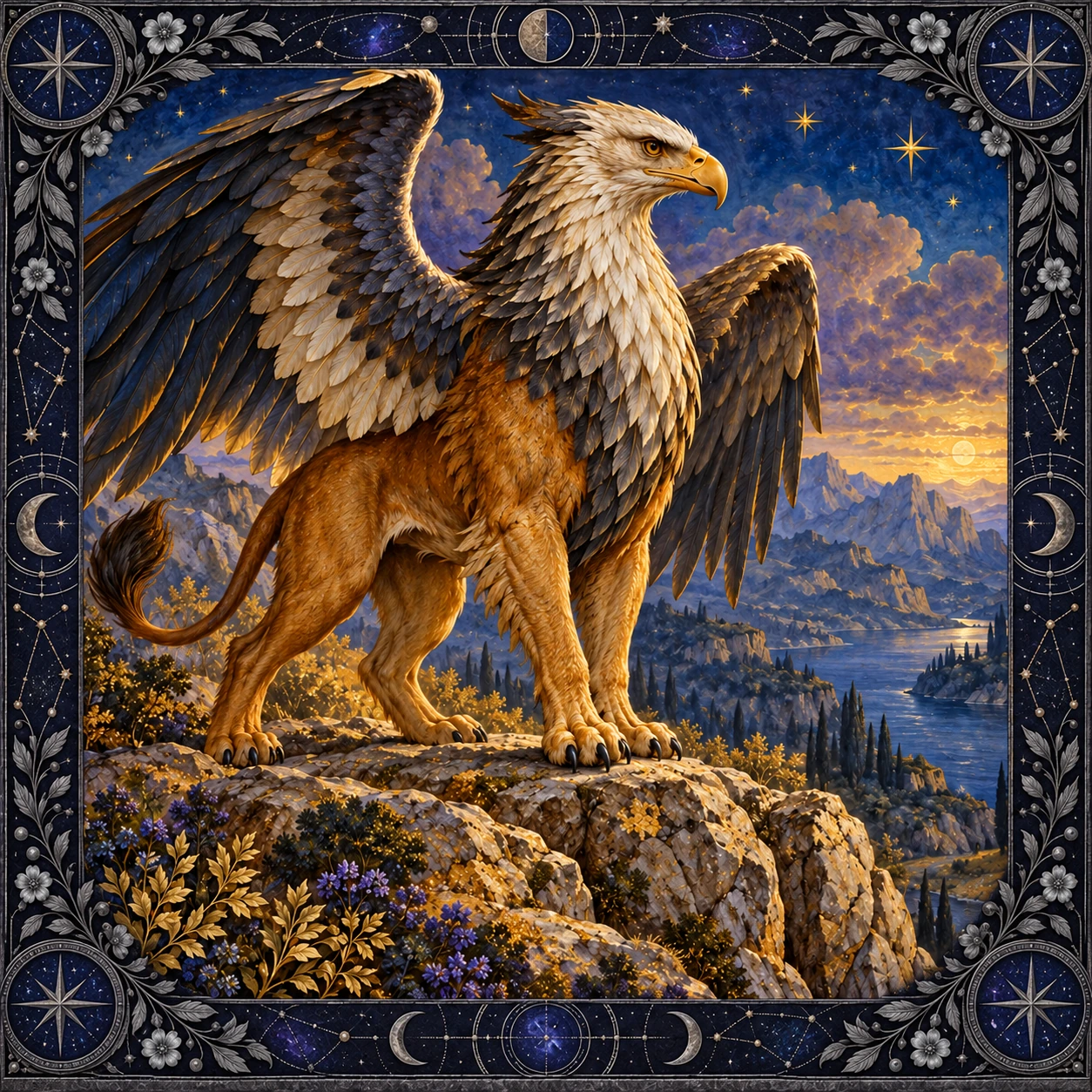
The griffin joins an eagle’s head and wings to a lion’s body, confronting gold seekers in ancient accounts and guarding rulers and memorials in art.
The prospectors wait for a moonless night. Aelian’s account gives them spades, sacks and weapons, but darkness is their best protection.
Read the manuscript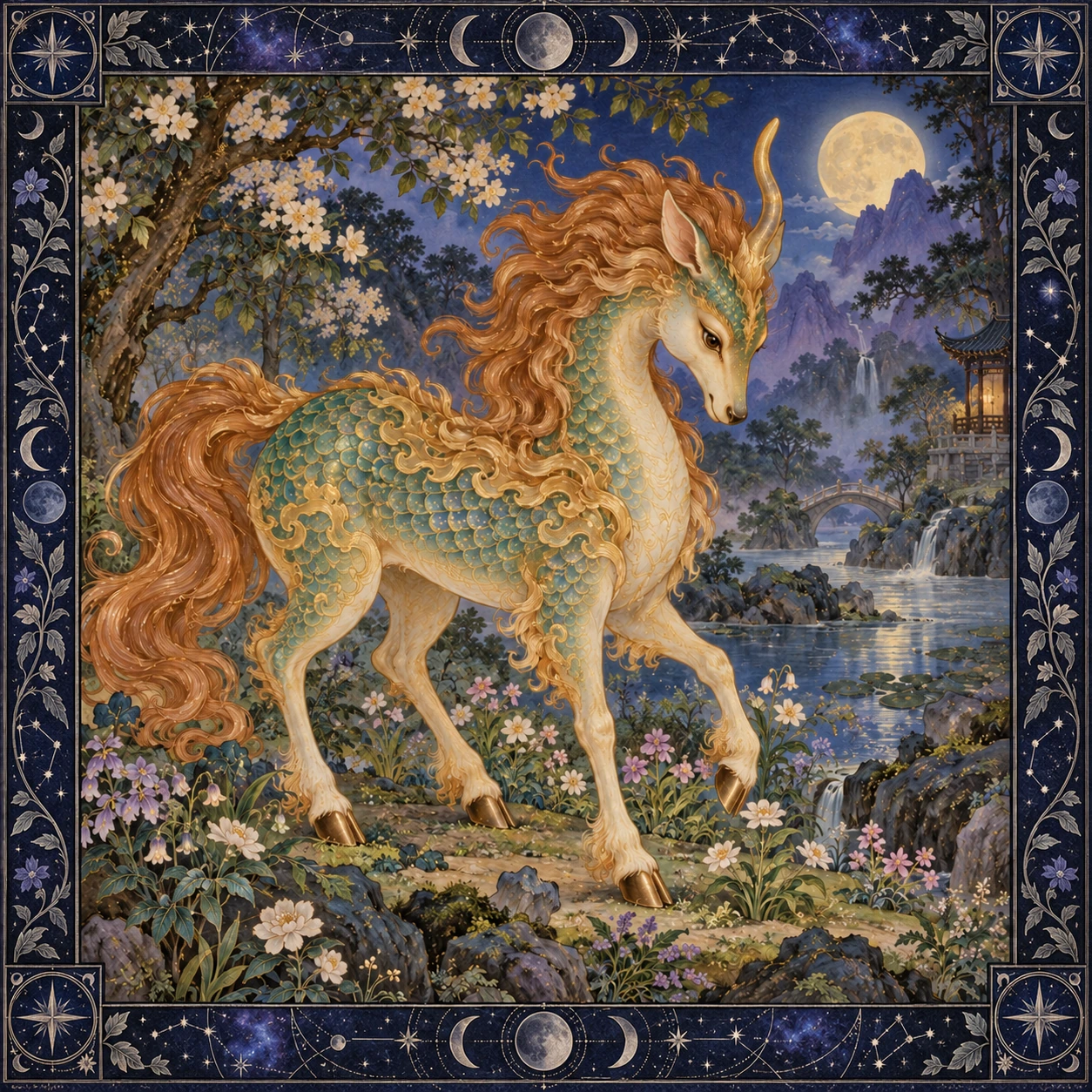
The qilin is a benevolent Chinese horned creature whose appearance can announce a worthy ruler or, in stories of Confucius, reveal that wisdom has come at the wrong time.
In 1414, a giraffe sent by the king of Bengal reached the Yongle emperor’s court. Officials welcomed it as a qilin, the rare creature associated with virtuous rule. A living animal had entered a much older argument about goodness, power and the ability to recognize a fortunate sign.
Read the manuscript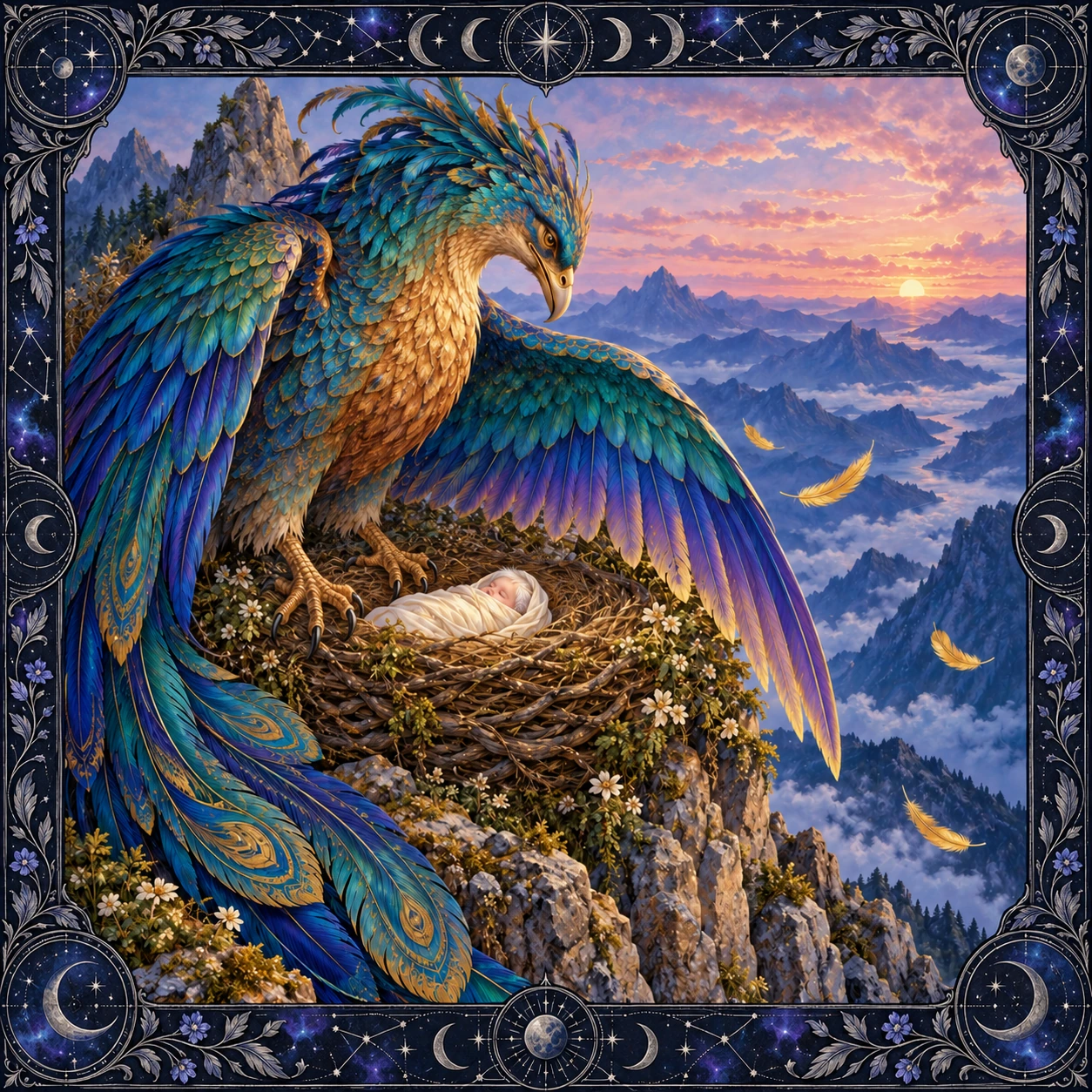
The Simurgh is a marvellous bird of Persian literature, raising the abandoned Zál and protecting his descendants; in Attar’s poem, birds seek a king bearing the same name.
On a mountain where his father has abandoned him, a white-haired infant cries beneath the Simurgh’s nest. She has hungry young to feed. Yet she carries him upward to raise him beside them. Years later, the feather she gives this rescued child will summon her into a human conflict that even her healing cannot mend.
Read the manuscript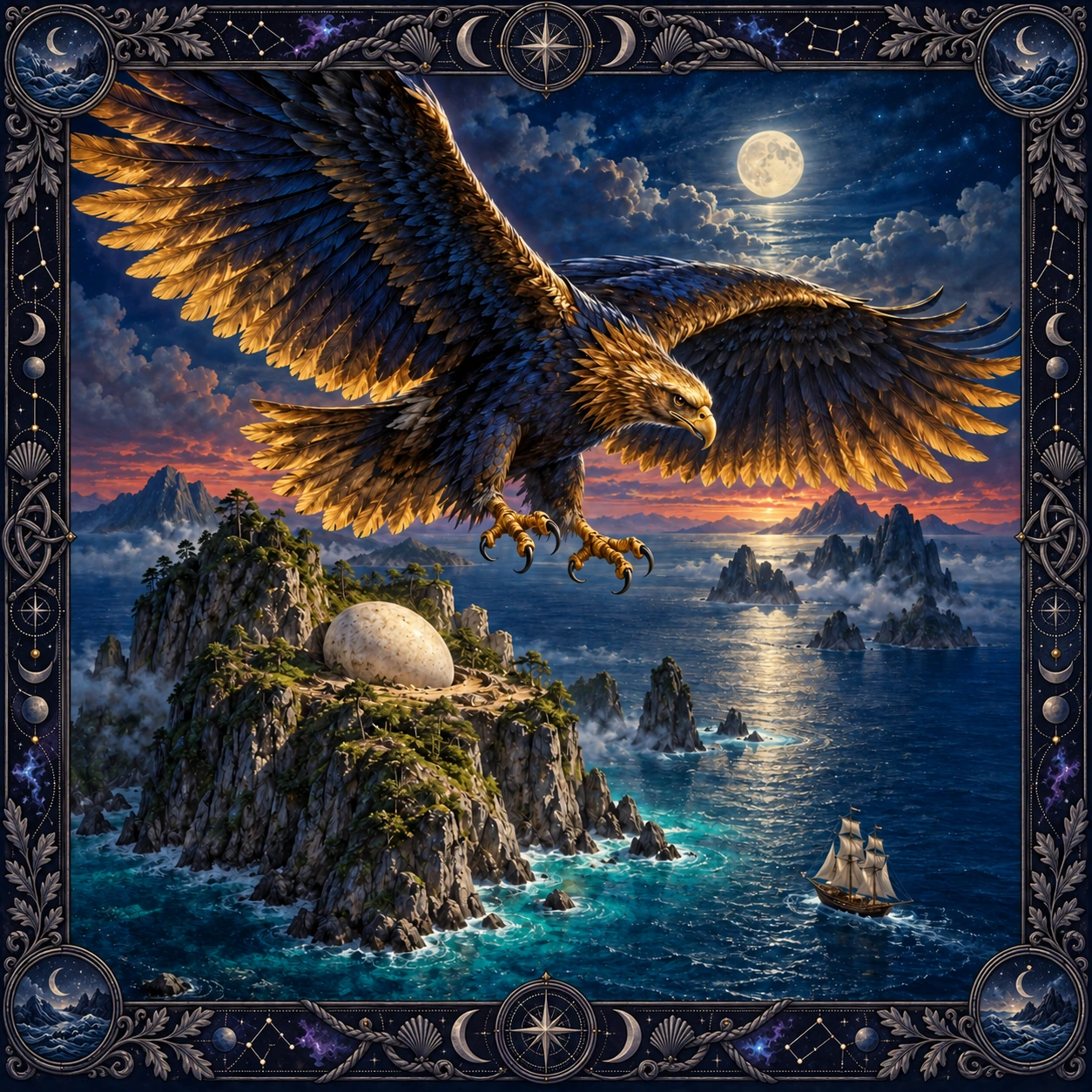
The roc is an immense bird of voyage literature, whose eggs, flight and parental retaliation dwarf the travellers who encounter it.
A white dome stands inland on the island where Sindbad has been abandoned. It has no door, and its smooth sides defeat his attempts to climb it. Then a wing passes across the sun. The stranded traveller has found an egg—and the arrival of its parent gives him an extraordinary idea.
Read the manuscript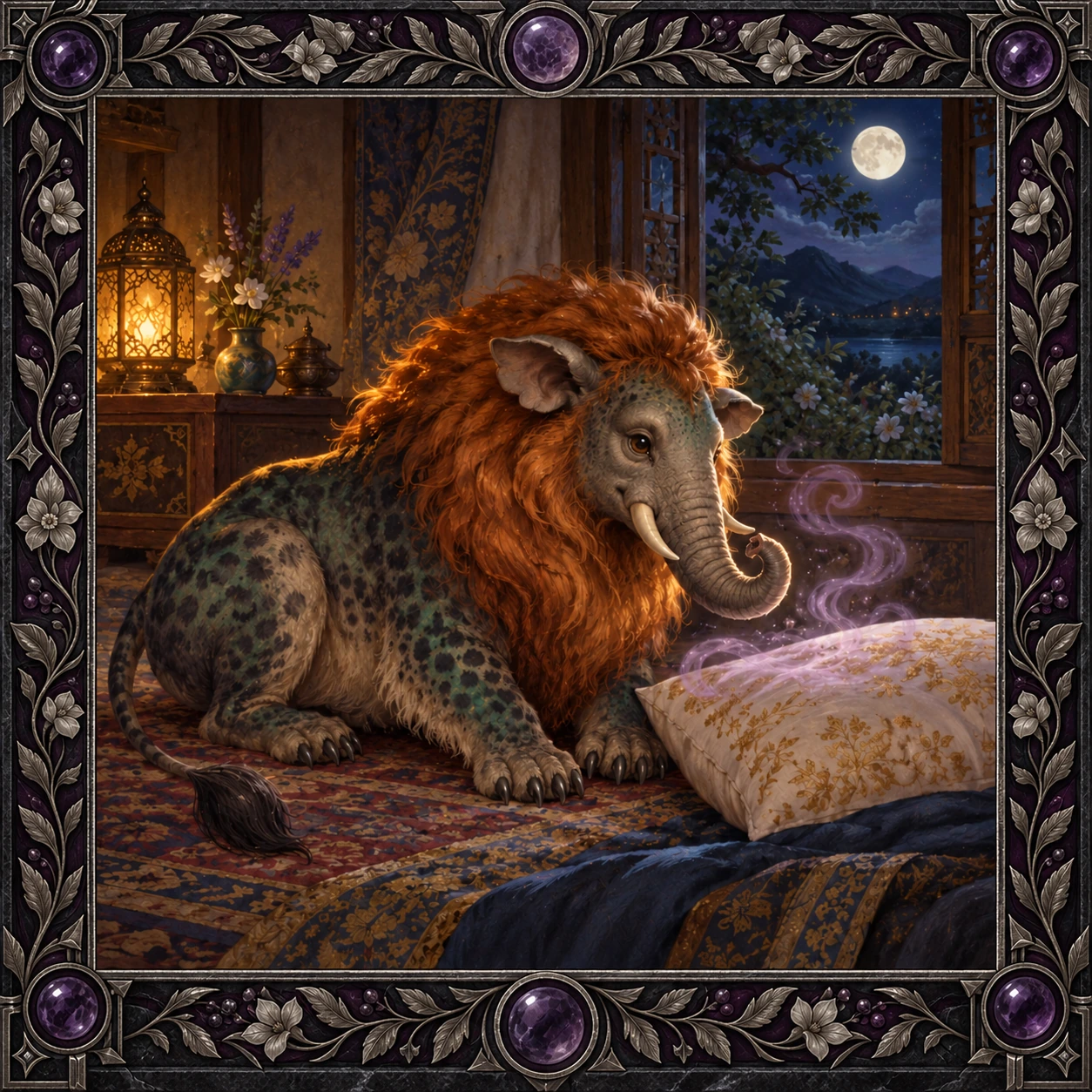
Baku is a Japanese dream-eating protector whose composite animal body appears on pillows, carvings and other objects meant to keep evil away.
In a brightly lit room, a dreamer casts no shadow. On the bed lies his own dead body, and something about its face is beginning to change. When he wakes, the visitor at his window seems to offer the relief he needs: Baku has come looking for a dream to eat.
Read the manuscript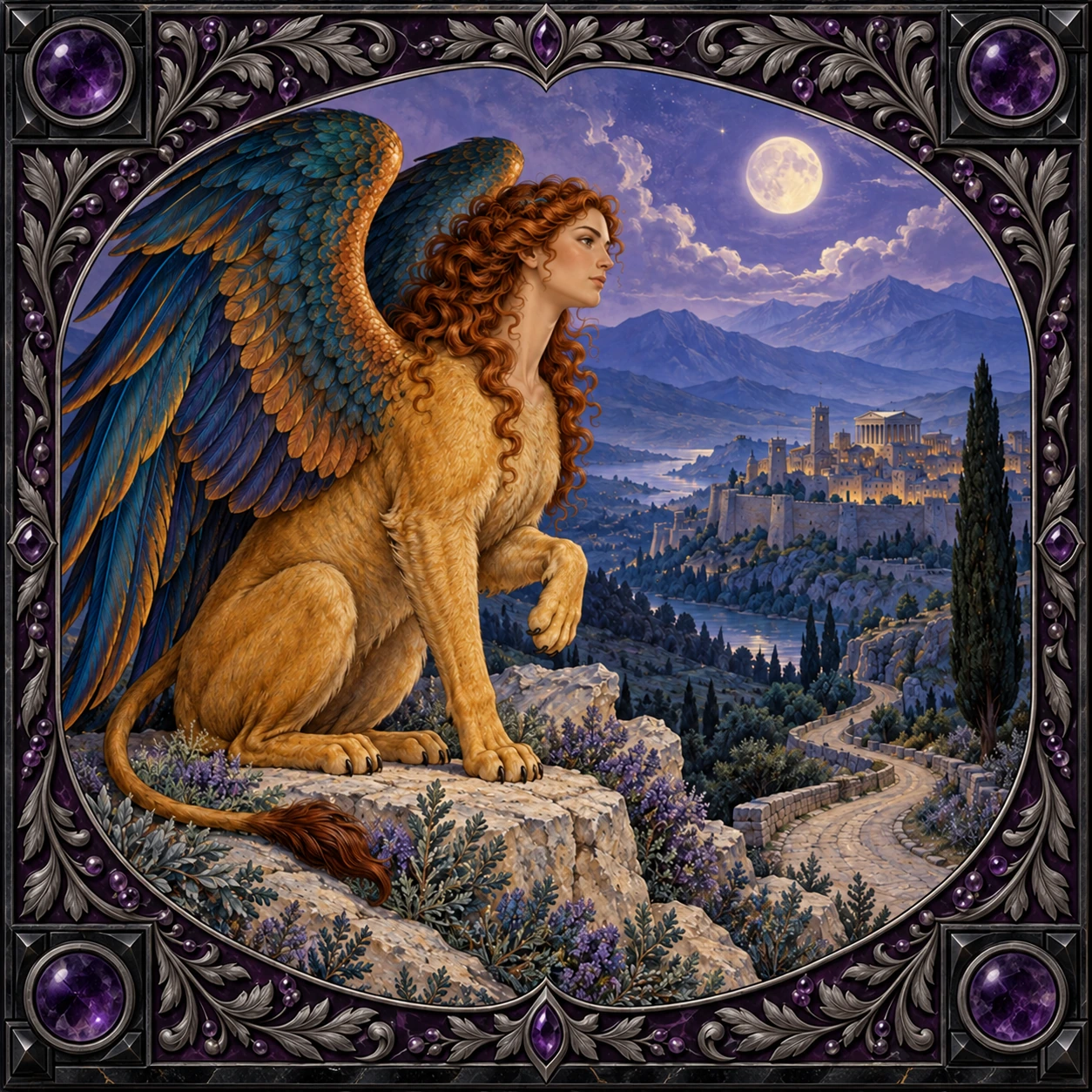
The Greek Sphinx is a winged, woman-faced lion who preys on Thebes until Oedipus answers her riddle about a human lifetime.
The Thebans meet to discuss the Sphinx’s question, but discussion saves no one. In the Library, each failure allows her to seize another victim. After his own son is taken, Creon offers the kingdom to anyone who can answer. The man who arrives has a question of his own: who were his parents?
Read the manuscript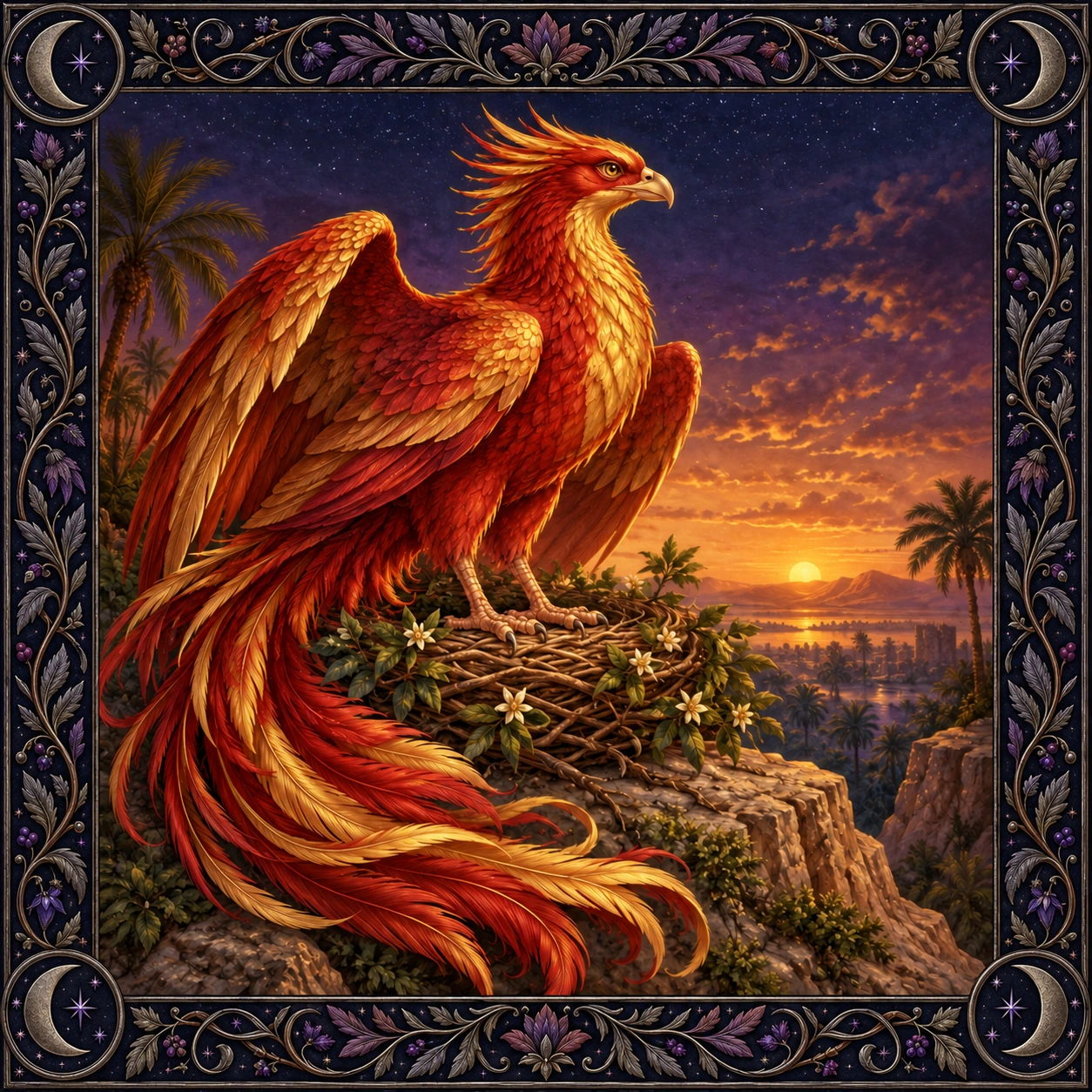
The phoenix is a rare, long-lived bird associated with the sun, a parent’s funeral and several different forms of renewal.
Before the phoenix can carry its dead parent to the sun’s temple, it must find out whether it is strong enough. In the story told to Herodotus at Heliopolis, the young bird makes a heavy ball of myrrh and tries to lift it. The journey begins with that careful test.
Read the manuscript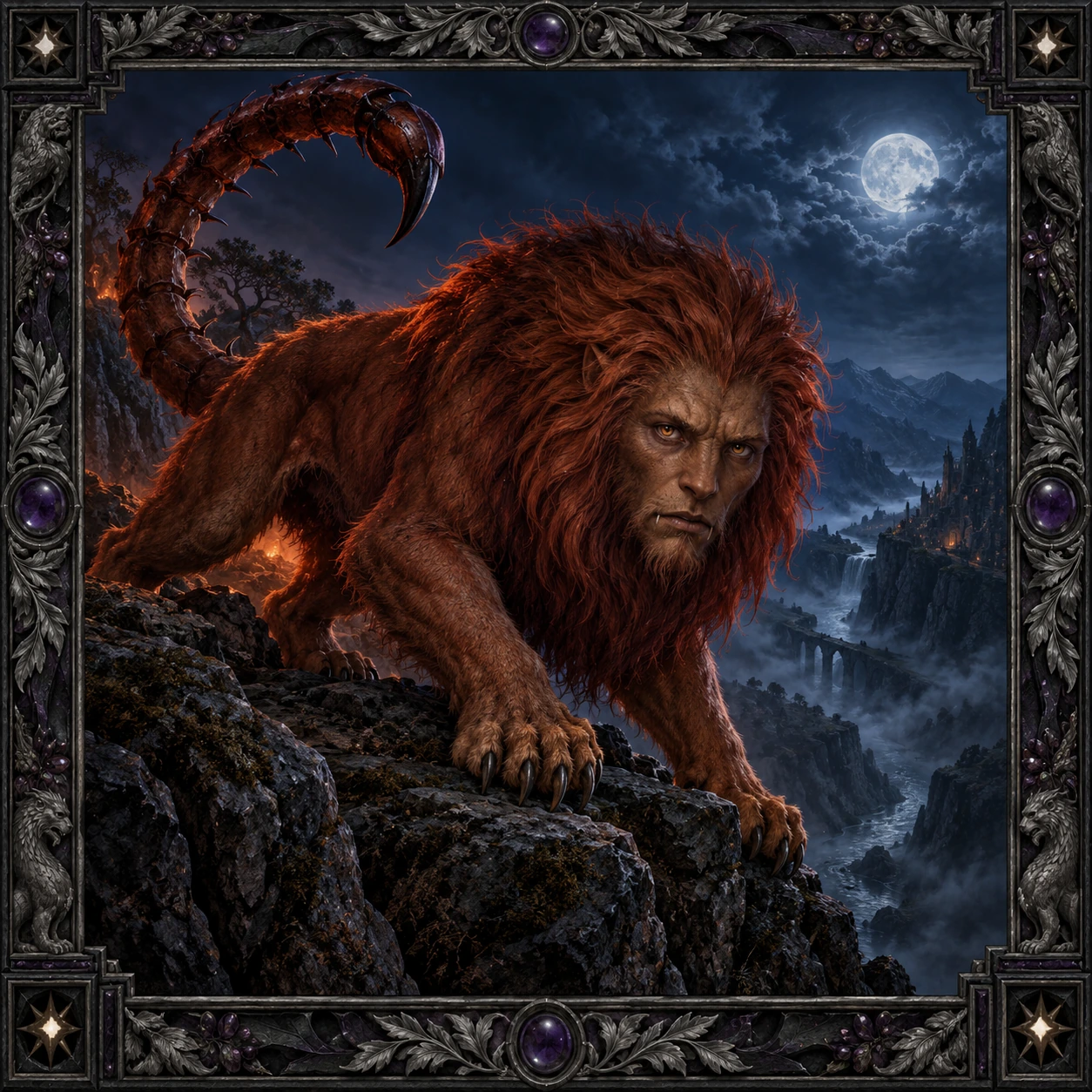
The manticore is a man-eating beast of ancient accounts of India, with a human face, a red lion-sized body and a tail that fires stings.
A monster arrives as a gift for the Persian king. The Greek writer Ctesias claims to have seen it there, according to the later writer Aelian. Then Aelian lets a doubt enter: how far should this witness be trusted?
Read the manuscript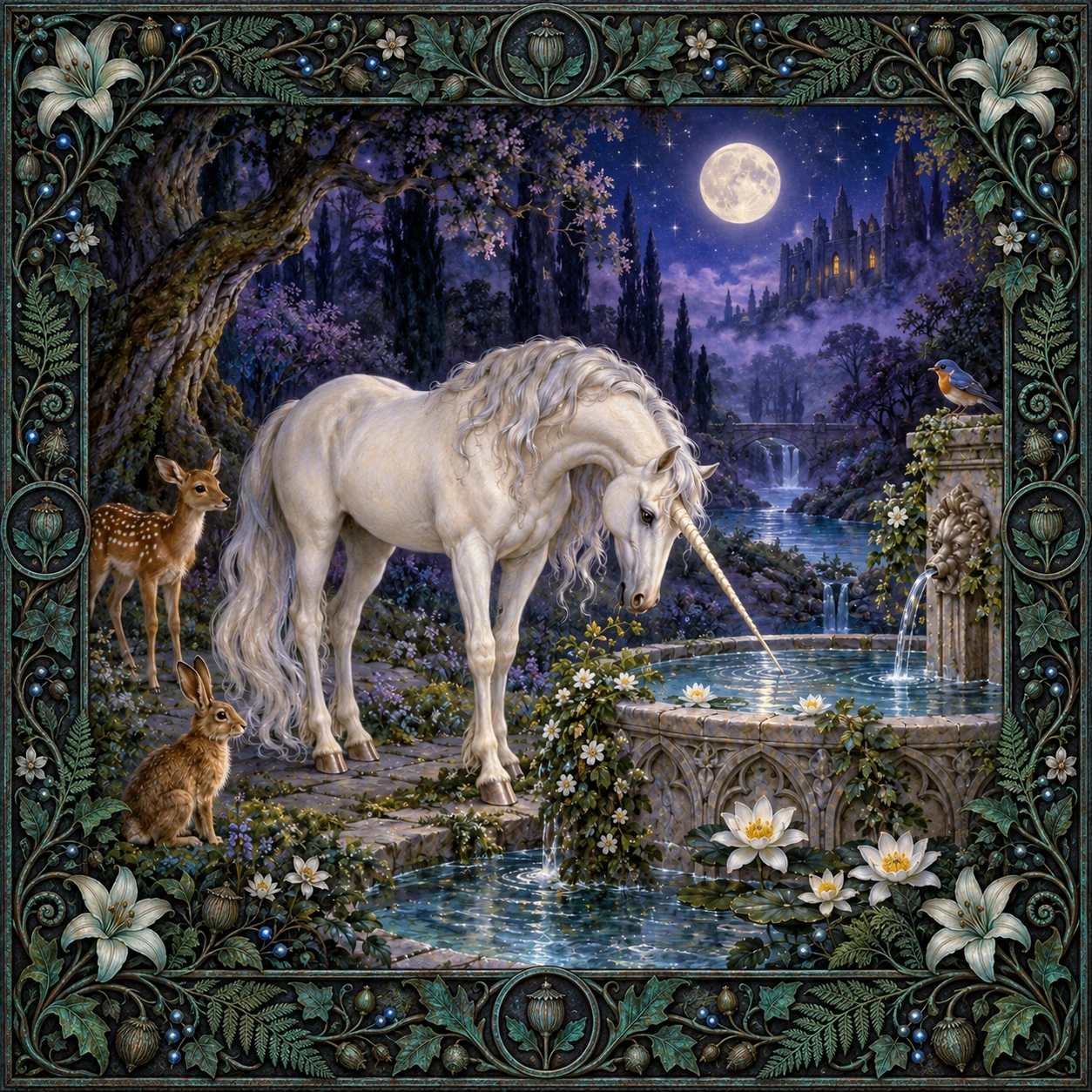
The unicorn is a one-horned beast of European natural history, bestiaries and art, fierce against hunters yet drawn into a maiden’s embrace.
The hunters have found their quarry, but the unicorn is kneeling at the water. Its horn enters the stream while animals gather around a white fountain. A tapestry at the Metropolitan Museum of Art’s Cloisters holds the hunters behind the creature they intend to possess.
Read the manuscript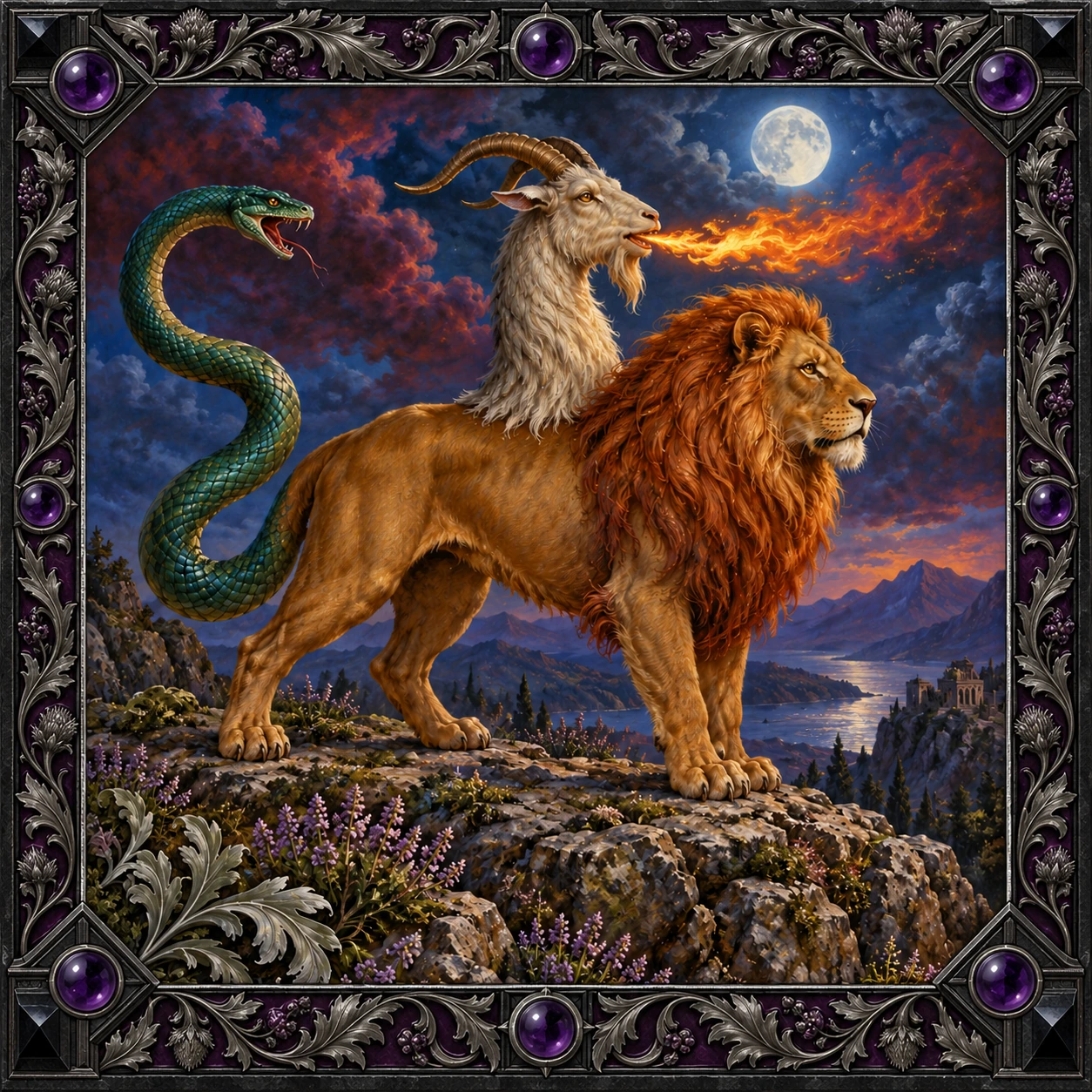
The Chimera is a fire-breathing monster of Lycia, joining lion, goat and serpent in one body before Bellerophon attacks her from the winged horse Pegasus.
Bellerophon carries a letter to a foreign king. Its message orders his death. The king sends him against the Chimera, a fire-breathing creature already devastating the country: a task that is meant to make an executioner unnecessary.
Read the manuscript
A mermaid combines a human upper body with a fish tail, appearing in European sea songs, Cornish storytelling and literary tales of longing.
A ship’s anchor has caught on someone’s front door. The woman asking its captain to move it rises waist-high from the sea, with yellow hair around her shoulders and children inside her underwater home. In William Bottrell’s Cornish story, a mermaid’s simple request sends the terrified sailors hurrying away.
Read the manuscript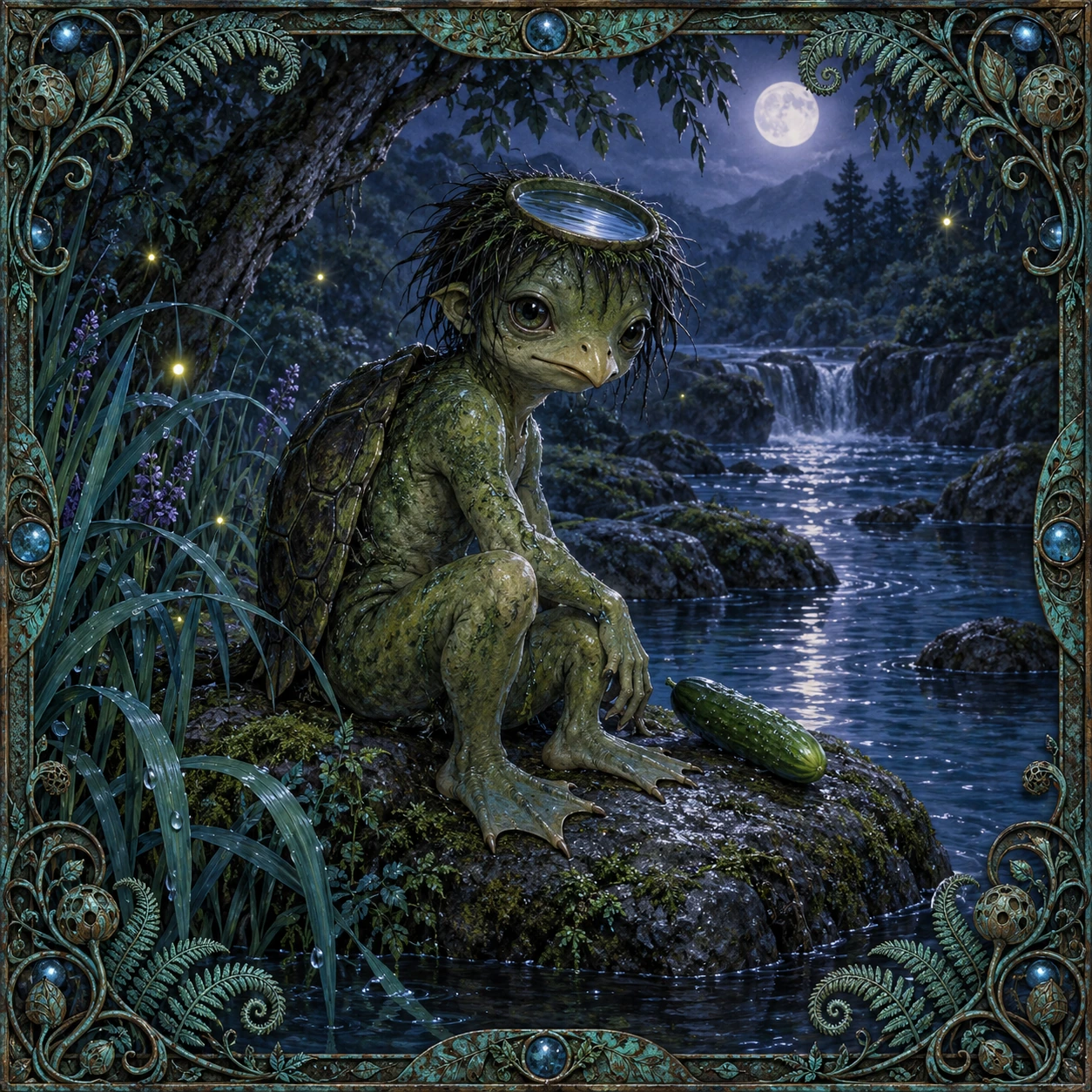
A Japanese water-being with a hollow in its head can drag a horse under—or bargain for its own life when the horse pulls it ashore.
The horse came to drink; the river-being came to seize it. In the Kawachi-mura story Lafcadio Hearn recorded, a belly-band catches the attacker’s head and the frightened horse drags it onto dry land. The villagers gather around their captive. It bows to the ground and begs aloud for mercy.
Read the manuscript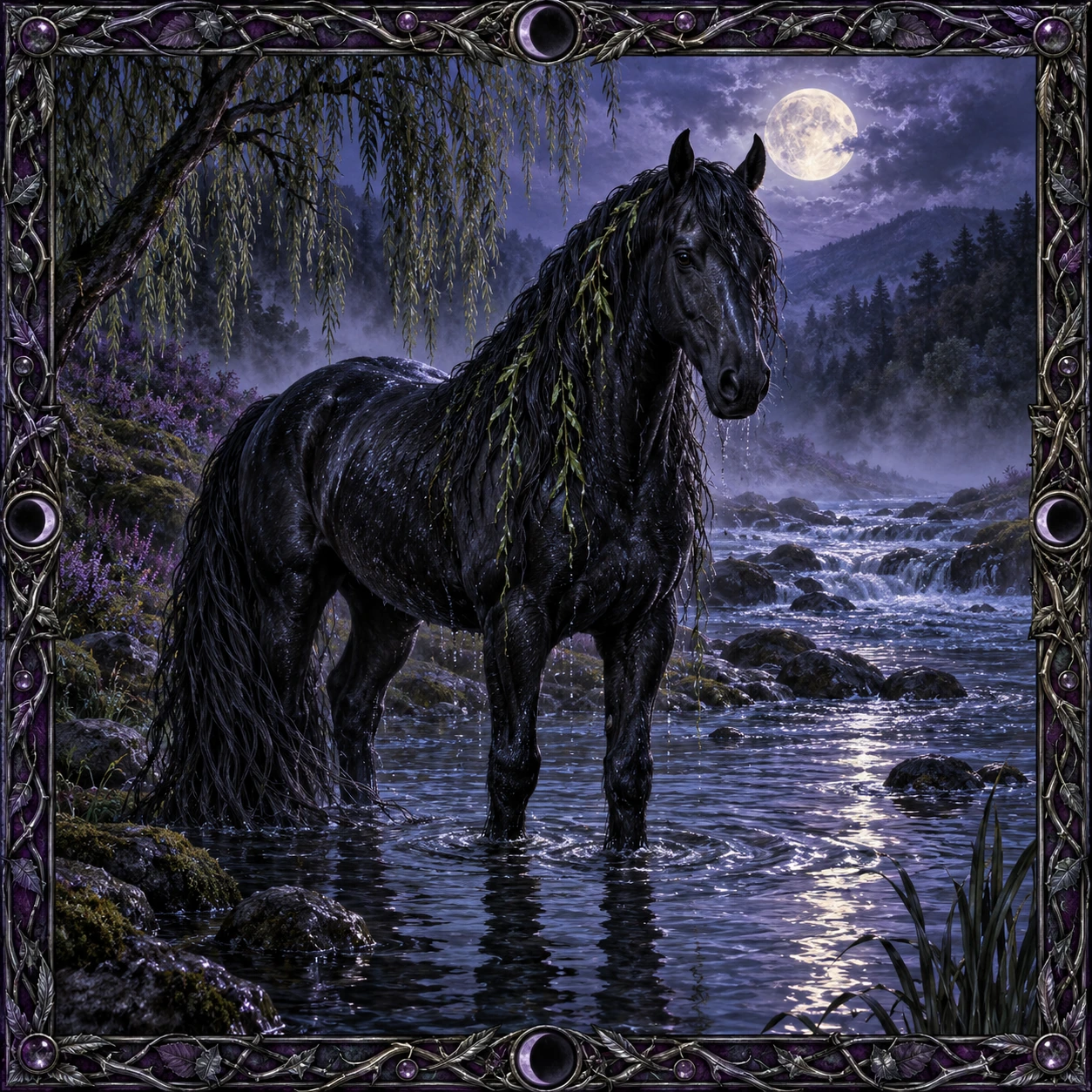
The kelpie is a Scottish water-spirit often seen as a horse, whose apparent usefulness can lure a traveler toward drowning.
James Macgrigor reaches home with a stolen bridle-bit in his pocket. The horse he took it from is already waiting at the door. It declares that he and the bit will never cross the threshold together. In William Grant Stewart’s telling, the quarrel has followed him off the road and put his own household beyond his reach.
Read the manuscript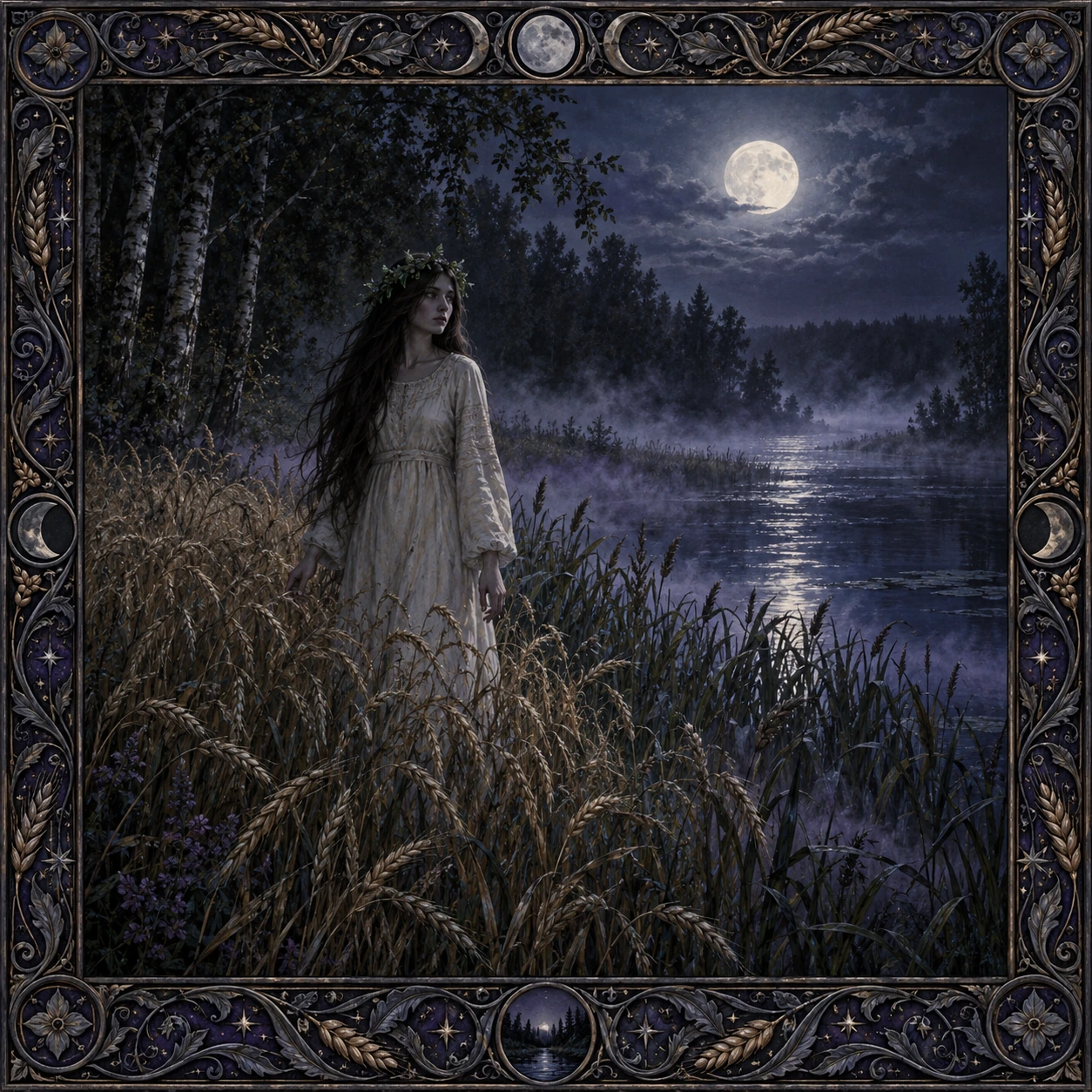
Rusalki are human-shaped beings in Slavic traditions, linked with the dead, flowering fields, woods and water.
A shepherd plays while the rusalki dance. By morning, his foot has beaten a hollow into the ground. William Ralston’s nineteenth-century collection places these dancers among fields as well as waters: their passing can leave richer grass, yet their invitation can cost a human life. To meet a rusalka is not always to meet someone who belongs in the river.
Read the manuscript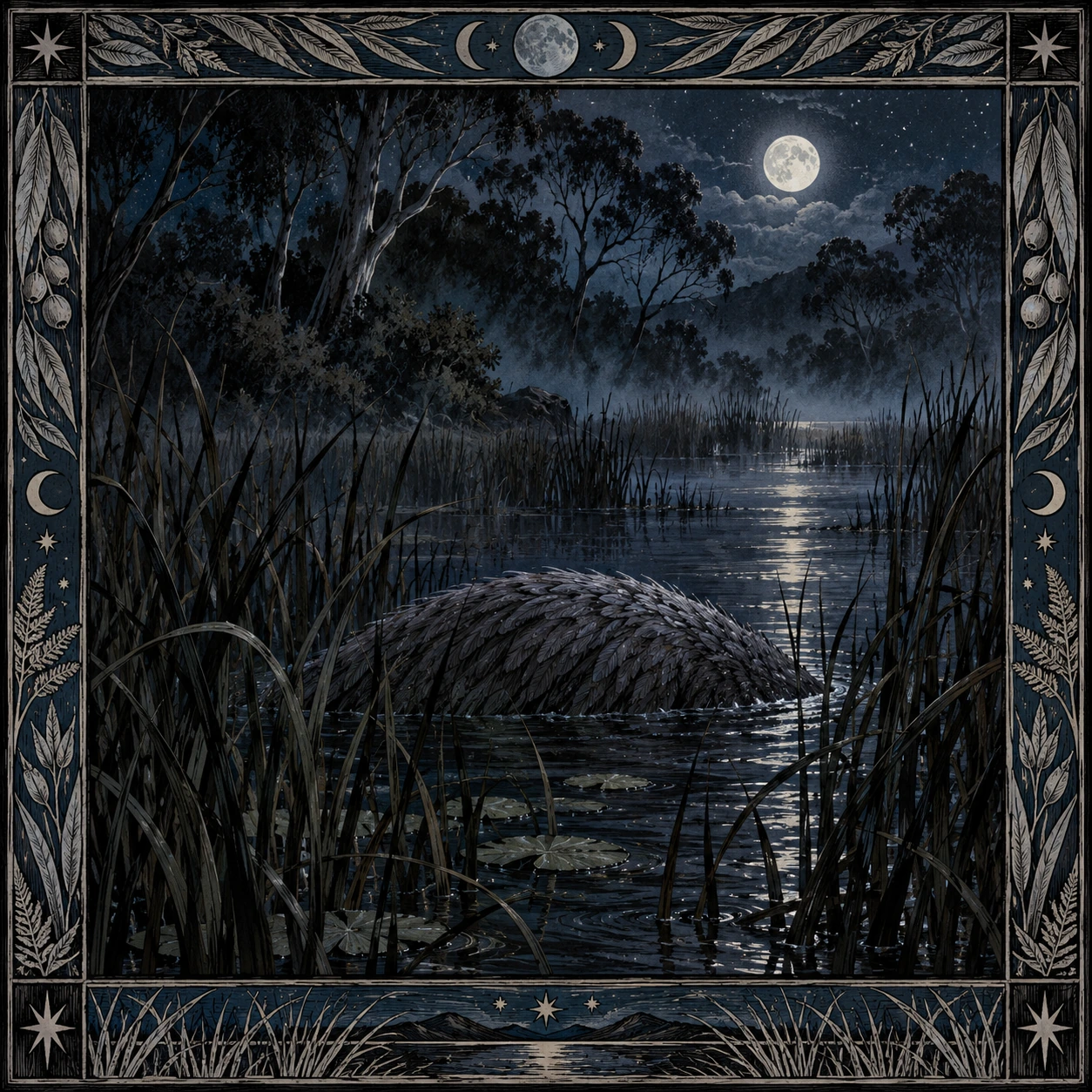
Bunyip names feared beings of Australian waters, variously described as feathered, furred or seal-like, whose encounters can end in drowning or transformation.
Something beneath Mustons Creek takes the bait and nearly tears the fishing line from a young man’s hands. His companions help him haul it ashore: a creature resembling both a calf and a seal. Across the pool, its mother rises from her den. In the Victorian tale printed from W. Dunlop’s notes, the fisherman refuses to surrender his extraordinary catch.
Read the manuscript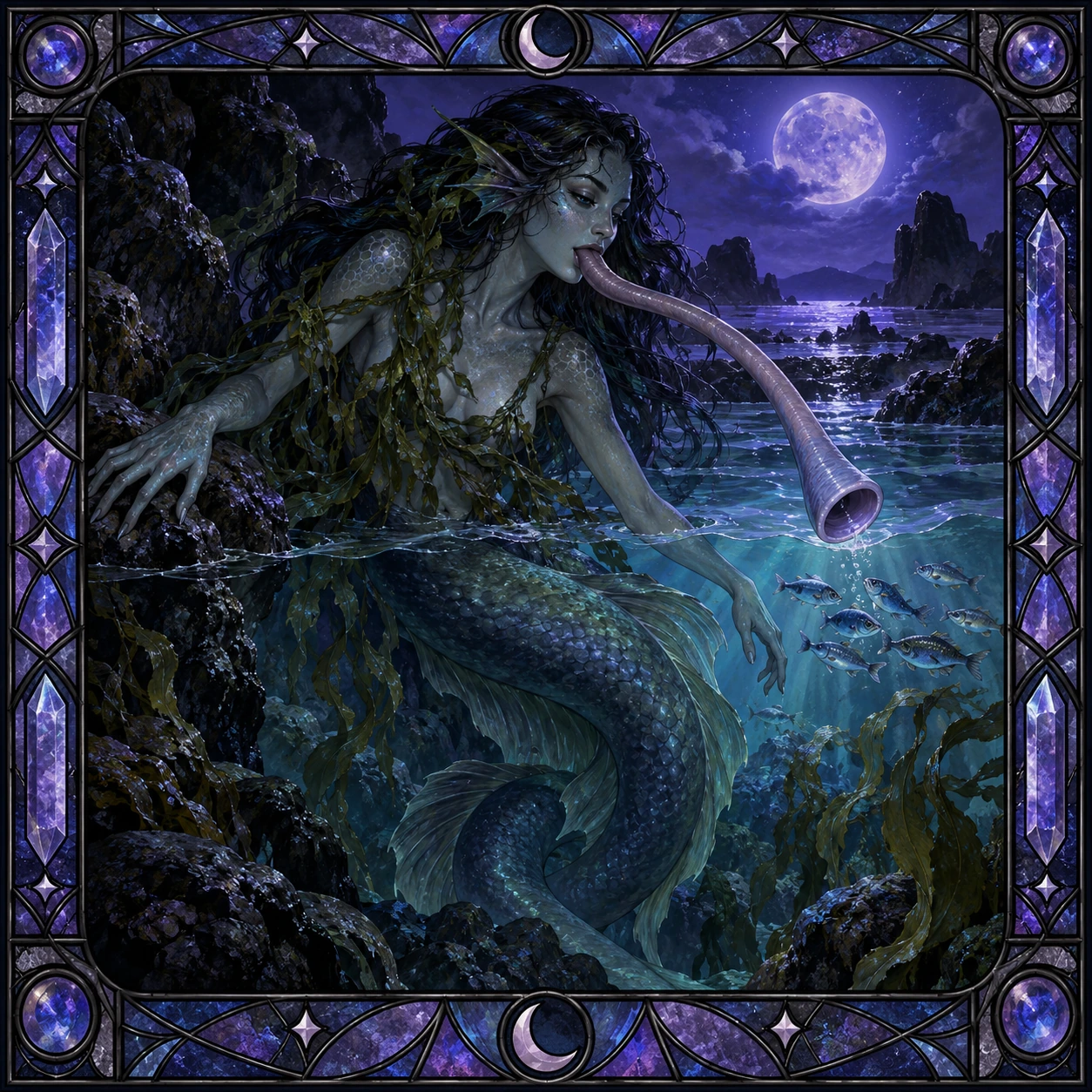
Marakihau is a Māori sea-being with a curling body and hollow tongue, represented in carvings, paintings and ancestral accounts.
On a carved wall slab, a fish approaches a cup-shaped opening. It is the end of the marakihau’s tongue.
Read the manuscript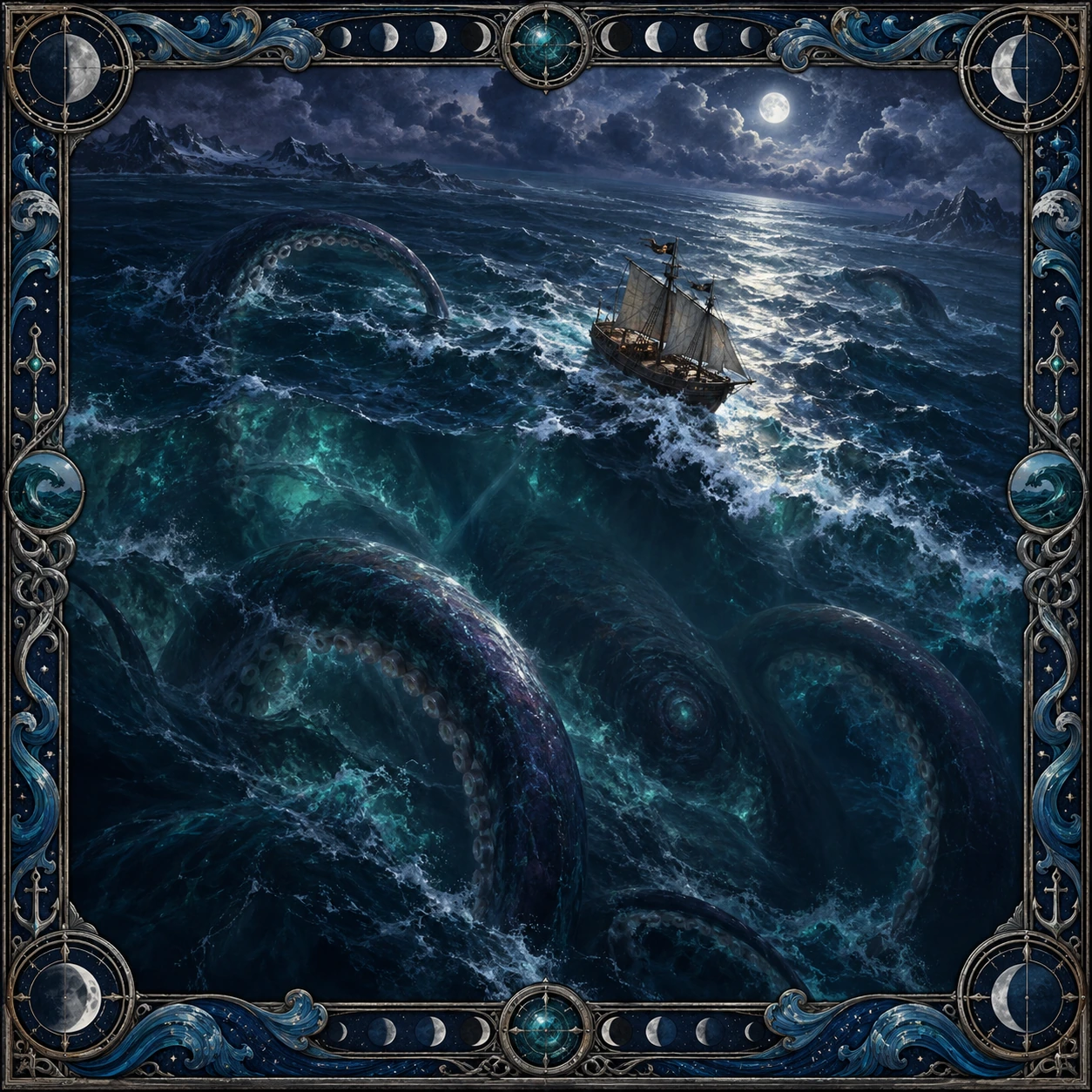
The kraken is an immense sea-being of Norwegian lore, depicted as an island-like presence and, in later images, a giant cephalopod.
The hooks come up crowded with cod and ling. The fishermen have found good water—or something beneath it. Their lines reach only a fraction of the depth they expect from the landmarks ashore. In Erik Pontoppidan’s account, the crews keep fishing, but watch the depth. If it diminishes again, they must leave.
Read the manuscript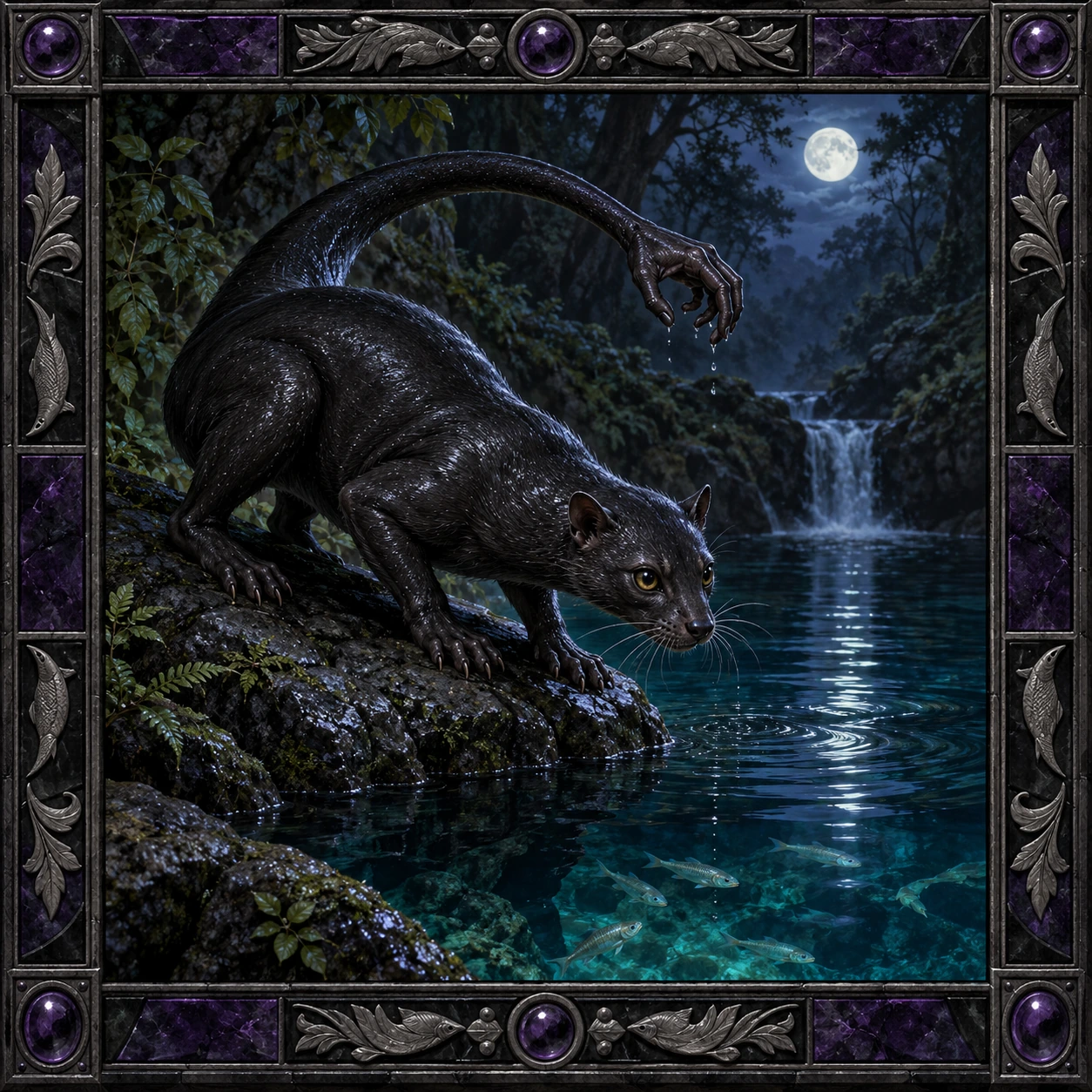
The ahuizotl is a small Nahua water-being that lures people to the bank and seizes them with the hand at the end of its tail.
A cry beside the water sounds like a child needing help. Someone goes to look. In the Florentine Codex’s account, the waiting ahuizotl reaches with the hand at the end of its tail and draws that person below.
Read the manuscript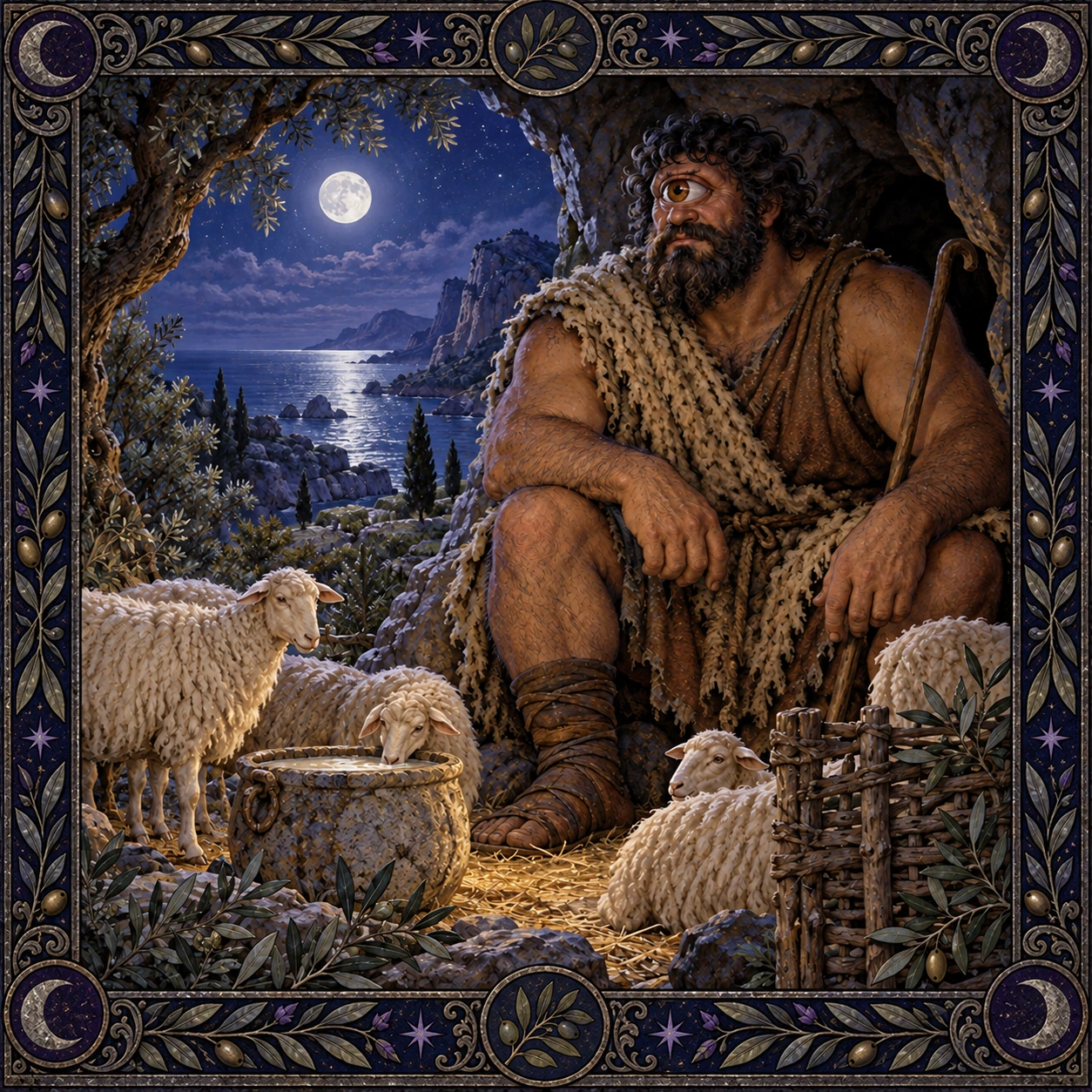
Cyclopes are one-eyed beings in Greek stories: divine craftsmen and immense builders, as well as the shepherd Polyphemus, who imprisons Odysseus in his cave.
Odysseus could kill the sleeping shepherd. The thought lasts only until he remembers the stone across the doorway. Polyphemus has moved it easily; none of the prisoners can. They need the creature who is eating them to remain alive long enough to let them out.
Read the manuscript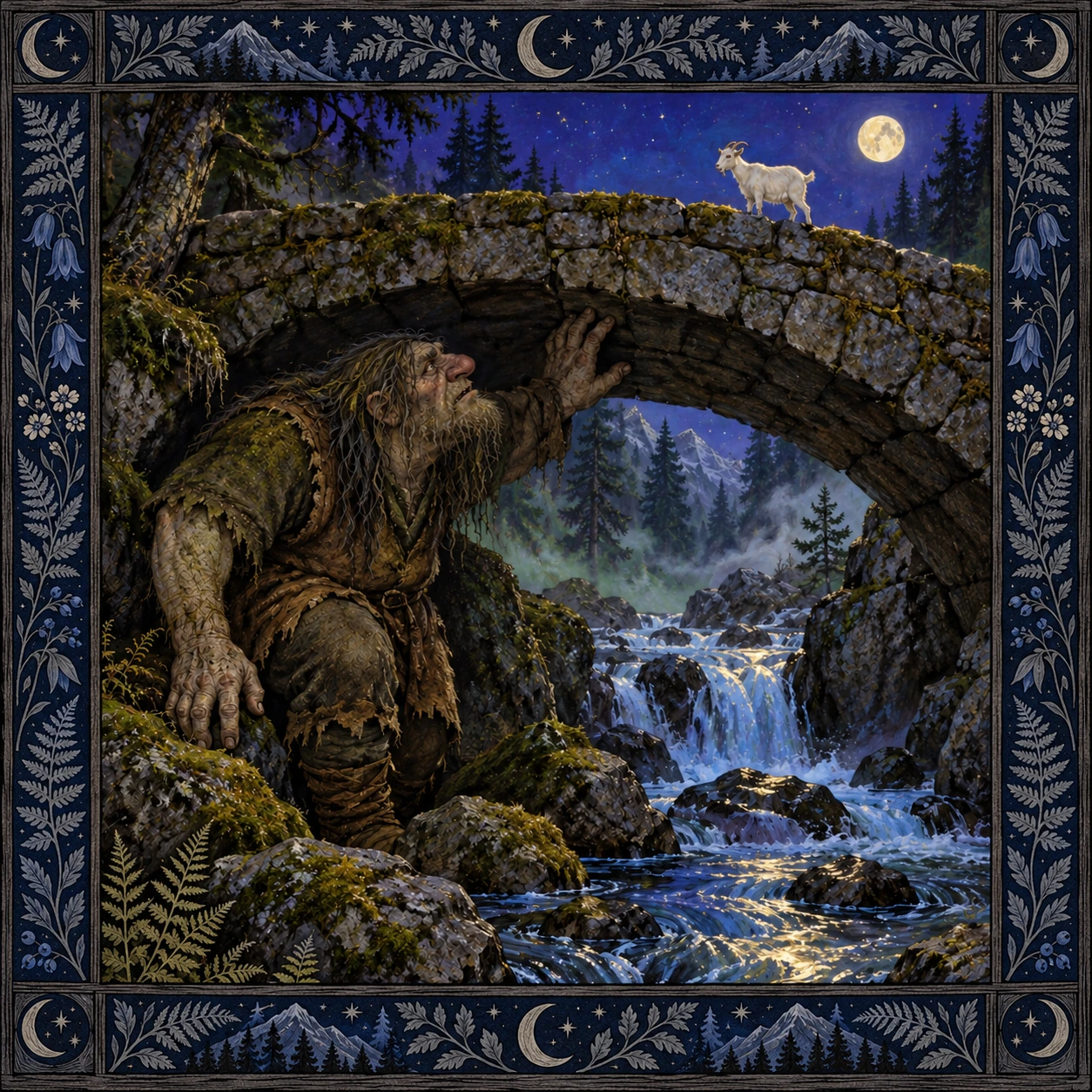
Trolls inhabit Scandinavian mountains, woods and stories, confronting people with formidable strength, dangerous appetites and sometimes an unexpected willingness to help.
Boots squeezes a piece of cheese until whey runs out. He calls it a stone and threatens to squeeze the troll in the same way. His opponent offers to help with the woodcutting.
Read the manuscript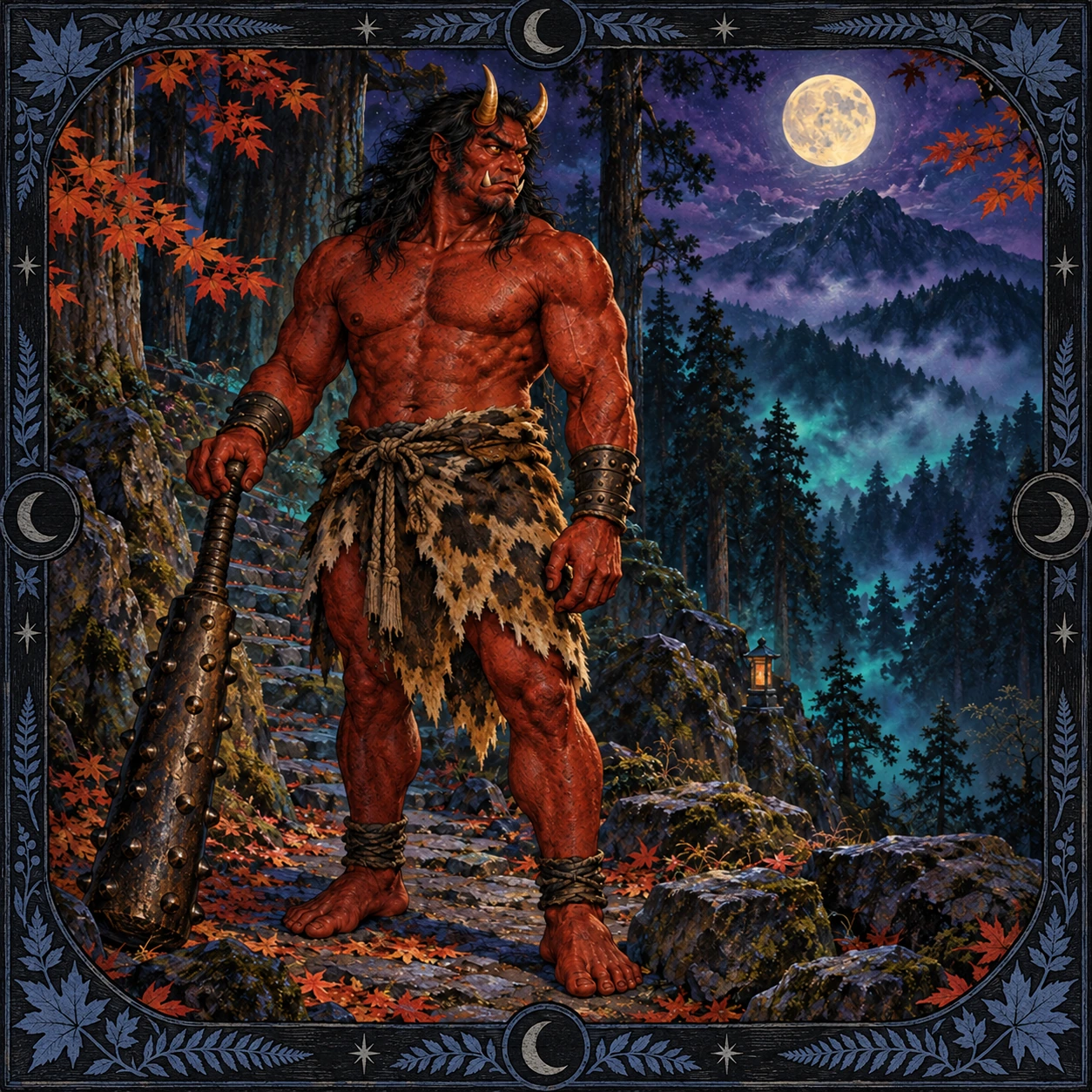
Oni are fearsome beings of Japanese stories, religion and art, often shown with horns, sharp teeth and powerful bodies.
The cook carries a human limb toward the mountain hall. Raikō’s men grip their hidden swords, then greet him politely and ask to see his master. In William Elliot Griffis’s Shuten Dōji tale, the rescuers must persuade their hosts to welcome the very men who have come to kill them.
Read the manuscript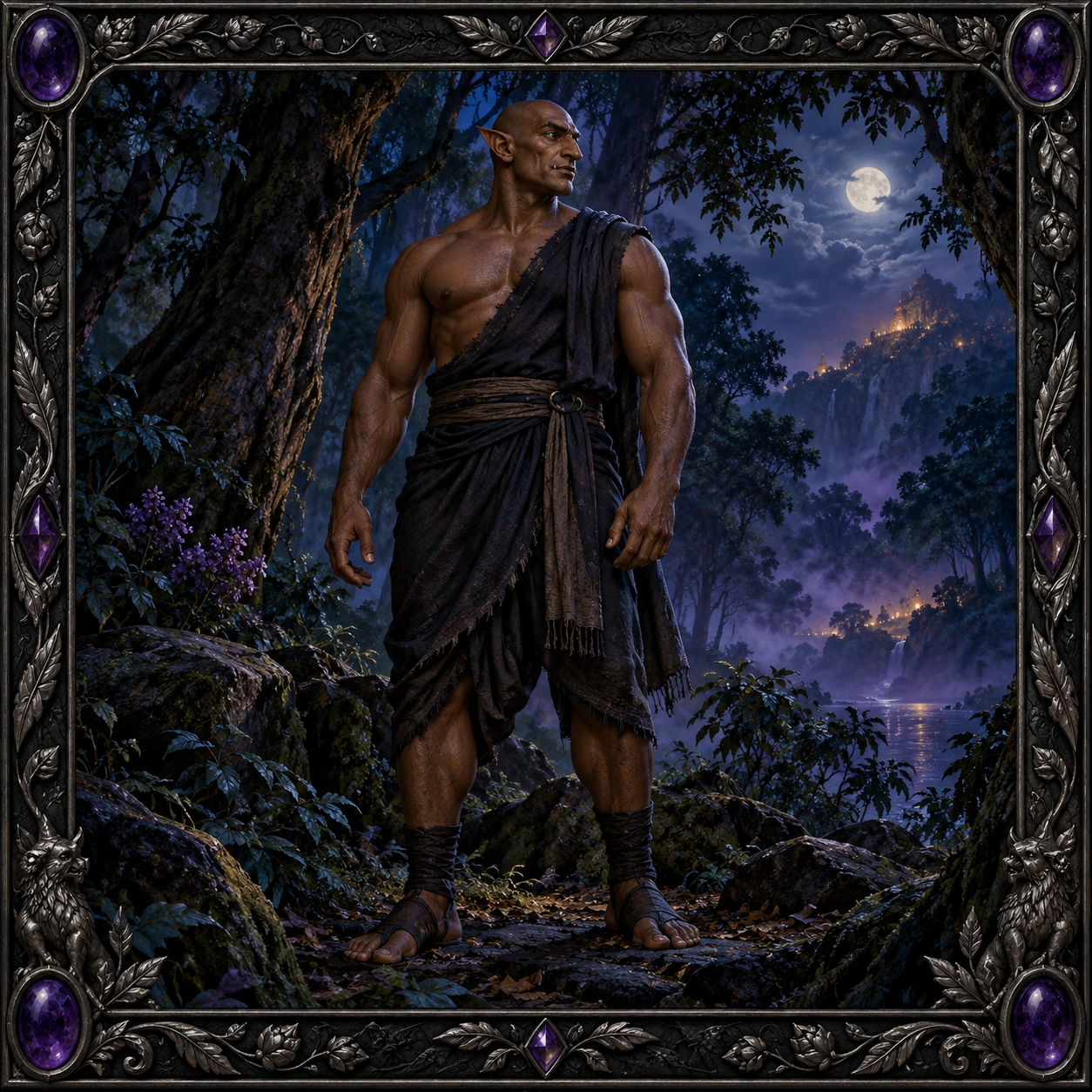
Rakshasas are formidable beings in South Asian epic narratives, whose named individuals can be opponents, advisers, relatives and loyal allies.
Ravana, ruler of Lanka, orders the death of Hanuman, the captured monkey envoy serving Rama. His own brother objects. In Griffith’s Ramayana, Vibhishana argues that even a guilty messenger must be spared. The court’s disagreement reveals a division among rakshasas that their formidable appearance cannot explain.
Read the manuscript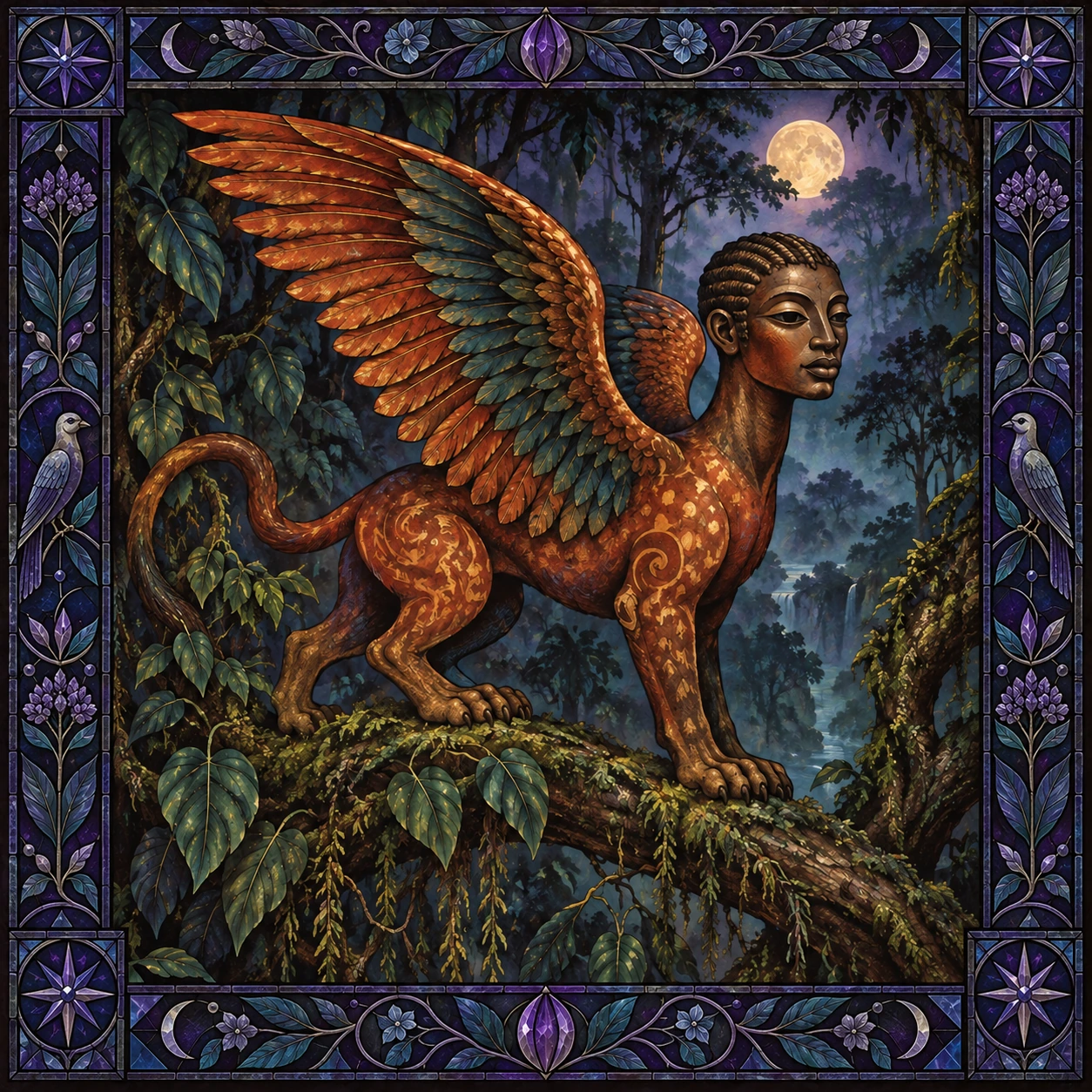
An Akan forest being threatens hunters from the trees and takes striking human-and-animal forms in Ghanaian sculpture.
The hunter has left his dogs at home. Above him are bunches of kola nuts; before him stands Sasabonsam, claiming the fruit and threatening his life. He asks for time to call his companions. The being allows three calls. In the tale collected by R. S. Rattray, the distance between the forest and home suddenly matters more than the hunter’s strength.
Read the manuscript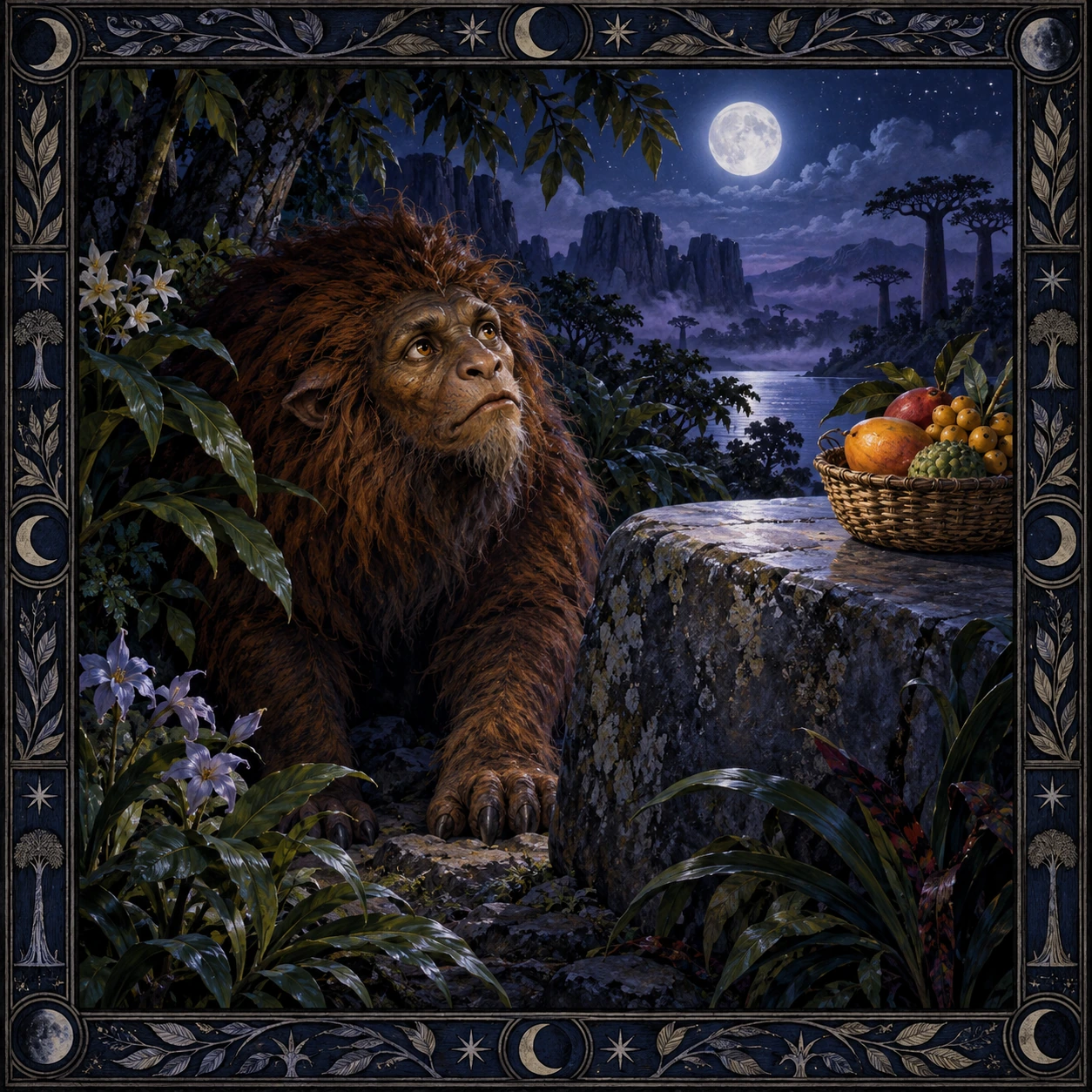
Trimobe is a powerful, man-eating figure in Malagasy tales, an owner of gardens and riches whose captives turn his appetite against him.
Trimobe carries his prisoner home in a basket. Each falling stone reassures him that Takinga is still inside. Then the prisoner himself drops to the ground.
Read the manuscript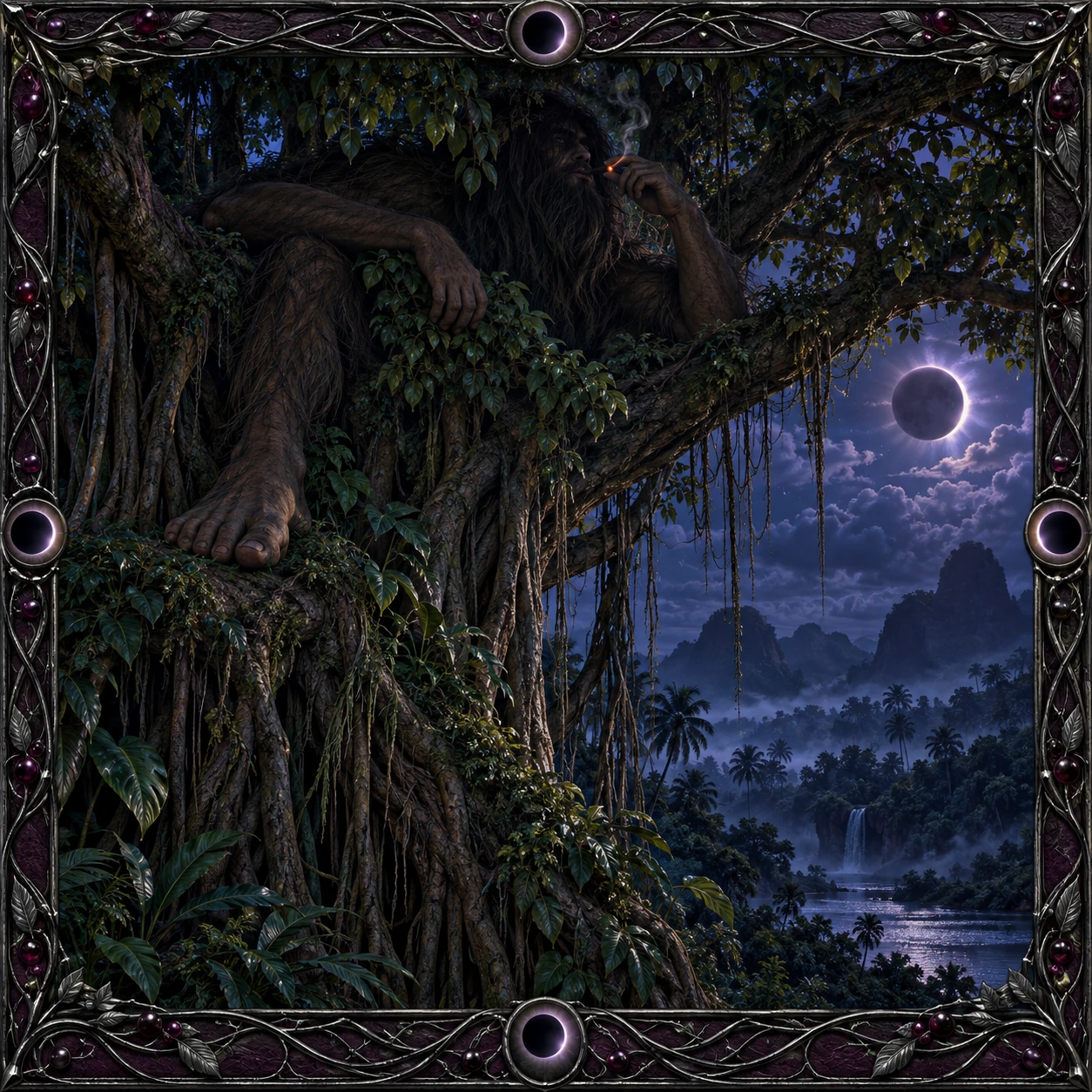
The kapre is a Philippine giant often encountered near trees, where an immense body or a glowing cigarette can turn a familiar place frightening.
A boy sits on a fence after dark. A man tells him to go home and taps his head. In an Ilocos Norte family account, that ordinary reprimand brings the man face to face with a giant.
Read the manuscript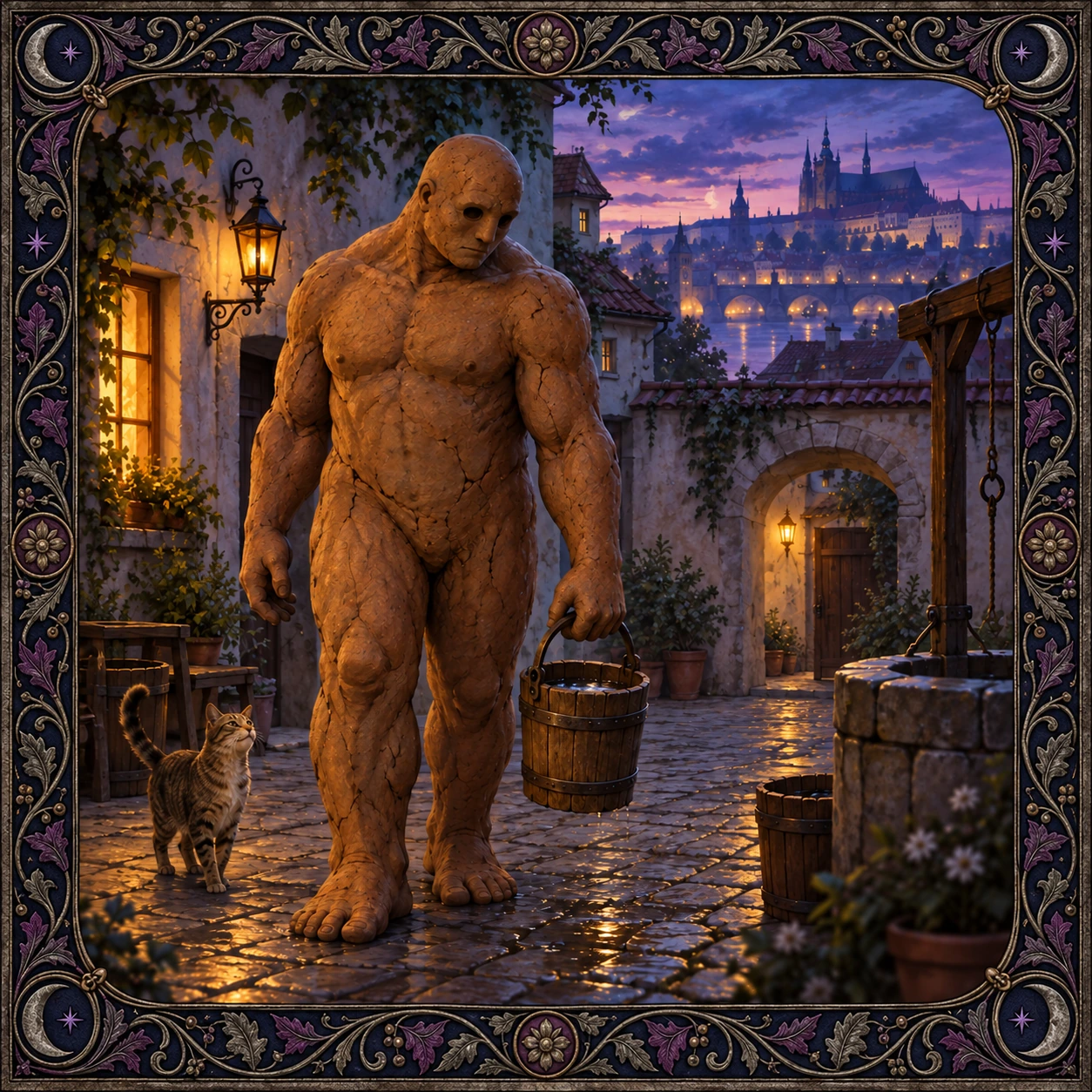
A golem is a humanlike being brought to life in Jewish texts and legends, sometimes serving its maker and sometimes becoming dangerously difficult to control.
Every Friday, Rabbi Löw stops his clay servant before the Sabbath begins. It has spent the week chopping wood, carrying water and sweeping. Then, in Leopold Weisel’s Prague tale, the rabbi forgets. The servant keeps moving, and the approaching holy day leaves very little time to stop it.
Read the manuscript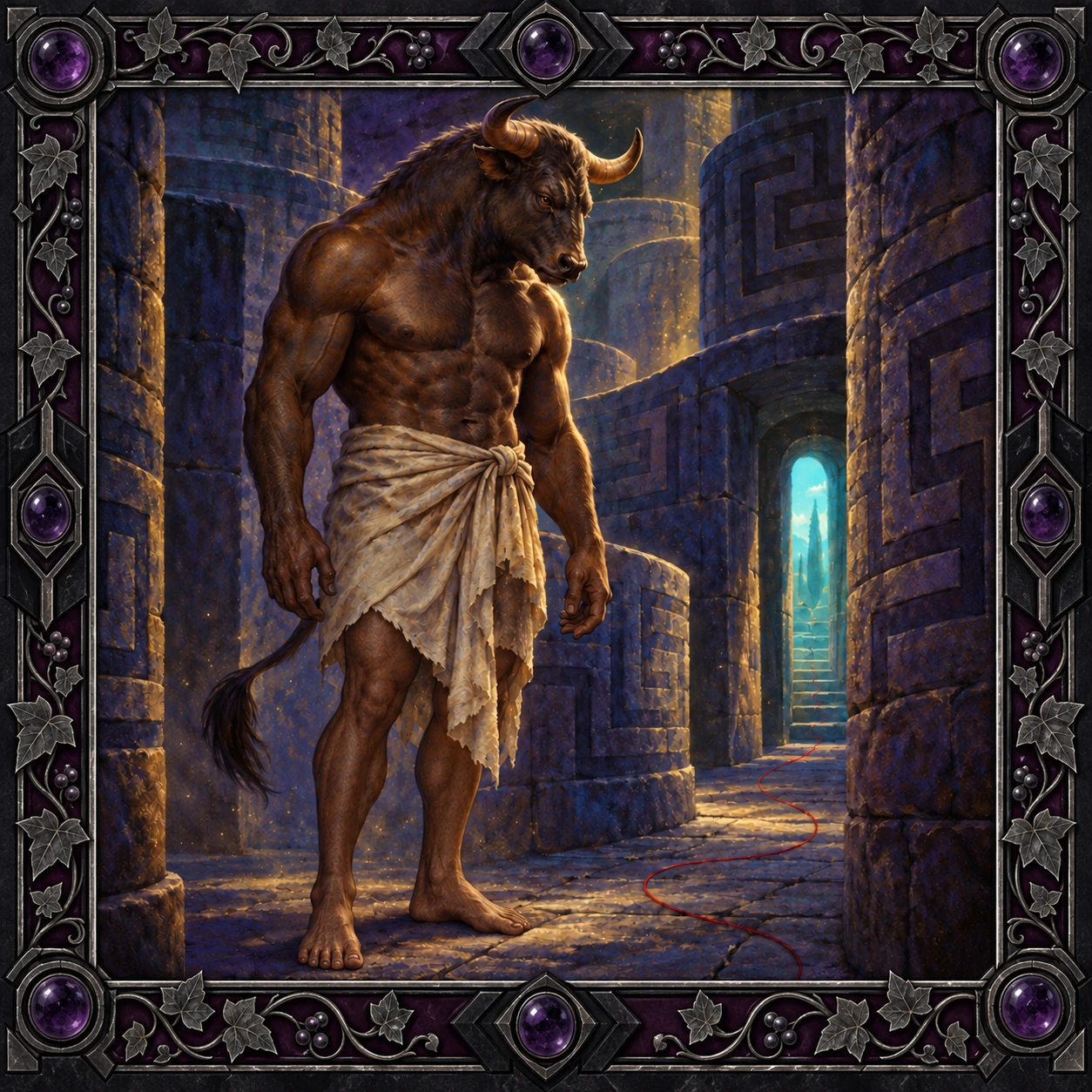
The Minotaur is Pasiphae’s bull-faced, human-bodied son, confined by Minos in a Labyrinth that Ariadne’s thread enables Theseus to escape.
Minos asks Poseidon for a bull and promises to sacrifice it. When the animal rises from the sea, the king decides it is too fine to lose. In the Library attributed to Apollodorus, his substituted offering begins a disaster that will require two inventions from the same craftsman: a wooden cow and a prison.
Read the manuscript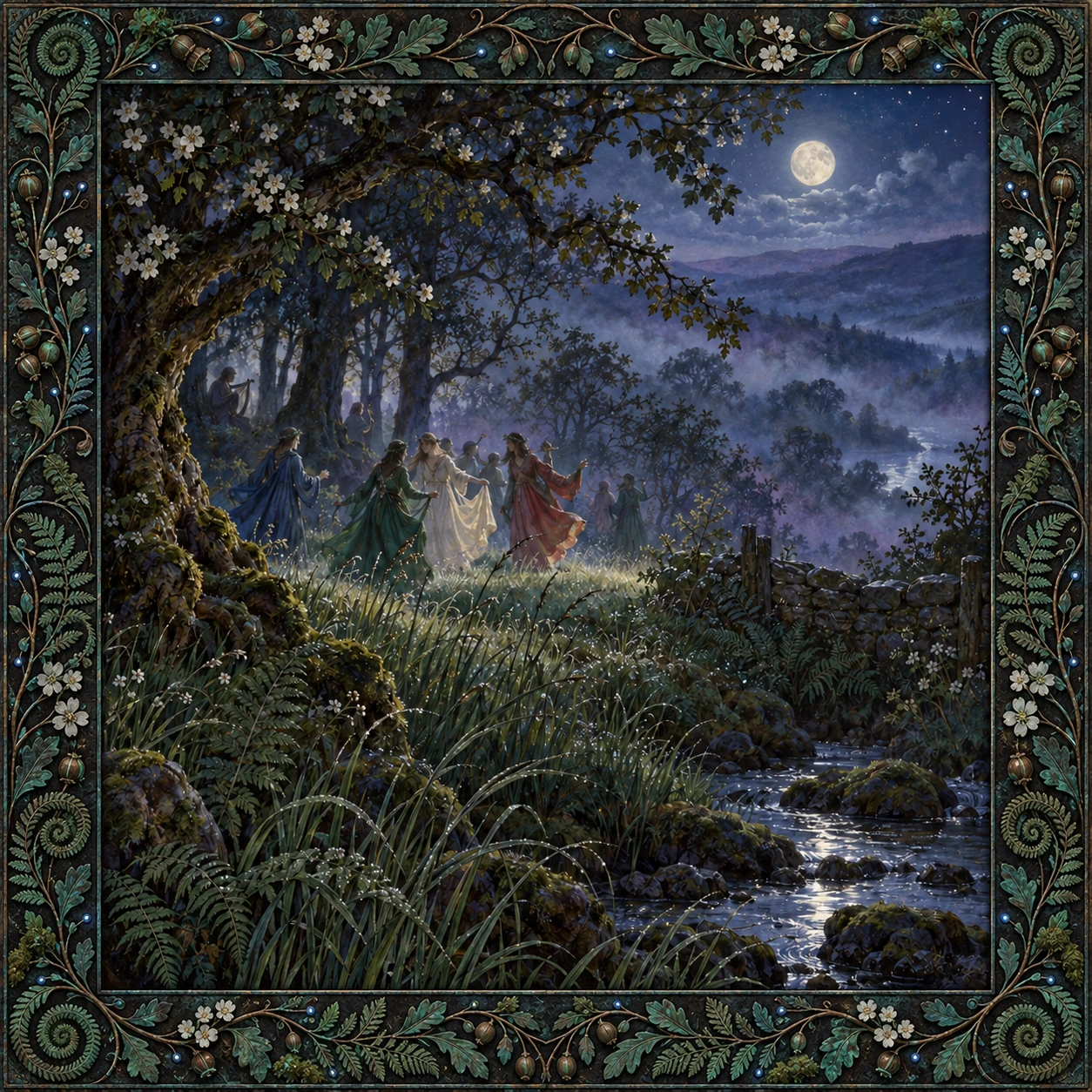
The Tylwyth Teg are the fairy people of Welsh tradition, encountered in dancing companies, hidden households and unsettling visits to human homes.
Two farm servants are walking home at twilight when one hears a tune he knows. His companion hears nothing. Rhys runs toward the music, promising to catch up; Llewellyn goes home alone.
Read the manuscript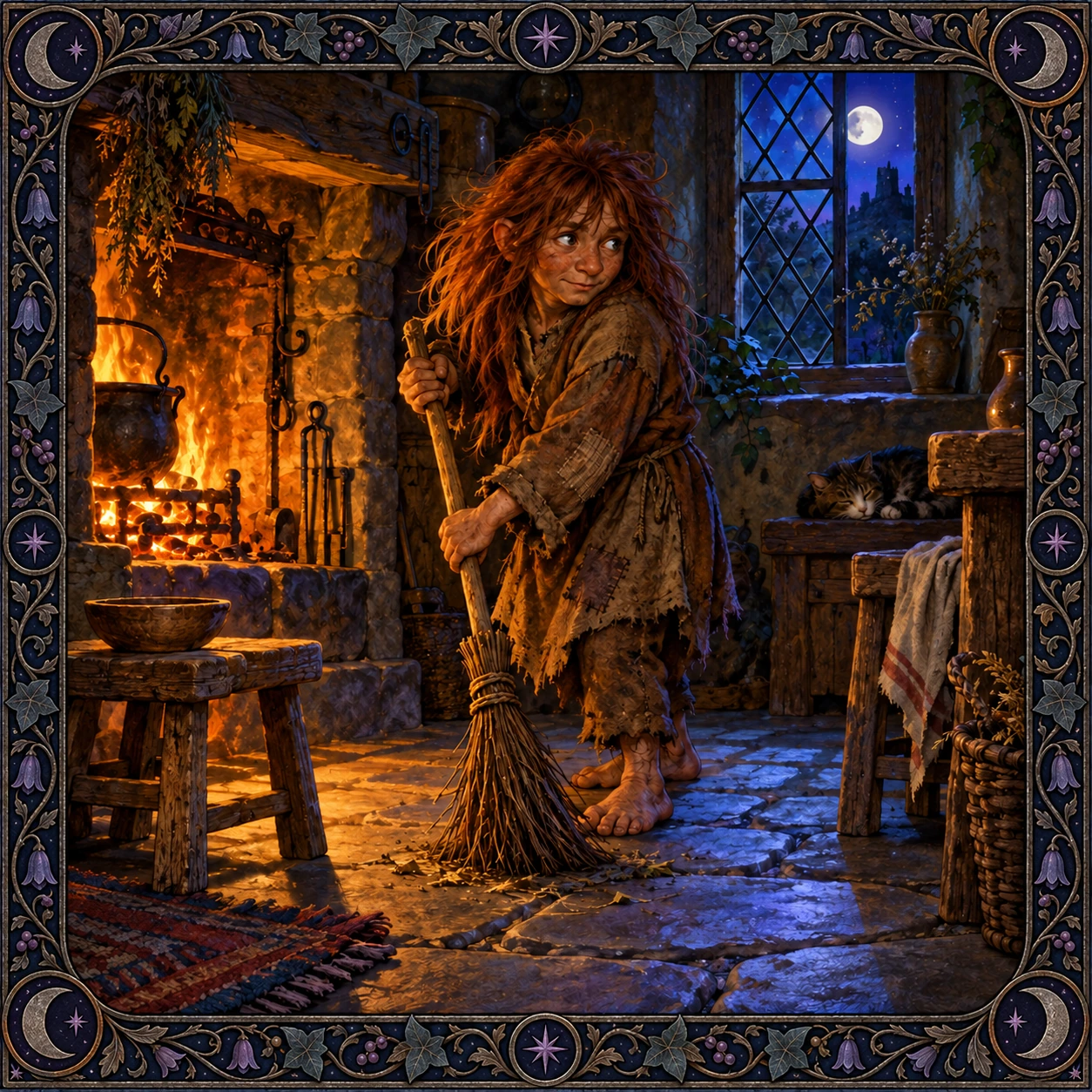
The brownie is a Scottish and Border household spirit that works unseen, accepts discreet treats and can leave a family when its help is taken for granted.
For several seasons, the brownie at Cranshaws has helped save and thresh the corn. Then, after a harvest, someone complains about the way it is piled in the barn. The household has found fault with a worker it cannot command. In William Henderson’s collection, the answer comes the following night.
Read the manuscript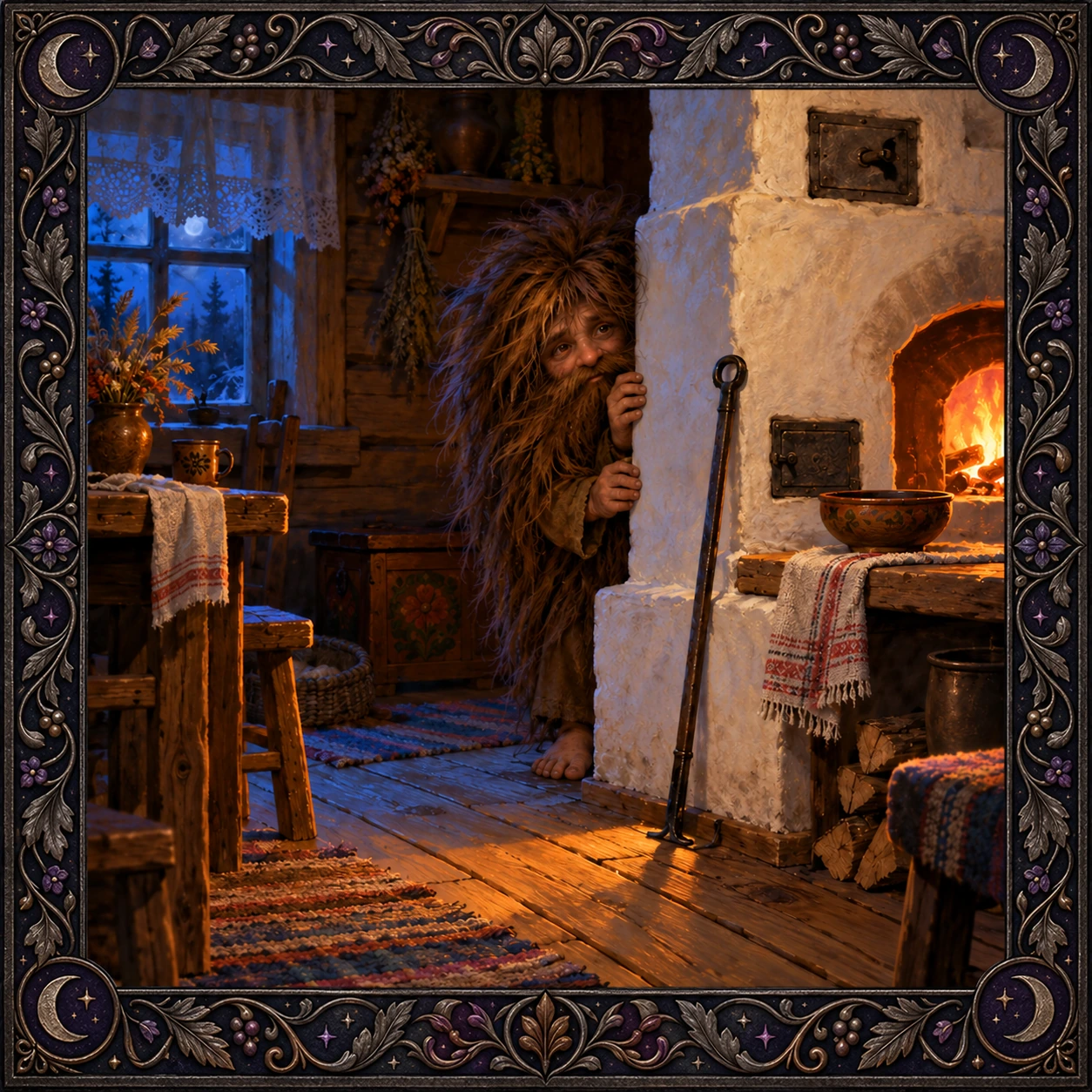
The Domovoi is a Russian household spirit whose care, warnings and mischief gather around the stove, family and fortunes of a home.
The Domovoi has thrown the cat to the floor. The housewife calls it to account: the family needs that animal. In a story collected by W. R. S. Ralston, the unseen keeper of a home must answer to someone who knows how the place should be run.
Read the manuscript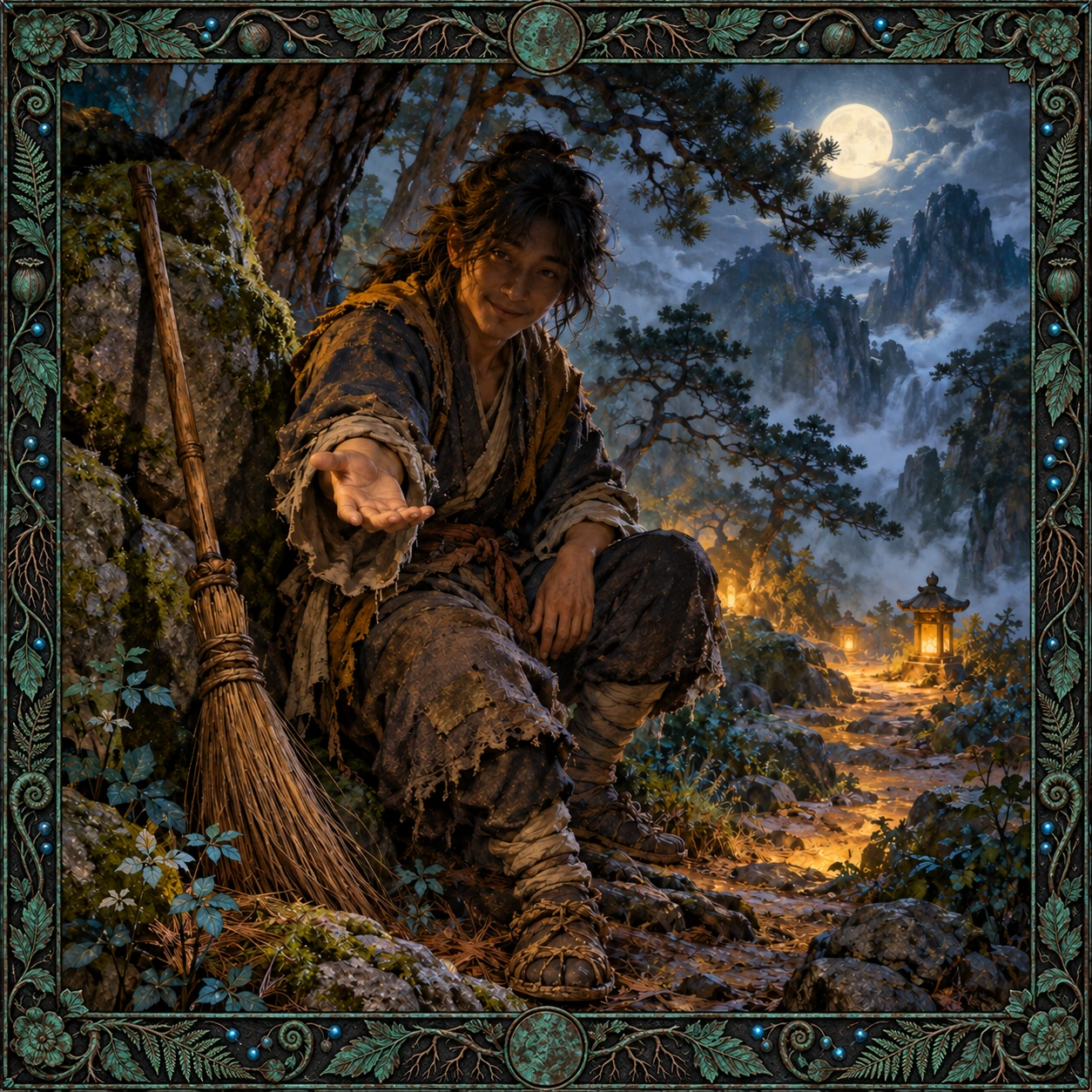
Dokkaebi are Korean supernatural beings who demand games, play tricks and bring unexpected wealth or trouble into human lives.
A boy sleeps in a house that everyone else avoids. The villagers blame Dokkaebi for the deaths of its former occupants; after midnight, something brushes his face. In a tale printed in 1902, his answer is to strike a light. What he finds makes the house’s dreadful reputation the beginning of his good fortune.
Read the manuscript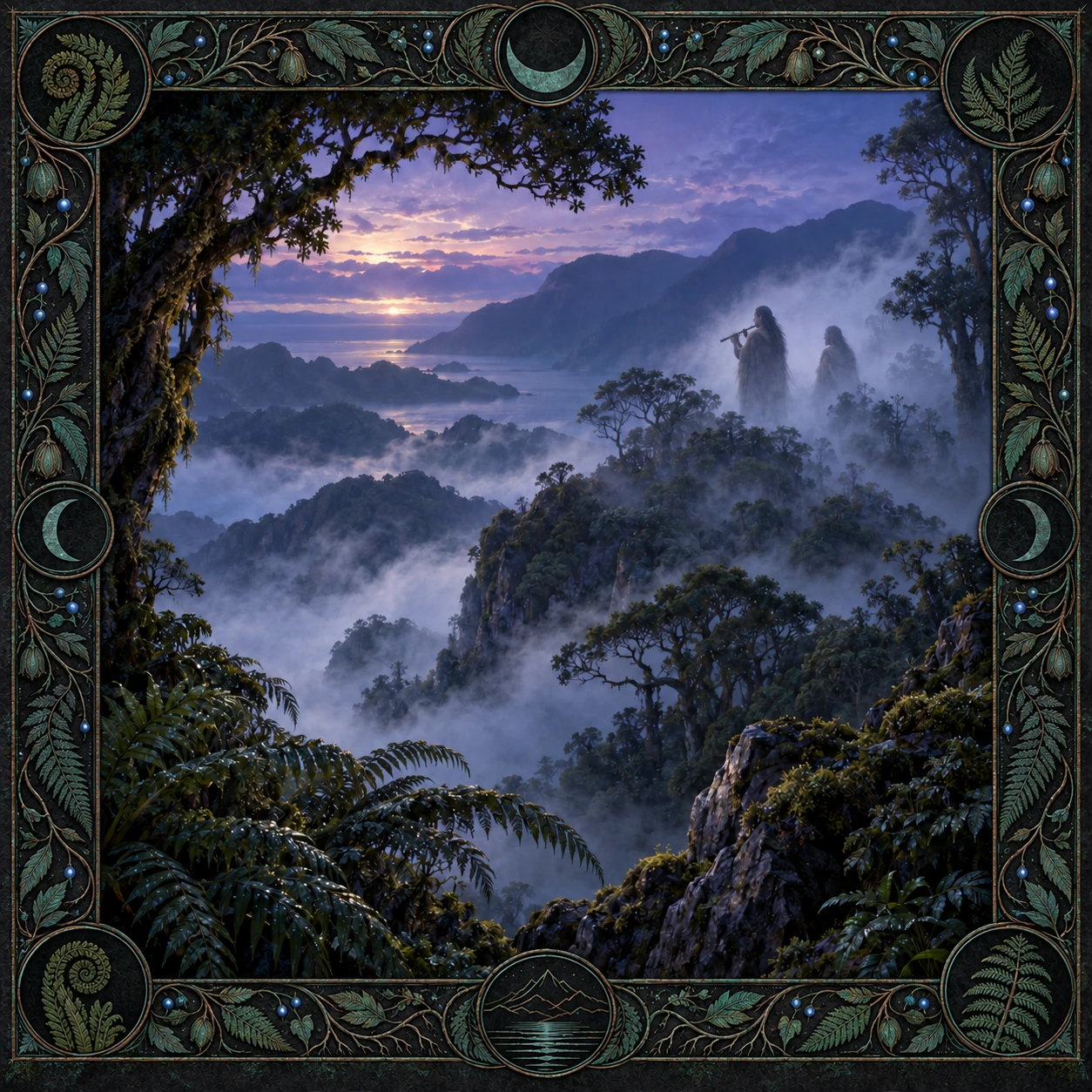
Patupaiarehe are elusive supernatural people in Māori traditions, associated with wooded mountains, mist and music heard from unseen companies.
Voices approach Te Kanawa’s hunting camp: men, women and children, though nobody can yet be seen. When the visitors finally peer over the tree roots, they seem interested chiefly in him. The Waikato chief reaches for his ornaments, hoping a gift will persuade them to leave.
Read the manuscript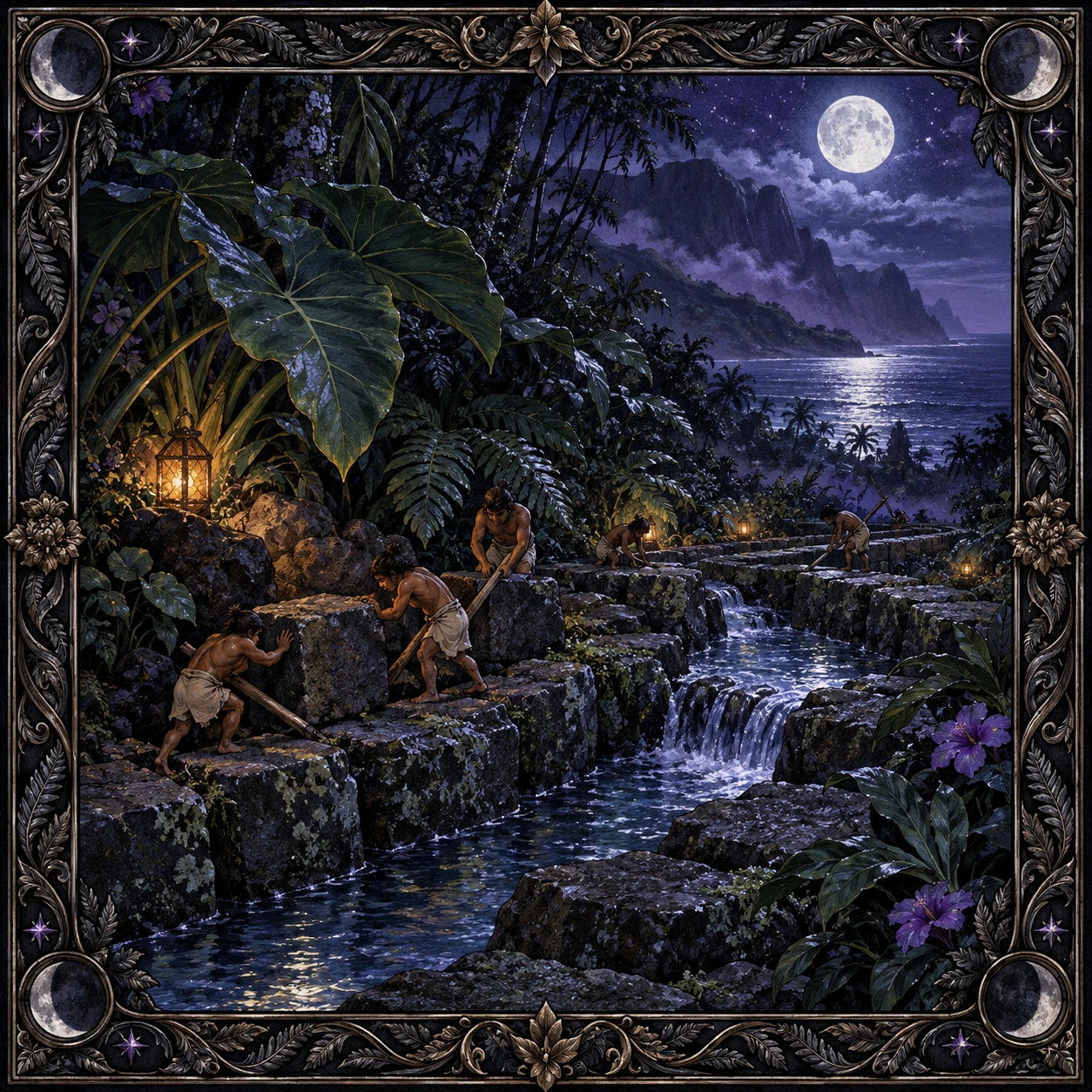
Menehune are skilled people and ancestral helpers in varied Hawaiian accounts, remembered for extraordinary collective work, family relationships and named places.
Laka cuts down a tree for his canoe. Next day it has vanished. He cuts another, and the same thing happens again. In the account collected by Thomas G. Thrum, he finally hides beneath a felled trunk and hears a company gathering to raise it. The people undoing his work know how to finish it.
Read the manuscript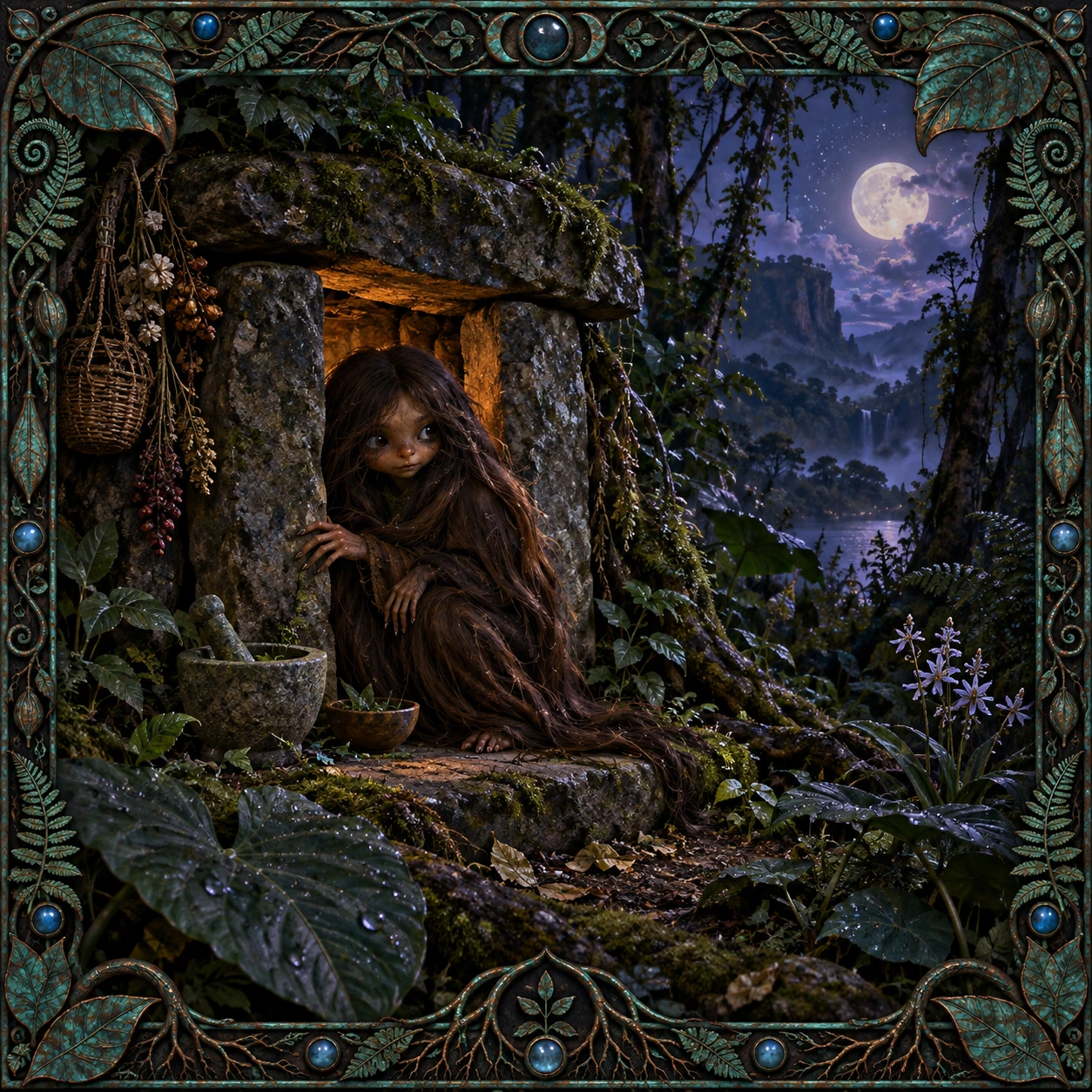
Kalanoro are small, elusive beings in Malagasy traditions, known in particular accounts for long hair, dangerous nails, taking children into the forest or helping people who seek healing.
On a riverbank, beings who have taken a child from home offer a raw crab. The child’s answer will decide whether the journey leads back to the parents or farther into the forest company. Gabriel Ferrand’s Betsimisaraka tale makes an offered meal the point at which one life may become another.
Read the manuscript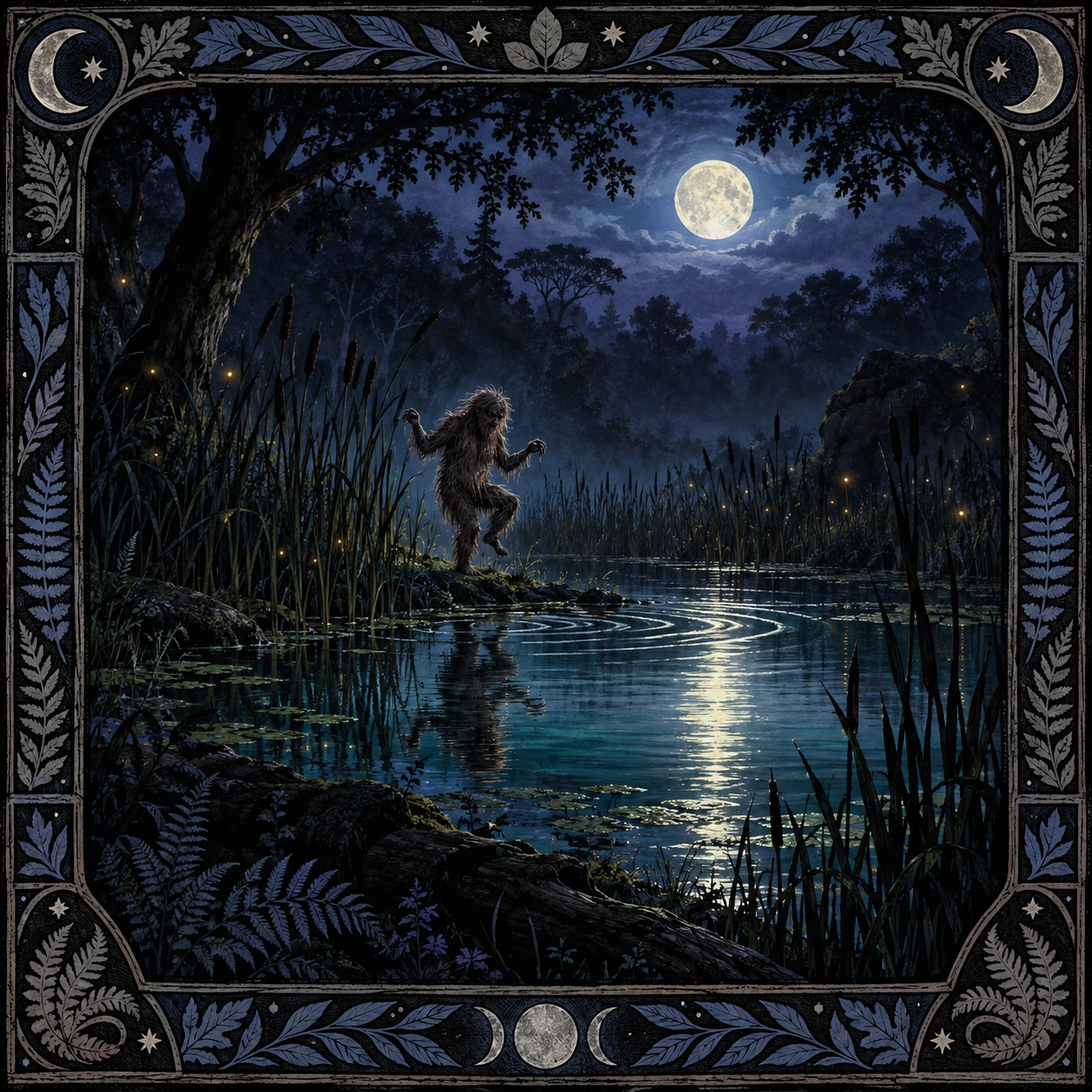
The tokoloshe is a small uncanny being in southern African traditions, appearing as a riverbank dancer, an intimate companion or a dangerous household visitor.
The guests have set off for a wedding dance. Behind them, a small river creature puts on an antelope-skin garment and practises the steps it means to perform. In Unoko Masila’s account, collected by Henry Callaway, this moment of eager preparation stands on the edge of violence. The tokoloshe’s place among people is intimate, precarious and seldom simple.
Read the manuscript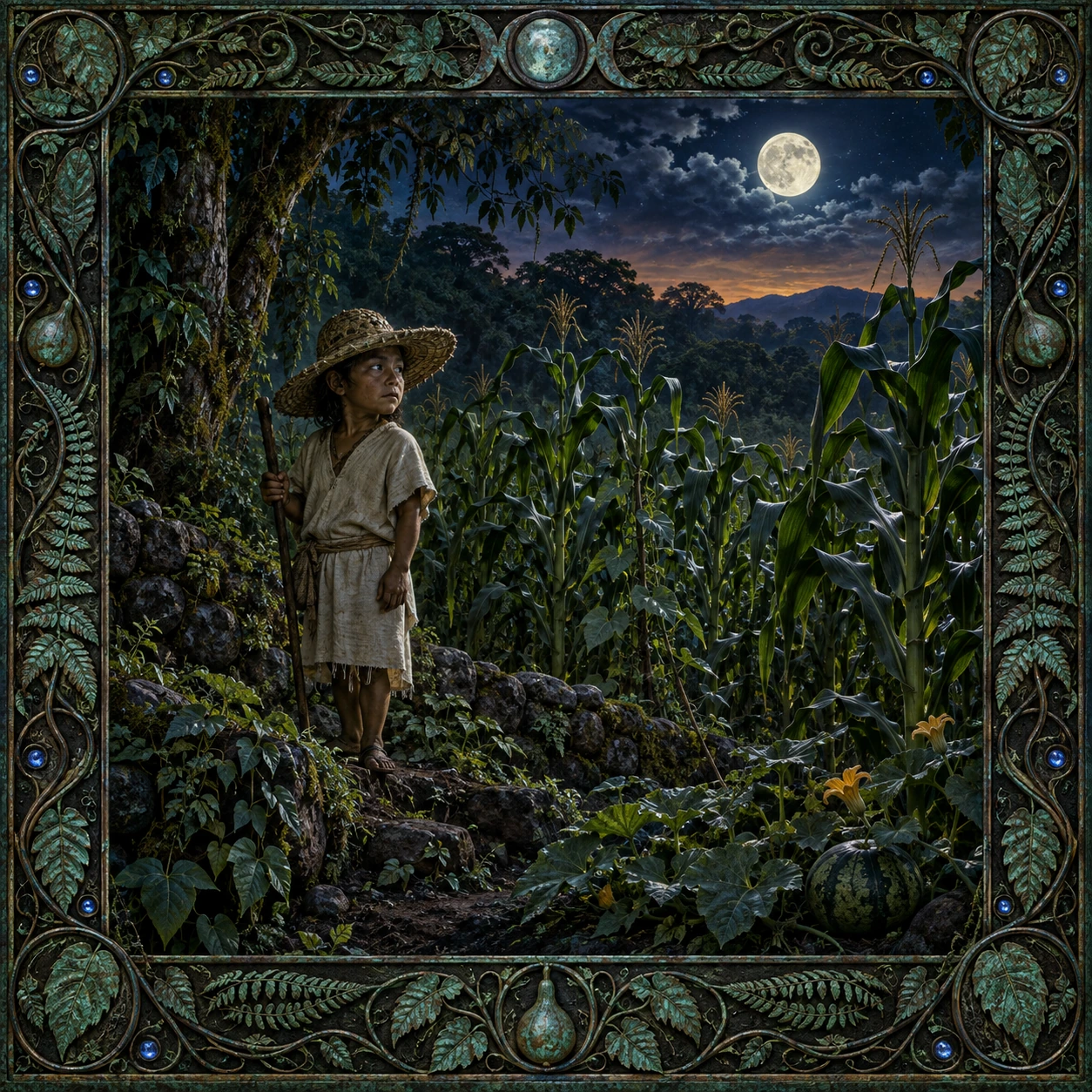
Aluxo’ob are small beings of Yucatec Maya tradition, known as troublesome night visitors and as guardians who share in the care of cultivated land.
In Uayma, Don Emilio Espadas describes showing his alux every corner of the land it will protect. The guardian has a name, a place in the family and responsibilities of its own. Looking after it is part of looking after the ground.
Read the manuscript
A Brazilian forest being with backward-pointing feet, Curupira can lead travellers astray, protect trees or disguise itself in a familiar voice.
A woman hears her husband’s voice outside. The visitor wears his clothes, and she takes him for the hunter returning home. In the tale Maria dos Reis told to collector Herbert Huntington Smith, both voice and clothing belong to a deception that has already cost her husband his life.
Read the manuscript
A supernatural mourner in Irish tradition, the banshee cries for particular families as a death approaches or a loss becomes known.
A shriek interrupted Mrs Jack Manaher as she waited for meat at a butcher’s stall. Across the street, an old man lay ill. The butcher hurried outside and suggested a dog; Mrs Manaher heard a different presence. For her, the voice belonged to the banshee, a mourner whose family ties could outlast the people who listened for her.
Read the manuscript
La Llorona is a weeping apparition of Mexican and Mexican American accounts, searching for lost children or wandering after her own violent death.
A woman wakes a sleeping watchman and asks the time. It is midnight. She says she must reach a distant city by noon, then cries out for her children and disappears. His officers dismiss such reports. In Thomas Janvier’s telling, one of those officers will soon ask the woman in white to uncover her face.
Read the manuscript
Jiangshi are animated corpses in Chinese stories, capable of pursuing the living, demanding food or clinging to desires that survive their deaths.
The trestles creaked. One of four travellers was still awake when the dead woman lifted her coverings and climbed down. In Pu Songling’s tale, the inn had offered the men its last available room. They had accepted a bed beside the landlord’s daughter-in-law, whose body was waiting for a coffin.
Read the manuscript
The Pontianak is a feared female ghost in Malay traditions, often associated with death in childbirth, whose earlier names and forms differ from the woman familiar in horror cinema.
A wedding is being prepared when deaths begin to trouble the village. In Revenge of the Pontianak, the bridegroom must confess what happened to a woman he once made pregnant. The danger approaching his new household belongs to a life he thought he had left behind.
Read the manuscript
Yūrei are Japanese apparitions whose attachments survive death: a mother returns to her household, a wronged person seeks vengeance, or the dead call the living into their company.
O-Sono’s little boy says his mother is upstairs. She has smiled at him, but will not speak. The family goes to her former room, where a small lamp reveals her beside a chest of drawers. Her funeral was yesterday. In Lafcadio Hearn’s A Dead Secret, the question is what has brought her back.
Read the manuscript
Black Shuck is an uncanny black dog of East Anglian tradition, appearing in violent storms, beside coastal churchyards and inside familiar homes.
The congregation can scarcely see one another. Thunder shakes the church, and lightning briefly restores the light. In Abraham Fleming’s account of the storm at Bungay in 1577, a black dog appears among the worshippers. It begins to run down the church.
Read the manuscript
Night Marchers are Hawaiian spirit processions in which departed chiefs, warriors and ancestral or sacred companies follow remembered paths.
The man on the Mahiki road sees a company approaching and steps behind a tree. He recognizes Kamehameha among the ranks. Thousands move together, yet he hears nothing. The silent march passes into the woods toward Waipiʻo, leaving him trembling in his hiding place.
Read the manuscript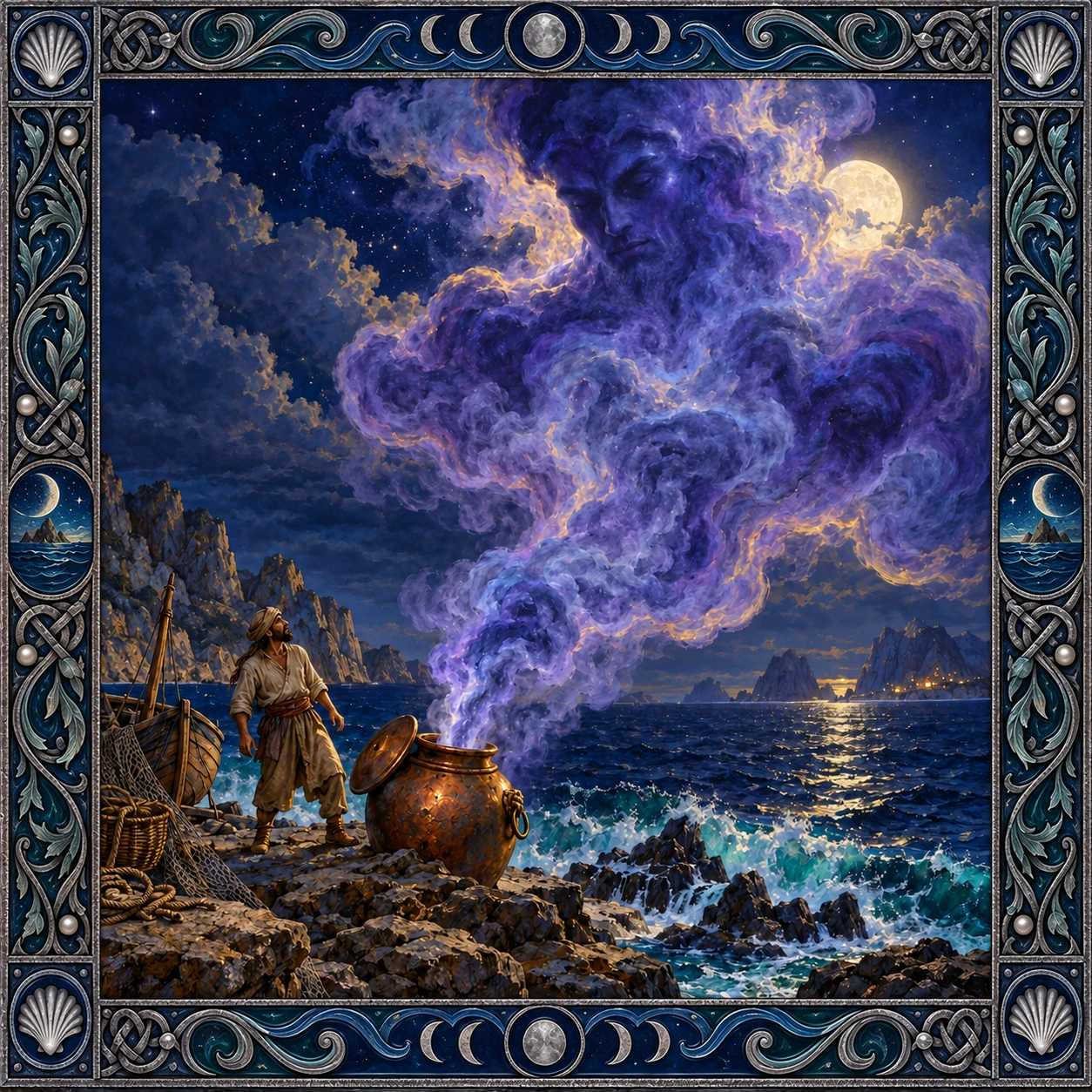
Jinn are morally varied unseen beings in Islamic belief and many regional traditions; literary genies can become terrifying captives, skilled builders, or dangerous benefactors.
The fisherman expected the sealed bronze vessel to improve a hungry day. Instead, smoke rose from its narrow mouth and gathered into a giant who offered him a choice of deaths. In Laurence Housman’s Arabian Nights adaptation, rescuing the captive is the beginning of the fisherman’s danger.
Read the manuscript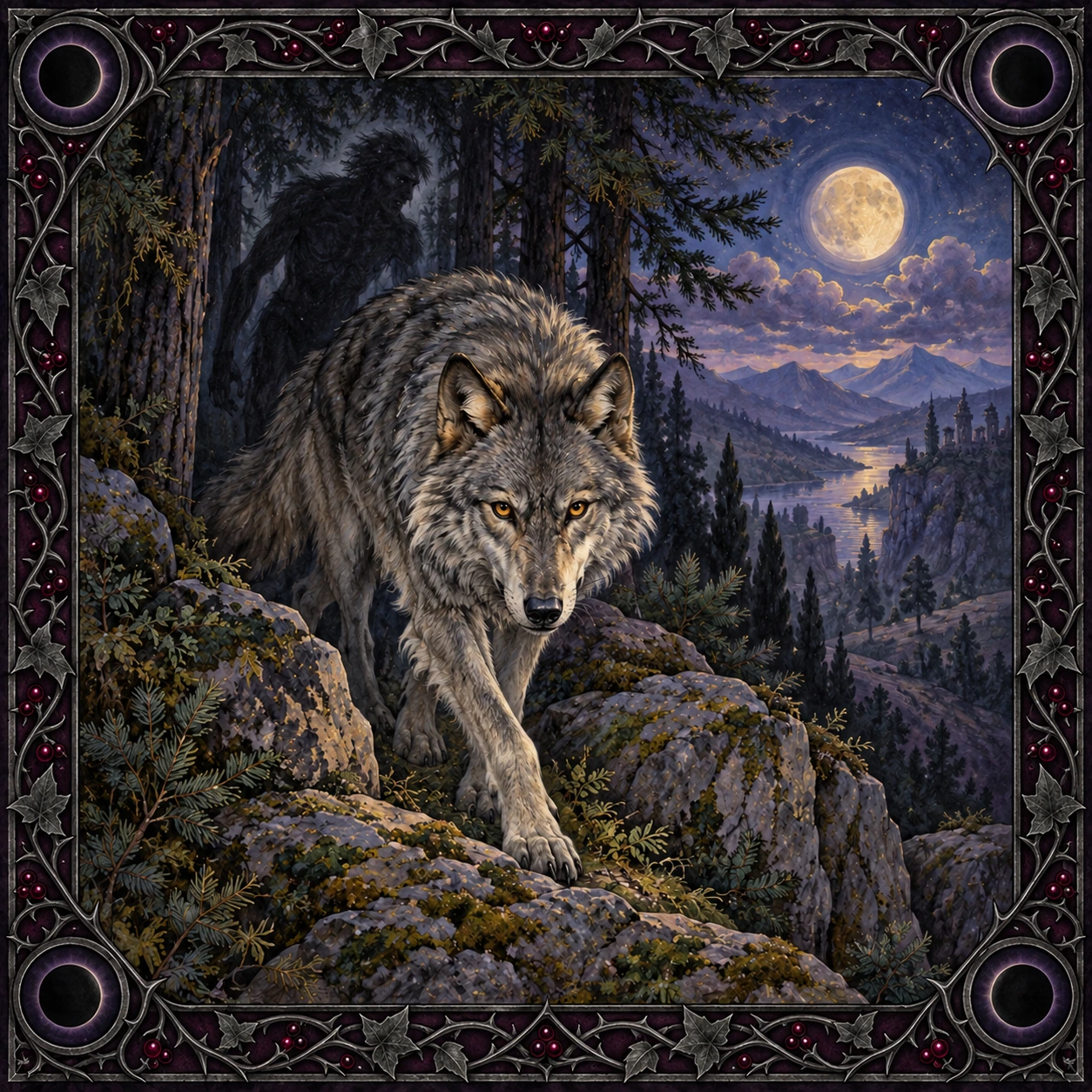
A person becomes a wolf, carrying human cruelty, loyalty or a hidden life into an animal body.
The hounds are closing in when the wolf runs to the king. It catches his stirrup and kisses his foot. In Marie de France’s Bisclavret, the gesture interrupts a hunt: the king sees a plea for mercy where his companions see prey. He does not yet know whom he is protecting.
Read the manuscript
Selkies are seal-folk of Scottish island tales, able to come ashore as humans but vulnerable to anyone who steals the skin that carries them home.
The youngest daughter stayed home because her foot was sore. Everyone else was out, and her mother was searching the house. The girl remembered something hidden above the bed: a skin her father had examined when he thought she was asleep. In Walter Traill Dennison’s Wastness tale, that small disclosure changes the family forever.
Read the manuscript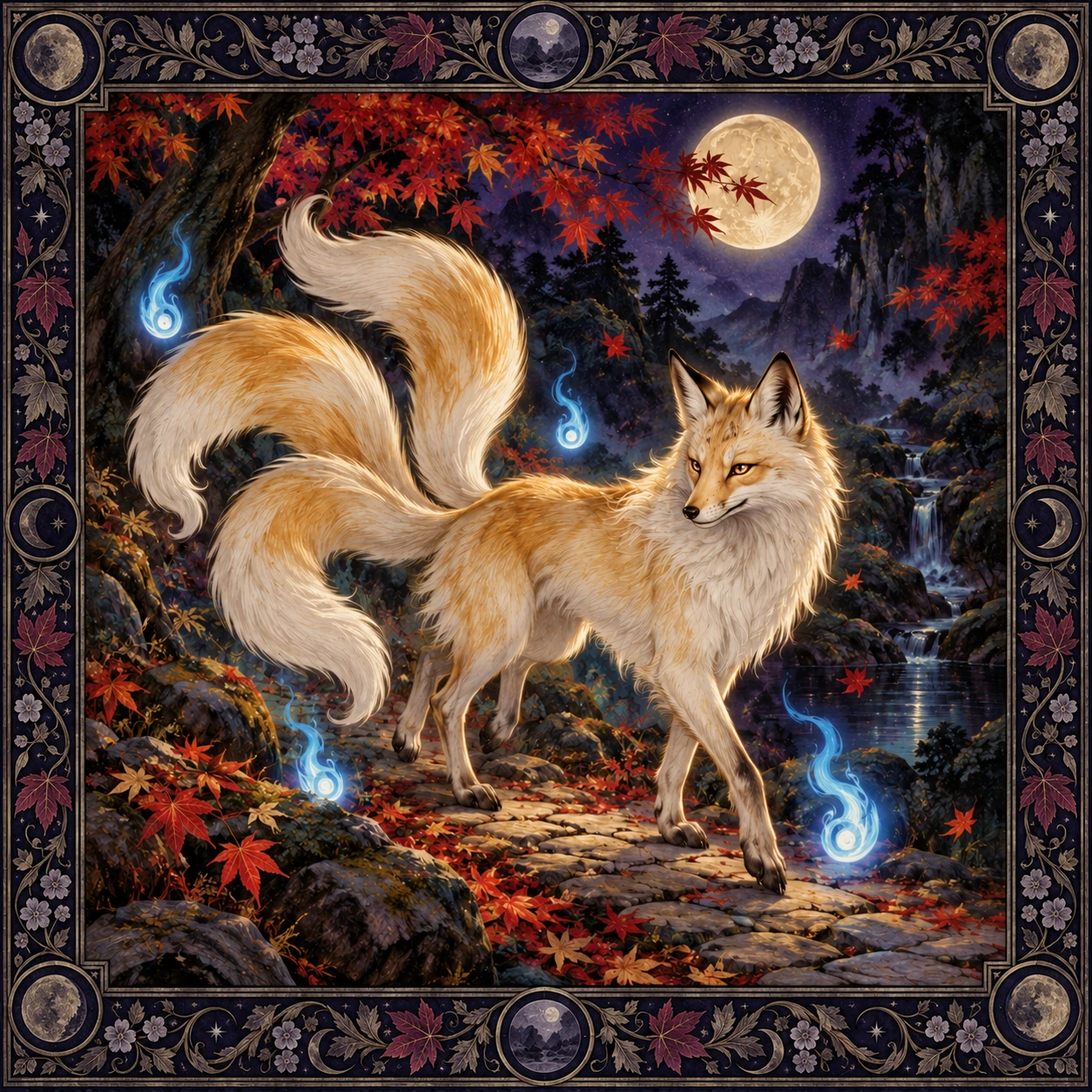
Foxes take human form, repay kindness and bring danger or prosperity to households in Japanese tales. At Inari shrines, foxes have a distinct sacred role as the deity’s messengers.
A messenger brings the medicine a merchant needs for his dying son. He will accept neither a present nor a bed for the night. The boy begins to recover. Three days later, the man commissioned to find the medicine arrives empty-handed—and knows nothing about the stranger who delivered it.
Read the manuscript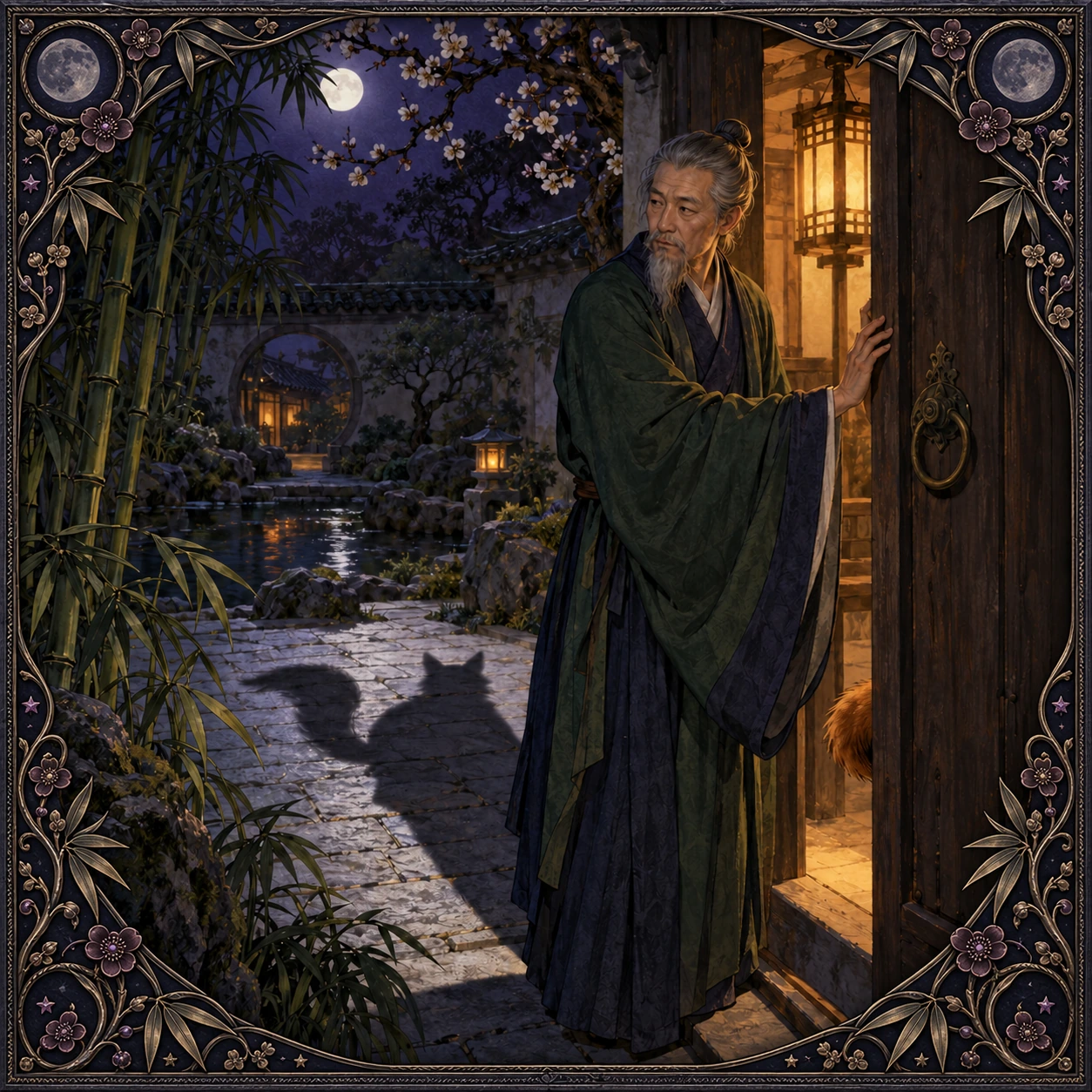
Chinese fox spirits can become human companions, repay a kindness with hidden knowledge, or enter a household carrying loyalties of their own.
Ch’ê reaches across his bed and touches something soft. A light reveals a drunken fox beside the empty wine bottle. He could kill it. Instead, he draws the covers over his unexpected companion and keeps the candle burning to see what it will become.
Read the manuscript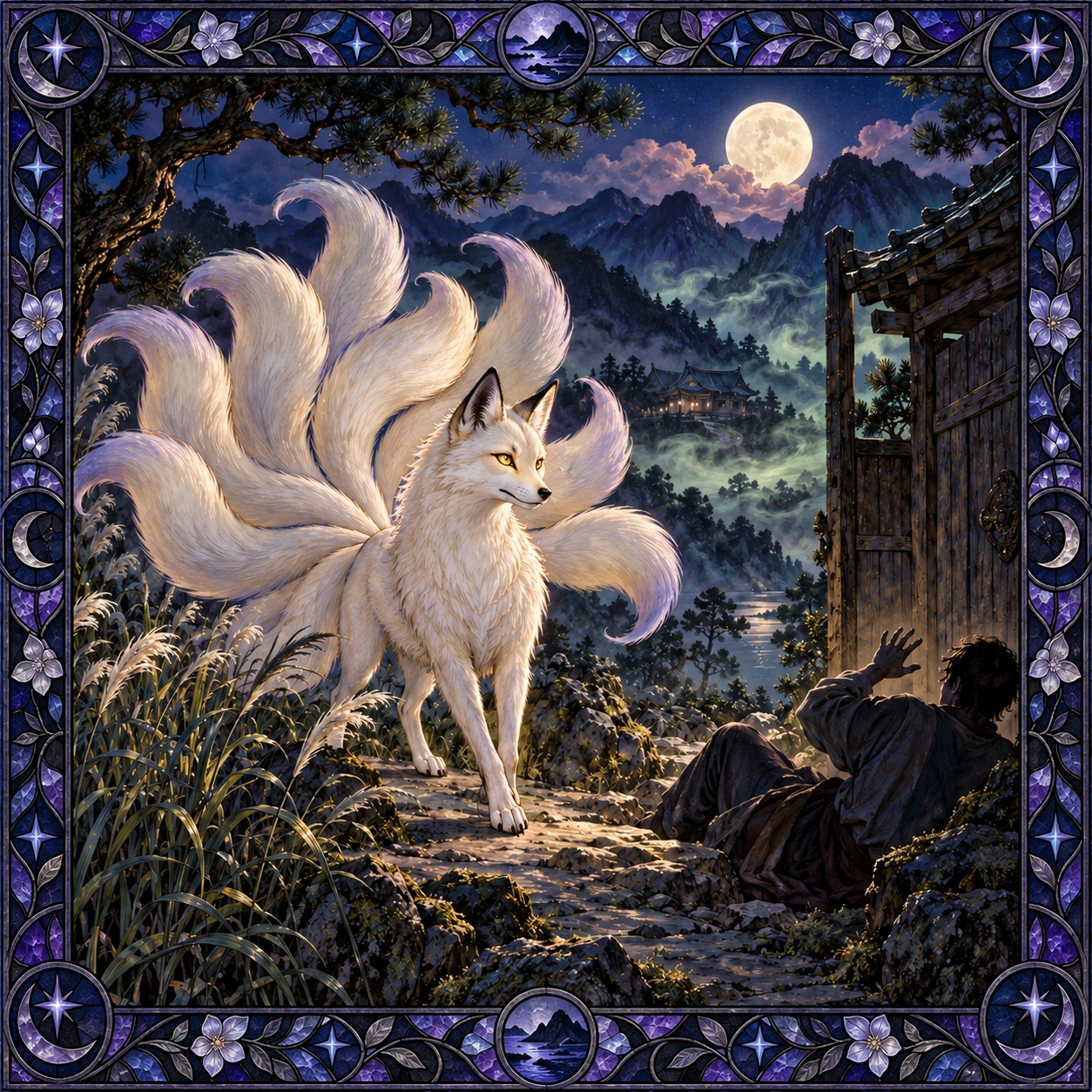
A nine-tailed fox of Korean lore, the kumiho can appear as a woman whose beauty conceals a dangerous hunger or a wish to become human.
The young scholar is studying alone when a woman enters his pavilion. He knows the women of the household; this stranger is none of them. Asked who she is, she only laughs. In Im Bang’s fox tale, the visitor’s silence leaves Yi Kwai to decide what has come through the door—and what he dares to do about it.
Read the manuscript
The Soucouyant is a Caribbean night traveller who sheds a human skin, flies as fire and drinks blood, then must recover the abandoned covering before daylight.
In a Trinidadian retelling, an elderly woman is stranded naked on a police-station water tank. Her skin waits in a mortar beside her. Getting down will cost another woman her life.
Read the manuscript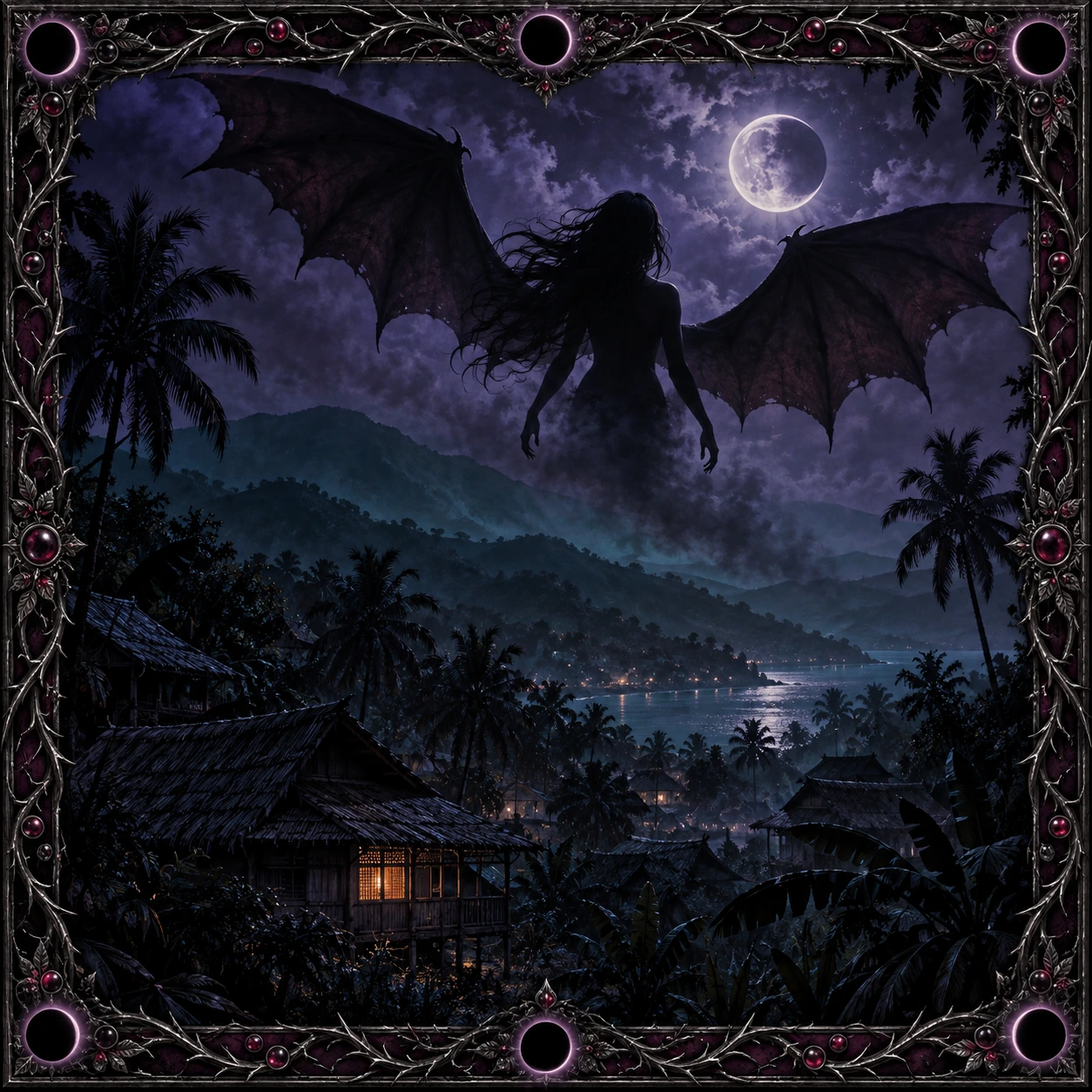
The manananggal is a Philippine night-flyer whose upper body leaves its legs behind, gaining wings while becoming vulnerable to anyone who finds the abandoned half.
The sailors have been welcomed into a splendid house in Capiz. Dinner is served on fine dishes, the wine is excellent, and everyone is laughing. Then one guest notices his fork: it has the shape of a human hand. In Fletcher Gardner’s collected tale, the men decide to stay awake.
Read the manuscript
The Boto Encantado is an Amazonian river dolphin that takes human form, appearing as a stranger at a celebration, a household visitor or a companion beside a canoe.
A white shape rests on the end of a fallen tree above the river. The canoe traveller thinks it is a bird. Then it turns toward him, and he sees a young woman dressed in white. He wants to speak, but keeps rowing. This is how a man from Bom Jesus, on Marajó, begins the encounter he remembers from his youth.
Read the manuscript
Krasue is a Thai nocturnal being whose glowing head and trailing entrails leave an ordinary-looking person’s body at night.
The washing has not dried, and the clothes stay outside overnight. By morning, marks on the fabric acquire a frightening explanation: something has wiped its mouth on them. Museum Siam’s Krasue warning brings the night visitor home through an ordinary garment.
Read the manuscript
Public scholarship describes skinwalkers as human witches in Diné/Navajo traditions, associated with animal disguise and harmful acts.
A presence at the edge of a home becomes a figure keeping pace with a car. In Peggy Alford’s study, stories changed as they passed from Diné accounts into Anglo-American telling: the danger moved toward the highway, and some narrators gave it the familiar name “wolfman.” Behind that change lies a specifically Diné subject whose public history includes both adaptations and firm decisions about what should remain untold.
Read the manuscript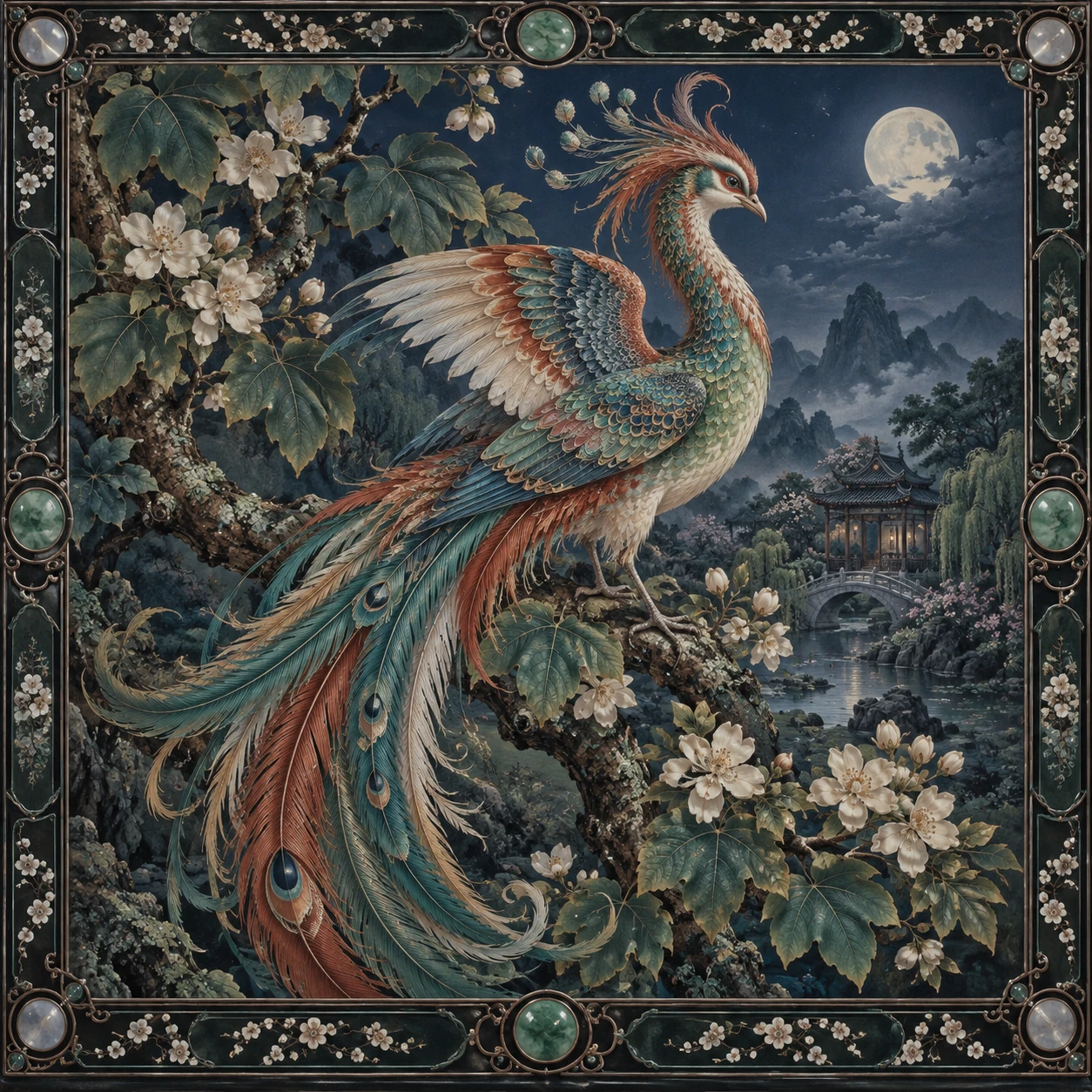
Fenghuang is a many-coloured Chinese bird whose song and arrival can herald peace, honour worthy people or carry musicians beyond the human world.
A musician can fill a courtyard without calling a single human guest. When Xiao Shi plays, peacocks and white cranes gather there. Nongyu, a duke’s daughter, learns from him. Years of practice prepare them for a different arrival: fenghuang coming to their roof.
Read the manuscript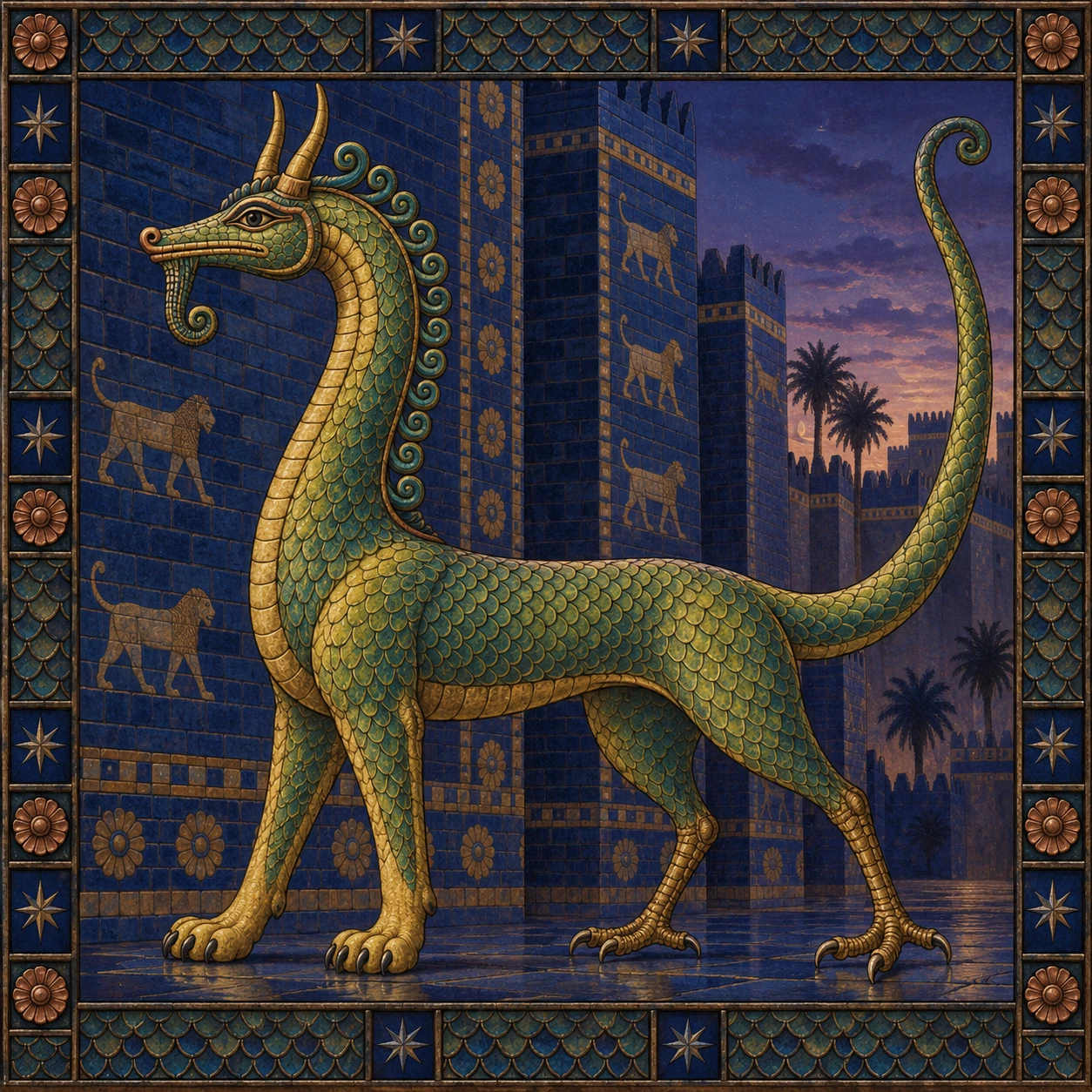
Mušḫuššu is a horned Babylonian serpent-dragon with feline forelegs and bird-like hind feet, associated with divine protection and the blue-brick splendour of the Ishtar Gate.
The road rose, and Babylon’s great gates became too low. Nebuchadnezzar II describes tearing them out and rebuilding from foundations at the water table. Above that deep work, bulls and serpent-dragons would cross shining blue walls: a practical problem answered with a monument intended to astonish.
Read the manuscript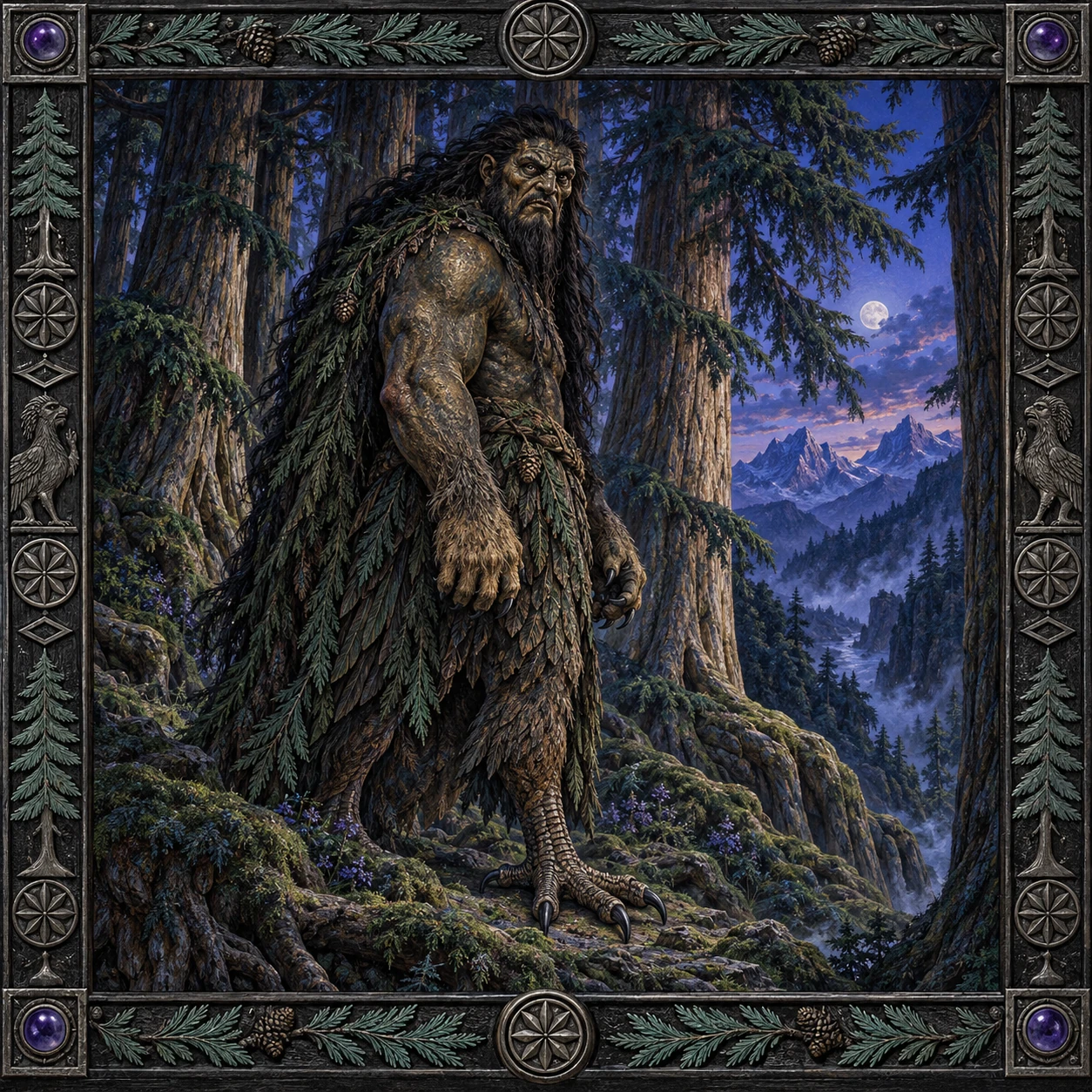
Humbaba guards the cedar forest, where Gilgamesh and Enkidu seek timber and lasting fame at the risk of their lives.
Winds strike Humbaba from every side. The guardian of the cedar forest cannot advance or retreat. In the Hittite passage translated in R. Campbell Thompson’s 1928 edition, he offers to serve the man who has overcome him. Enkidu urges his friend to refuse.
Read the manuscript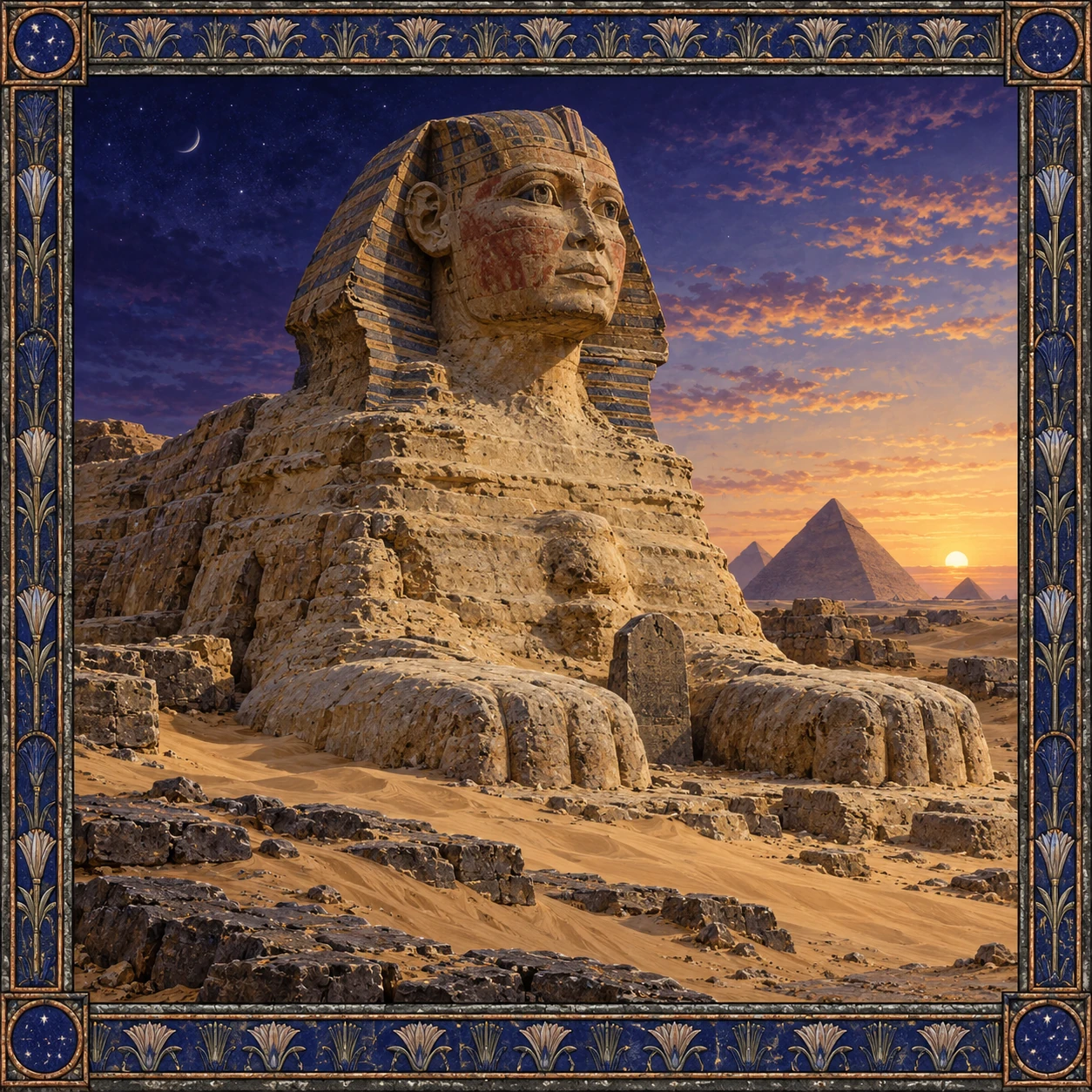
The Egyptian sphinx joins a human head to a lion’s body, giving royal power the strength and watchfulness of a sacred guardian.
A prince stops his chariot journey and sleeps in the Great Sphinx’s shade. At noon the stone figure speaks to him as a father to a son. Its promise is a kingdom; its complaint is the sand encroaching on its body. Thutmose must listen to a god who needs his help.
Read the manuscript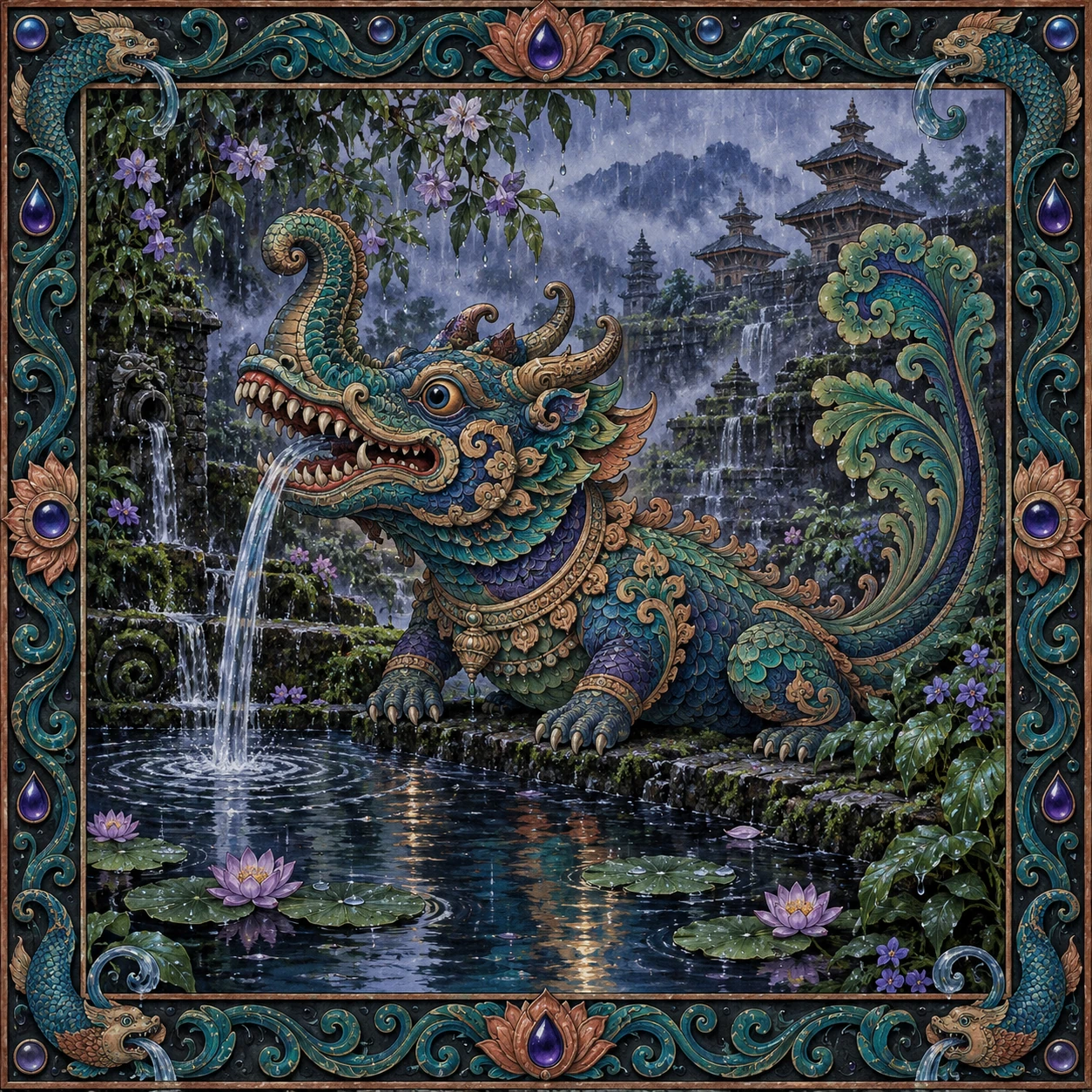
Makara are composite aquatic beings whose changing bodies carry river goddesses, frame sacred entrances and turn fountains and ritual vessels into creature forms.
A goat projects from a monster’s open jaws at the Golden Fountain of Bhaktapur. A curling snout rises above it; smaller creatures crowd the metalwork behind. The makara’s fantastic face is also the working end of a water supply.
Read the manuscript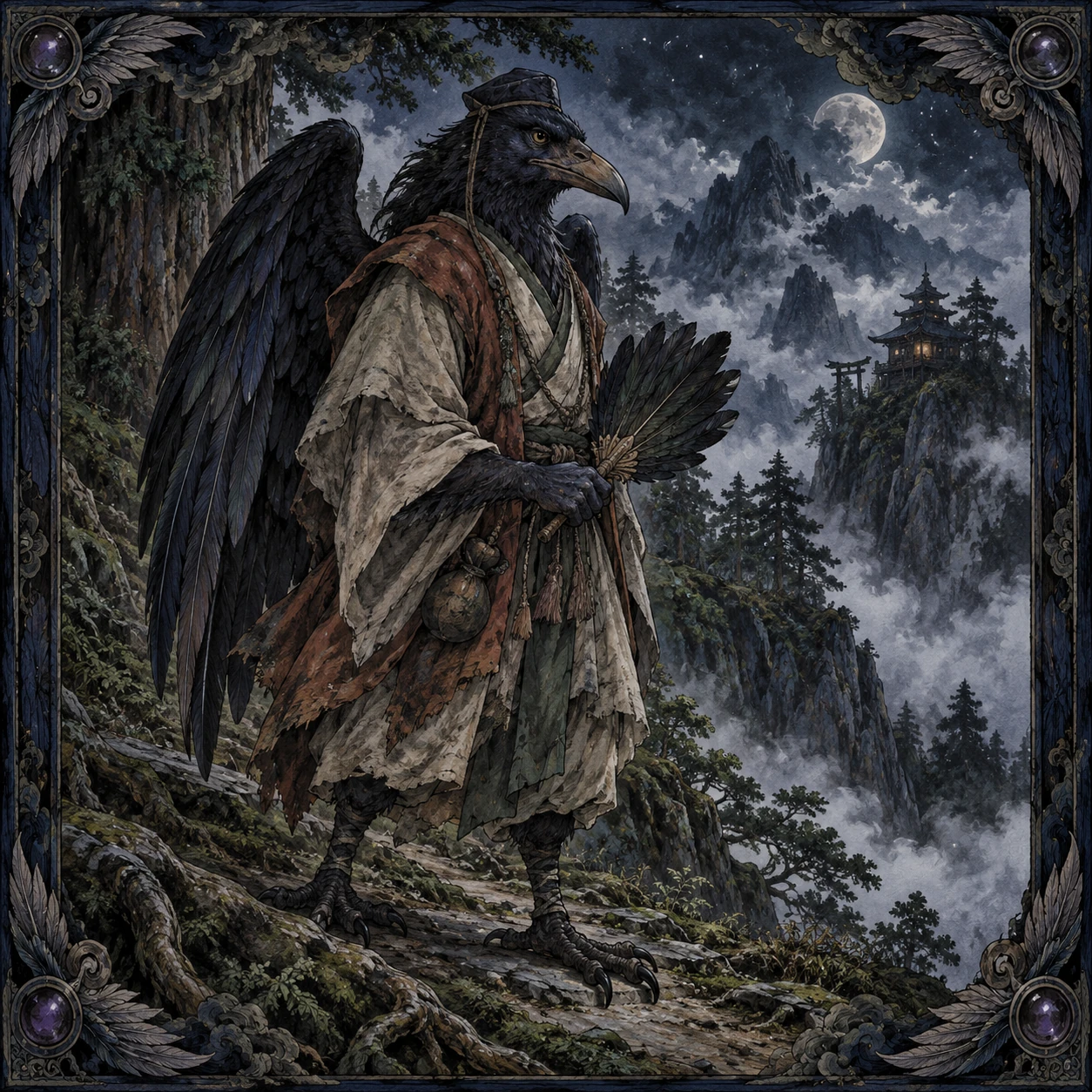
Tengu are Japanese mountain beings whose beaked or long-nosed appearances accompany stories of deception, formidable knowledge and martial instruction.
The monks leave the blossom-viewing party rather than share it with a stranger. One child stays and speaks kindly to him.
Read the manuscript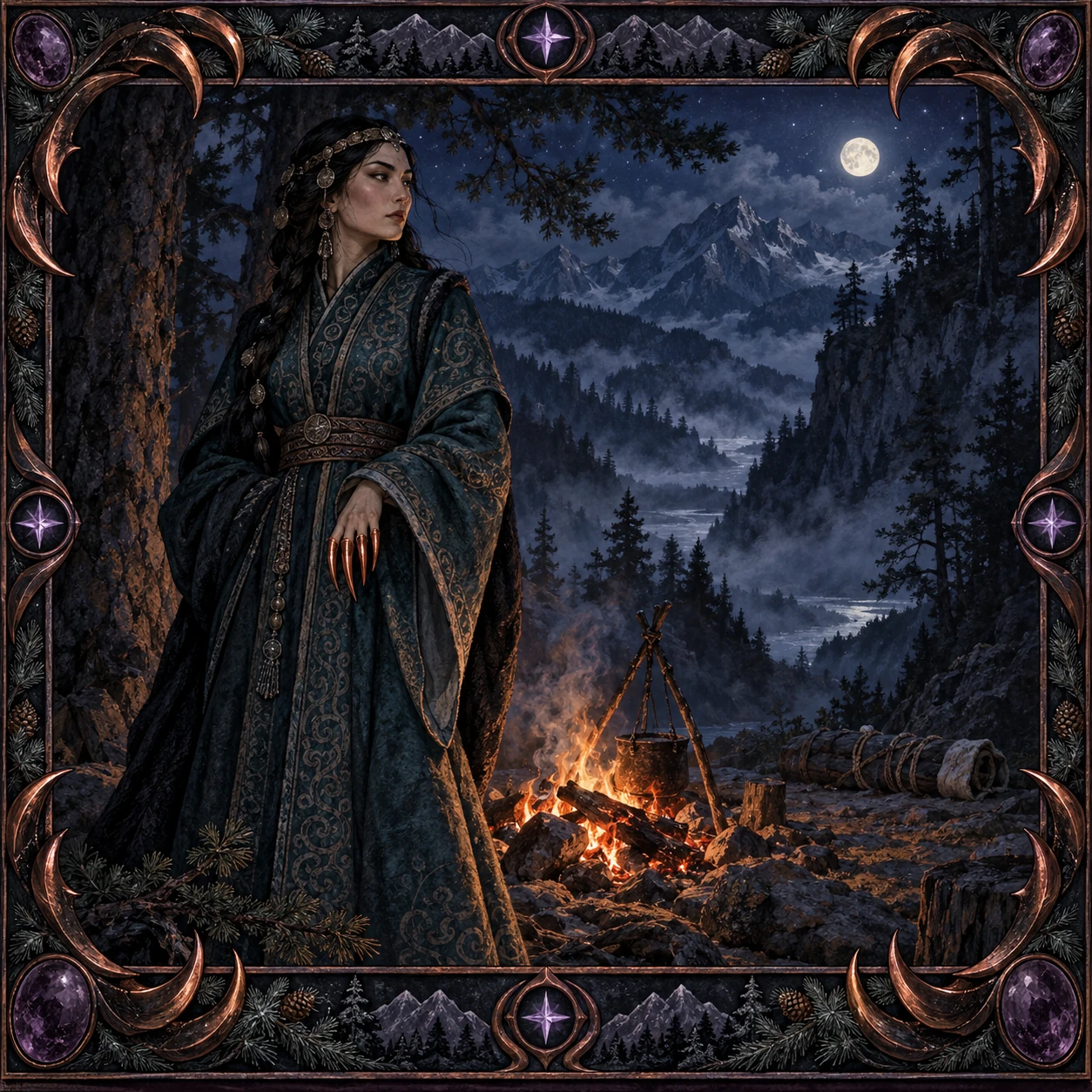
Zheztyrnak is a dangerous being in Kazakh stories, able to approach in human form while concealing sharp metal claws.
The reeds are moving, but Syzdyk feels no wind. A woman steps out and sits beside his fire. She accepts the food he offers without uncovering her hands. In Magzhan Zhumabayuly’s poem Ertegi, that small gesture is enough to turn a greeting into a warning.
Read the manuscript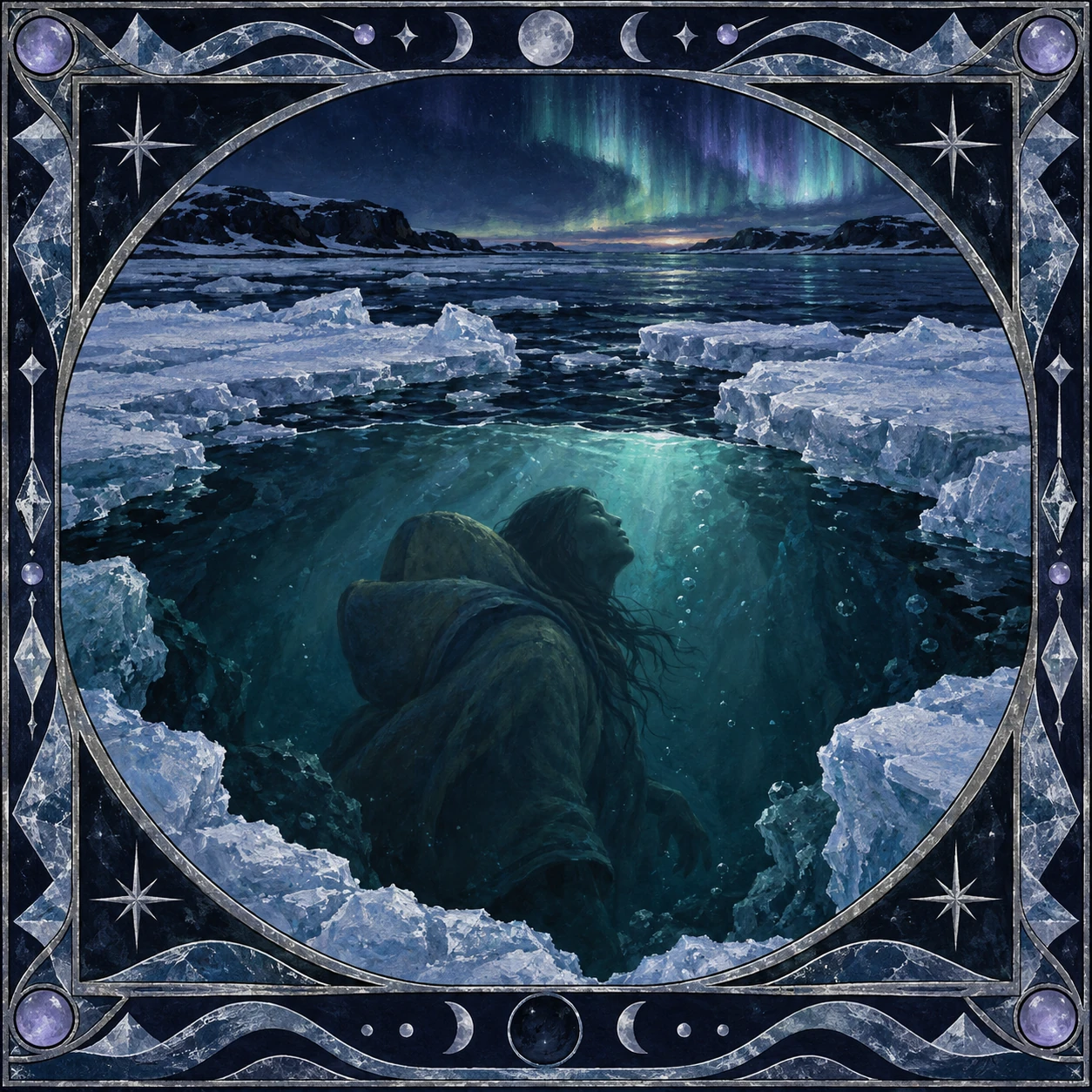
Qalupalik is a humanlike water being in Inuit accounts, feared for carrying people away in a great pouch beneath the sea or lake ice.
The boy sits beside a crack in the ice, playing with seaweed. Beneath him, Kalopaling holds the other end of a tether. When two people approach, the child warns his captor. In the account published by Franz Boas, getting him out of the water will be only part of bringing him home.
Read the manuscript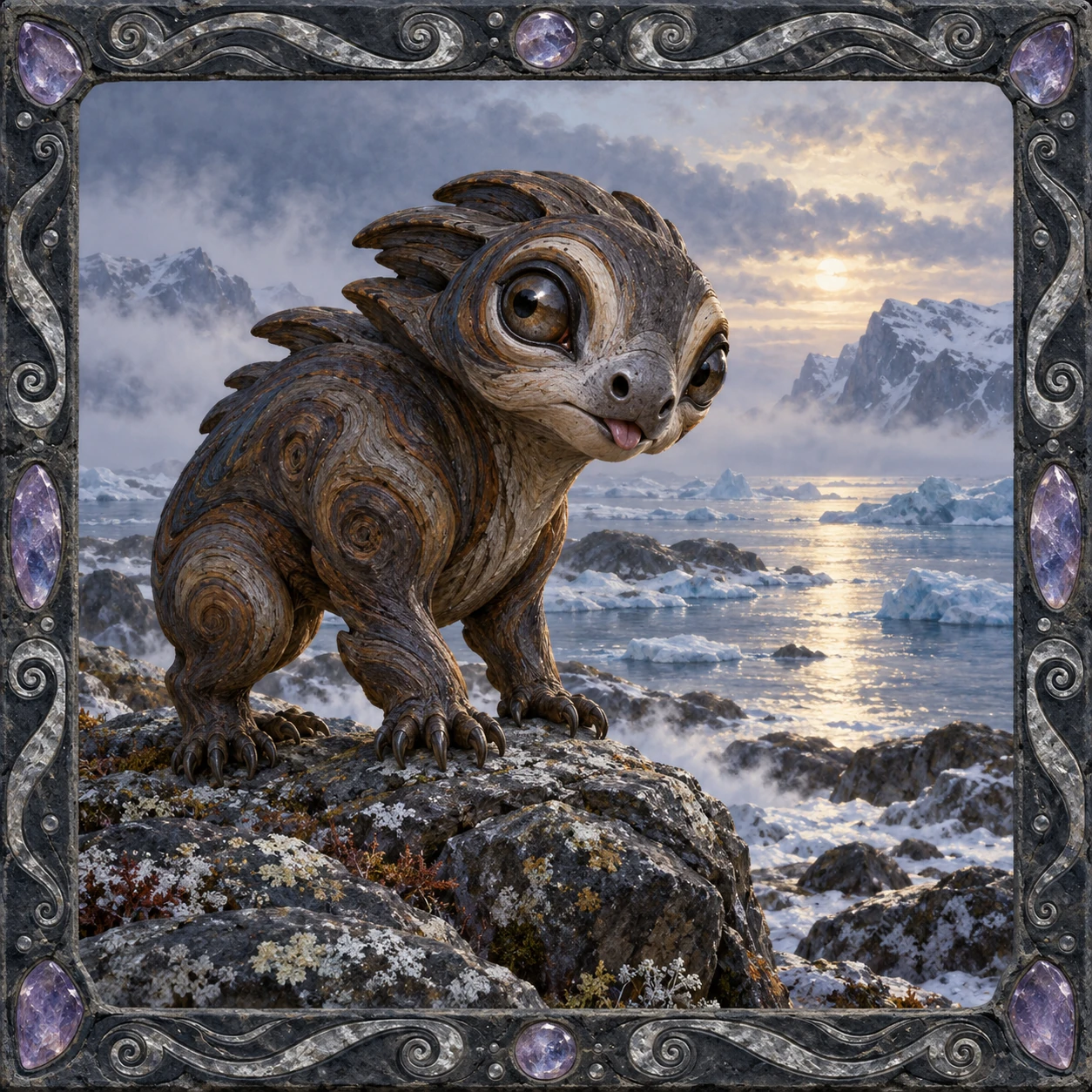
A tupilak is a being made to harm an enemy in Greenlandic accounts; its name also belongs to carved figures with grotesque, imaginative bodies.
The old couple receive meat from the hunter’s bear, but they also receive an insult. They take the food home without eating it. In Kululuk’s tale, what should have been a shared meal becomes the beginning of a danger directed at the hunter’s children.
Read the manuscript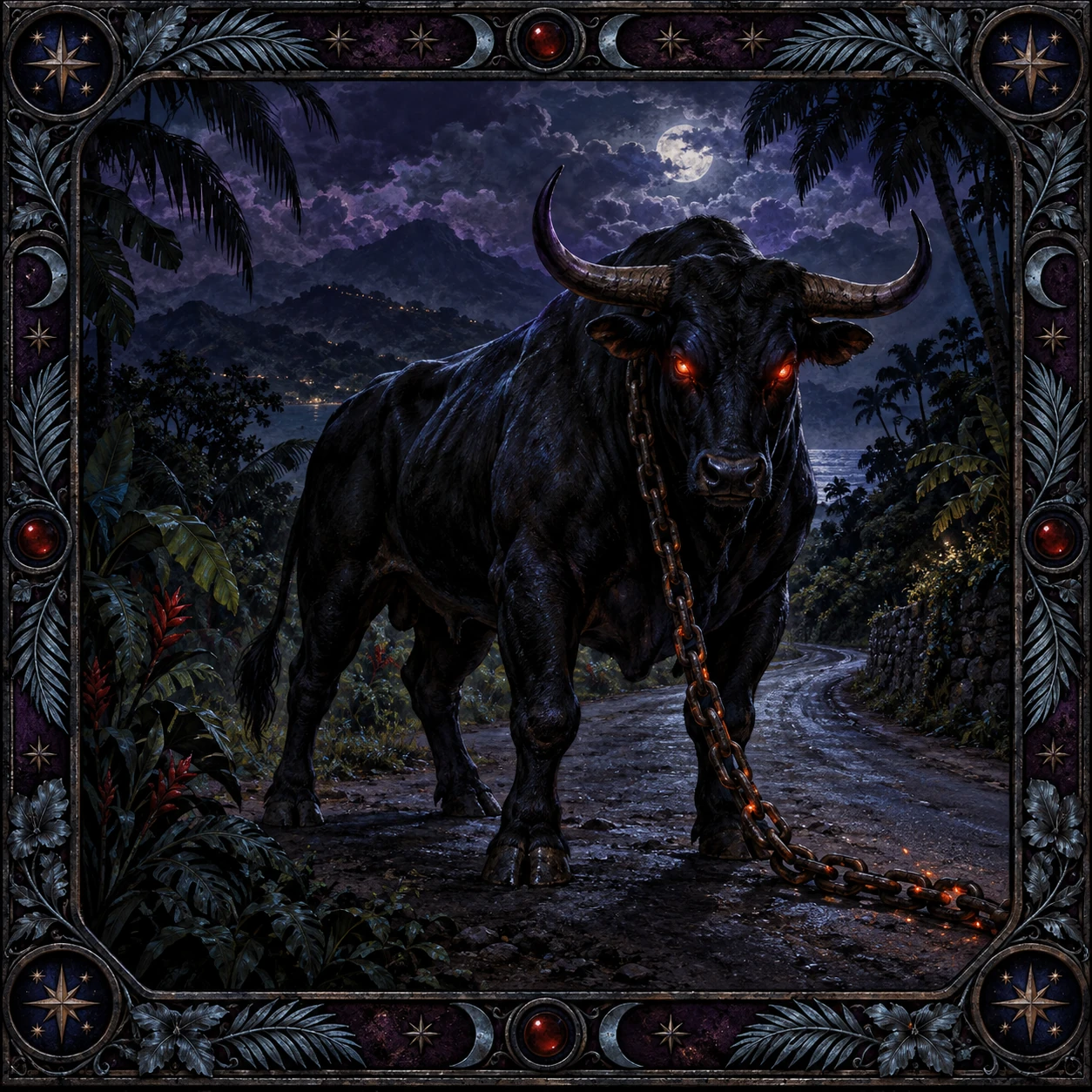
A fiery-eyed animal spirit pursues night travellers in Jamaican stories, sometimes taking a bull’s shape with a chain rattling behind it.
A chain clanks in the dark, followed by the bellow of an approaching animal. In Jamaican rolling-calf accounts, sound can announce the danger before fiery eyes reveal it. A road used by neighbours in daylight has acquired another traveller.
Read the manuscript
The Ciguapa is an elusive being of Dominican folklore, known for backward-pointing feet, a haunting cry and encounters beside nighttime streams.
Marcelina chooses the tree beneath which Jacinto will build their home. He asks her to stay beside him a little longer. Then two cries interrupt them: one from the mountain, the other from the woman he has just promised to protect.
Read the manuscript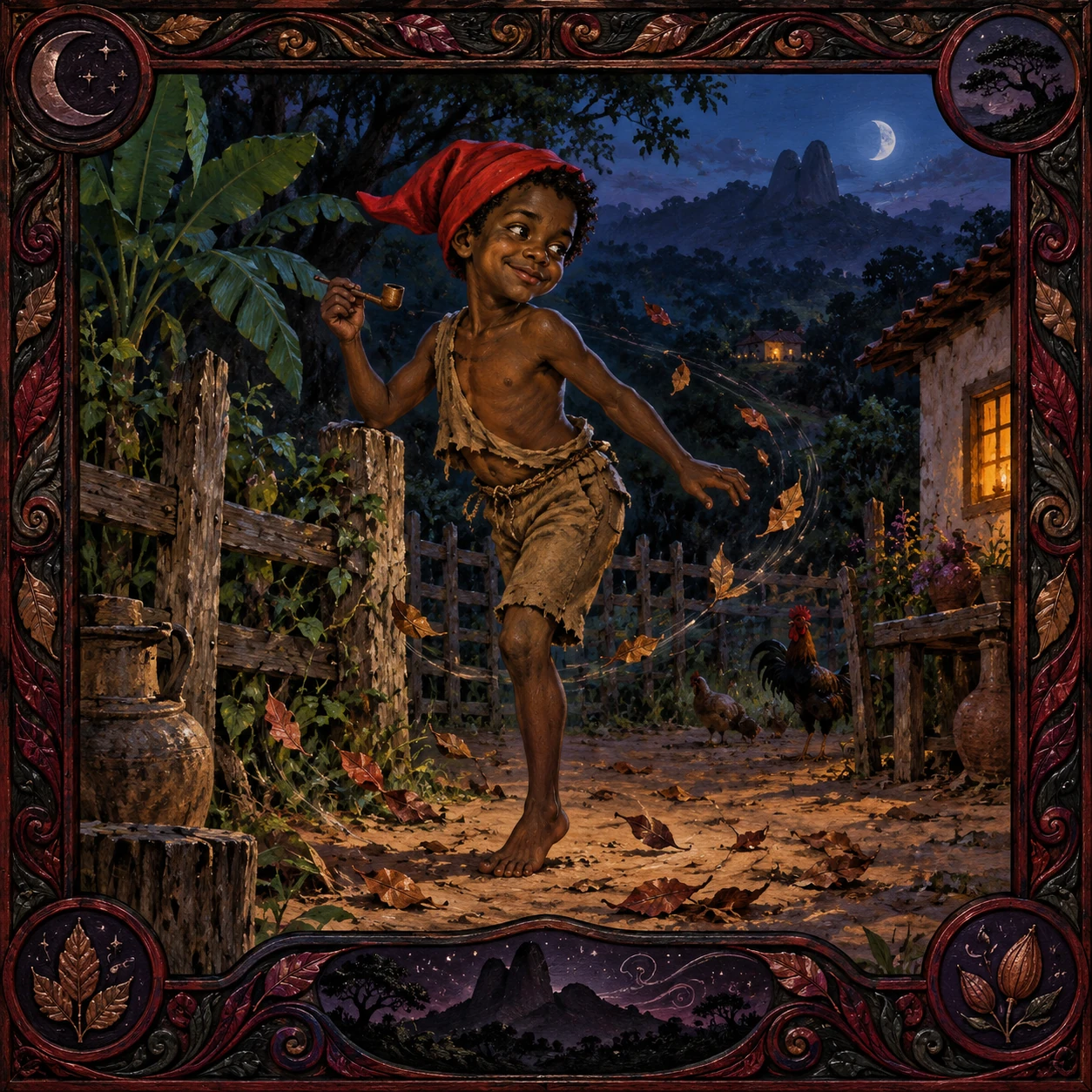
A one-legged Brazilian trickster in a red cap unsettles homes, torments horses and turns ordinary mishaps into mischief.
Chico Rio Grandense knew the sounds of Saci in the woods: a whistle, a laugh, dry leaves disturbed by a hopping foot. The old muleteer had plenty of stories for a child to hear. Then came the journey on which the thing he described jumped onto his own horse.
Read the manuscript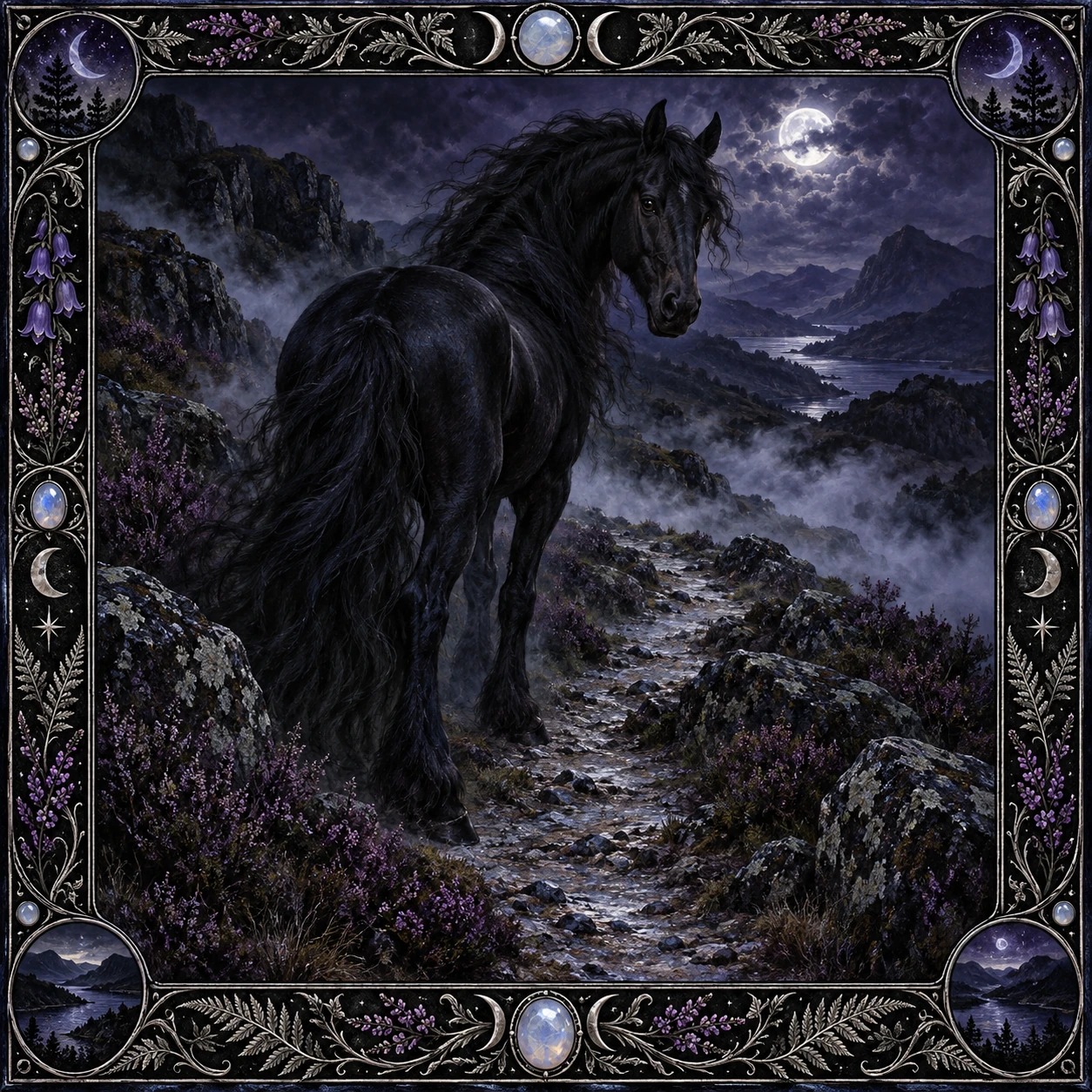
An unpredictable Irish shapeshifter, the Púca appears in tales of terrifying night rides, uncanny advice and unexpected help.
Phadrig hears something rush past him in the field. In Lady Wilde’s story, the farmer’s son calls to the Phouka and offers his coat against the cold. A young bull appears, lashing its tail. The boy puts the coat over it, and the creature becomes quiet enough to give him an invitation.
Read the manuscript
Mélusine is a fairy ancestress whose marriage, building works and serpent transformation turn on a broken promise of privacy.
Raymondin asks for only as much land as a deer-hide can enclose. Mélusine has told him how to make the request—and how to turn the hide into a narrow strip long enough to secure an estate. Before she is the serpent glimpsed through a forbidden door, she is the woman who knows how to found a house.
Read the manuscript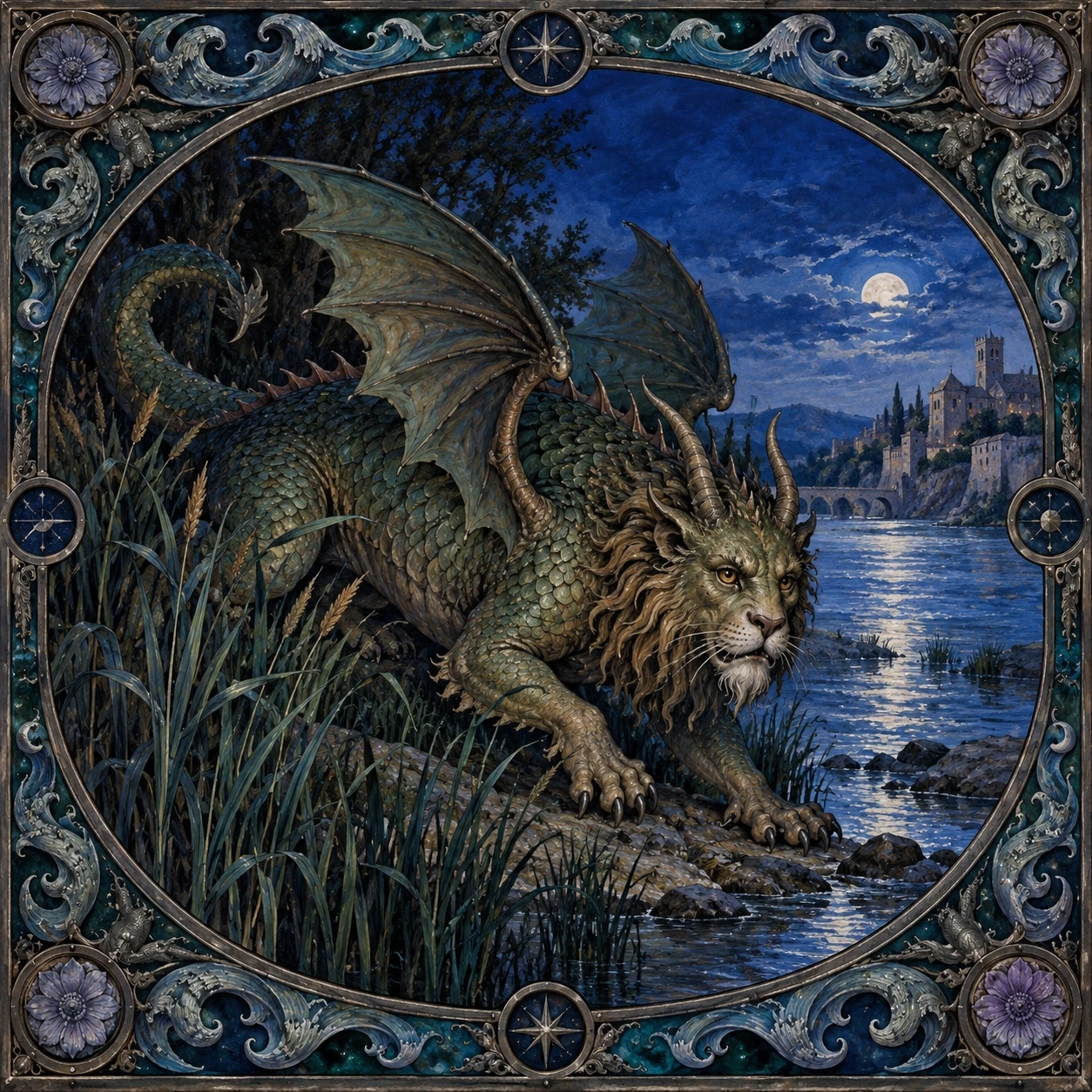
The Tarasque is a monstrous inhabitant of the Rhône subdued by Saint Martha in legend and celebrated as Tarascon’s unruly festival beast.
A custodian brings the keys, the doors open, and an enormous painted creature stares out of the darkness. The coachman who has brought Mona Caird and her companion here is proud of what they are about to see. The visitors must find something suitably admiring to say. Tarascon’s famous monster is easier to praise, he suggests, when it is loose in the streets.
Read the manuscript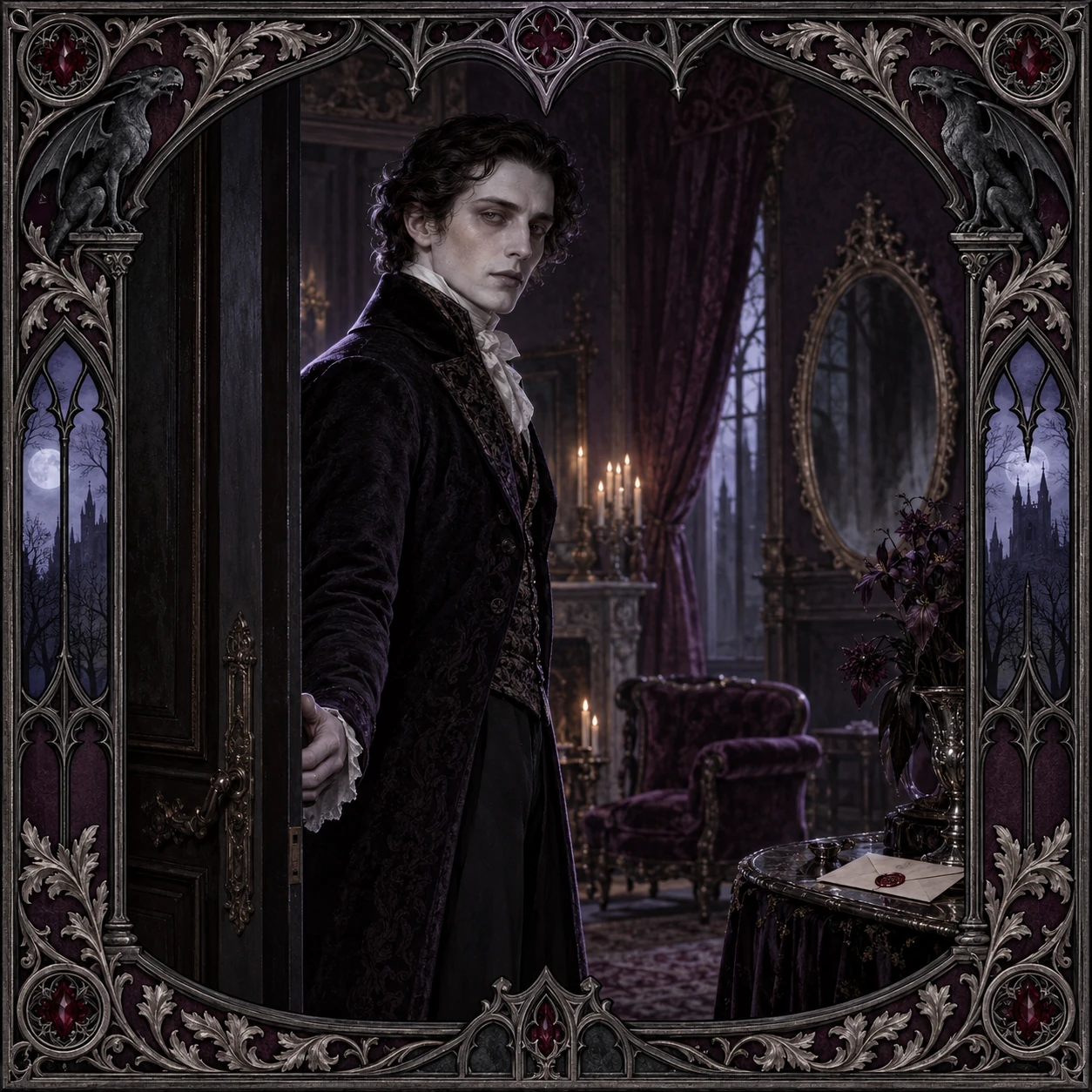
The vampire is a dangerous returning dead person who feeds on the living, appearing as a feared neighbour in reports and a seductive stranger in Gothic fiction.
The widow says her husband has come back for his shoes. He has been buried for ten weeks. She leaves the village, but others cannot escape so easily: nine deaths are reported in eight days. In Calmet’s account of Kisolova, the next journey is to the grave.
Read the manuscript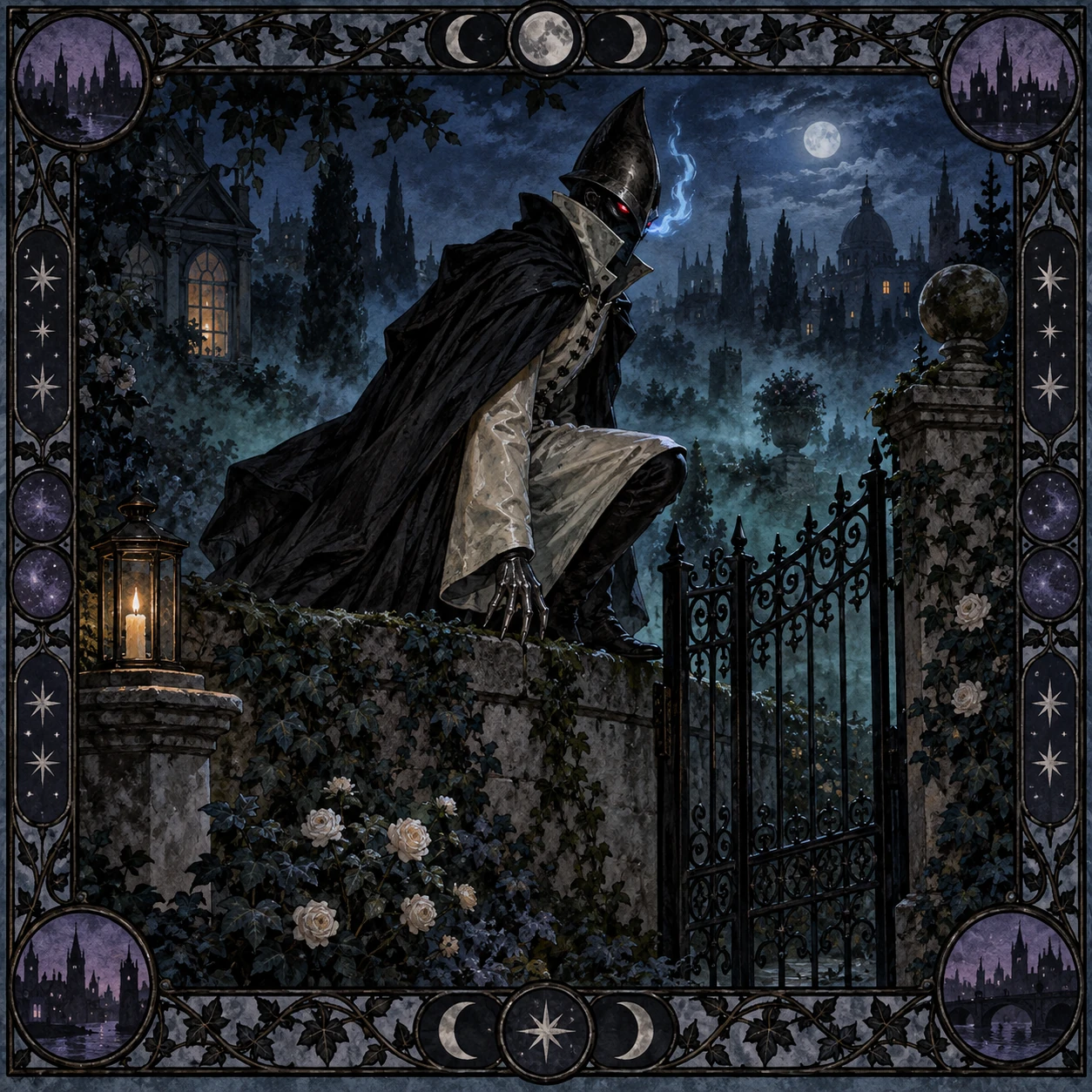
Spring-heeled Jack is a cloaked figure of Victorian encounter reports and penny fiction, feared as an attacker and reinvented as a leaping rescuer.
The caller at Jane Alsop’s gate said he was a policeman. He had caught Spring-heeled Jack in the lane and needed a light. Jane went inside for a candle.
Read the manuscript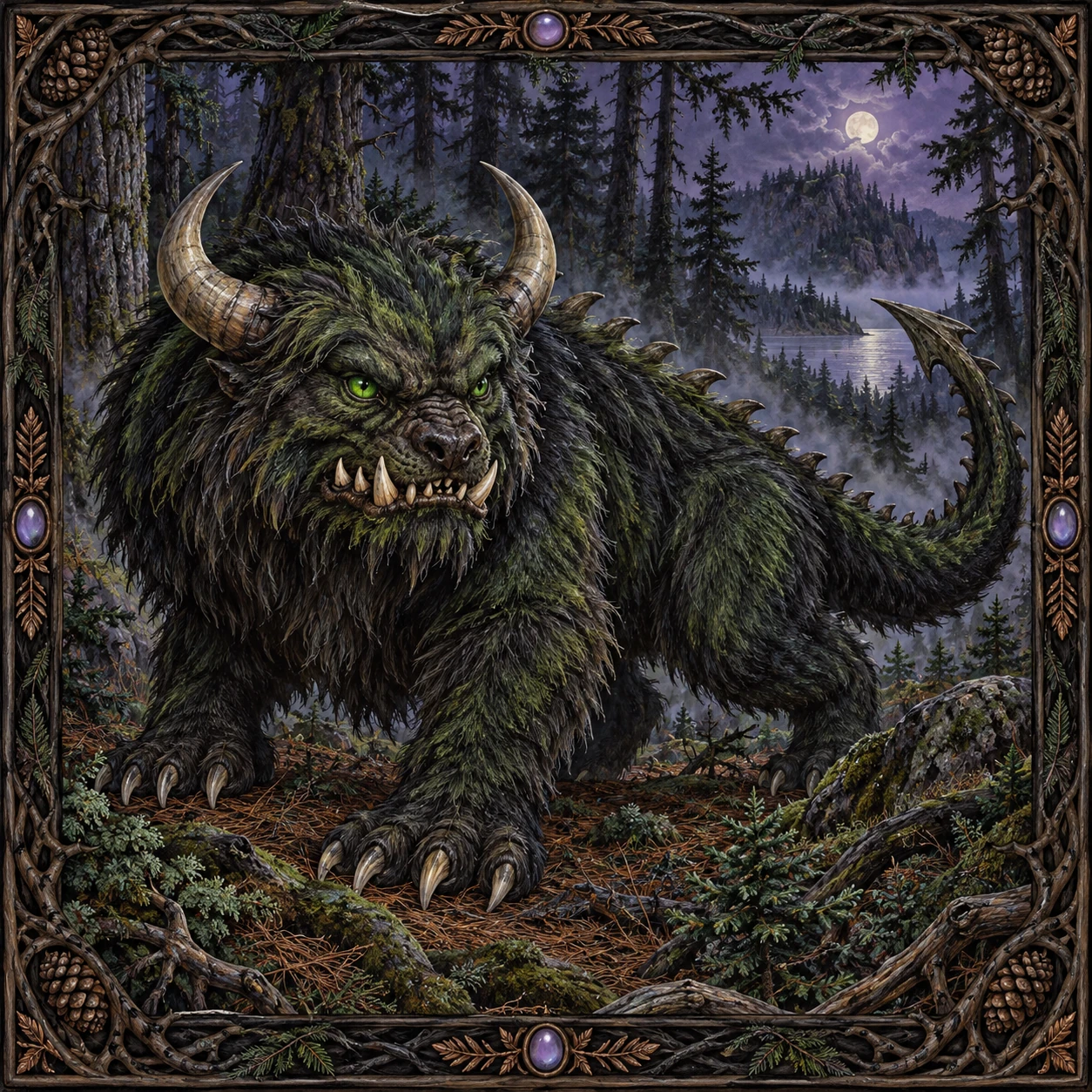
The Hodag haunts northwoods lumber tales as a tree-uprooting beast or an ox reborn from ashes, with horns, claws and an appetite for trouble.
The pit is ready, the ox is on the trail, and the man leading it has been chosen for his speed. Behind them comes the Hodag, tearing through trees and underbrush. In Lake Shore Kearney’s tale, the trap will work only if the bait can get out of its way.
Read the manuscript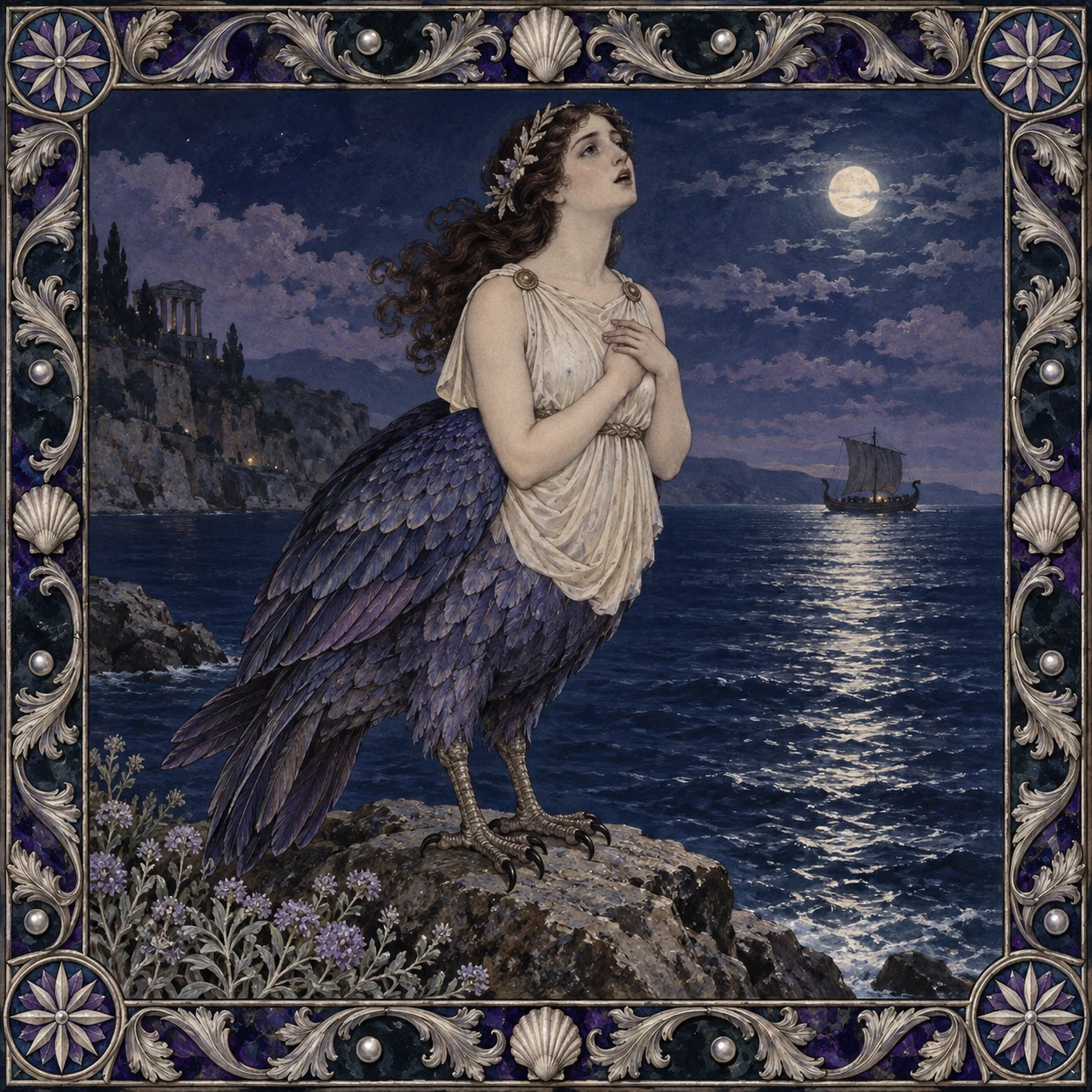
The Greek Sirens are singers whose irresistible voices threaten a sailor’s return; poets and artists also give these bird-bodied beings a place among mourners.
The Sirens recognise Odysseus and promise the knowledge he longs to hear. Around their shore lie the remains of earlier listeners. Their song makes danger sound like a welcome meant especially for him; escape will depend on companions who refuse his own request for release.
Read the manuscript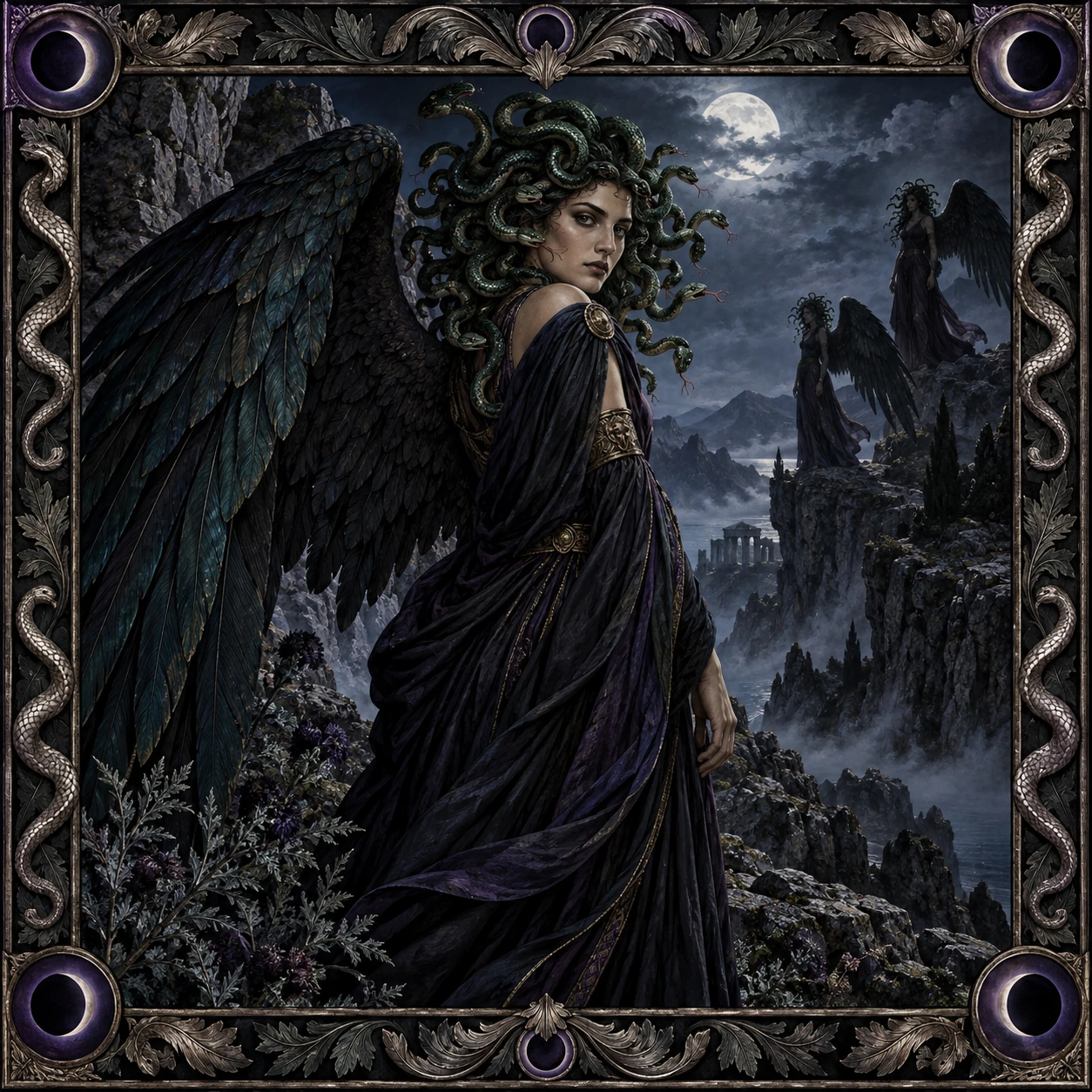
The Gorgons are three sisters in Greek myth whose gaze turns onlookers to stone; Medusa alone can die, but her severed head keeps its terrible power.
A king asks his guests for horses. Perseus offers something more extravagant: even a Gorgon’s head would not be beyond him. In the ancient Library, that boast becomes a command. To fulfil it, he must find three sleeping sisters—and approach them without looking into a face.
Read the manuscript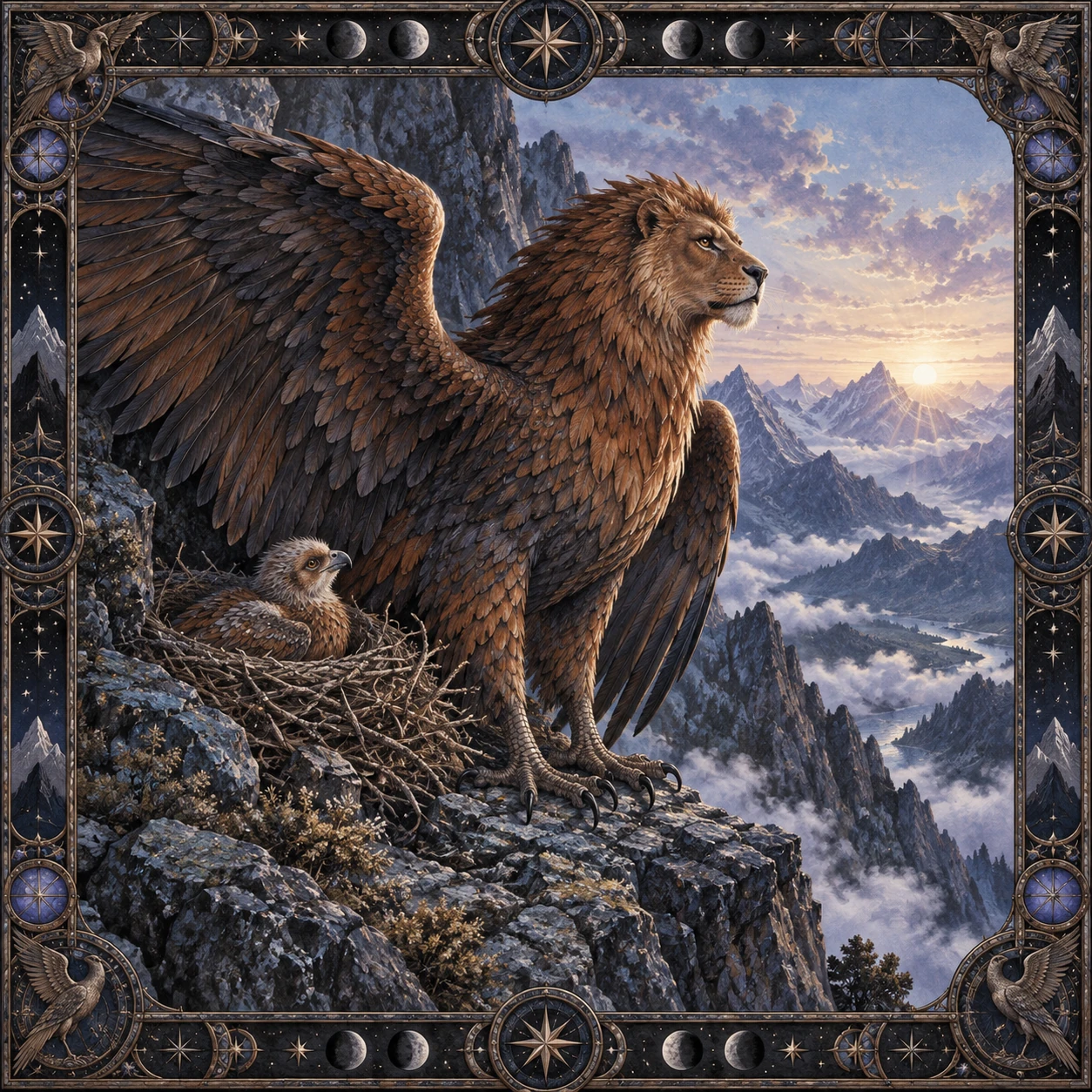
Anzu is a mighty bird of ancient Mesopotamia, depicted with a lion’s head and known in different poems as a devoted parent, a generous helper and a thief of divine authority.
Anzud calls to its nest, but the chick does not answer. The bird’s grief shakes the divine world before it comes close enough to see what a stranger has done. In this Sumerian poem, a creature strong enough to carry mountain bulls is also a parent afraid for its young.
Read the manuscript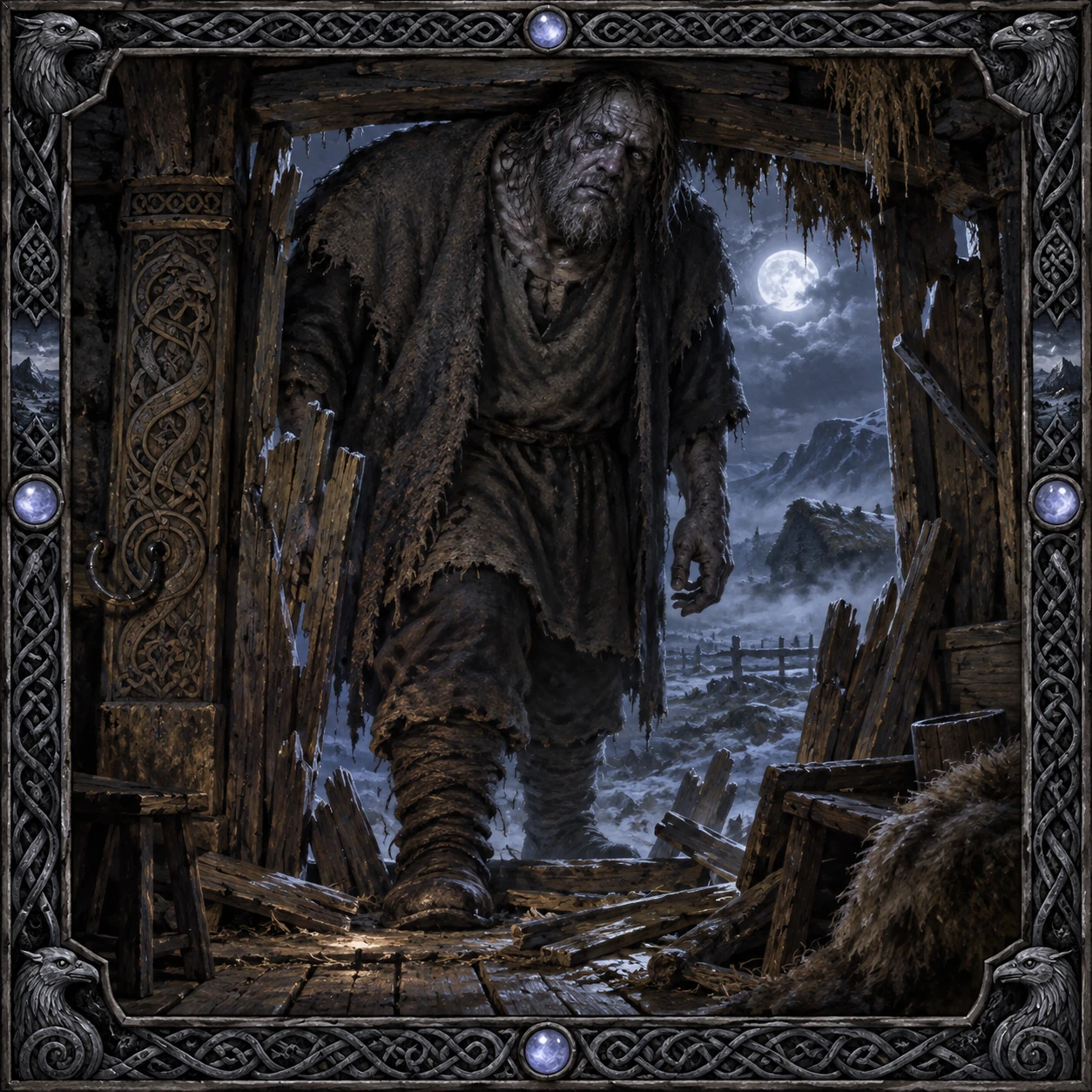
A draugr is a dead person who returns bodily in Icelandic sagas, haunting farms or guarding buried treasure.
The warrior Grettir lies fully dressed beneath a cloak, his feet braced against a beam. Above him, the dead shepherd drives his heels into the roof. The rafters crack. When the noise stops, the visitor comes down to the door.
Read the manuscript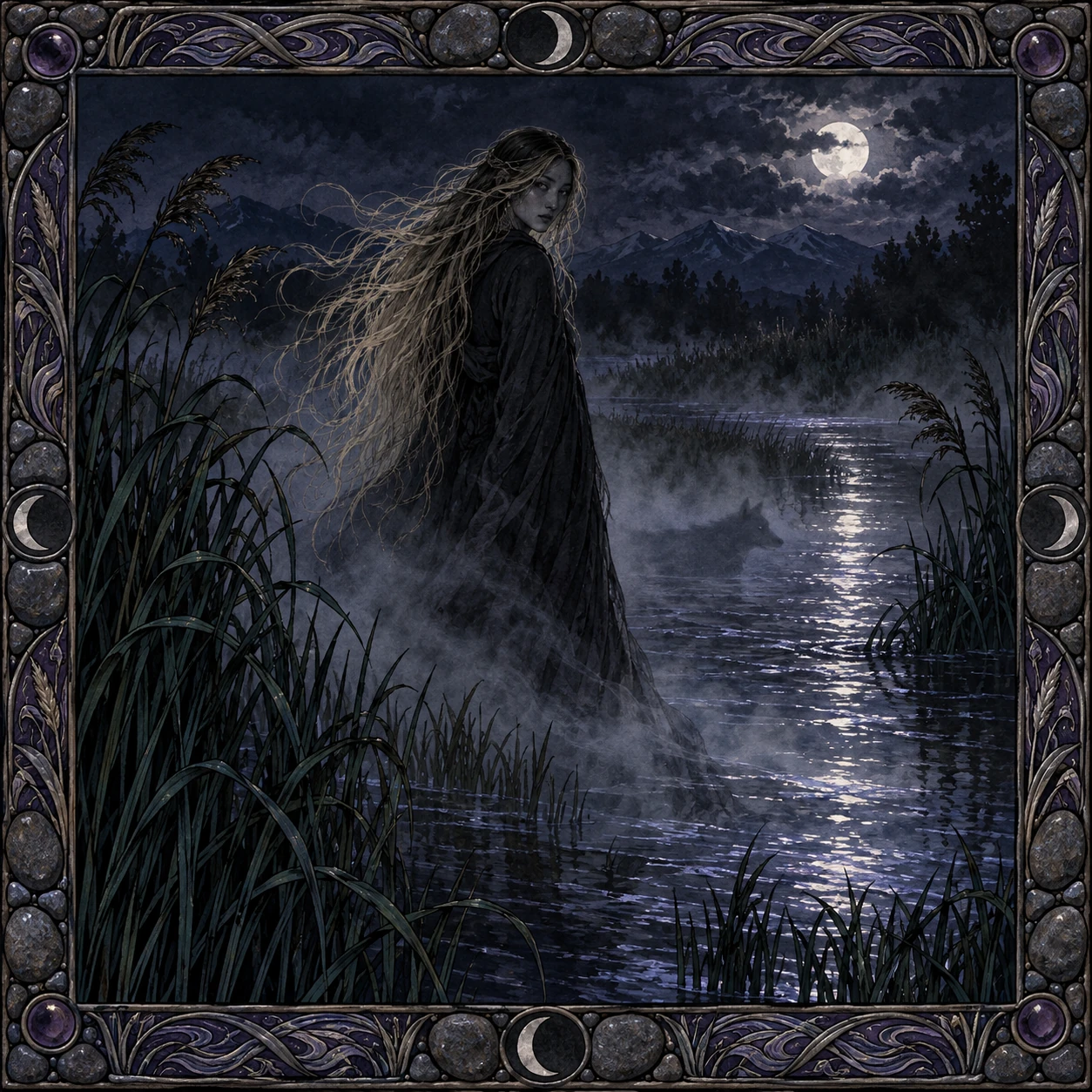
Albasty is a spirit feared in childbirth and night encounters across several Turkic traditions, appearing as a woman, an animal or a weight upon the sleeper.
A rider approaching a village sees a fox carrying human lungs. He recognizes Albasty and gives chase. Inside a house, a woman has collapsed after childbirth. In this Kazakh account, she can still be saved—but only before the stolen lungs reach water.
Read the manuscript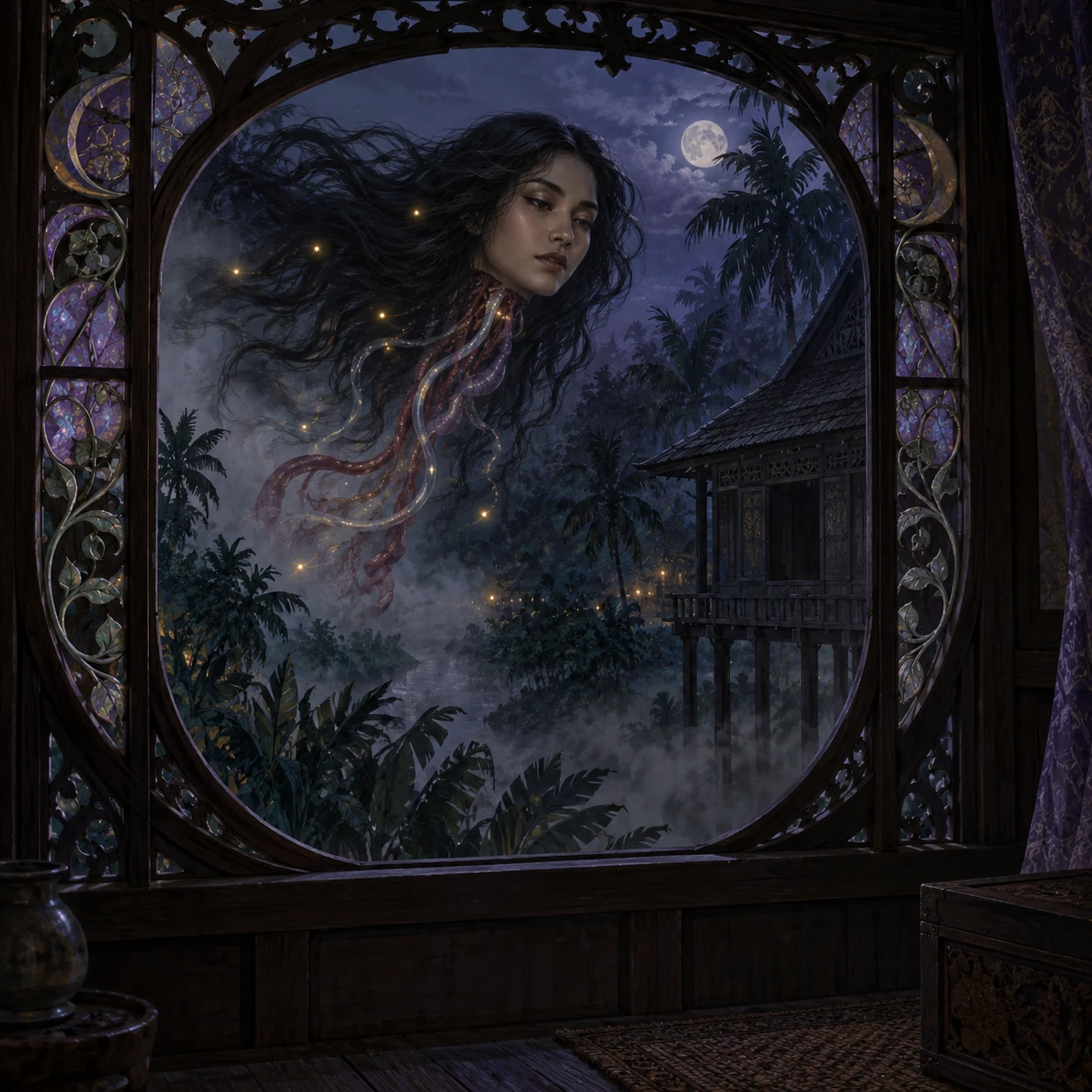
The Penanggalan of Malay accounts is a woman’s detached head that flies with its entrails hanging beneath it and seeks blood around homes.
In Abdullah bin Abdul Kadir’s recollection, a conversation in a Malacca household turns to a visitor no door was built to admit: a woman’s head, flying with her entrails beneath it. William Milne, a missionary, wants the story explained. Abdullah can describe the feared being, but he has doubts of his own.
Read the manuscript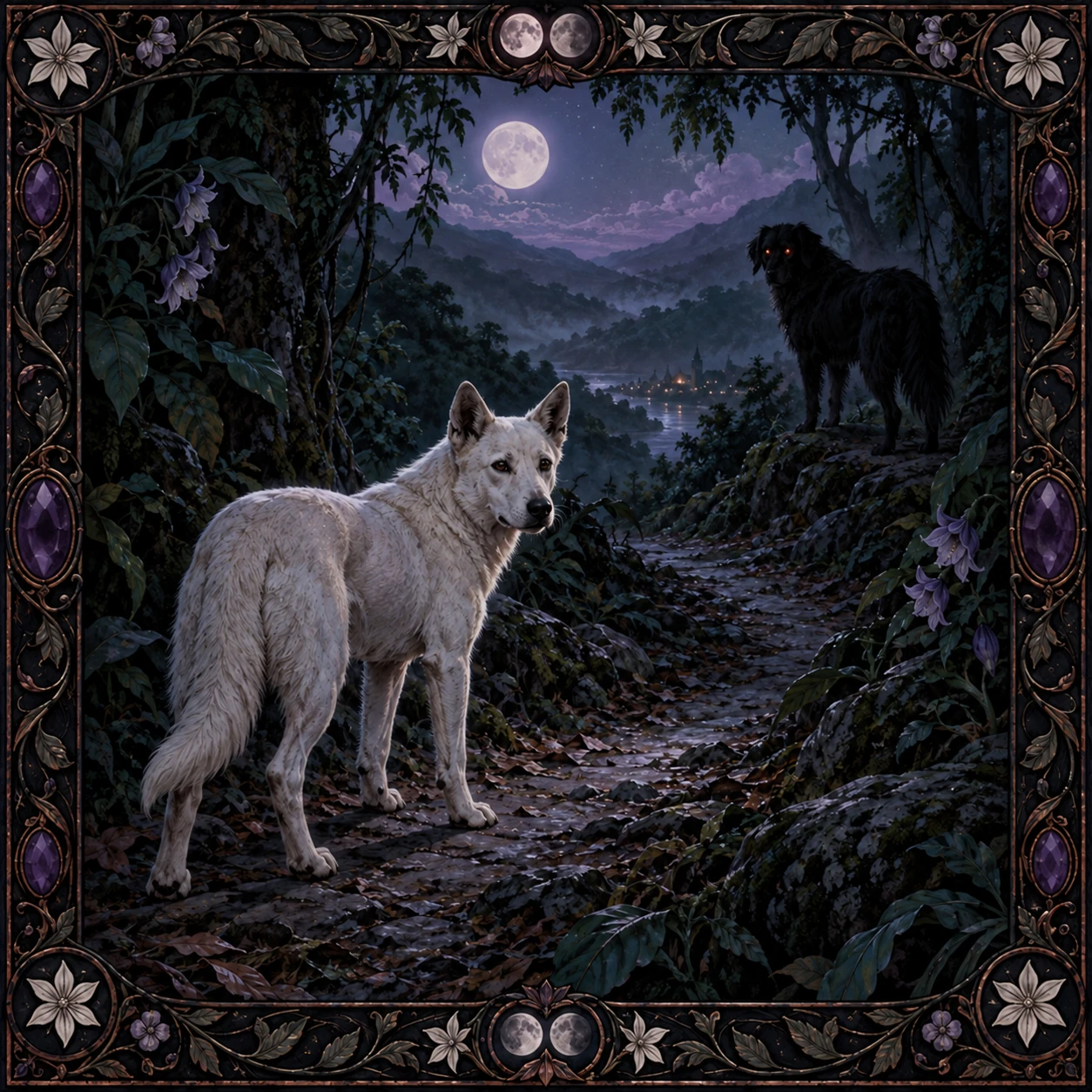
A spectral dog is said to follow Central American night travellers, offering protection or danger in different accounts.
The visitor has come for communion wafers, as he does on Fridays, but this time he bursts in warning Elvira that her braid will be cut. She tries to reach the door. Her feet will not move. Miguel Ángel Asturias’s Leyenda del Cadejo brings the night creature into a convent, where a familiar errand becomes an encounter with desire, terror and a body that will not obey.
Read the manuscript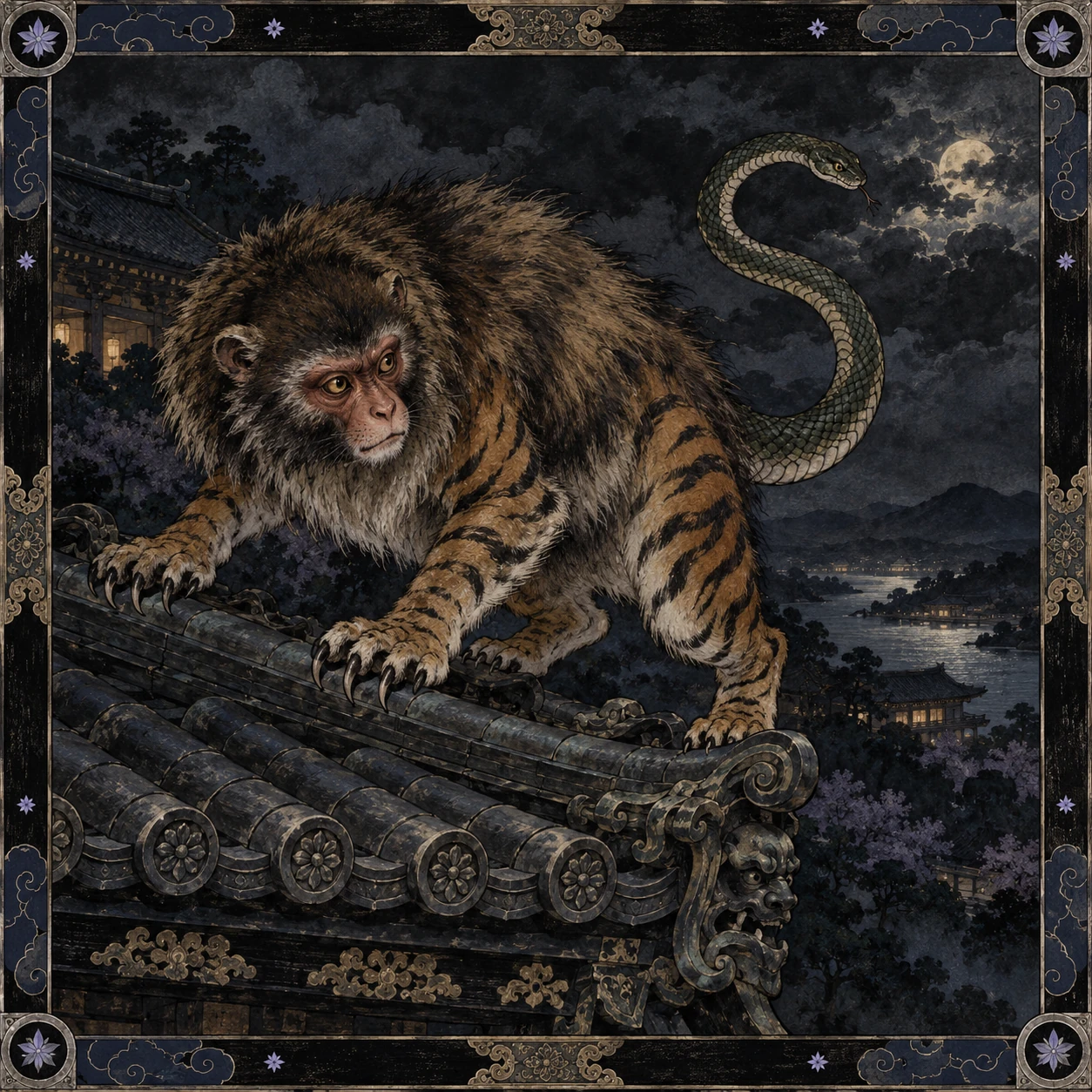
The Nue is a monkey-headed, serpent-tailed creature whose cry troubles Japan’s imperial palace and whose ghost seeks a monk’s prayers.
Yorimasa takes two arrows to the palace. In The Tale of the Heike, one is meant for the apparition frightening the emperor. If that shot fails, he intends the other for the courtier who recommended him. The celebrated monster hunt begins with a warrior angry at the task he has been given.
Read the manuscript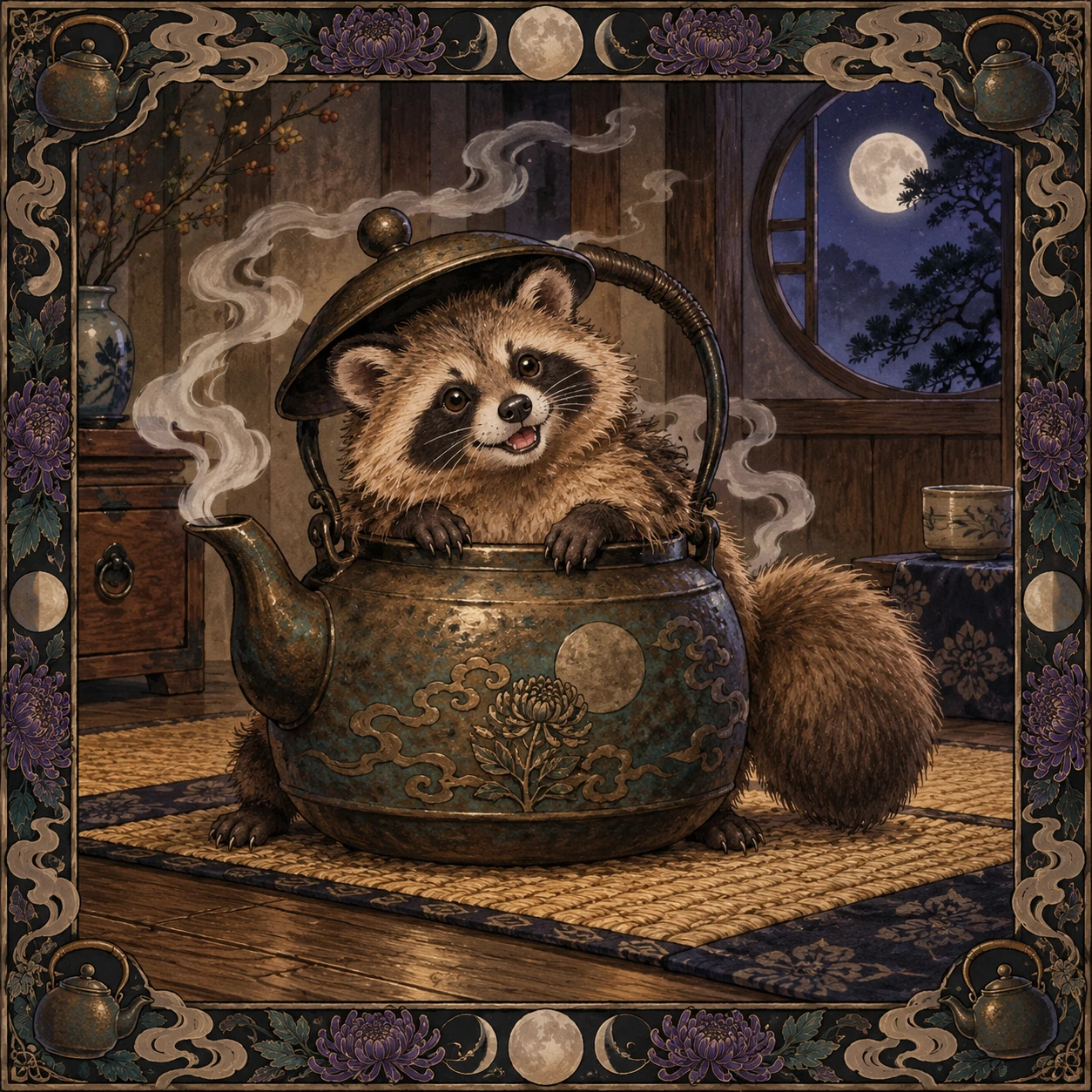
A shapeshifting raccoon dog in Japanese folklore, the bake-danuki deceives people, rewards kindness and sometimes becomes the victim of its own disguise.
The novices hear a commotion in the next room and assume their master is enjoying himself. Instead, his new tea-kettle has grown paws and begun to dance. In Grace James’s telling, the priest sleeps through the first appearance of a creature whose talents will soon overturn his comfortable judgement.
Read the manuscript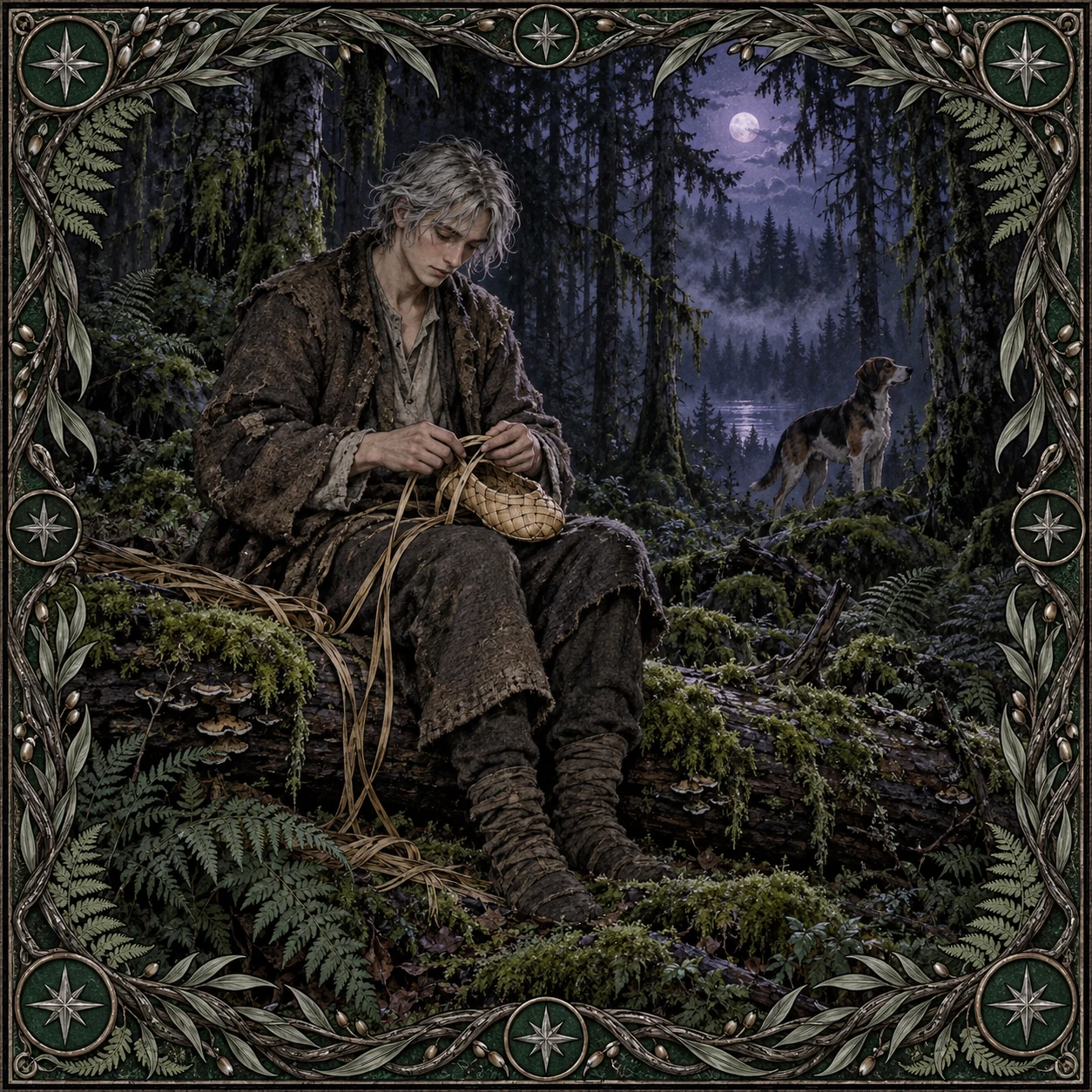
The leshy is a Russian forest being who can mislead travellers, tend animals and appear as an uncanny human stranger.
The hunter’s dog begins barking, its hair raised. Ahead, a young-looking man sits on a log making a shoe, his hair entirely grey. In Ralston’s tale, the hunter has not yet spoken when the stranger answers what he is thinking.
Read the manuscript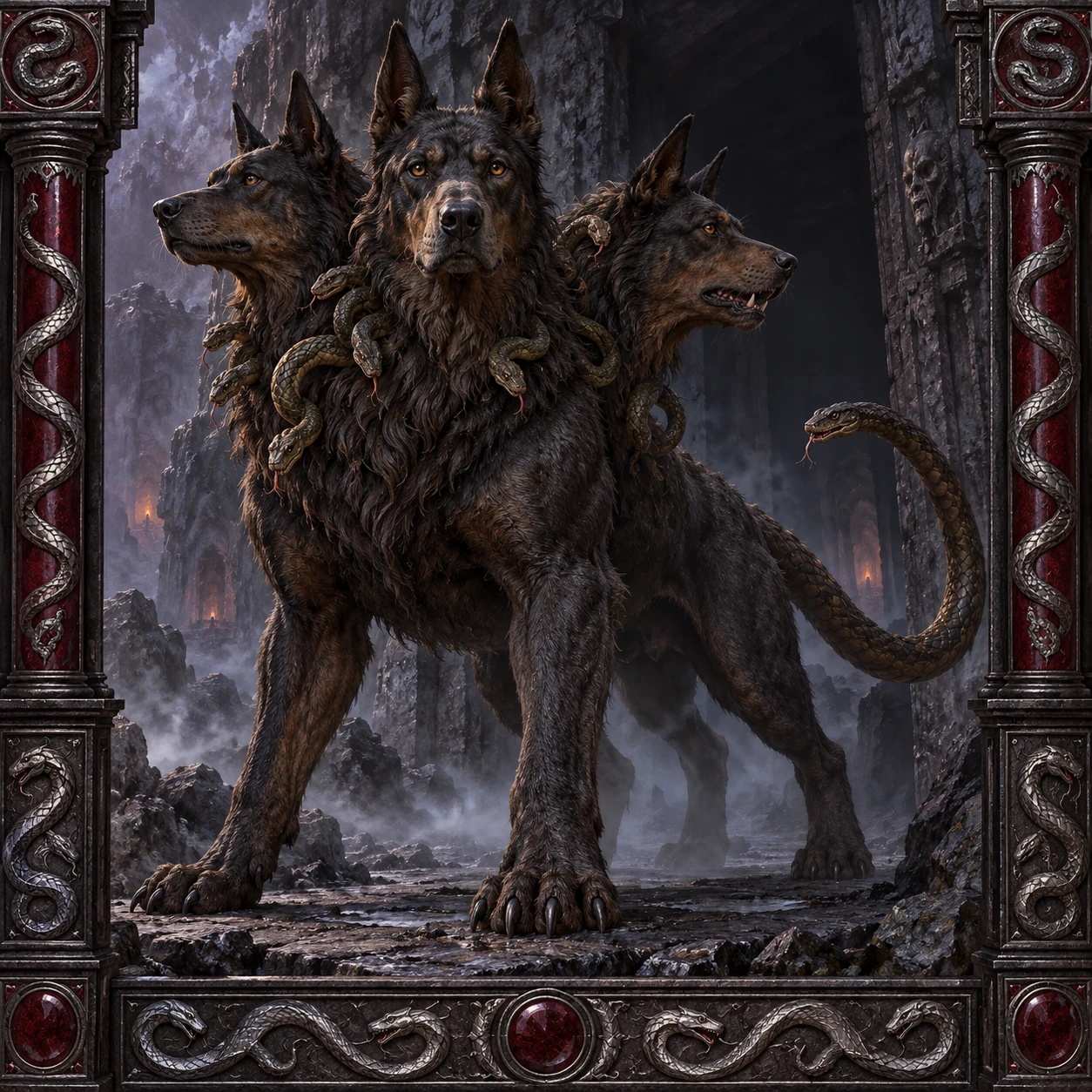
Cerberus is the many-headed hound of the Greek underworld, a guardian who welcomes the dead but turns on those who try to leave.
Heracles has reached the ruler of the dead with an extraordinary request: he wants to take the watchdog away. Permission comes with a condition. He must master Cerberus without his weapons.
Read the manuscript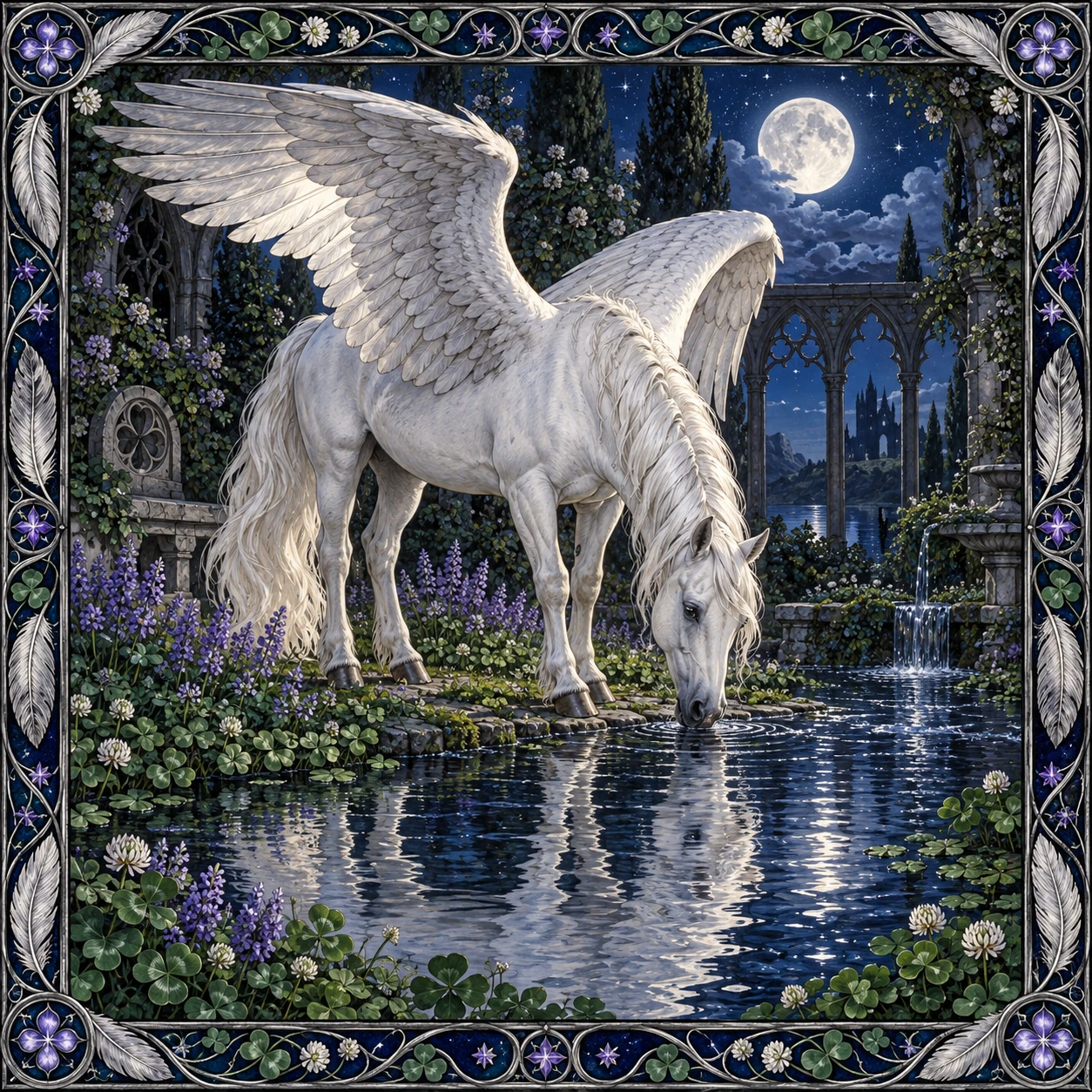
Pegasus is the winged horse whose legends connect Bellerophon’s adventures, Greek springs and the stars.
Bellerophon has tried again and again to catch the winged horse. In Pindar’s account, help reaches him while he sleeps: Athena brings a golden bridle. When he wakes, it is still beside him. The dream has left something he can hold, but the work of approaching Pegasus remains.
Read the manuscript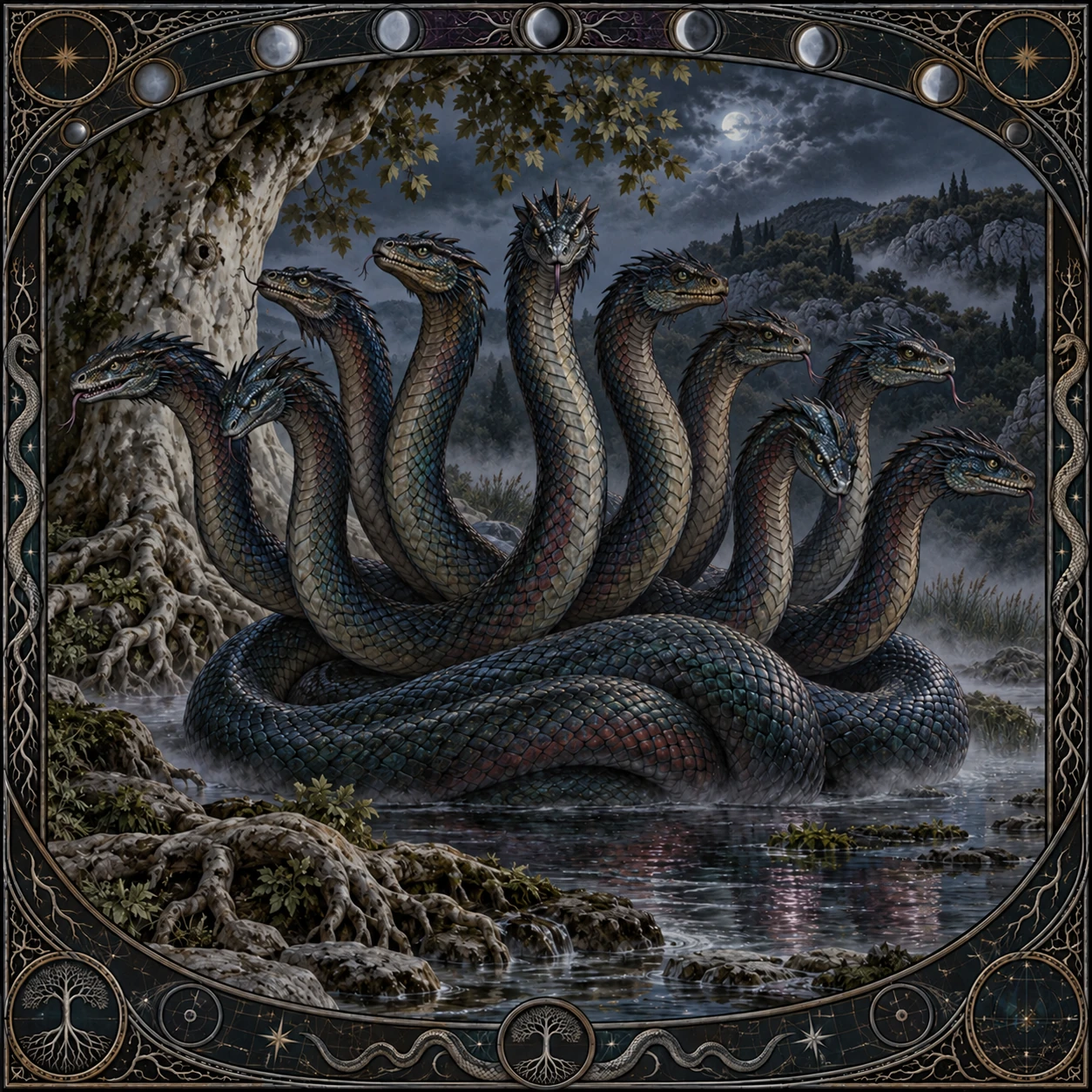
The Lernaean Hydra is Heracles’ serpentine adversary, whose severed heads multiply and whose poison outlives the battle.
A head falls, and two rise in its place. In Diodorus’ account, every successful blow makes Heracles’ task harder. He has come to kill the serpent of Lerna, but strength alone is giving it more mouths.
Read the manuscript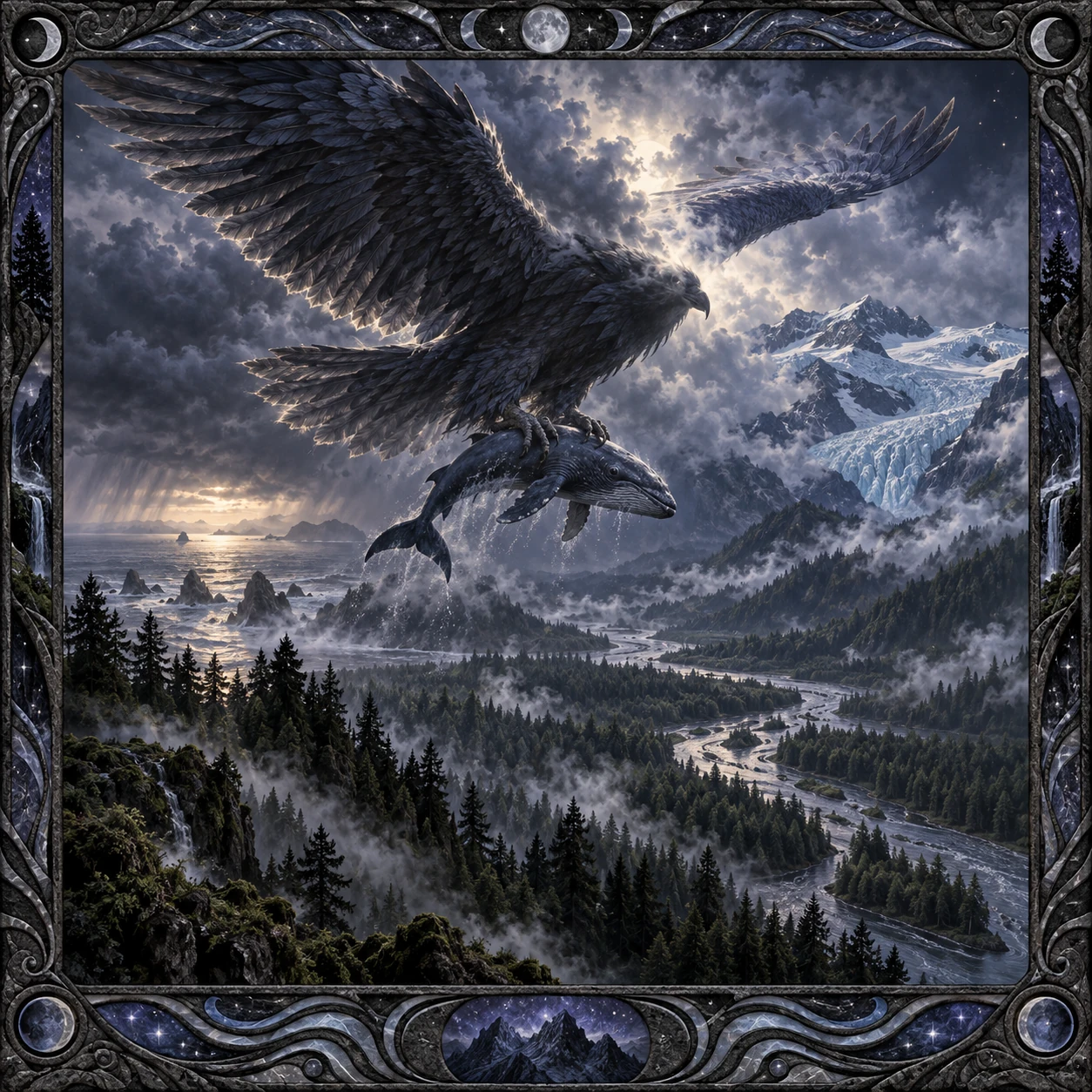
Thunderbird is an immense whale-hunting, storm-making being in Hoh and Quileute accounts, with a mountain home beneath the Olympic ice.
Again Thunderbird takes hold of Mimlos-Whale. Again the whale breaks free. Their struggle tears trees from the ground and shakes the mountains, but the hunter cannot finish it. In Luke Hobucket’s telling, the chase will end with a refuge for the prey.
Read the manuscript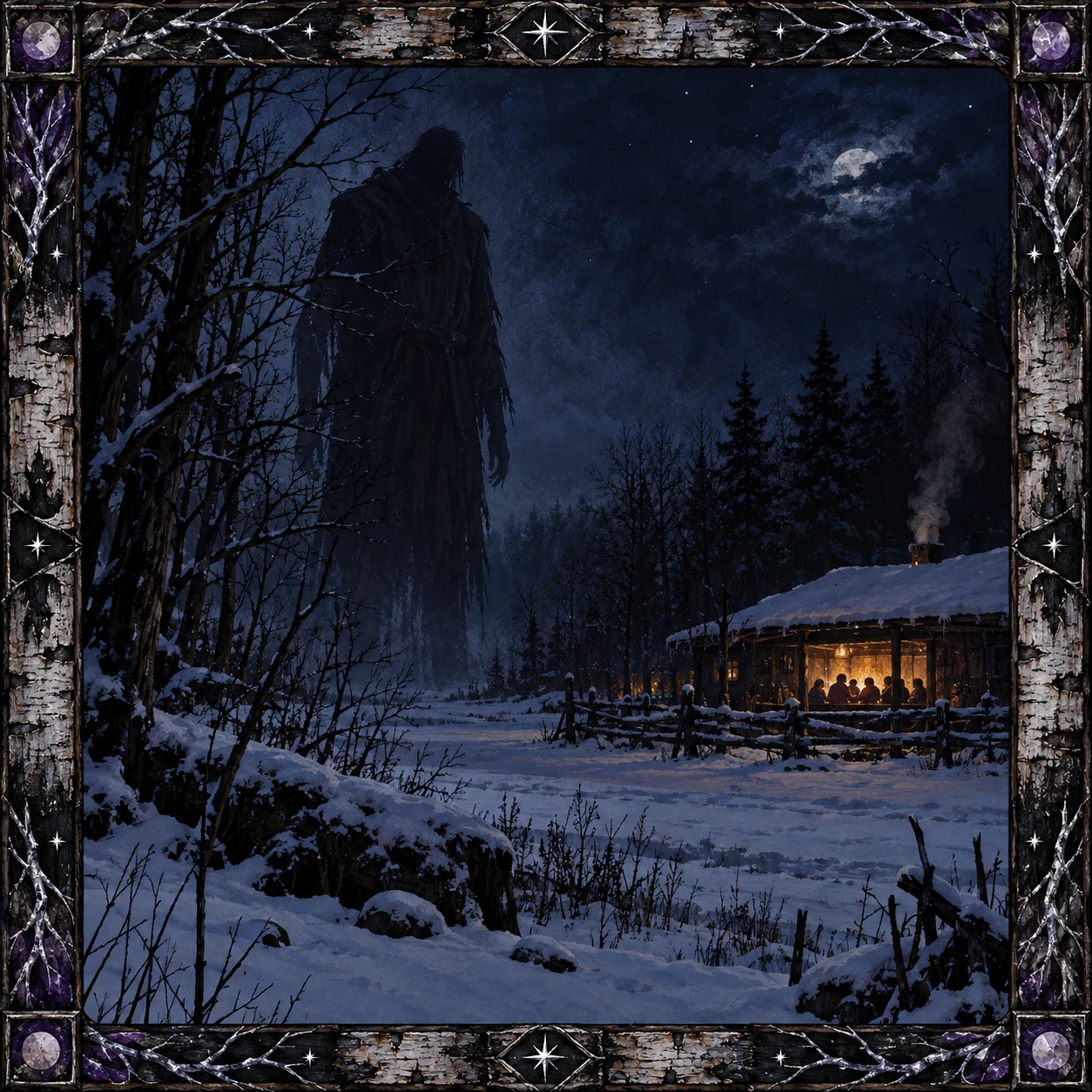
Wiindigoo is a winter cannibal in Ojibwe accounts, a being whose consuming hunger also gives shape to stories about greed, responsibility and care.
What could satisfy a creature that grows with every person it eats? Ojibwe.net’s language guide gives Wiindigoo an appetite that enlarges its own power. Other tellers bring that danger close to ordinary wants, and ask what might interrupt it.
Read the manuscript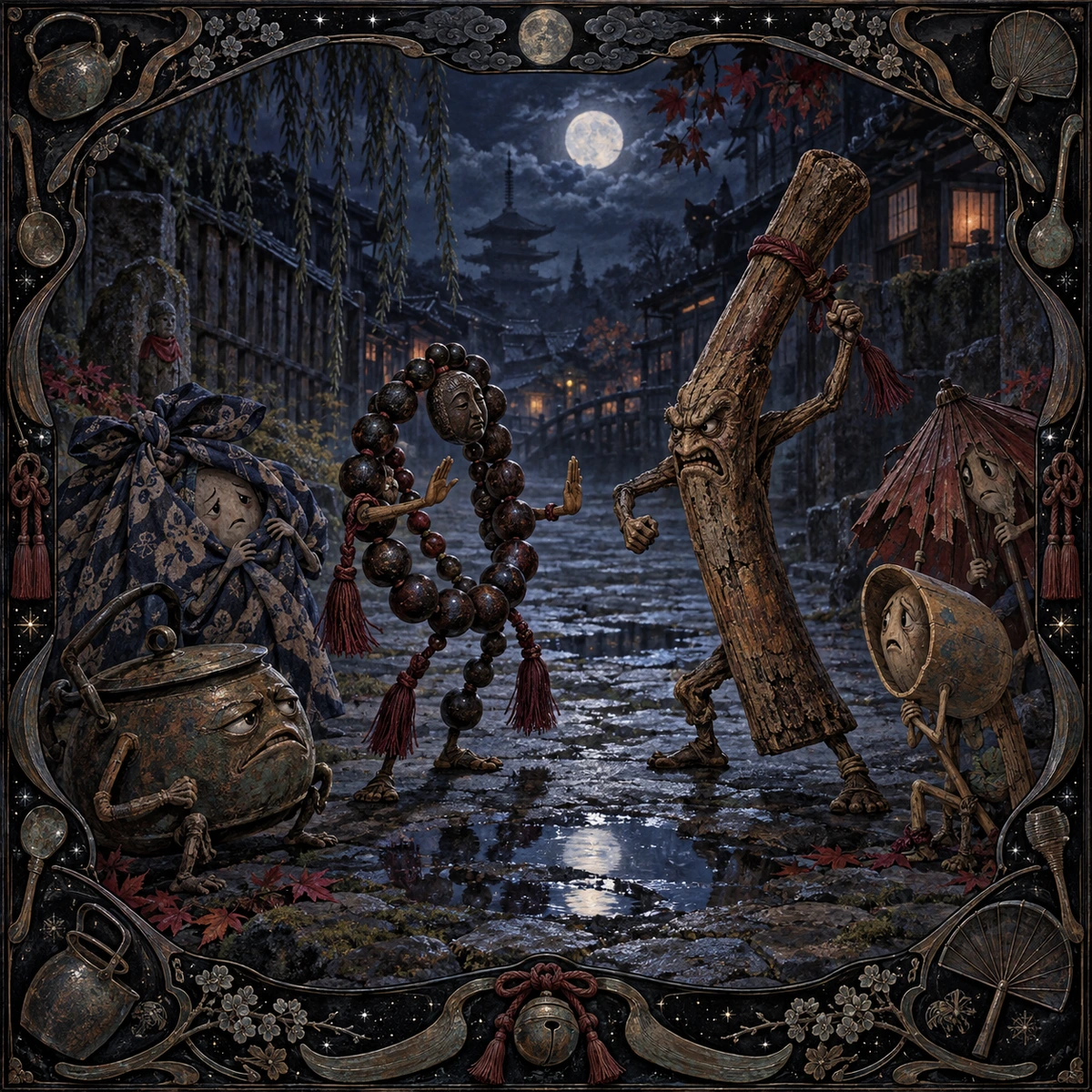
Tsukumogami are old tools and household objects that take on lives of their own in Japanese stories and pictures.
The discarded tools remember their years of service. Now they lie beside a road, kicked by passing oxen and horses, while their former owners enjoy replacements. A rosary urges them to repay hostility with kindness. A wooden club will hear no more of that.
Read the manuscript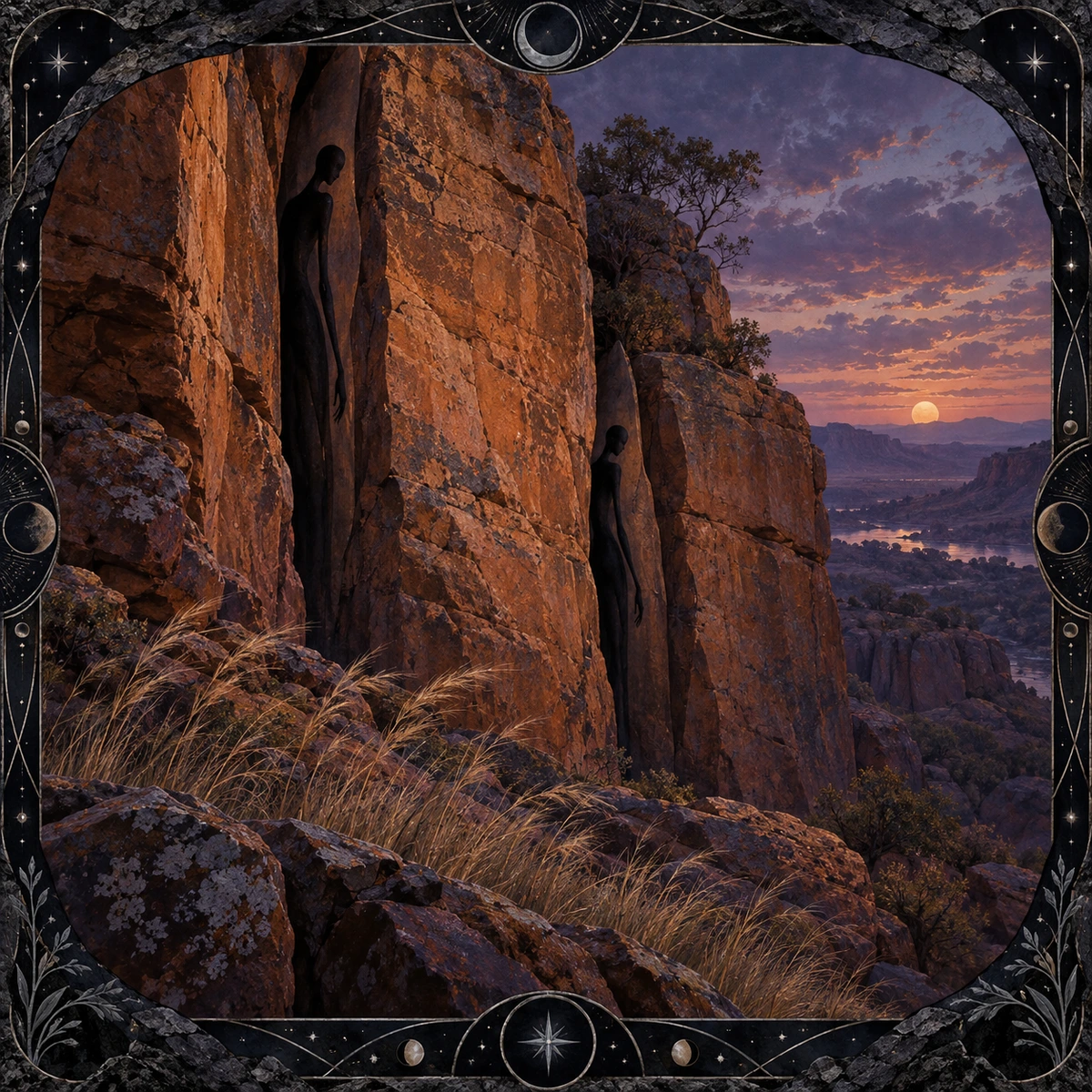
Mimih are slender spirits of western Arnhem Land’s rock country, whose hidden society hunts, sings and dances, and whose forms have inspired generations of named Aboriginal artists.
When the wind rises, Mimih must hurry inside the rocks: their necks are so slender that the gusts could break them. Artist John Mawurndjul describes their songs emerging from that sheltered world. Beyond the stone’s surface, other public accounts give them families and histories of their own.
Read the manuscript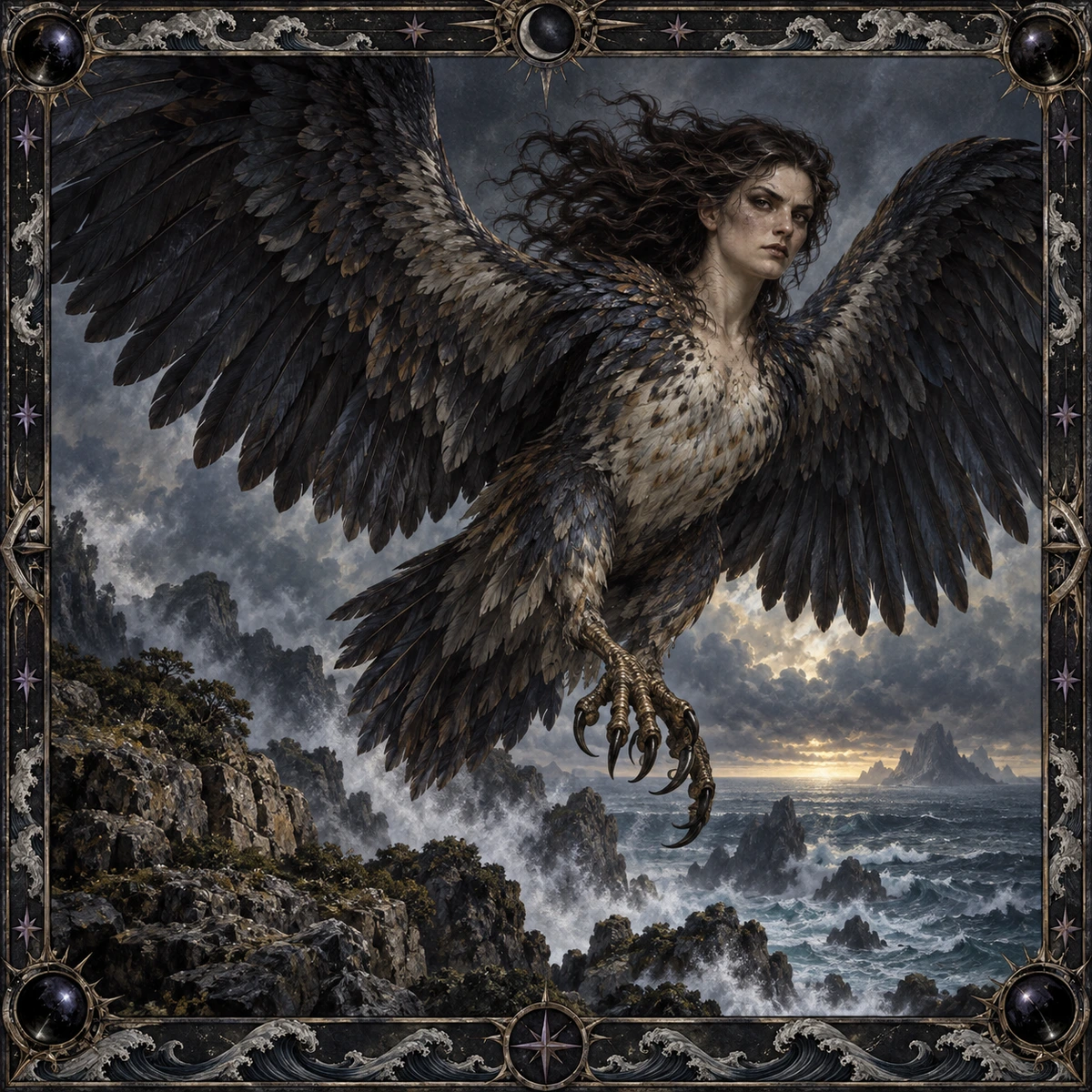
Harpies are swift winged women who snatch food from a hungry seer and confront the wandering Trojans with a prophecy of famine.
Phineus has food brought to his house, yet hunger is destroying him. Whenever he reaches for a meal, wings descend. The visitors now approaching his door have come for directions; he needs them to make it possible for him to eat.
Read the manuscript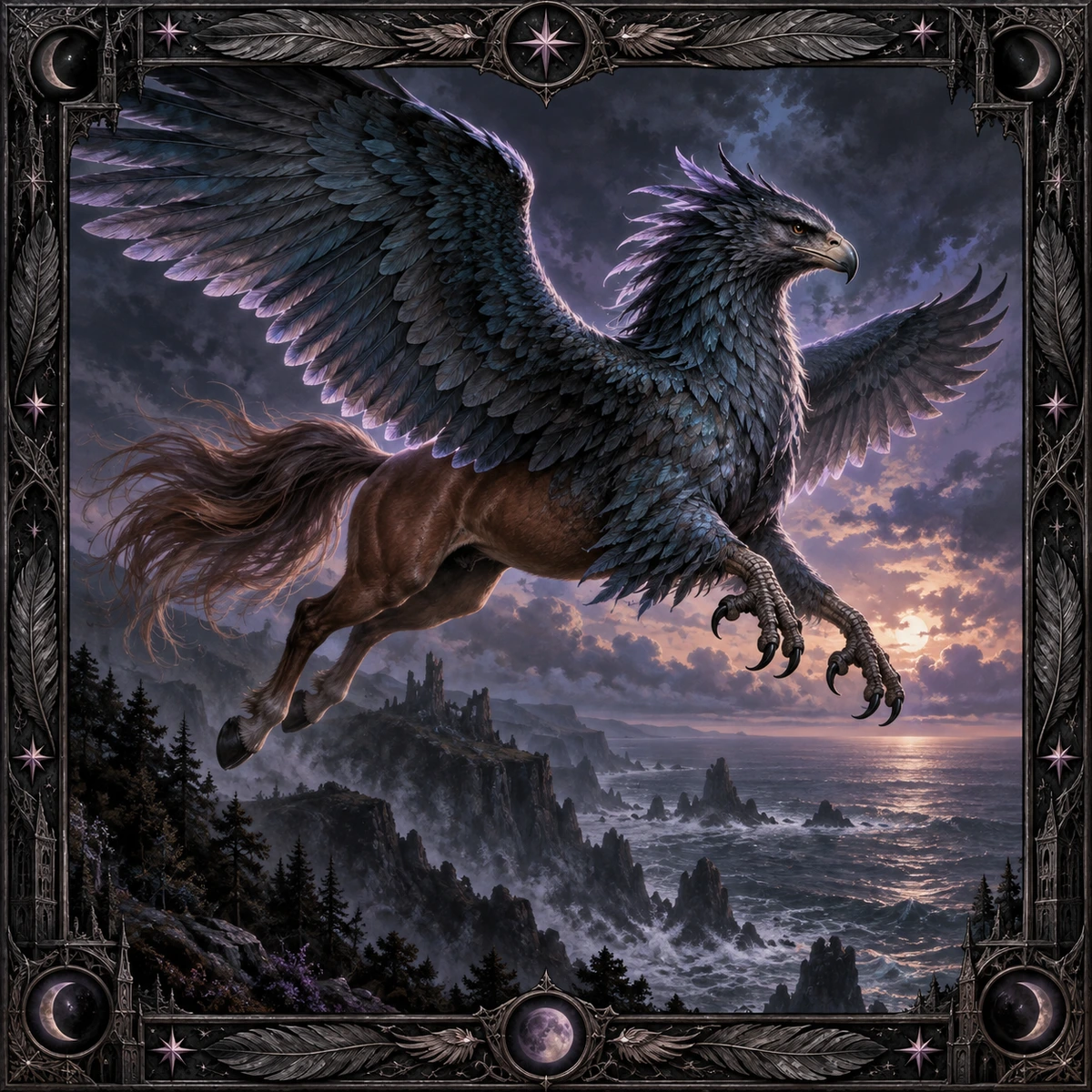
Born of a griffin and a mare, Ariosto’s hippogriff carries knights above mountains and seas, sometimes far from where they mean to go.
Bradamante has broken the enchanted prison and found the man she loves. Then Ruggiero climbs onto the waiting hippogriff. A few running strides become a flight, and she can only watch as the rider she has just freed disappears into the sky.
Read the manuscript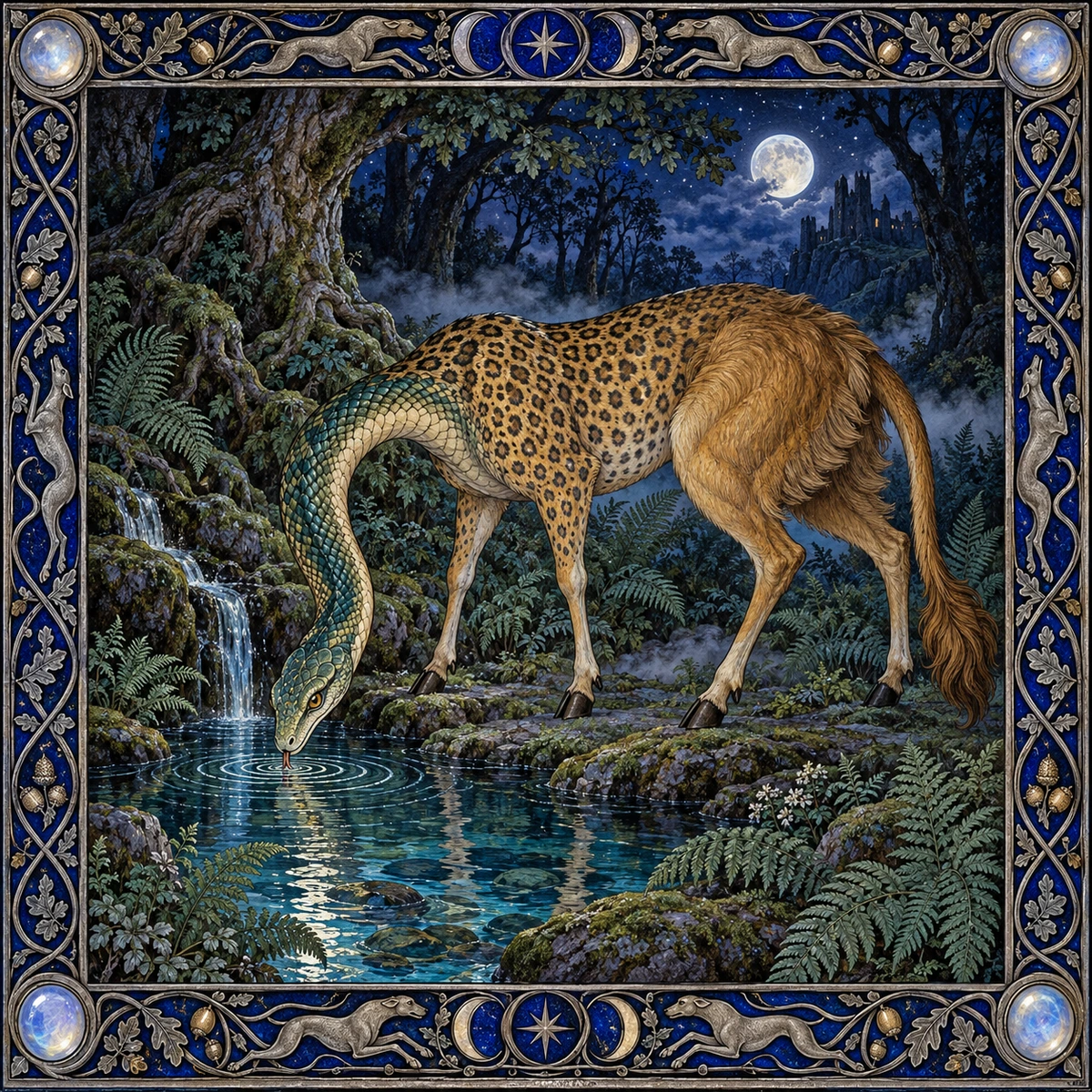
An animal that sounds like a pack of hunting hounds leads Arthurian knights into long pursuits and unsettling revelations.
A whole pack seems to be approaching the spring. Then one animal appears, and the barking stops as it drinks. The Questing Beast carries the sound of the hunt within itself—a marvel whose body, pursuers and meaning change between Arthurian tellings.
Read the manuscript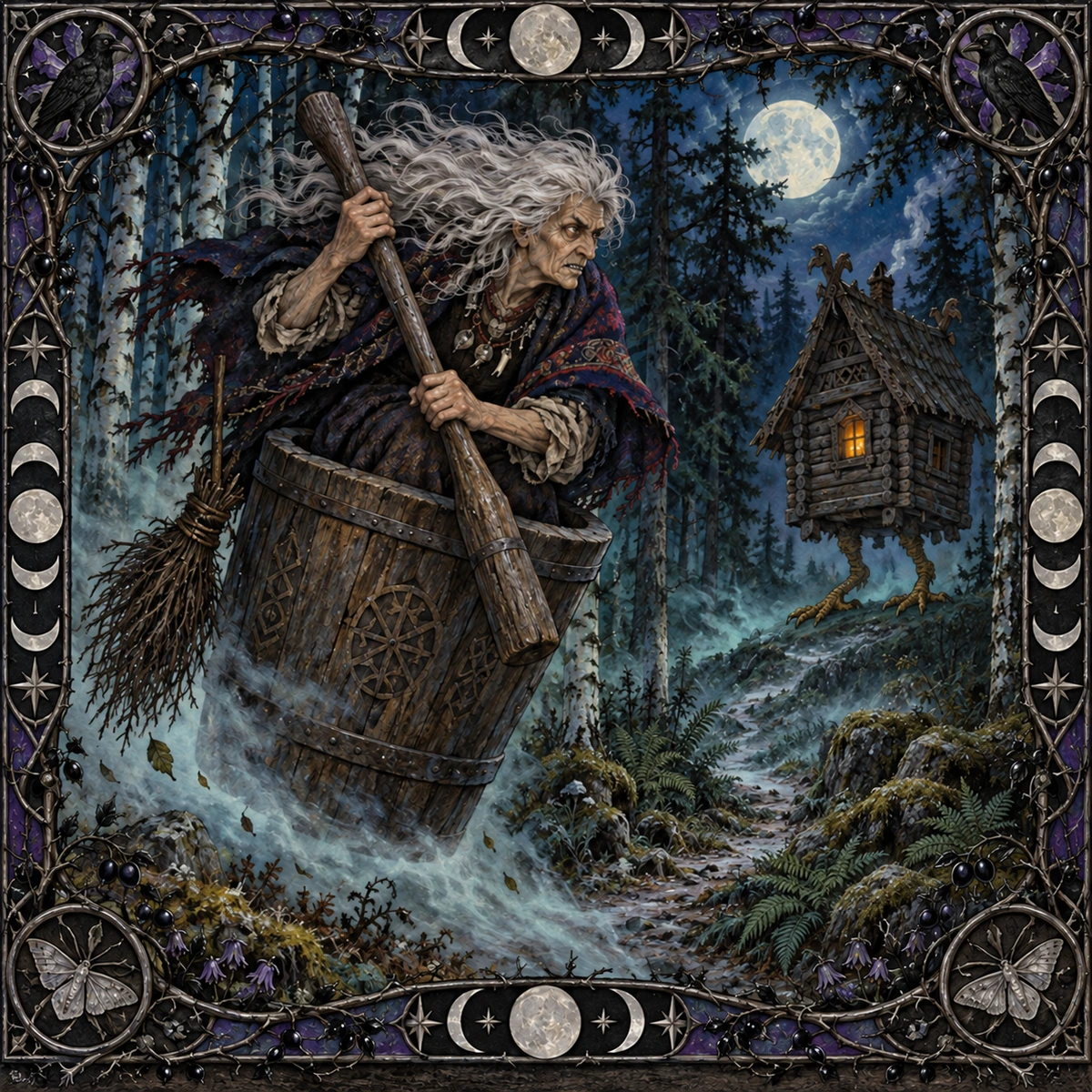
Baba Yaga is the forest witch of East Slavic tales, a dangerous host who may eat a visitor, demand impossible work, or send a traveller home with a powerful gift.
The girl is sitting at Baba Yaga’s loom when she learns what the bath is for: the witch intends to eat her. In translator W. R. S. Ralston’s tale, escape begins with a piece of bacon offered to a cat. Soon someone else must keep the loom moving while the child makes for the door.
Read the manuscript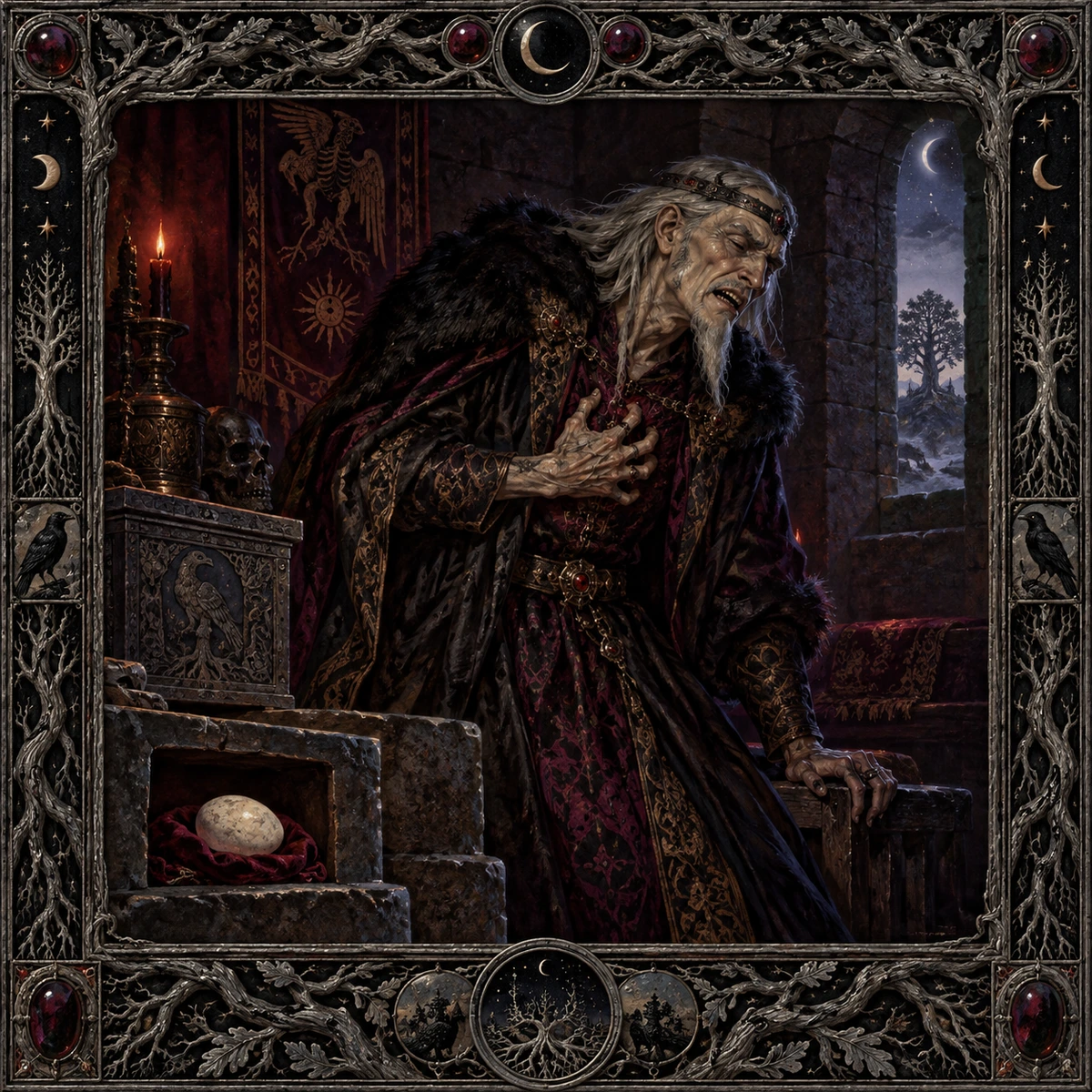
Koschei is a powerful captor in East Slavic wonder tales, called Deathless because defeating him requires a secret or extraordinary help.
Ivan’s mother hides her son before her captor returns. Koschei senses a stranger in the house, but she talks him out of his suspicion. Then she draws closer and asks where his death is hidden. The son who came to rescue her must wait while she persuades the Deathless to explain how he can die.
Read the manuscript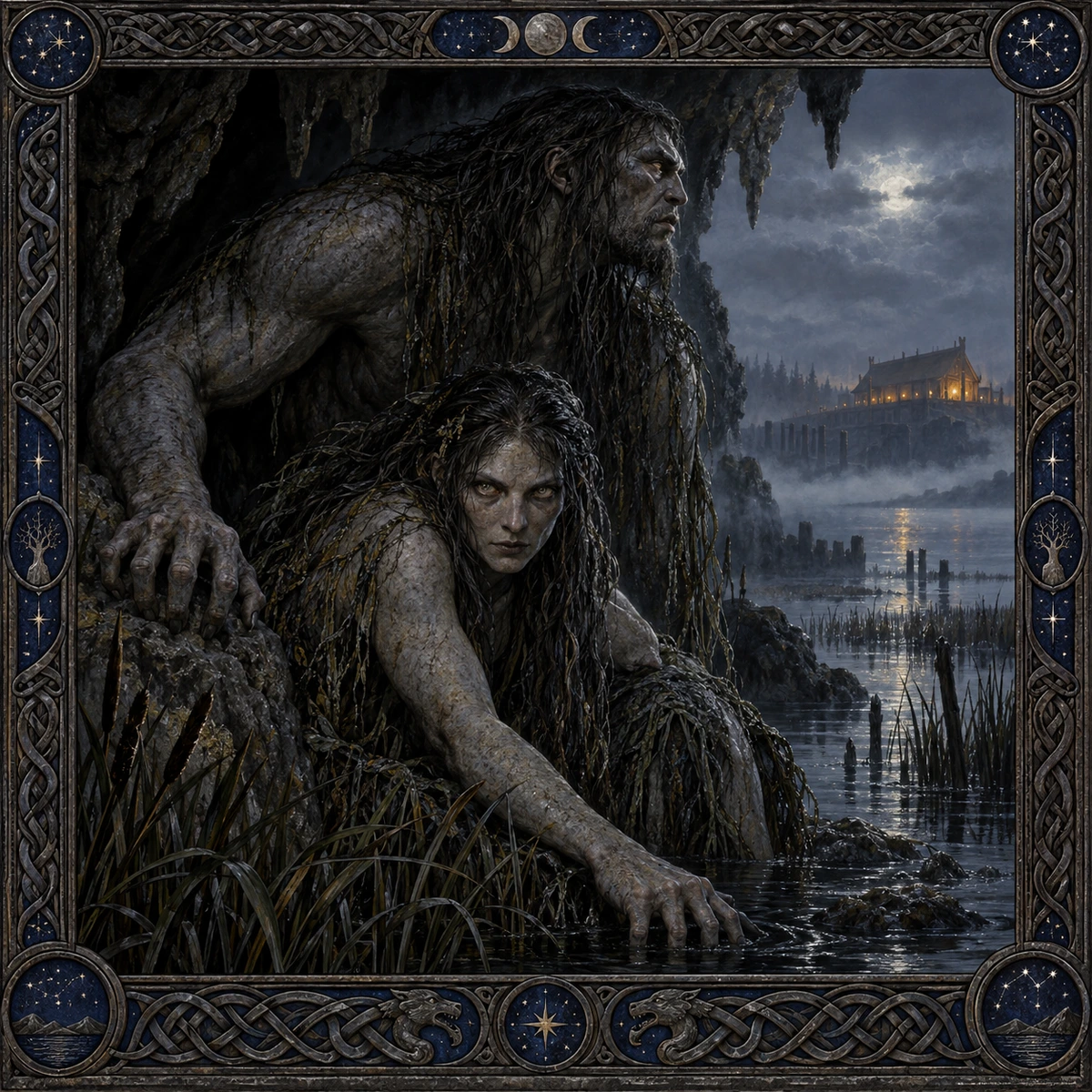
Grendel hunts the sleepers in a Danish king’s hall; his mother comes from the mere to avenge the son Beowulf has killed.
Heorot was built for feasting, music and the giving of gifts. Now its people leave before nightfall. For twelve years King Hrothgar has been unable to stop the visitor who carries his men away. Then a young warrior from across the sea asks to spend the night inside.
Read the manuscript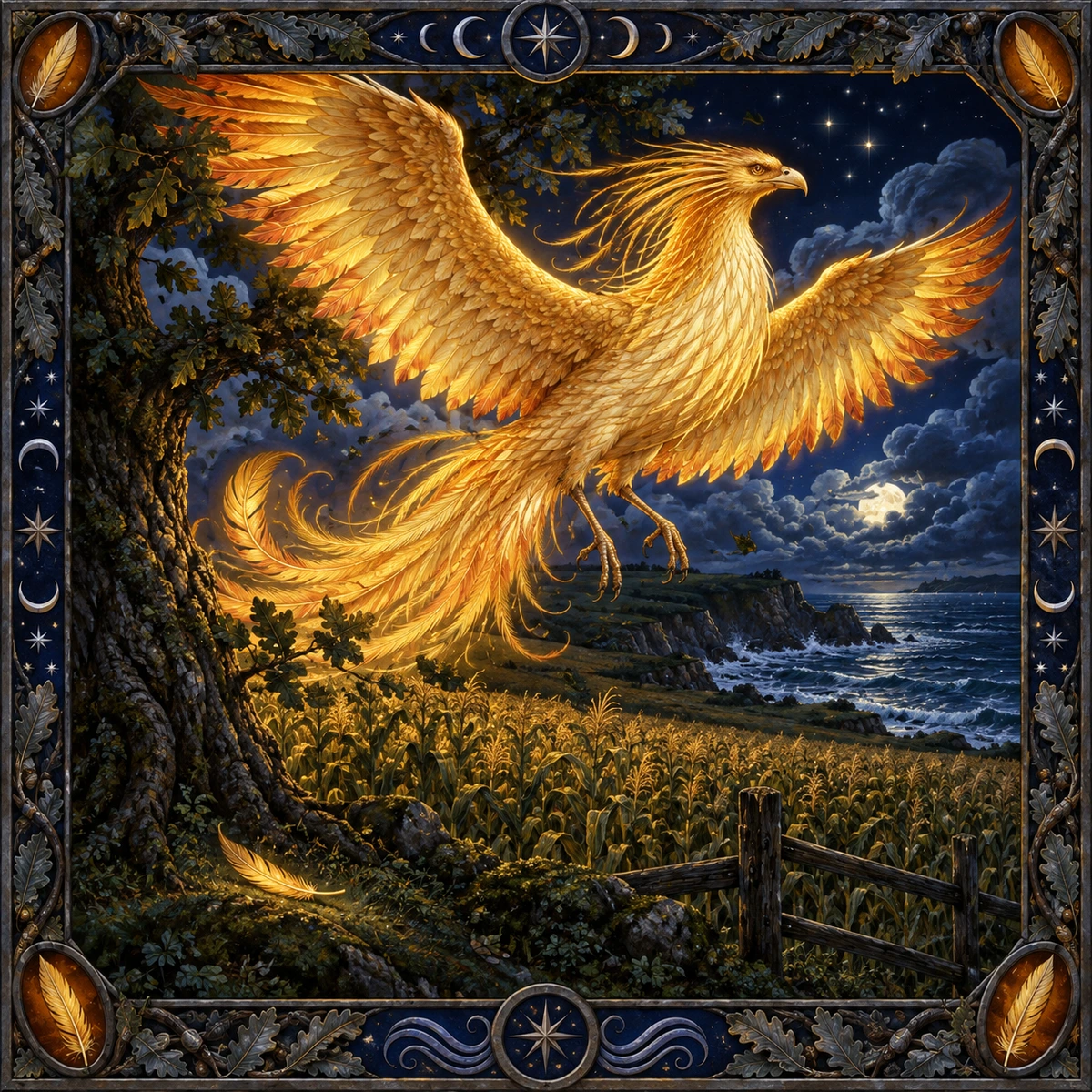
The Firebird is a golden bird of Russian wonder tales whose coveted feathers draw people into perilous quests.
A feather larger than a swan’s lies in a silent forest. The young archer wants to take it to his ruler. His horse can speak, and its warning is plain: leave it where it lies. In writer Arthur Ransome’s telling, beauty has given the young man a choice he will soon regret.
Read the manuscript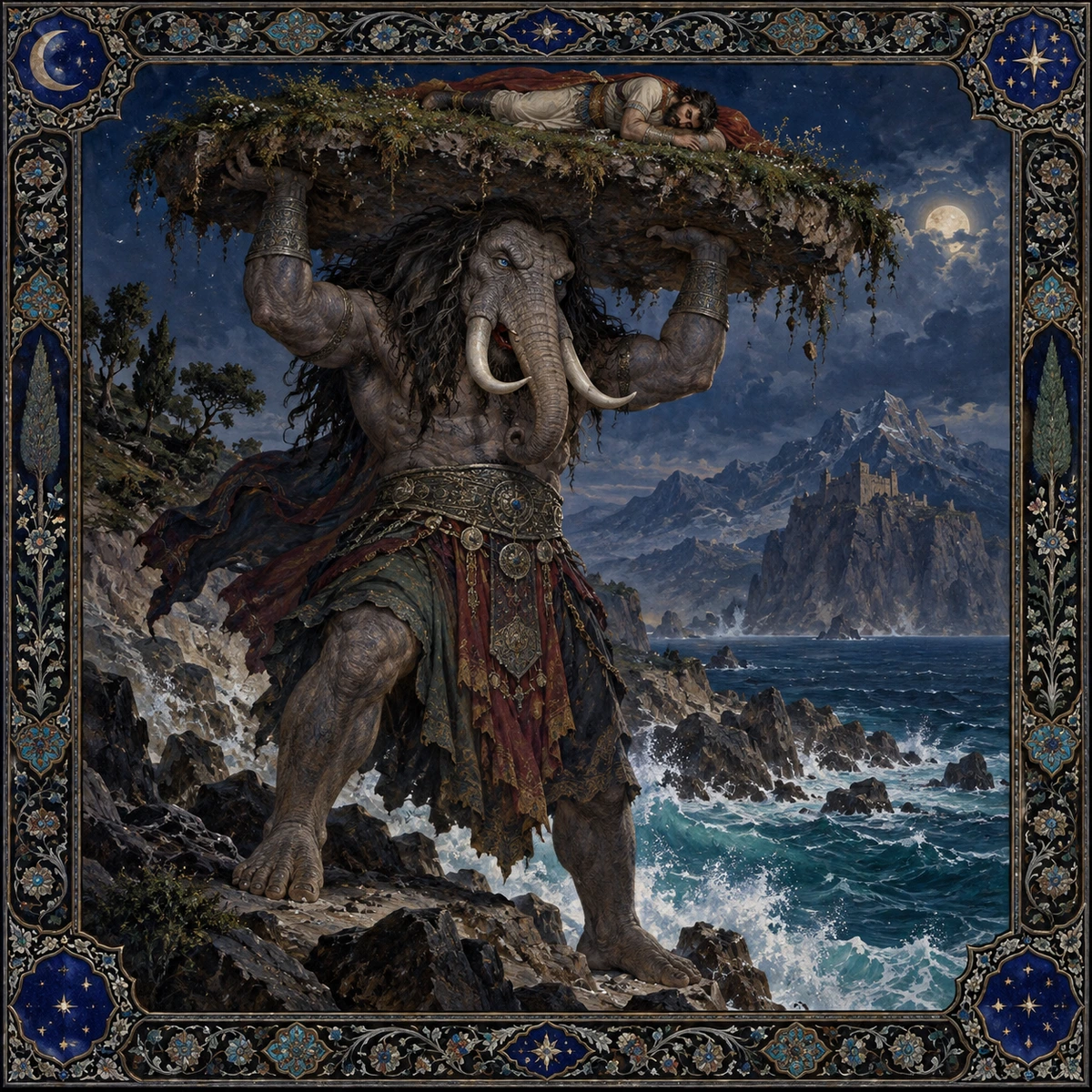
Akvān-e Dīv is the shape-changing demon who carries Rostam into the sky and offers him a fatal choice between mountain and sea.
Rostam wakes on a piece of ground held above the earth by a demon. Akvān offers him a choice: be thrown onto the mountains or into the sea. The hero’s answer will have to persuade his captor to do the opposite of what he asks.
Read the manuscript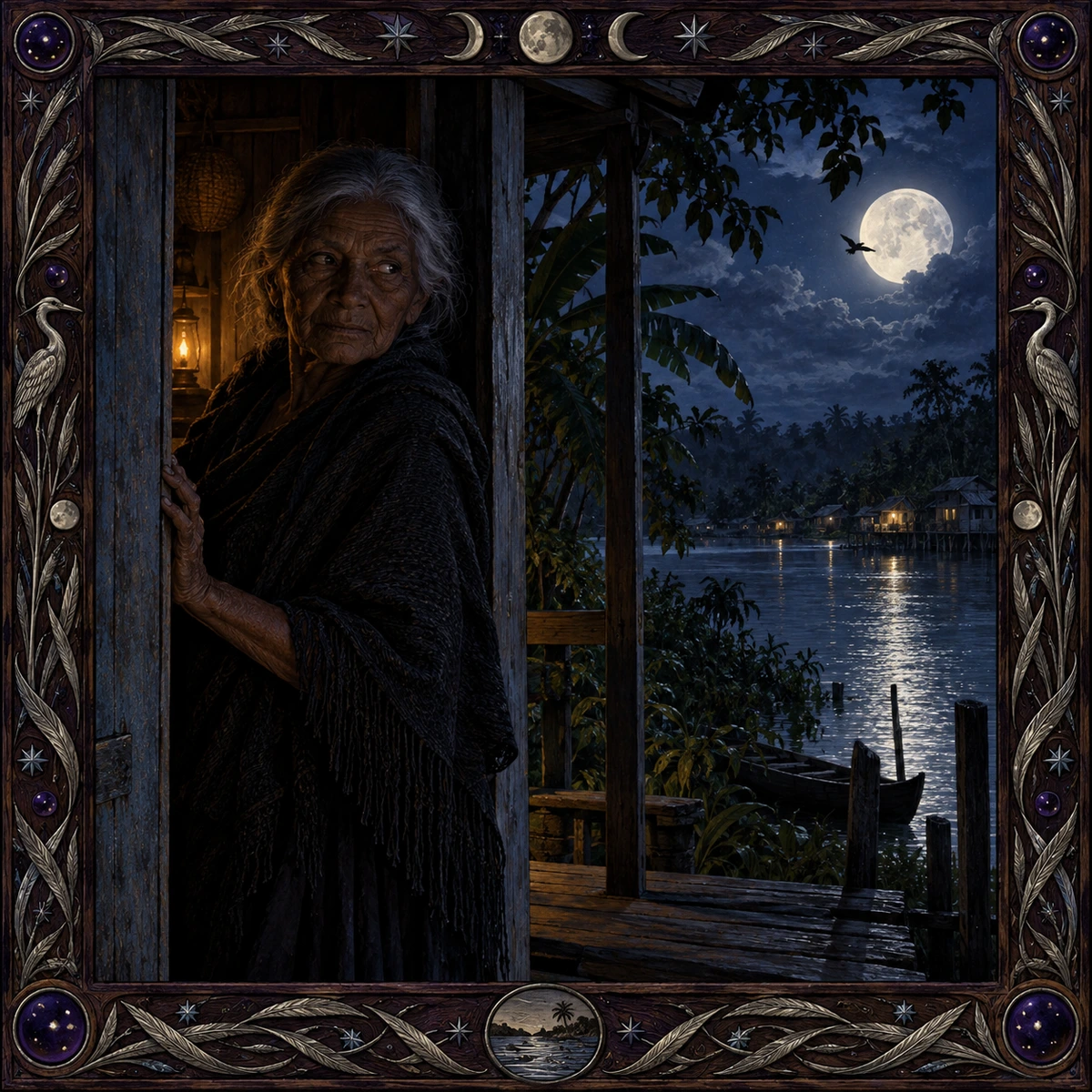
Matinta Perera is a night-whistling being of Amazonian lore, often appearing as a woman who returns by daylight to collect promised tobacco.
A voice asks an old man about his molasses. He looks behind the stump and finds no one.
Read the manuscript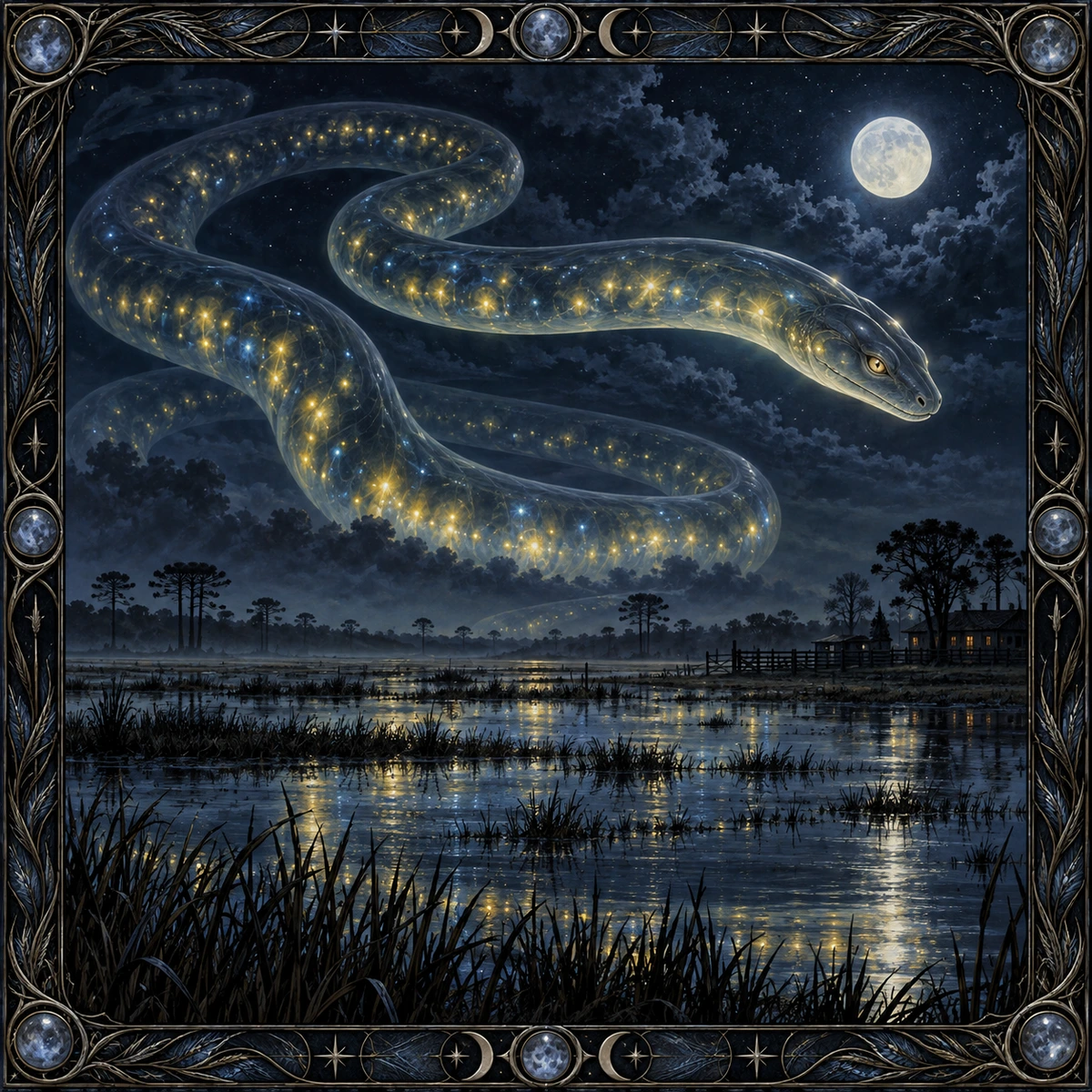
Boitatá is a Brazilian being of moving light, described as a wandering fire or luminous serpent and, in some accounts, a guardian of fields.
Night has lasted so long that the people’s eyes have grown weary of the darkness. Their fires are dwindling. In João Simões Lopes Neto’s A M’boi-tátá, even the animals have lost their way. Then water enters a sleeping snake’s den, and the great creature wakes beneath the rising flood.
Read the manuscript
Iara is an alluring water woman whose beauty and promises draw watchers towards a dangerous world beneath the surface.
A child points into the water. The woman below has golden hair, an ivory comb and a smile sweeter than his mother’s. He wants his mother to admire her too. Instead, she warns him to look away.
Read the manuscript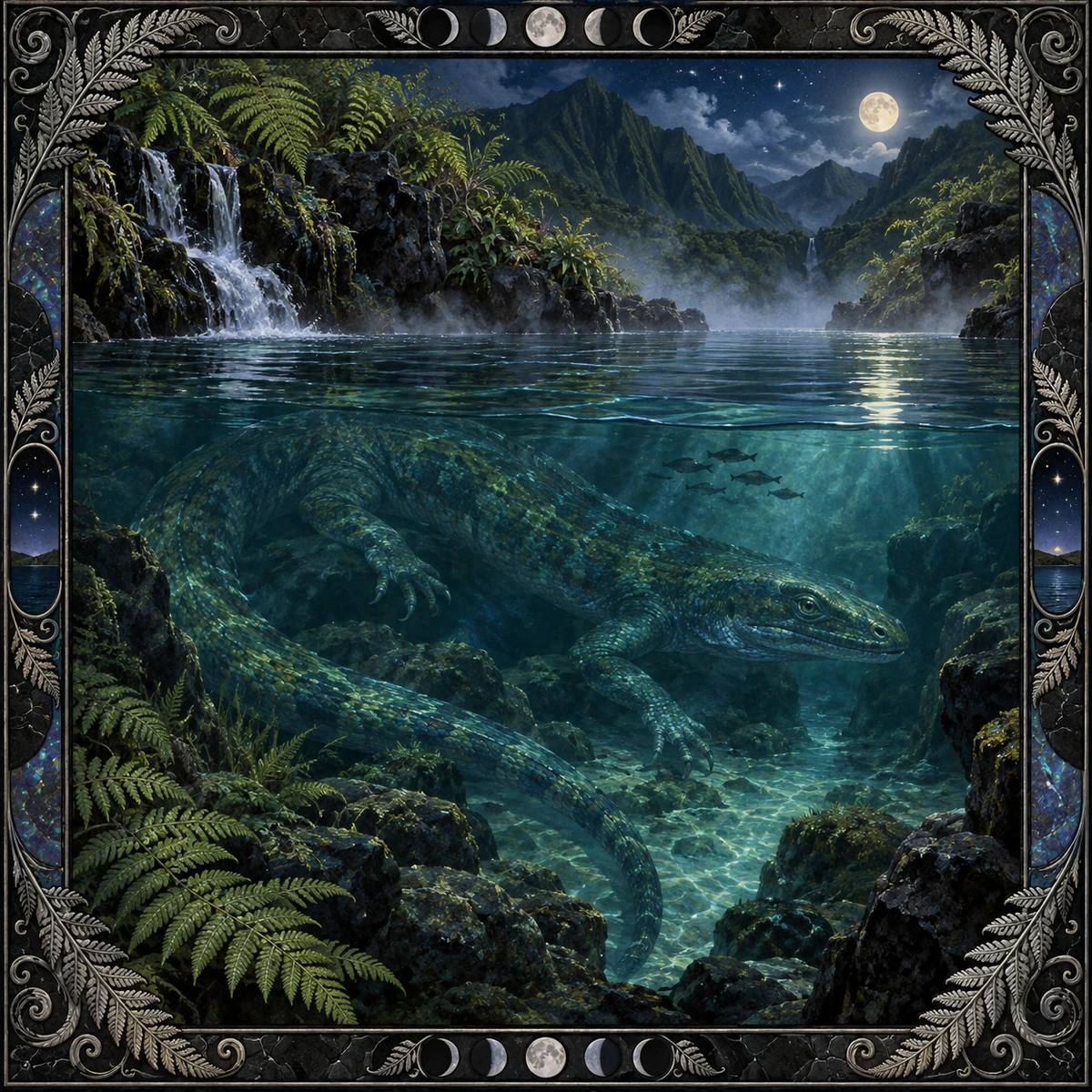
Moʻo are Hawaiian reptilian and water beings whose named stories include ancestral help, fishpond guardianship and deadly encounters along island routes.
The children have escaped their stepmother again, but their new refuge has no water. The sister wants to bathe; her brother wants to stay where they are harder to find. In E. M. Nakuina’s The Punahou Spring, he knows someone who might make both wishes possible: Kakea, a moʻo and an ancestor on their mother’s side.
Read the manuscript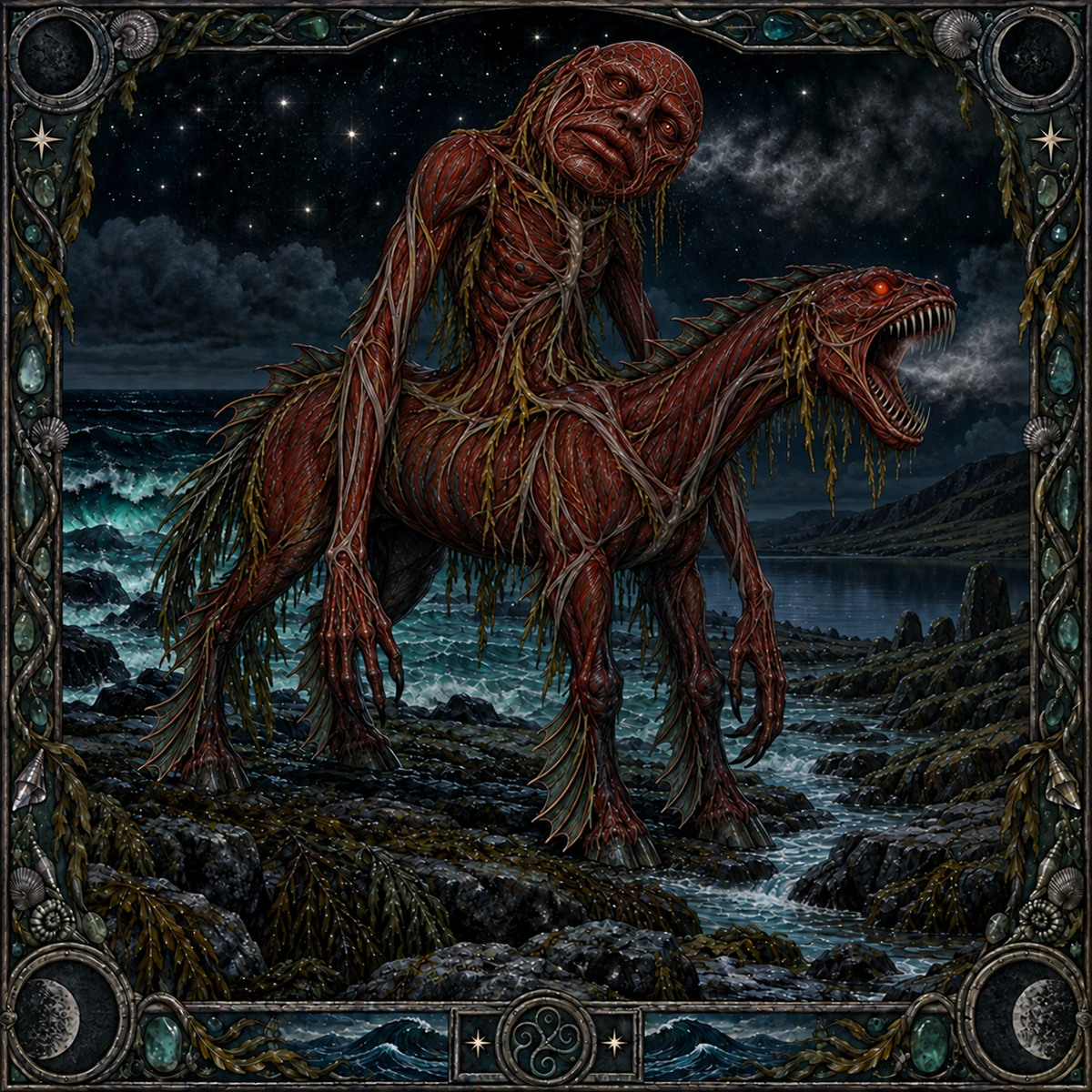
The Nuckelavee is Orkney’s skinless sea monster, a horse-and-human horror whose breath ruins crops and whose long arms reach for travellers on shore.
There is no room to step aside. Tammas has the sea on one side of the road and a deep freshwater loch on the other; something huge is coming toward him. The night has stars but no moon. He has heard that turning his back on an evil thing is the worst choice he can make, so he asks God for protection and walks slowly forward.
Read the manuscript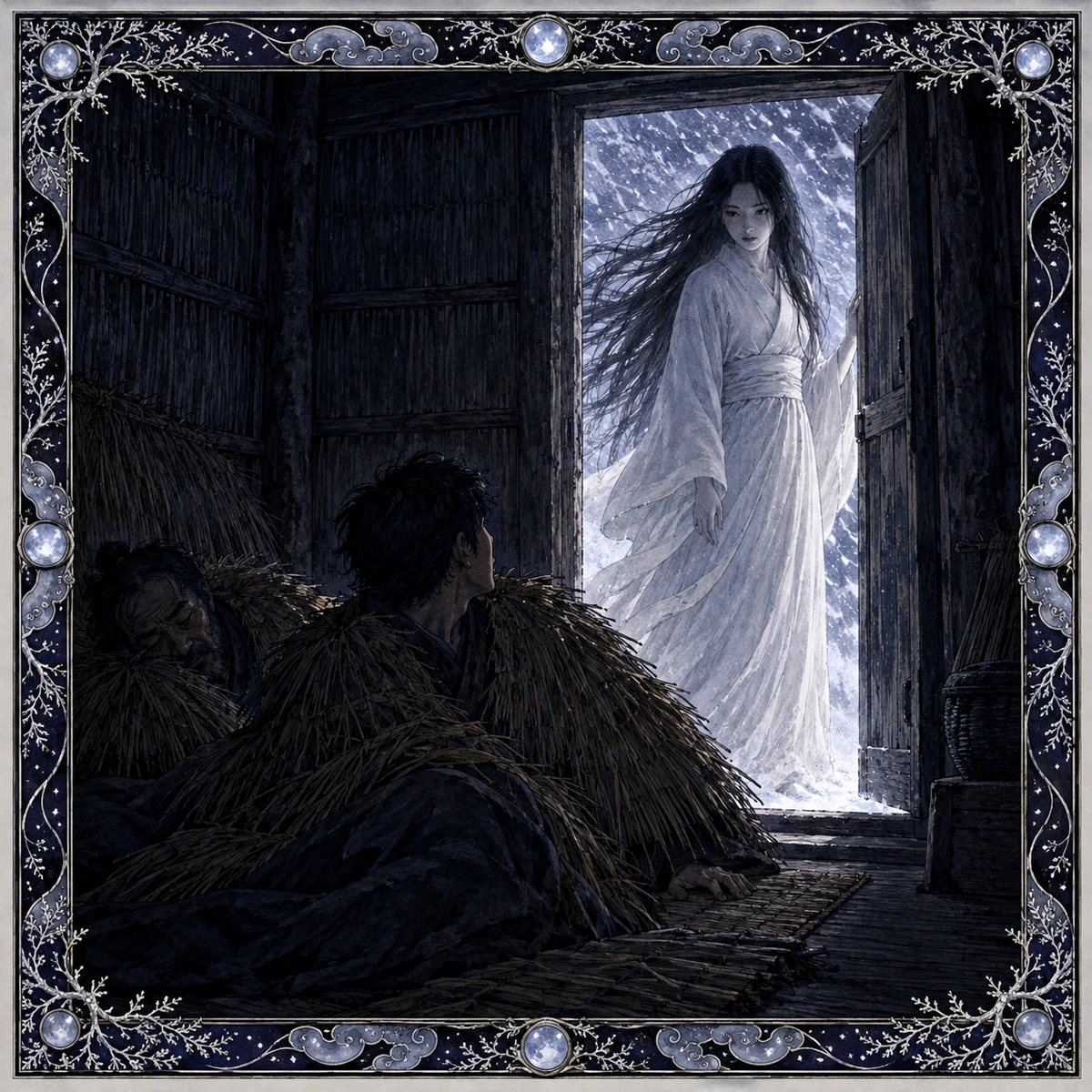
Yuki-onna is a Japanese woman of the snow, appearing in winter accounts as a frightening visitor, a giver of rewards or a beautiful stranger with a deadly secret.
The ferryboat lies on the far bank, and the boatman has gone. Two woodcutters shelter in his hut, without a window or a place to light a fire. During the night, the younger man wakes to snow falling on his face. The door stands open. In Lafcadio Hearn’s Yuki-Onna, something has entered with the storm.
Read the manuscript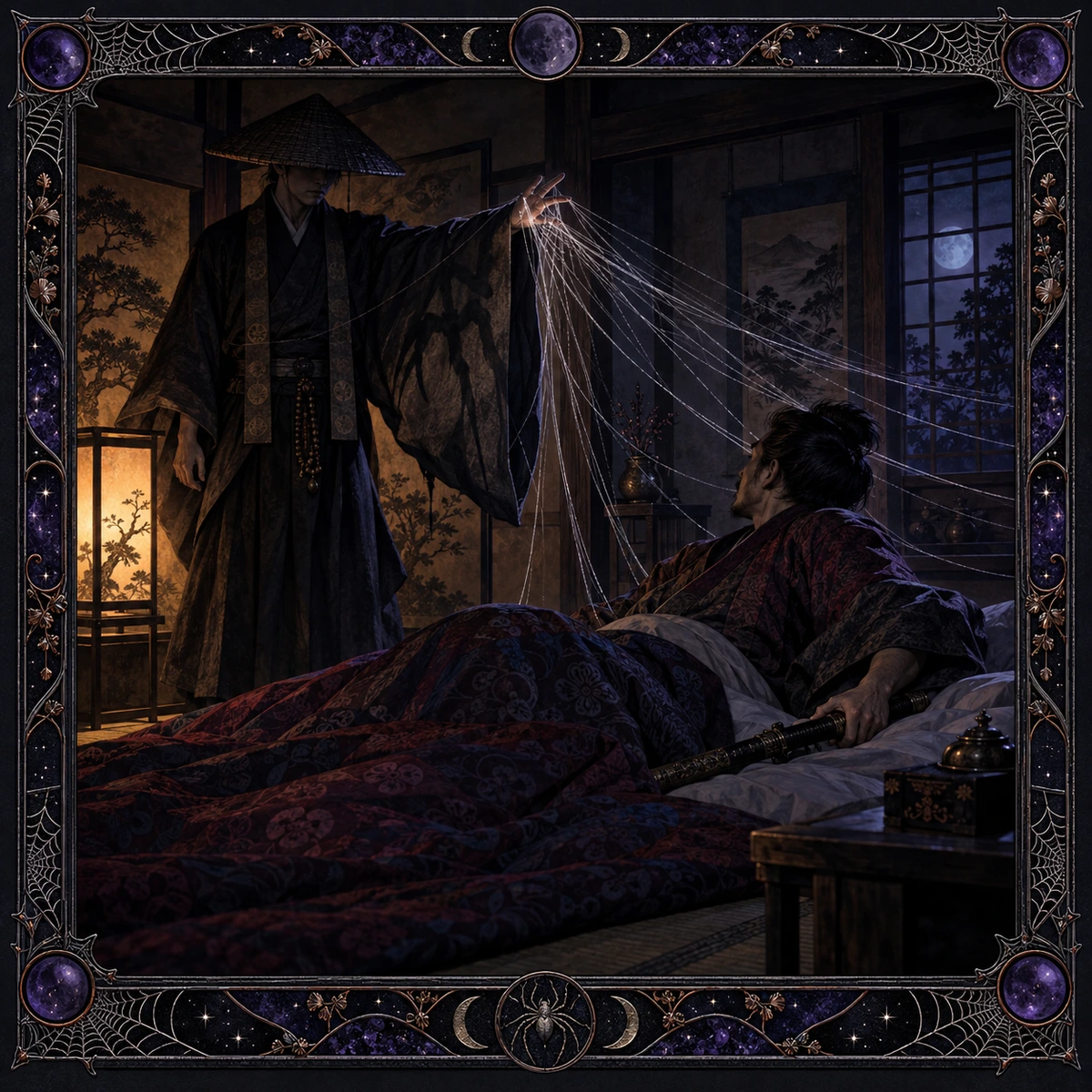
Tsuchigumo is a spider spirit of Japanese Noh drama that takes a monk’s shape and binds its enemies in white threads.
An unfamiliar monk approaches the sick warrior’s pillow. Asked his name, he begins a poem about a spider. The patient takes up the reference, but the stranger keeps coming closer.
Read the manuscript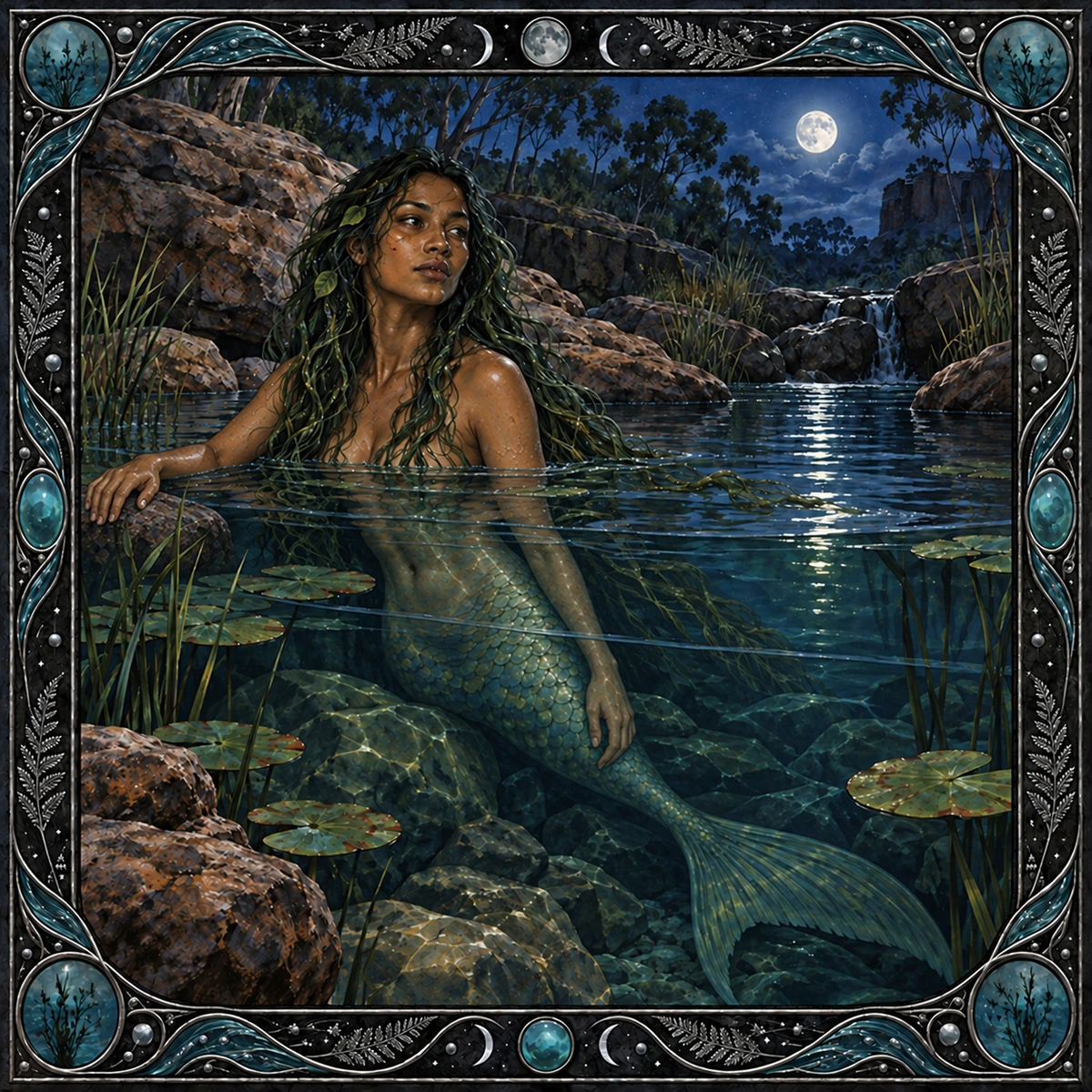
Yawkyawk are female freshwater spirits of Arnhem Land, whose fish-tailed bodies, transformations and ties to particular places take distinctive forms in Aboriginal story and art.
A fork in a tree can become a tail. For Owen Yalandja, the movement of a water spirit begins in the wood he chooses: a curve that his carving will follow, then a surface alive with painted scales.
Read the manuscript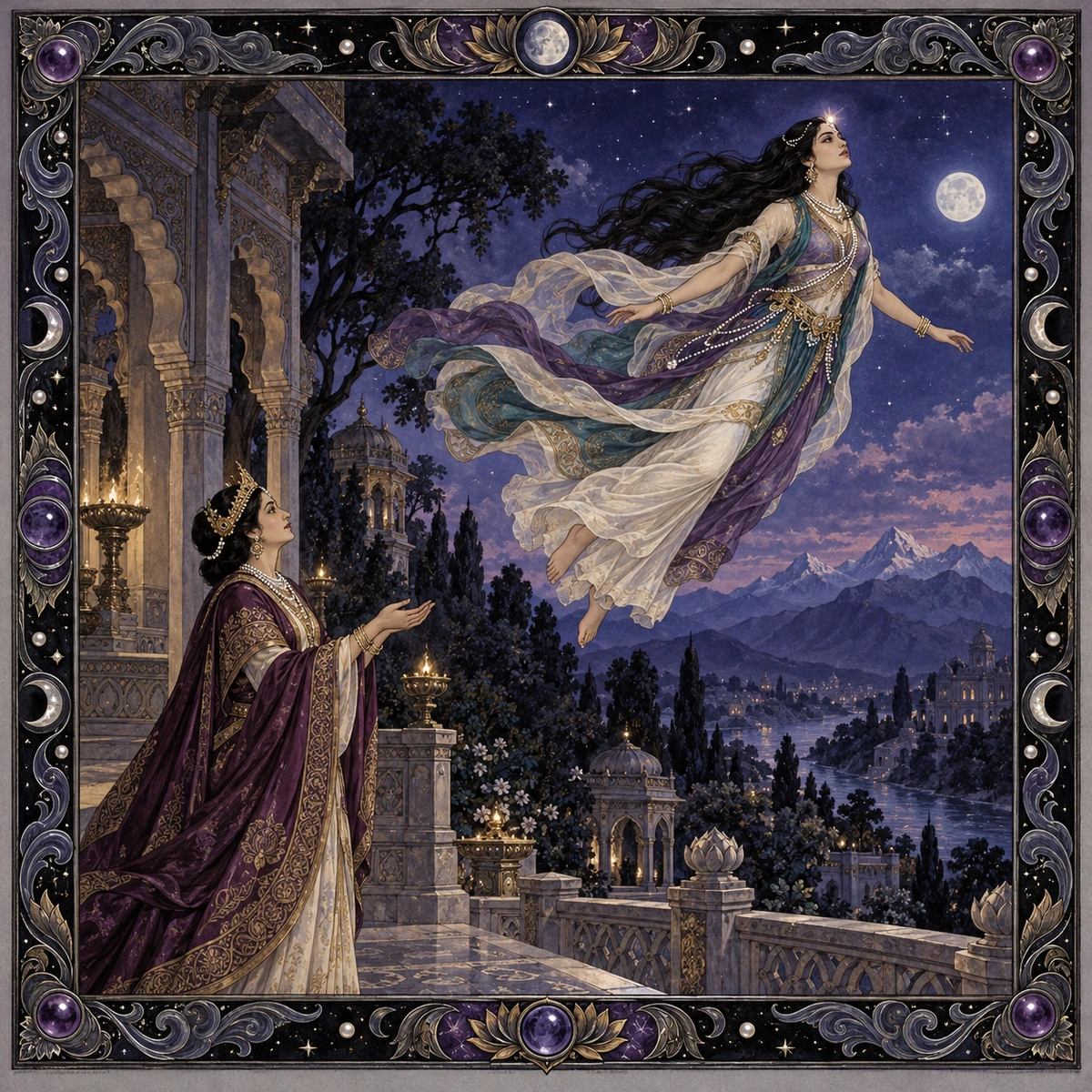
Kinnaris and kinnaras are otherworldly beings associated with music and flight. The princess Manoharā is captured, escapes a royal sacrifice and helps a human prince find his way to her distant homeland.
A hunter saves a water-being from abduction and receives a chain that can hold fast whatever it catches. He soon uses that gift to capture someone else. Manoharā, the flying princess caught in his snare, enters a human court where love will offer her little protection against a frightened king and an ambitious priest.
Read the manuscript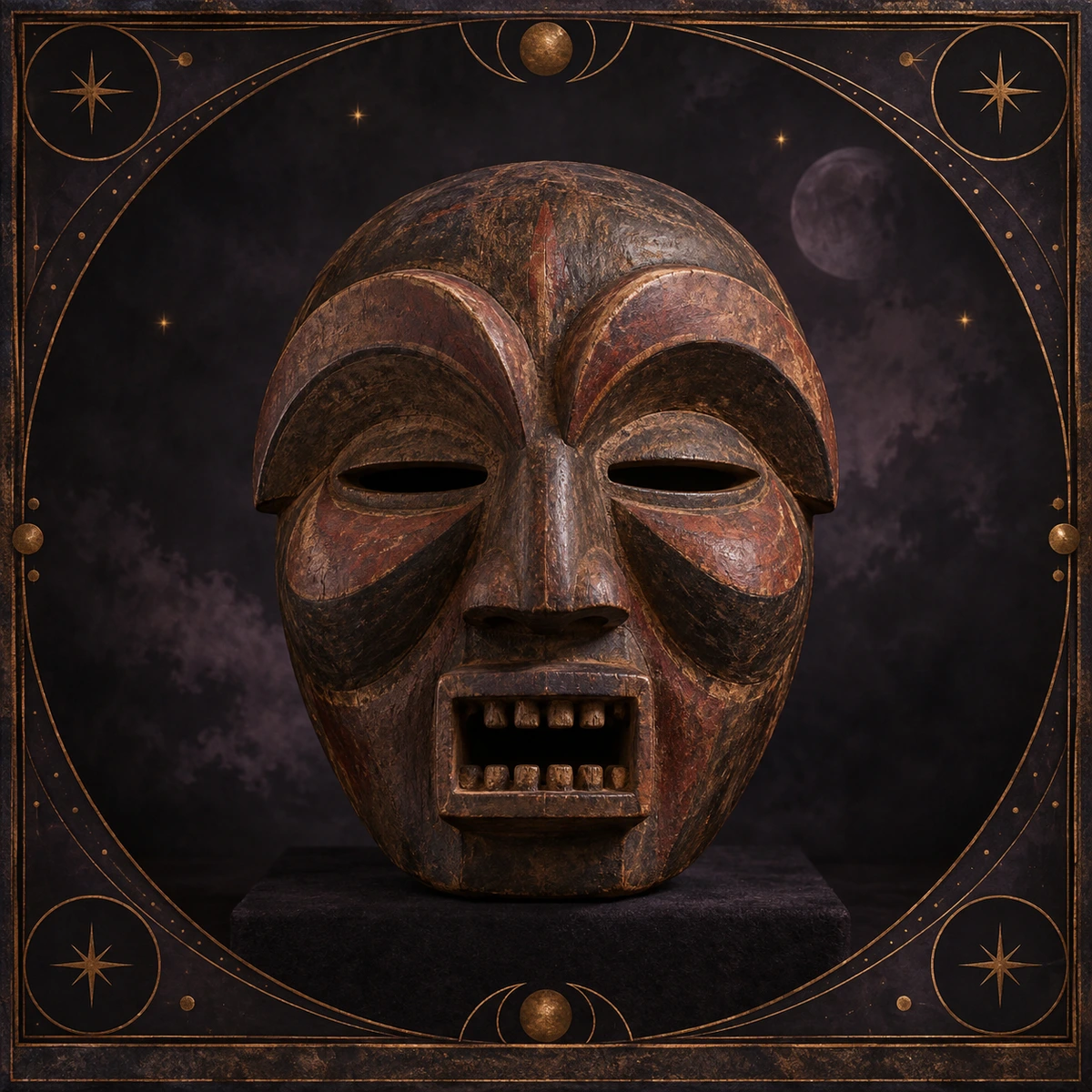
Makishi are ancestral masquerade characters of Zambia and neighbouring regions, returning through masks, costumes, dance and music to guide, protect and engage the living.
A hunter dances with a bow and arrow. His carved face has projecting cheeks, narrow eyes and a tooth-filled mouth; a fibre costume and palm-leaf skirt complete the figure. Alisa LaGamma’s account of the Mbunda character Sachihongo restores movement to a mask that now stands in a museum.
Read the manuscript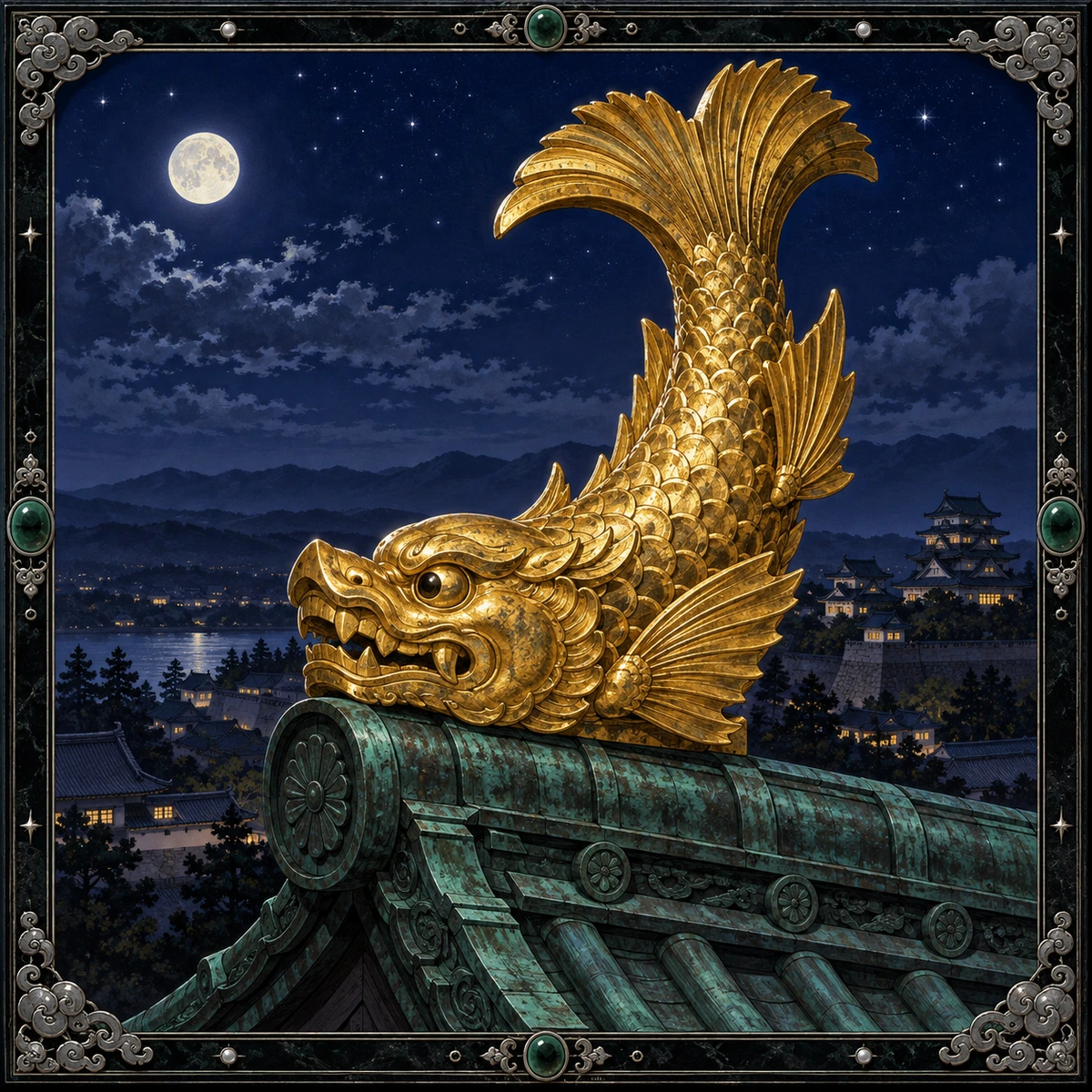
Shachihoko are fish-bodied roof guardians with formidable heads; Nagoya’s golden pair have become emblems of authority, survival and the city itself.
In March 1874, a ship carrying Japanese treasures home from Vienna went down in a storm. Nagoya’s golden roof guardian escaped the wreck: at the transfer in Hong Kong, it had been too large to fit aboard. The fish poised above the castle has a history of voyages, theft stories and painstaking repairs—an extraordinary life for a creature made to stay on a roof.
Read the manuscript