Blue Feldspathoid and Light-Responsive Varieties
Sodalite
A blue to variable-colored feldspathoid mineral.
Mineral species; ornamental specimens may include other minerals
Loading this page…
Return homePlease wait while the next page arrives.


Blue Feldspathoid and Light-Responsive Varieties
A blue to variable-colored feldspathoid mineral.
Mineral species; ornamental specimens may include other minerals
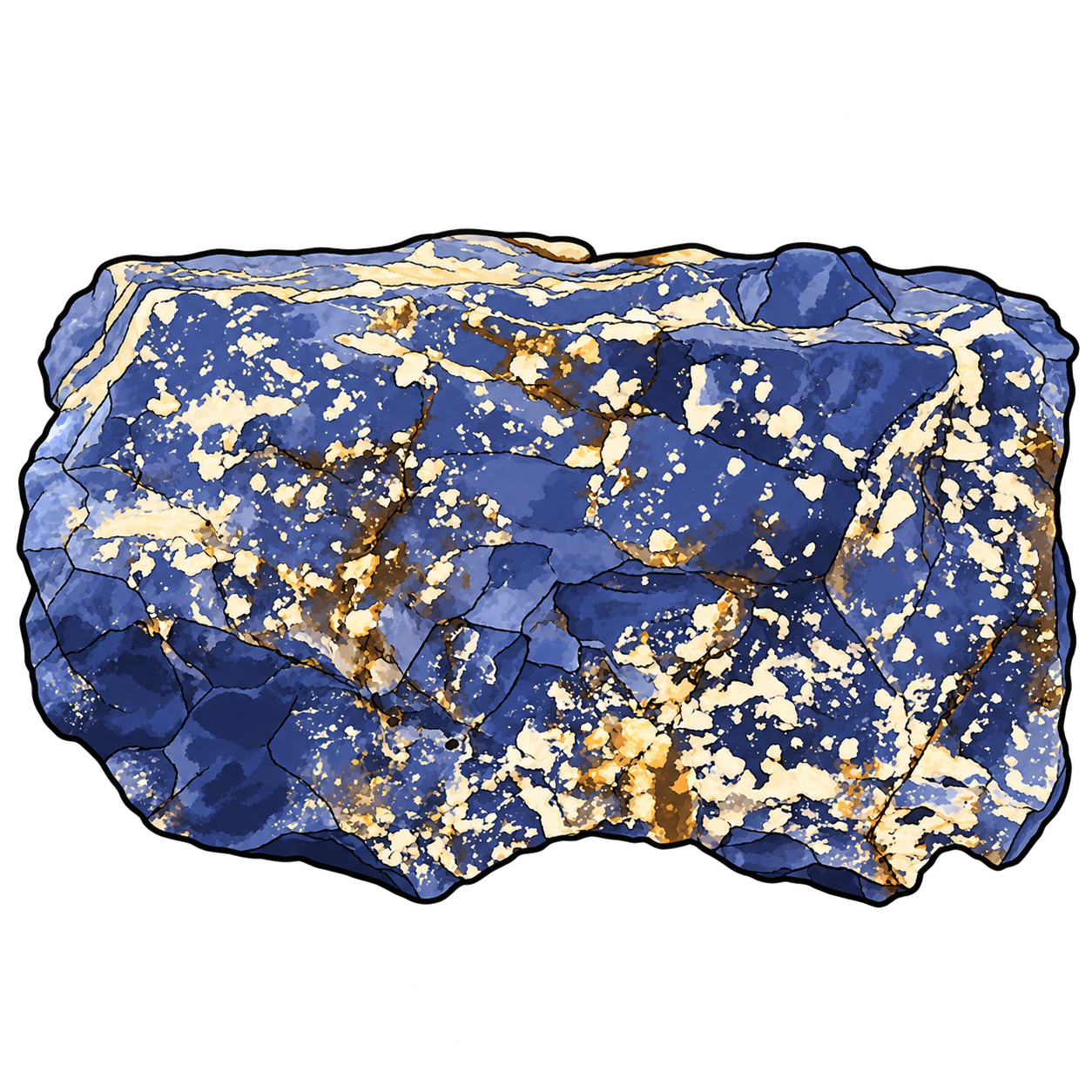
Sodalite is familiar in blue, pale-veined ornamental rocks, but the mineral has other colors too.
Geology · Human history · Spiritual attributes
The Crystal Council links sodalite's third-eye and throat associations: recognizing an internal thought or feeling, then giving it clear expression. Its contemporary interpretation centers on understanding rather than a promise of externally supplied answers. [3]
These are practitioner associations, not consequences of the mineral's optical behavior. Fluorescence under a lamp does not demonstrate a spiritual frequency or an effect on the nervous system.
Composition: Na₈Al₆Si₆O₂₄Cl₂ Crystal system: Cubic Mohs hardness: 5.5–6 Specific gravity: Approximately 2.27–2.33 Refractive index: Approximately 1.483–1.487 Luster: Glassy to greasy Streak: White Fracture: Uneven to shell-like; brittle [1]
An object sold as sodalite may contain sodalite with calcite, feldspar or other associated minerals. A white vein should not be identified solely from its color. The whole object can have variable polish and durability because its constituents differ. A description such as “sodalite-bearing rock” is often more informative than implying that every visible patch belongs to one crystal. [1]
Cubic symmetry describes internal organization, not a requirement that a piece display six square faces. Embedded grains need not have a complete external crystal outline.
Fluorescence is light emitted during excitation; phosphorescence persists after the exciting source is removed. Tenebrescence is a reversible change in body color, often discussed as photochromism. A stone can show more than one response, but the words are not interchangeable. [2]
Hackmanite is sulfur-bearing sodalite associated with tenebrescence. GIA's Myanmar/Afghanistan study found varied transparency and light responses; it used tenebrescence, not fluorescence alone, to distinguish hackmanite. [2]
For a meaningful observation, compare the same piece under ordinary light before and after exposure, then separately record what it looks like while the excitation source is on. A photograph showing a glowing patch does not demonstrate that the ordinary body color changed. Ask sellers to identify the lighting used in dramatic images.
Sodalite occurs in nepheline syenite, phonolite, some altered calcareous rocks and volcanic cavities. Its documented localities include Greenland, Norway, Russia and Canada. [1]
An Ontario geological inventory provides a specific example relevant to fluorescent beach stones. Its Coldwell Complex record describes sodalite-bearing syenite and discusses the proposed transport of similar material by glaciers into the Lake Superior region. “Yooperlite” refers to a fluorescent sodalite-bearing rock, not a newly discovered mineral species. The proposed source history is geological interpretation, not a certificate of origin for every pebble sold under that name. [4]
Sodalite's optical behavior is also a subject of materials research. In 2022, the University of Turku's research group reported that laboratory-prepared hackmanite could retain a measurable indication of gamma exposure even after its visible color had been bleached back. The work explored radiation-sensitive material and instrumental detection. [5]
That is not evidence that an ornamental stone is a calibrated radiation detector. Composition, preparation, measurement and experimental conditions matter. The distinction allows the research to remain remarkable without converting it into a claim about the safety capabilities of a bracelet or cabinet specimen.
Decide whether you want blue color, an attractive pattern of associated minerals, transparency or a documented light response. These are separate qualities. A brightly fluorescent rock can be gray in daylight, while an appealing blue carving may have little dramatic response under the lamp available to its owner.
For a light-responsive purchase, request ordinary-light photographs as well as excitation images and ask whether the response is fluorescence, afterglow or reversible color change. If locality is important, preserve the supplier's label and provenance rather than inferring a source from the hue of the glow.
Ask about treatments as well. GIA's Myanmar/Afghanistan investigation recorded dealer reports of oiling to improve apparent clarity in rough and fashioned material. That observation does not mean all sodalite is treated; it means transparency alone is not sufficient evidence of an untreated stone. [2]
For a carving, check thin projections, corners and visible cracks. For jewelry, inspect the setting and consider how much abrasion the item will receive. A specimen's visual interest need not depend on being transparent, perfectly blue or free of pale veins.
Sodalite's moderate hardness and brittleness favor protection from harder gems and impacts. Keep individual pieces in padded compartments and lift carvings from their strongest supported area. A mixed rock may have softer zones than its blue mineral component. [1]
Record light-response observations without treating a specimen as an experimental heat source. GIA's work shows that heating can permanently change hackmanite's responsiveness; household heating is not a harmless way to “reset” a stone. [2] Keep treatment information and any original locality label alongside the object so that future care decisions remain informed.
handbookofmineralogy.org · Reference for the accompanying text · Reference recorded October 15, 2026
gia.edu · Reference for the accompanying text · Reference recorded October 15, 2026
thecrystalcouncil.com · Reference for the accompanying text · Reference recorded October 15, 2026
geologyontario.mndm.gov.on.ca · Reference for the accompanying text · Reference recorded October 15, 2026
imc.utu.fi · Reference for the accompanying text · Reference recorded October 15, 2026