More than a familiar blue
Topaz
Aluminium fluorine/hydroxyl silicate mineral.
Aluminum fluorine-hydroxyl silicate mineral species and gem varieties
Loading this page…
Return homePlease wait while the next page arrives.


More than a familiar blue
Aluminium fluorine/hydroxyl silicate mineral.
Aluminum fluorine-hydroxyl silicate mineral species and gem varieties
Topaz is an aluminium silicate containing fluorine and hydroxyl.
Geology · Human history · Spiritual attributes
Topaz carries historical associations with strength and the moderation of anger. Contemporary crystal writing also treats colourless topaz as a focus for insight and spiritual awareness. These are attributed meanings, distinct from its measurable mineral properties. [1,2]
The clear stone's transparency gives inward-looking practices a simple visual focus. Older uses of the name topaz did not always identify the mineral known by that name today, so its history includes both changing language and changing beliefs. [1]
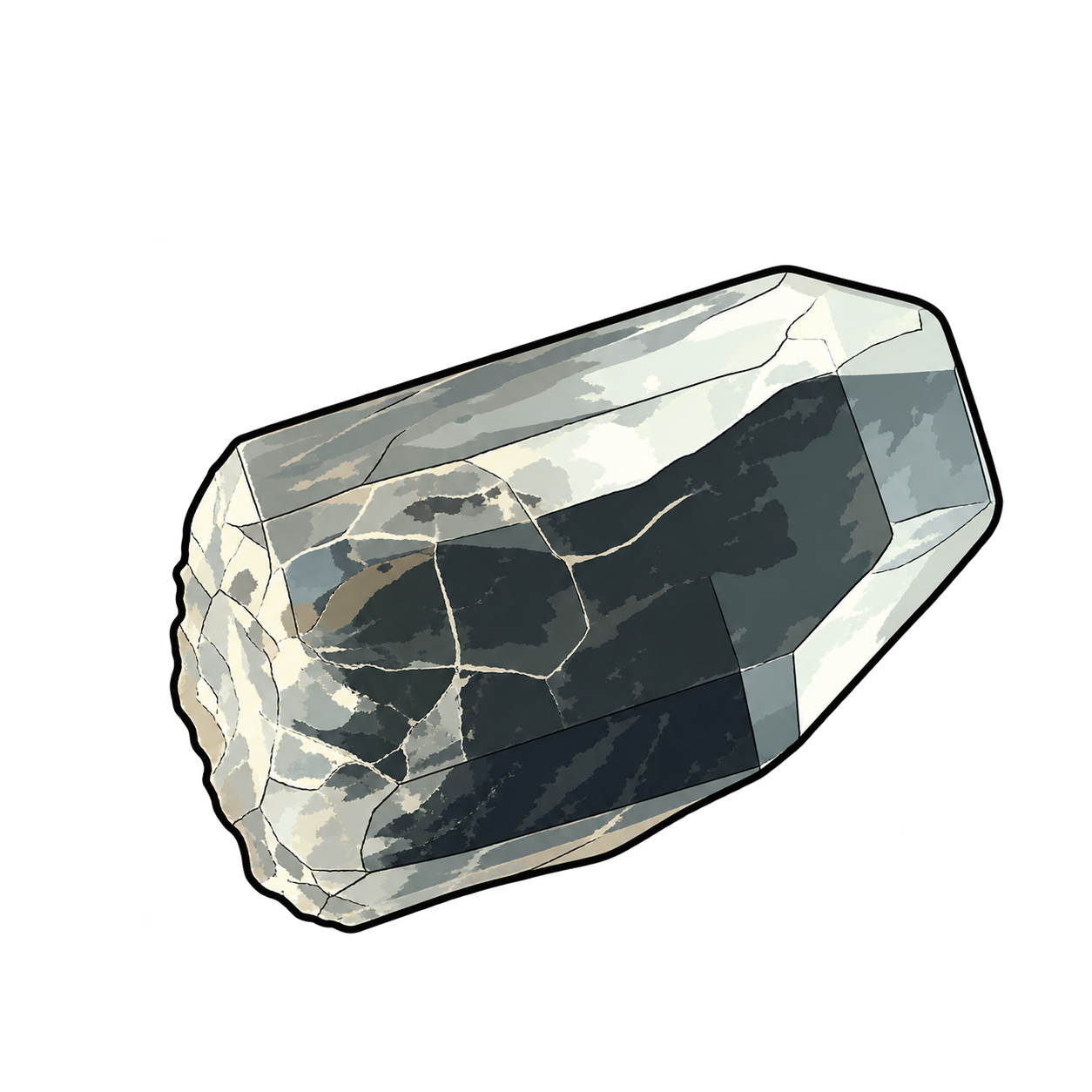
Topaz is an aluminium silicate containing fluorine and hydroxyl. It crystallizes in the orthorhombic system, often as short or elongated prisms with lengthwise grooves. Its lustre is glassy; measured density is approximately 3.49–3.57 g/cm³. Transparent crystals can contain inclusions or fractures that make parts of a specimen cloudy or opaque. [3]
It is the reference mineral for Mohs hardness 8, but it has perfect basal cleavage: a strong tendency to split along planes across the crystal. This combination is important. Resistance to scratching does not guarantee resistance to a sharp blow. The same specimen can have durable-looking faces and a vulnerable internal direction of separation. [3,4]
Topaz occurs in granite-related veins, pegmatites, rhyolite cavities and altered rocks called greisens. It also occurs in some metamorphic rocks and survives erosion into sedimentary deposits. Fluorine-rich environments are important to its formation. [3]
The range of topaz is much wider than the familiar bright-blue jewellery stone. Chromium can produce natural pink, red and violet colours; defects in the crystal structure contribute to other colours. Colourless material is common, and much commercial blue topaz owes its appearance to treatment rather than its original colour in the ground. A treated natural topaz is still topaz, but its colour history is part of an accurate description. [5]
Names such as sherry and imperial belong to gemstone commerce rather than to separate mineral species. GIA describes imperial topaz in reddish-orange tones and sherry topaz in yellow-brown to orange tones. Neither a warm colour nor an impressive trade name establishes a particular origin. Topaz and citrine may resemble one another, but citrine is quartz: they differ in structure, hardness, density and cleavage. [3,5]
Some topaz displays pleochroism, a change in apparent colour with viewing direction. Cutters must consider both appearance and the cleavage orientation when planning a stone. A long, clear crystal is therefore not simply a larger version of a finished gem; decisions about shape, direction and retained weight influence what can safely be fashioned from it. [4,5]
The name is commonly linked with Topazios, an old name for the Red Sea island now known as Zabargad. Its celebrated ancient gems were peridot, not modern mineralogical topaz. This mismatch explains why an ancient statement about “topaz” needs more scrutiny than a modern laboratory identification. GIA also notes a proposed Sanskrit derivation associated with fire. [1]
The Smithsonian's American Golden Topaz shows what the material can become at a very different scale from ordinary jewellery. The finished gemstone weighs 22,892.5 carats and has 172 facets. Leon Agee cut it over two years from an approximately 11.8-kilogram Brazilian cobble. Its extraordinary size makes the work a study in preserving proportion and optical interest across a large body of material, not merely in extracting the greatest possible weight. [6]
The museum's account also describes enormous associated topaz crystals once acquired with industrial research in mind. Their later importance as collection specimens illustrates the overlap between mineral science, technical experimentation and the appreciation of natural form. These objects preserve evidence that a finished gemstone alone cannot: crystal surfaces, mineral contacts and the conditions under which growth was constrained. [6]
Protect topaz from impacts, especially against exposed edges. GIA recommends warm soapy water rather than steam or ultrasonic cleaning. Heat can damage it, and some yellow-to-brown colours may fade with prolonged exposure to heat or light. Surface-coated topaz requires particular care because scratching the coating can alter its appearance even when the underlying crystal remains intact. [4]
For a natural specimen, support the body rather than balancing it on a narrow termination. A display mount should not press tightly against a projecting edge or fracture. Keep the specimen label with the object: recorded locality, treatment information and the distinction between a natural crystal and a fashioned gem are more informative than a colour name alone.
gia.edu · Reference for the accompanying text · Reference recorded October 15, 2026
thecrystalcouncil.com · Reference for the accompanying text · Reference recorded October 15, 2026
handbookofmineralogy.org · Reference for the accompanying text · Reference recorded October 15, 2026
gia.edu · Reference for the accompanying text · Reference recorded October 15, 2026
gia.edu · Reference for the accompanying text · Reference recorded October 15, 2026
naturalhistory.si.edu · Reference for the accompanying text · Reference recorded October 15, 2026