Silica-Rich Volcanic Rock
Rhyolite and Patterned Volcanic Stones
Silica-rich volcanic rock, with varied textures and mineral mixtures.
Silica-rich volcanic igneous rock
Loading this page…
Return homePlease wait while the next page arrives.


Silica-Rich Volcanic Rock
Silica-rich volcanic rock, with varied textures and mineral mixtures.
Silica-rich volcanic igneous rock
Rhyolite is a volcanic rock whose composition is rich in silica.
Geology · Human history · Spiritual attributes
Endurance · Self-understanding · Transformation · Presence [3]
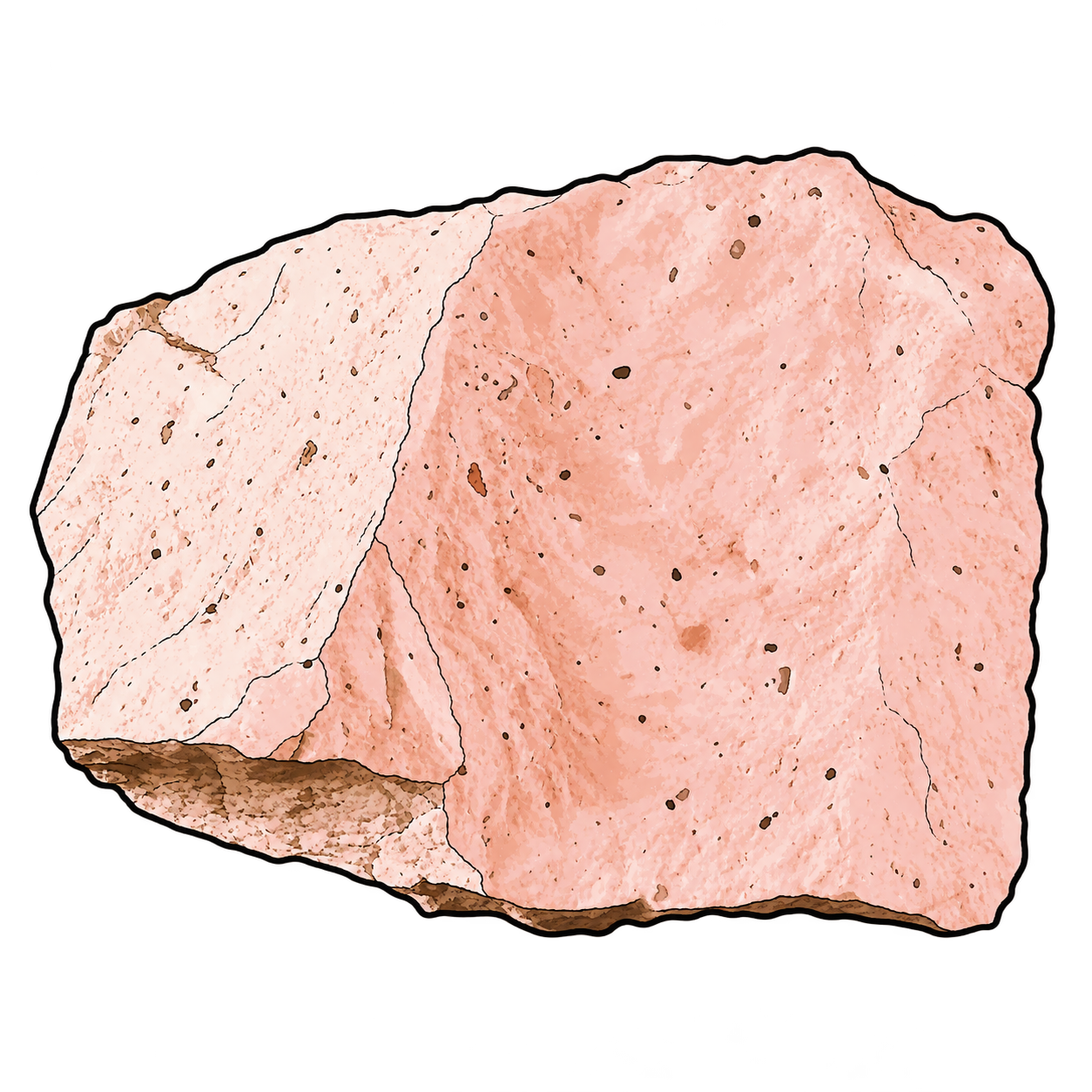
Rhyolite is a volcanic rock whose composition is rich in silica. It can be pale and fine-grained, dotted with larger crystals, streaked with flow bands or patterned by rounded mineral growths. A rough specimen and an ornamental polished piece may look very different while belonging to the same broad rock family. Its textures record cooling and movement rather than a single, uniform crystal structure. [1, 2]
Modern crystal practitioners associate rhyolite with sustained effort and personal growth. Its volcanic origin provides a symbolic connection with change, while its solid form is used as a reminder to turn intention into steady action. These meanings belong to contemporary spiritual practice rather than geological measurement. [3]
Classification: Extrusive igneous rock Composition: Silica-rich; quartz, alkali feldspar and plagioclase are characteristic crystalline constituents Crystal system: None for the whole rock; individual minerals have their own structures Texture: Commonly fine-grained; may include larger crystals, glass, cavities or volcanic fragments Hardness: Variable with composition and texture, not one definitive mineral value Luster: Dull to glassy, depending on the surface and glass content Fracture and strength: Depend on the mineral mixture, pores, cooling cracks and weathering [1, 4]
A fine groundmass indicates that much of the material solidified without growing large, easily visible crystals. Larger crystals within it are called phenocrysts. They can have begun growing before eruption, when the magma remained underground. This contrast in crystal size is called a porphyritic texture; it does not mean that the larger grains were glued into an unrelated stone. [4]
Quartz is silicon dioxide; rhyolite contains a mineral mixture and has no single crystal formula. [5]
An ornamental stone's performance depends on more than its hardest mineral. A compact piece with interlocking grains may polish well, while a weathered or highly porous piece can have weak areas. Inspect the actual object rather than treating “volcanic” as a durability rating. On carvings, narrow projections and openings need particular care even when the broad surfaces seem robust.
Bands can mark differences in crystals, glass and bubbles that became stretched or folded as lava moved. At Yellowstone, a single rhyolite flow can contain a glassy exterior, a more crystalline interior and broken material along its margins. Different parts of one flow therefore need not look alike. [2]
Spherulites are rounded aggregates of radiating crystals that can develop as volcanic glass crystallizes. They differ from empty gas cavities. A cavity, or vesicle, records a bubble; if later minerals fill it, the filling records a subsequent event. A polished section may cut either feature at an angle, changing the apparent outline. [2, 4]
These distinctions are useful when examining ornamental patterns. A ring is not automatically a fossil, and a pale center is not automatically agate. Describe the visible texture first; a thin section or mineralogical analysis may be needed to determine the individual components confidently.
Silica-rich melts tend to resist flow more strongly than low-silica basaltic melts. Temperature, dissolved water and other chemical components also affect viscosity. Rhyolitic volcanism can produce lava flows and domes as well as explosive ash deposits; it should not be reduced to the claim that every piece formed in one catastrophic explosion. [1, 6]
Rhyolitic tuff combines a compositional description with a fragmental one: tuff consists of consolidated volcanic ash. Obsidian denotes volcanic glass. [1]
Granite is the coarse-grained intrusive counterpart. Rhyolitic obsidian is glassy, rather than visibly crystalline. [4]
Some ornamental volcanic rocks are marketed with “jasper” in their names. Kambaba is a useful example: EPI's examination identified a rhyolitic rock containing several minerals, rather than the fossil or jasper sometimes suggested by its sales descriptions. A trade name may be familiar and useful, but it should sit beside a material description, not replace one. [7]
Volcanic stone has a long history in toolmaking. Yellowstone's Obsidian Cliff is one documented example involving rhyolitic glass: material from this source traveled far beyond the park through human movement and exchange. Chemical fingerprints allow researchers to connect artifacts with their geological source. That history belongs to particular materials, places and communities, rather than to an undifferentiated worldwide “rhyolite tradition.” [8]
For a modern collection, a locality label can be as valuable as an elaborate trade name. A specimen with a known flow, quarry or geological unit can be compared with published descriptions. Without that record, an attractive hand specimen still illustrates texture, but cannot independently establish the age or eruption that produced it.
Choose according to your interest: visible crystals, folded bands, rounded growth structures, carving quality or documented locality. A glossy surface emphasizes color and pattern; an unpolished face may make grain relationships easier to see. Ask for both when available, and request disclosure of fillers, coatings or repairs rather than assuming every shine is entirely natural.
nps.gov · Reference for the accompanying text · Reference recorded October 15, 2026
usgs.gov · Reference for the accompanying text · Reference recorded October 15, 2026
thecrystalcouncil.com · Reference for the accompanying text · Reference recorded October 15, 2026
geology.com · Reference for the accompanying text · Reference recorded October 15, 2026
webmineral.com · Reference for the accompanying text · Reference recorded October 15, 2026
nps.gov · Reference for the accompanying text · Reference recorded October 15, 2026
epigem.de · Reference for the accompanying text · Reference recorded October 15, 2026
nps.gov · Reference for the accompanying text · Reference recorded October 15, 2026