Gray and brown quartz shaped by crystal chemistry and irradiation
Smoky Quartz
Brown to near-black quartz.
Quartz color variety
Loading this page…
Return homePlease wait while the next page arrives.


Gray and brown quartz shaped by crystal chemistry and irradiation
Brown to near-black quartz.
Quartz color variety
Smoky quartz ranges from a faint gray-brown tint to a depth that looks nearly black.
Geology · Human history · Spiritual attributes
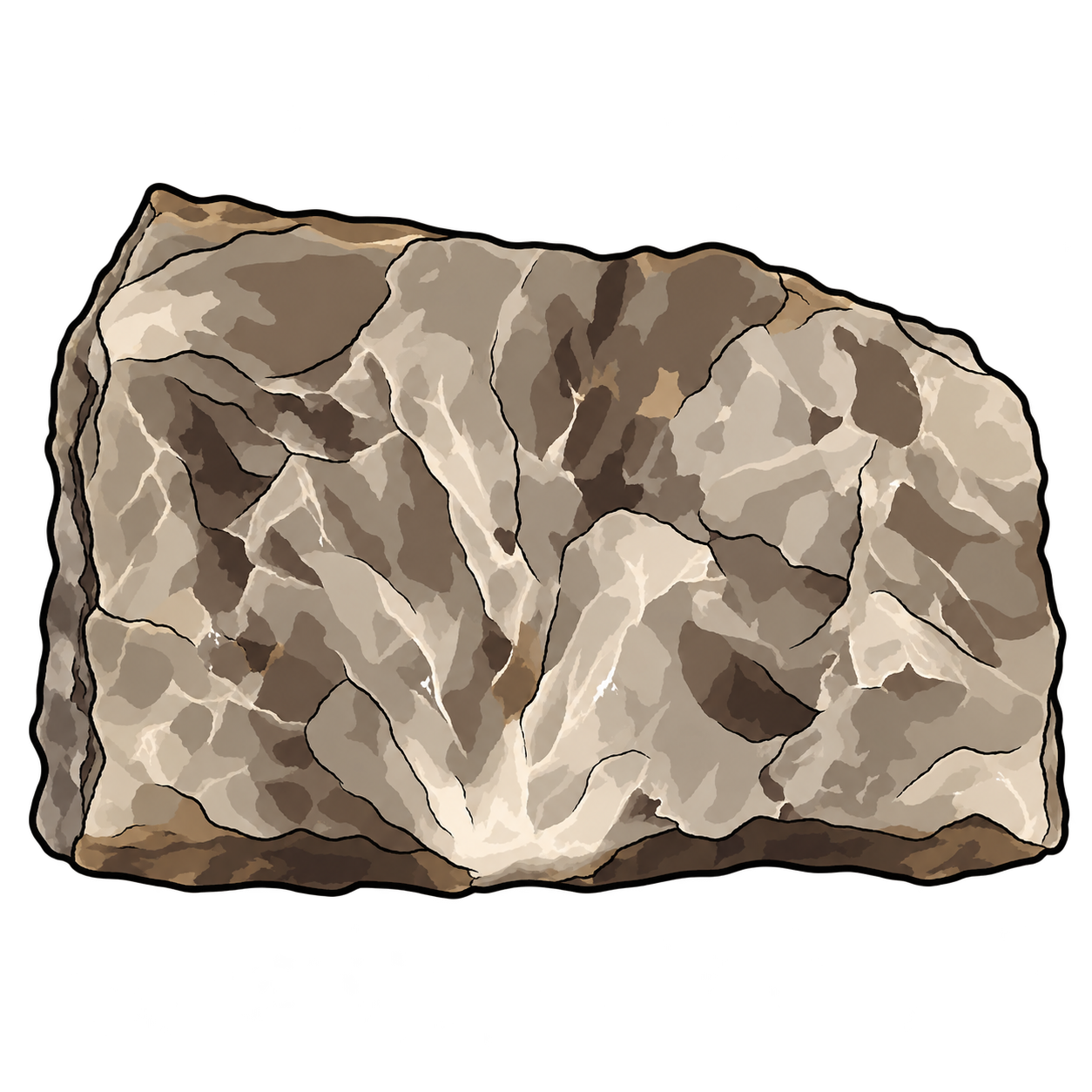
Smoky quartz ranges from a faint gray-brown tint to a depth that looks nearly black. A dark specimen may still transmit light through thin edges, while a paler crystal can reveal fractures, inclusions and changes in color within its interior. The smoky appearance belongs to quartz itself; it does not mean that smoke or soot is trapped inside. [1, 2]
Contemporary crystal practice associates smoky quartz with steadiness and a grounded approach to change. Its symbolism is practical in tone: returning attention to the present, clarifying an intention and finding the resolve to act. Practitioners may carry a small piece or use it during meditation. [3]
Some practitioners pair it with black tourmaline or black kyanite in grounding practices. These associations describe contemporary spiritual use; they are distinct from the geological process that produces the brown color and from the documented history of Scottish quartz jewelry. [3]
Small amounts of aluminum can substitute for silicon in quartz. That substitution alone is insufficient to make the crystal smoky. Irradiation alters the associated electronic structure, creating color centers that absorb part of the light passing through the material. Sufficient color-center development can make a crystal appear extremely dark. [2]
This explanation distinguishes a color center from a visible inclusion. A mineral grain trapped in quartz is a separate piece of material; a color center is an atomic-scale feature of the host. The two can coexist, but the ordinary smoky tint should not be explained as suspended particles of smoke. [2]
In nature, surrounding rocks can supply the irradiation involved. National Museums Scotland discusses uranium and thorium in Cairngorm granite as part of this geological setting. Laboratory irradiation can also deepen quartz color, while heating can reduce or alter it. The appearance alone therefore does not reveal the complete treatment history. [4]
Quartz occurs in pegmatites, veins and cavities within volcanic rocks. These different settings allow varied growth forms and mineral associations. [8]
At Loch Avon in the Cairngorms, the Scottish Geology Trust records smoky quartz associated with topaz in granite cavities and rounded material in river gravels. This provides a concrete distinction between a crystal preserved near its geological setting and material subsequently transported and worn. The protected locality is a place to observe responsibly, not an invitation to collect without permission. [5]
Spain's Geominero Museum also displays a large Brazilian smoky-quartz gemstone and discusses both pegmatitic and hydrothermal sources. Its recorded specimen weighs 1,781 carats. A museum example of that scale demonstrates what cutters can achieve with suitable rough; it is not a typical size or a standard against which a small specimen needs to compete. [6]
Morion is a name used for very dark smoky quartz. It describes an appearance, not a different chemical formula or proof that the color is untreated. Cairngorm has a historical connection with Scottish quartz and the mountain landscape from which prized stones were obtained. Neither name should replace an actual locality record. [4, 6]
National Museums Scotland documents the use of cairngorm stones in seals, brooches and Highland accessories. One brooch by Muirhead & Son, dated about 1868–1873, combines a central cairngorm with Sutherland gold and Scottish freshwater pearls. The museum also notes that older jewelry often lacks precise stone-locality information and that imports entered the trade. A Scottish-made object is therefore not, by itself, proof that its quartz was mined in Scotland. [4]
A brown appearance is not a complete identification. Quartz can resemble other transparent brown materials, and a polished object has lost many of the external features that would help identify rough. Gemological examination can use optical properties rather than depending on color alone. [4]
For a purchase described as untreated, ask for the basis of that statement and retain the answer with the receipt. Do not infer artificial irradiation merely because a crystal is dark, or natural coloration merely because it is pale. A careful description can acknowledge an unknown treatment history without inventing certainty.
Likewise, a new trade name is not evidence of a new mineral. Ask whether an unfamiliar name refers to locality, inclusions, color or a fashioned shape. The useful record is specific: material identification, dimensions, condition, known treatment and documented origin.
Begin with diffuse light that shows the whole object, then examine a thin edge with light behind it. This can reveal transparency that a front-lit photograph conceals. Compare dark and pale backgrounds, keeping the illumination consistent. A change in apparent depth may come from the viewing conditions rather than from a real difference between two stones.
For a natural point, inspect the tip, edges and base. Look for repairs and areas where a broken surface has been polished to resemble a growth face. These questions concern condition and presentation; a repaired specimen need not be rejected if the repair is disclosed and suits the collection's purpose.
For a faceted stone, notice whether it remains lively in ordinary room light. A deep color can be attractive, but it may hide internal detail or make the gem look almost black. Select the balance of transparency and tone you prefer rather than assuming that the darkest specimen is always the finest.
Heat can alter smoky quartz's color; do not heat it to clean it. [2]
webmineral.com · Reference for the accompanying text · Reference recorded October 15, 2026
gia.edu · Reference for the accompanying text · Reference recorded October 15, 2026
thecrystalcouncil.com · Reference for the accompanying text · Reference recorded October 15, 2026
nms.ac.uk · Reference for the accompanying text · Reference recorded October 15, 2026
geosites.scottishgeologytrust.org · Reference for the accompanying text · Reference recorded October 15, 2026
web.igme.es · Reference for the accompanying text ·
mints.uwc.ac.za · Reference for the accompanying text · Reference recorded October 15, 2026