Iron oxide, natural magnetism, and the cultural life of lodestone
Magnetite
Magnetic iron oxide, distinct from hematite.
Mineral species; ornamental specimens may include other minerals
Loading this page…
Return homePlease wait while the next page arrives.


Iron oxide, natural magnetism, and the cultural life of lodestone
Magnetic iron oxide, distinct from hematite.
Mineral species; ornamental specimens may include other minerals
Magnetite is a black iron oxide whose magnetic response can be more striking than its appearance.
Geology · Human history · Spiritual attributes
Attraction, prosperity, relationship symbolism, and protective intention in specifically attributed lodestone traditions. [2]
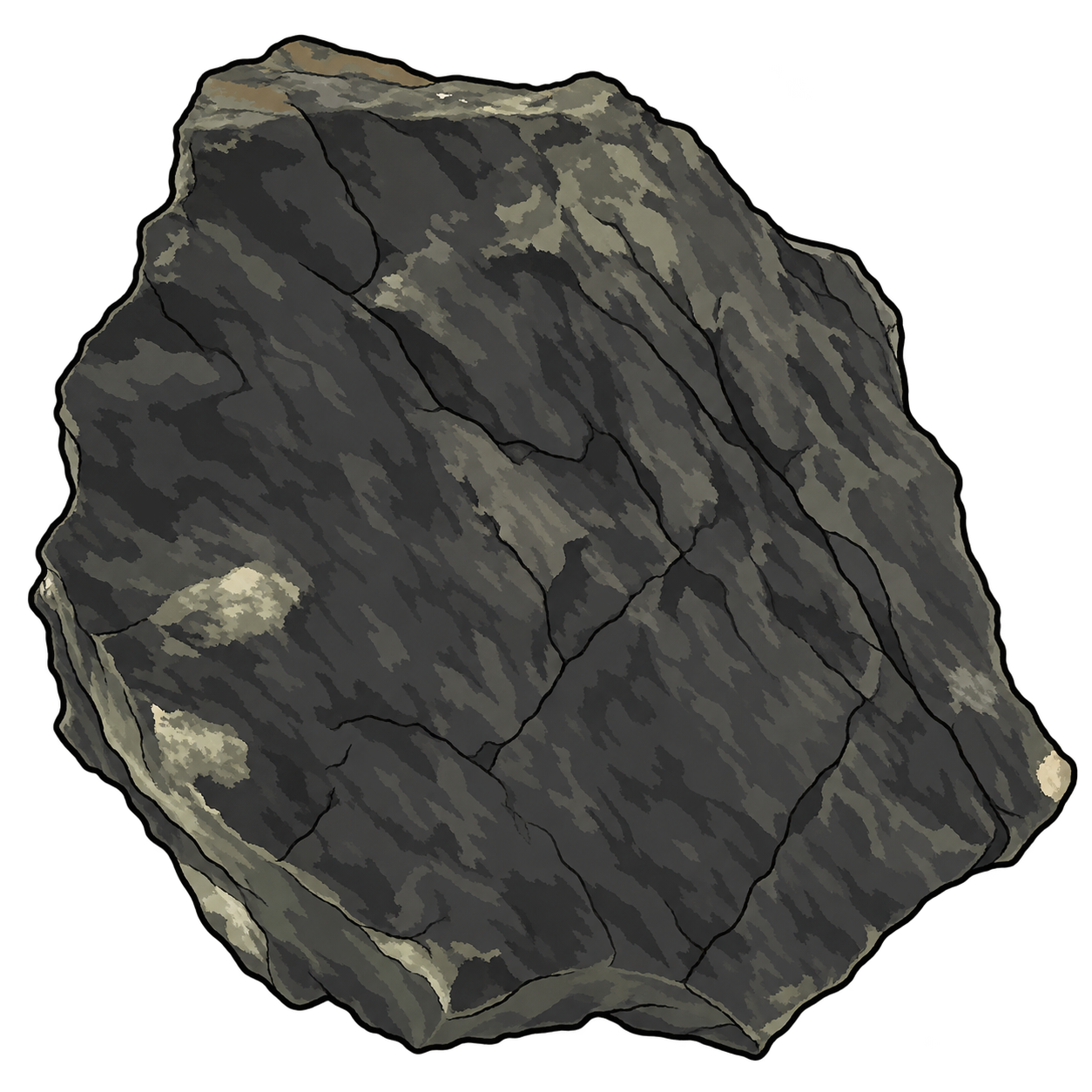
Magnetite is a black iron oxide whose magnetic response can be more striking than its appearance. It occurs as sharply formed crystals, dense masses, and small grains in larger rocks. Lodestone is naturally magnetized material capable of acting as a permanent magnet; the term is not a substitute for every piece of magnetite or every dark stone that responds to a magnet. [1,3]
Lodestone has a documented role in African American hoodoo and conjure, where physical attraction provides a model for drawing desired circumstances. Lucky Mojo's practitioner account describes single stones used for luck or money-oriented intentions and paired stones representing relationships. These are practices within a particular tradition, not universal meanings shared by all cultures. [2]
The account describes feeding lodestones with fine magnetic iron material and preserves a 1945 Chicago spiritual-supply advertisement. The repeated ritual act and visible adherence of iron are part of the practice. They do not demonstrate that a stone can guarantee money, influence another person's feelings, or change the outcome of an event. [2]
Natural lodestone, manufactured magnets and prepared spiritual-supply objects are different materials even when used within a similar symbolism of attraction.
Magnetite has the formula Fe3O4 and belongs to the spinel group. It is cubic, commonly forming octahedra, while granular and massive material is widespread. The Handbook of Mineralogy records hardness around 5.5–6.5, measured density about 5.18, a black streak, and strong magnetic response. It is brittle despite its substantial feel. [1]
Magnetite differs chemically from hematite, Fe2O3, and their characteristic streak colors differ as well. A black powder from magnetite contrasts with hematite's red-brown powder. These are useful mineralogical distinctions, not an invitation to damage a finished object with a scratch test.
Magnetic attraction alone cannot establish natural origin, purity, or locality. Steel fragments, manufactured magnets, and mixed rocks containing magnetic grains can all complicate a casual test. A response should begin an identification question rather than end it.
Magnetite occurs in igneous and metamorphic rocks, in major iron formations, and in detrital concentrations. Some deposits reflect magmatic concentration or contact metamorphism; in other settings it is only a minor constituent. The same mineral name therefore spans very different geological histories and economic roles. [1]
P. K. Sims's 1950 USGS study of the Dover district in New Jersey was explicitly concerned with both its magnetite deposits and the petrology and structure of the crystalline Highlands. It illustrates the scale of investigation needed to understand an ore district: the valuable mineral must be considered together with the rocks and structures that contain it. [4]
A small dark grain and a mineable concentration differ in more than size. Their surrounding material, continuity, and geological setting determine what they can reveal and how they can be used. A collection label describing magnetite-bearing rock may therefore be more accurate than one implying a pure mass.
Royal Museums Greenwich preserves a small silver-mounted lodestone dated approximately 1700–1720. Its frame includes a suspension ring and two steel pieces beneath the stone, an arrangement intended to strengthen its magnetic action. The object links a natural mineral with a carefully made instrument accessory. [3]
The museum explains that early compass needles could lose their magnetism and be restored by stroking them with lodestone. Before improved eighteenth-century compasses, the stone played a maintenance role in navigation. It was not merely an emblem of direction: its physical behavior helped keep an instrument functional. [3]
This history and the spiritual symbolism of attraction are related through observation but should not be confused. Remagnetizing a compass needle is a physical application; drawing fortune is a ritual interpretation. Each can be described accurately without presenting one as proof of the other.
Ask whether an object is natural magnetite, naturally magnetized lodestone, or a manufactured magnetic product. A seller should also disclose added coatings or decorative finishes. A strong response or dark metallic appearance does not resolve those questions.
For a specimen, preserve its source label and any documented mine information. For an antique mounted lodestone, preserve the mounting and seek specialist advice rather than separating the stone from its frame. The object may have historical value in its assembled form that exceeds the interest of the mineral alone.
Support heavy specimens securely and keep brittle crystal edges from impact. Use a dry soft cloth on stable surfaces; avoid unnecessary immersion, harsh cleaning, or abrasive polishing of collection specimens. Any adhering iron particles should be handled with care rather than scattered as dust.
Keep strongly magnetic objects away from items sensitive to magnets and follow the relevant manufacturer's guidance for medical devices or equipment. Small loose magnets and mineral fragments are not toys or food. These practical precautions concern physical properties, not spiritual interpretation.
handbookofmineralogy.org · Reference for the accompanying text · Reference recorded October 15, 2026
luckymojo.com · Reference for the accompanying text · Reference recorded October 15, 2026
rmg.co.uk · Reference for the accompanying text · Reference recorded October 15, 2026
usgs.gov · Reference for the accompanying text · Reference recorded October 15, 2026