Loading Luminary Oddities
Please wait while the next page arrives.
Loading this page…
Return homePlease wait while the next page arrives.


 Bestiary of Cryptids & Legendary Creatures
Wonder at the edge of the known
A cry reaches a family before bad news. A dead woman returns because a letter remains undiscovered. Old utensils stir into an unexpected procession. Other manuscripts follow night travellers, returning corpses, religious accounts of unseen beings and living masquerade traditions. The first uncanny sign is only the beginning: each account gives the presence a particular voice, purpose and consequence.
Search by name, place or tradition, or use the filters to explore a group of creatures.
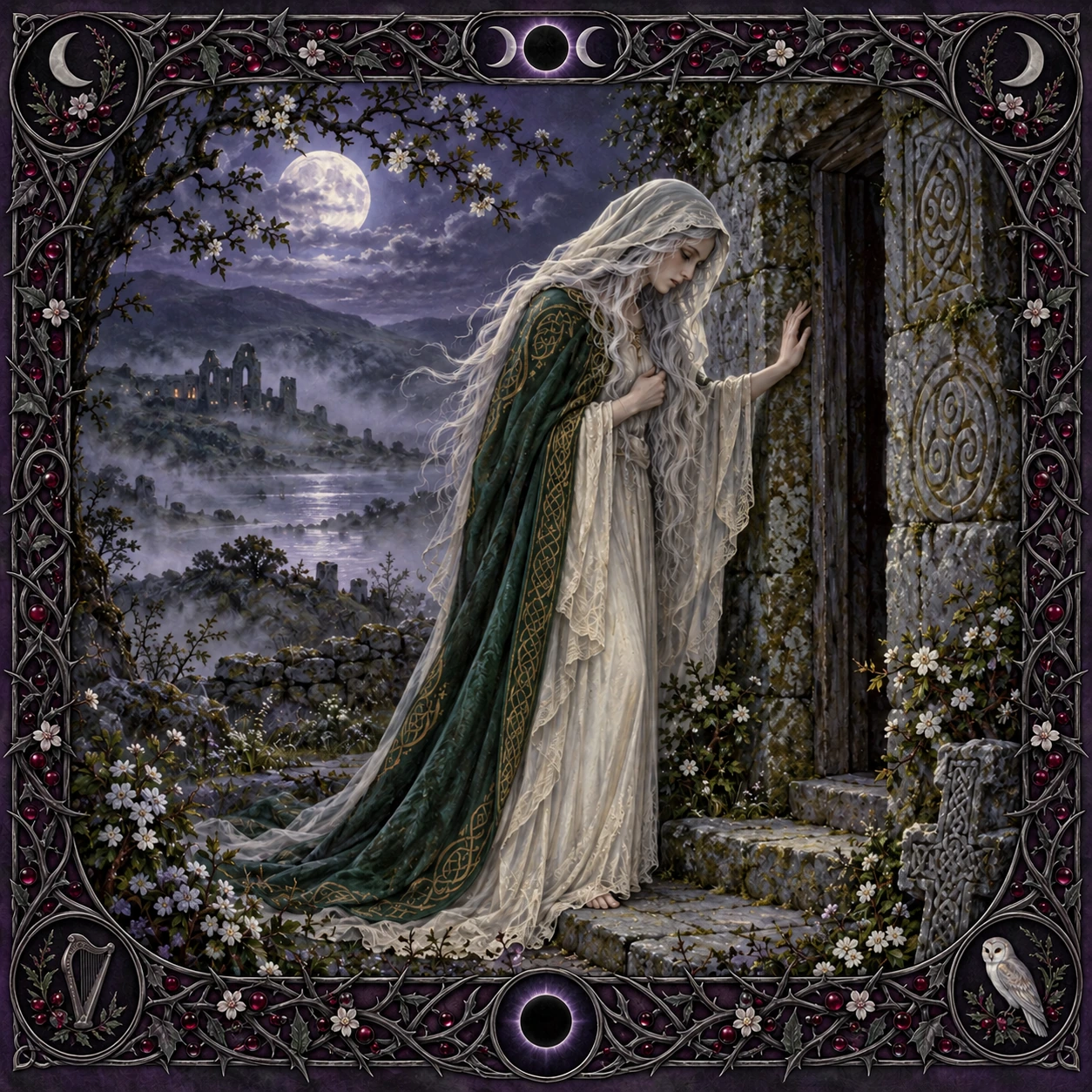
A supernatural mourner in Irish tradition, the banshee cries for particular families as a death approaches or a loss becomes known.
A shriek interrupted Mrs Jack Manaher as she waited for meat at a butcher’s stall. Across the street, an old man lay ill. The butcher hurried outside and suggested a dog; Mrs Manaher heard a different presence. For her, the voice belonged to the banshee, a mourner whose family ties could outlast the people who listened for her.
Read the manuscript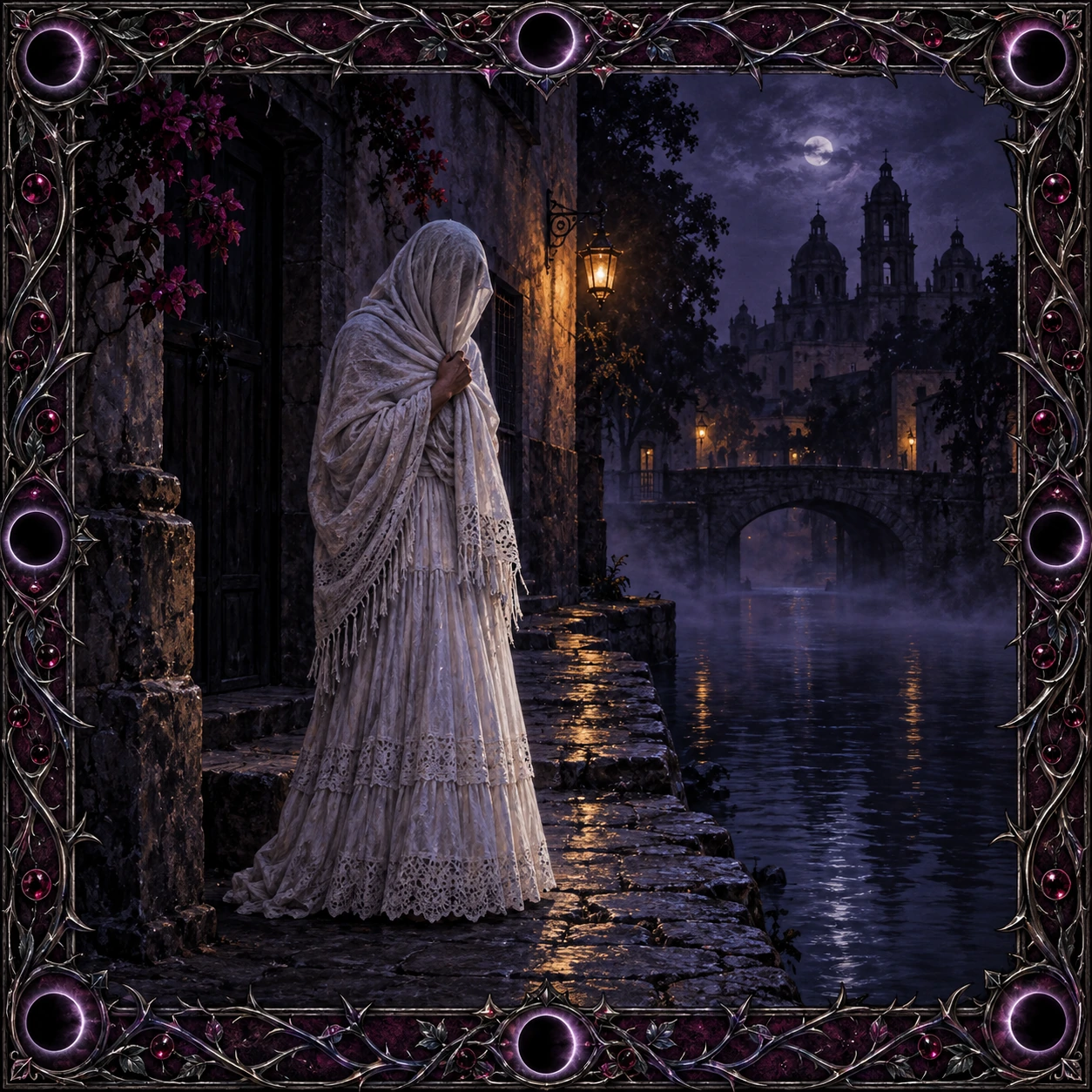
La Llorona is a weeping apparition of Mexican and Mexican American accounts, searching for lost children or wandering after her own violent death.
A woman wakes a sleeping watchman and asks the time. It is midnight. She says she must reach a distant city by noon, then cries out for her children and disappears. His officers dismiss such reports. In Thomas Janvier’s telling, one of those officers will soon ask the woman in white to uncover her face.
Read the manuscript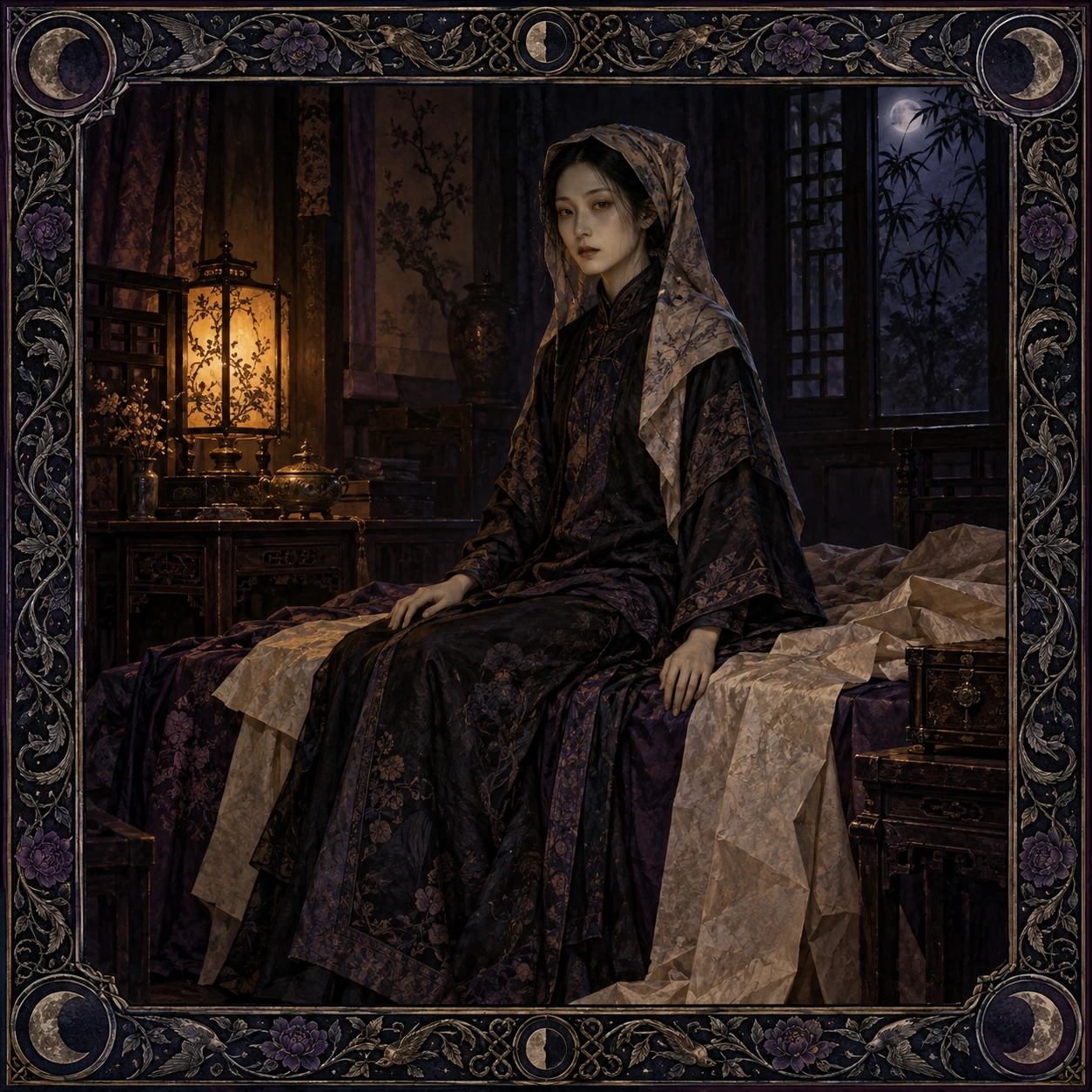
Jiangshi are animated corpses in Chinese stories, capable of pursuing the living, demanding food or clinging to desires that survive their deaths.
The trestles creaked. One of four travellers was still awake when the dead woman lifted her coverings and climbed down. In Pu Songling’s tale, the inn had offered the men its last available room. They had accepted a bed beside the landlord’s daughter-in-law, whose body was waiting for a coffin.
Read the manuscript
The Pontianak is a feared female ghost in Malay traditions, often associated with death in childbirth, whose earlier names and forms differ from the woman familiar in horror cinema.
A wedding is being prepared when deaths begin to trouble the village. In Revenge of the Pontianak, the bridegroom must confess what happened to a woman he once made pregnant. The danger approaching his new household belongs to a life he thought he had left behind.
Read the manuscript
Yūrei are Japanese apparitions whose attachments survive death: a mother returns to her household, a wronged person seeks vengeance, or the dead call the living into their company.
O-Sono’s little boy says his mother is upstairs. She has smiled at him, but will not speak. The family goes to her former room, where a small lamp reveals her beside a chest of drawers. Her funeral was yesterday. In Lafcadio Hearn’s A Dead Secret, the question is what has brought her back.
Read the manuscript
Black Shuck is an uncanny black dog of East Anglian tradition, appearing in violent storms, beside coastal churchyards and inside familiar homes.
The congregation can scarcely see one another. Thunder shakes the church, and lightning briefly restores the light. In Abraham Fleming’s account of the storm at Bungay in 1577, a black dog appears among the worshippers. It begins to run down the church.
Read the manuscript
Night Marchers are Hawaiian spirit processions in which departed chiefs, warriors and ancestral or sacred companies follow remembered paths.
The man on the Mahiki road sees a company approaching and steps behind a tree. He recognizes Kamehameha among the ranks. Thousands move together, yet he hears nothing. The silent march passes into the woods toward Waipiʻo, leaving him trembling in his hiding place.
Read the manuscript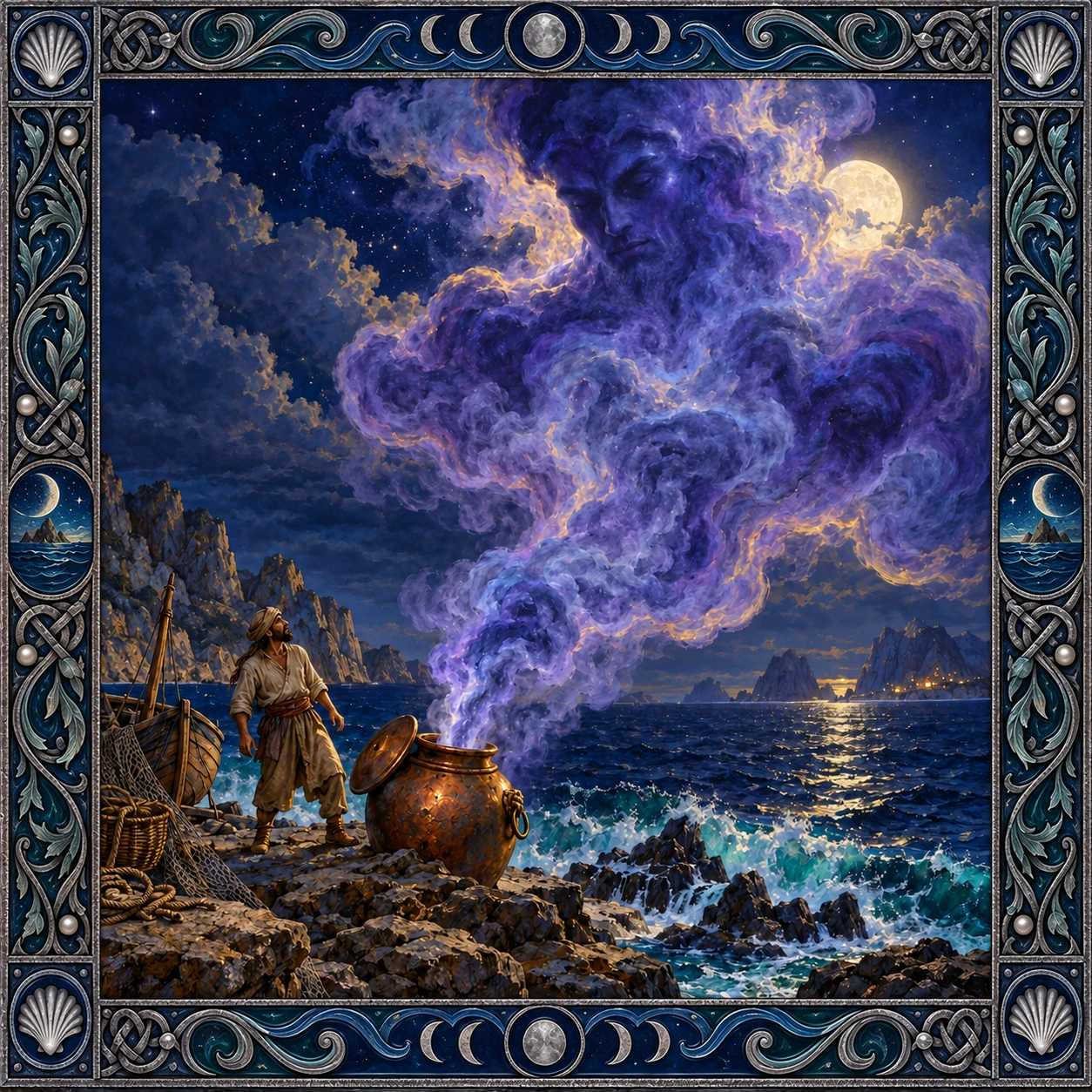
Jinn are morally varied unseen beings in Islamic belief and many regional traditions; literary genies can become terrifying captives, skilled builders, or dangerous benefactors.
The fisherman expected the sealed bronze vessel to improve a hungry day. Instead, smoke rose from its narrow mouth and gathered into a giant who offered him a choice of deaths. In Laurence Housman’s Arabian Nights adaptation, rescuing the captive is the beginning of the fisherman’s danger.
Read the manuscript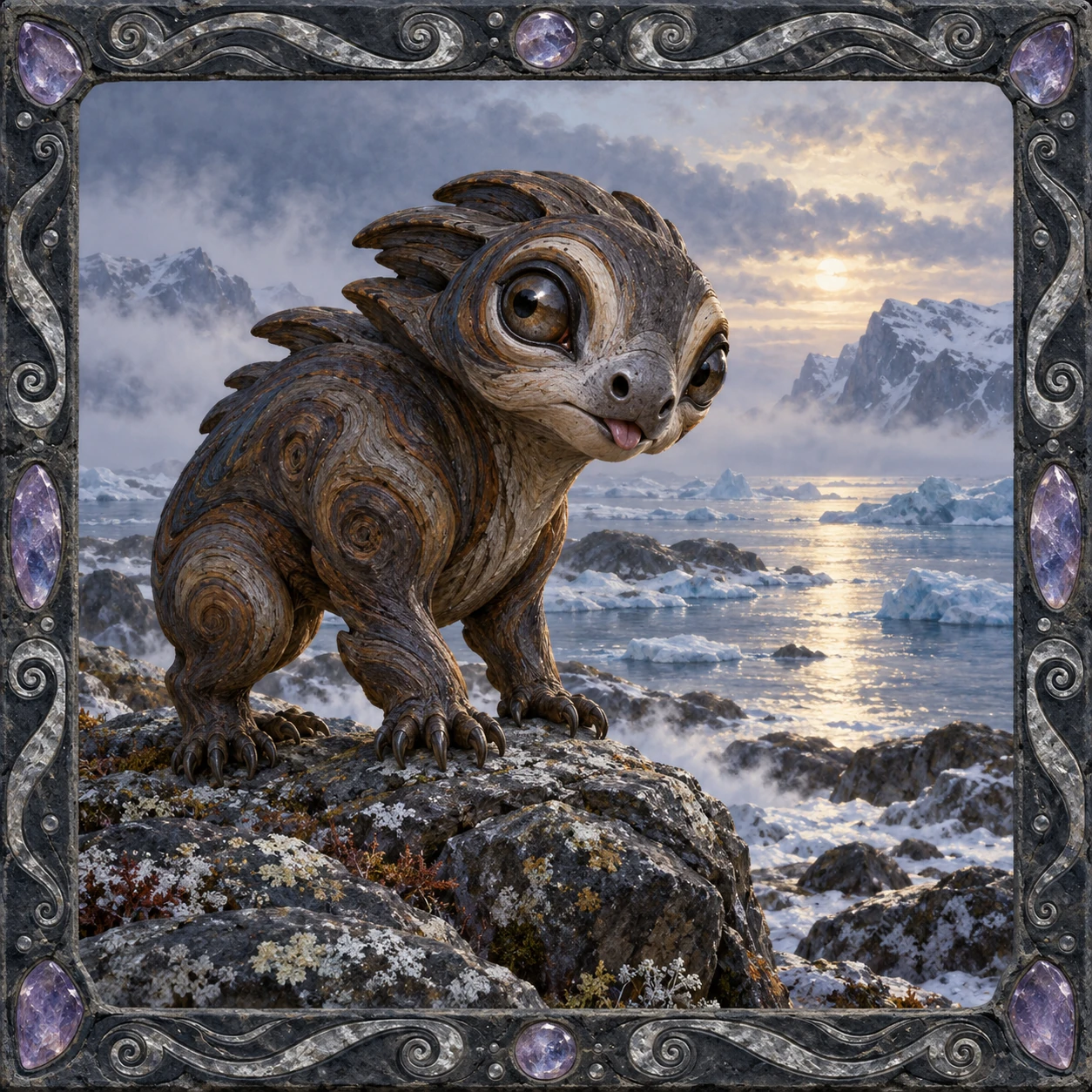
A tupilak is a being made to harm an enemy in Greenlandic accounts; its name also belongs to carved figures with grotesque, imaginative bodies.
The old couple receive meat from the hunter’s bear, but they also receive an insult. They take the food home without eating it. In Kululuk’s tale, what should have been a shared meal becomes the beginning of a danger directed at the hunter’s children.
Read the manuscript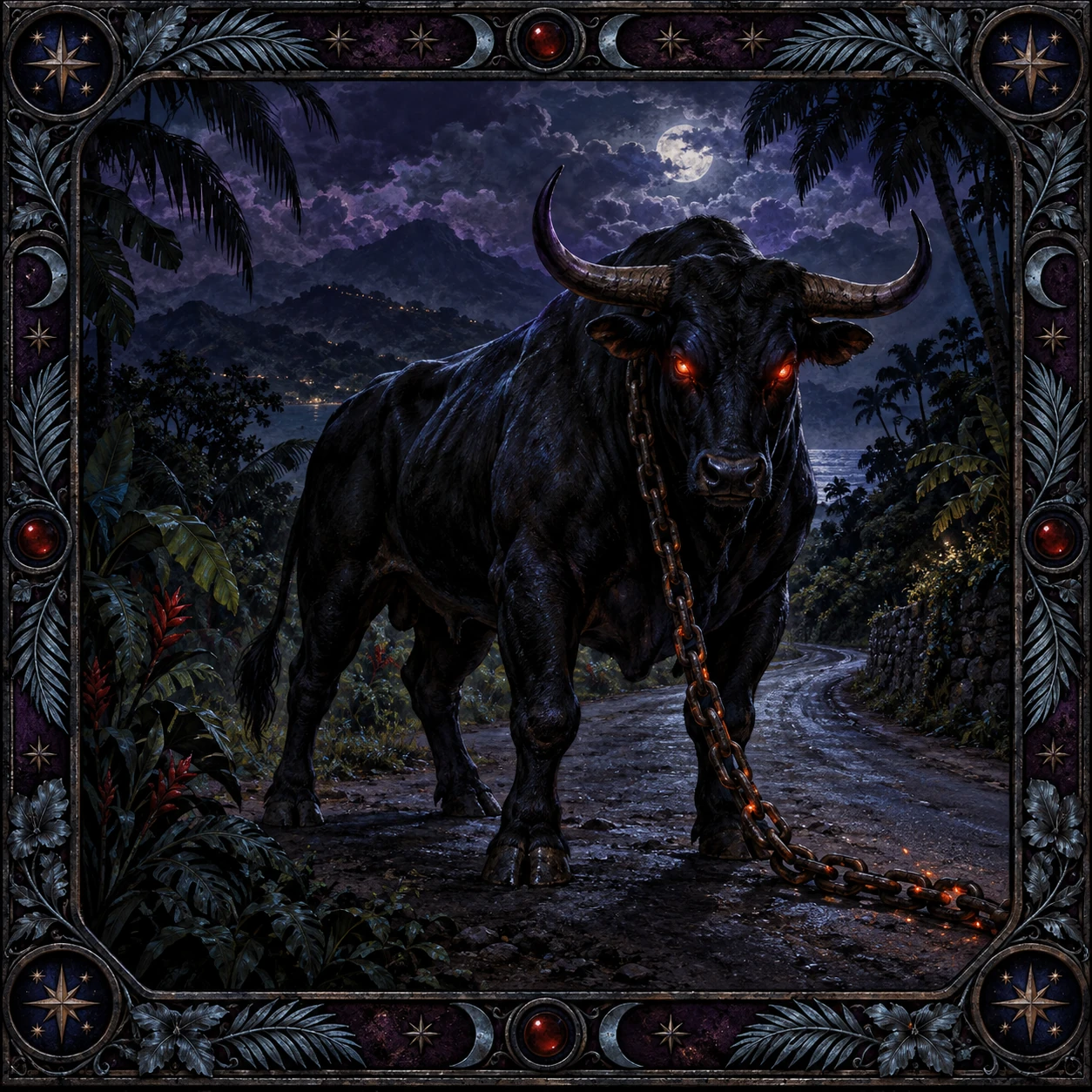
A fiery-eyed animal spirit pursues night travellers in Jamaican stories, sometimes taking a bull’s shape with a chain rattling behind it.
A chain clanks in the dark, followed by the bellow of an approaching animal. In Jamaican rolling-calf accounts, sound can announce the danger before fiery eyes reveal it. A road used by neighbours in daylight has acquired another traveller.
Read the manuscript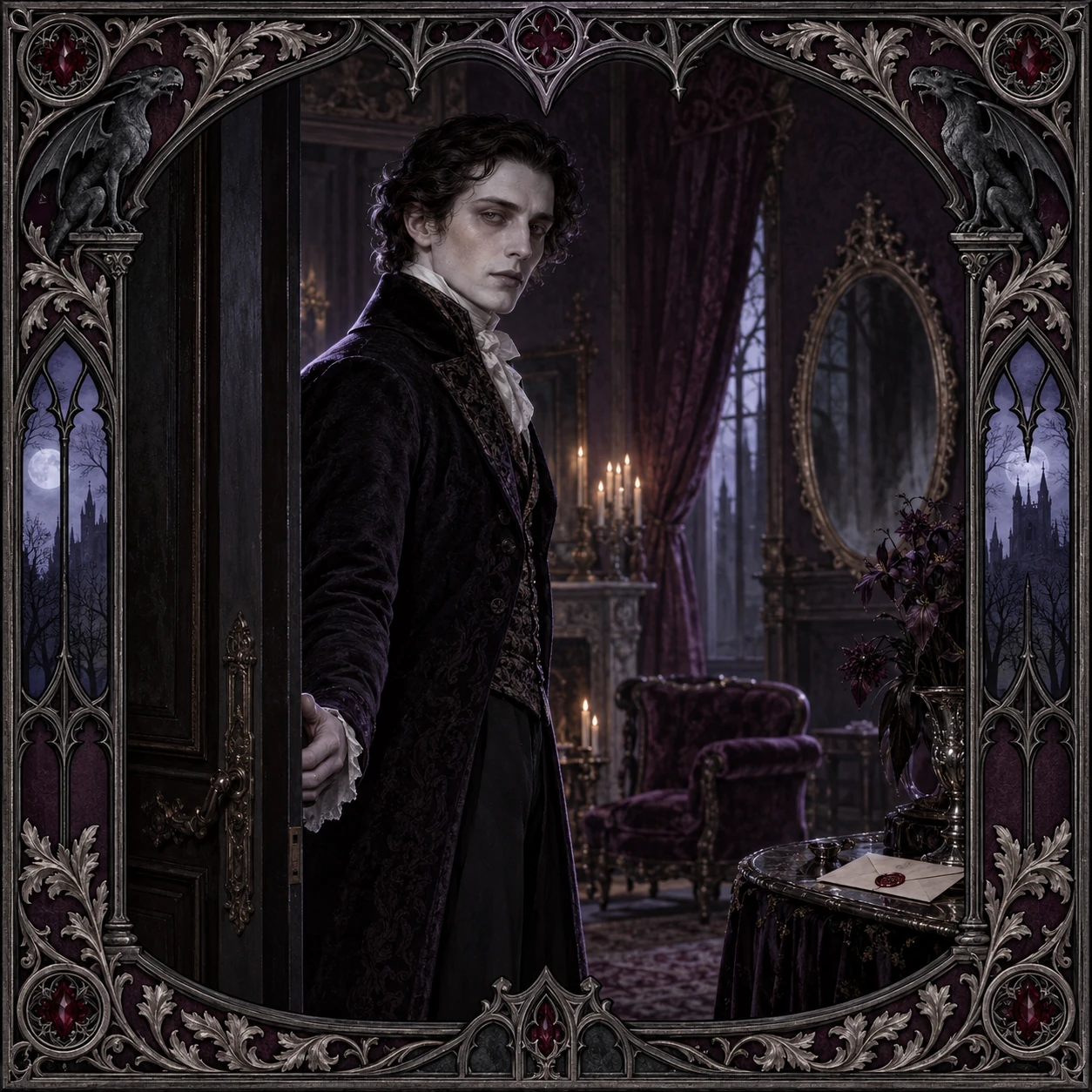
The vampire is a dangerous returning dead person who feeds on the living, appearing as a feared neighbour in reports and a seductive stranger in Gothic fiction.
The widow says her husband has come back for his shoes. He has been buried for ten weeks. She leaves the village, but others cannot escape so easily: nine deaths are reported in eight days. In Calmet’s account of Kisolova, the next journey is to the grave.
Read the manuscript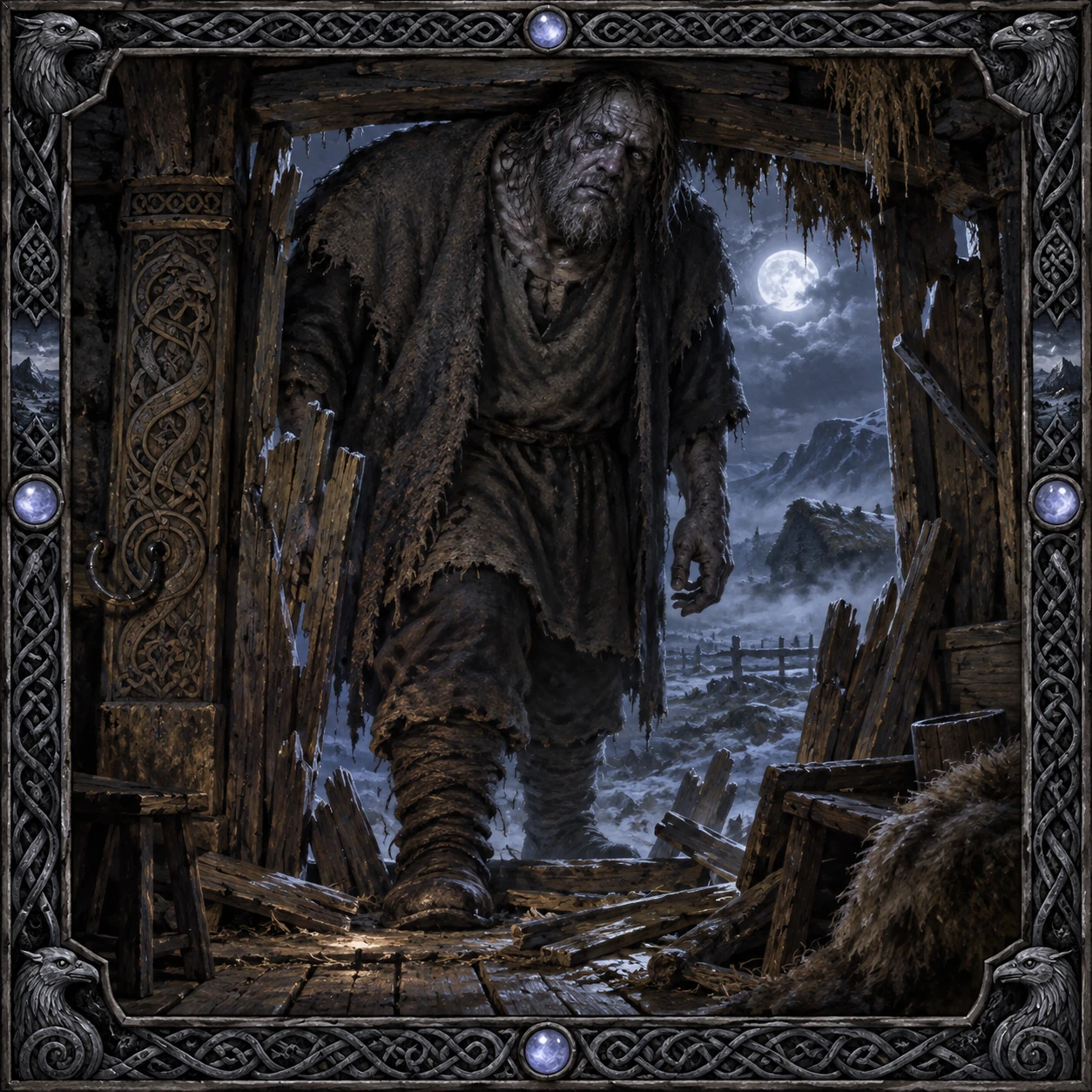
A draugr is a dead person who returns bodily in Icelandic sagas, haunting farms or guarding buried treasure.
The warrior Grettir lies fully dressed beneath a cloak, his feet braced against a beam. Above him, the dead shepherd drives his heels into the roof. The rafters crack. When the noise stops, the visitor comes down to the door.
Read the manuscript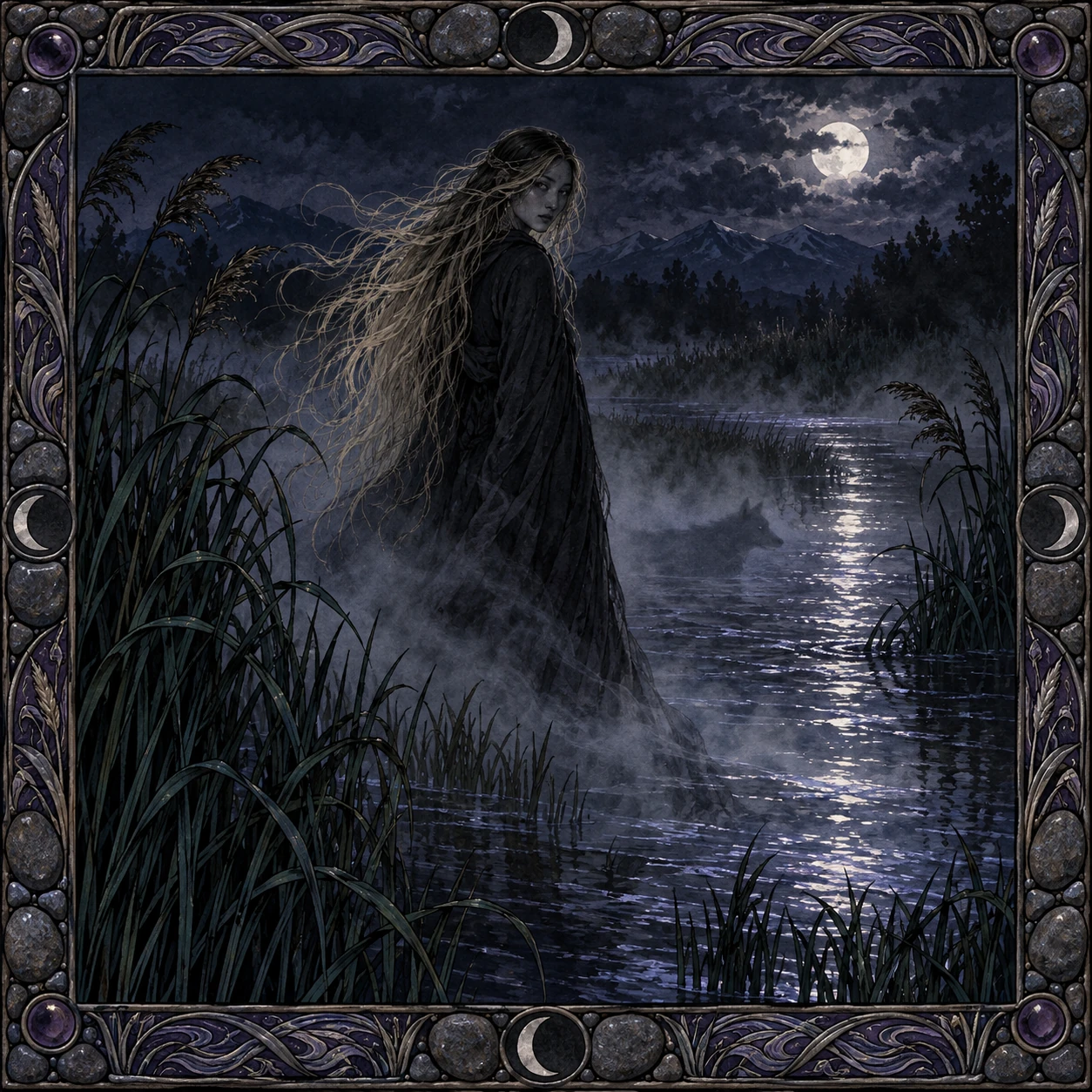
Albasty is a spirit feared in childbirth and night encounters across several Turkic traditions, appearing as a woman, an animal or a weight upon the sleeper.
A rider approaching a village sees a fox carrying human lungs. He recognizes Albasty and gives chase. Inside a house, a woman has collapsed after childbirth. In this Kazakh account, she can still be saved—but only before the stolen lungs reach water.
Read the manuscript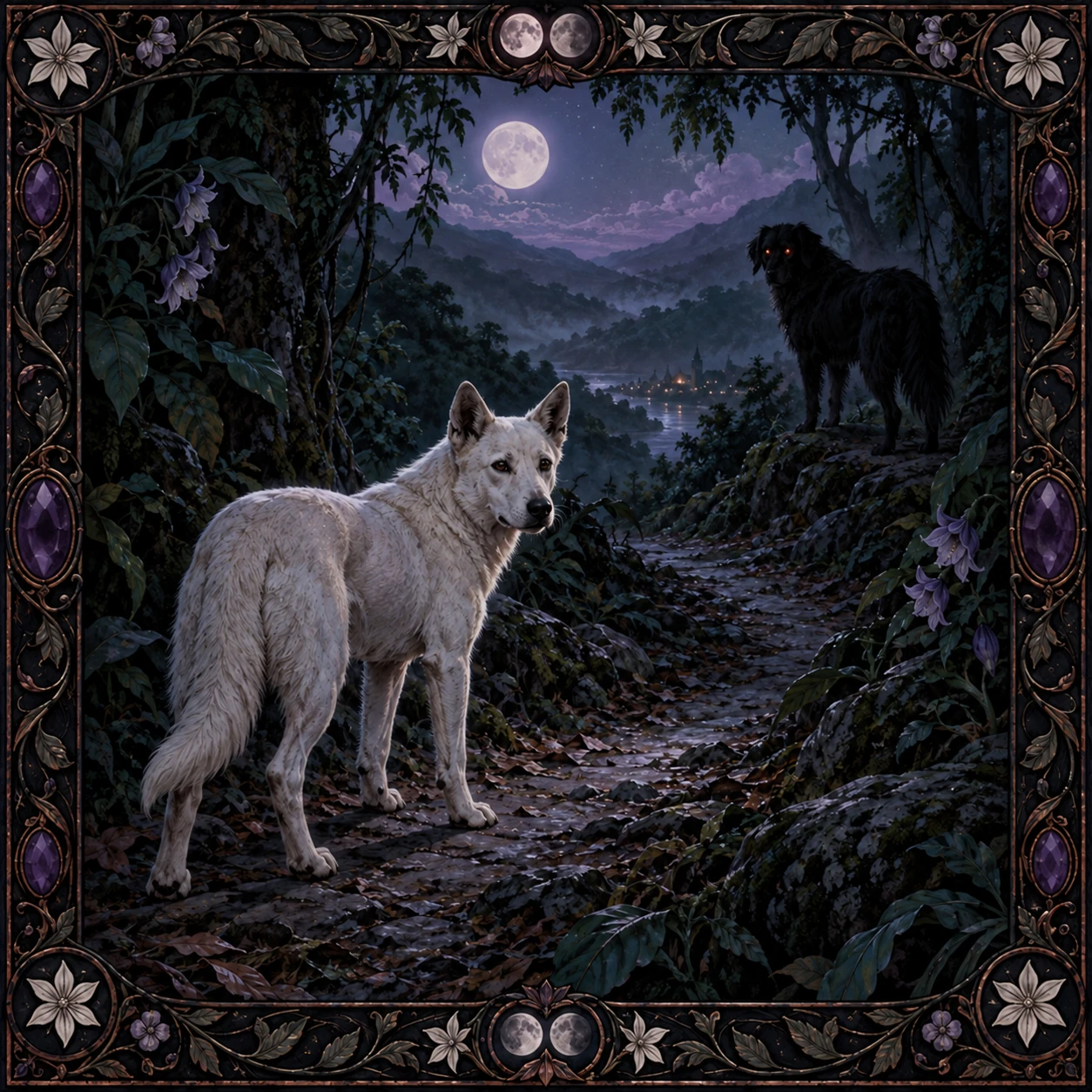
A spectral dog is said to follow Central American night travellers, offering protection or danger in different accounts.
The visitor has come for communion wafers, as he does on Fridays, but this time he bursts in warning Elvira that her braid will be cut. She tries to reach the door. Her feet will not move. Miguel Ángel Asturias’s Leyenda del Cadejo brings the night creature into a convent, where a familiar errand becomes an encounter with desire, terror and a body that will not obey.
Read the manuscript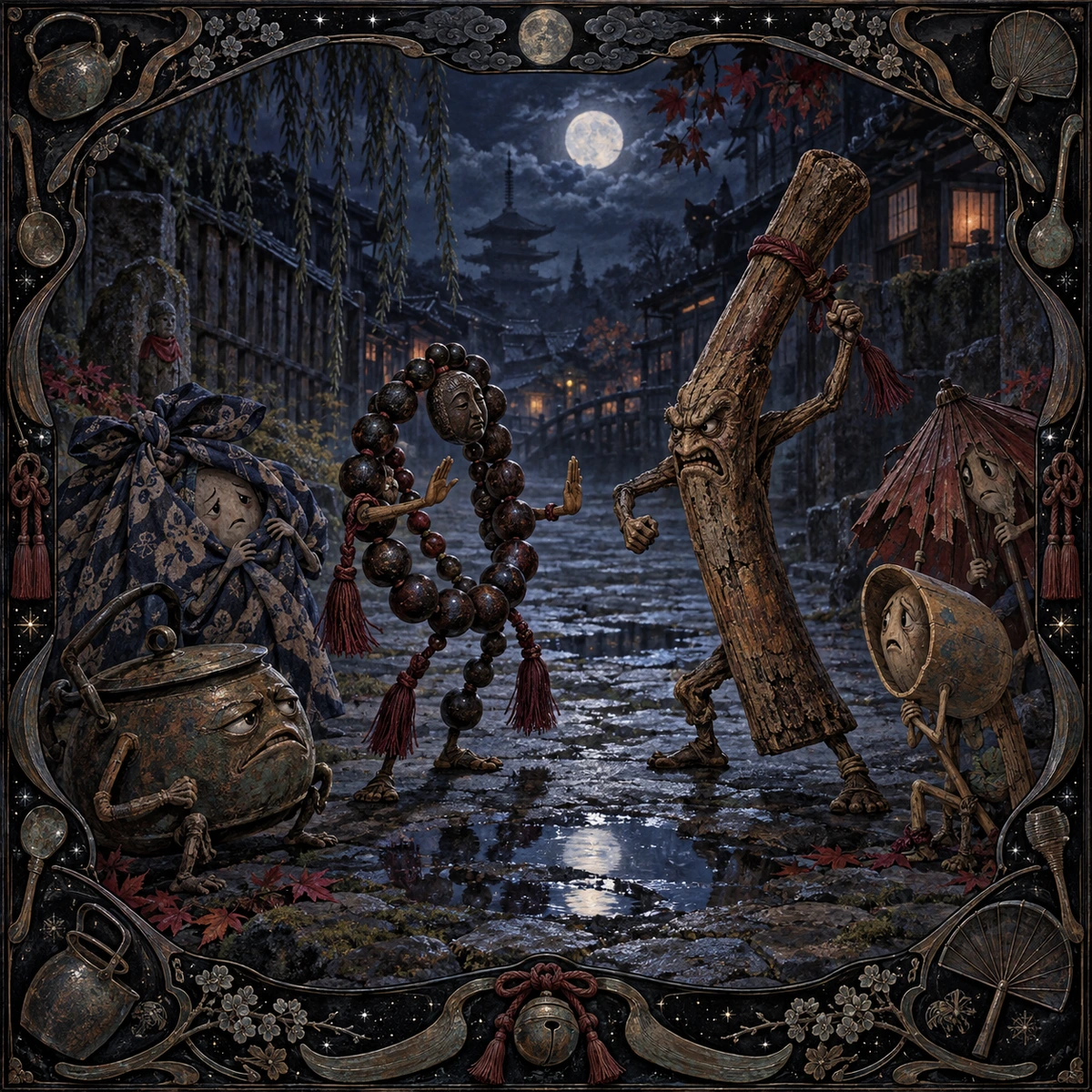
Tsukumogami are old tools and household objects that take on lives of their own in Japanese stories and pictures.
The discarded tools remember their years of service. Now they lie beside a road, kicked by passing oxen and horses, while their former owners enjoy replacements. A rosary urges them to repay hostility with kindness. A wooden club will hear no more of that.
Read the manuscript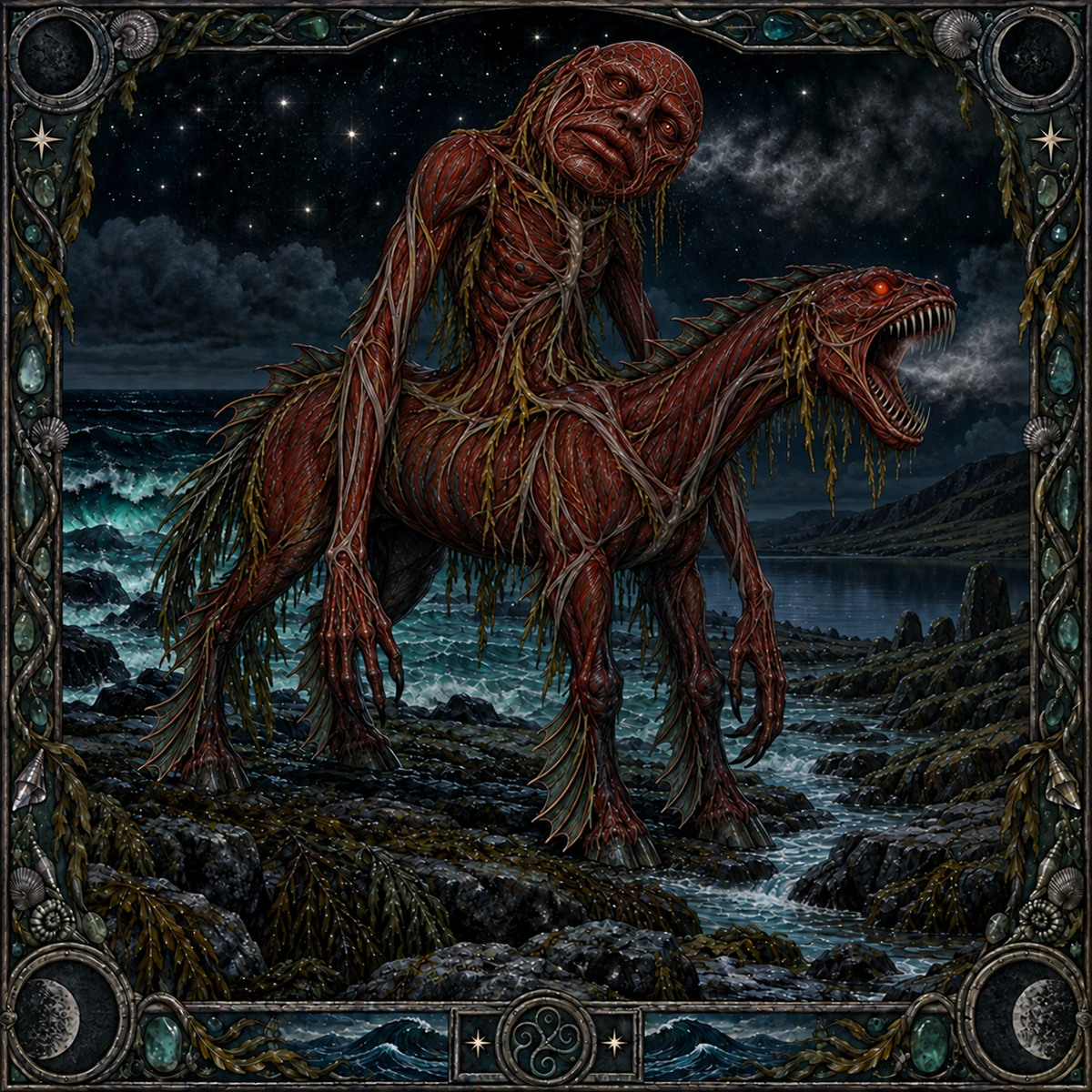
The Nuckelavee is Orkney’s skinless sea monster, a horse-and-human horror whose breath ruins crops and whose long arms reach for travellers on shore.
There is no room to step aside. Tammas has the sea on one side of the road and a deep freshwater loch on the other; something huge is coming toward him. The night has stars but no moon. He has heard that turning his back on an evil thing is the worst choice he can make, so he asks God for protection and walks slowly forward.
Read the manuscript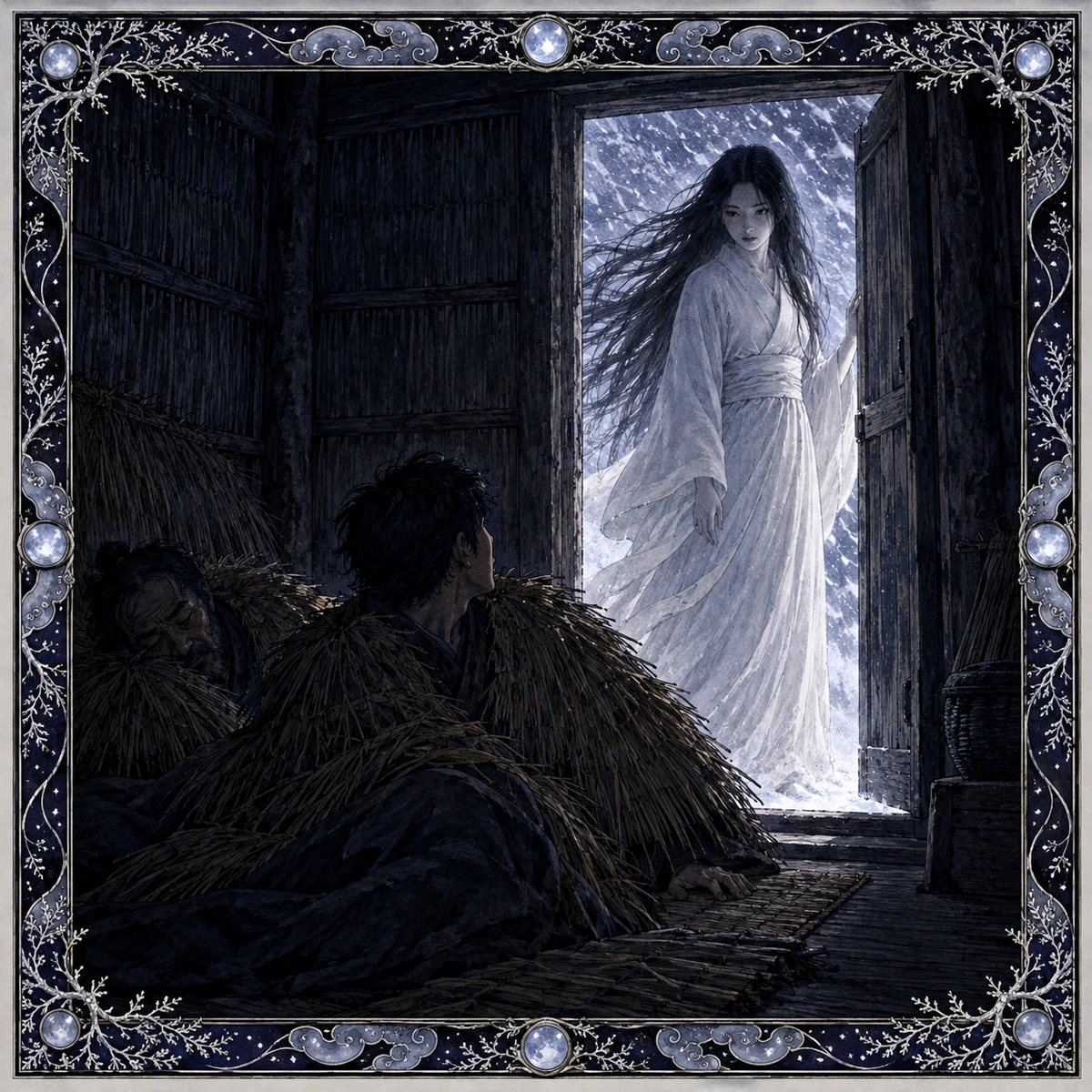
Yuki-onna is a Japanese woman of the snow, appearing in winter accounts as a frightening visitor, a giver of rewards or a beautiful stranger with a deadly secret.
The ferryboat lies on the far bank, and the boatman has gone. Two woodcutters shelter in his hut, without a window or a place to light a fire. During the night, the younger man wakes to snow falling on his face. The door stands open. In Lafcadio Hearn’s Yuki-Onna, something has entered with the storm.
Read the manuscript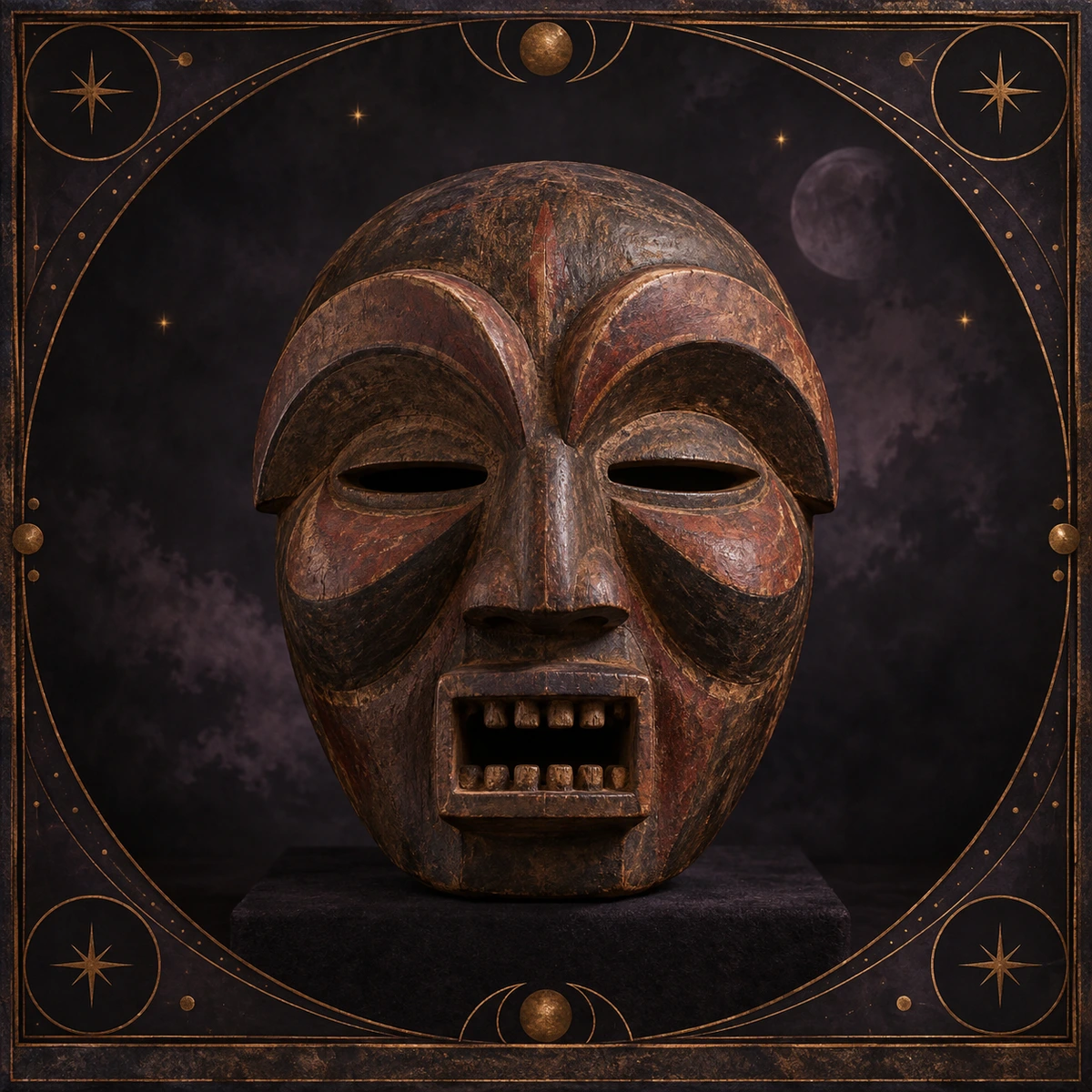
Makishi are ancestral masquerade characters of Zambia and neighbouring regions, returning through masks, costumes, dance and music to guide, protect and engage the living.
A hunter dances with a bow and arrow. His carved face has projecting cheeks, narrow eyes and a tooth-filled mouth; a fibre costume and palm-leaf skirt complete the figure. Alisa LaGamma’s account of the Mbunda character Sachihongo restores movement to a mask that now stands in a museum.
Read the manuscript