Loading Luminary Oddities
Please wait while the next page arrives.
Loading this page…
Return homePlease wait while the next page arrives.


 Bestiary of Cryptids & Legendary Creatures
Wonder at the edge of the known
Odysseus survives the Cyclops through a name and a plan. Rostam must outwit Akvān while suspended above the earth. Koschei’s death is hidden where a sword alone cannot reach it. Strength matters in these encounters, but so do hospitality, knowledge and the help of others. Alongside formidable opponents stand constructed protectors, forest beings and figures whose actions belong to particular living traditions.
Search by name, place or tradition, or use the filters to explore a group of creatures.
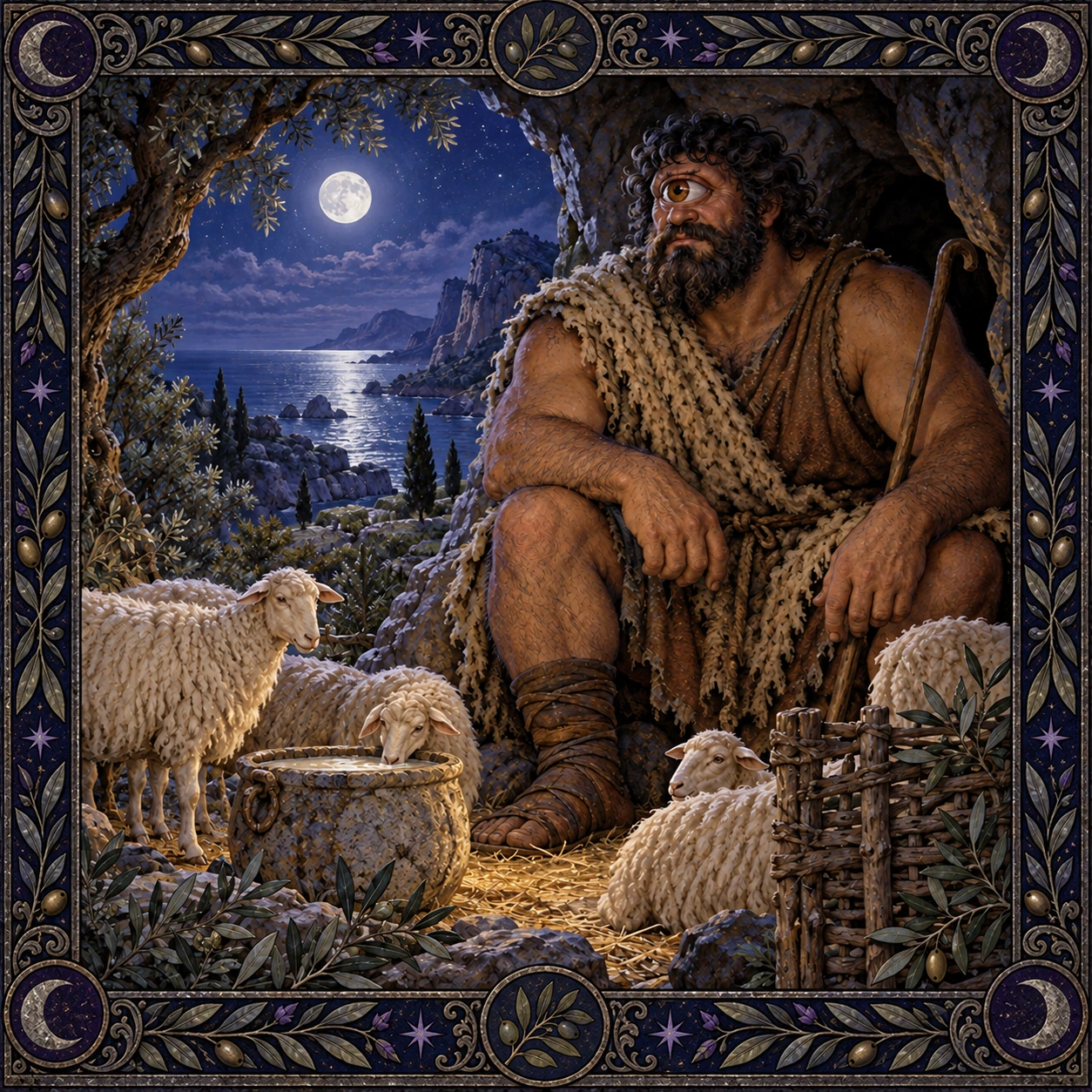
Cyclopes are one-eyed beings in Greek stories: divine craftsmen and immense builders, as well as the shepherd Polyphemus, who imprisons Odysseus in his cave.
Odysseus could kill the sleeping shepherd. The thought lasts only until he remembers the stone across the doorway. Polyphemus has moved it easily; none of the prisoners can. They need the creature who is eating them to remain alive long enough to let them out.
Read the manuscript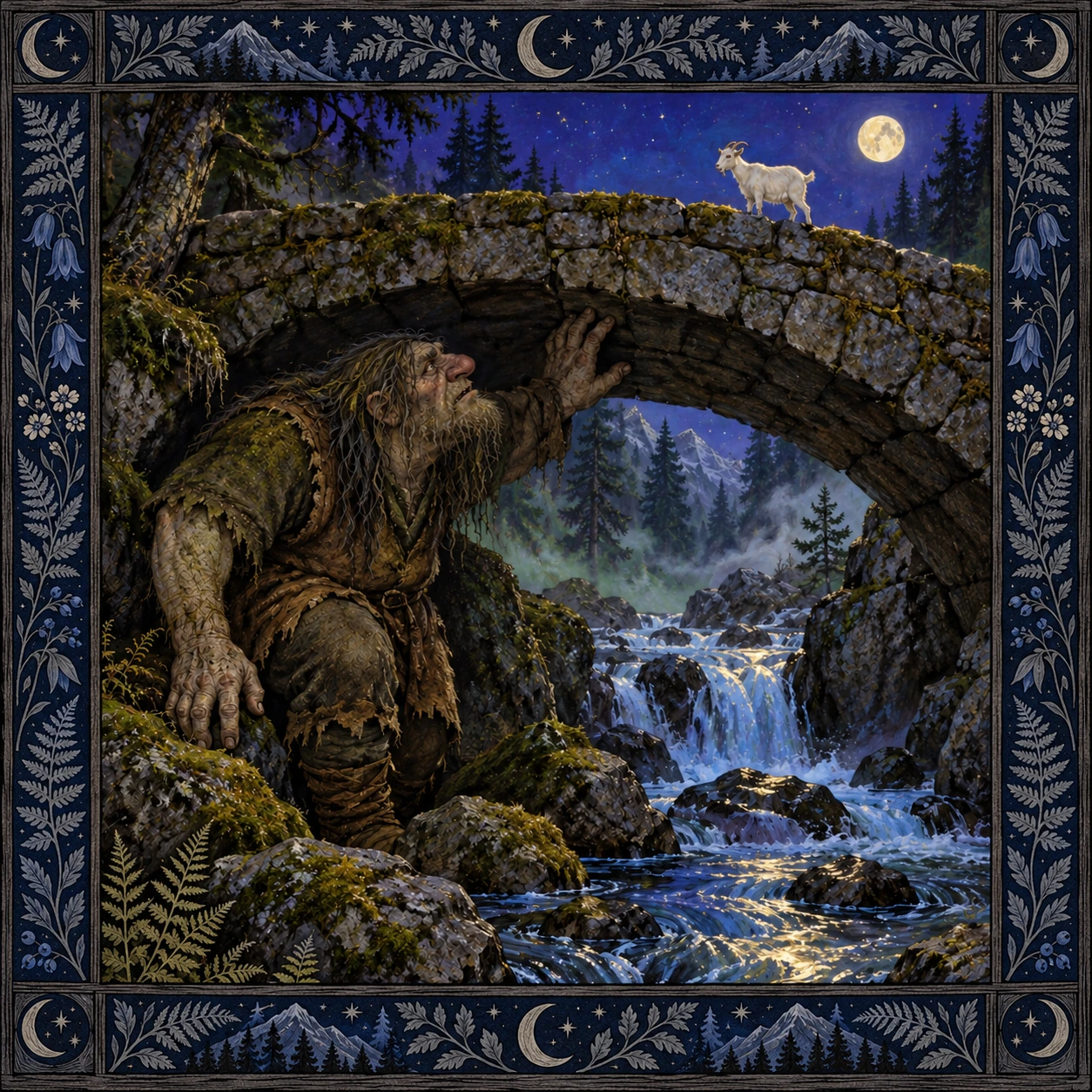
Trolls inhabit Scandinavian mountains, woods and stories, confronting people with formidable strength, dangerous appetites and sometimes an unexpected willingness to help.
Boots squeezes a piece of cheese until whey runs out. He calls it a stone and threatens to squeeze the troll in the same way. His opponent offers to help with the woodcutting.
Read the manuscript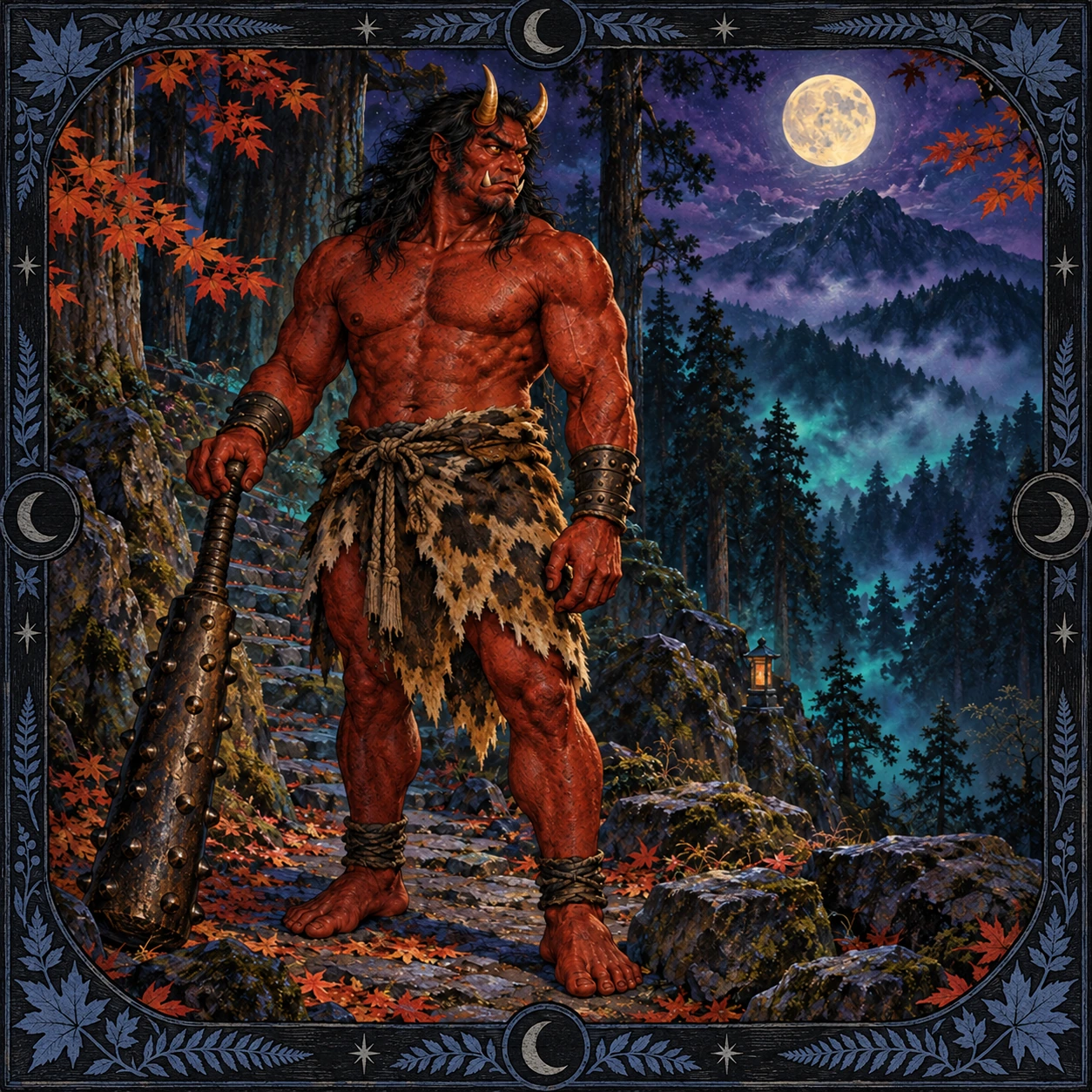
Oni are fearsome beings of Japanese stories, religion and art, often shown with horns, sharp teeth and powerful bodies.
The cook carries a human limb toward the mountain hall. Raikō’s men grip their hidden swords, then greet him politely and ask to see his master. In William Elliot Griffis’s Shuten Dōji tale, the rescuers must persuade their hosts to welcome the very men who have come to kill them.
Read the manuscript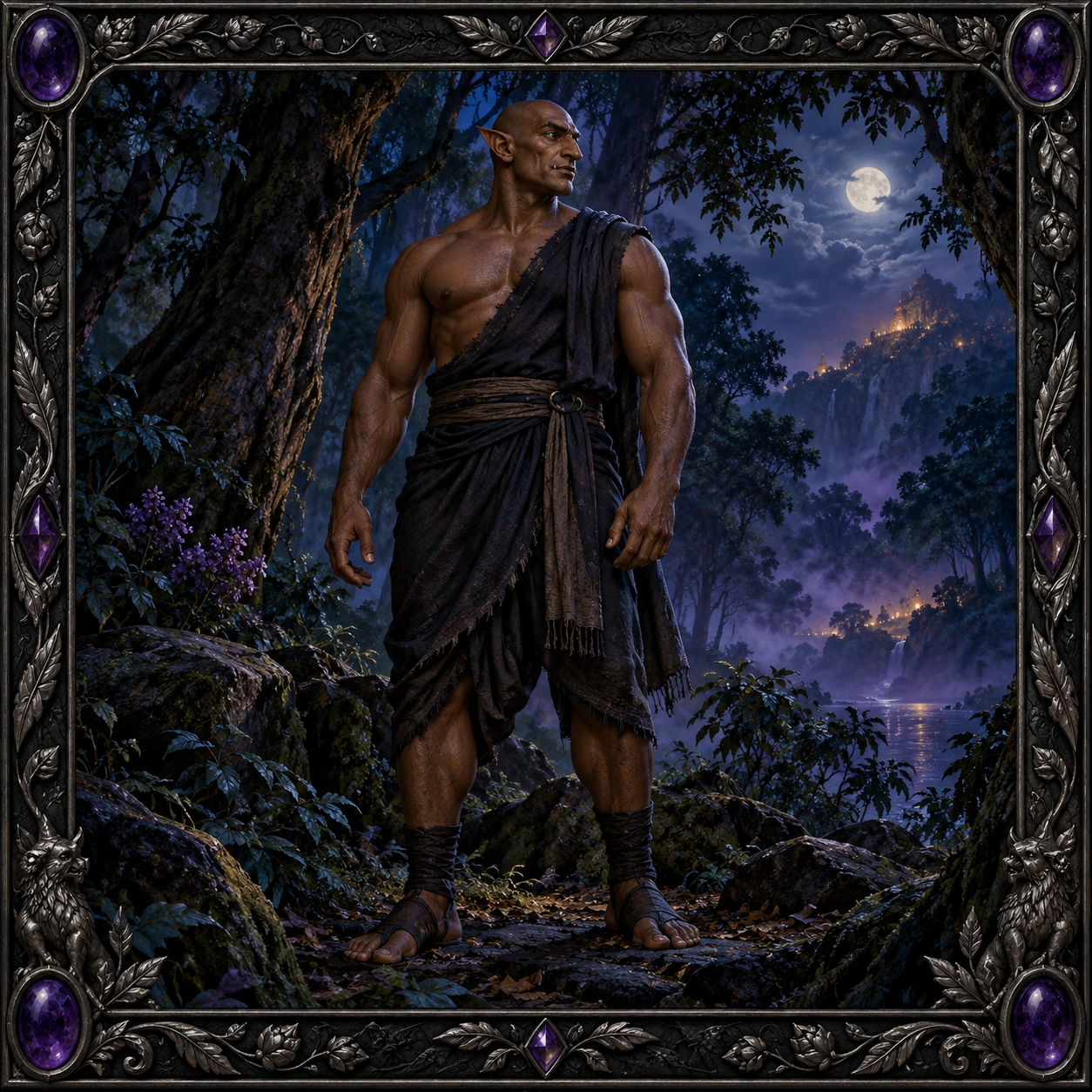
Rakshasas are formidable beings in South Asian epic narratives, whose named individuals can be opponents, advisers, relatives and loyal allies.
Ravana, ruler of Lanka, orders the death of Hanuman, the captured monkey envoy serving Rama. His own brother objects. In Griffith’s Ramayana, Vibhishana argues that even a guilty messenger must be spared. The court’s disagreement reveals a division among rakshasas that their formidable appearance cannot explain.
Read the manuscript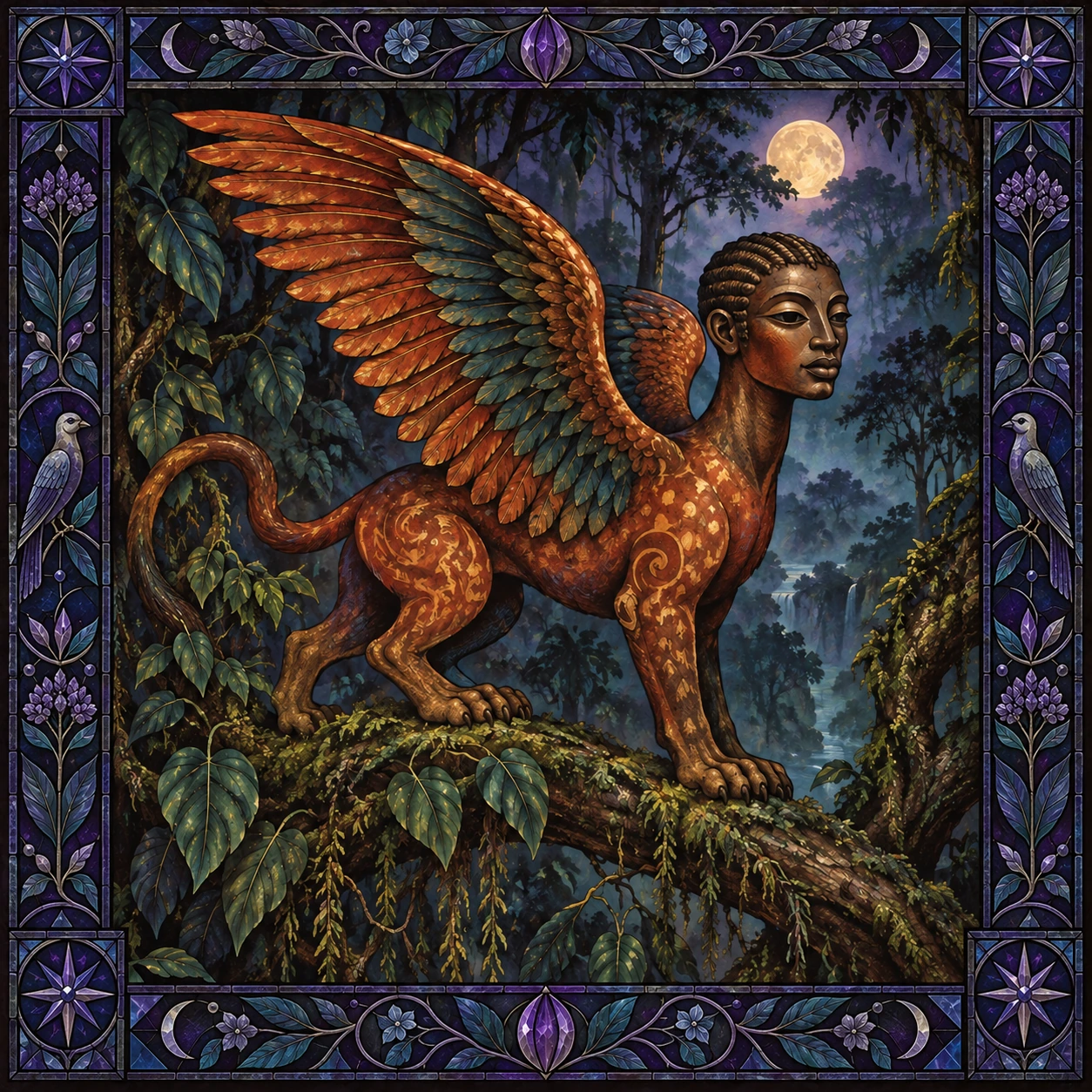
An Akan forest being threatens hunters from the trees and takes striking human-and-animal forms in Ghanaian sculpture.
The hunter has left his dogs at home. Above him are bunches of kola nuts; before him stands Sasabonsam, claiming the fruit and threatening his life. He asks for time to call his companions. The being allows three calls. In the tale collected by R. S. Rattray, the distance between the forest and home suddenly matters more than the hunter’s strength.
Read the manuscript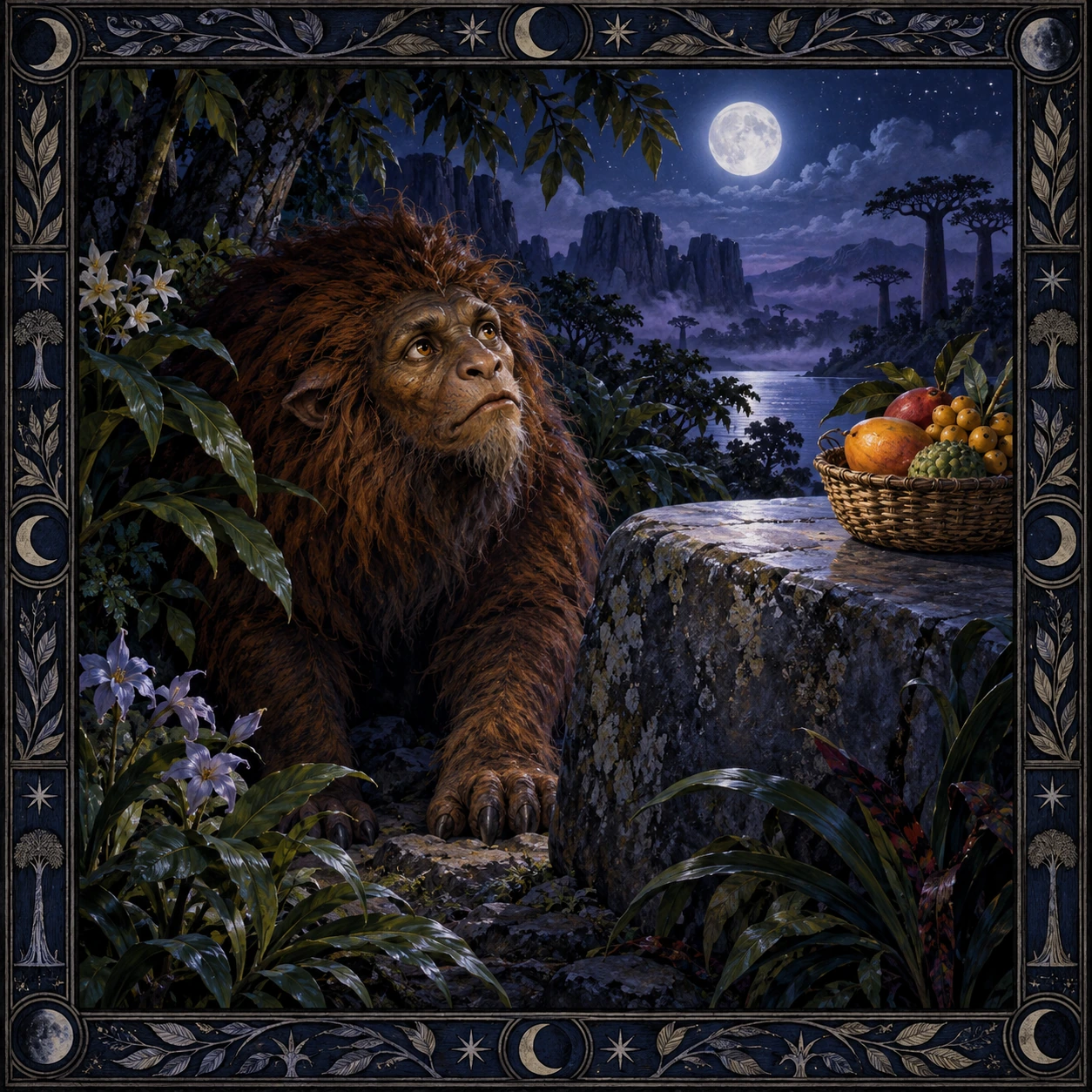
Trimobe is a powerful, man-eating figure in Malagasy tales, an owner of gardens and riches whose captives turn his appetite against him.
Trimobe carries his prisoner home in a basket. Each falling stone reassures him that Takinga is still inside. Then the prisoner himself drops to the ground.
Read the manuscript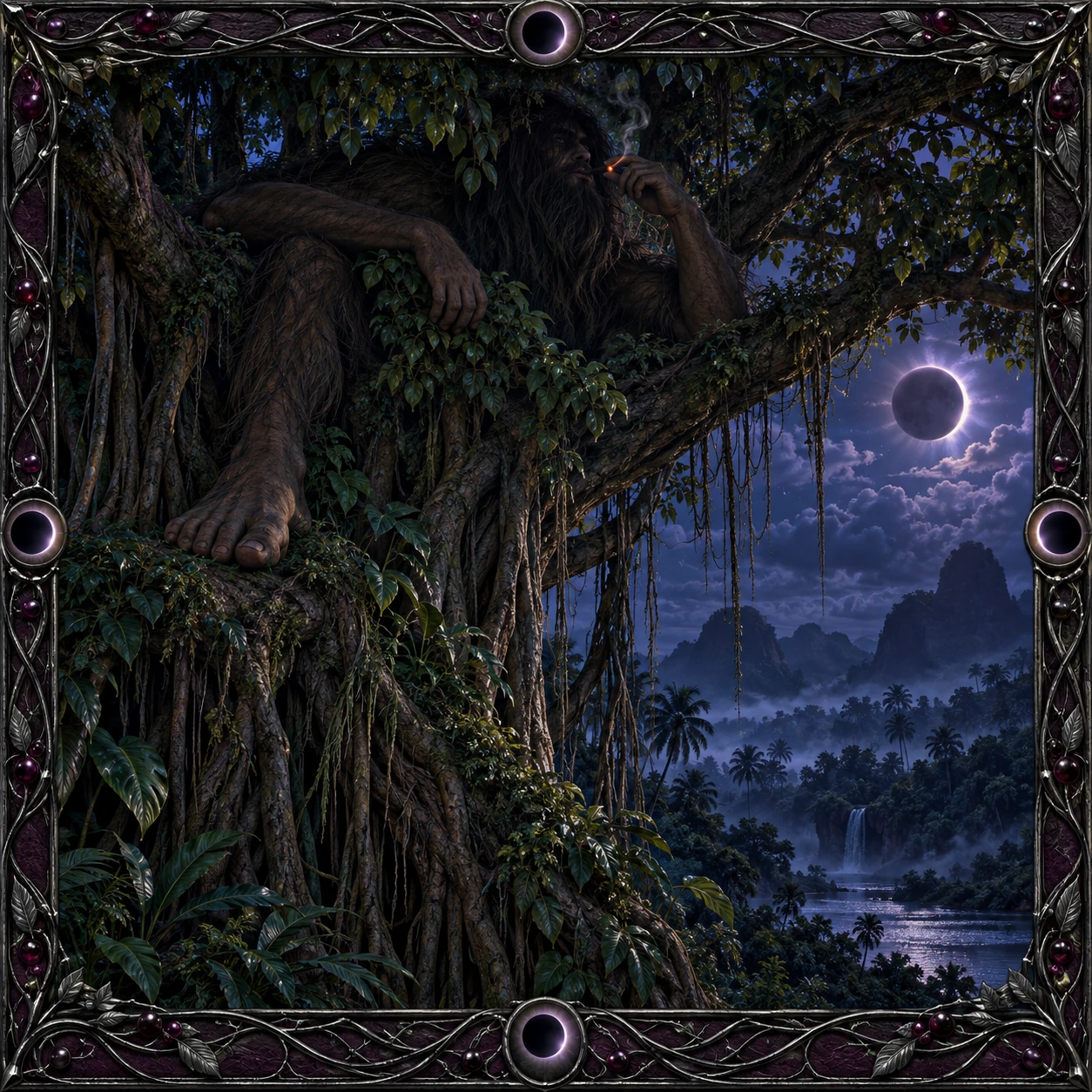
The kapre is a Philippine giant often encountered near trees, where an immense body or a glowing cigarette can turn a familiar place frightening.
A boy sits on a fence after dark. A man tells him to go home and taps his head. In an Ilocos Norte family account, that ordinary reprimand brings the man face to face with a giant.
Read the manuscript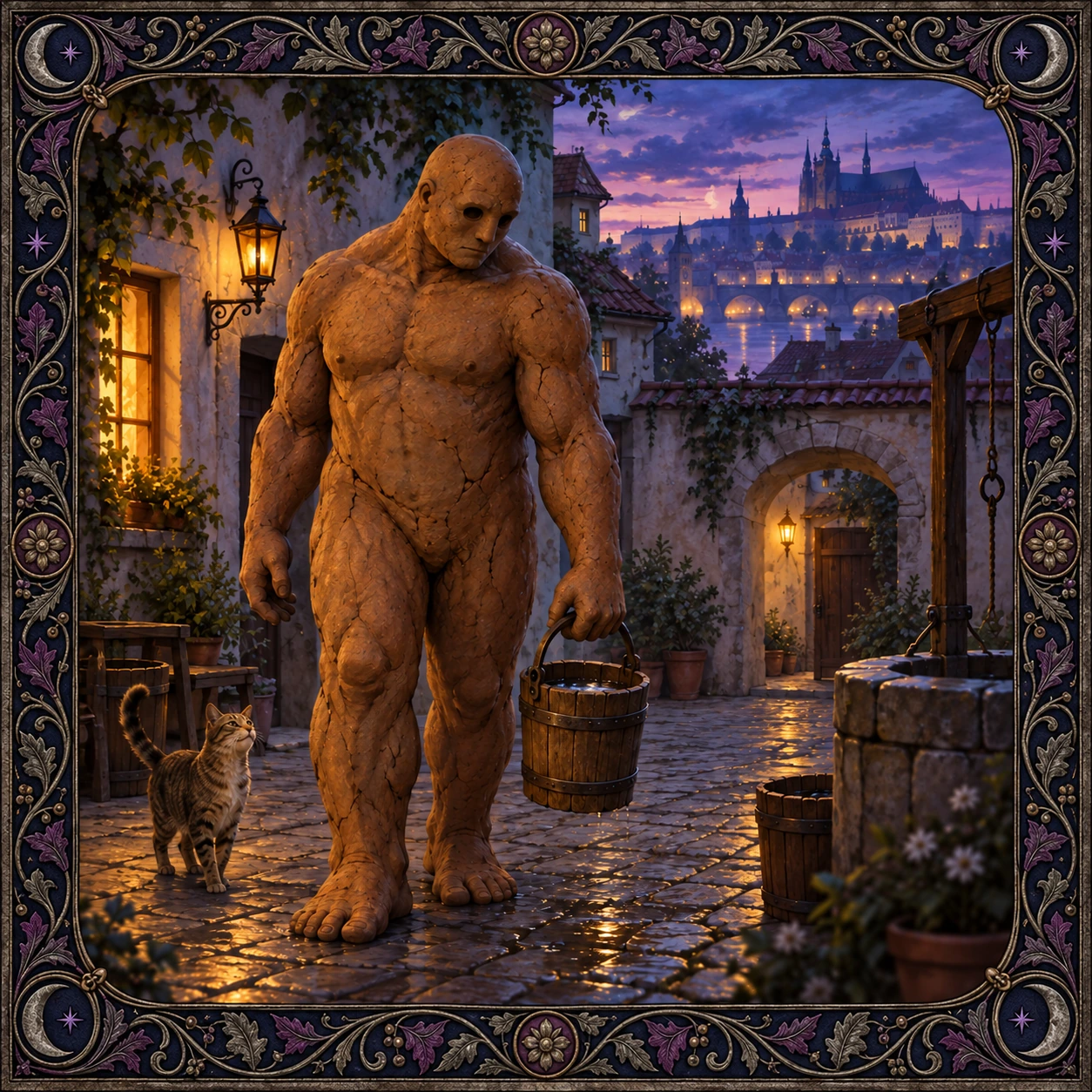
A golem is a humanlike being brought to life in Jewish texts and legends, sometimes serving its maker and sometimes becoming dangerously difficult to control.
Every Friday, Rabbi Löw stops his clay servant before the Sabbath begins. It has spent the week chopping wood, carrying water and sweeping. Then, in Leopold Weisel’s Prague tale, the rabbi forgets. The servant keeps moving, and the approaching holy day leaves very little time to stop it.
Read the manuscript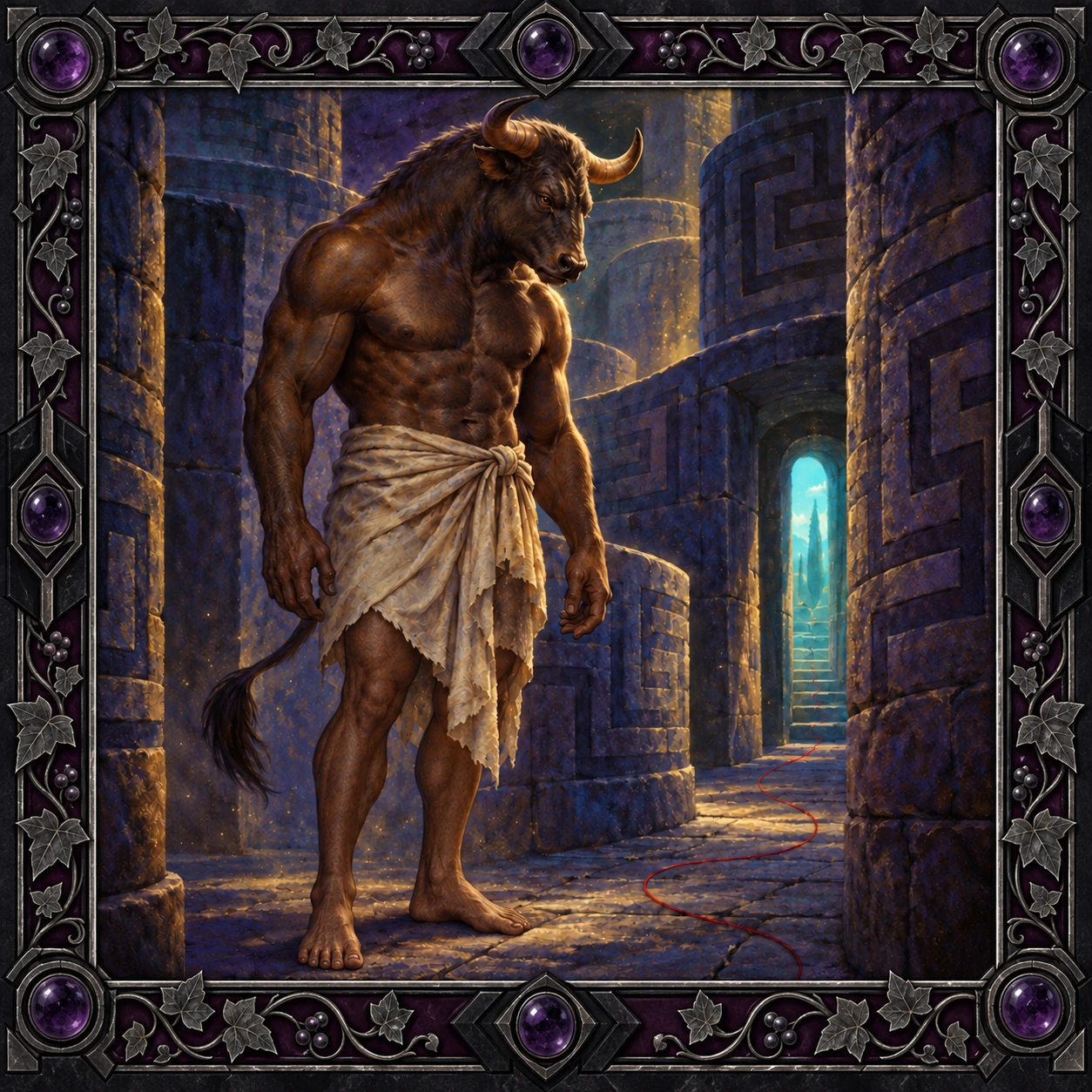
The Minotaur is Pasiphae’s bull-faced, human-bodied son, confined by Minos in a Labyrinth that Ariadne’s thread enables Theseus to escape.
Minos asks Poseidon for a bull and promises to sacrifice it. When the animal rises from the sea, the king decides it is too fine to lose. In the Library attributed to Apollodorus, his substituted offering begins a disaster that will require two inventions from the same craftsman: a wooden cow and a prison.
Read the manuscript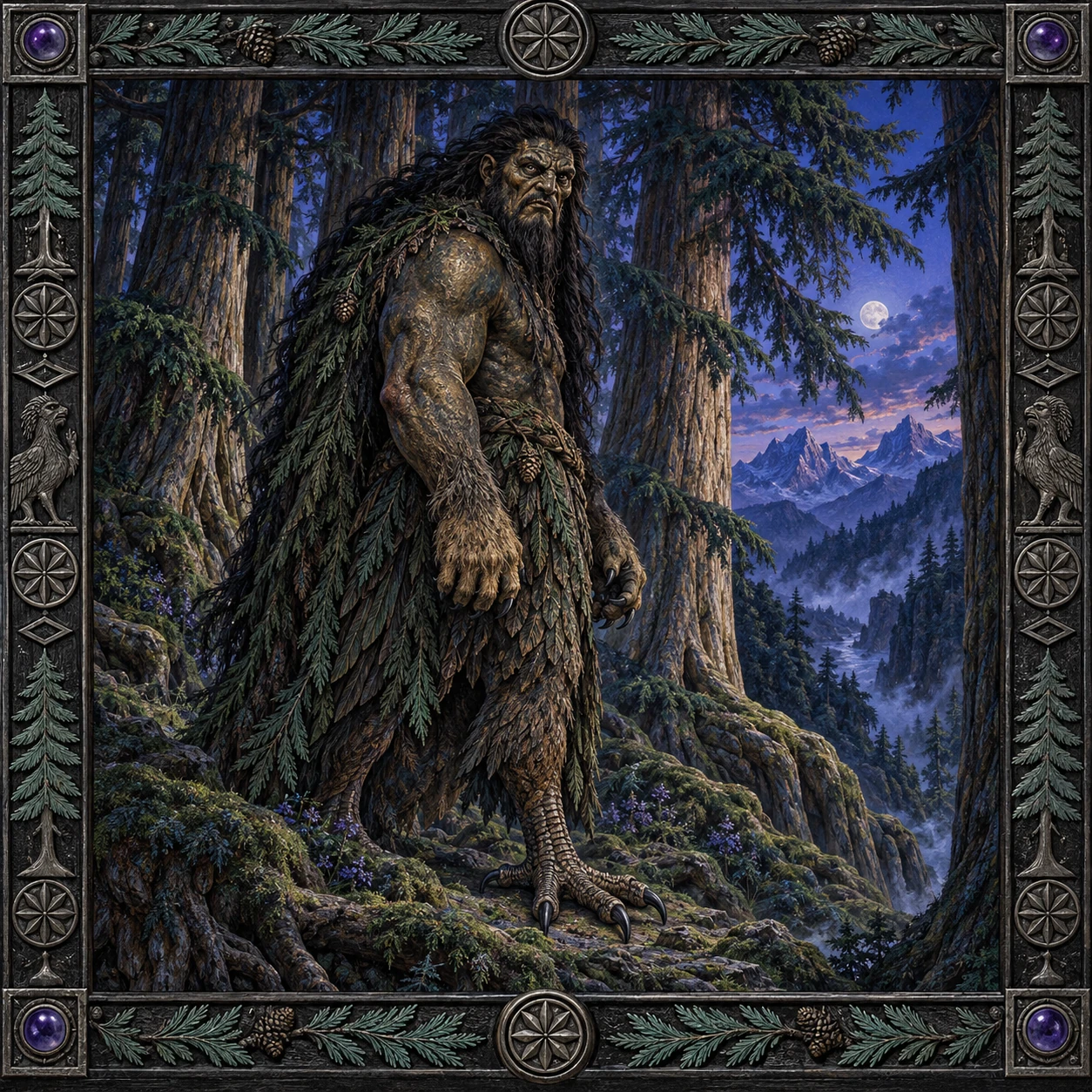
Humbaba guards the cedar forest, where Gilgamesh and Enkidu seek timber and lasting fame at the risk of their lives.
Winds strike Humbaba from every side. The guardian of the cedar forest cannot advance or retreat. In the Hittite passage translated in R. Campbell Thompson’s 1928 edition, he offers to serve the man who has overcome him. Enkidu urges his friend to refuse.
Read the manuscript
Zheztyrnak is a dangerous being in Kazakh stories, able to approach in human form while concealing sharp metal claws.
The reeds are moving, but Syzdyk feels no wind. A woman steps out and sits beside his fire. She accepts the food he offers without uncovering her hands. In Magzhan Zhumabayuly’s poem Ertegi, that small gesture is enough to turn a greeting into a warning.
Read the manuscript
The Ciguapa is an elusive being of Dominican folklore, known for backward-pointing feet, a haunting cry and encounters beside nighttime streams.
Marcelina chooses the tree beneath which Jacinto will build their home. He asks her to stay beside him a little longer. Then two cries interrupt them: one from the mountain, the other from the woman he has just promised to protect.
Read the manuscript
The Gorgons are three sisters in Greek myth whose gaze turns onlookers to stone; Medusa alone can die, but her severed head keeps its terrible power.
A king asks his guests for horses. Perseus offers something more extravagant: even a Gorgon’s head would not be beyond him. In the ancient Library, that boast becomes a command. To fulfil it, he must find three sleeping sisters—and approach them without looking into a face.
Read the manuscript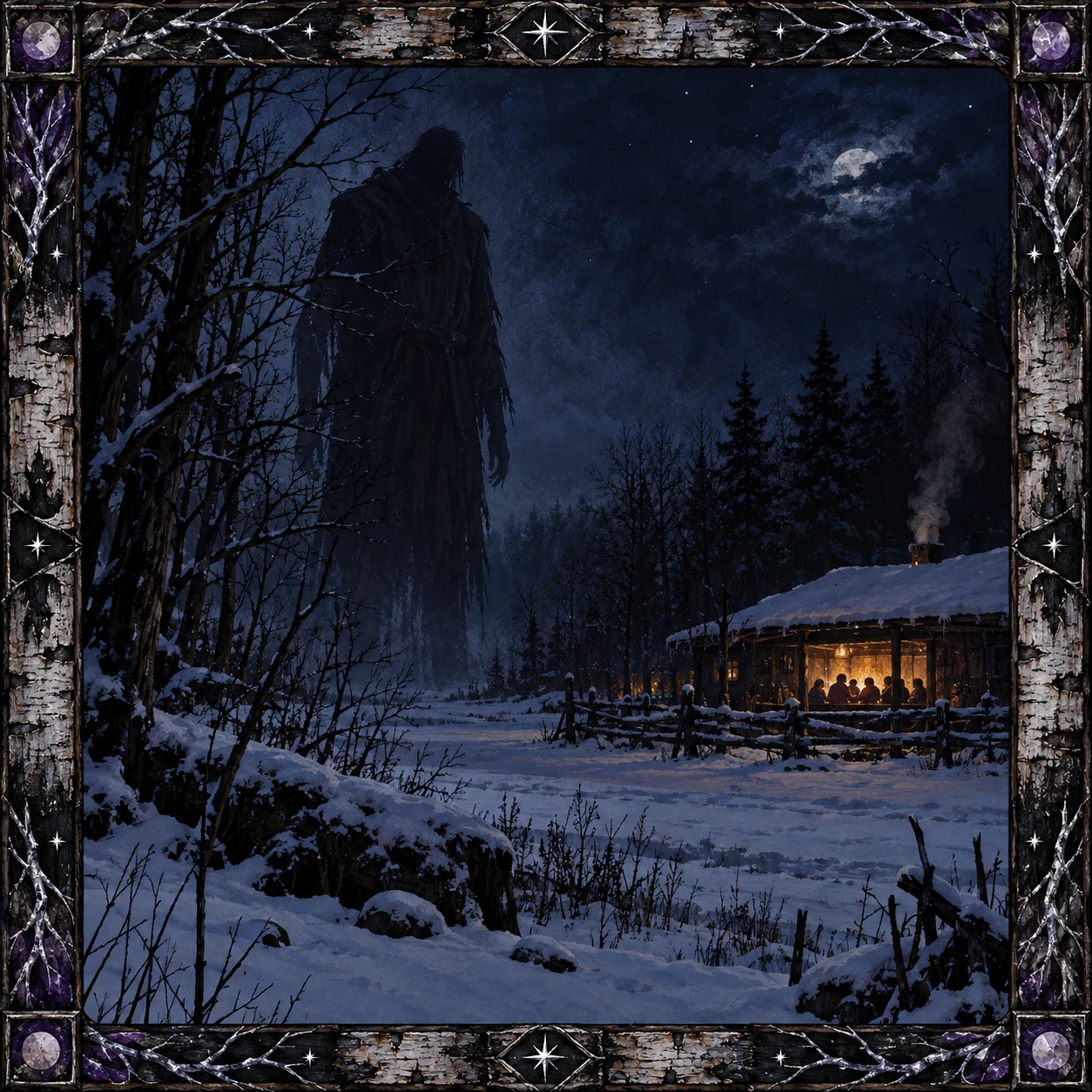
Wiindigoo is a winter cannibal in Ojibwe accounts, a being whose consuming hunger also gives shape to stories about greed, responsibility and care.
What could satisfy a creature that grows with every person it eats? Ojibwe.net’s language guide gives Wiindigoo an appetite that enlarges its own power. Other tellers bring that danger close to ordinary wants, and ask what might interrupt it.
Read the manuscript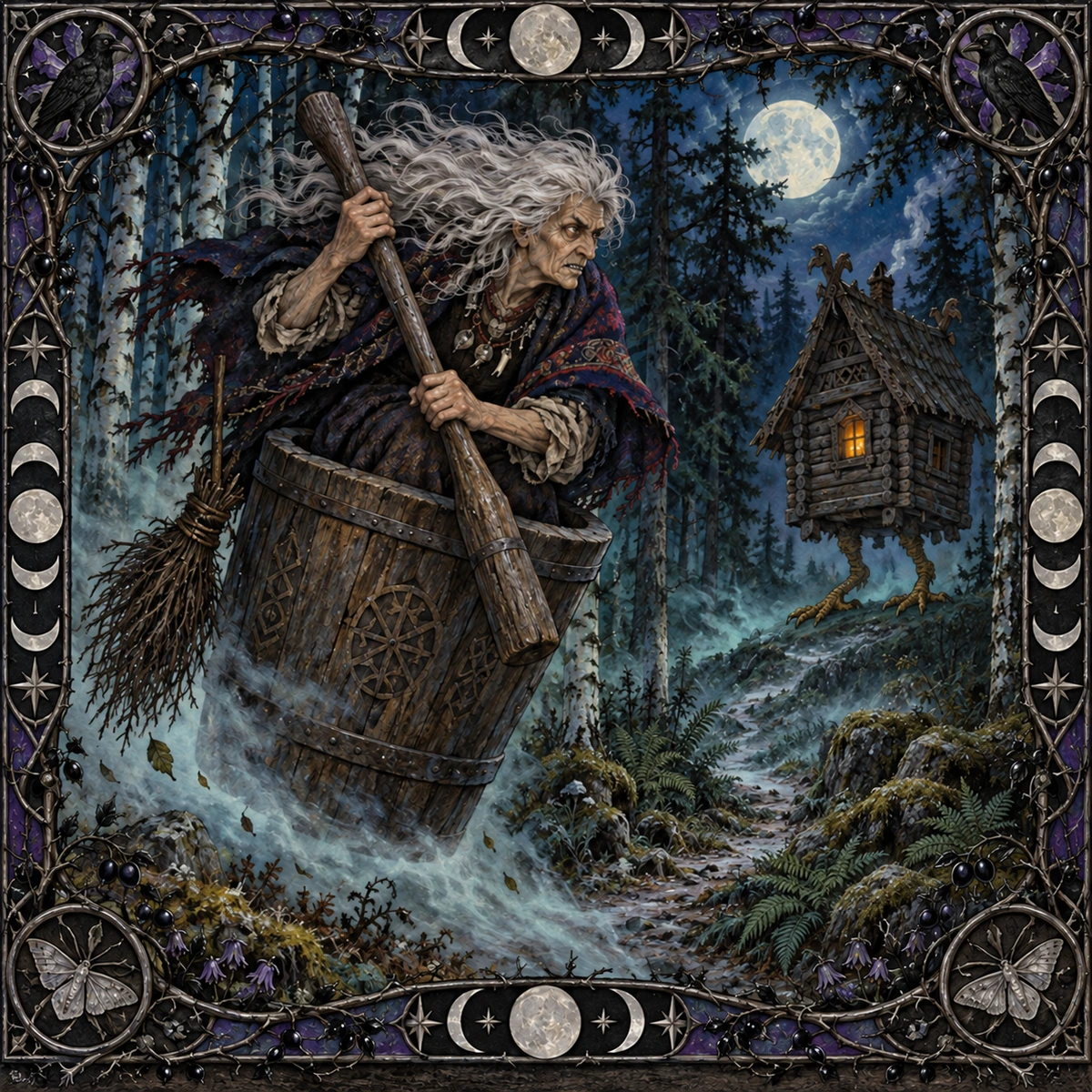
Baba Yaga is the forest witch of East Slavic tales, a dangerous host who may eat a visitor, demand impossible work, or send a traveller home with a powerful gift.
The girl is sitting at Baba Yaga’s loom when she learns what the bath is for: the witch intends to eat her. In translator W. R. S. Ralston’s tale, escape begins with a piece of bacon offered to a cat. Soon someone else must keep the loom moving while the child makes for the door.
Read the manuscript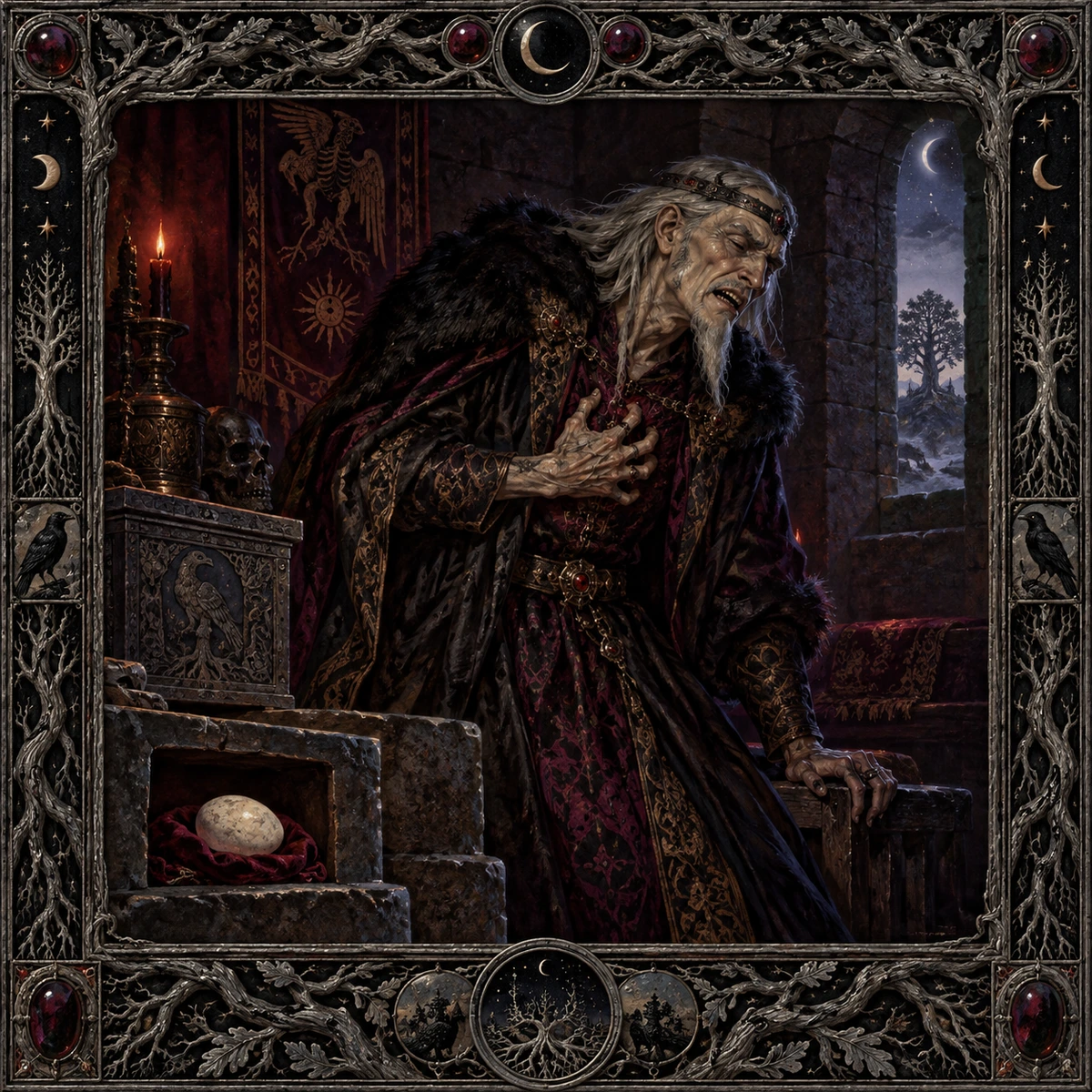
Koschei is a powerful captor in East Slavic wonder tales, called Deathless because defeating him requires a secret or extraordinary help.
Ivan’s mother hides her son before her captor returns. Koschei senses a stranger in the house, but she talks him out of his suspicion. Then she draws closer and asks where his death is hidden. The son who came to rescue her must wait while she persuades the Deathless to explain how he can die.
Read the manuscript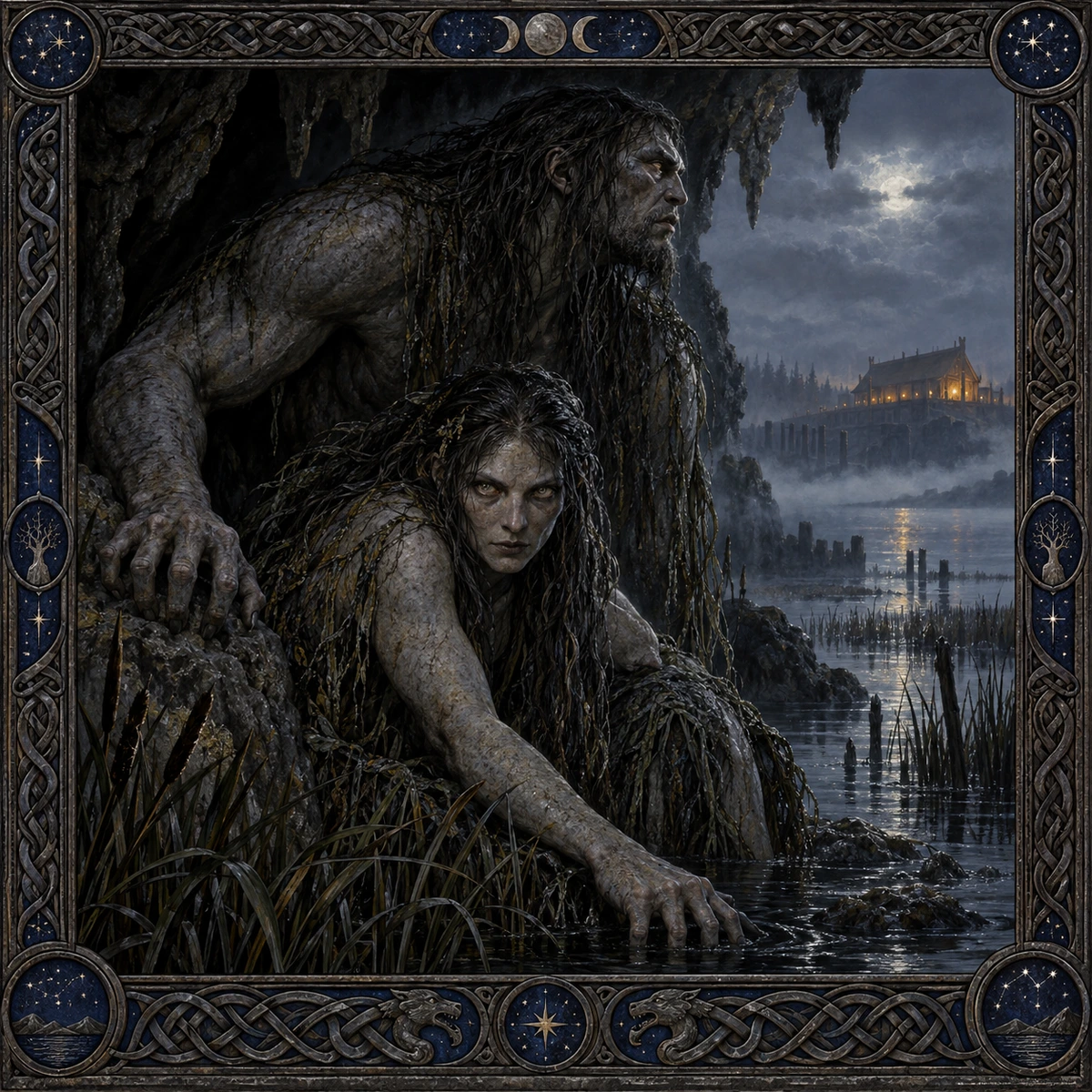
Grendel hunts the sleepers in a Danish king’s hall; his mother comes from the mere to avenge the son Beowulf has killed.
Heorot was built for feasting, music and the giving of gifts. Now its people leave before nightfall. For twelve years King Hrothgar has been unable to stop the visitor who carries his men away. Then a young warrior from across the sea asks to spend the night inside.
Read the manuscript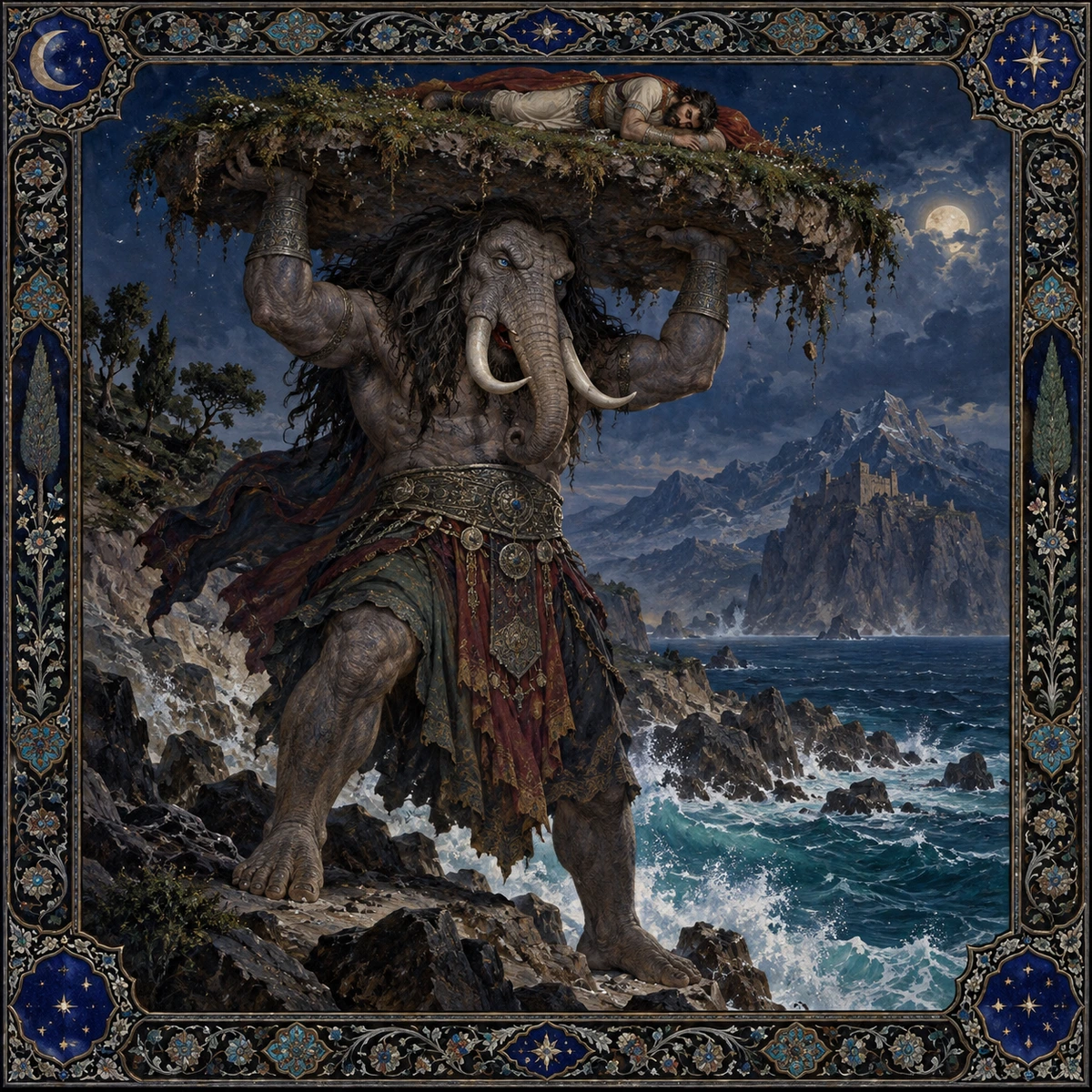
Akvān-e Dīv is the shape-changing demon who carries Rostam into the sky and offers him a fatal choice between mountain and sea.
Rostam wakes on a piece of ground held above the earth by a demon. Akvān offers him a choice: be thrown onto the mountains or into the sea. The hero’s answer will have to persuade his captor to do the opposite of what he asks.
Read the manuscript