Loading Luminary Oddities
Please wait while the next page arrives.
Loading this page…
Return homePlease wait while the next page arrives.


 Bestiary of Cryptids & Legendary Creatures
Wonder at the edge of the known
A kappa’s encounter with a horse leads to a bargain. A kelpie pursues a stolen bridle-bit to a household door. Far out at sea, the kraken troubles the boundary between island and animal. These waters also hold songs, carved figures and accounts tied to named rivers and coastlines. The manuscripts follow what draws people toward the water, what meets them there and what changes when they return.
Search by name, place or tradition, or use the filters to explore a group of creatures.
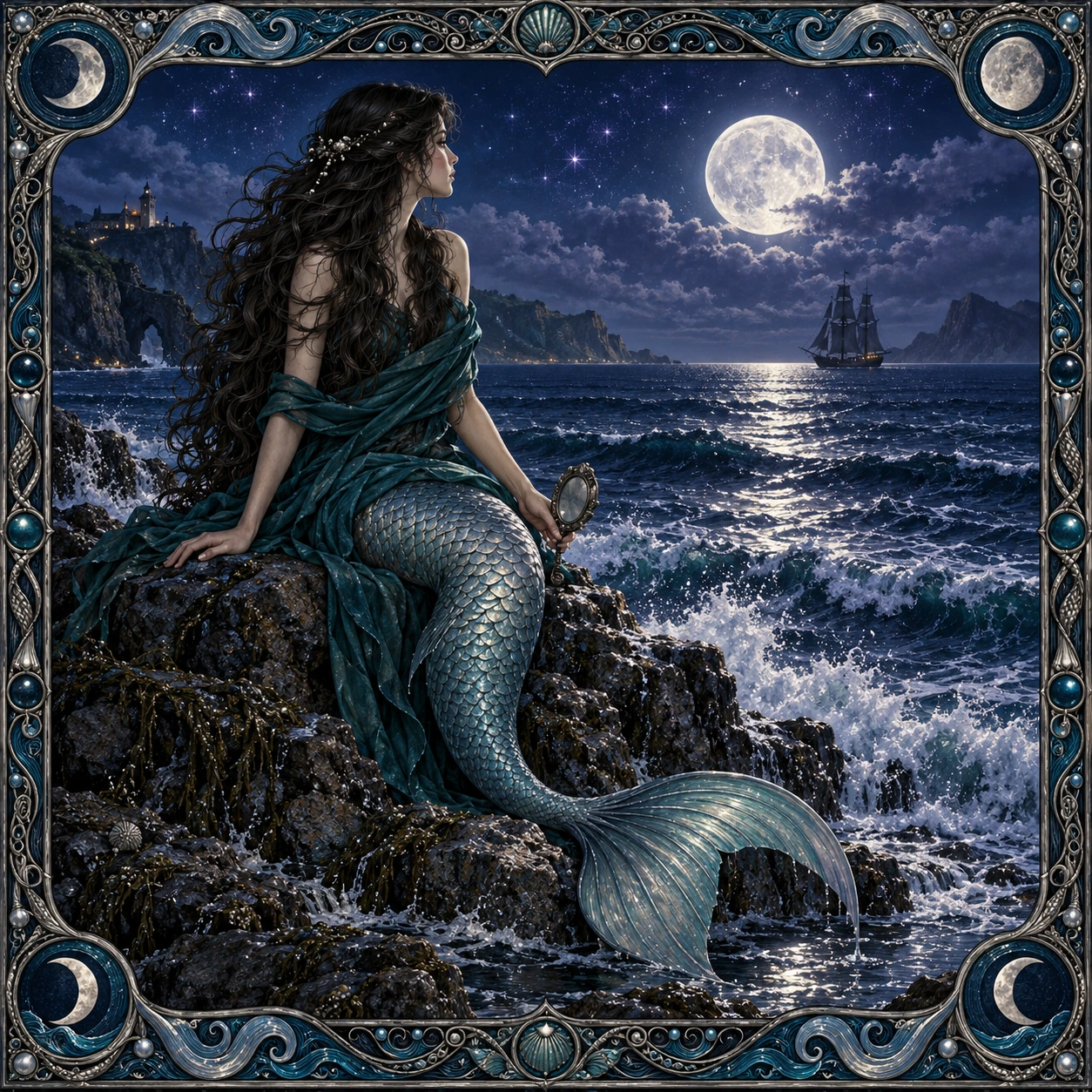
A mermaid combines a human upper body with a fish tail, appearing in European sea songs, Cornish storytelling and literary tales of longing.
A ship’s anchor has caught on someone’s front door. The woman asking its captain to move it rises waist-high from the sea, with yellow hair around her shoulders and children inside her underwater home. In William Bottrell’s Cornish story, a mermaid’s simple request sends the terrified sailors hurrying away.
Read the manuscript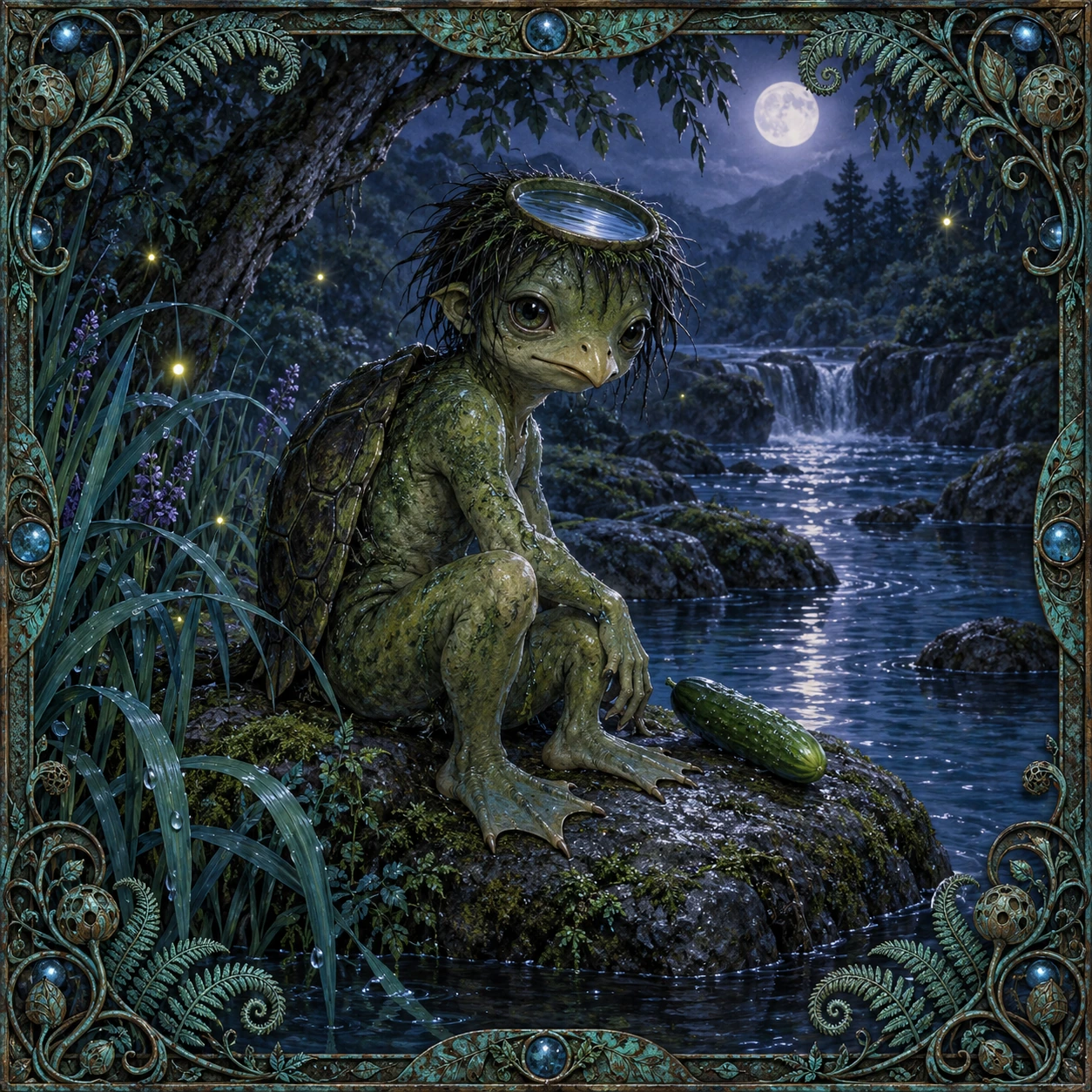
A Japanese water-being with a hollow in its head can drag a horse under—or bargain for its own life when the horse pulls it ashore.
The horse came to drink; the river-being came to seize it. In the Kawachi-mura story Lafcadio Hearn recorded, a belly-band catches the attacker’s head and the frightened horse drags it onto dry land. The villagers gather around their captive. It bows to the ground and begs aloud for mercy.
Read the manuscript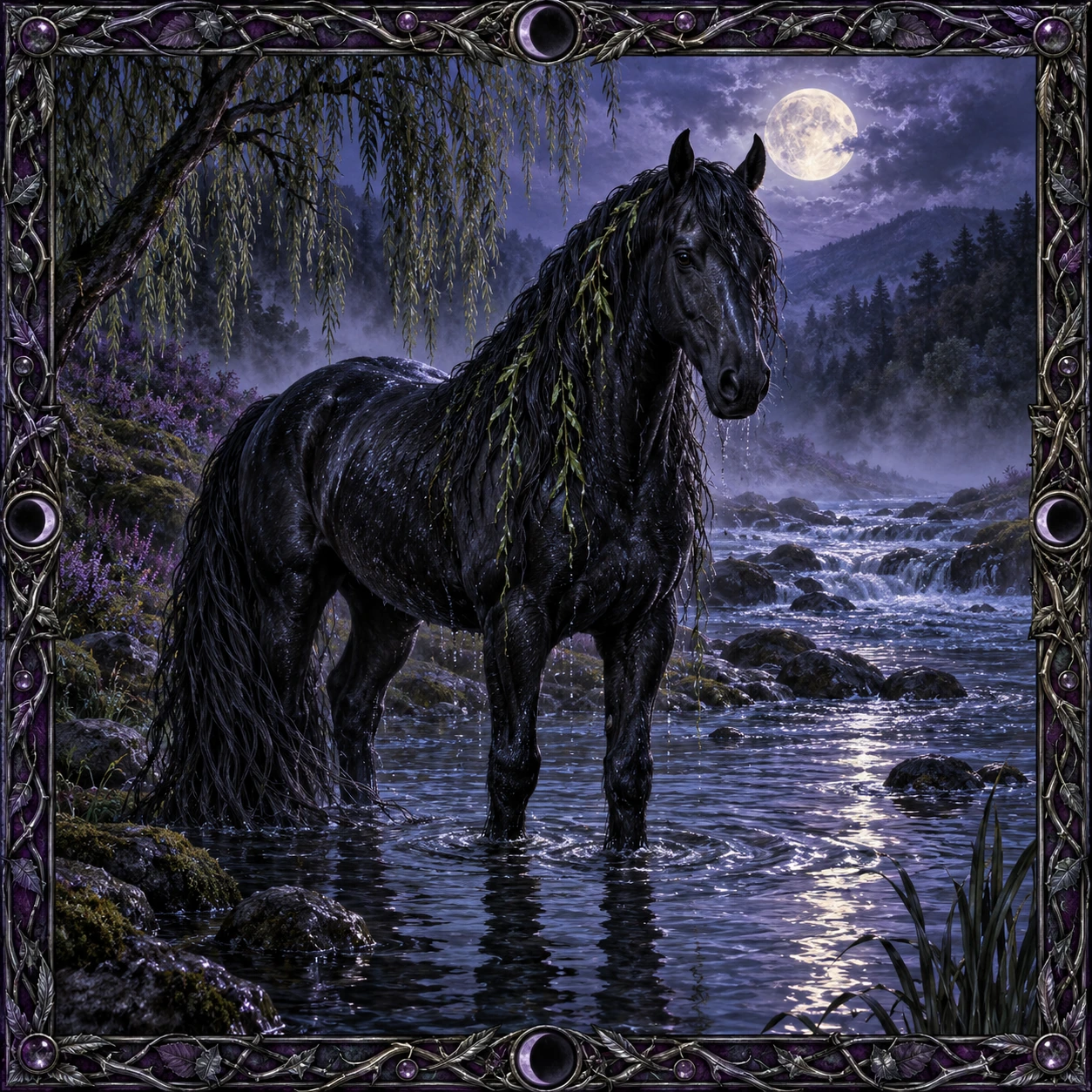
The kelpie is a Scottish water-spirit often seen as a horse, whose apparent usefulness can lure a traveler toward drowning.
James Macgrigor reaches home with a stolen bridle-bit in his pocket. The horse he took it from is already waiting at the door. It declares that he and the bit will never cross the threshold together. In William Grant Stewart’s telling, the quarrel has followed him off the road and put his own household beyond his reach.
Read the manuscript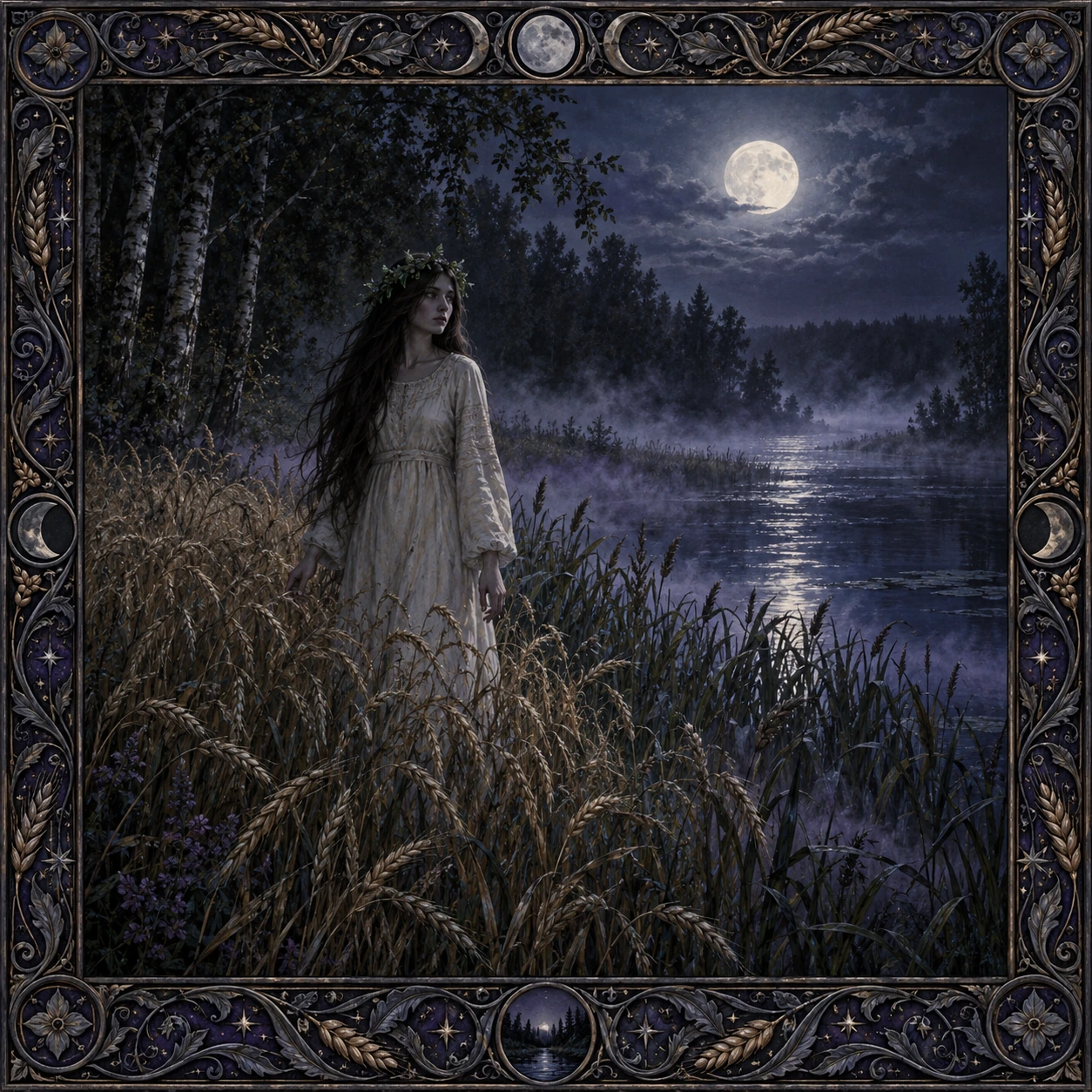
Rusalki are human-shaped beings in Slavic traditions, linked with the dead, flowering fields, woods and water.
A shepherd plays while the rusalki dance. By morning, his foot has beaten a hollow into the ground. William Ralston’s nineteenth-century collection places these dancers among fields as well as waters: their passing can leave richer grass, yet their invitation can cost a human life. To meet a rusalka is not always to meet someone who belongs in the river.
Read the manuscript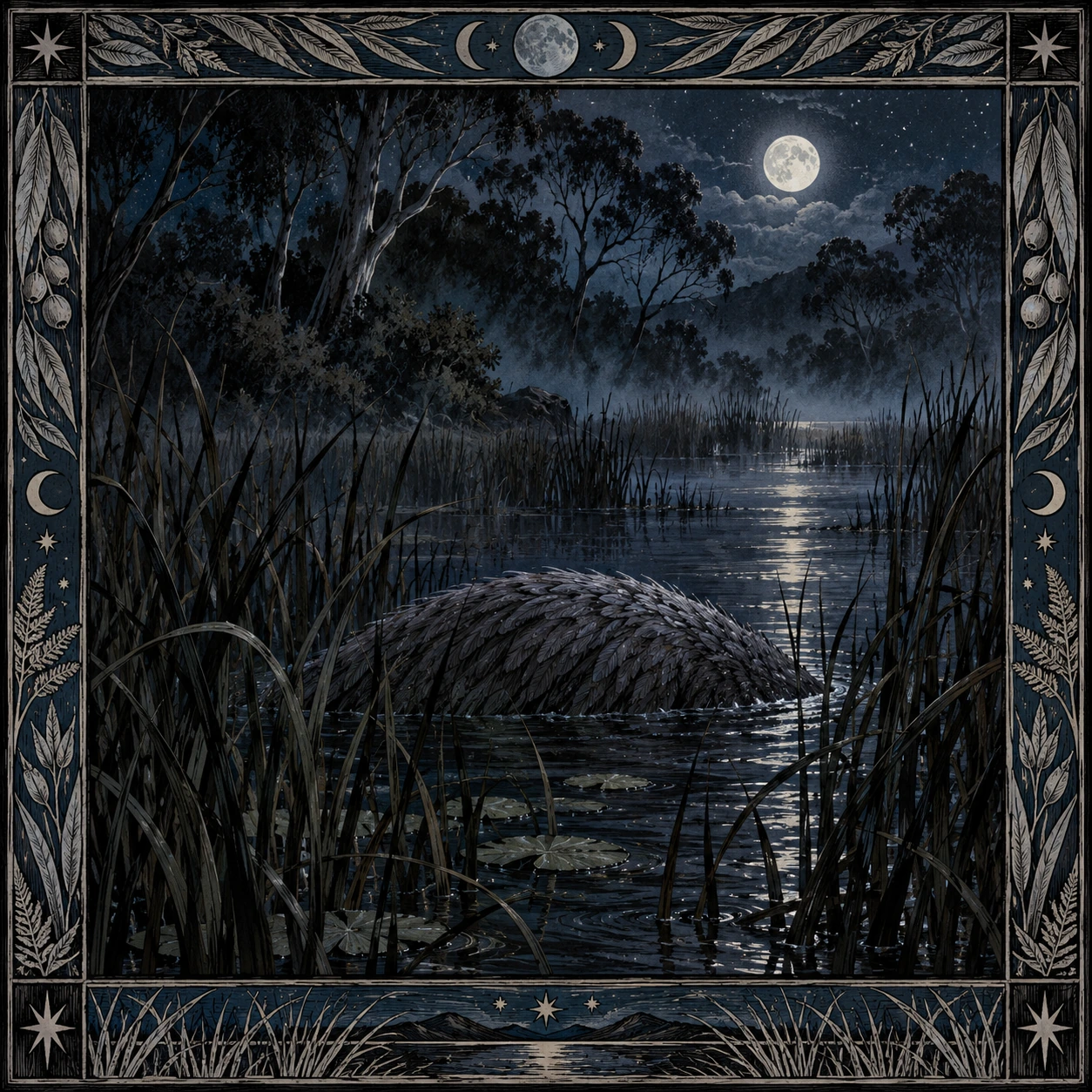
Bunyip names feared beings of Australian waters, variously described as feathered, furred or seal-like, whose encounters can end in drowning or transformation.
Something beneath Mustons Creek takes the bait and nearly tears the fishing line from a young man’s hands. His companions help him haul it ashore: a creature resembling both a calf and a seal. Across the pool, its mother rises from her den. In the Victorian tale printed from W. Dunlop’s notes, the fisherman refuses to surrender his extraordinary catch.
Read the manuscript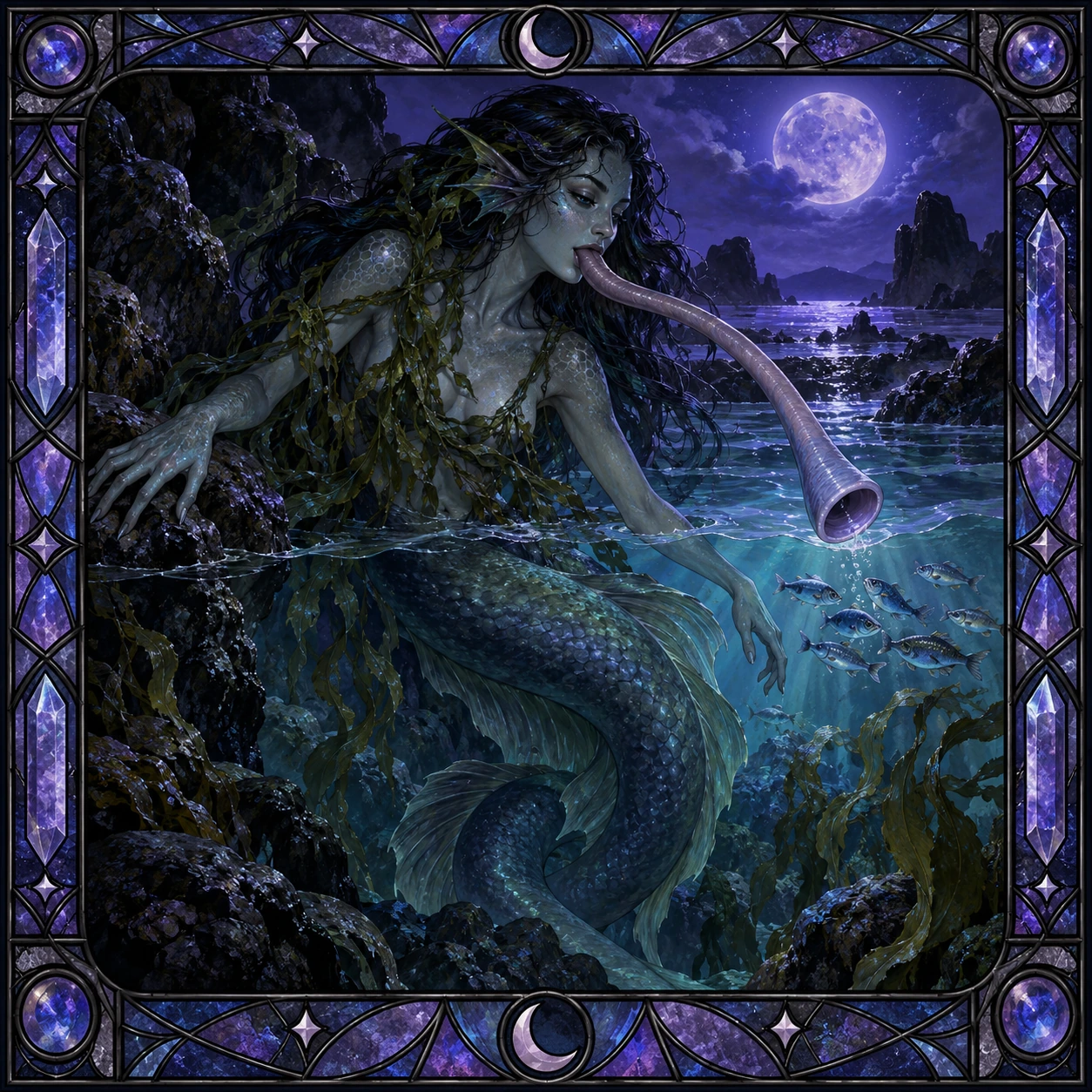
Marakihau is a Māori sea-being with a curling body and hollow tongue, represented in carvings, paintings and ancestral accounts.
On a carved wall slab, a fish approaches a cup-shaped opening. It is the end of the marakihau’s tongue.
Read the manuscript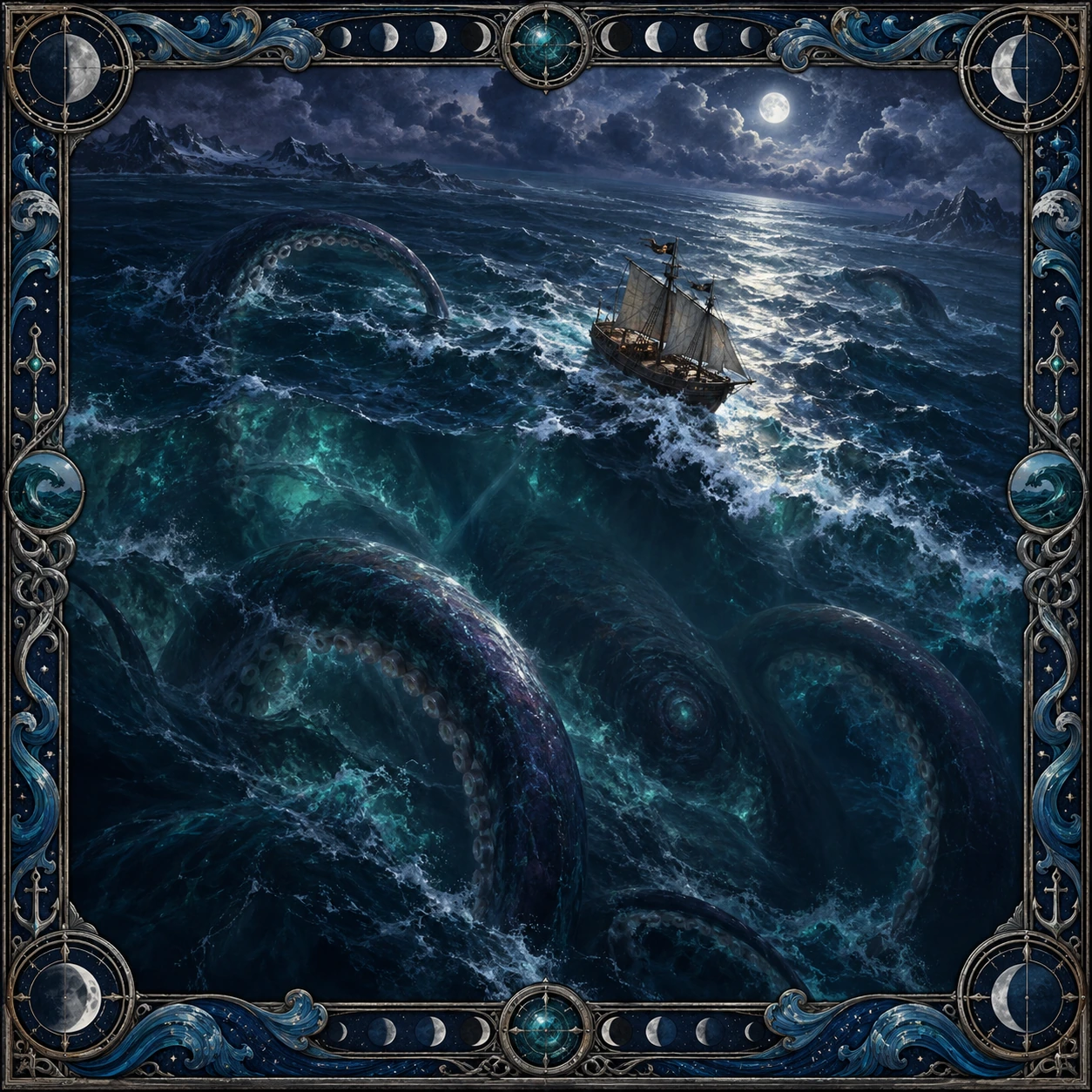
The kraken is an immense sea-being of Norwegian lore, depicted as an island-like presence and, in later images, a giant cephalopod.
The hooks come up crowded with cod and ling. The fishermen have found good water—or something beneath it. Their lines reach only a fraction of the depth they expect from the landmarks ashore. In Erik Pontoppidan’s account, the crews keep fishing, but watch the depth. If it diminishes again, they must leave.
Read the manuscript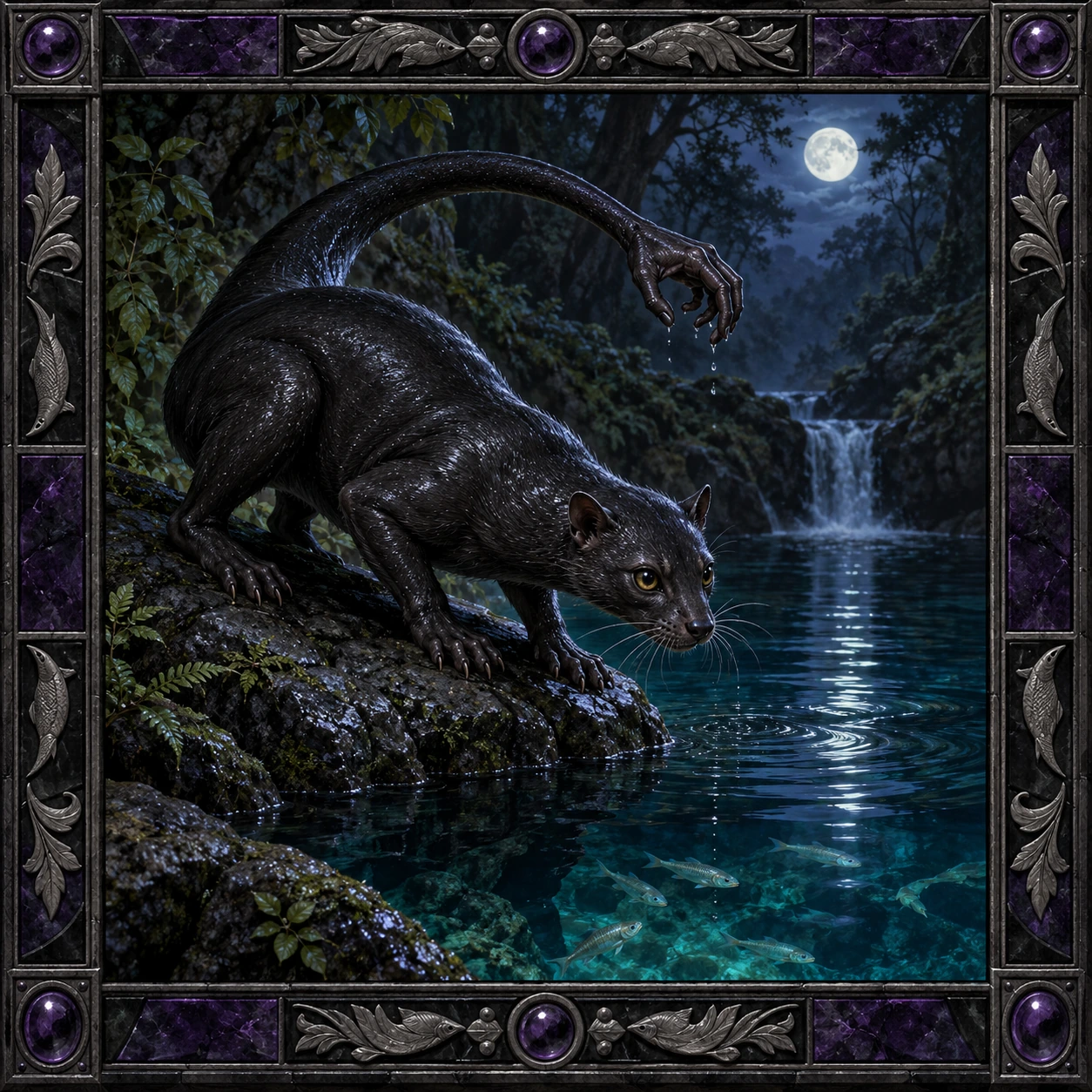
The ahuizotl is a small Nahua water-being that lures people to the bank and seizes them with the hand at the end of its tail.
A cry beside the water sounds like a child needing help. Someone goes to look. In the Florentine Codex’s account, the waiting ahuizotl reaches with the hand at the end of its tail and draws that person below.
Read the manuscript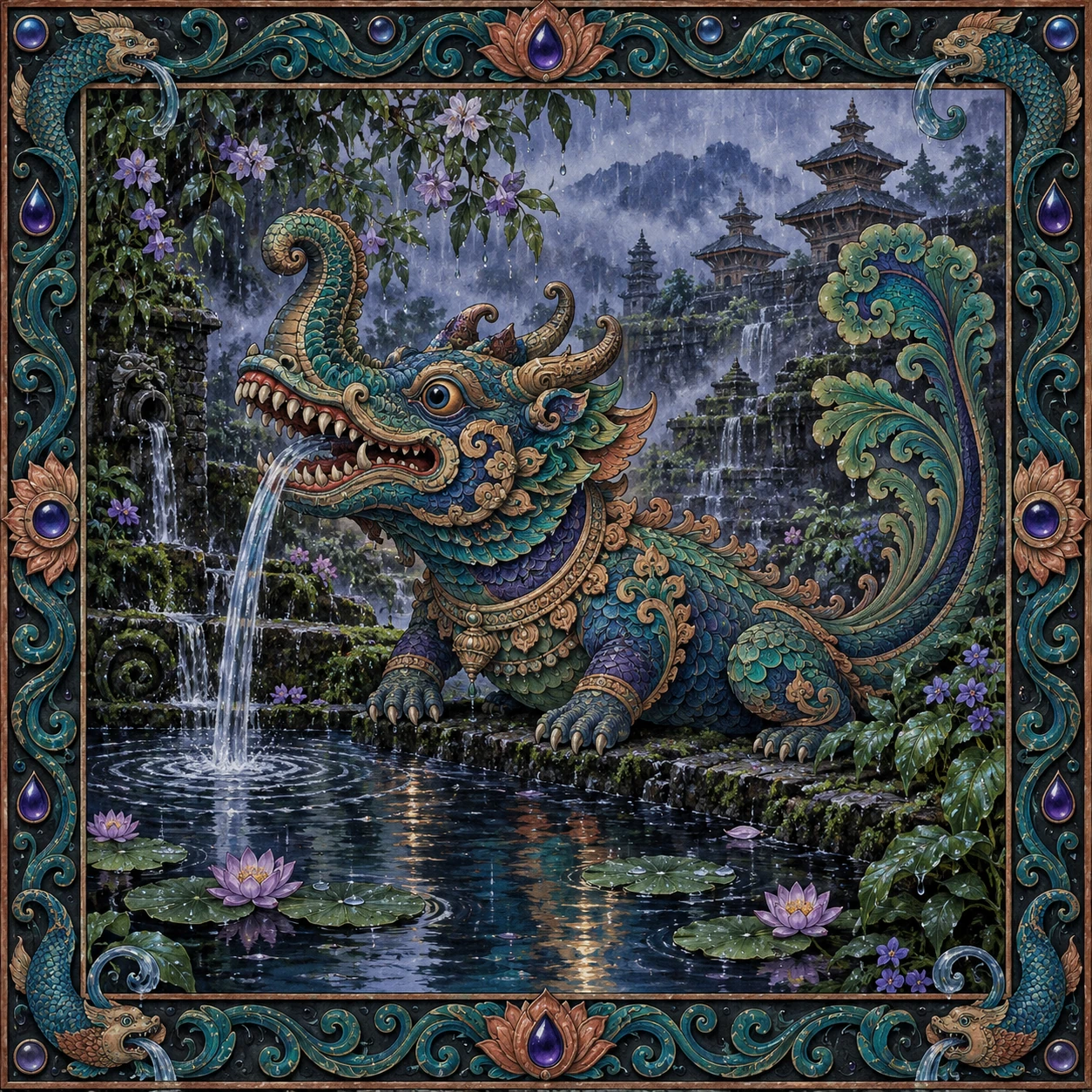
Makara are composite aquatic beings whose changing bodies carry river goddesses, frame sacred entrances and turn fountains and ritual vessels into creature forms.
A goat projects from a monster’s open jaws at the Golden Fountain of Bhaktapur. A curling snout rises above it; smaller creatures crowd the metalwork behind. The makara’s fantastic face is also the working end of a water supply.
Read the manuscript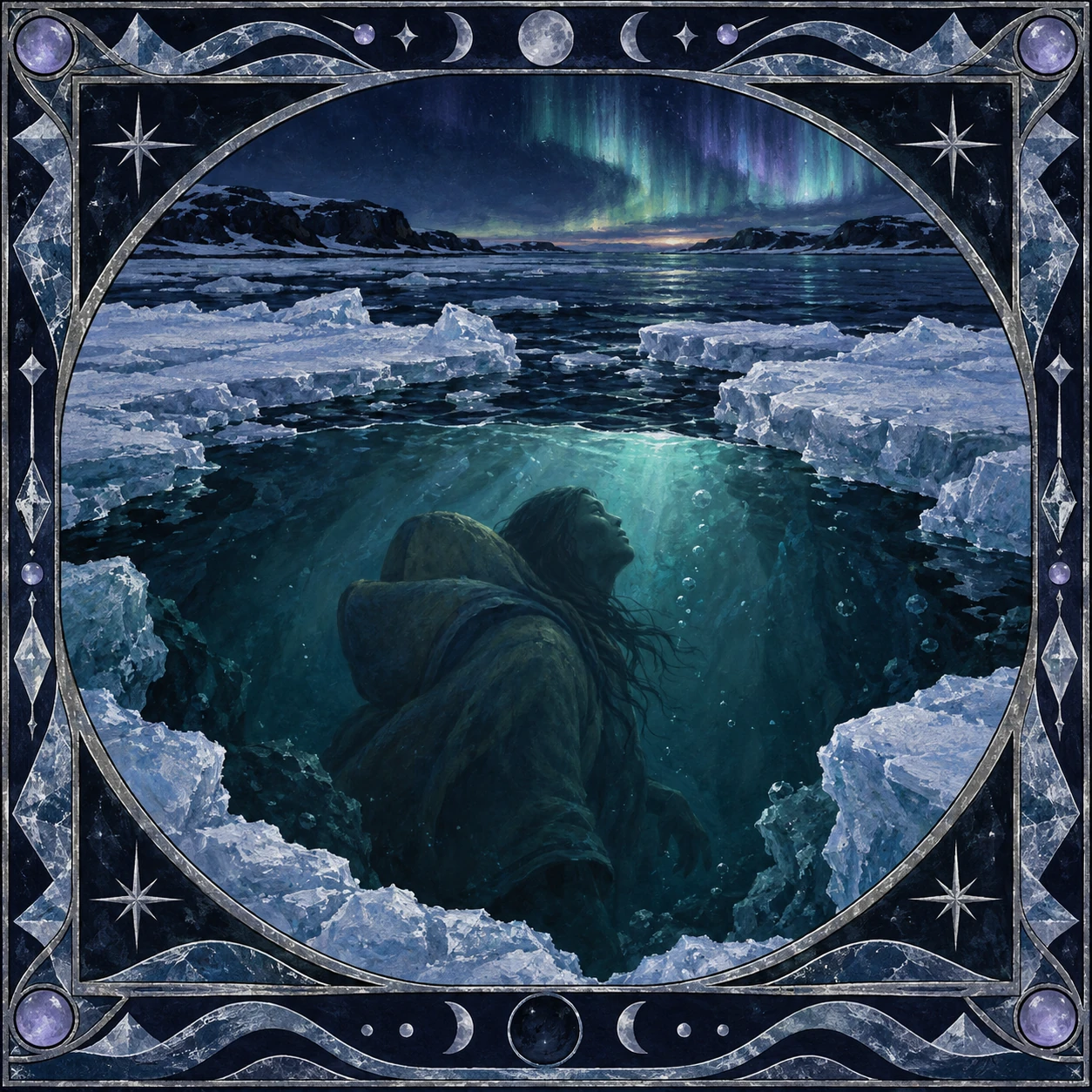
Qalupalik is a humanlike water being in Inuit accounts, feared for carrying people away in a great pouch beneath the sea or lake ice.
The boy sits beside a crack in the ice, playing with seaweed. Beneath him, Kalopaling holds the other end of a tether. When two people approach, the child warns his captor. In the account published by Franz Boas, getting him out of the water will be only part of bringing him home.
Read the manuscript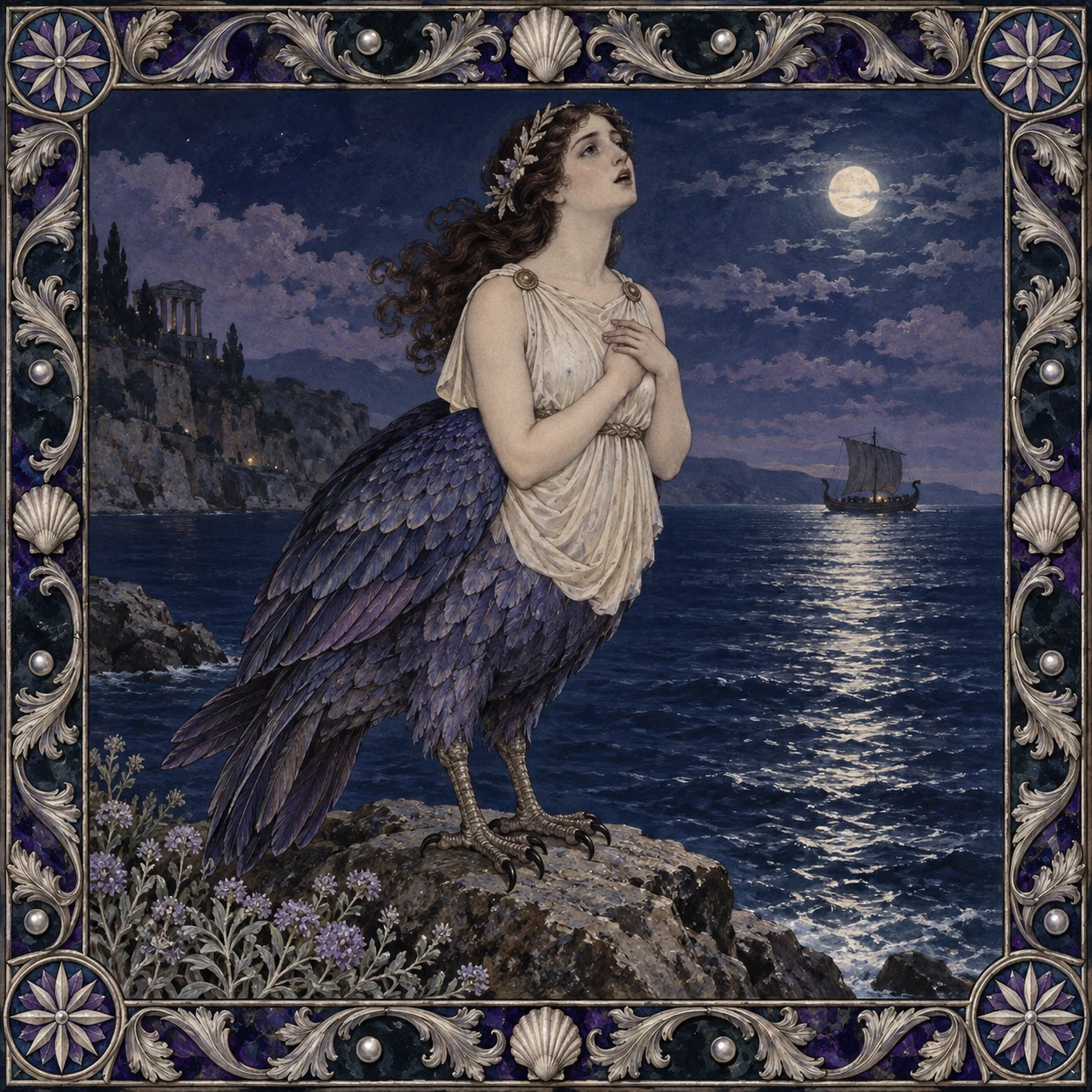
The Greek Sirens are singers whose irresistible voices threaten a sailor’s return; poets and artists also give these bird-bodied beings a place among mourners.
The Sirens recognise Odysseus and promise the knowledge he longs to hear. Around their shore lie the remains of earlier listeners. Their song makes danger sound like a welcome meant especially for him; escape will depend on companions who refuse his own request for release.
Read the manuscript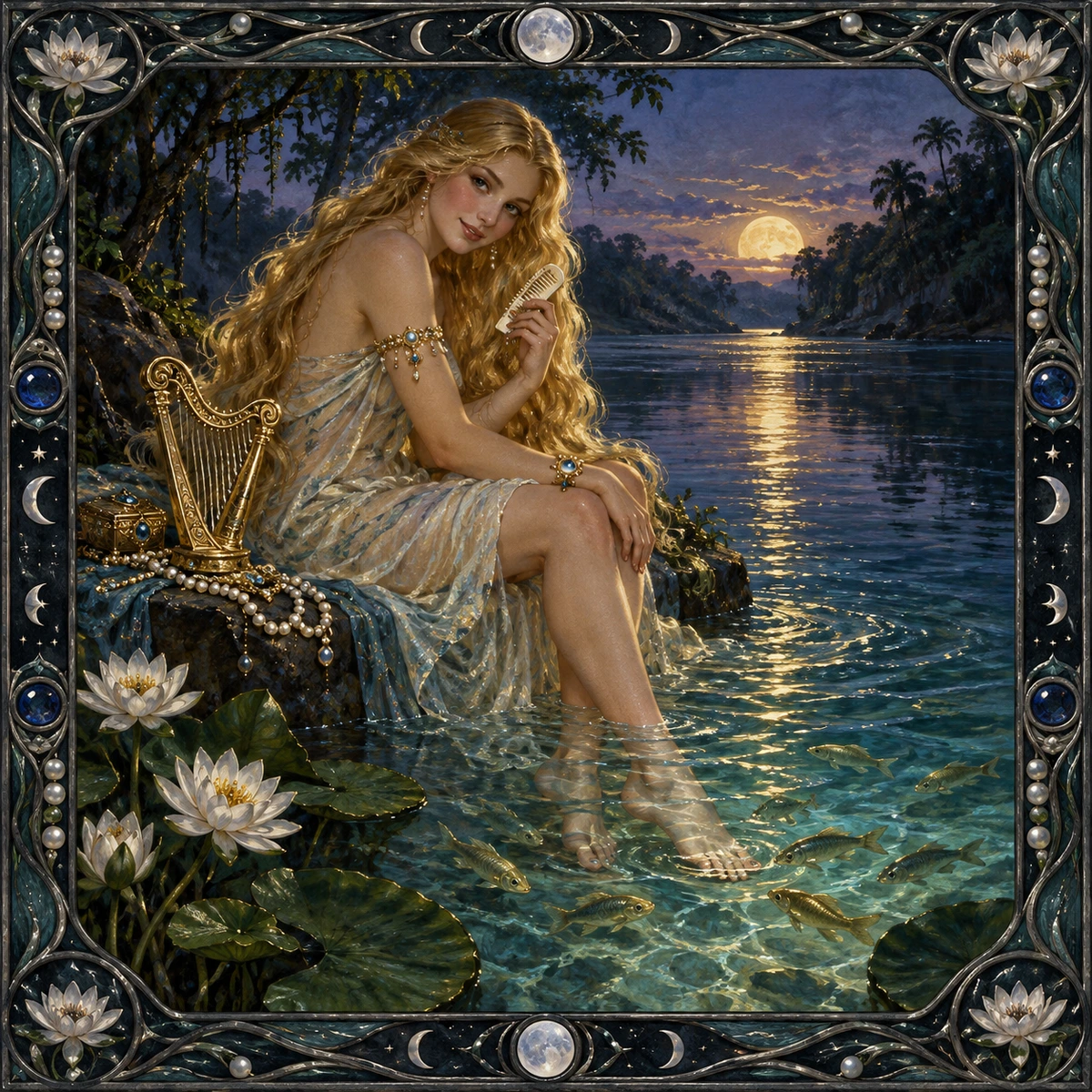
Iara is an alluring water woman whose beauty and promises draw watchers towards a dangerous world beneath the surface.
A child points into the water. The woman below has golden hair, an ivory comb and a smile sweeter than his mother’s. He wants his mother to admire her too. Instead, she warns him to look away.
Read the manuscript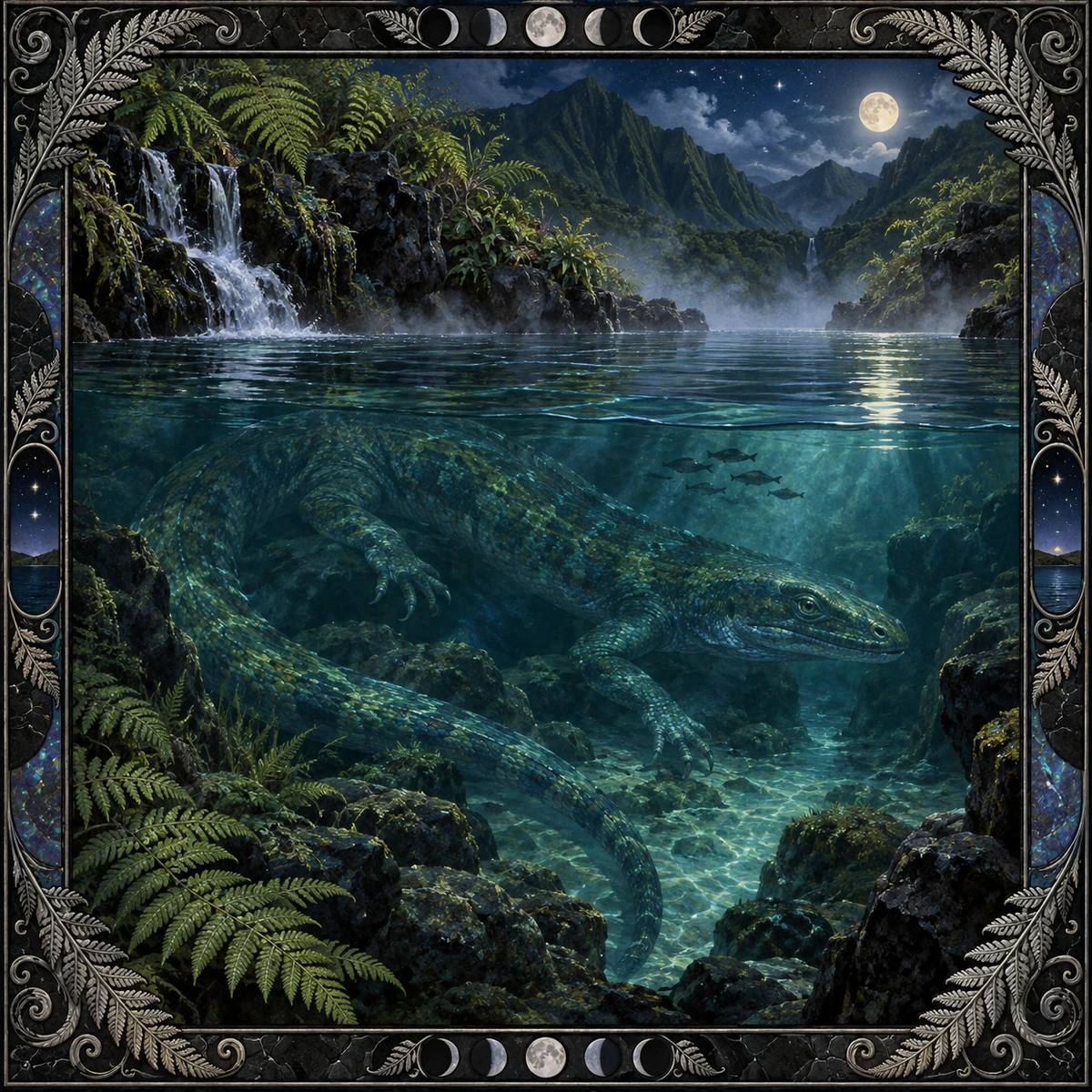
Moʻo are Hawaiian reptilian and water beings whose named stories include ancestral help, fishpond guardianship and deadly encounters along island routes.
The children have escaped their stepmother again, but their new refuge has no water. The sister wants to bathe; her brother wants to stay where they are harder to find. In E. M. Nakuina’s The Punahou Spring, he knows someone who might make both wishes possible: Kakea, a moʻo and an ancestor on their mother’s side.
Read the manuscript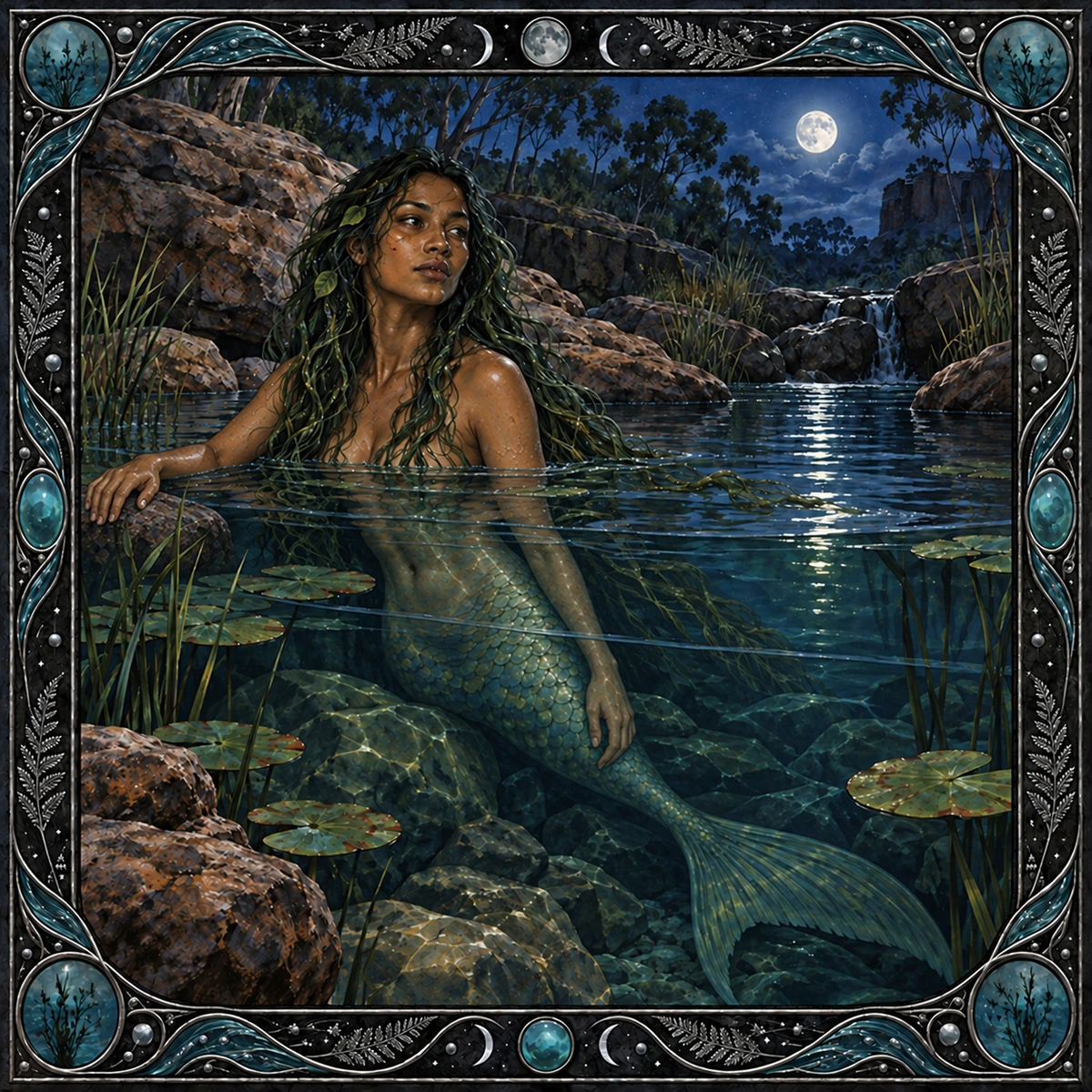
Yawkyawk are female freshwater spirits of Arnhem Land, whose fish-tailed bodies, transformations and ties to particular places take distinctive forms in Aboriginal story and art.
A fork in a tree can become a tail. For Owen Yalandja, the movement of a water spirit begins in the wood he chooses: a curve that his carving will follow, then a surface alive with painted scales.
Read the manuscript