Loading Luminary Oddities
Please wait while the next page arrives.
Loading this page…
Return homePlease wait while the next page arrives.


 Bestiary of Cryptids & Legendary Creatures
Wonder at the edge of the known
A wolf approaches a king and asks, without words, to be spared. A woman’s missing sealskin binds her to a life ashore. A fox enters human company as a companion, stranger or relative. A change of form can begin a friendship or conceal a danger; a discovered secret can undo a household. These manuscripts follow the bargains, disguises and revelations that make each transformation consequential.
Search by name, place or tradition, or use the filters to explore a group of creatures.
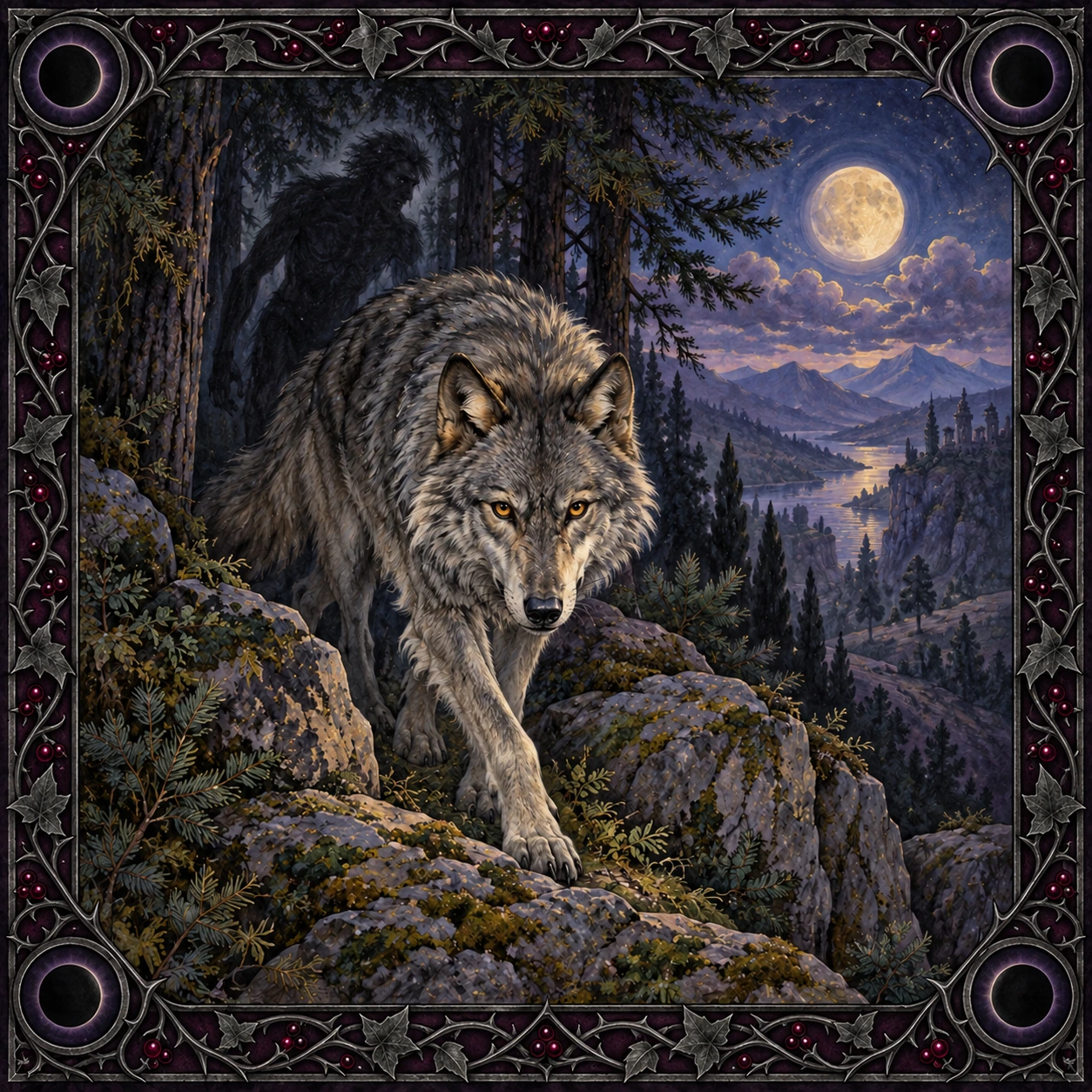
A person becomes a wolf, carrying human cruelty, loyalty or a hidden life into an animal body.
The hounds are closing in when the wolf runs to the king. It catches his stirrup and kisses his foot. In Marie de France’s Bisclavret, the gesture interrupts a hunt: the king sees a plea for mercy where his companions see prey. He does not yet know whom he is protecting.
Read the manuscript
Selkies are seal-folk of Scottish island tales, able to come ashore as humans but vulnerable to anyone who steals the skin that carries them home.
The youngest daughter stayed home because her foot was sore. Everyone else was out, and her mother was searching the house. The girl remembered something hidden above the bed: a skin her father had examined when he thought she was asleep. In Walter Traill Dennison’s Wastness tale, that small disclosure changes the family forever.
Read the manuscript
Foxes take human form, repay kindness and bring danger or prosperity to households in Japanese tales. At Inari shrines, foxes have a distinct sacred role as the deity’s messengers.
A messenger brings the medicine a merchant needs for his dying son. He will accept neither a present nor a bed for the night. The boy begins to recover. Three days later, the man commissioned to find the medicine arrives empty-handed—and knows nothing about the stranger who delivered it.
Read the manuscript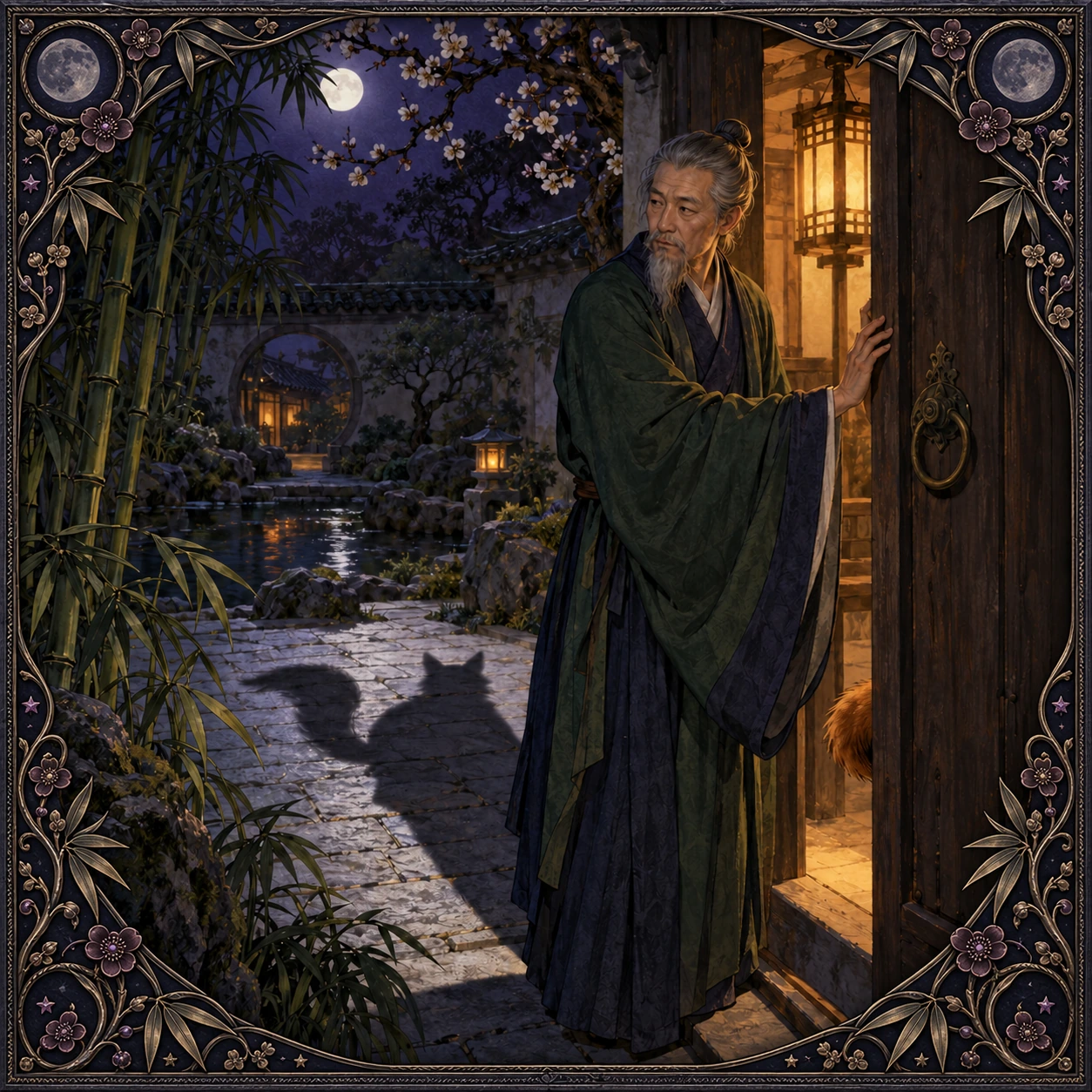
Chinese fox spirits can become human companions, repay a kindness with hidden knowledge, or enter a household carrying loyalties of their own.
Ch’ê reaches across his bed and touches something soft. A light reveals a drunken fox beside the empty wine bottle. He could kill it. Instead, he draws the covers over his unexpected companion and keeps the candle burning to see what it will become.
Read the manuscript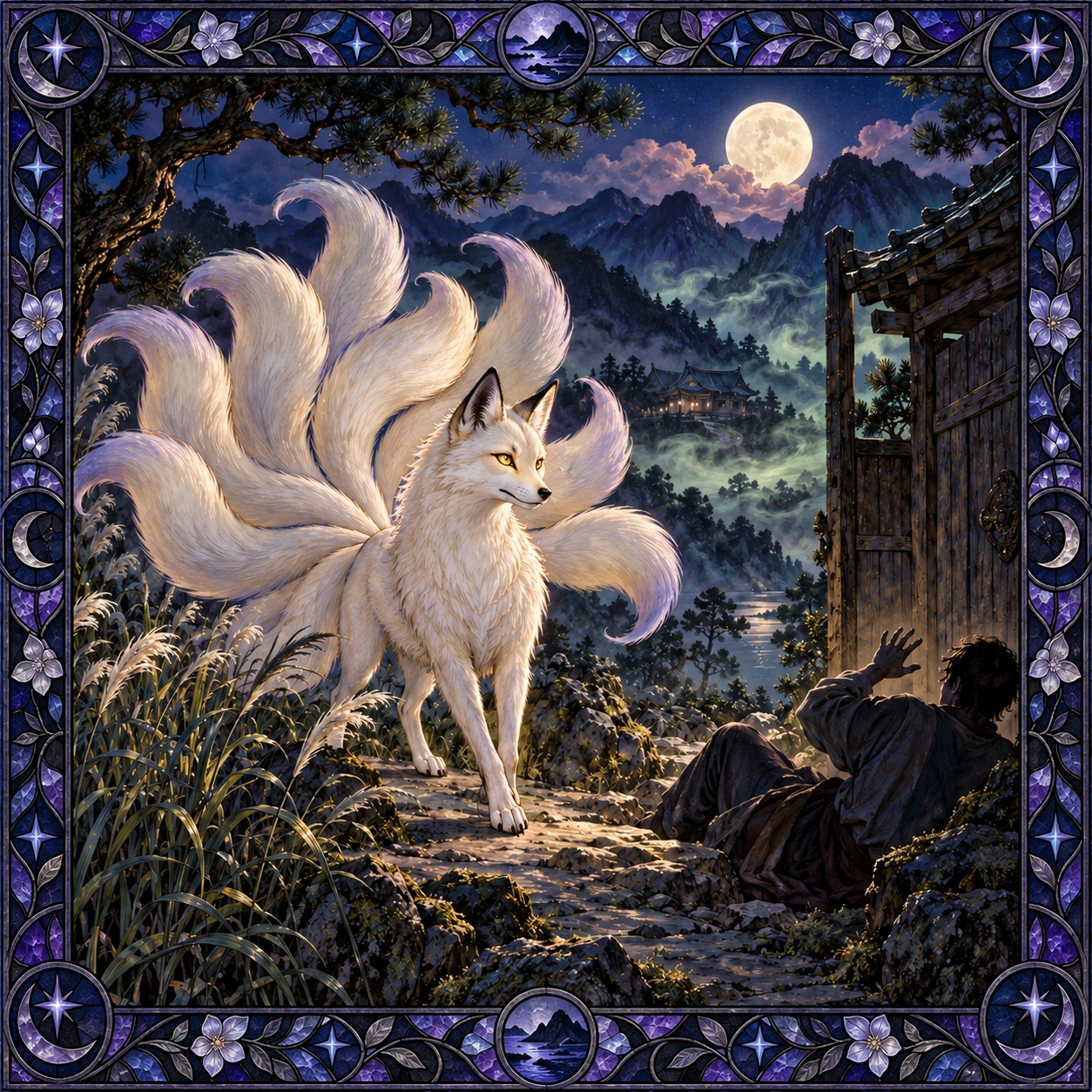
A nine-tailed fox of Korean lore, the kumiho can appear as a woman whose beauty conceals a dangerous hunger or a wish to become human.
The young scholar is studying alone when a woman enters his pavilion. He knows the women of the household; this stranger is none of them. Asked who she is, she only laughs. In Im Bang’s fox tale, the visitor’s silence leaves Yi Kwai to decide what has come through the door—and what he dares to do about it.
Read the manuscript
The Soucouyant is a Caribbean night traveller who sheds a human skin, flies as fire and drinks blood, then must recover the abandoned covering before daylight.
In a Trinidadian retelling, an elderly woman is stranded naked on a police-station water tank. Her skin waits in a mortar beside her. Getting down will cost another woman her life.
Read the manuscript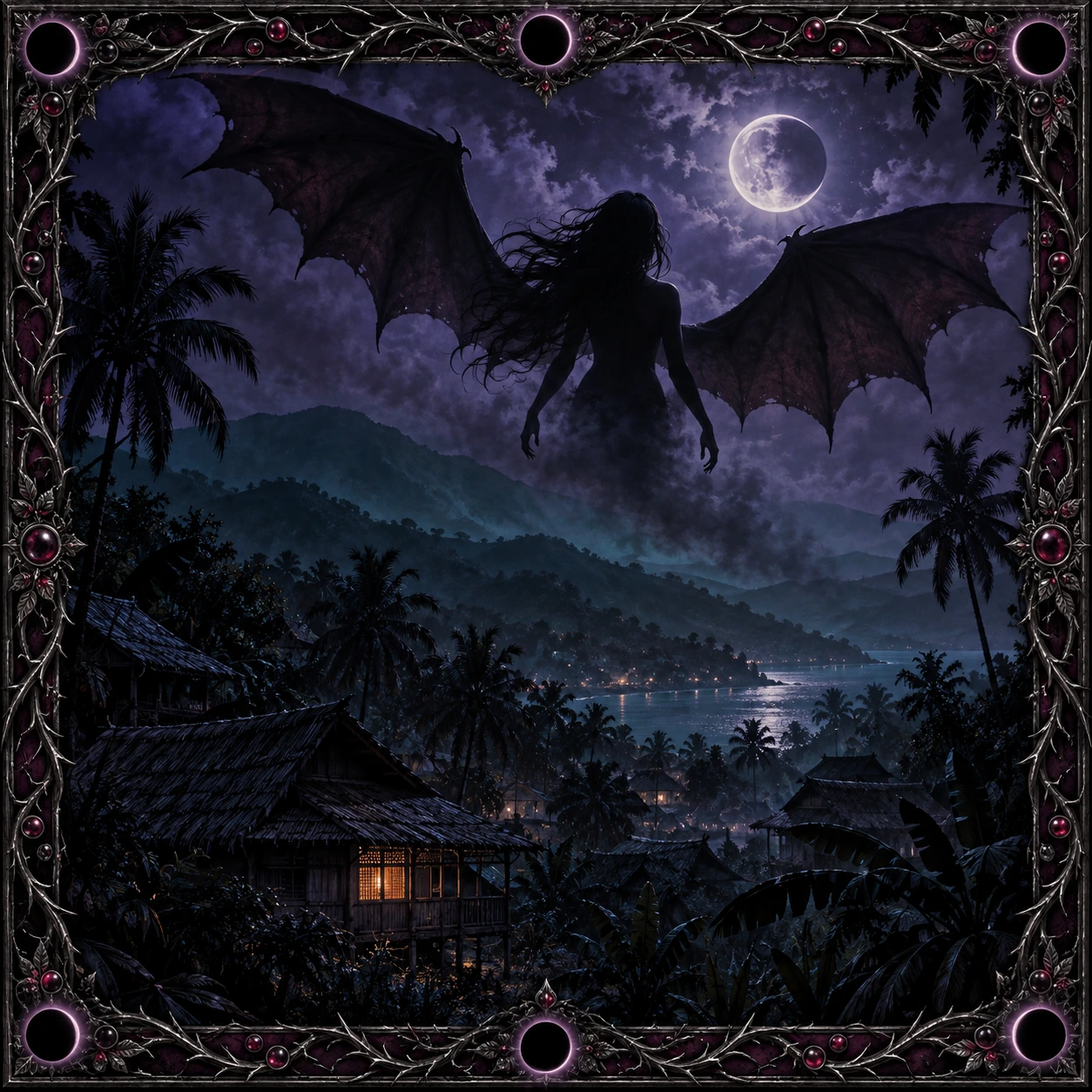
The manananggal is a Philippine night-flyer whose upper body leaves its legs behind, gaining wings while becoming vulnerable to anyone who finds the abandoned half.
The sailors have been welcomed into a splendid house in Capiz. Dinner is served on fine dishes, the wine is excellent, and everyone is laughing. Then one guest notices his fork: it has the shape of a human hand. In Fletcher Gardner’s collected tale, the men decide to stay awake.
Read the manuscript
The Boto Encantado is an Amazonian river dolphin that takes human form, appearing as a stranger at a celebration, a household visitor or a companion beside a canoe.
A white shape rests on the end of a fallen tree above the river. The canoe traveller thinks it is a bird. Then it turns toward him, and he sees a young woman dressed in white. He wants to speak, but keeps rowing. This is how a man from Bom Jesus, on Marajó, begins the encounter he remembers from his youth.
Read the manuscript
Krasue is a Thai nocturnal being whose glowing head and trailing entrails leave an ordinary-looking person’s body at night.
The washing has not dried, and the clothes stay outside overnight. By morning, marks on the fabric acquire a frightening explanation: something has wiped its mouth on them. Museum Siam’s Krasue warning brings the night visitor home through an ordinary garment.
Read the manuscript
Public scholarship describes skinwalkers as human witches in Diné/Navajo traditions, associated with animal disguise and harmful acts.
A presence at the edge of a home becomes a figure keeping pace with a car. In Peggy Alford’s study, stories changed as they passed from Diné accounts into Anglo-American telling: the danger moved toward the highway, and some narrators gave it the familiar name “wolfman.” Behind that change lies a specifically Diné subject whose public history includes both adaptations and firm decisions about what should remain untold.
Read the manuscript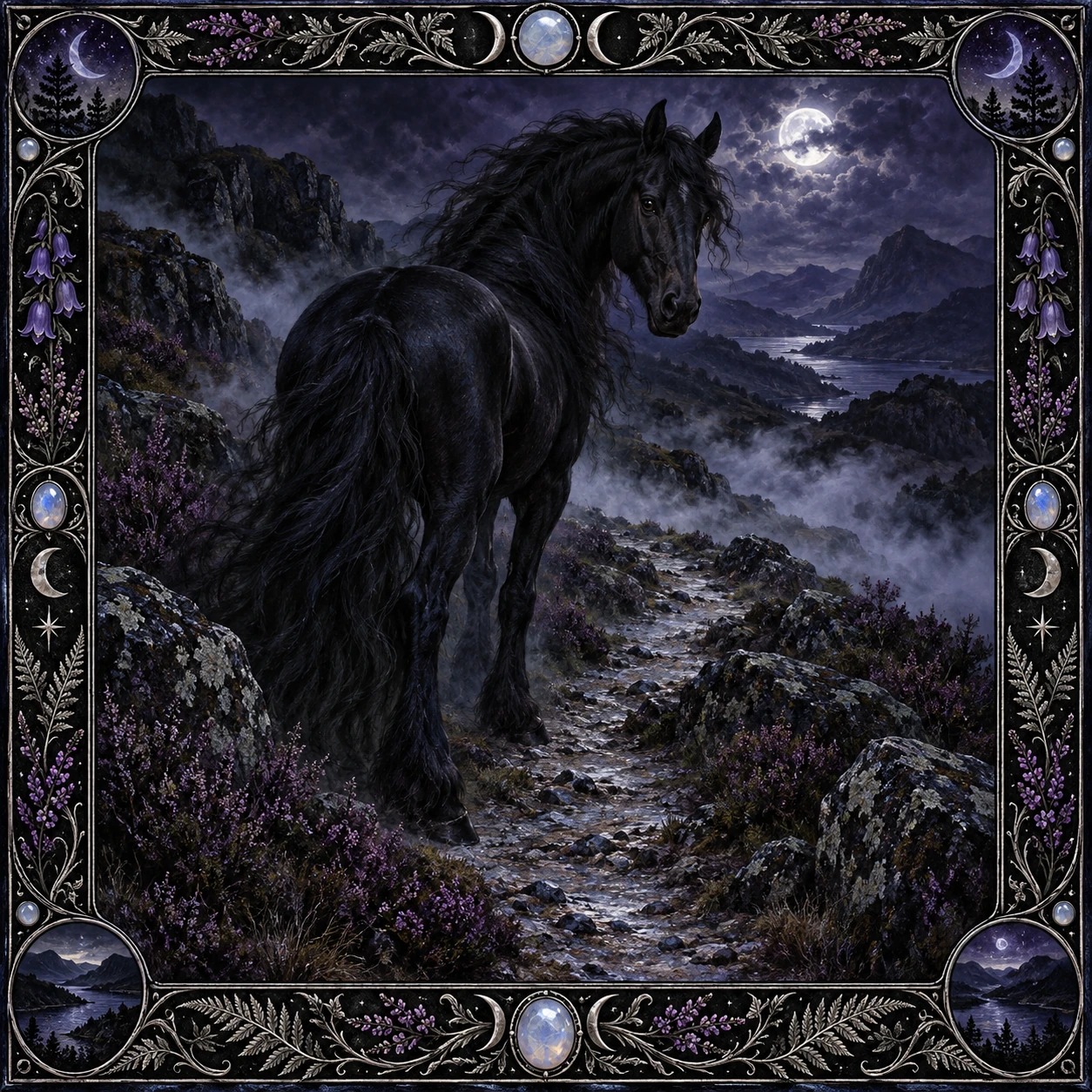
An unpredictable Irish shapeshifter, the Púca appears in tales of terrifying night rides, uncanny advice and unexpected help.
Phadrig hears something rush past him in the field. In Lady Wilde’s story, the farmer’s son calls to the Phouka and offers his coat against the cold. A young bull appears, lashing its tail. The boy puts the coat over it, and the creature becomes quiet enough to give him an invitation.
Read the manuscript
Mélusine is a fairy ancestress whose marriage, building works and serpent transformation turn on a broken promise of privacy.
Raymondin asks for only as much land as a deer-hide can enclose. Mélusine has told him how to make the request—and how to turn the hide into a narrow strip long enough to secure an estate. Before she is the serpent glimpsed through a forbidden door, she is the woman who knows how to found a house.
Read the manuscript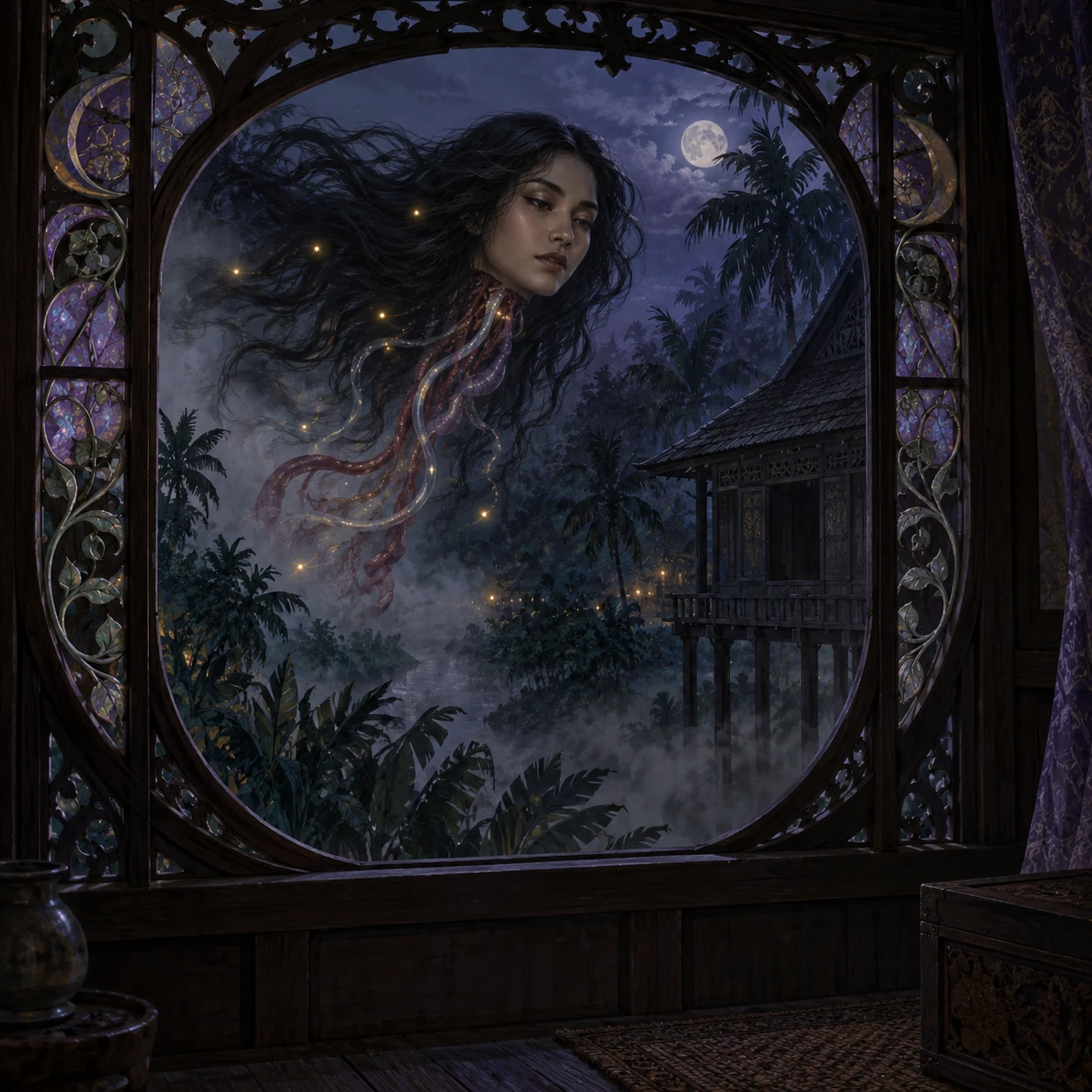
The Penanggalan of Malay accounts is a woman’s detached head that flies with its entrails hanging beneath it and seeks blood around homes.
In Abdullah bin Abdul Kadir’s recollection, a conversation in a Malacca household turns to a visitor no door was built to admit: a woman’s head, flying with her entrails beneath it. William Milne, a missionary, wants the story explained. Abdullah can describe the feared being, but he has doubts of his own.
Read the manuscript
A shapeshifting raccoon dog in Japanese folklore, the bake-danuki deceives people, rewards kindness and sometimes becomes the victim of its own disguise.
The novices hear a commotion in the next room and assume their master is enjoying himself. Instead, his new tea-kettle has grown paws and begun to dance. In Grace James’s telling, the priest sleeps through the first appearance of a creature whose talents will soon overturn his comfortable judgement.
Read the manuscript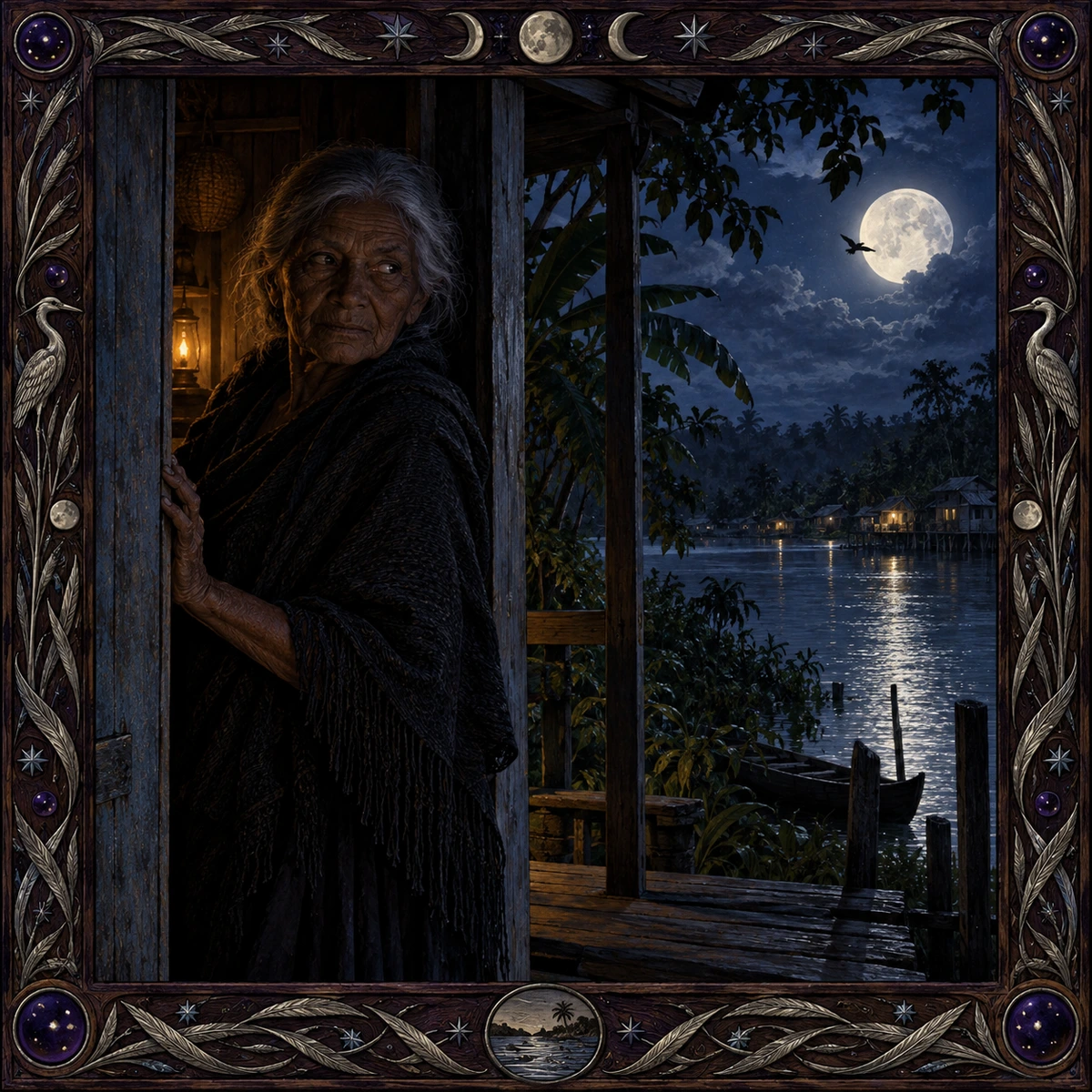
Matinta Perera is a night-whistling being of Amazonian lore, often appearing as a woman who returns by daylight to collect promised tobacco.
A voice asks an old man about his molasses. He looks behind the stump and finds no one.
Read the manuscript