Loading Luminary Oddities
Please wait while the next page arrives.
Loading this page…
Return homePlease wait while the next page arrives.


Natural history · Entomological Atlas
Species accounts of cicada identification, distribution and natural history, with supporting references.
The Atlas combines specimen illustrations with documented natural history.
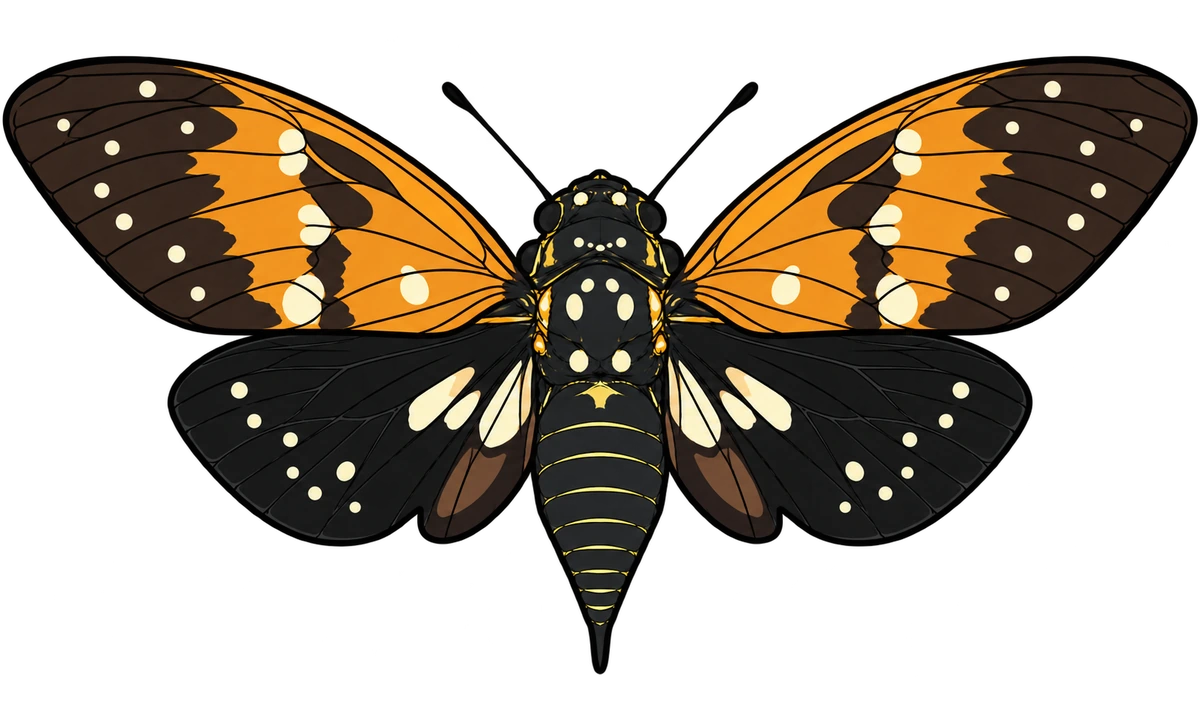
Ambragaeana ambra
Ambragaeana ambra is a patterned Asian cicada and the type species of its genus. Field observations in Thailand describe canopy calling and overnight adult emergence, while examined Vietnamese material provides a dated high-elevation record.
Explore the guide →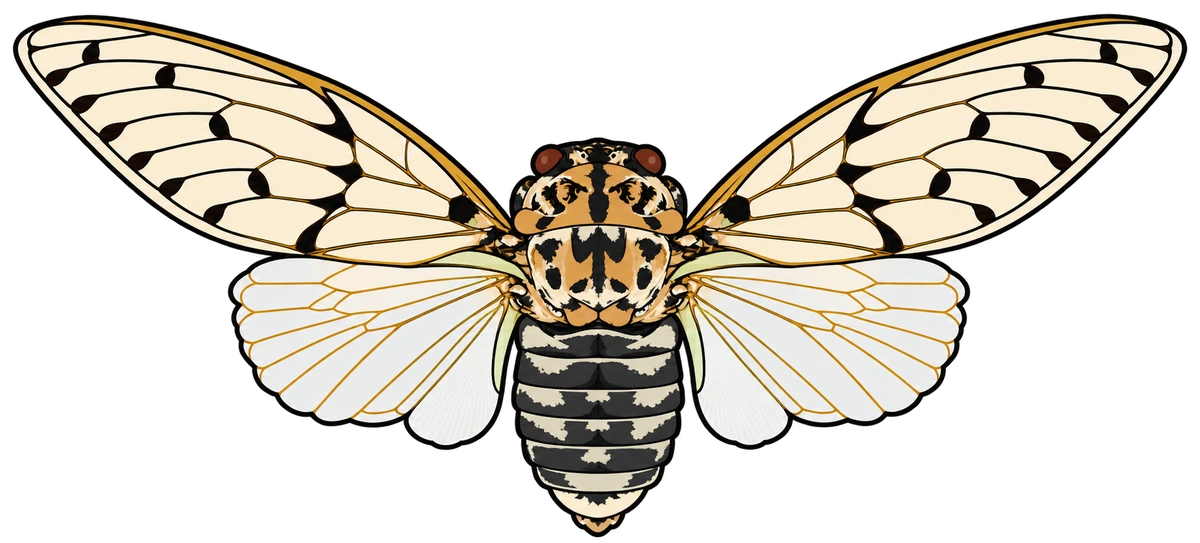
Ayuthia spectabile
Ayuthia spectabile is a Southeast Asian cicada whose creamy white wing regions contrast with transparent tips and a dark body. The transparent forewing membrane carries nanoscale surface pillars investigated in microscopy and polymer-replication studies.
Explore the guide →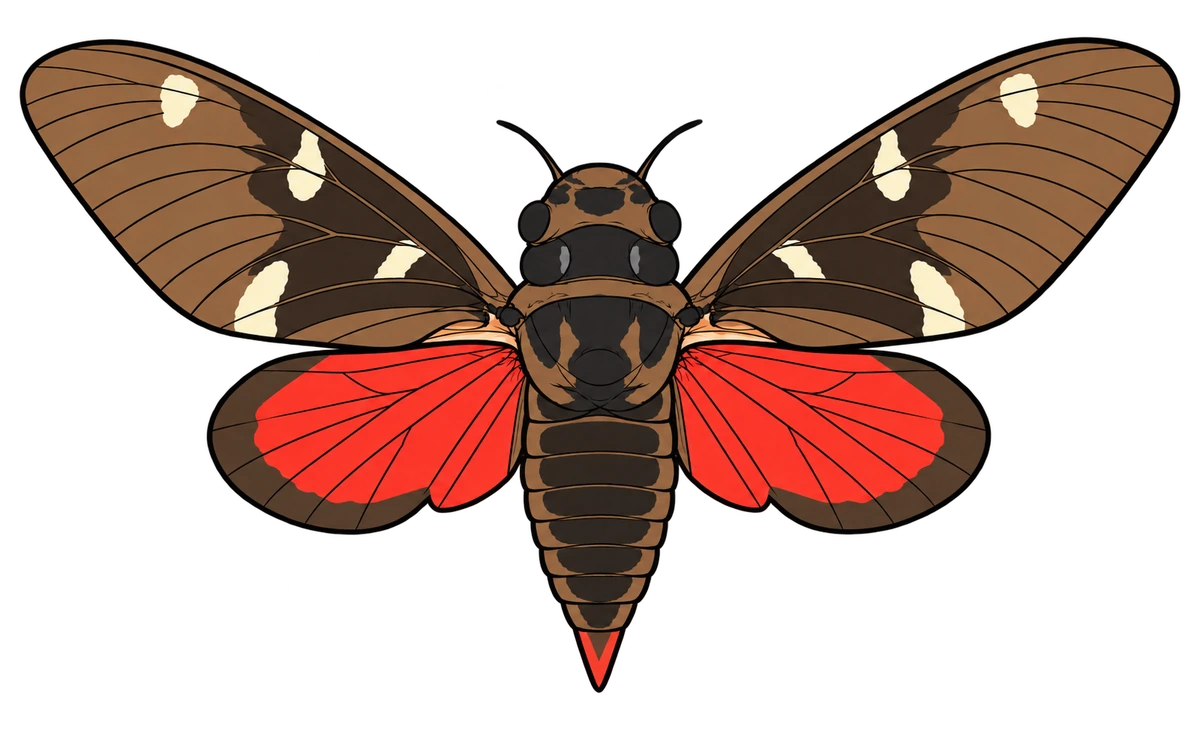
Balinta octonotata
Balinta octonotata is an Asian cicada with cream markings on dark wings. A 2021 specimen study documents extensive variation in the forewing spots and records the species in Assam and Uttarakhand.
Explore the guide →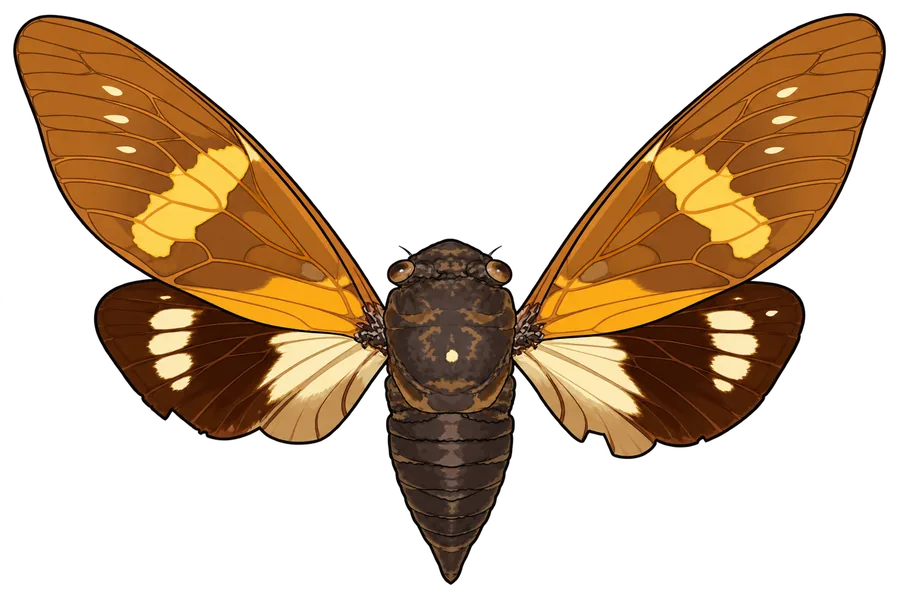
Becquartina bicolor
Becquartina bicolor is a cicada described from Meghalaya in 2024. Its contrasting wing bands occur in saffron and white forms in both sexes; the original study also documents forest localities and male calling activity.
Explore the guide →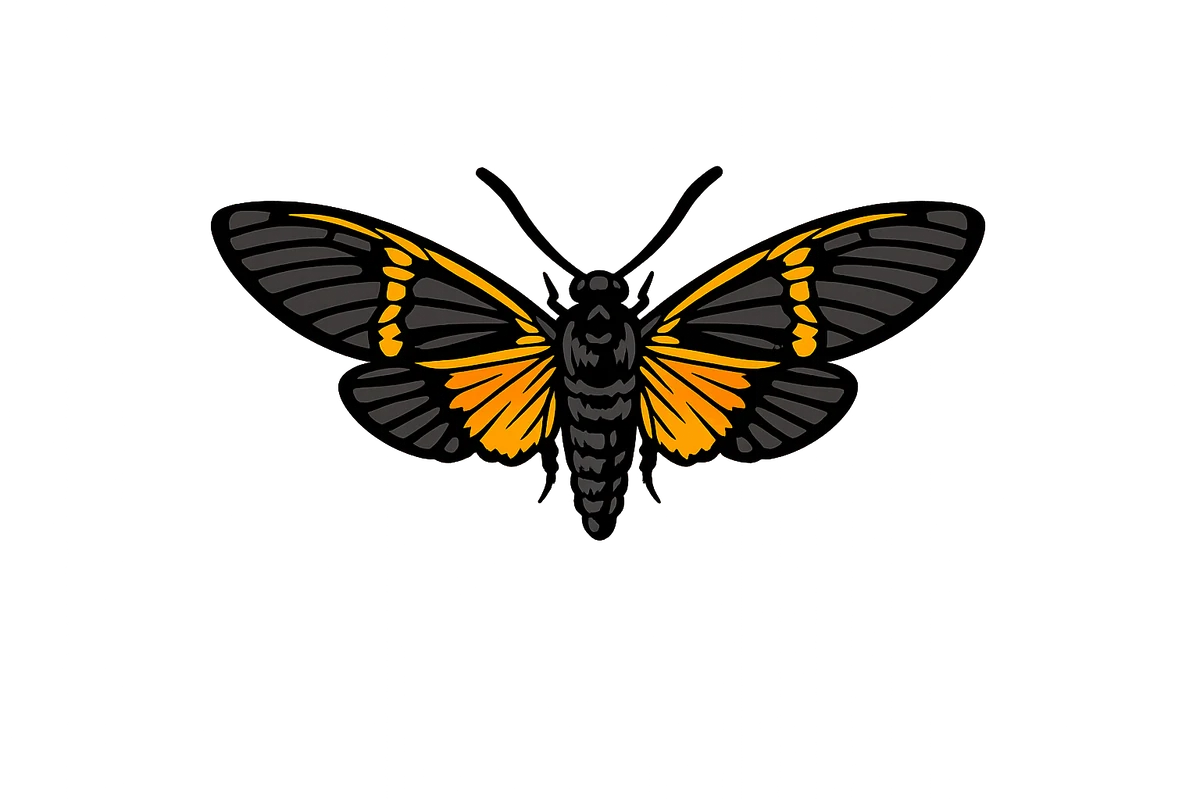
Becquartina electa
Becquartina electa is a dark-bodied Asian cicada with bright yellow body margins and a broad, straight yellow forewing band. Comparative taxonomy describes its pattern alongside related Becquartina species.
Explore the guide →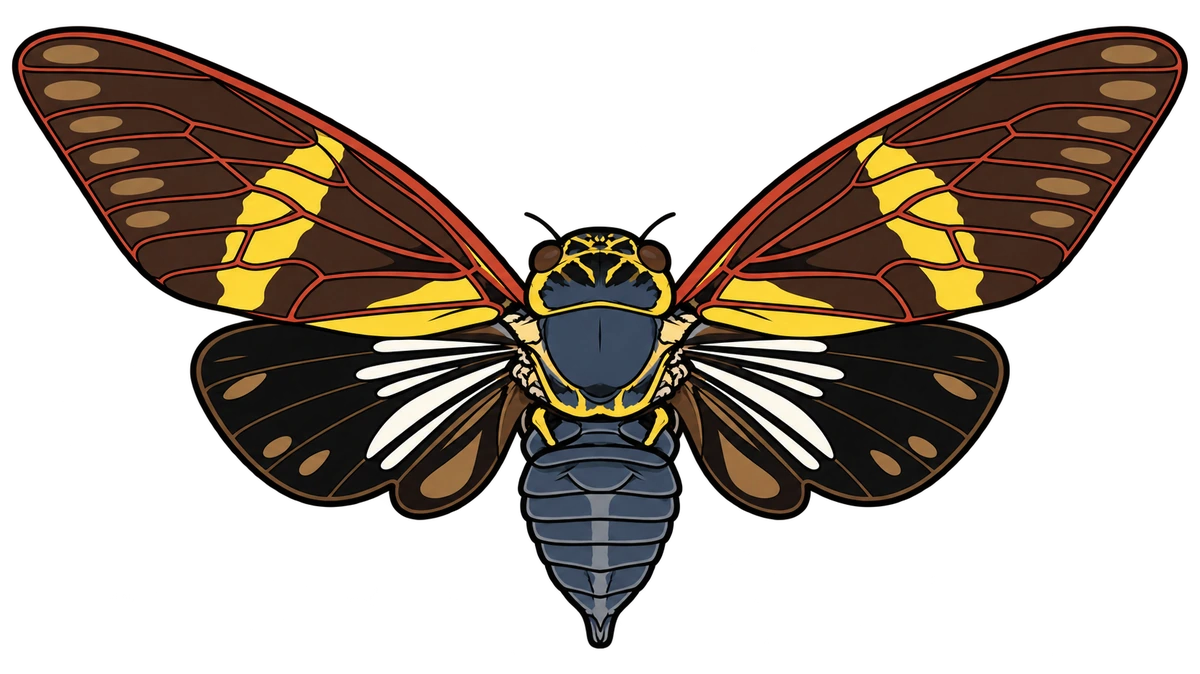
Becquartina versicolor
Becquartina versicolor is a patterned Asian cicada with reddish forewing veins and variable hindwing coloration. Identified photographs and comparative taxonomy document the contrasting markings of its broad wings.
Explore the guide →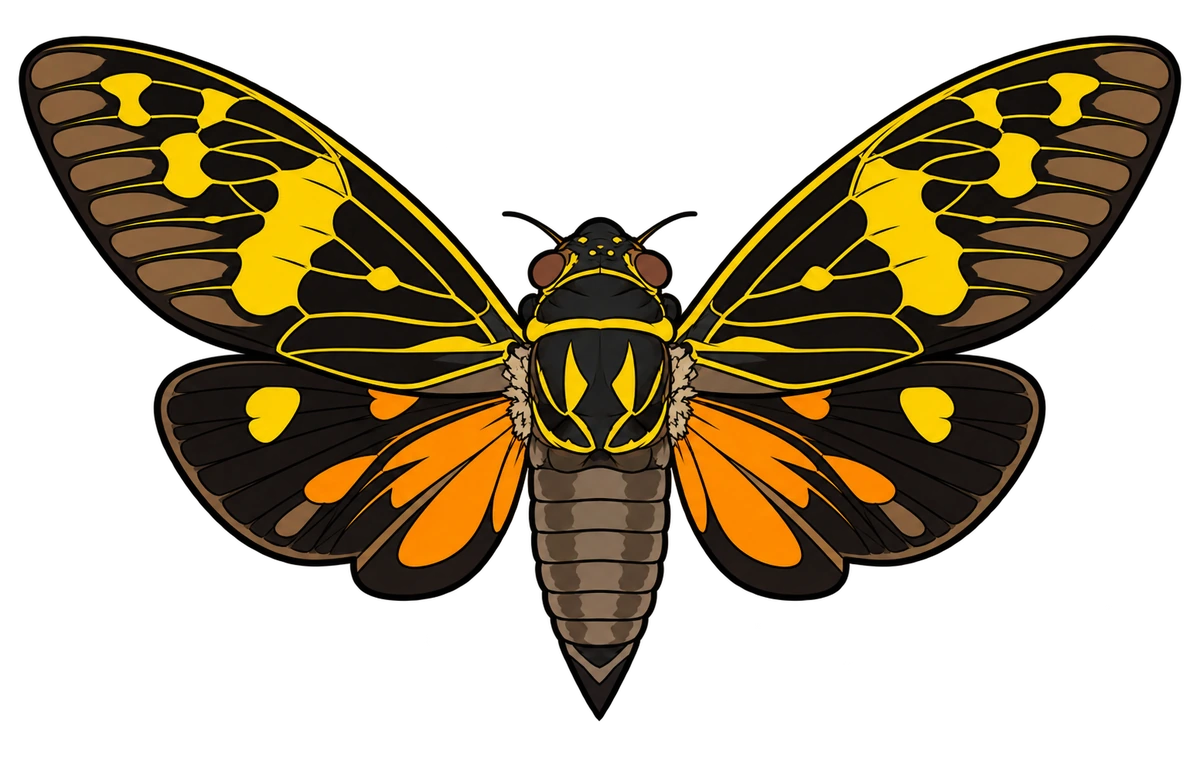
Callogaeana festiva
Callogaeana festiva has dark-and-pale forewing patterns and hindwing colour forms described as orange or blue-green. Historical diagnoses record substantial pattern variation, while recent systematics retains the species in Callogaeana.
Explore the guide →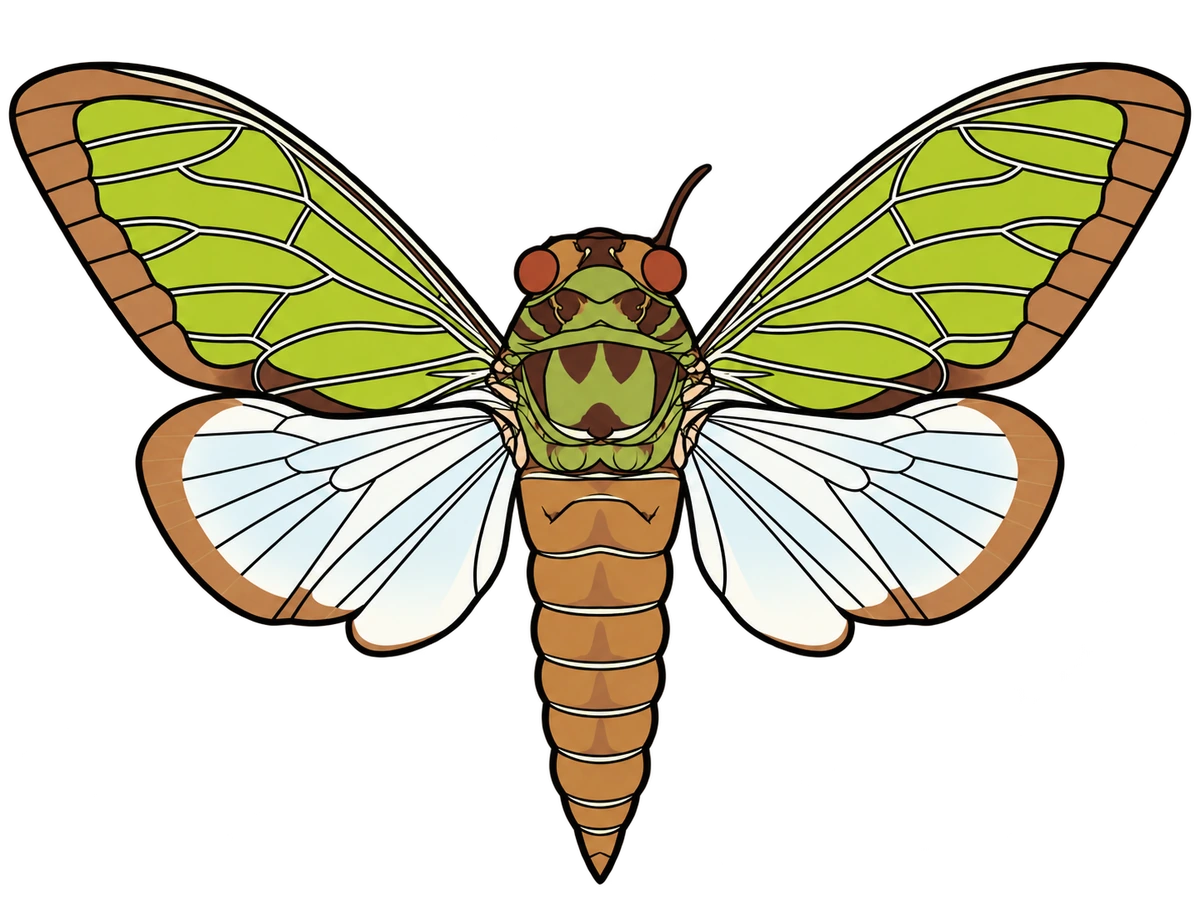
Callogaeana hageni
Callogaeana hageni was described from Sumatran material in 1889. Distant’s diagnosis records pale green forewings with a broad dark apical border and pale blue-green hindwings with a narrower dark edge.
Explore the guide →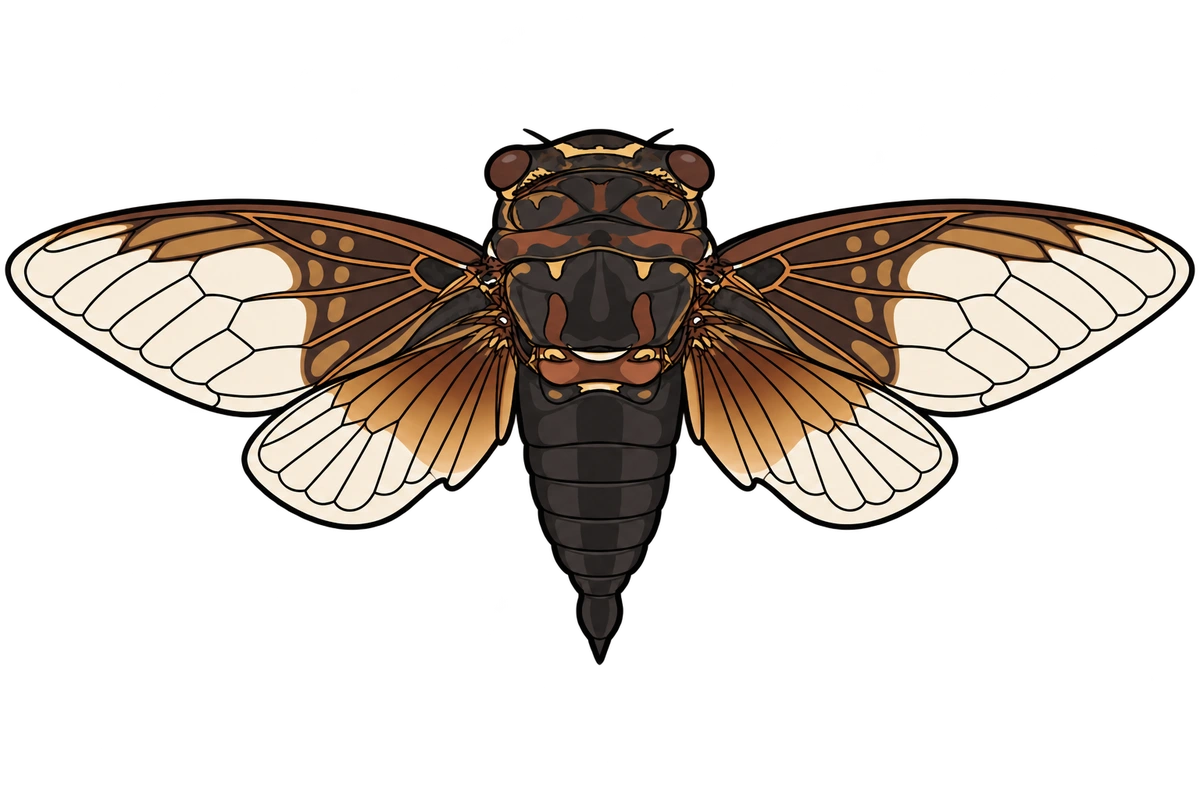
Cryptotympana aquila
Cryptotympana aquila is a Southeast Asian cicada with a glossy dark upper body, an orange-brown underside and partly transparent wings. Malaysian recordings document its structured song, and laboratory research has measured bacterial killing on its forewing surfaces.
Explore the guide →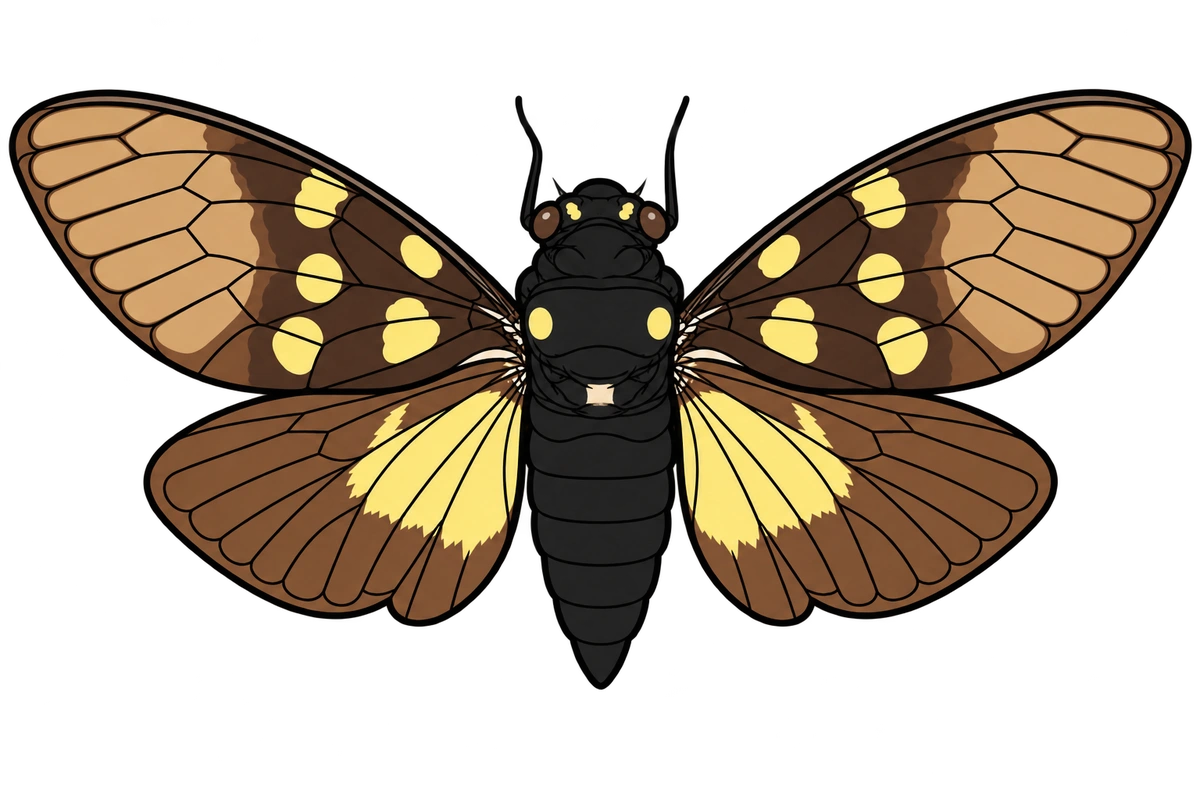
Gaeana maculata
A dark, yellow-patterned cicada currently treated as Gaeana maculata maculata. Northern Thai field observations and wing-surface experiments were published under the name Gaeana cheni.
Explore the guide →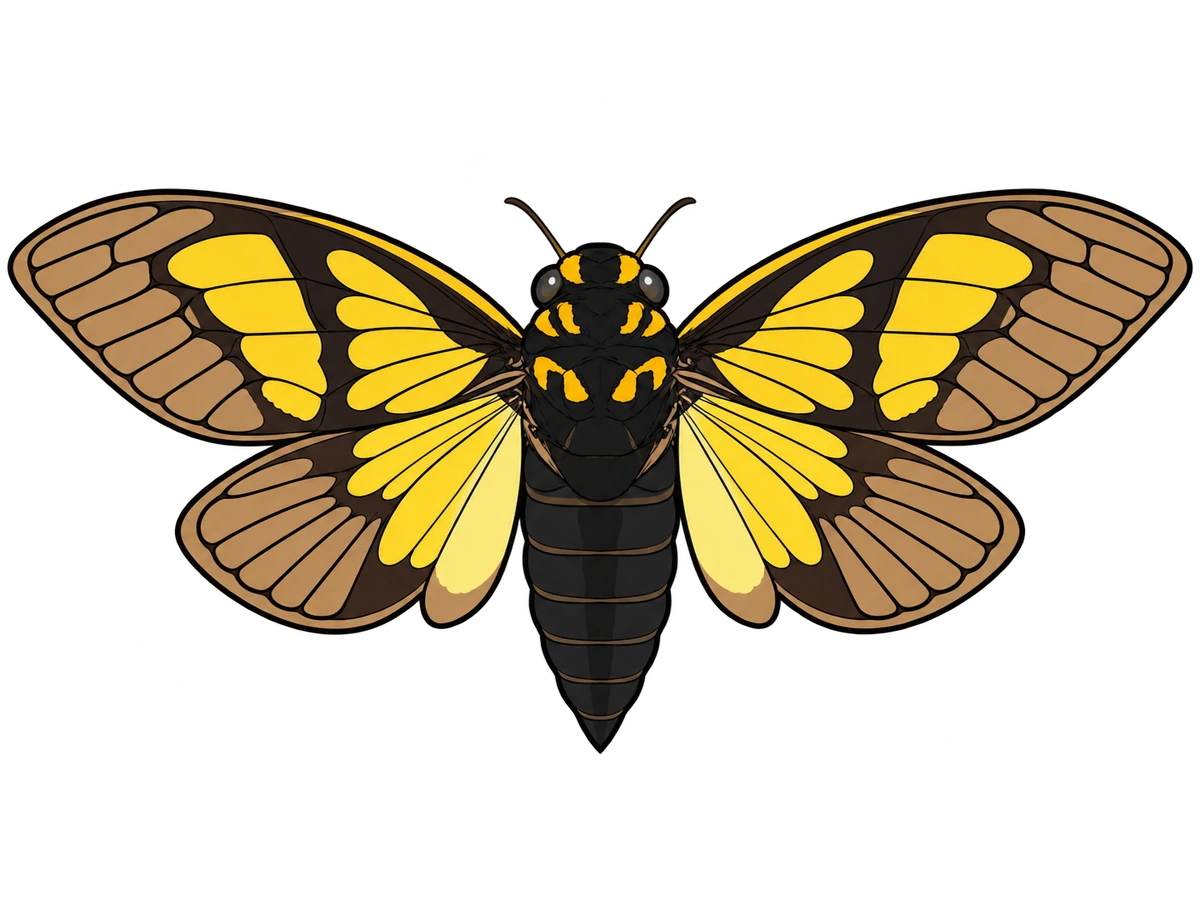
Sulphogaeana sulphurea
Sulphogaeana sulphurea is a Himalayan cicada with sulphur-yellow wings crossed and bordered by dark markings. Historical descriptions detail its contrasting body pattern, and field observations include a mating pair in Bhutan.
Explore the guide →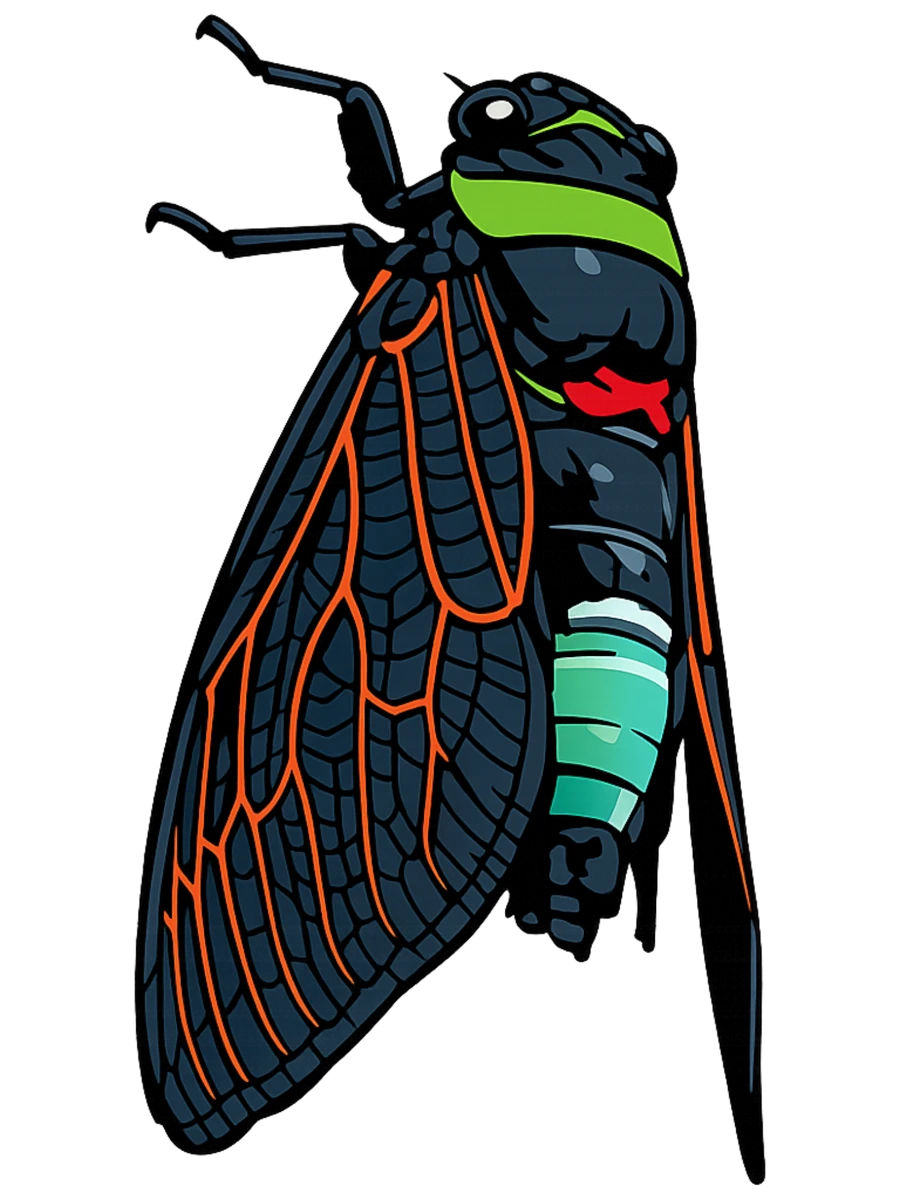
Tacua speciosa
Tacua speciosa is a large forest cicada recorded in Indonesia and Malaysia. A green to yellow collar and red thoracic marking contrast with its dark body; Sabah surveys document adults active on branches during daylight.
Explore the guide →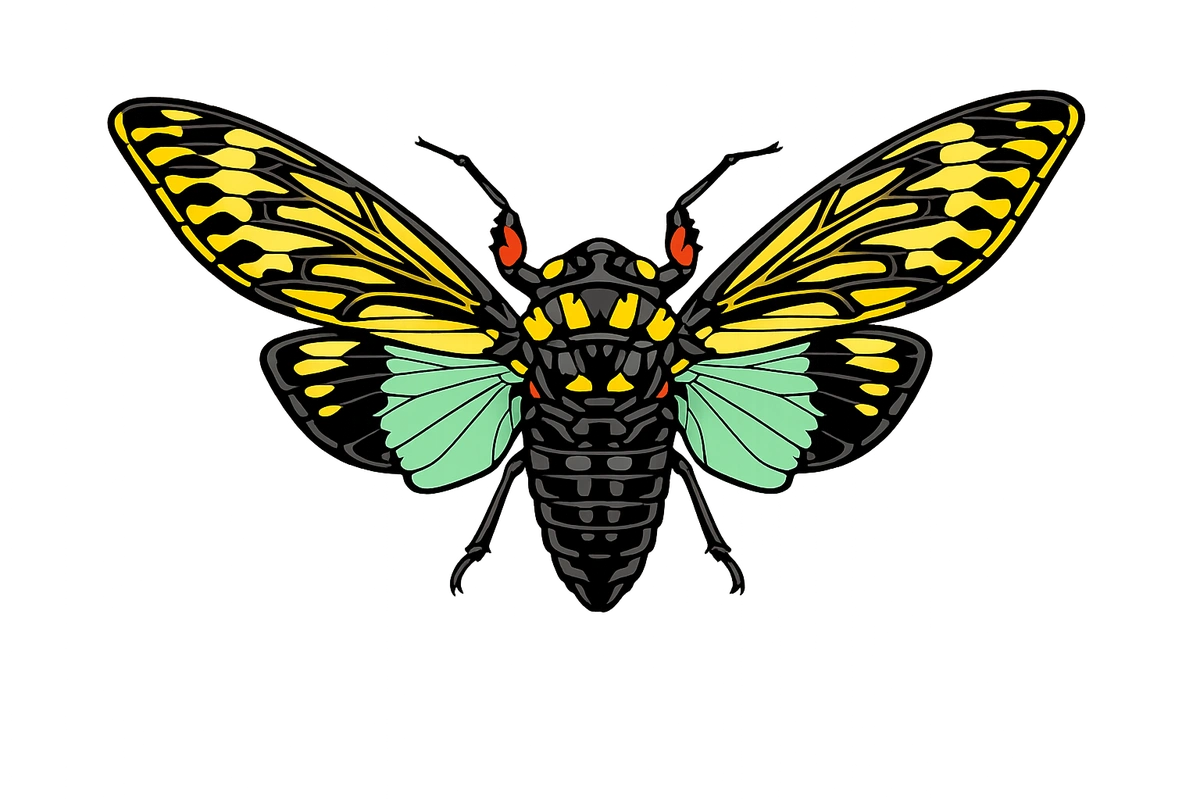
Distantalna splendida
Distantalna splendida is an Asian cicada with partly translucent wings, pale green basal hindwing fields and a dark body marked with yellow and red. Field photographs document adults feeding and a female laying eggs in Thailand.
Explore the guide →