Loading Luminary Oddities
Please wait while the next page arrives.
Loading this page…
Return homePlease wait while the next page arrives.


Natural history · Entomological Atlas
Species accounts of beetle identification, distribution and natural history, with supporting references.
The Atlas combines specimen illustrations with documented natural history.
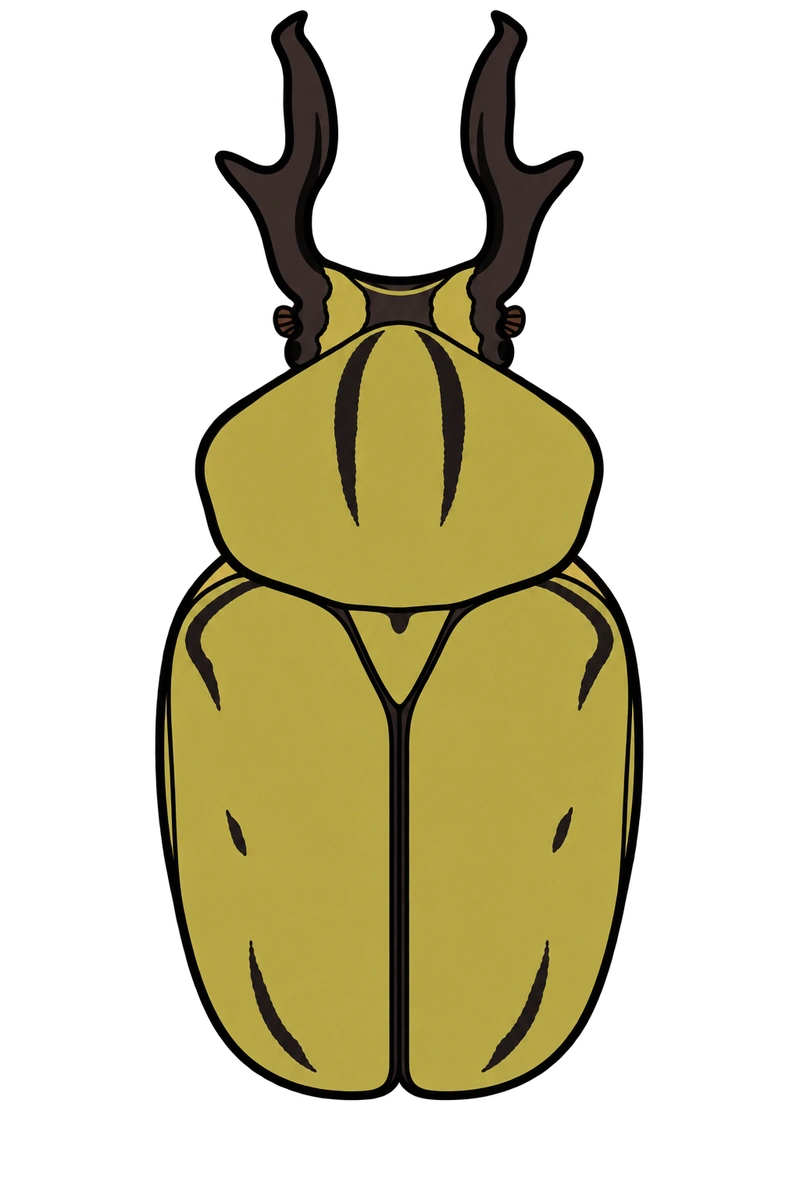
Dicronocephalus wallichi
An antler-horn flower chafer whose males use their forelegs and horns in contests. Females prepare leaf-provisioned nests that support early larval development.
Explore the guide →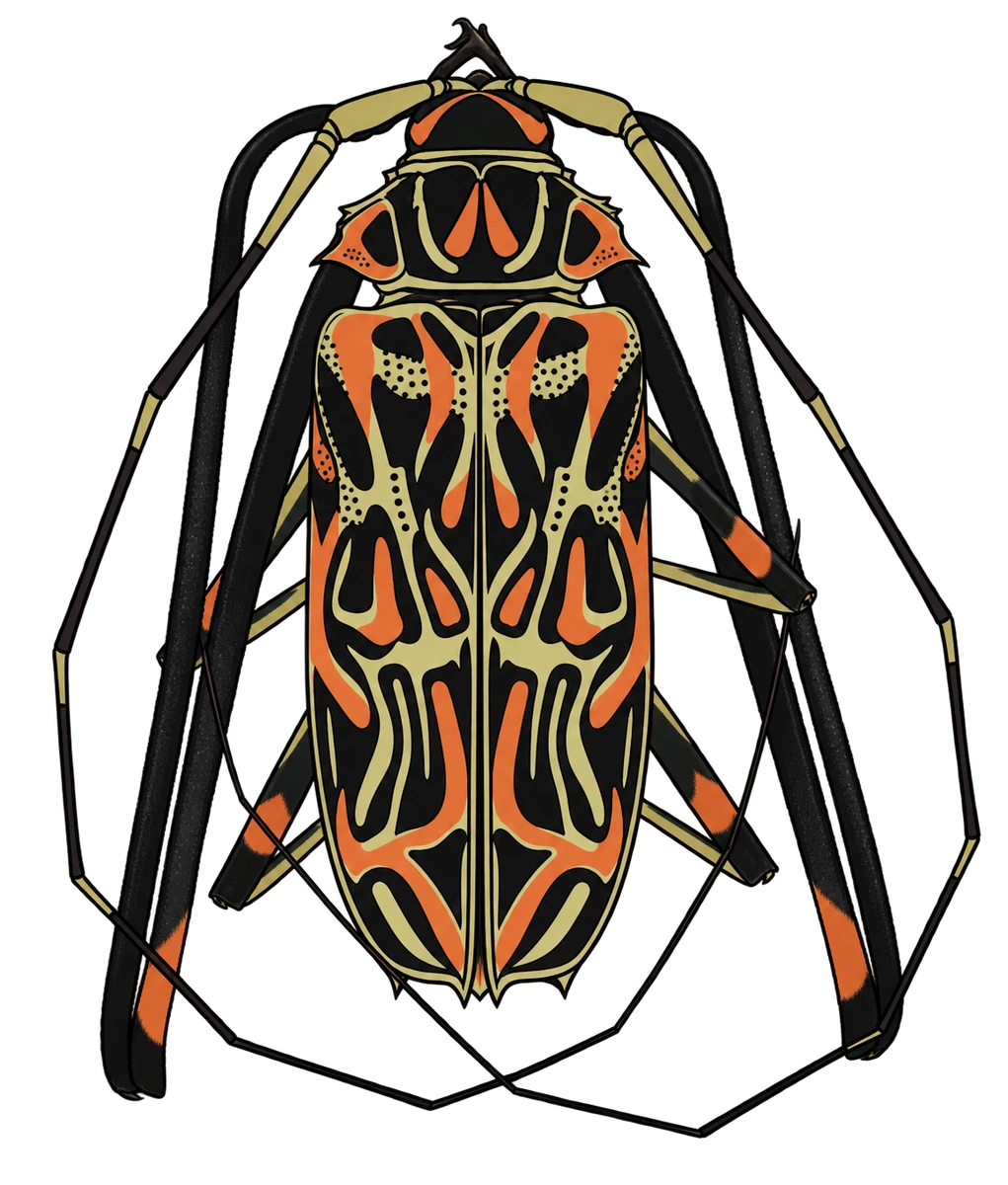
Acrocinus longimanus
Acrocinus longimanus is a tropical American longhorn beetle with interlocking black, greenish-yellow and red-orange markings. The male’s exceptionally long forelegs serve as levers during contests for mating and egg-laying sites.
Explore the guide →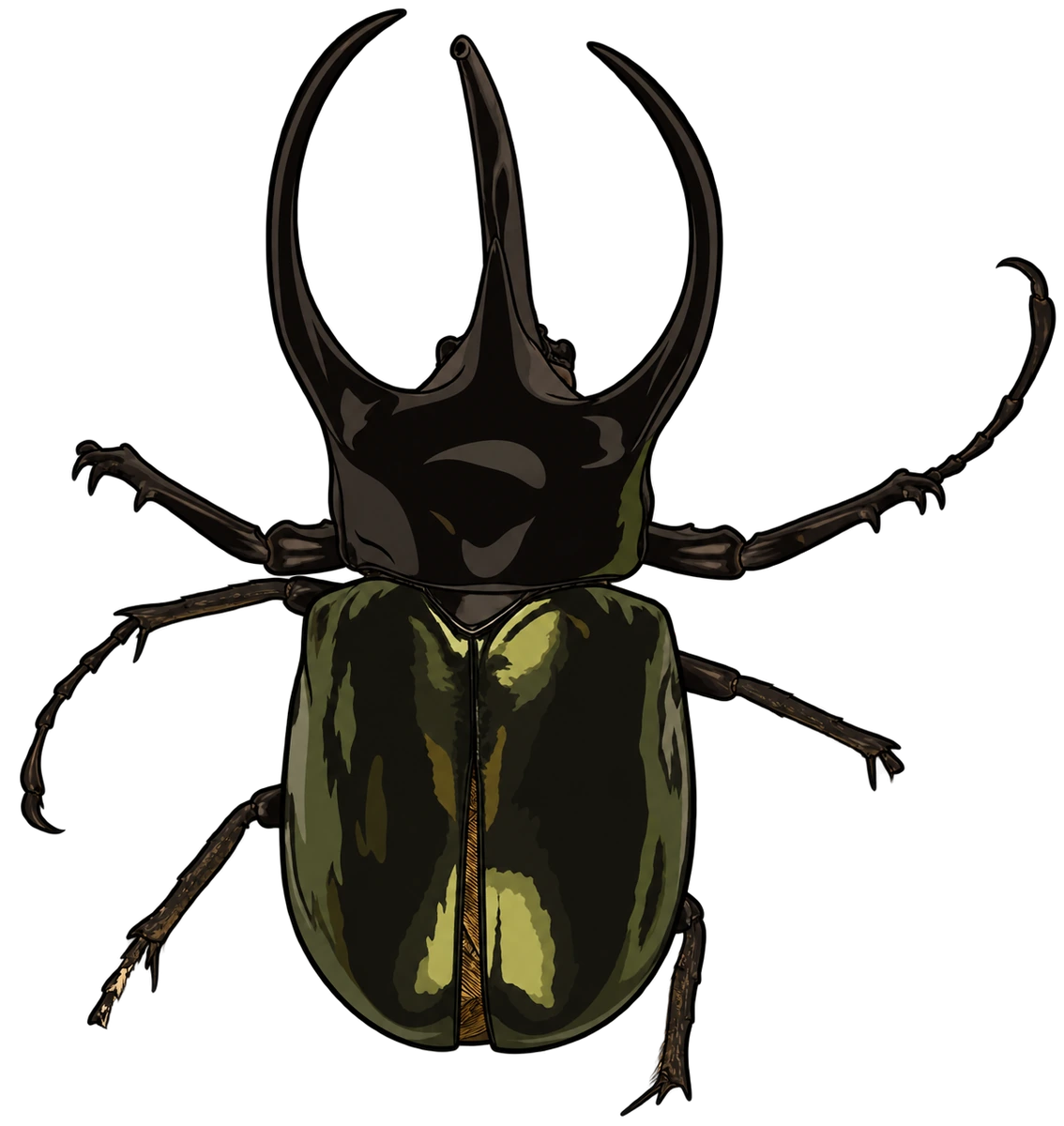
Chalcosoma atlas
Chalcosoma atlas is a Southeast Asian rhinoceros beetle with a glossy, dark body. The male carries three long horns: one rises from the head and two project from the thorax. Their proportions vary substantially among males.
Explore the guide →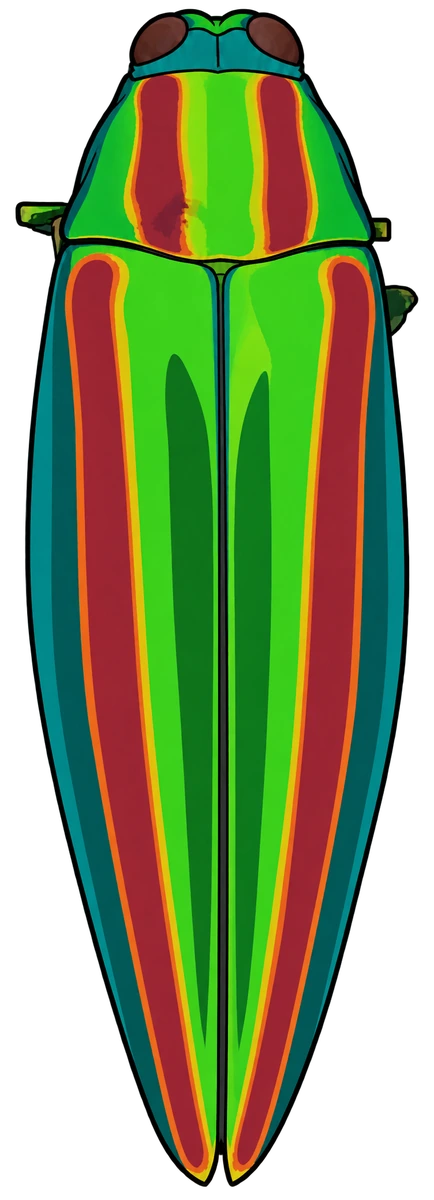
Chrysochroa fulgidissima
Chrysochroa fulgidissima is an elongated jewel beetle with brilliant green upper surfaces crossed by red-purple longitudinal stripes. Its abdomen is green-gold below. The contrasting hues arise from microscopic layers within the exoskeleton.
Explore the guide →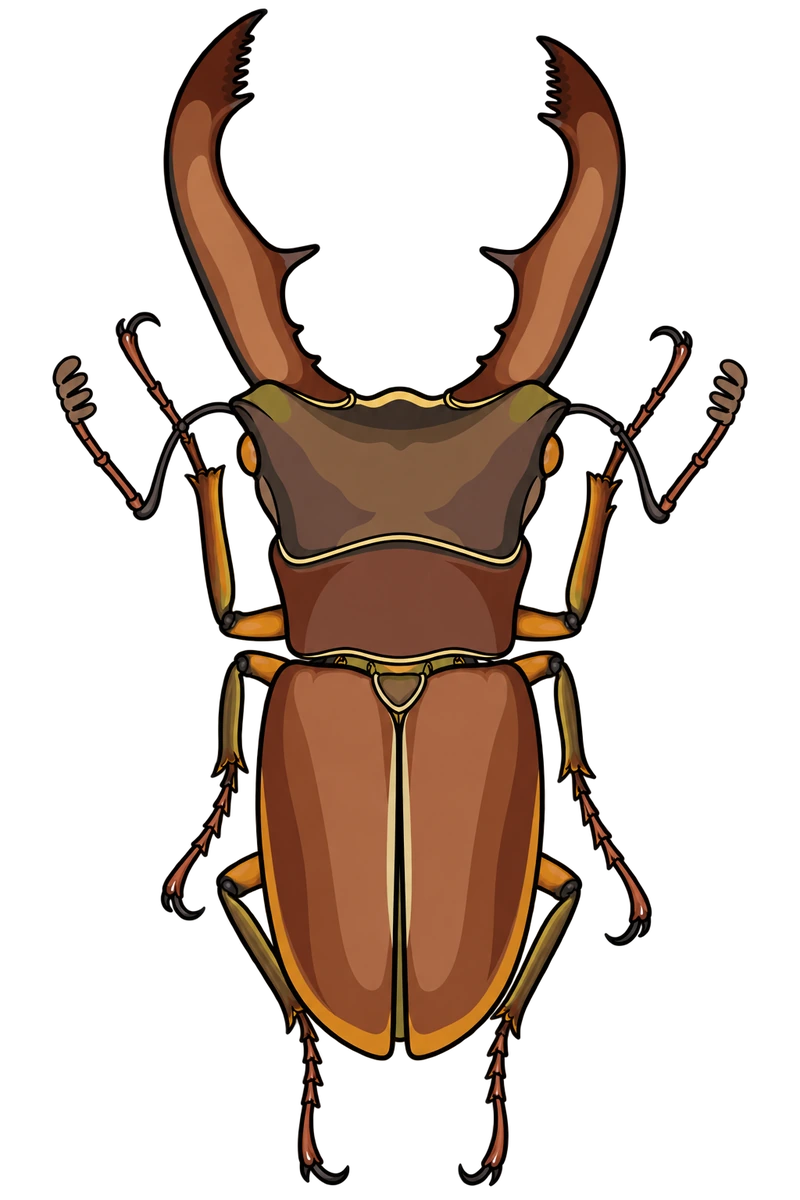
Cyclommatus metallifer
Cyclommatus metallifer is a Sulawesi stag beetle with a metallic brown body and exceptionally elongated male mandibles. Its slender weapons combine powerful gripping with bite-force adjustment, making the species a model for the mechanics of animal combat.
Explore the guide →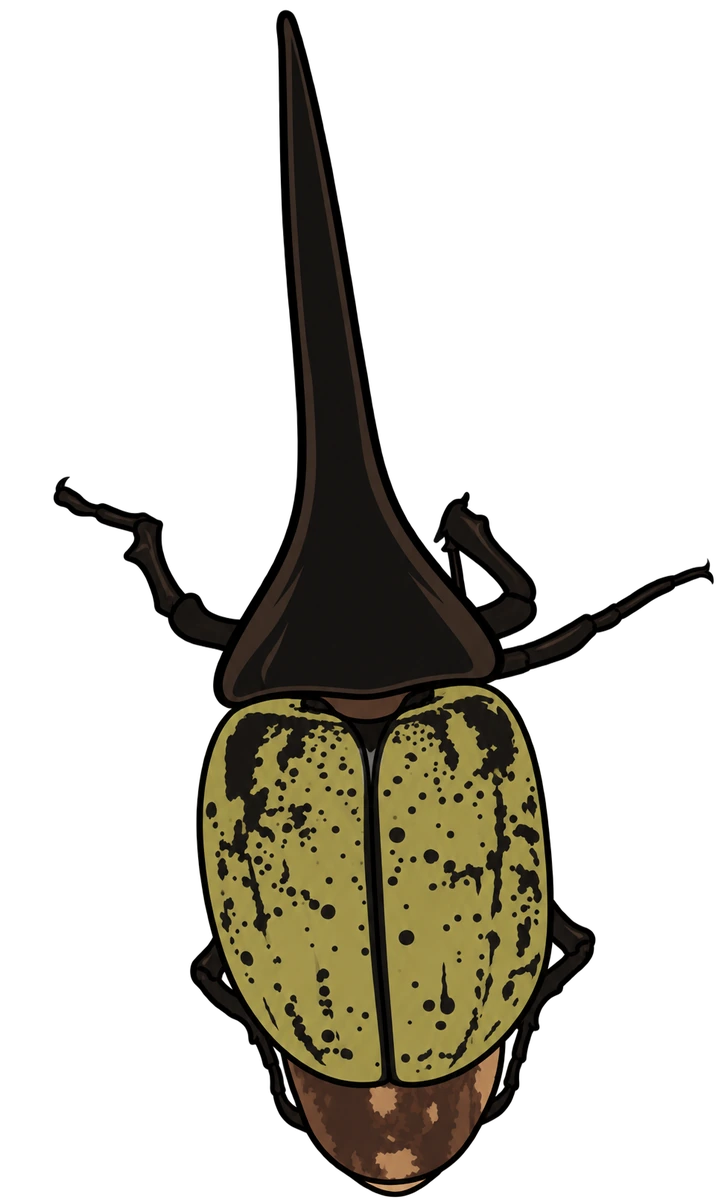
Dynastes hercules
Dynastes hercules is the giant Hercules beetle of Guadeloupe and Dominica. Males bear opposed head and thoracic horns above a dark body and olive wing covers; females are hornless and predominantly black.
Explore the guide →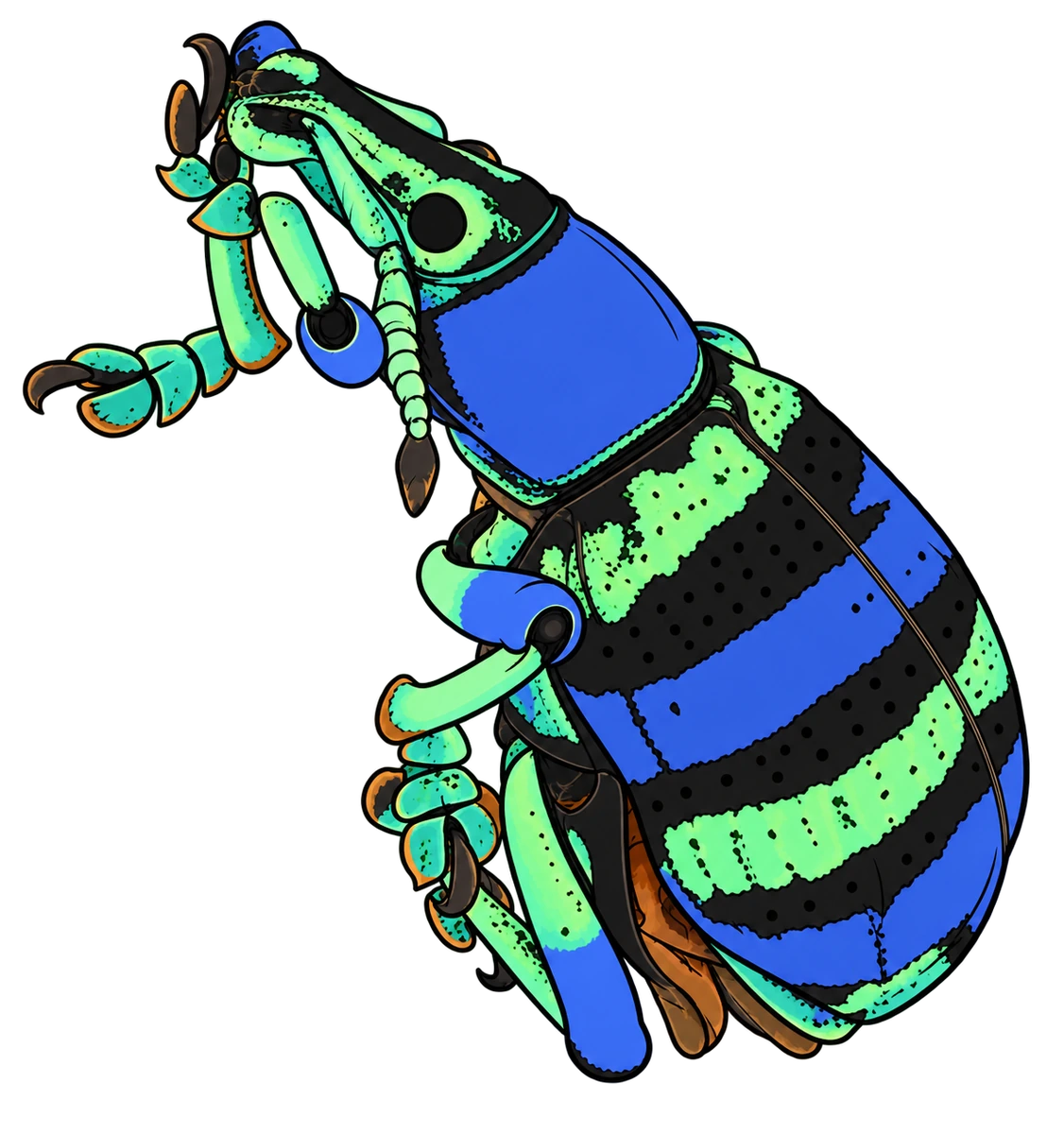
Eupholus schoenherrii
Eupholus schoenherrii is a New Guinea weevil with blue-green scales and contrasting black bands on its wing covers. A short, broad snout and clubbed antennae complete its compact outline.
Explore the guide →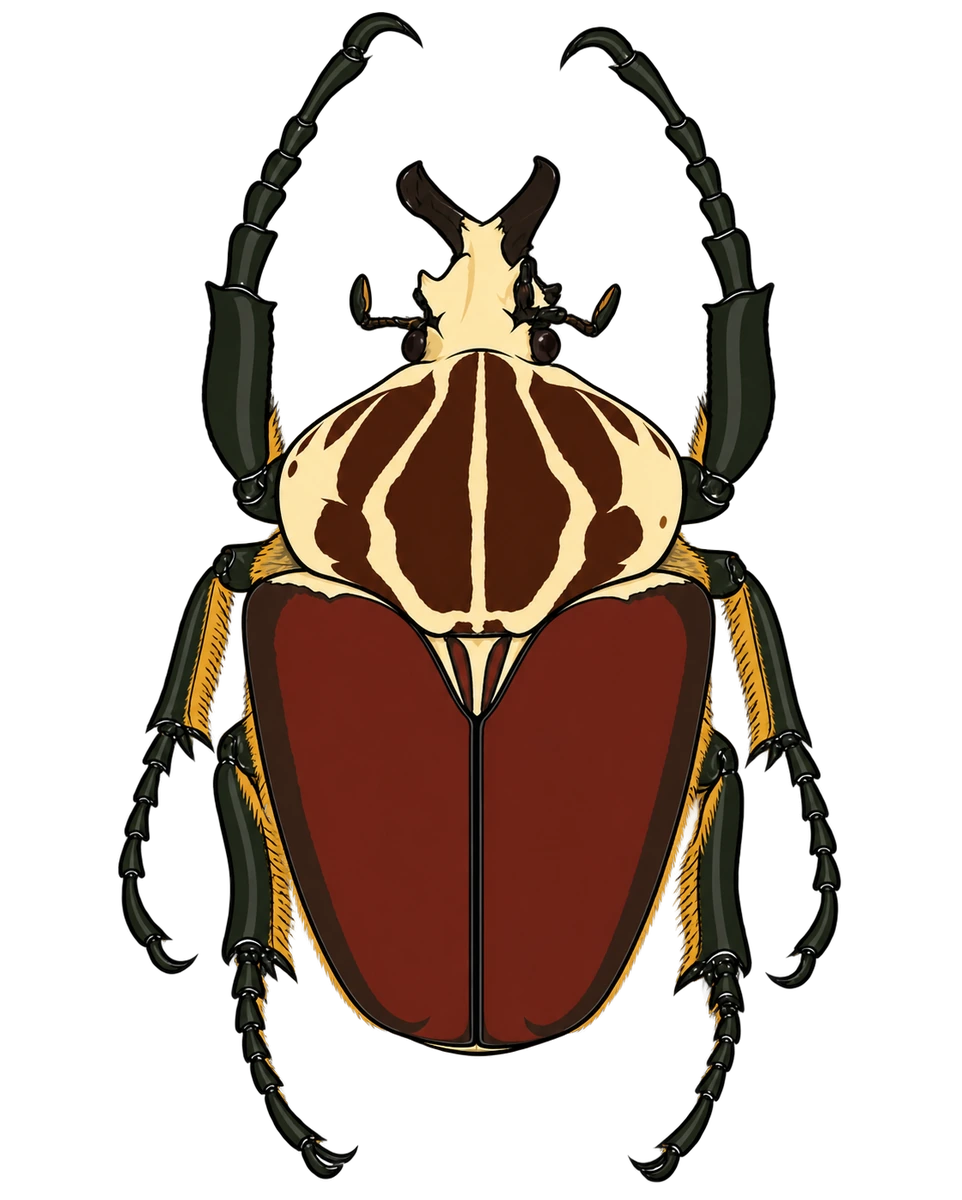
Goliathus goliatus
Goliathus goliatus is a large African flower chafer with a striped thorax and strongly variable wing-cover colour. Brown and predominantly white individuals can occur in the same population.
Explore the guide →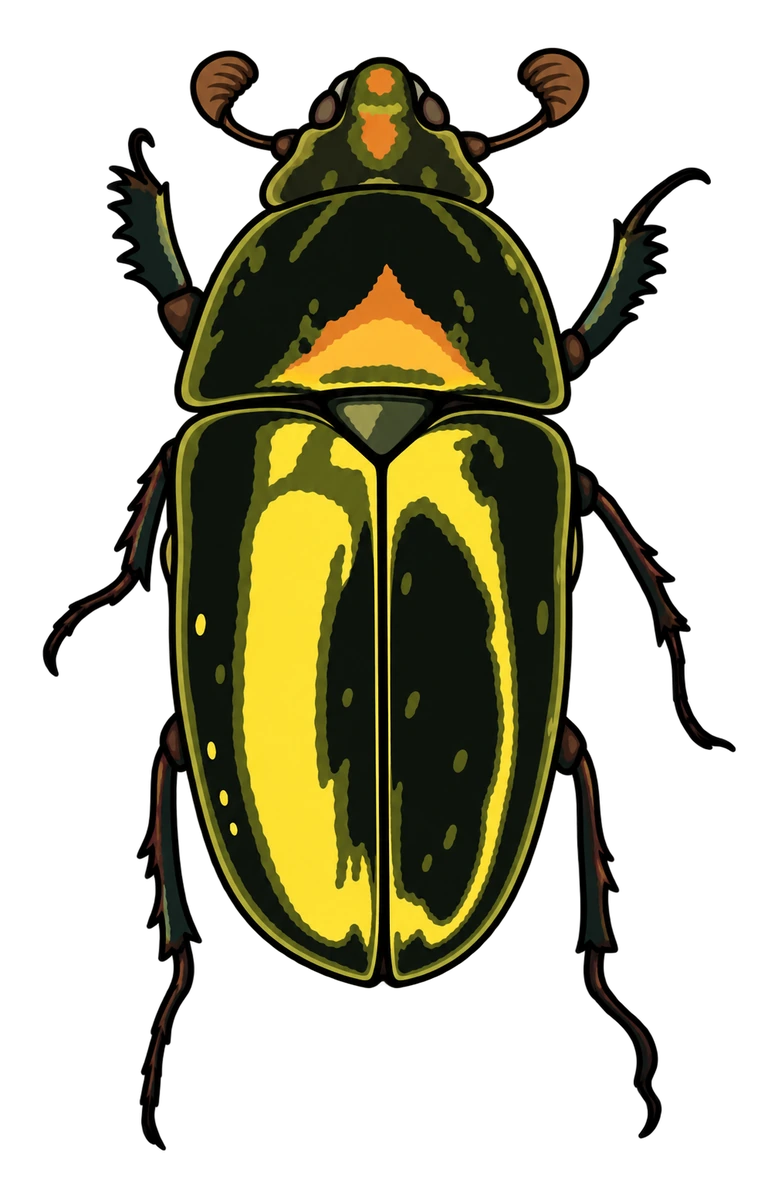
Lamprima adolphinae
Lamprima adolphinae is a metallic stag beetle of New Guinea’s mountain forests. Males combine a broad, dull-sheened body with long mandibles; the smaller females have short jaws and a brighter, polished surface.
Explore the guide →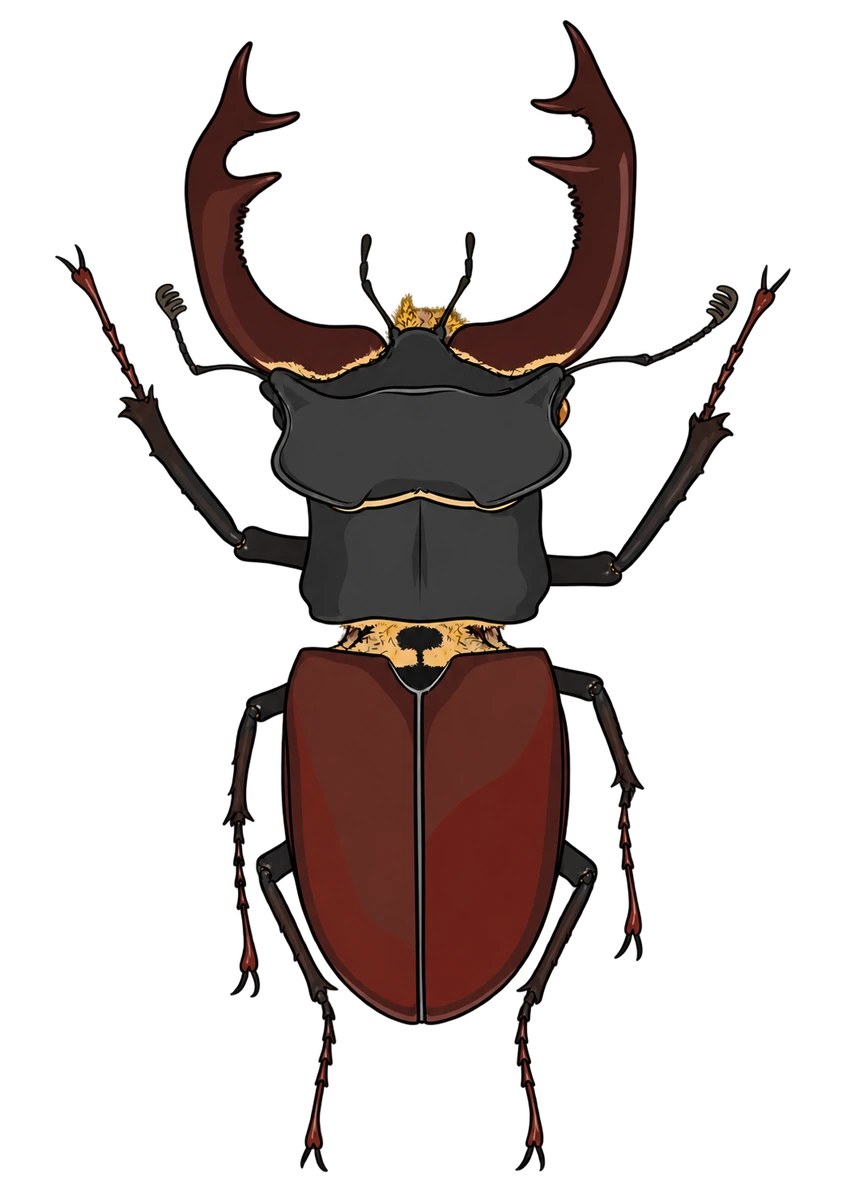
Lucanus cervus
Lucanus cervus is a European stag beetle distinguished by the male’s enlarged, antler-like mandibles and reddish-brown wing covers. Most of its life is spent as a wood-feeding larva; the adult emerges for a brief summer breeding season.
Explore the guide →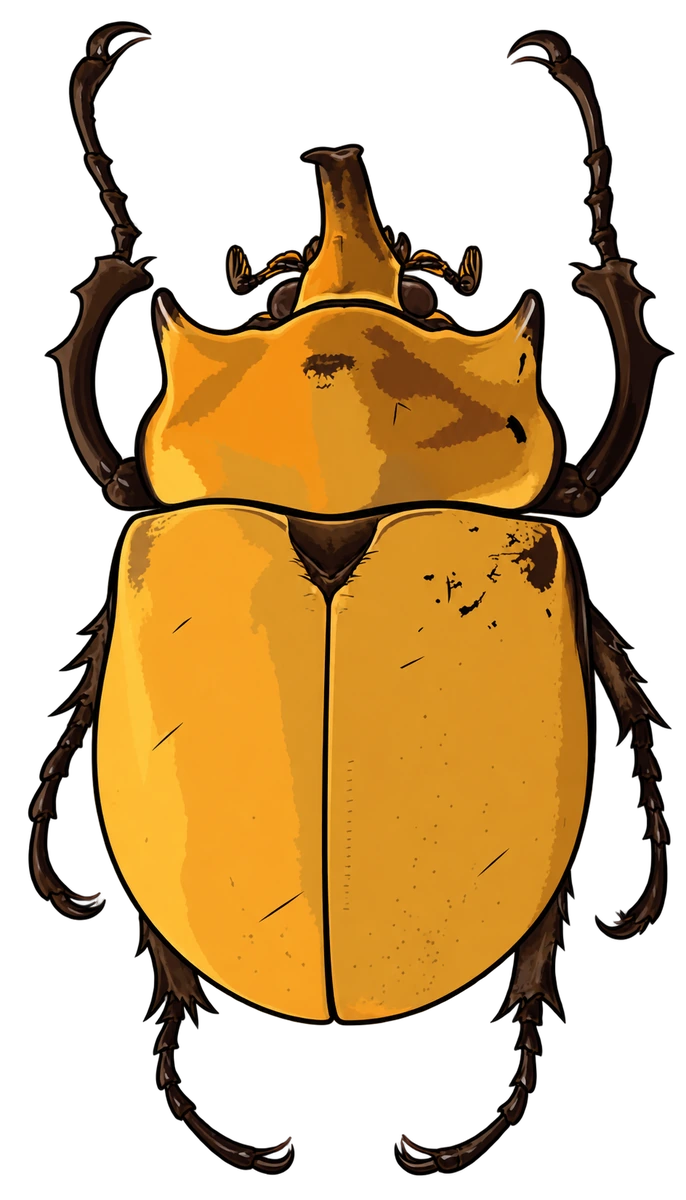
Megasoma elephas
Megasoma elephas is a tropical American rhinoceros beetle with a velvet-like covering on its wing cases. Males carry projecting horns; females are hornless and have a more coarsely sculptured pronotum.
Explore the guide →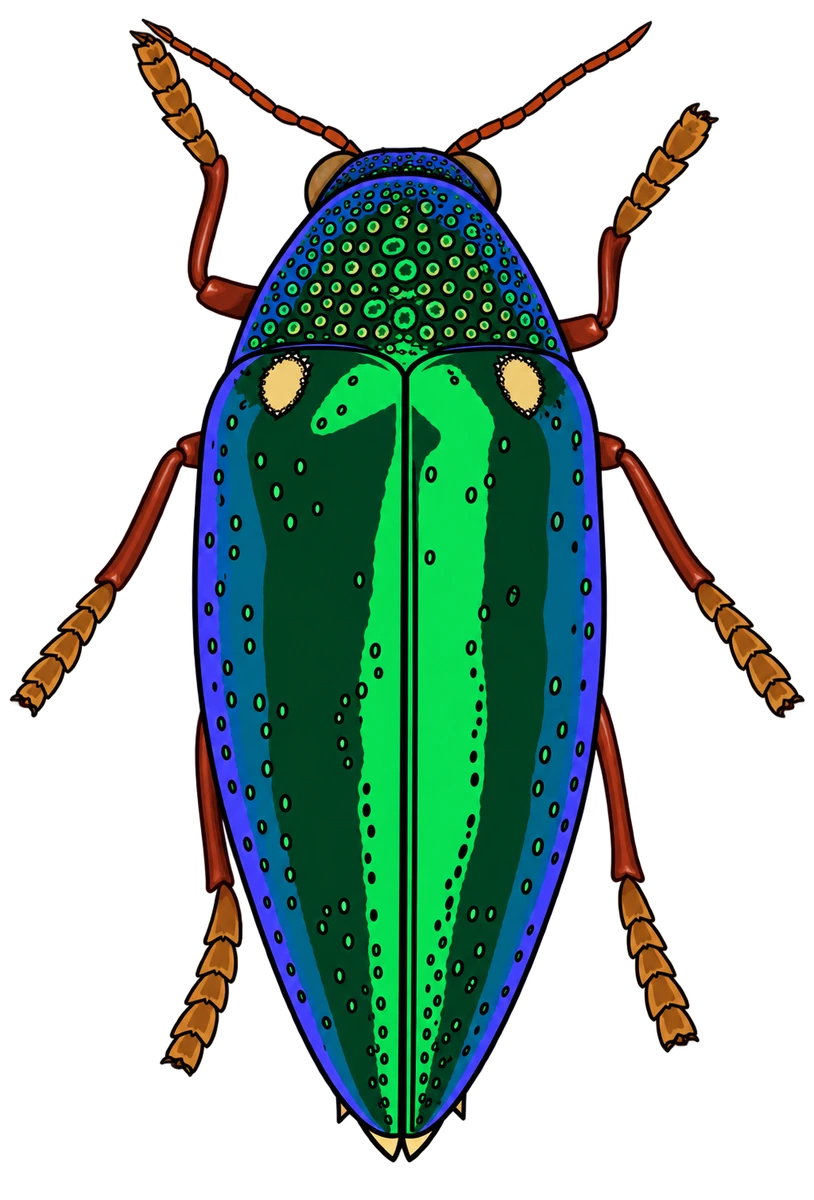
Sternocera aequisignata
Sternocera aequisignata is a metallic jewel beetle whose predominantly green shell can also reflect blue, purple and warmer hues. Experiments using its wing covers show that iridescent colour changes can make a target harder for predators to detect.
Explore the guide →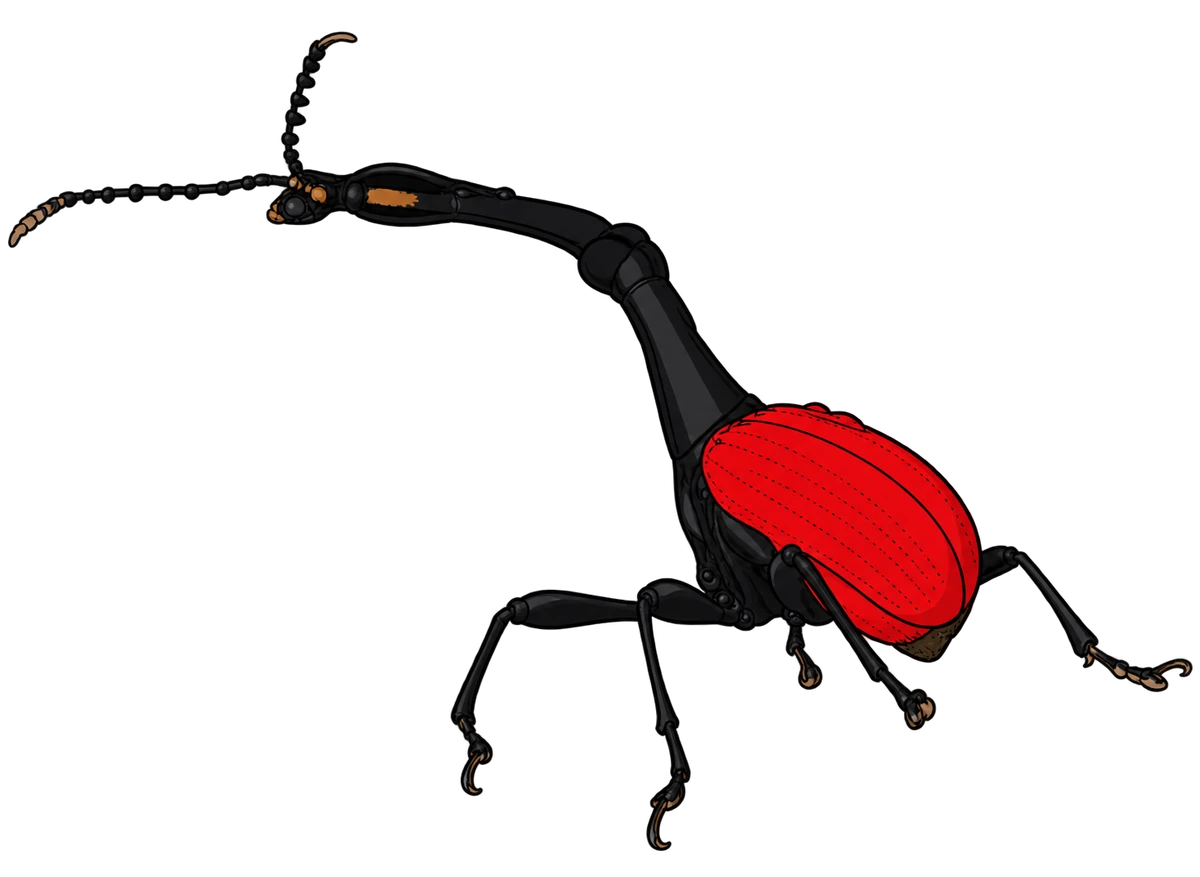
Trachelophorus giraffa
Trachelophorus giraffa is a Madagascar leaf-rolling weevil with a glossy black body, red wing covers and an exceptionally elongated male forebody. The long, narrow prothorax gives the beetle its giraffe-like profile.
Explore the guide →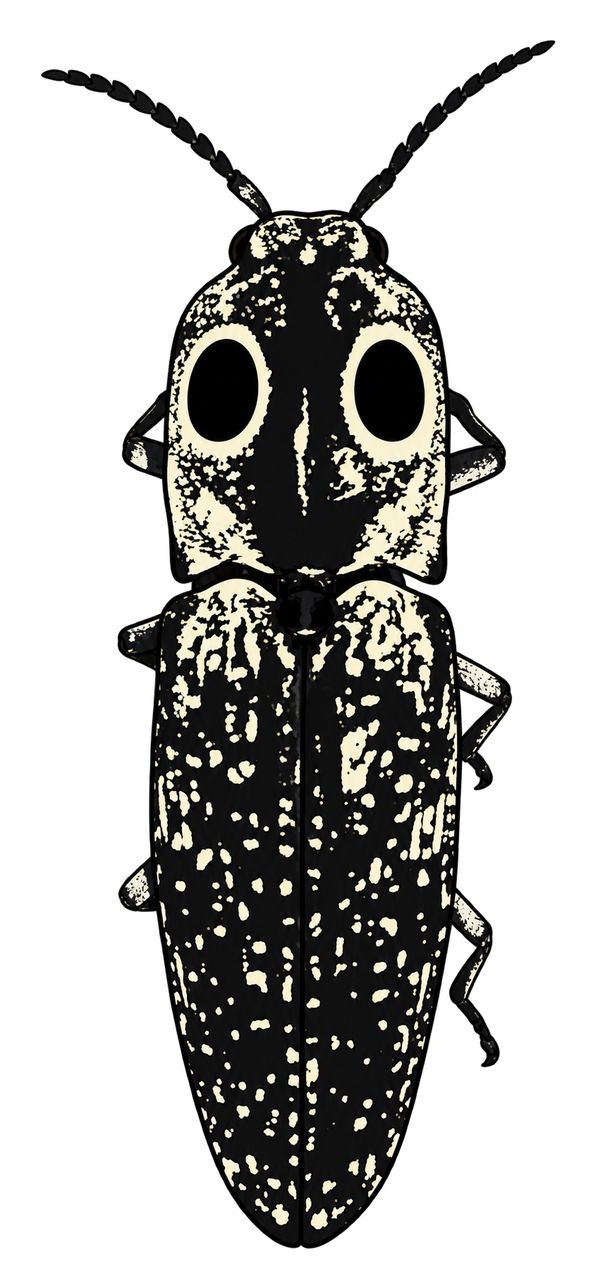
Alaus oculatus
Alaus oculatus is an eastern North American click beetle whose large black pronotal spots are bordered in white. Microscopy shows that pigment and densely arranged hairs combine to produce the unusually dark false eyes.
Explore the guide →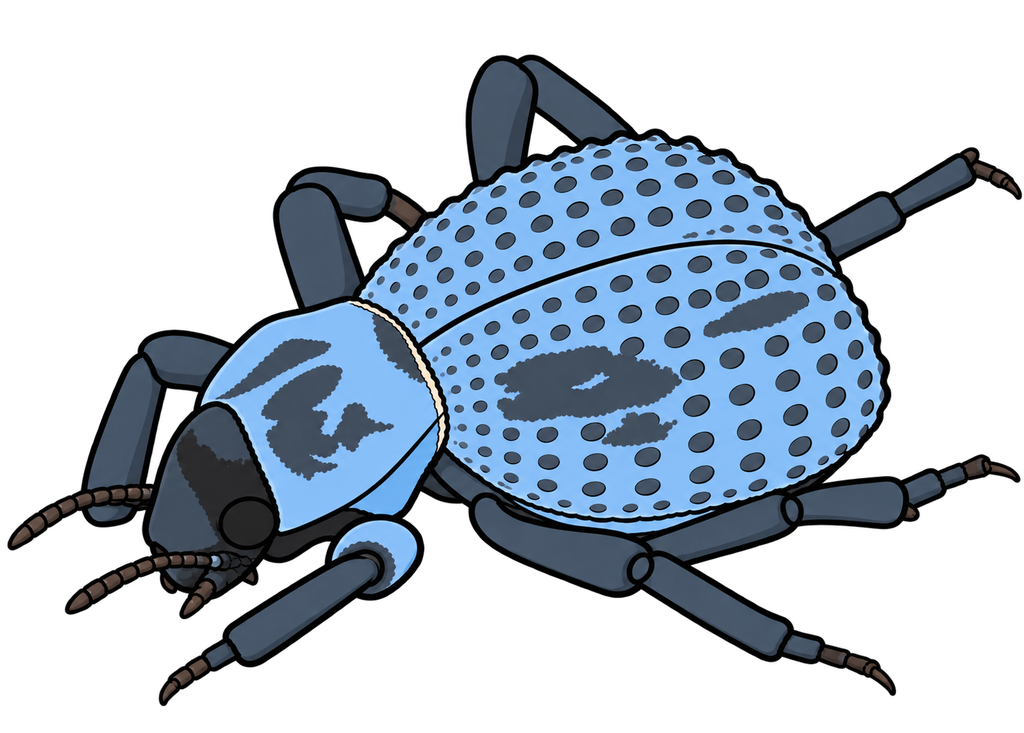
Asbolus verrucosus
Asbolus verrucosus is a darkling beetle of southwestern North American deserts. A powder-blue wax coating covers its dark body, and threatened adults can remain motionless on their backs for extended periods.
Explore the guide →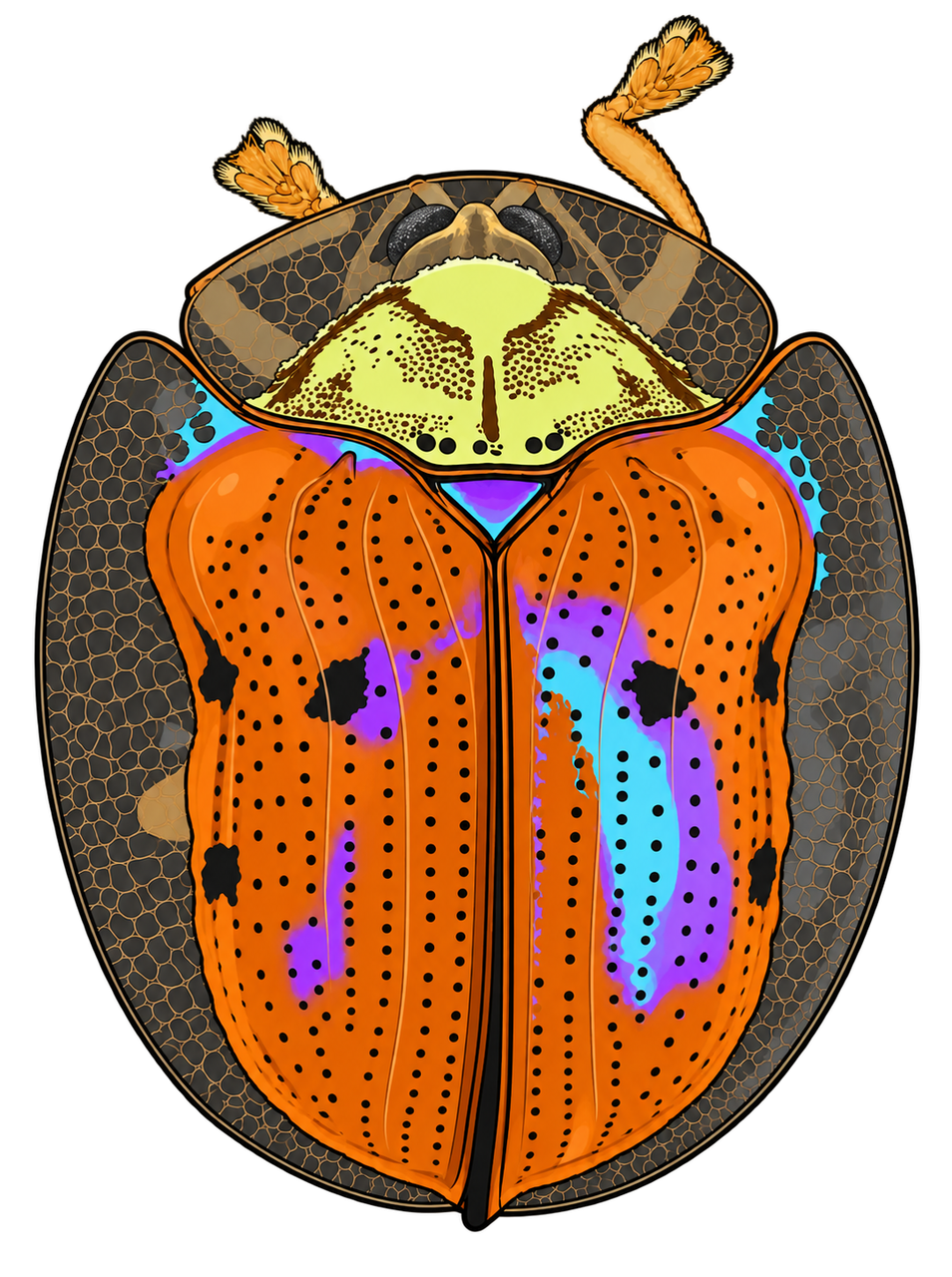
Charidotella sexpunctata
Charidotella sexpunctata is an American tortoise beetle with translucent margins. Living adults can be gold, while disturbed or dried individuals may become red or brown.
Explore the guide →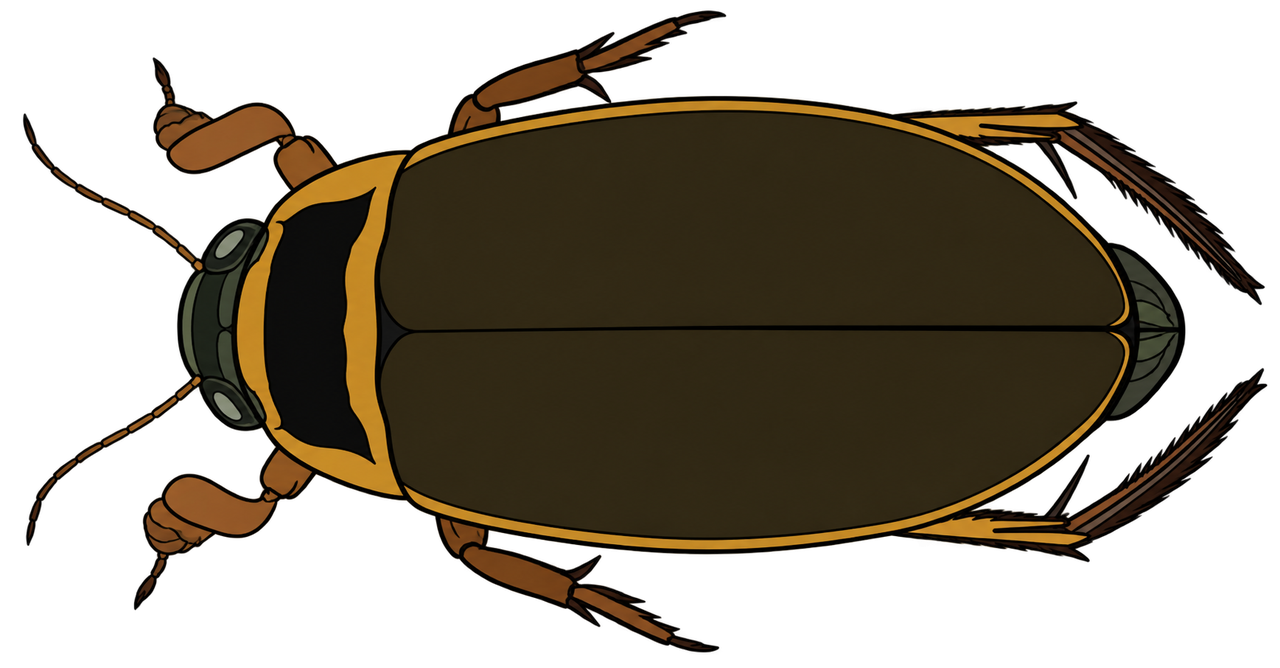
Dytiscus marginalis
Dytiscus marginalis is a large predatory water beetle with a streamlined dark body and pale yellow margins. Males have adhesive pads on their forelegs, while females occur in both grooved and smooth wing-cover forms.
Explore the guide →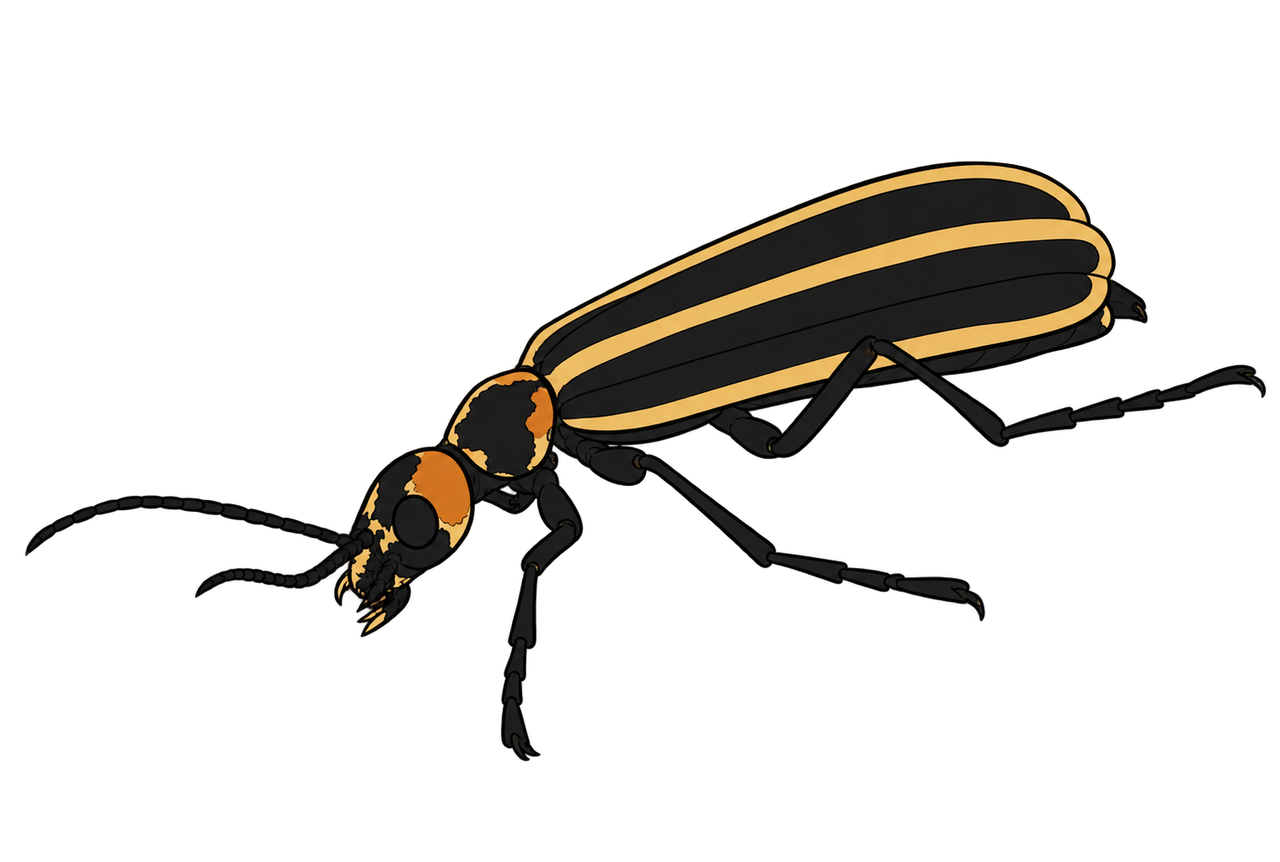
Epicauta vittata
Epicauta vittata is a slender yellow-and-black blister beetle of eastern North America. Adults feed on foliage, while its active young larvae seek grasshopper egg pods beneath the soil.
Explore the guide →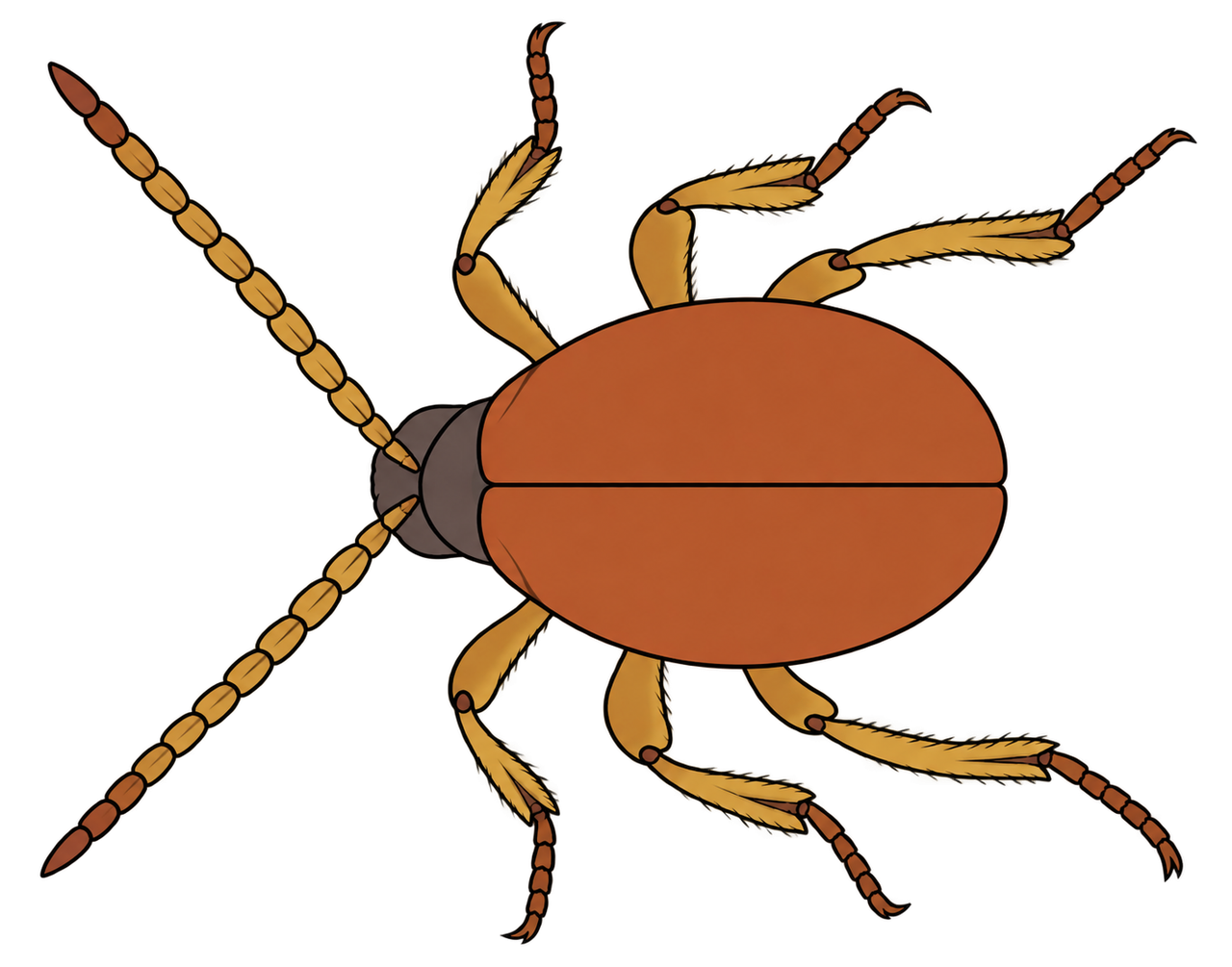
Gibbium psylloides
Gibbium psylloides is a tiny flightless beetle with a glossy, rounded body and long, pale-haired appendages. It lives among dry organic materials and is associated with stored products and sheltered cavities in old buildings.
Explore the guide →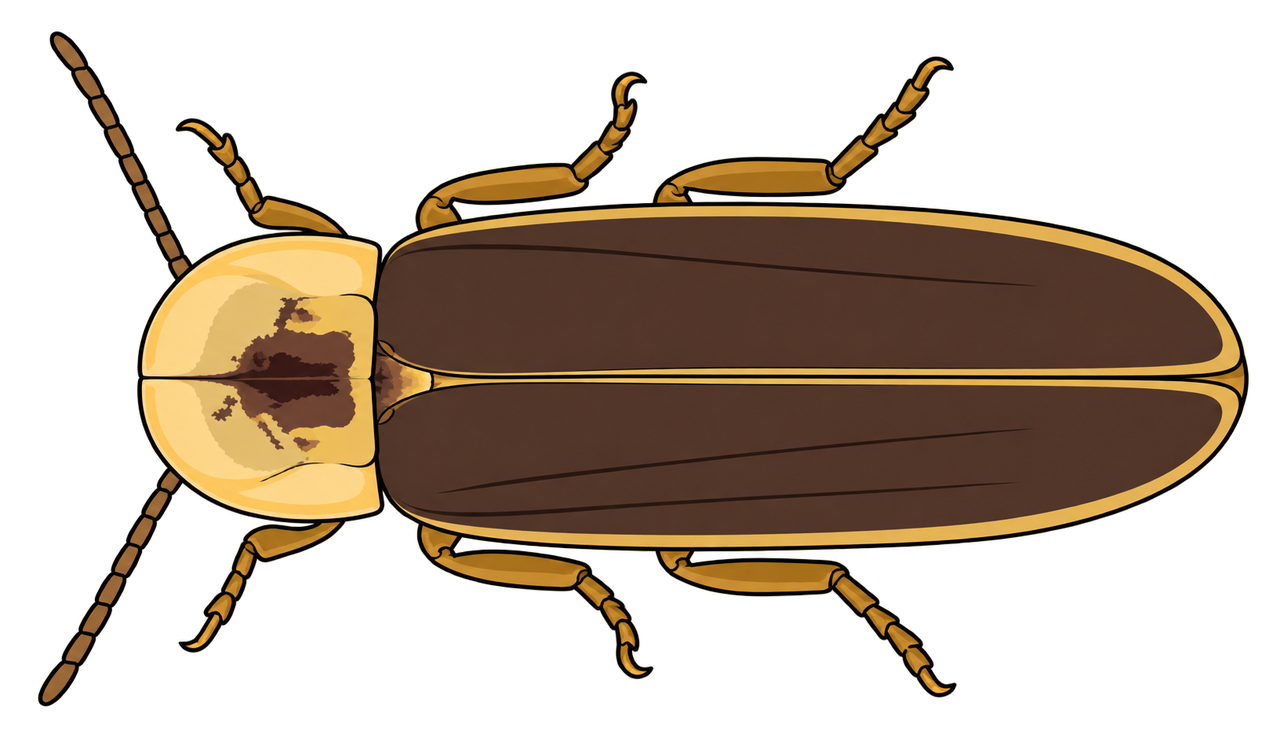
Lampyris noctiluca
Lampyris noctiluca is a European and Asian firefly with strongly different adult sexes. The wingless, larviform female displays a steady yellow-green light to attract the smaller flying male.
Explore the guide →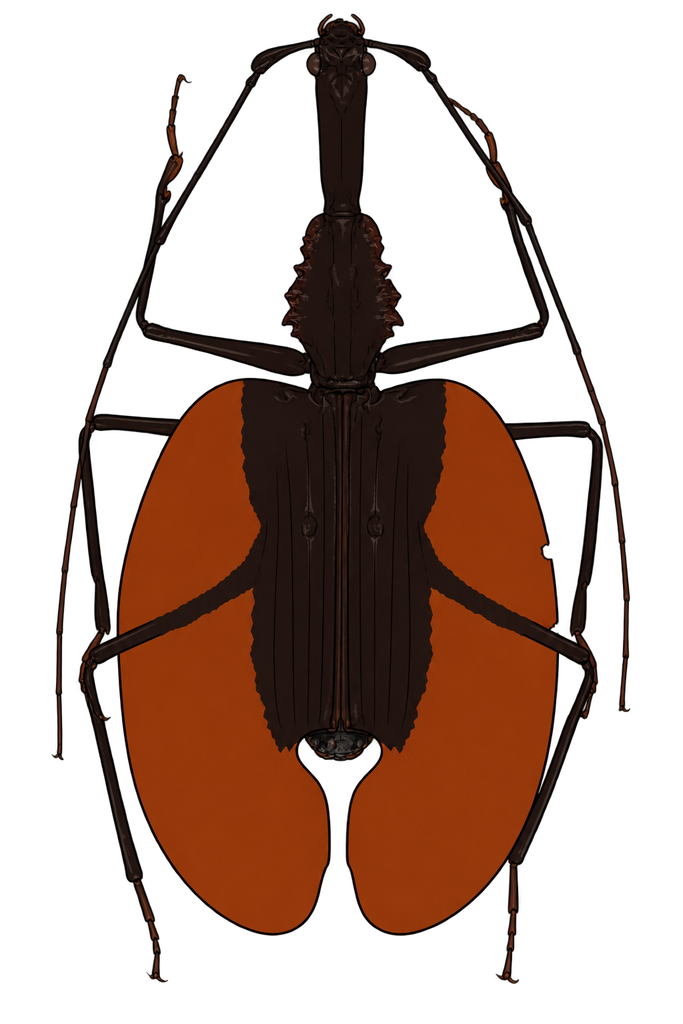
Mormolyce phyllodes
Mormolyce phyllodes is a Southeast Asian ground beetle with flattened, violin-shaped wing covers. Adults in Perak sheltered beneath bracket fungi on fallen rainforest trees.
Explore the guide →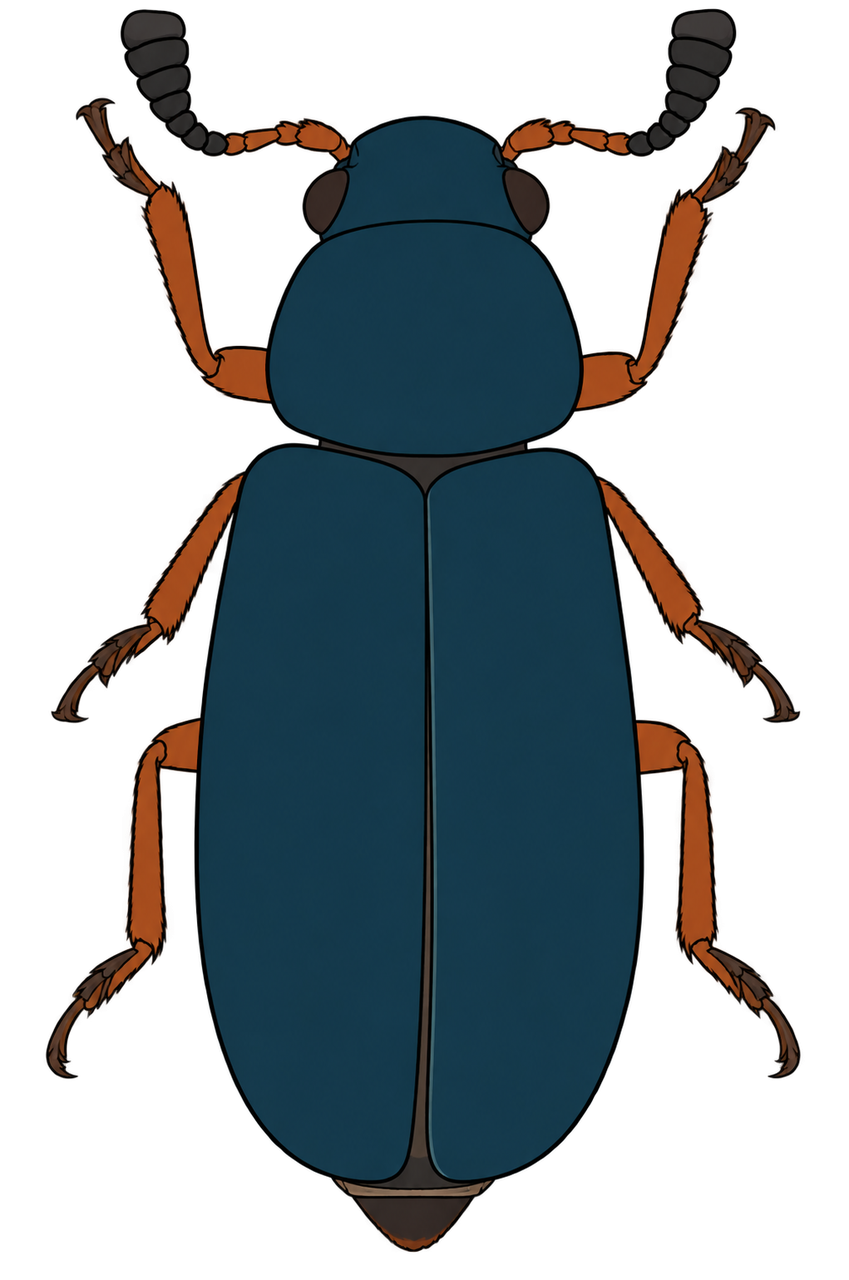
Necrobia rufipes
Necrobia rufipes is a small blue-green beetle with orange-red legs and a dark antennal club. It combines scavenging with predation and occurs on dried animal materials, stored foods and other protein-rich resources.
Explore the guide →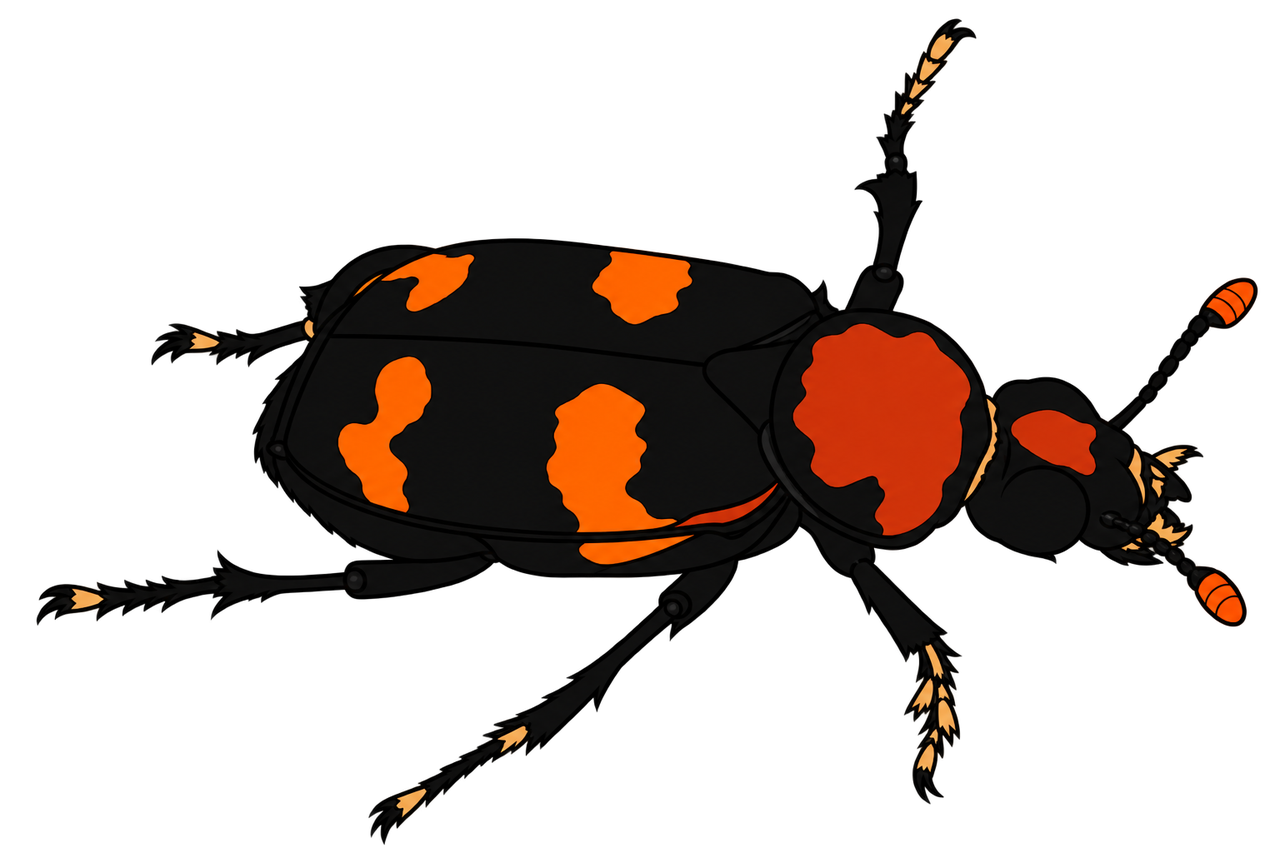
Nicrophorus americanus
Nicrophorus americanus is a large orange-and-black carrion beetle of North America. A distinctive orange-red pronotal patch separates it from other North American burying beetles, and parents prepare buried carcasses to rear their young.
Explore the guide →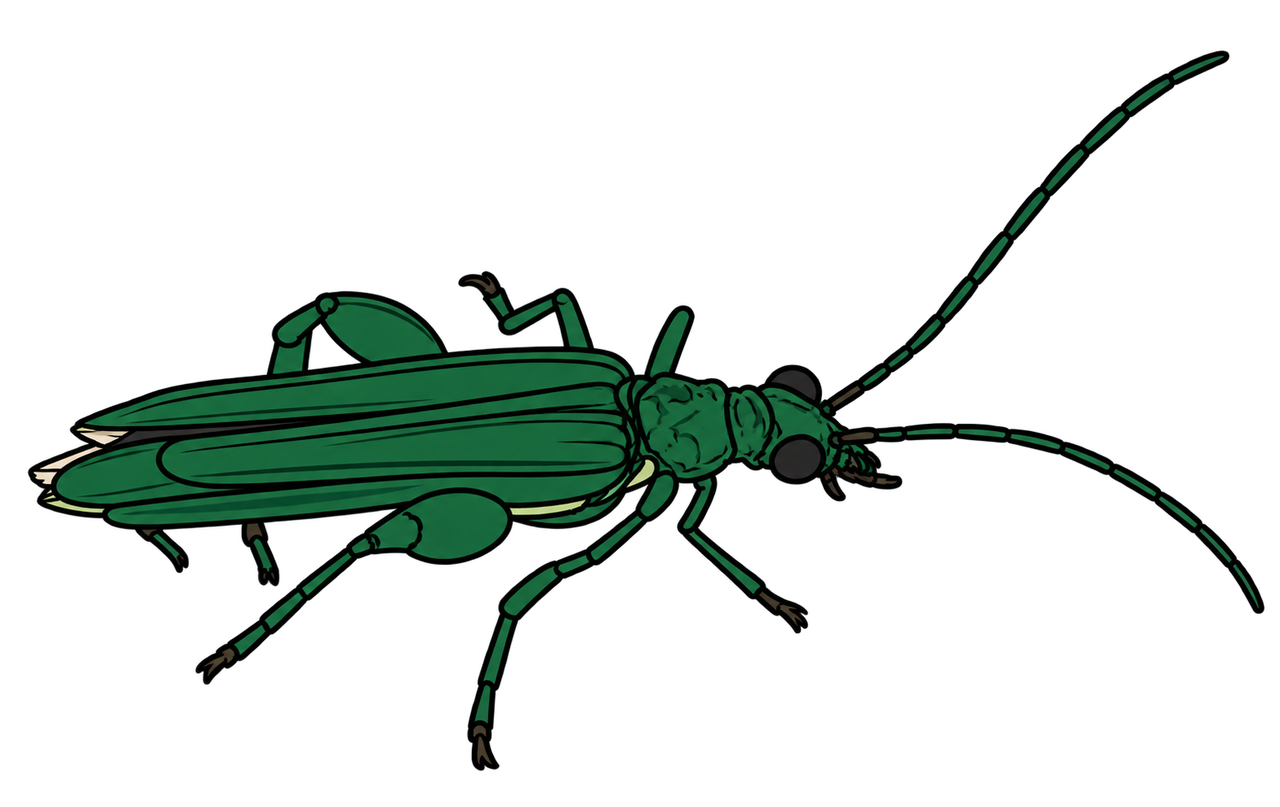
Oedemera nobilis
Oedemera nobilis is a slender metallic-green flower beetle whose males have dramatically enlarged hind femora. High-speed filming shows these legs grasping the female during mating, while wingbeats provide take-off propulsion.
Explore the guide →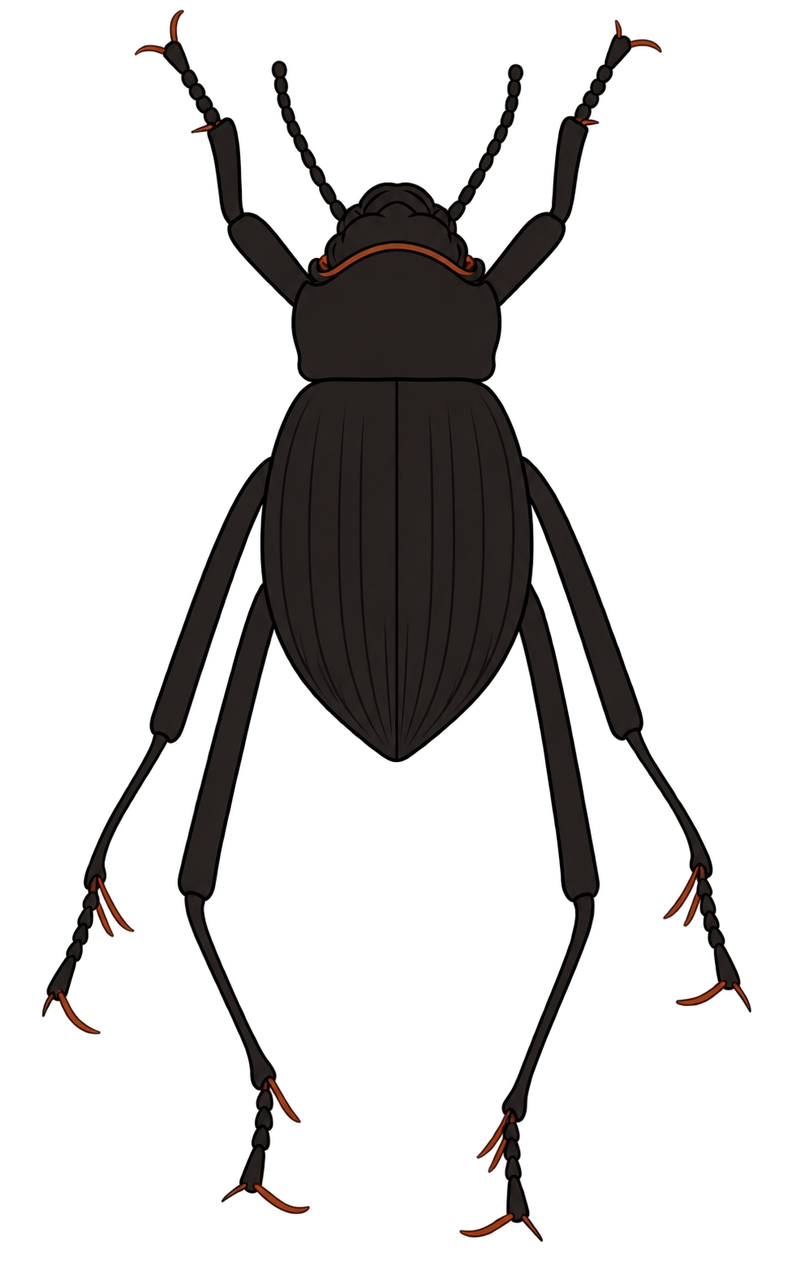
Onymacris unguicularis
Onymacris unguicularis is a flightless Namib Desert darkling beetle that collects fog water by standing head-down into the wind. Its comparatively smooth, hydrophobic wing covers channel droplets towards the mouth.
Explore the guide →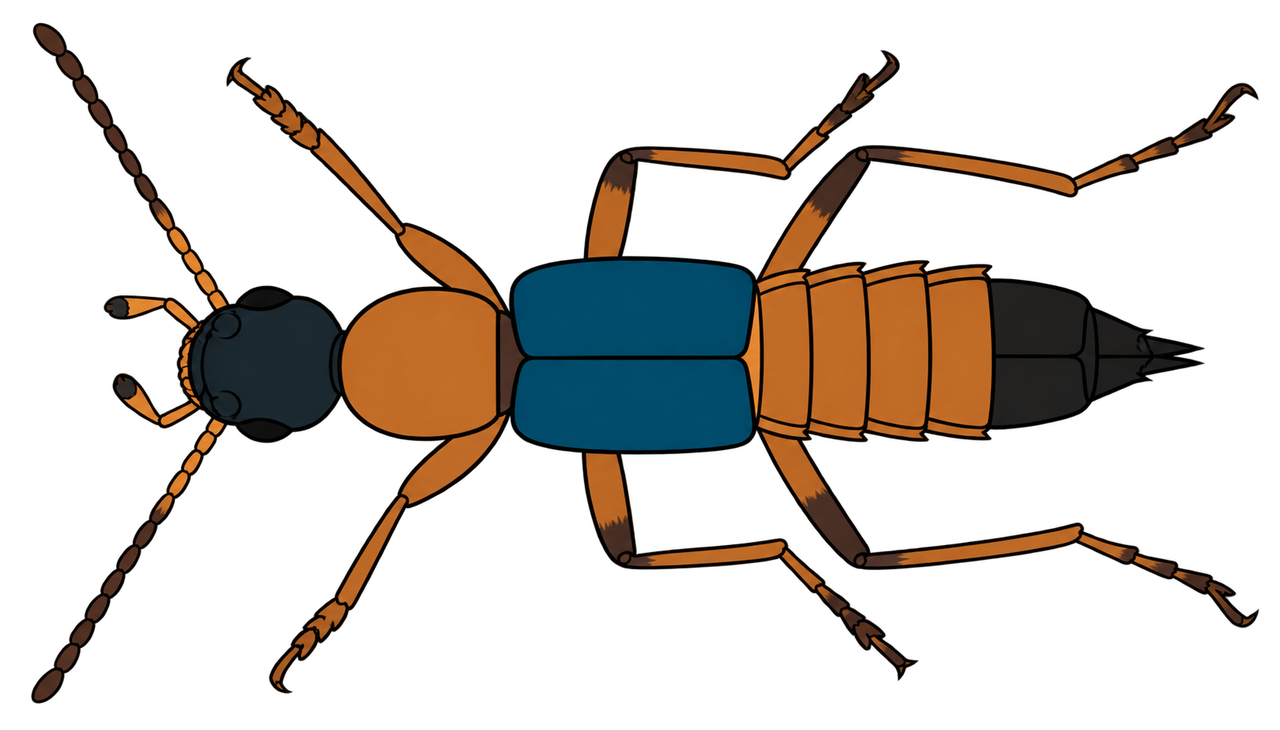
Paederus fuscipes
Paederus fuscipes is a slender rove beetle whose short wing covers leave much of its orange-and-black abdomen exposed. It occurs in damp grasslands and rice fields, where it preys on small invertebrates.
Explore the guide →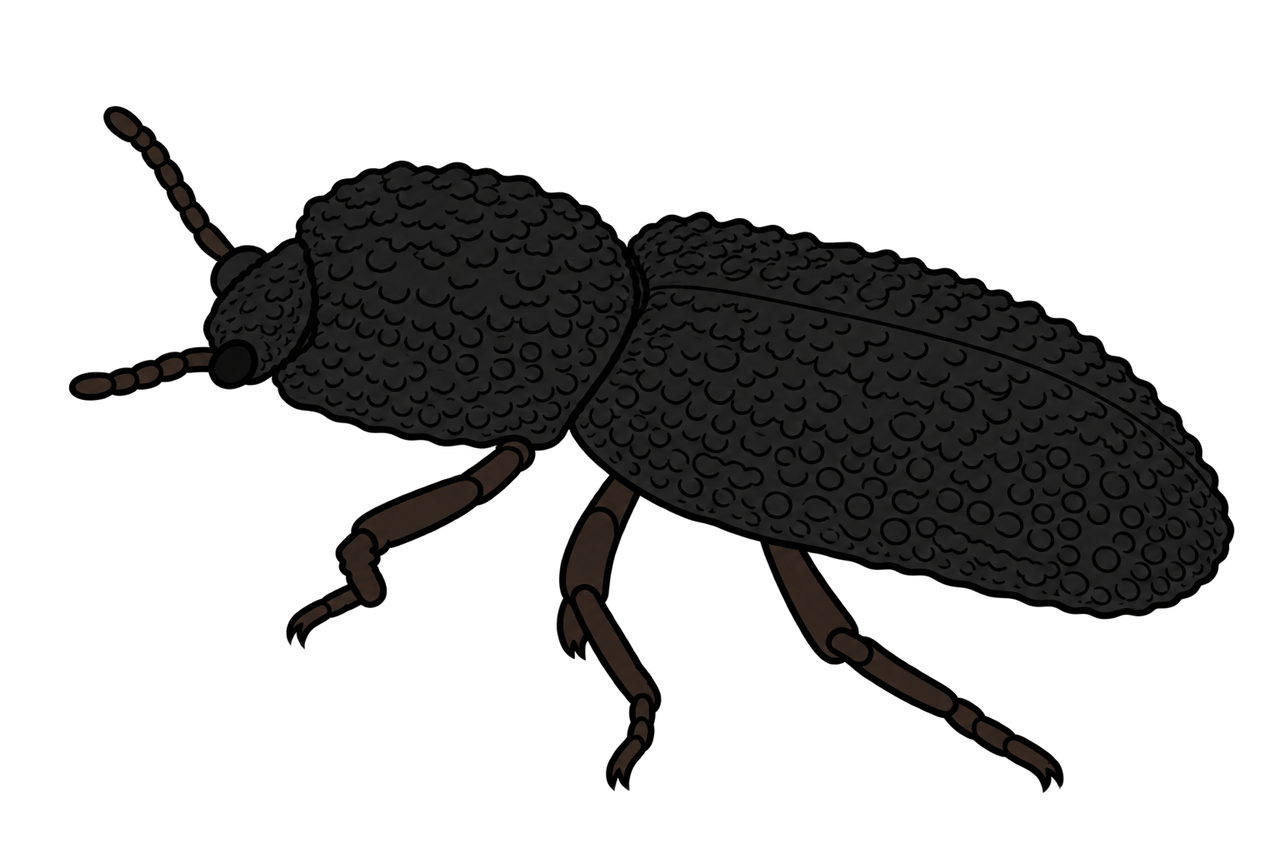
Phloeodes diabolicus
Phloeodes diabolicus is a flightless western North American beetle with a rough, heavily reinforced exoskeleton. Interlocking joints and layered wing-cover material resist compression, making its armour a subject of biomechanical research.
Explore the guide →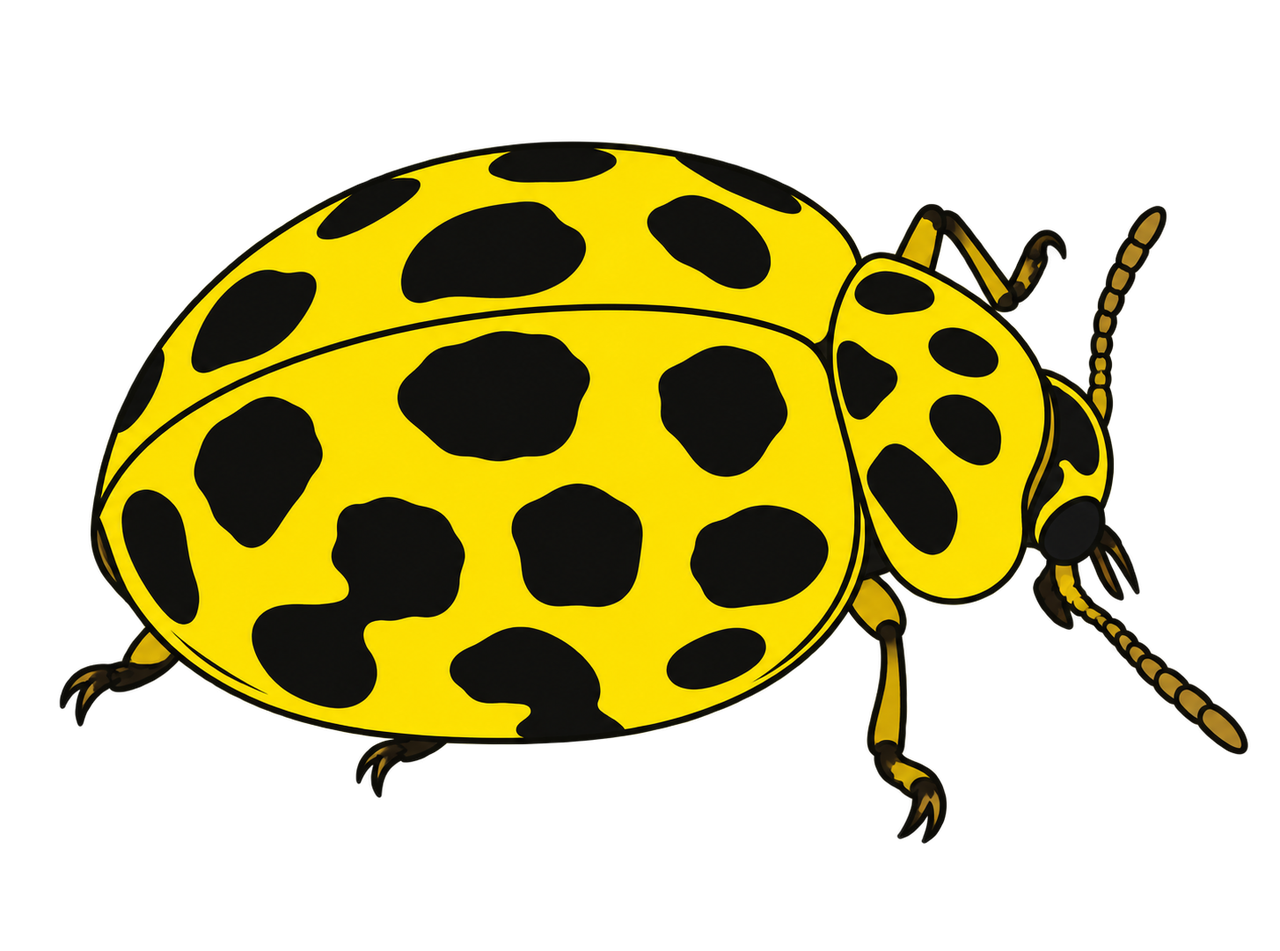
Psyllobora vigintiduopunctata
Psyllobora vigintiduopunctata is a small yellow ladybird patterned with rounded black spots. Adults and larvae graze powdery mildew on plant surfaces.
Explore the guide →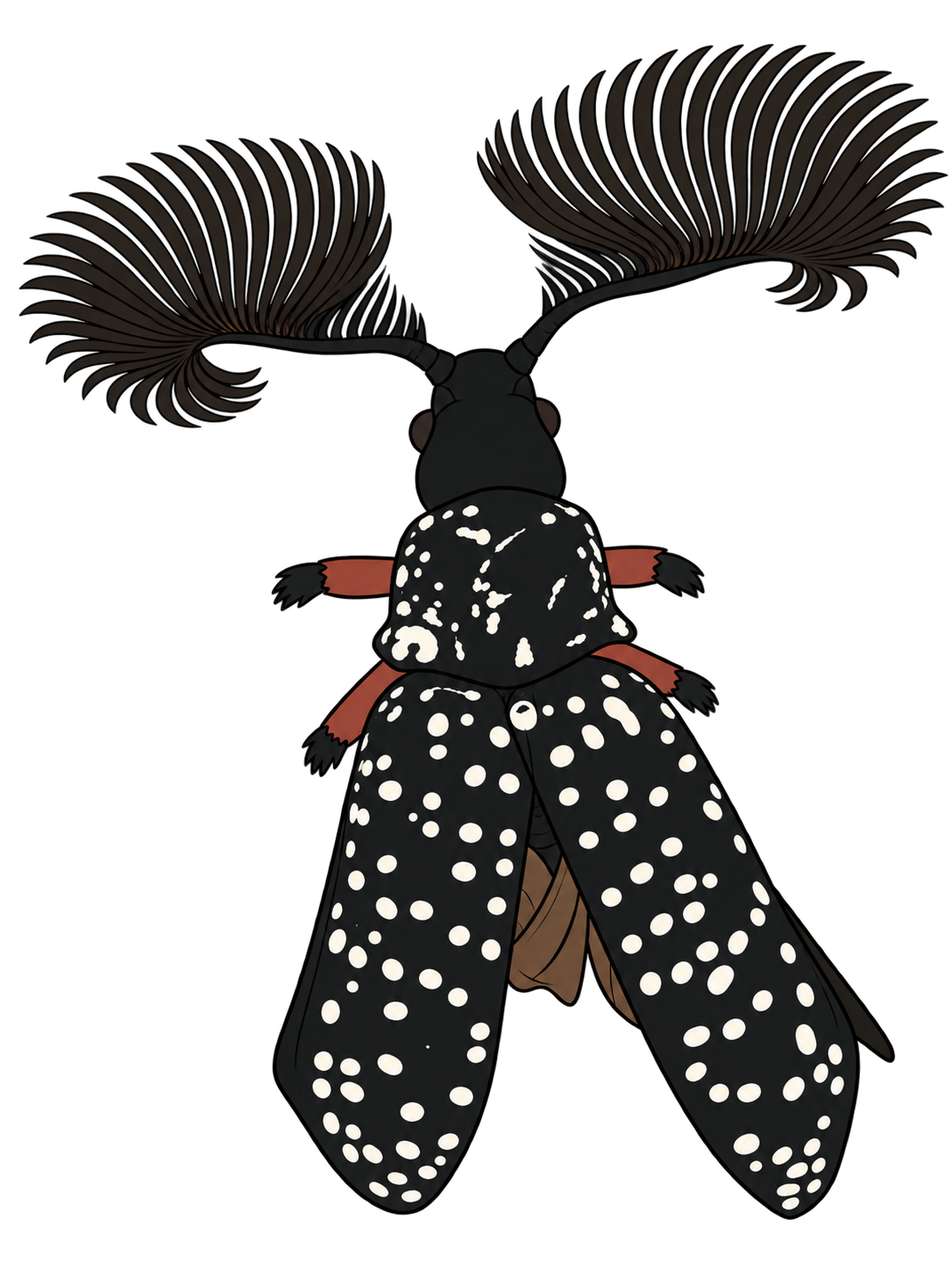
Rhipicera femorata
Rhipicera femorata is an Australian beetle with a black-and-white body and striking antennal dimorphism. The male’s large, many-branched fans carry vastly more sensory structures than the female’s smaller antennae.
Explore the guide →