Loading Luminary Oddities
Please wait while the next page arrives.
Loading this page…
Return homePlease wait while the next page arrives.


Natural history · Entomological Atlas
Species accounts of moth identification, distribution and natural history, with supporting references.
The Atlas combines specimen illustrations with documented natural history.
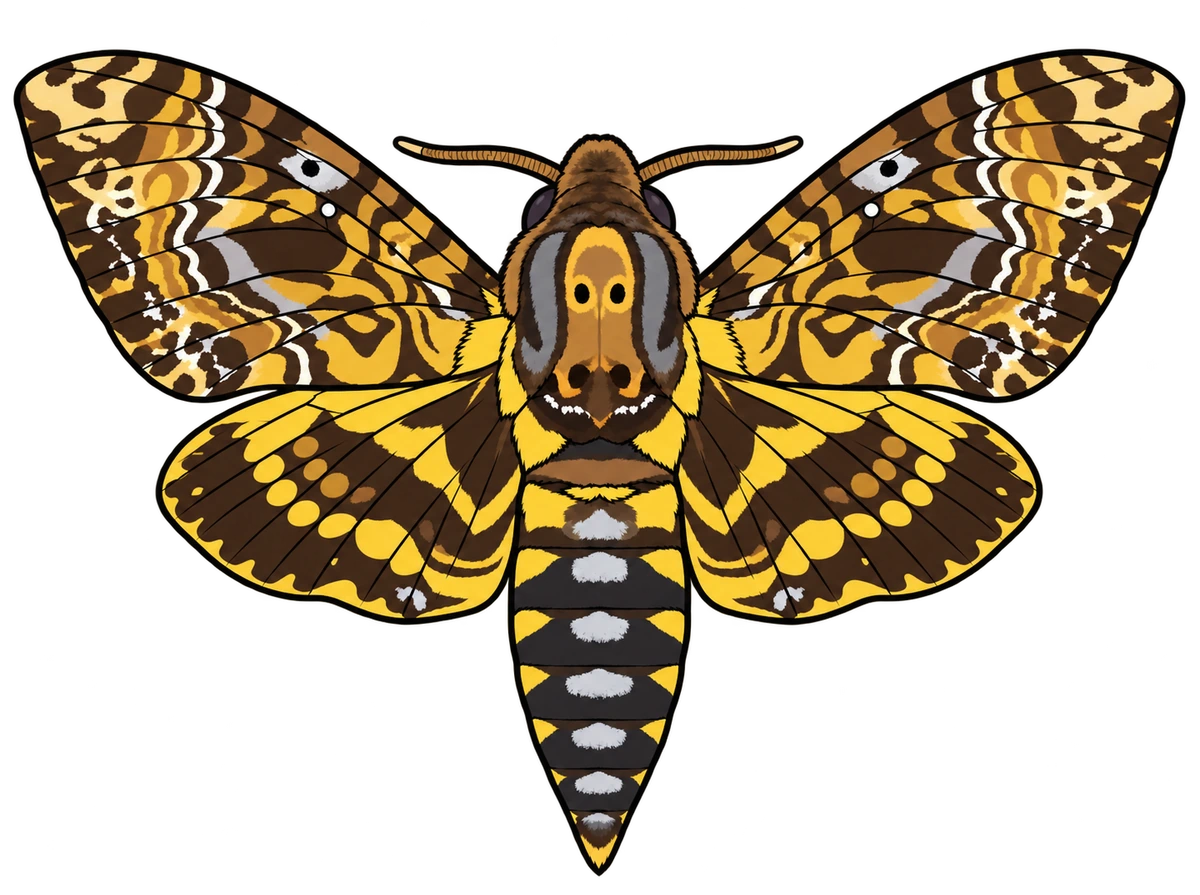
Acherontia lachesis
Acherontia lachesis is a large Asian hawk moth with a skull-like thoracic marking and strongly banded hindwings. Field and rearing studies describe its larval colour variation, underground pupation and rasping defensive sound.
Explore the guide →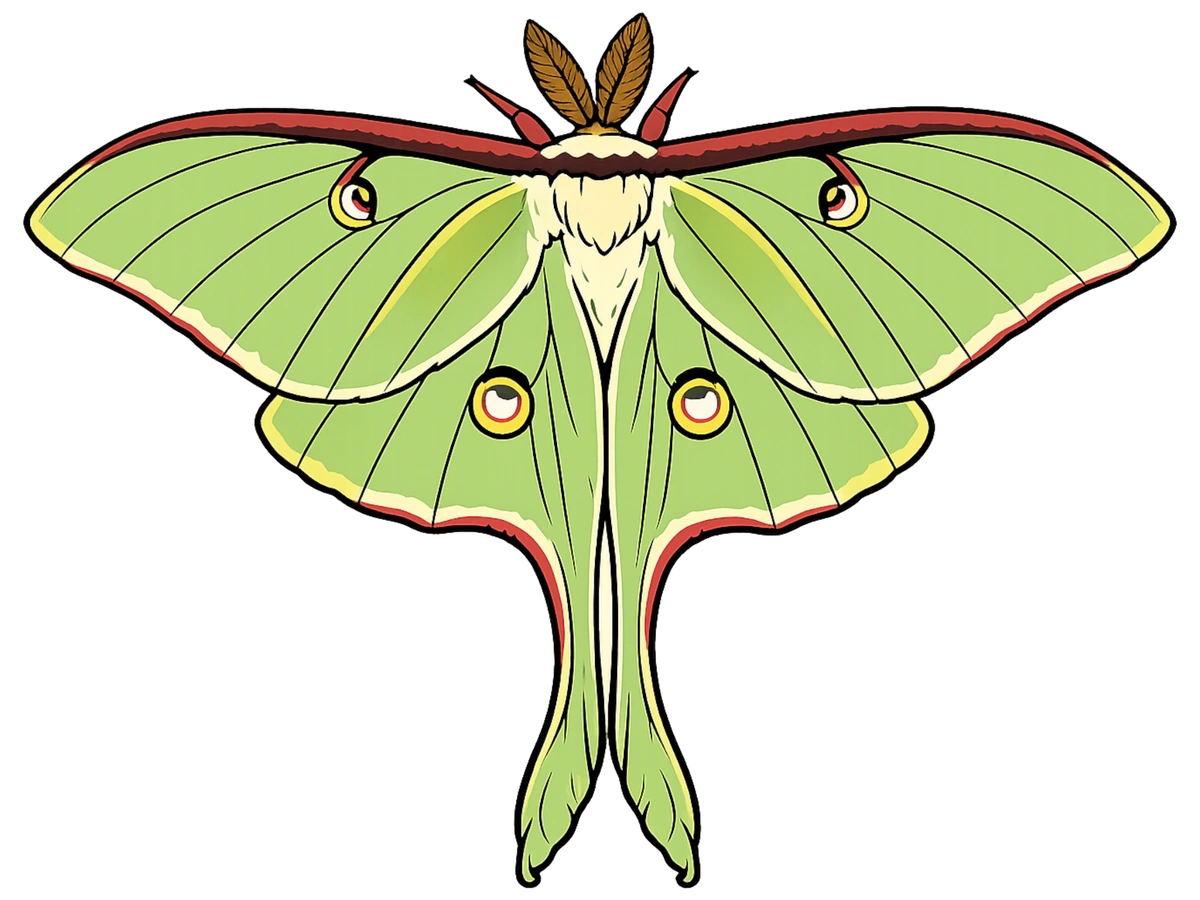
Actias luna
Actias luna is a green silk moth of eastern North America, recognized by its eyespots and long hindwing tails. Its nonfeeding adults rely on larval reserves, and experiments show that the tails can divert attacks by echolocating bats.
Explore the guide →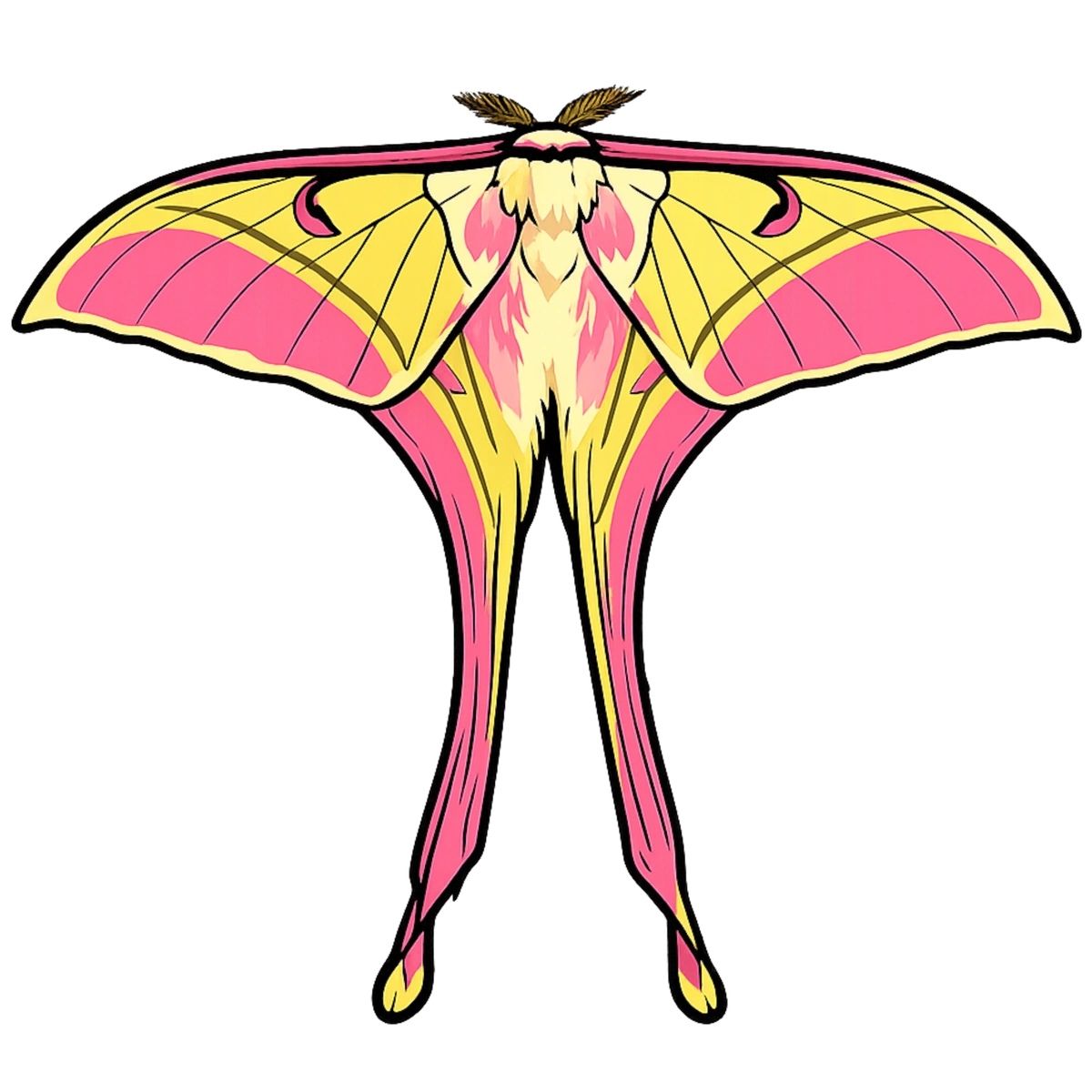
Actias rhodopneuma
Actias rhodopneuma is an Asian moon moth recorded from China and Laos. Documented Laotian specimens include a June collection at 1,800 m and males and females collected in the mountain forests of Phongsaly in August 2024.
Explore the guide →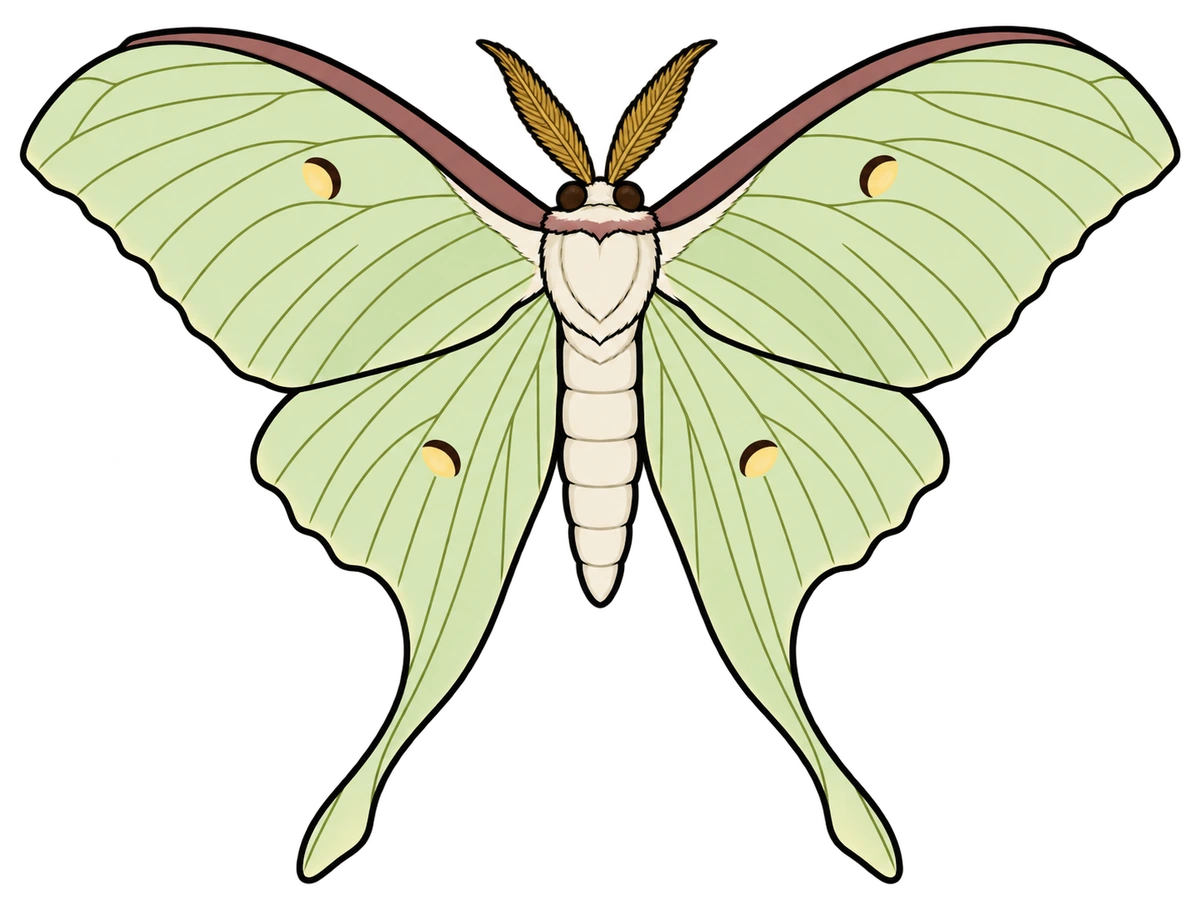
Actias selene
Actias selene is an Asian moon moth with pale emerald wings, crescent-marked eyespots and long hindwing tails. A two-year rearing study in Nagaland documented three annual generations and prolonged winter pupal dormancy.
Explore the guide →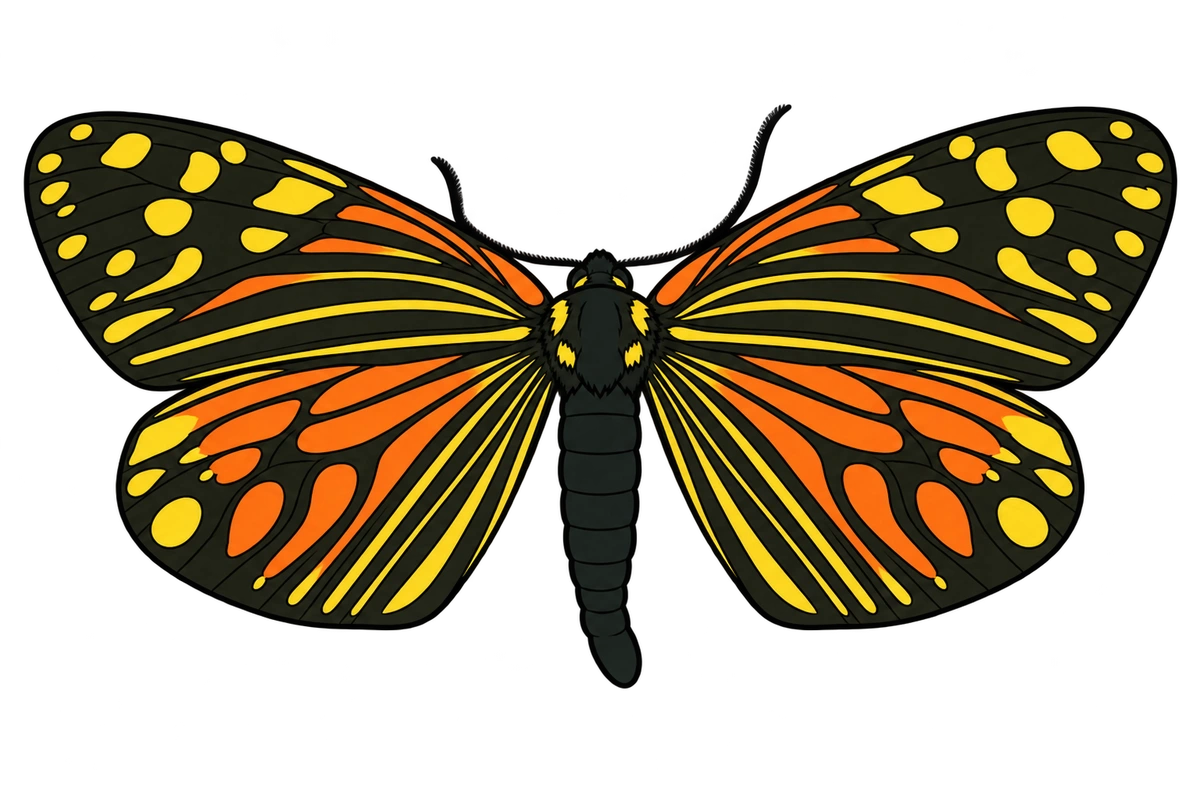
Campylotes histrionicus
Campylotes histrionicus is a day-flying moth recorded across parts of the Himalaya and western China. Regional catalogues document its nomenclature, occurrences and reported larval plants.
Explore the guide →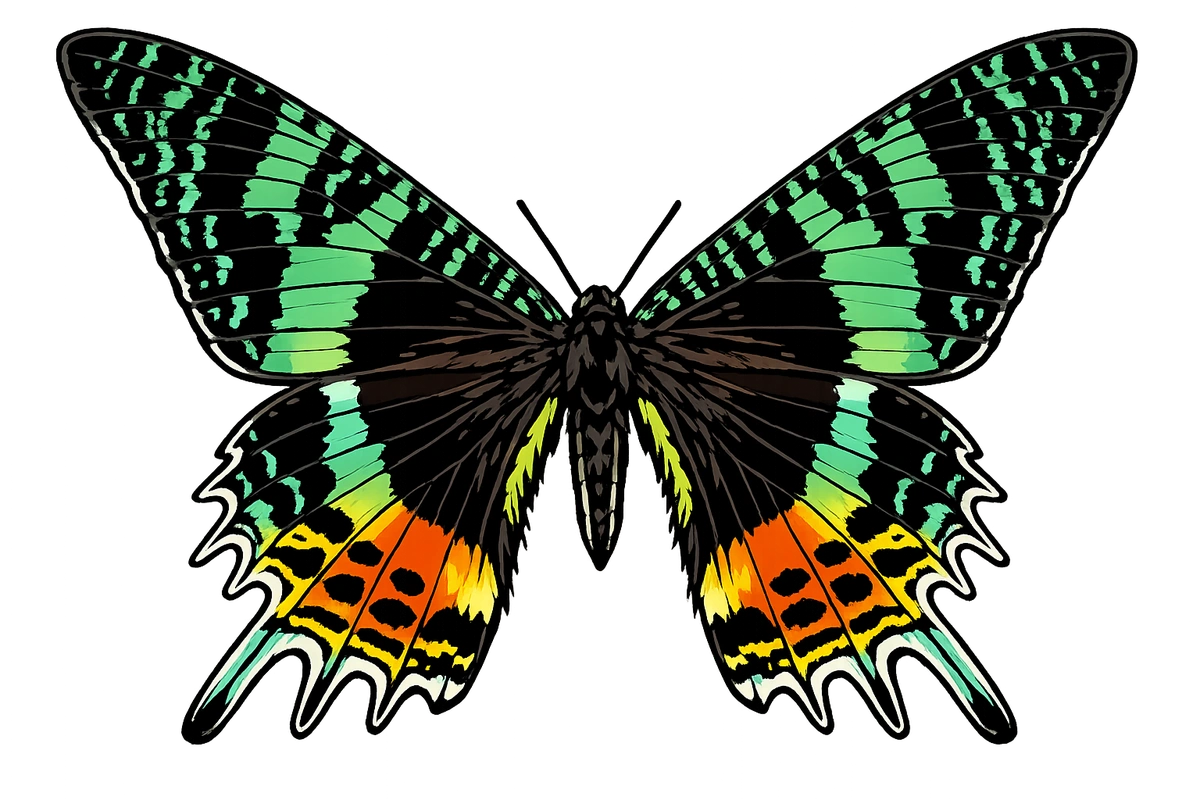
Chrysiridia rhipheus
Chrysiridia rhipheus, the Madagascan sunset moth, flies by day. Its iridescent colours arise from microscopic layers within the wing scales, while compounds acquired from Omphalea hosts contribute to its chemical defence.
Explore the guide →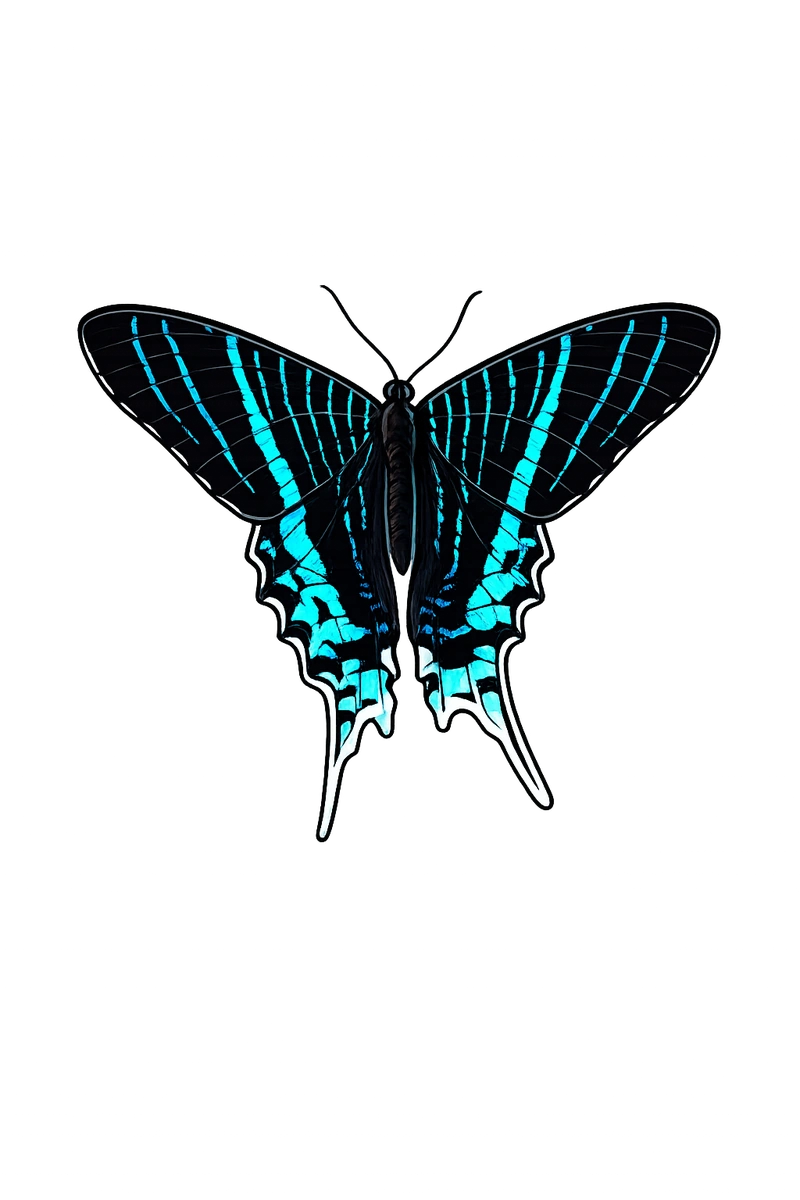
Urania leilus
Urania leilus is a day-flying Neotropical moth with iridescent green bands and pale hindwing tails. Field studies document migration, while comparative research examines its distribution and specialized larval hosts.
Explore the guide →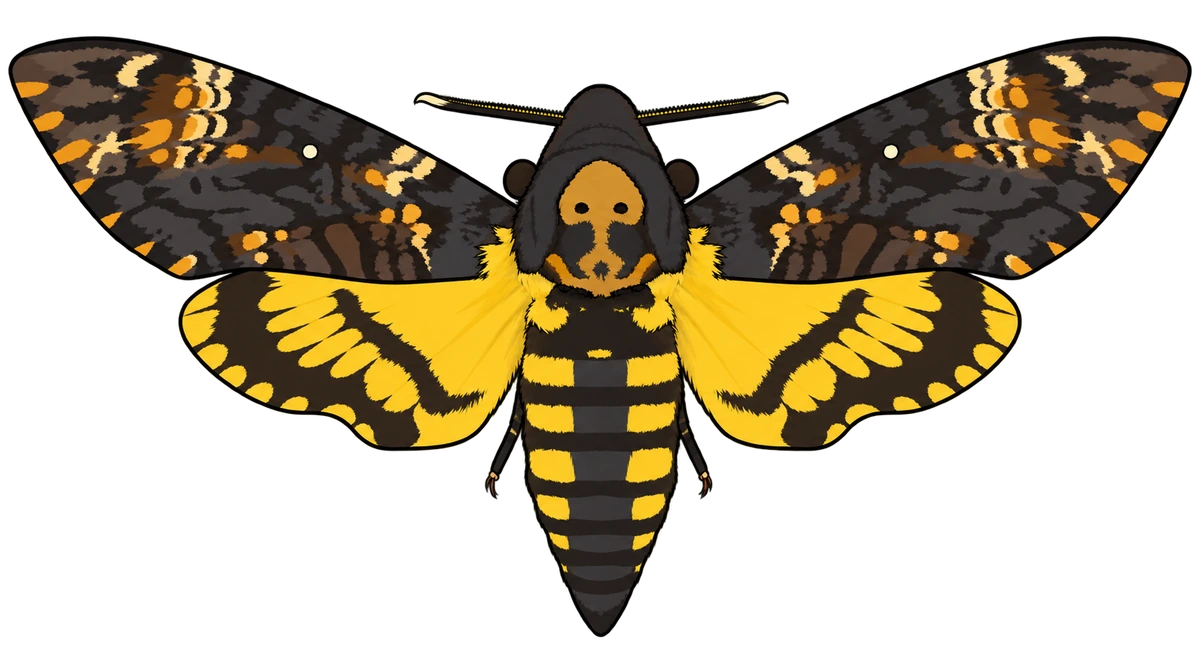
Acherontia atropos
A pale skull-like thoracic marking, yellow-and-black hindwings and a banded abdomen identify this large hawk-moth. Adults can enter honeybee colonies to feed and produce an audible squeak.
Explore the guide →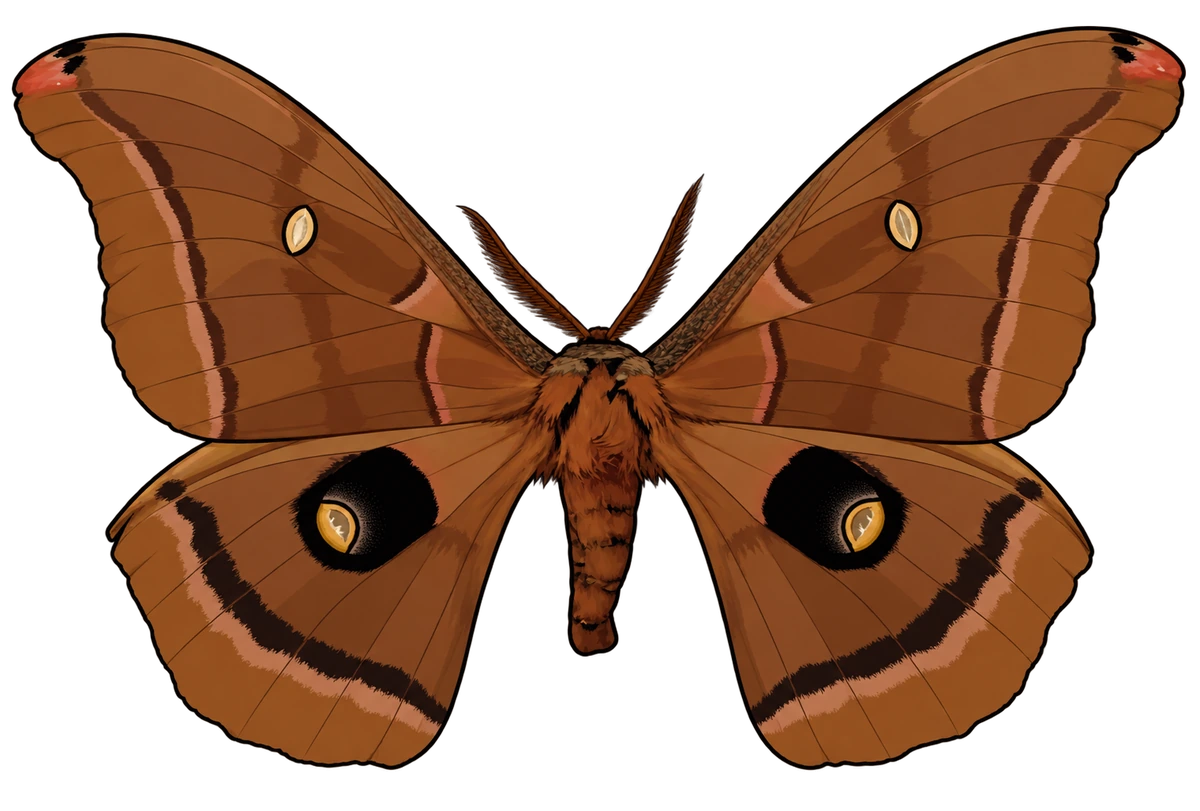
Antheraea polyphemus
Large ringed hindwing eyespots distinguish the Polyphemus moth. Its caterpillars produce audible mandibular clicks and defend themselves with regurgitated fluid.
Explore the guide →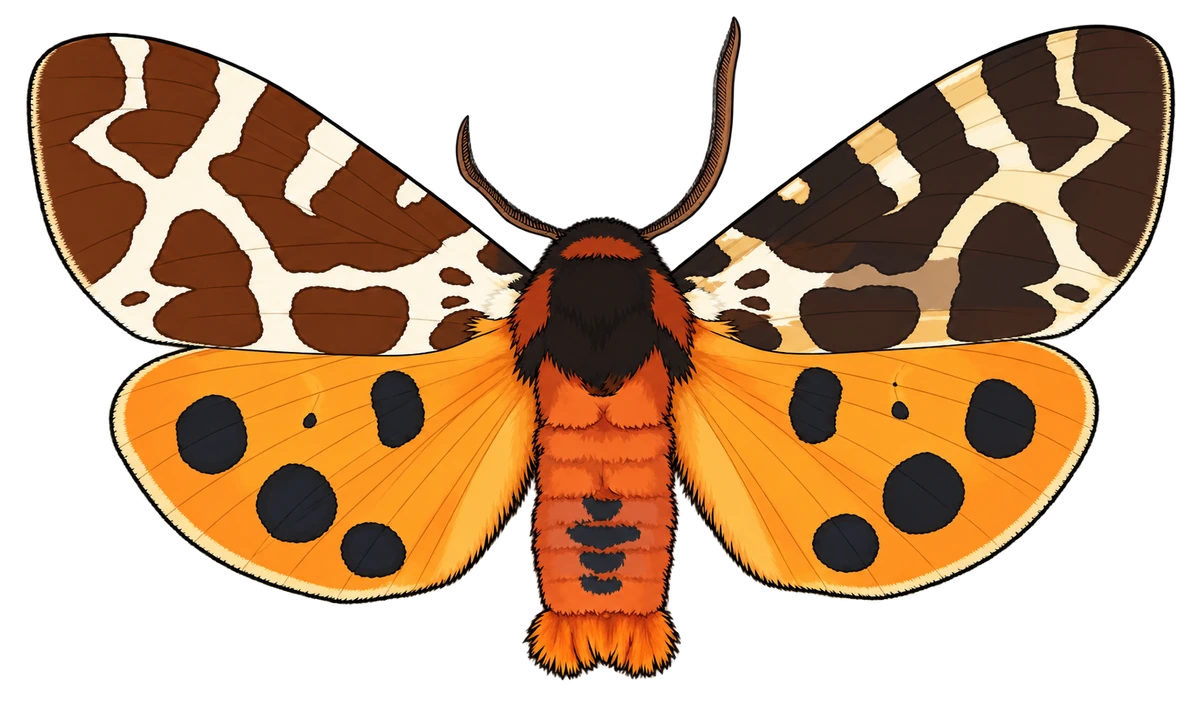
Arctia caja
A cream-and-brown forewing mosaic conceals orange hindwings marked with blue-black spots. Individual variation is a characteristic of this Holarctic tiger moth.
Explore the guide →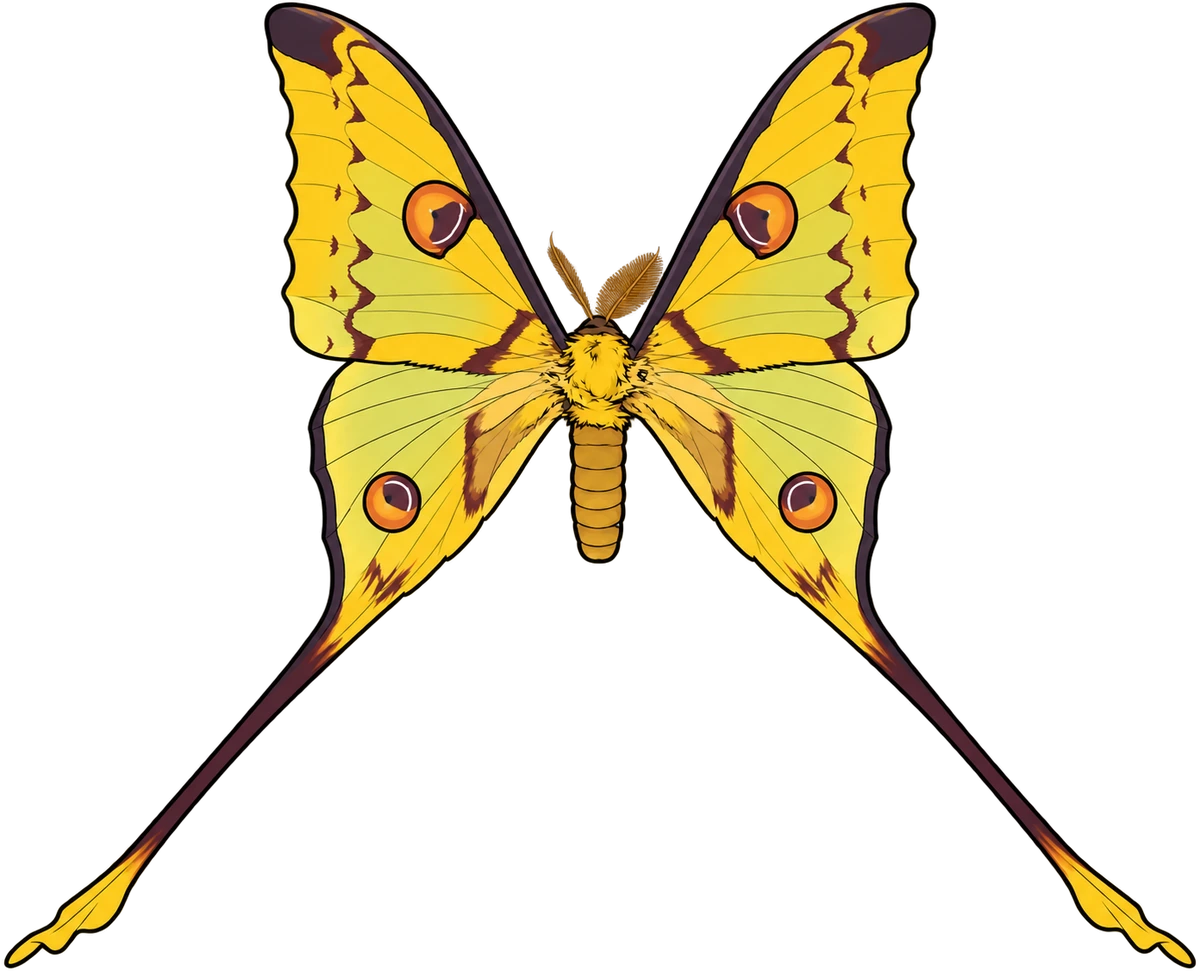
Argema mittrei
The Madagascan moon moth is a yellow silk moth with eyespots and exceptionally elongated red-and-yellow hindwing tails. Males carry slimmer tails and more feathery antennae than females.
Explore the guide →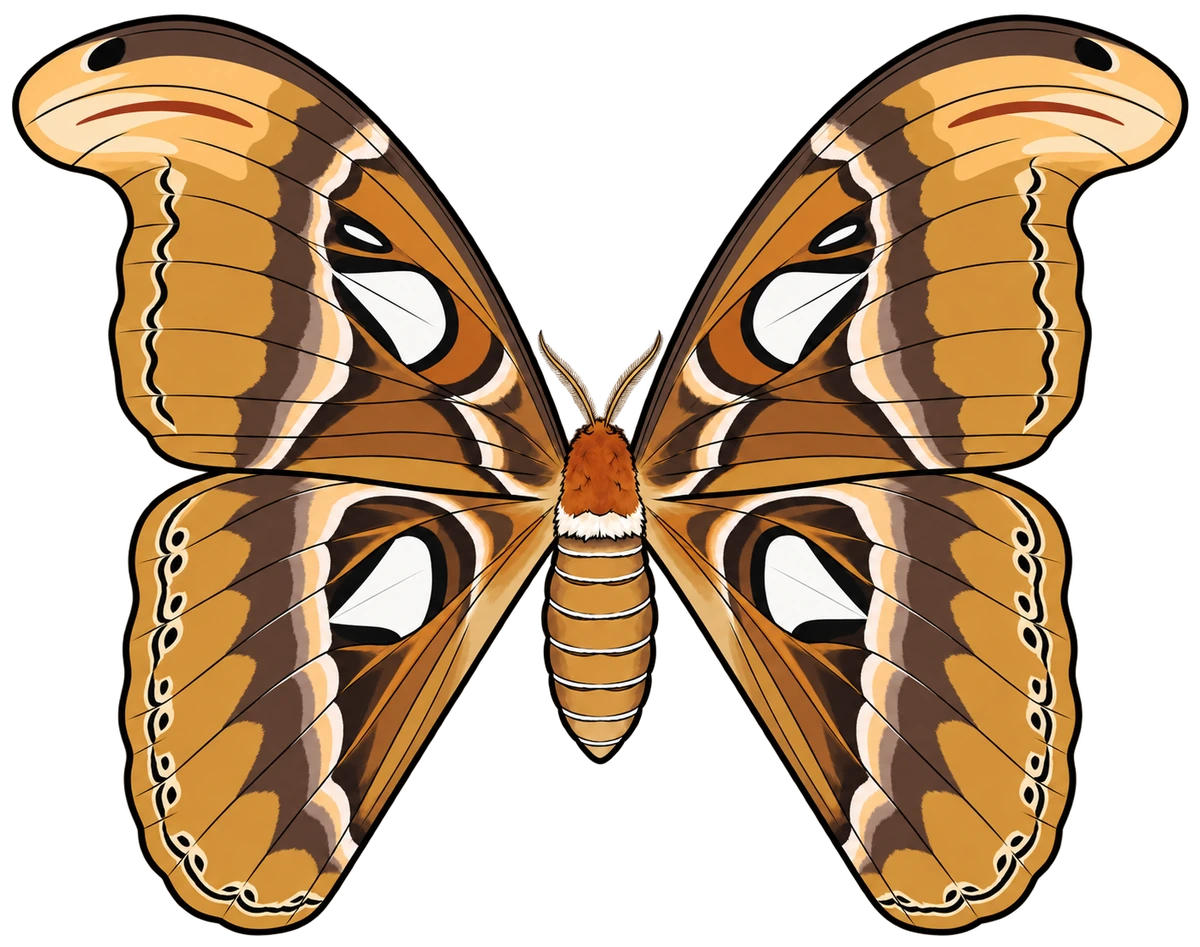
Attacus atlas
The Atlas moth combines broad brown wings, pale window-like patches and strongly curved forewing tips. Adults live on reserves accumulated by the caterpillar and take no food.
Explore the guide →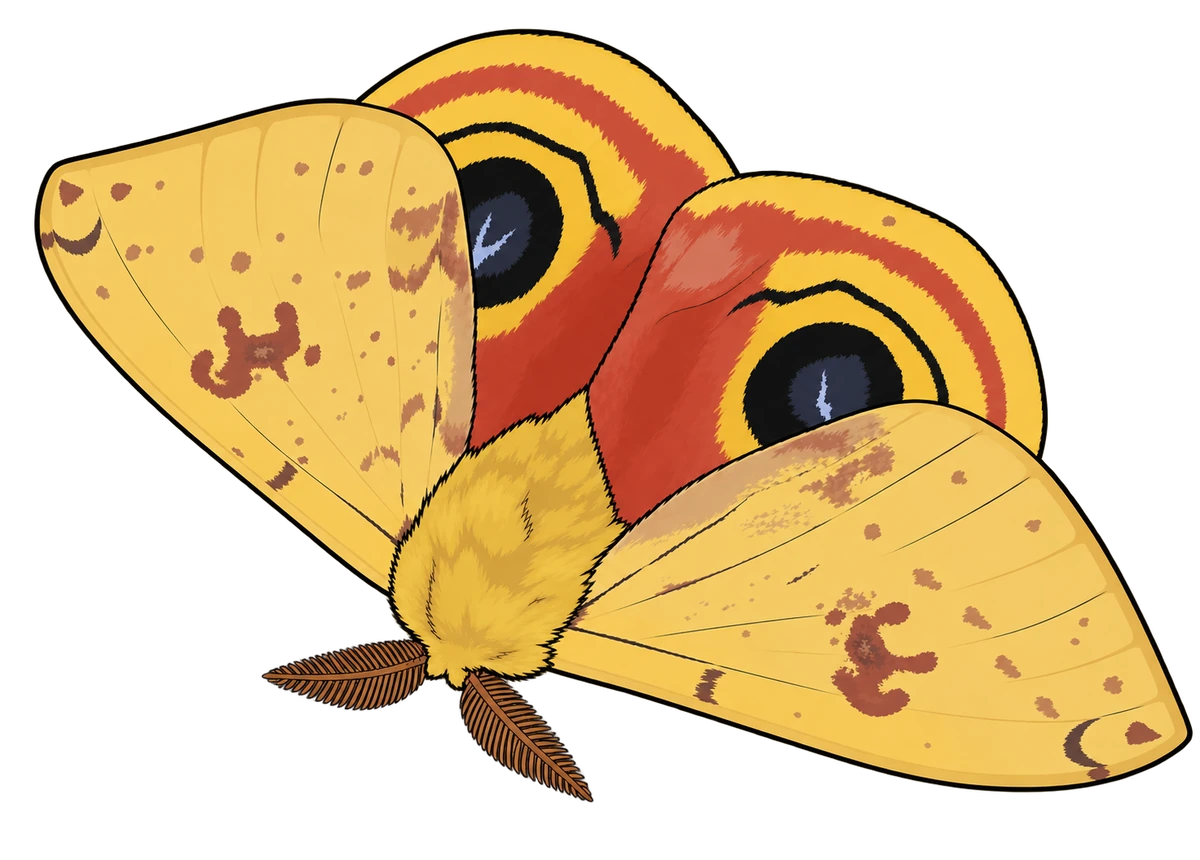
Automeris io
The Io moth conceals a pair of conspicuous hindwing eyespots beneath forewings that vary with sex and population. Its green caterpillars carry branching, stinging spines.
Explore the guide →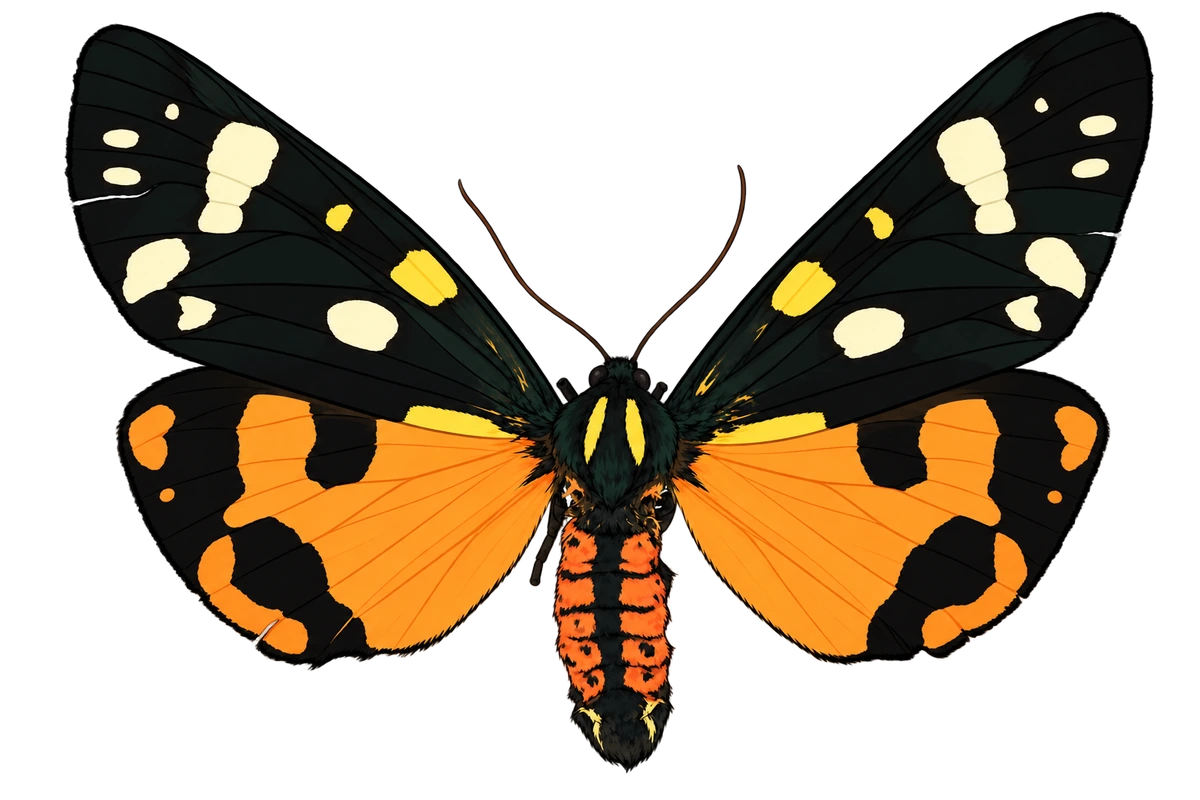
Callimorpha dominula
Cream and yellow spots mark the dark, green-tinged forewings; bright red hindwings appear in flight. Wetland populations have also provided a long-running record of inherited wing-pattern variation.
Explore the guide →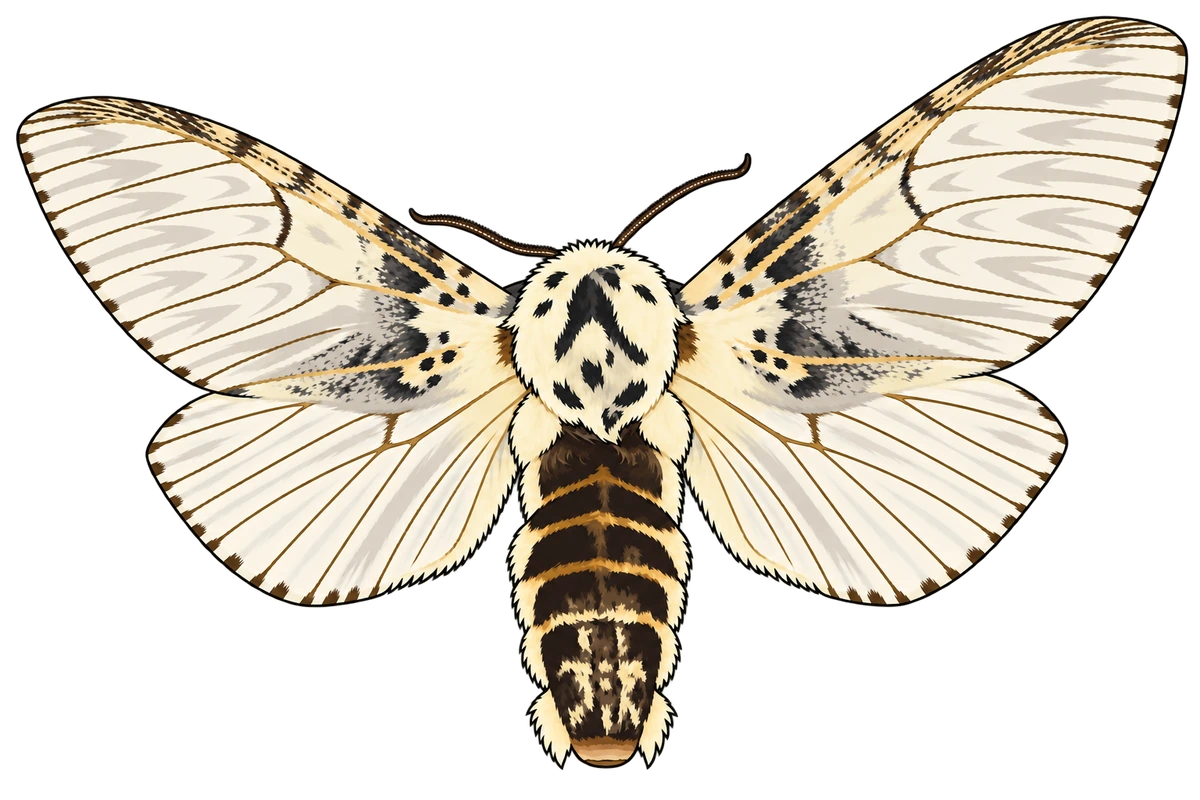
Cerura vinula
The puss moth has a densely furred white-grey body and patterned forewings. Its green caterpillar is equally distinctive, with a dark saddle, a conspicuous false-face display and paired posterior structures that can extend red whips when disturbed.
Explore the guide →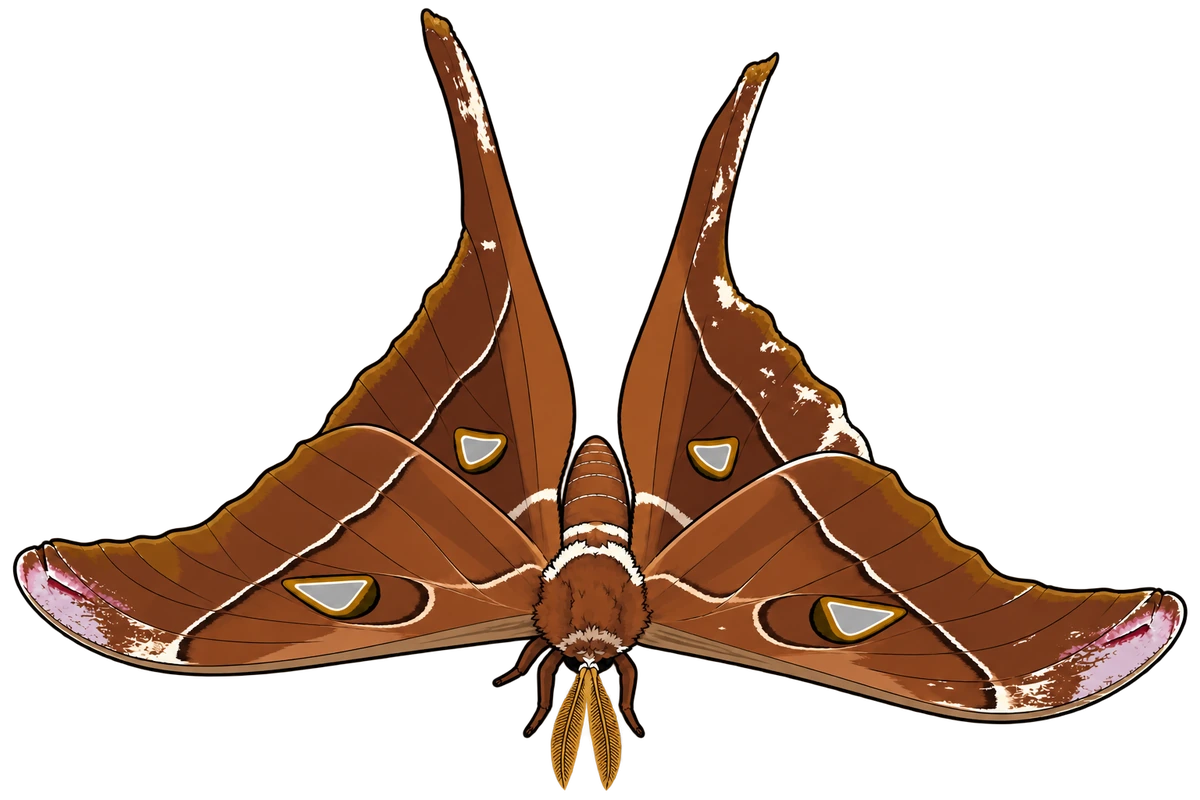
Coscinocera hercules
The Hercules moth is a large rainforest silk moth of northern Queensland, Australia. Clear wing windows, a heavily built body and the male’s elongated hindwing tails distinguish its adult form.
Explore the guide →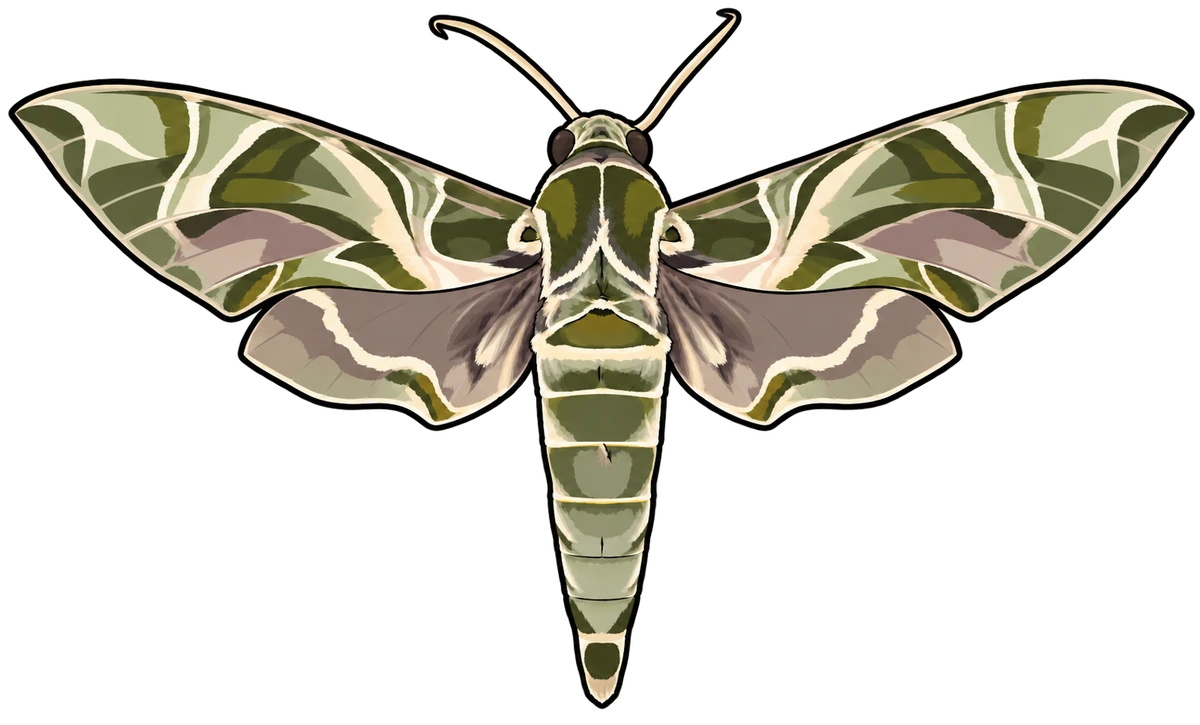
Daphnis nerii
Intricate green, cream and pink fields cover the wings and body of this hawk-moth. Its caterpillars feed on oleander and several related ornamental plants in tropical gardens.
Explore the guide →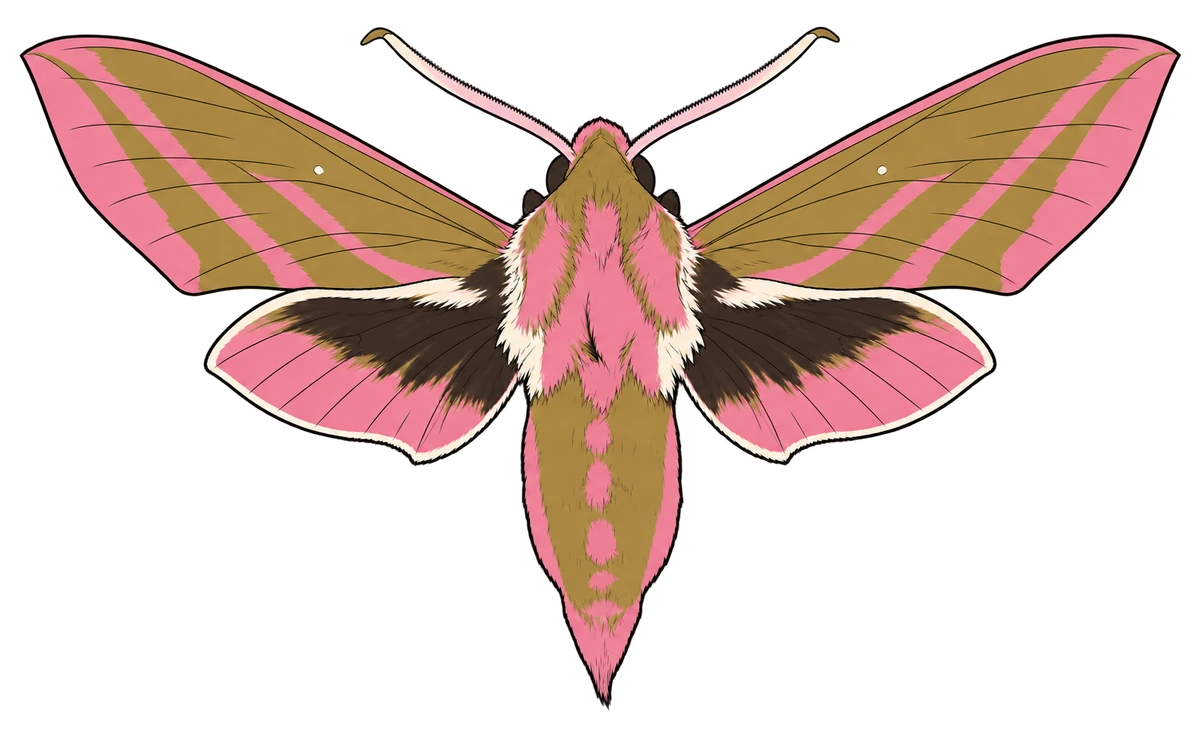
Deilephila elpenor
The elephant hawk-moth combines pink-and-khaki coloration with a visual system capable of distinguishing flower colours in very dim light.
Explore the guide →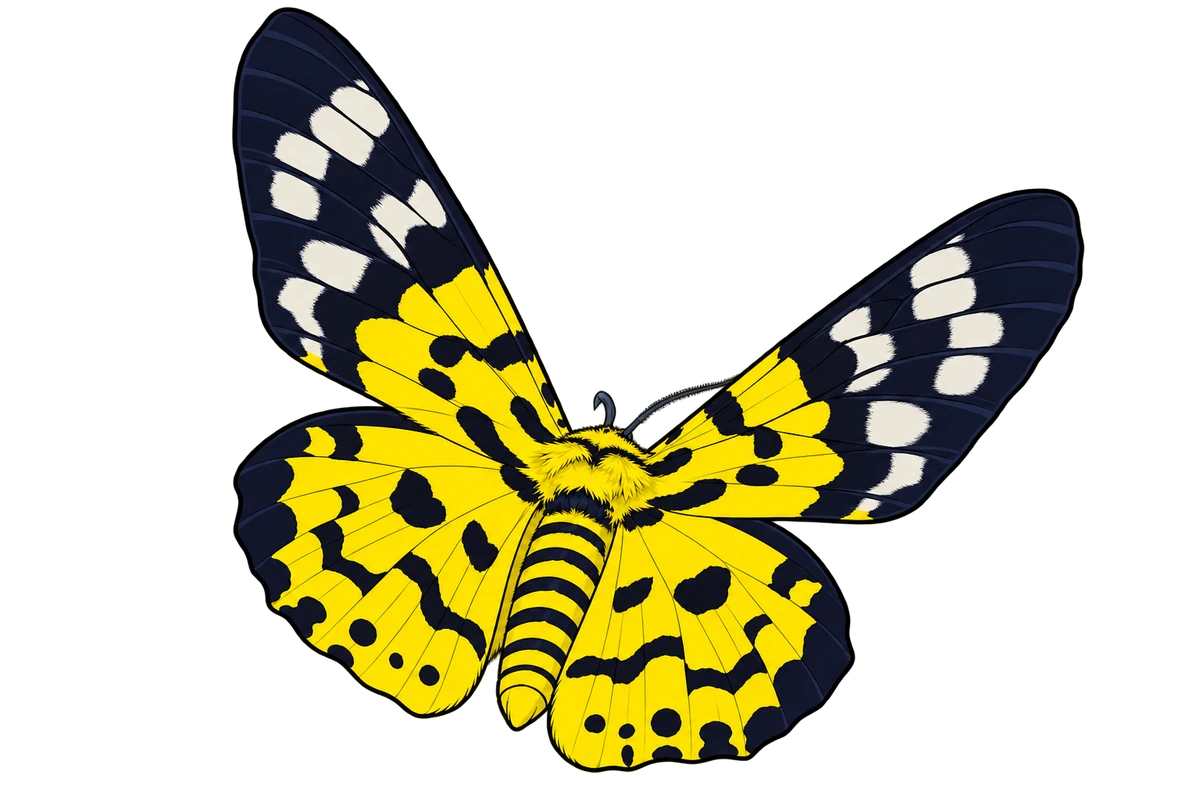
Dysphania militaris
Dysphania militaris is a yellow-and-black geometrid moth with bold wing patches and, in typical forms, a black-ringed abdomen. Its striking adult pattern accompanies a life cycle documented through rearing in Hong Kong and photographic observations in Bali.
Explore the guide →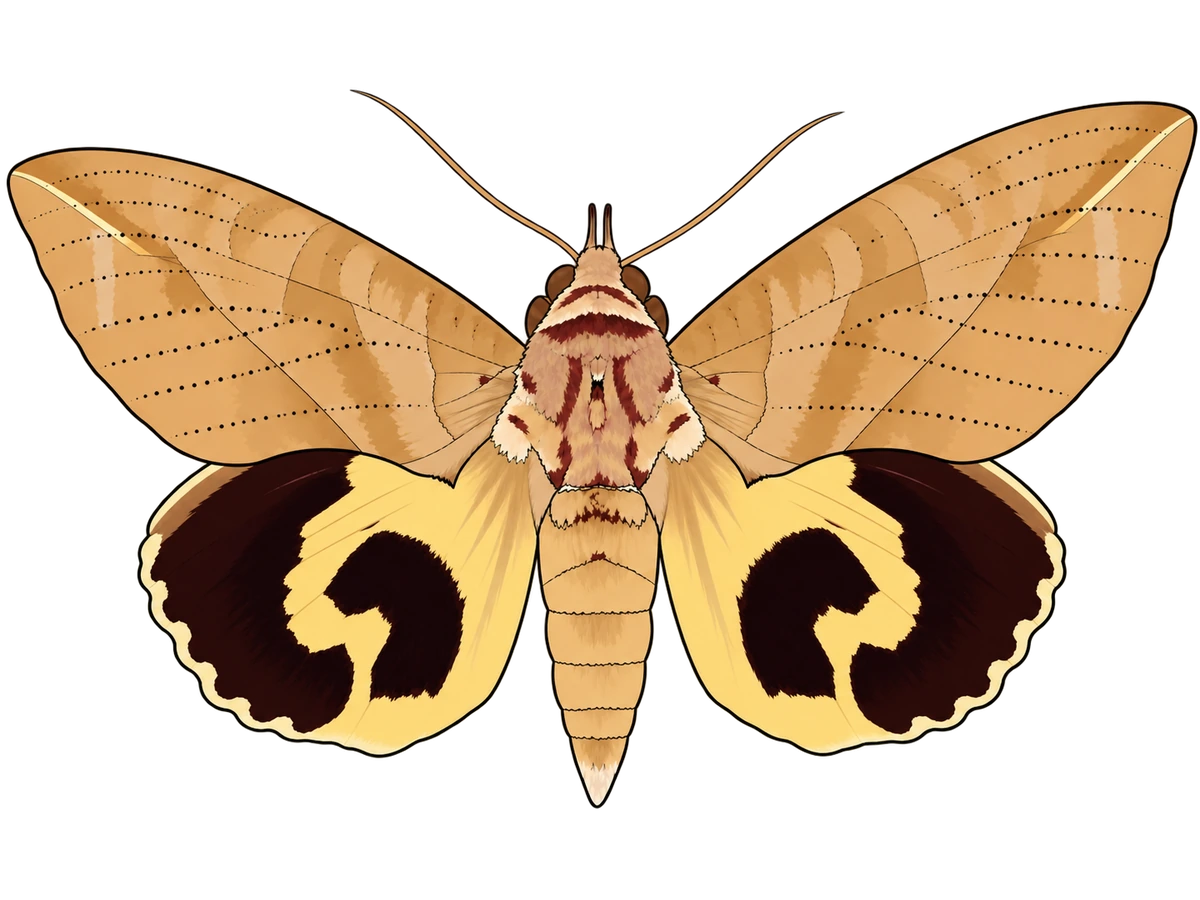
Eudocima phalonia
The common fruit-piercing moth combines subdued, leaflike forewings with yellow-orange hindwings marked by a dark comma. Its adult feeding apparatus can penetrate fruit skin, while its caterpillars develop on host plants whose identity varies among Indo-Pacific populations.
Explore the guide →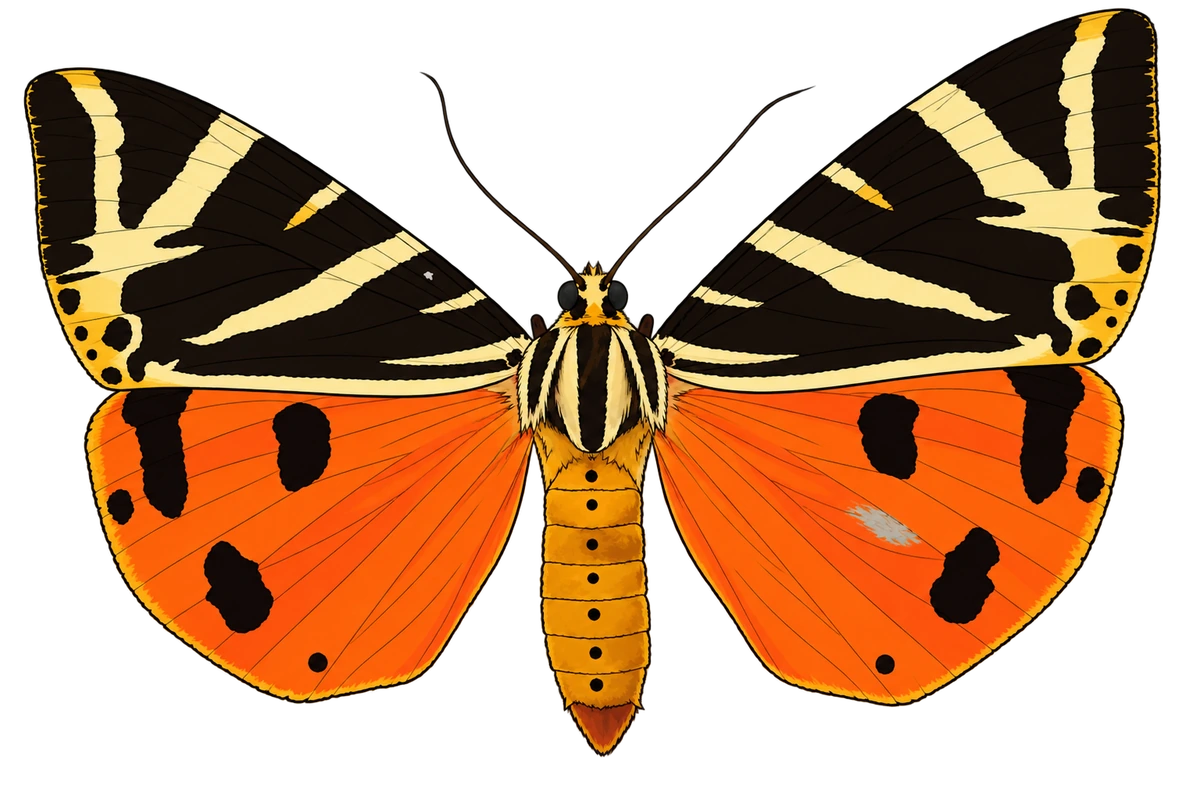
Euplagia quadripunctaria
Diagonal cream-white stripes cross black forewings above orange or yellow hindwings. This tiger moth combines conspicuous flight colours with a compact, triangular resting posture.
Explore the guide →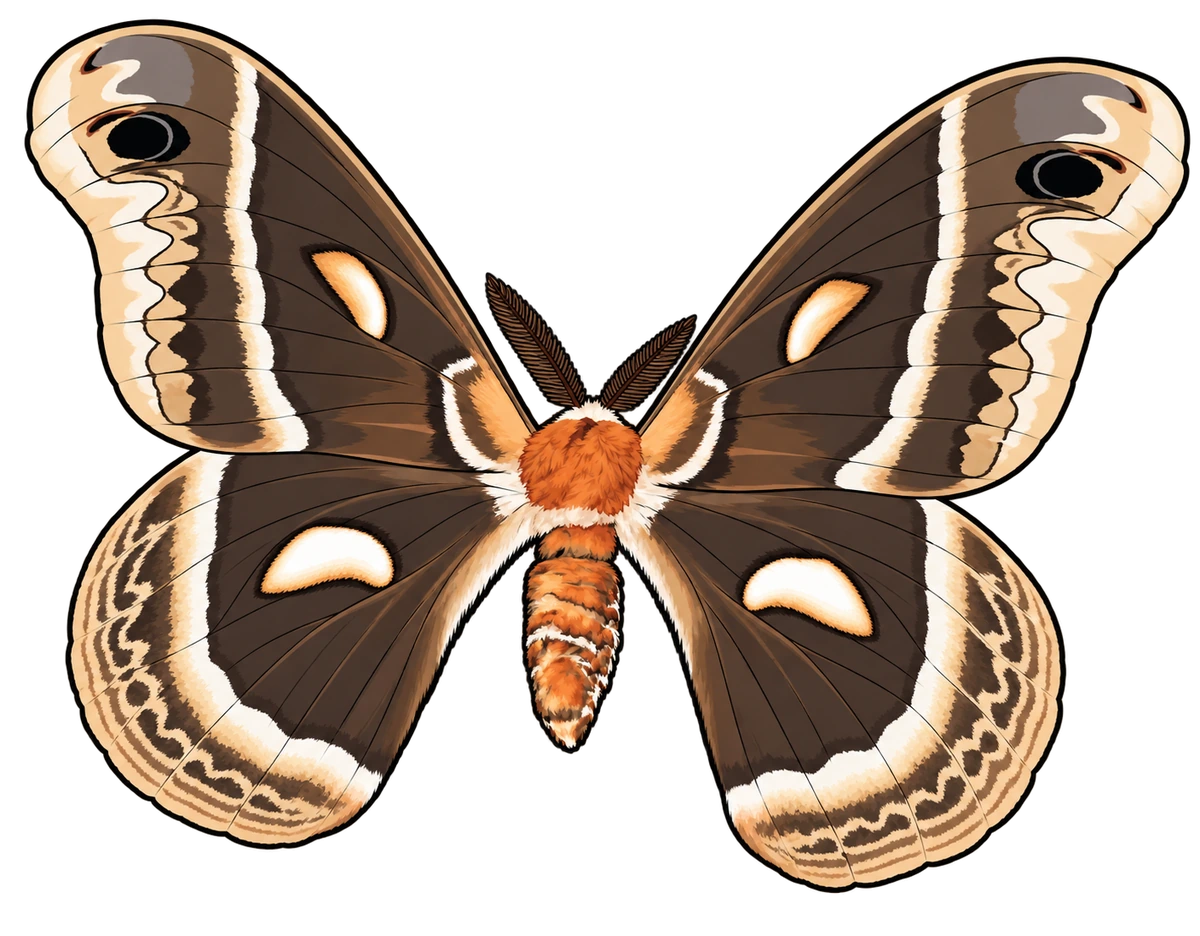
Hyalophora cecropia
The cecropia moth is a large North American silk moth with red-and-white wing crescents, broad pale bands and a conspicuously banded abdomen.
Explore the guide →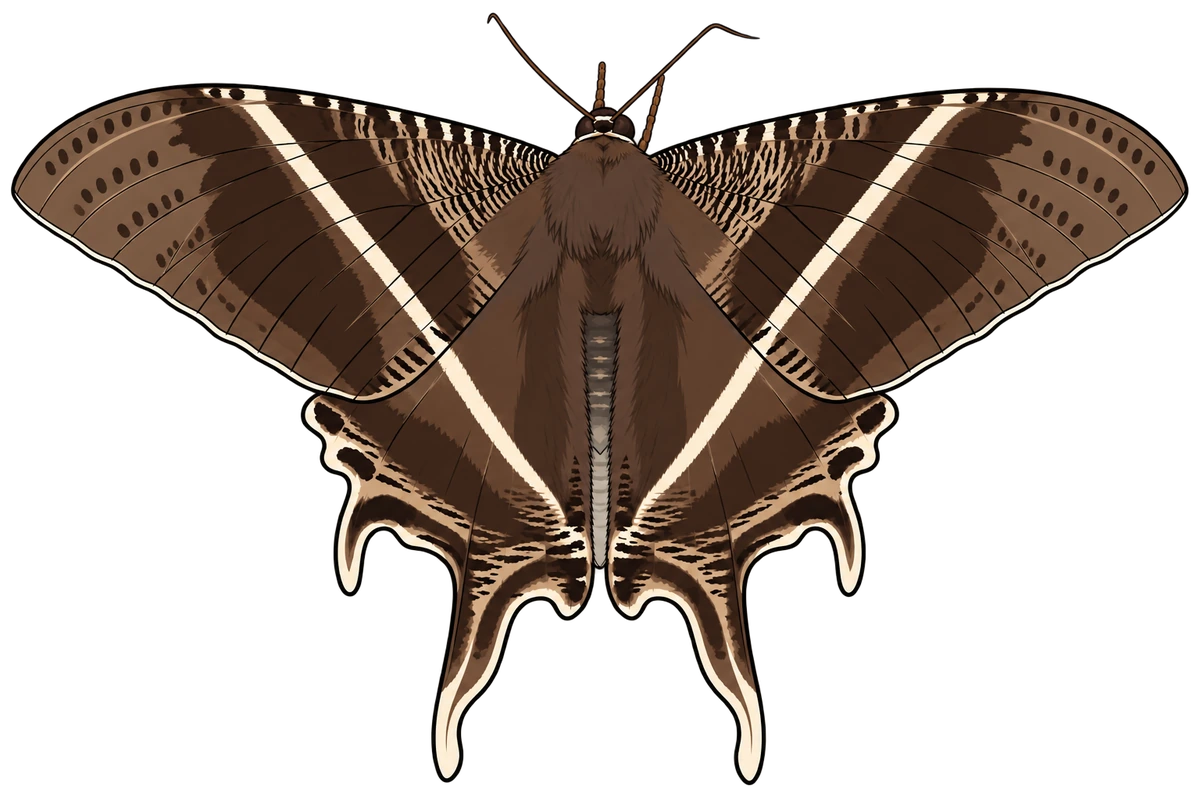
Lyssa zampa
Lyssa zampa is a large uraniid moth with dark wings crossed by pale bands and extended hindwing tails. Its adult pattern differs subtly from that of Lyssa menoetius, while observations in Singapore connect its caterpillars and ground-level pupation to Endospermum trees.
Explore the guide →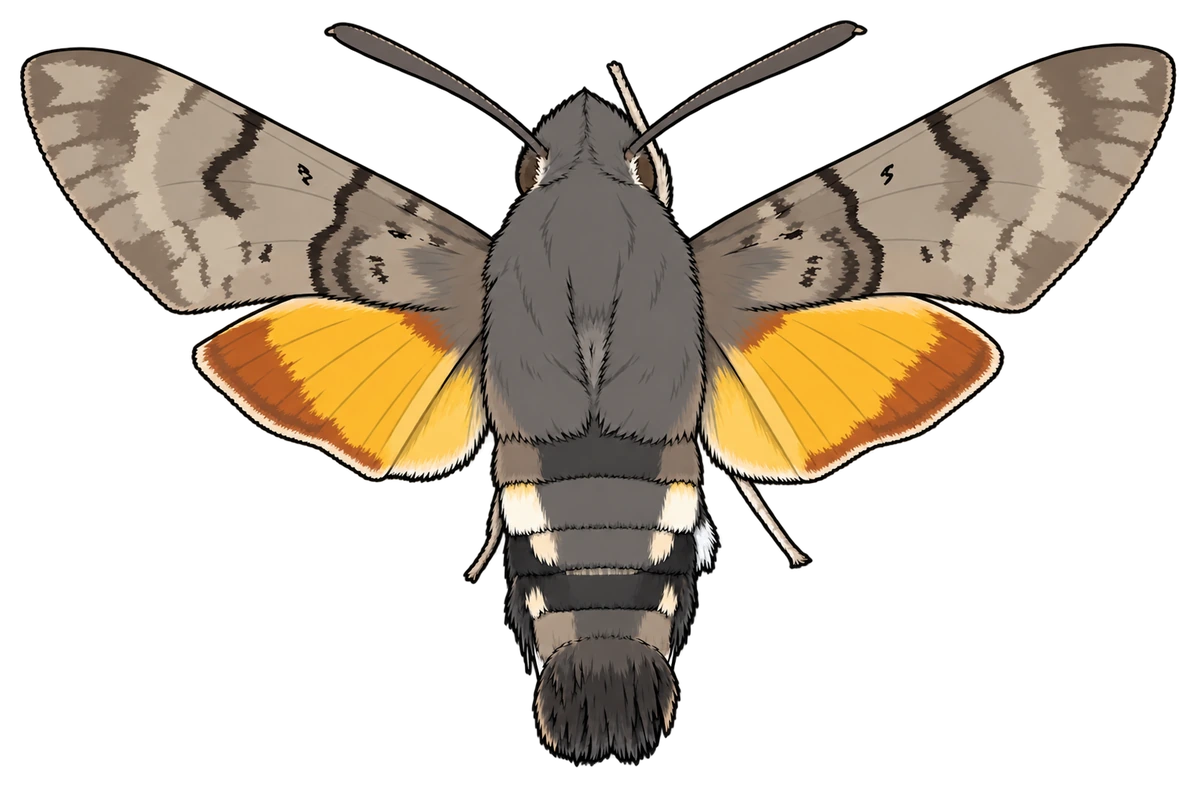
Macroglossum stellatarum
The humming-bird hawk-moth hovers at flowers by day. Grey-brown forewings contrast with orange hindwings and a black-and-white abdominal pattern.
Explore the guide →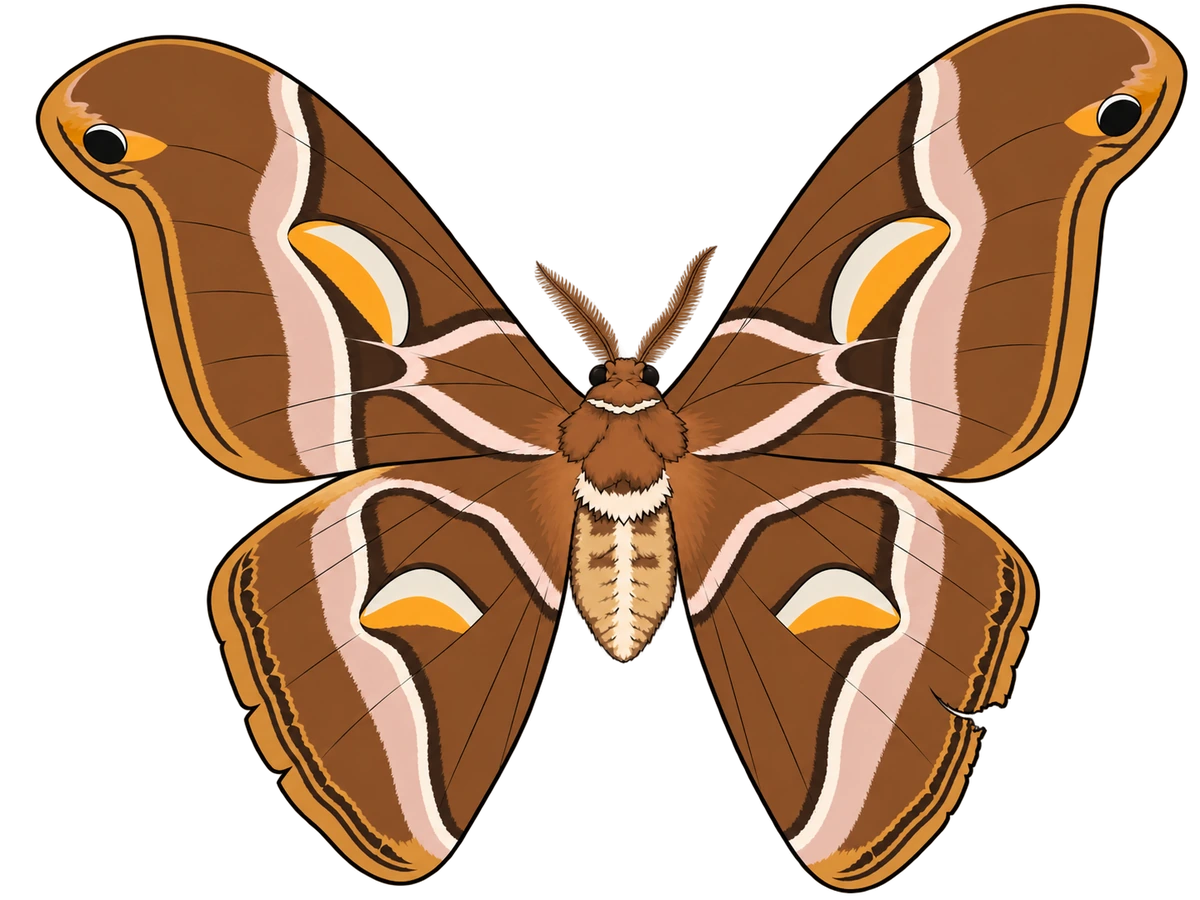
Samia cynthia
Olive-brown wings, pink transverse bands and golden-edged translucent crescents identify the ailanthus silkmoth. Its introduced populations are closely associated with tree-of-heaven.
Explore the guide →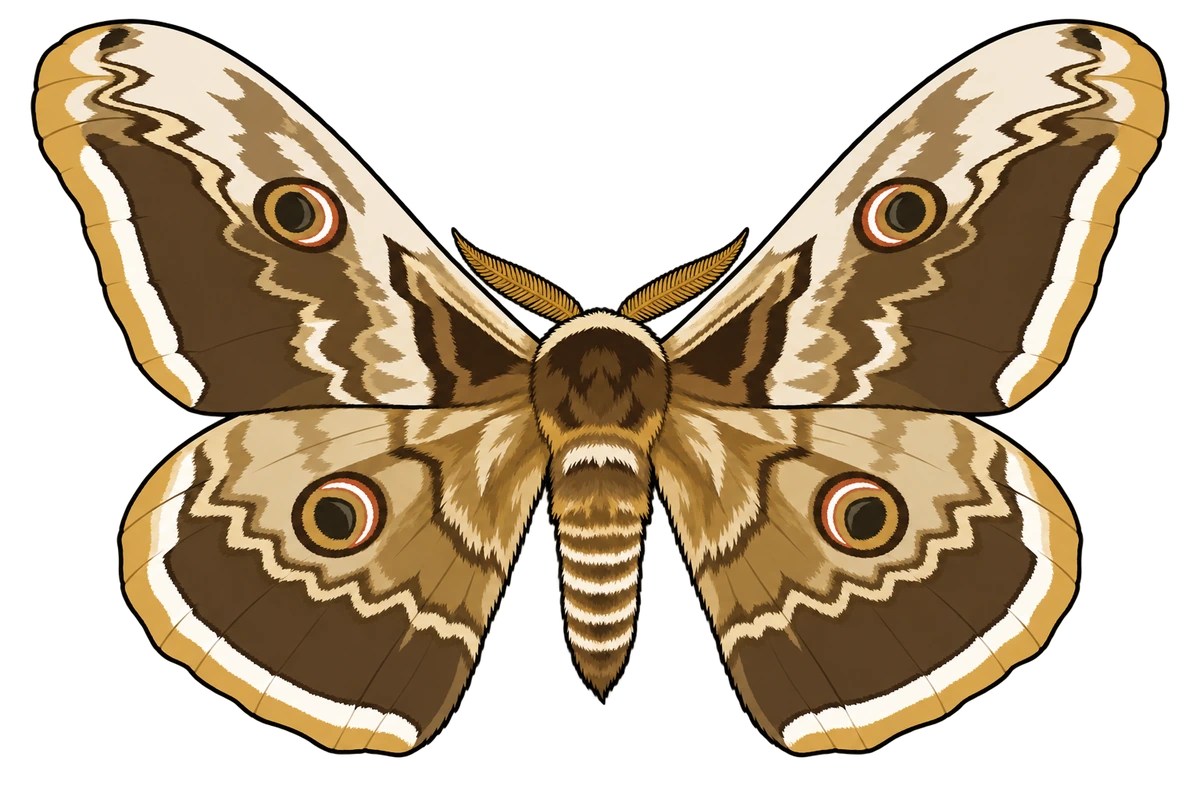
Saturnia pyri
Four ringed eyespots punctuate the giant peacock moth’s grey-brown wings. This European silk moth develops on deciduous trees and passes winter as a pupa within a fibrous cocoon.
Explore the guide →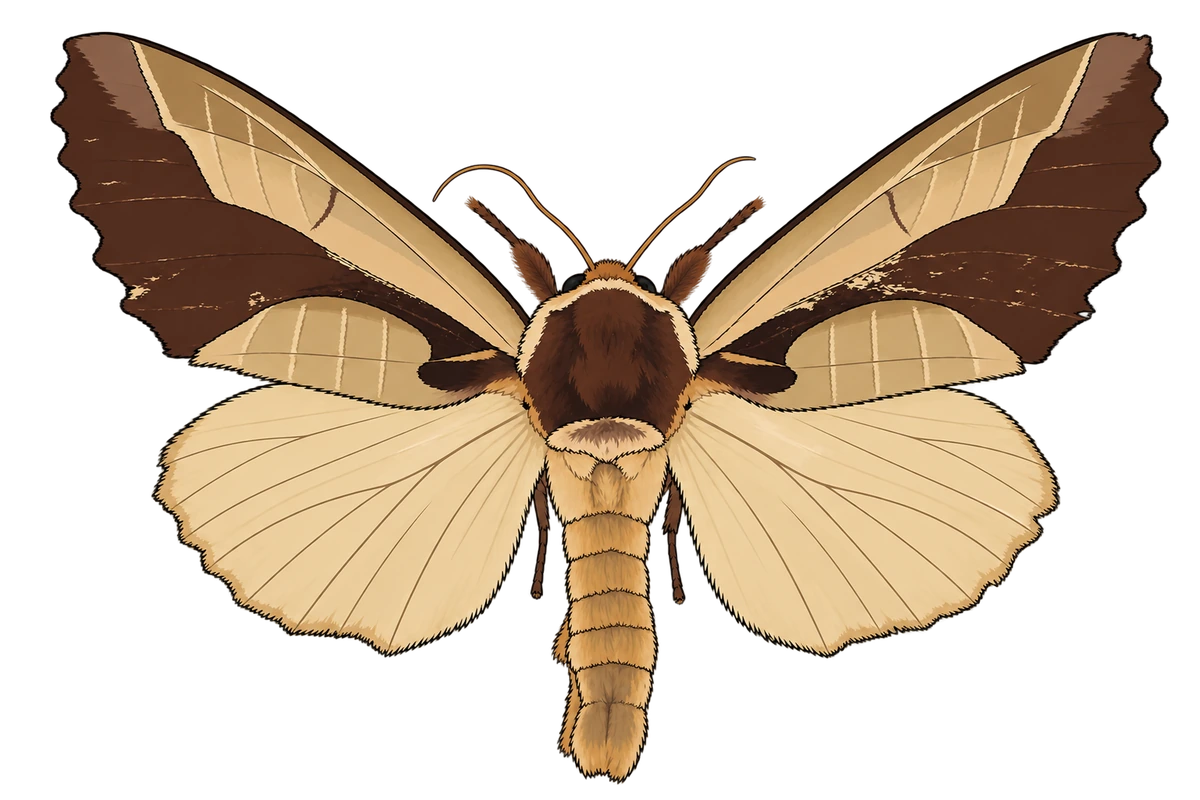
Uropyia meticulodina
Uropyia meticulodina is a notodontid moth whose resting wing pattern resembles a rolled leaf. Bands of light and dark colour create an unusually convincing impression of curled surfaces, while the caterpillar has specialized posterior structures and feeding behaviour that changes during development.
Explore the guide →
Aenetus virescens
Aenetus virescens is a large New Zealand ghost moth whose caterpillar shelters in a tree tunnel and feeds around its entrance. Females have dark forewing mottling and buff hindwings; smaller males typically carry white forewing markings and greener hindwings.
Explore the guide →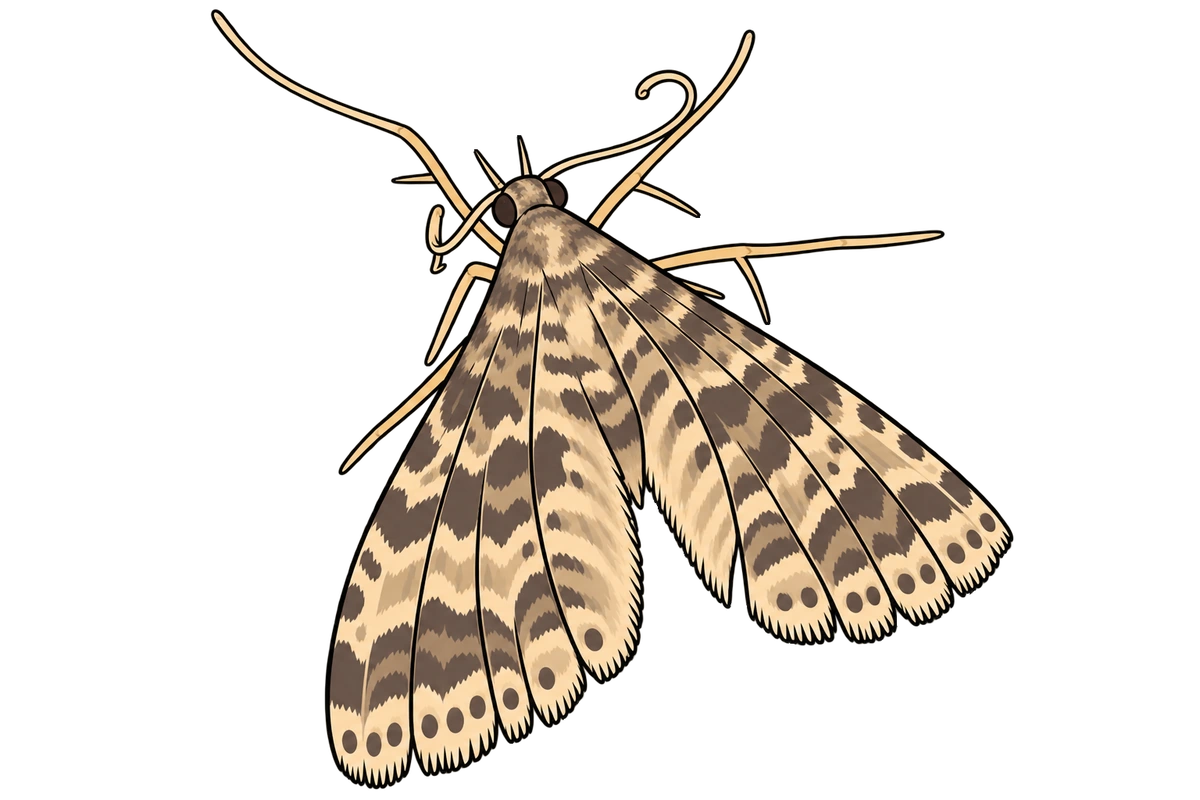
Alucita hexadactyla
Alucita hexadactyla spreads four wings divided into six feather-like fronds apiece. This small honeysuckle-associated moth carries brown, black and white chevrons across an unusually open wing structure.
Explore the guide →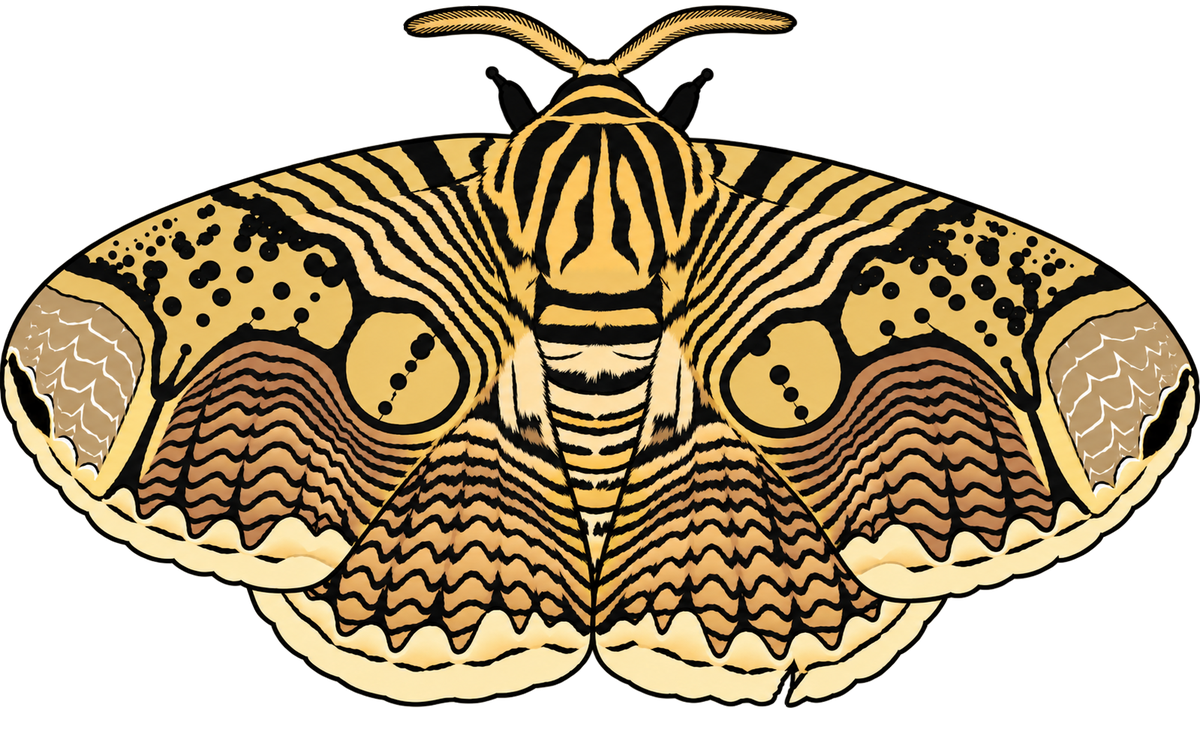
Brahmaea hearseyi
Brahmaea hearseyi carries an intricate arrangement of dark median wing fields and closely rippled pale fasciae. Its caterpillars change markedly during development, losing their long filaments before the final instar and raising the forebody when disturbed.
Explore the guide →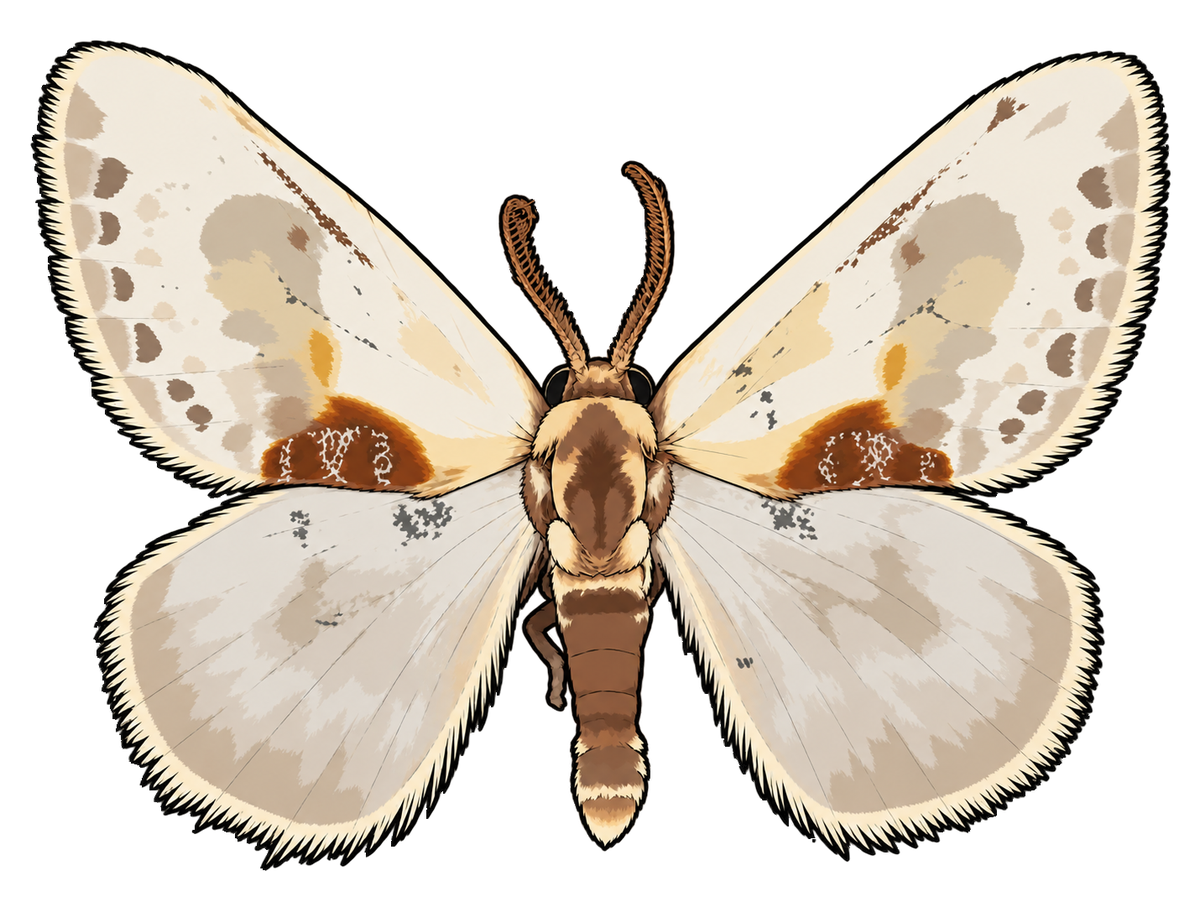
Cilix glaucata
Cilix glaucata combines white wings, dark blotches and a steeply folded resting posture that resembles a bird dropping. This small drepanid lives around shrubs and woodland, with hawthorn and blackthorn providing its principal larval foliage.
Explore the guide →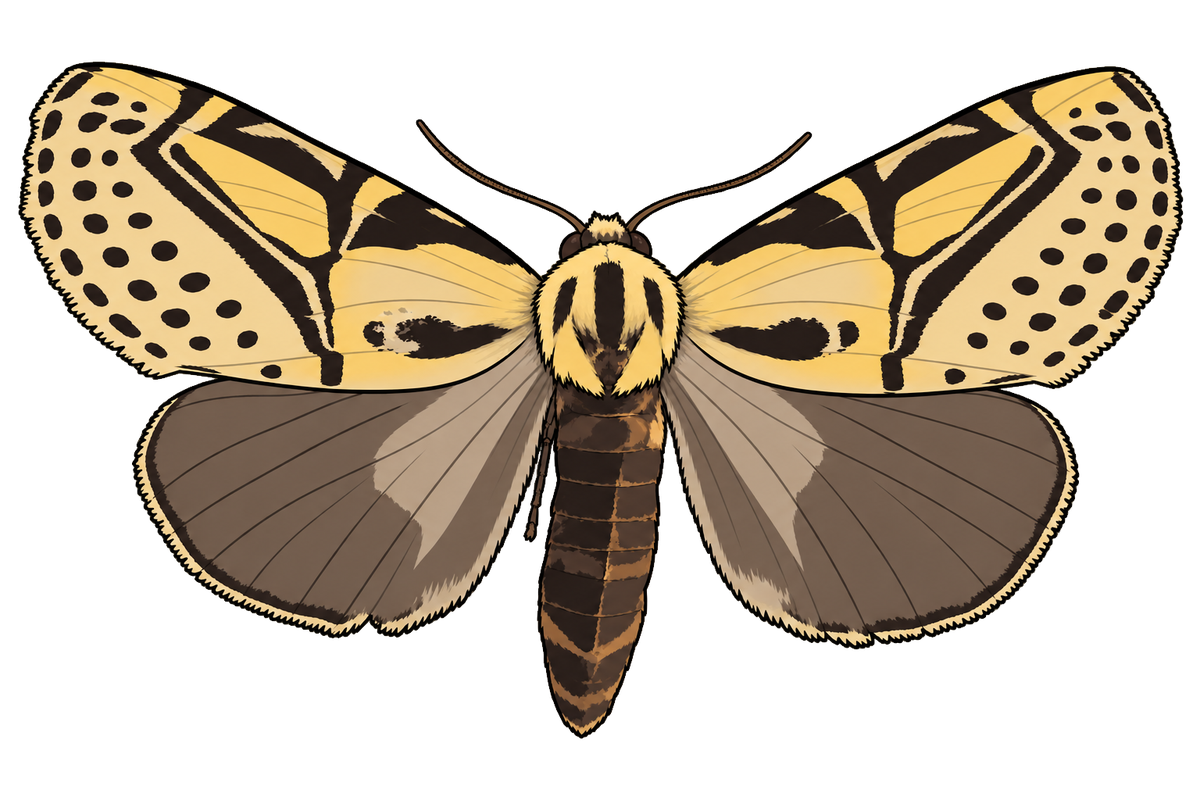
Diphthera festiva
Diphthera festiva has lemon-yellow forewings crossed by a bluish-grey lattice. Its striped caterpillars feed gregariously on tropical and subtropical plants.
Explore the guide →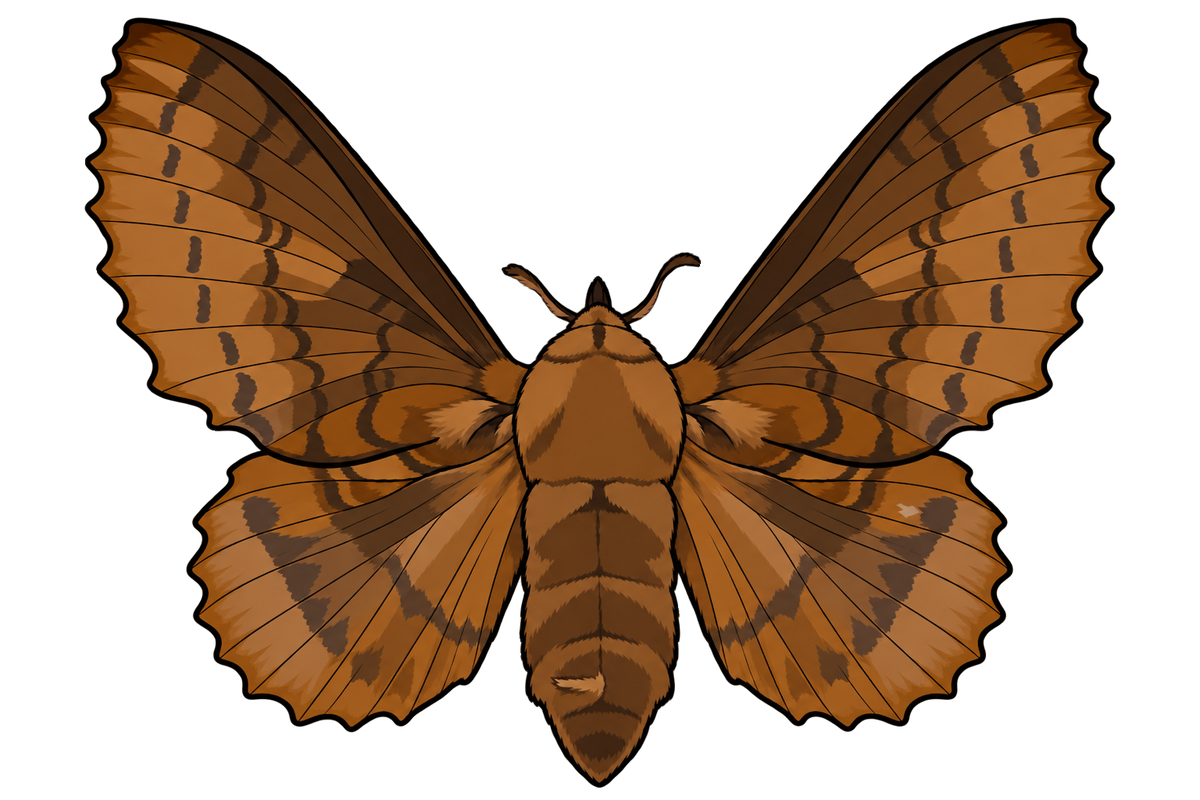
Gastropacha quercifolia
Gastropacha quercifolia resembles a cluster of dry leaves when its russet wings overlap at rest. Its large, hairy caterpillar carries a row of fleshy, fringed lobes along the sides—the lappets that give the moth its English name.
Explore the guide →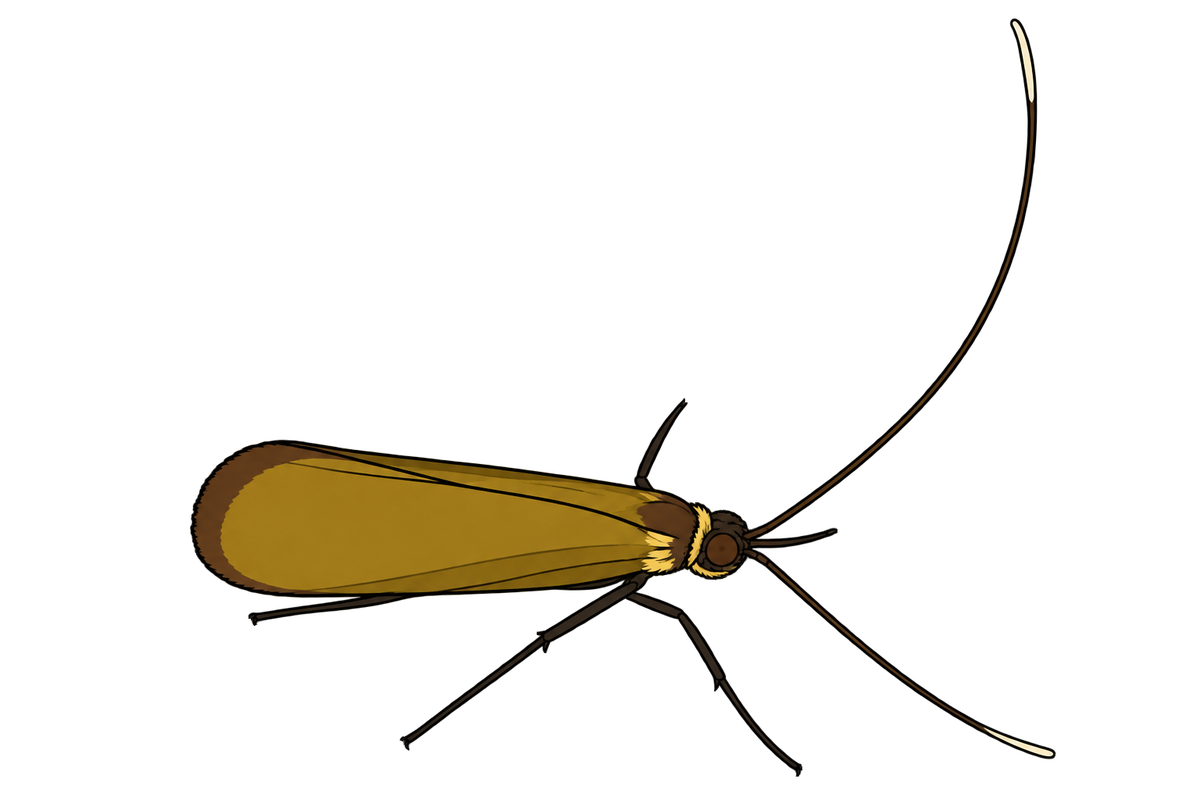
Nemophora metallica
Nemophora metallica is a bronze, day-flying longhorn moth of flower-rich European grasslands. Its larvae begin in scabious flower heads and later carry portable cases among lower leaves and fallen material.
Explore the guide →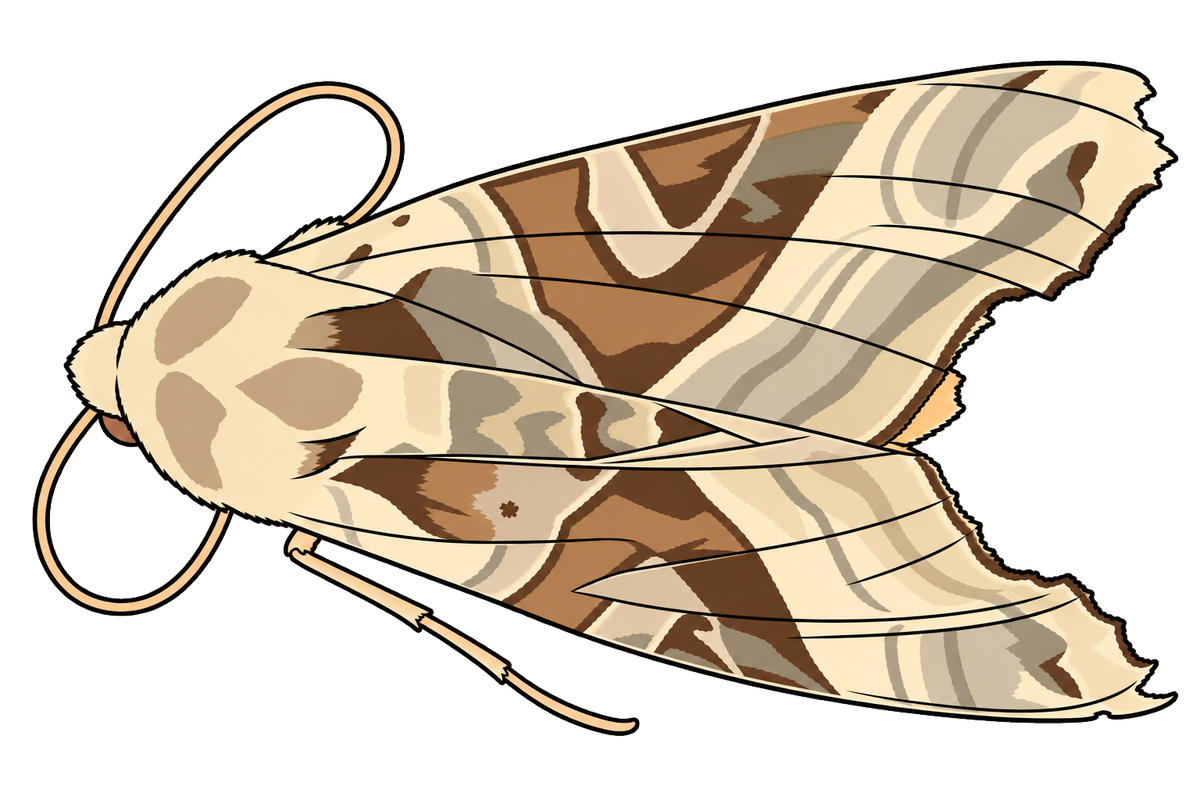
Phlogophora meticulosa
Phlogophora meticulosa folds its angular, olive-and-pink wings into the outline of a withered leaf. This migratory European moth occupies gardens, woodland edges and coastal habitats, and its caterpillars vary from bright green to dark brown.
Explore the guide →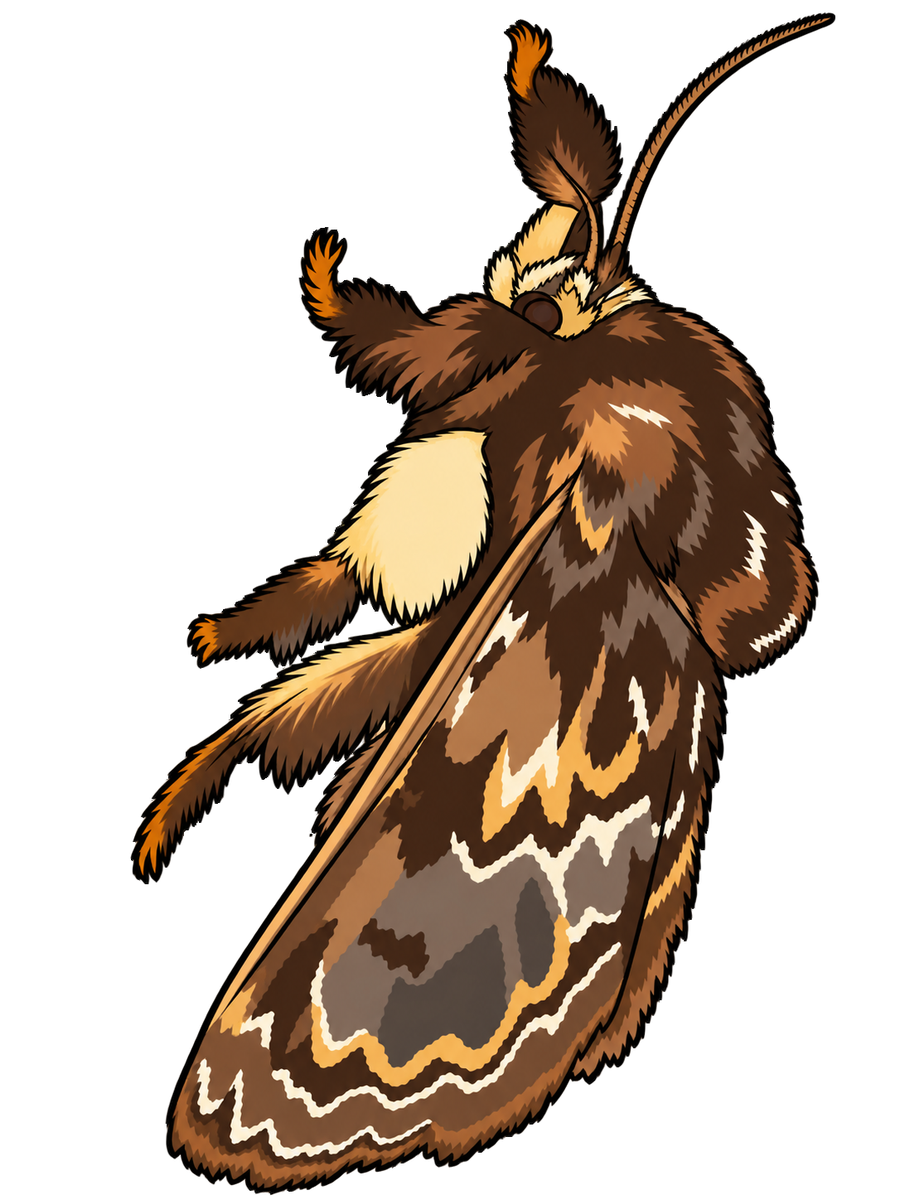
Phobetron pithecium
Phobetron pithecium has a spider-like caterpillar. Adult males have nearly transparent forewings; larger females have darker patterned wings and conspicuous pale middle-leg tufts.
Explore the guide →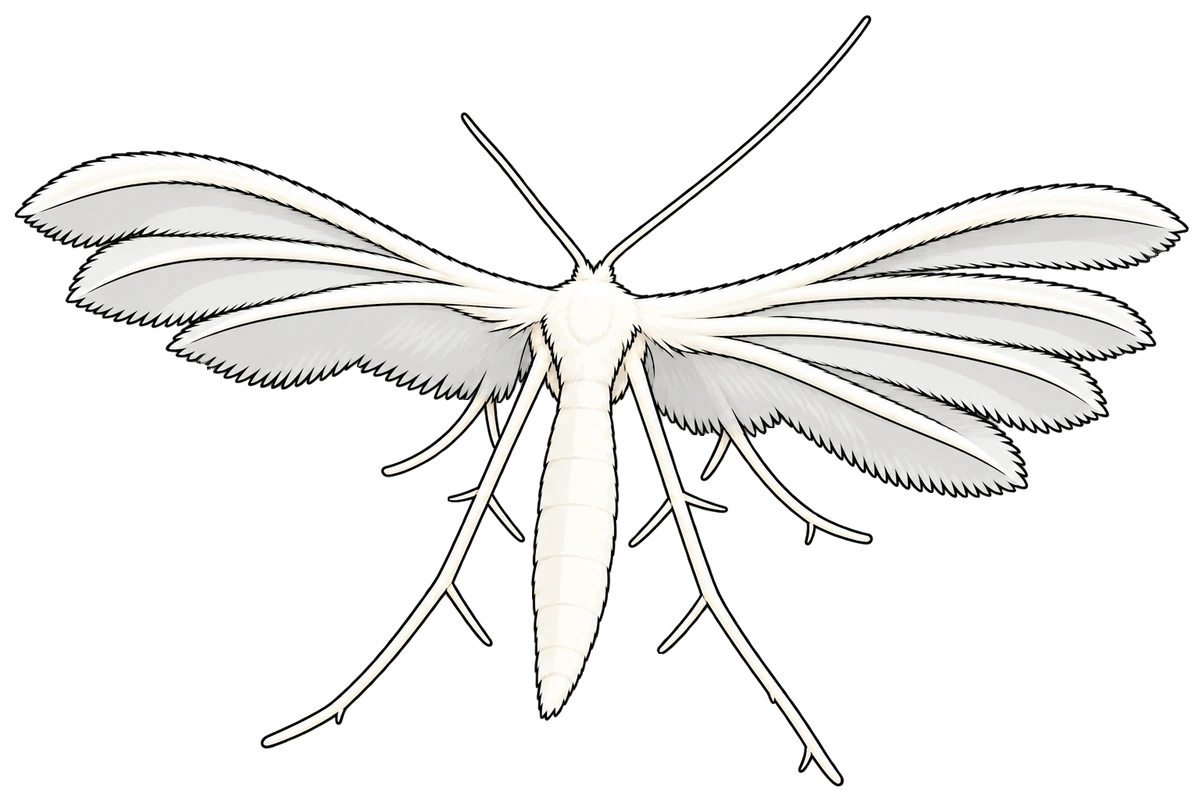
Pterophorus pentadactyla
Pterophorus pentadactyla has pure white wings divided into slender, feather-edged plumes. Its caterpillars feed on bindweed, and the adults emerge at dusk over grassland, garden margins and woodland edges.
Explore the guide →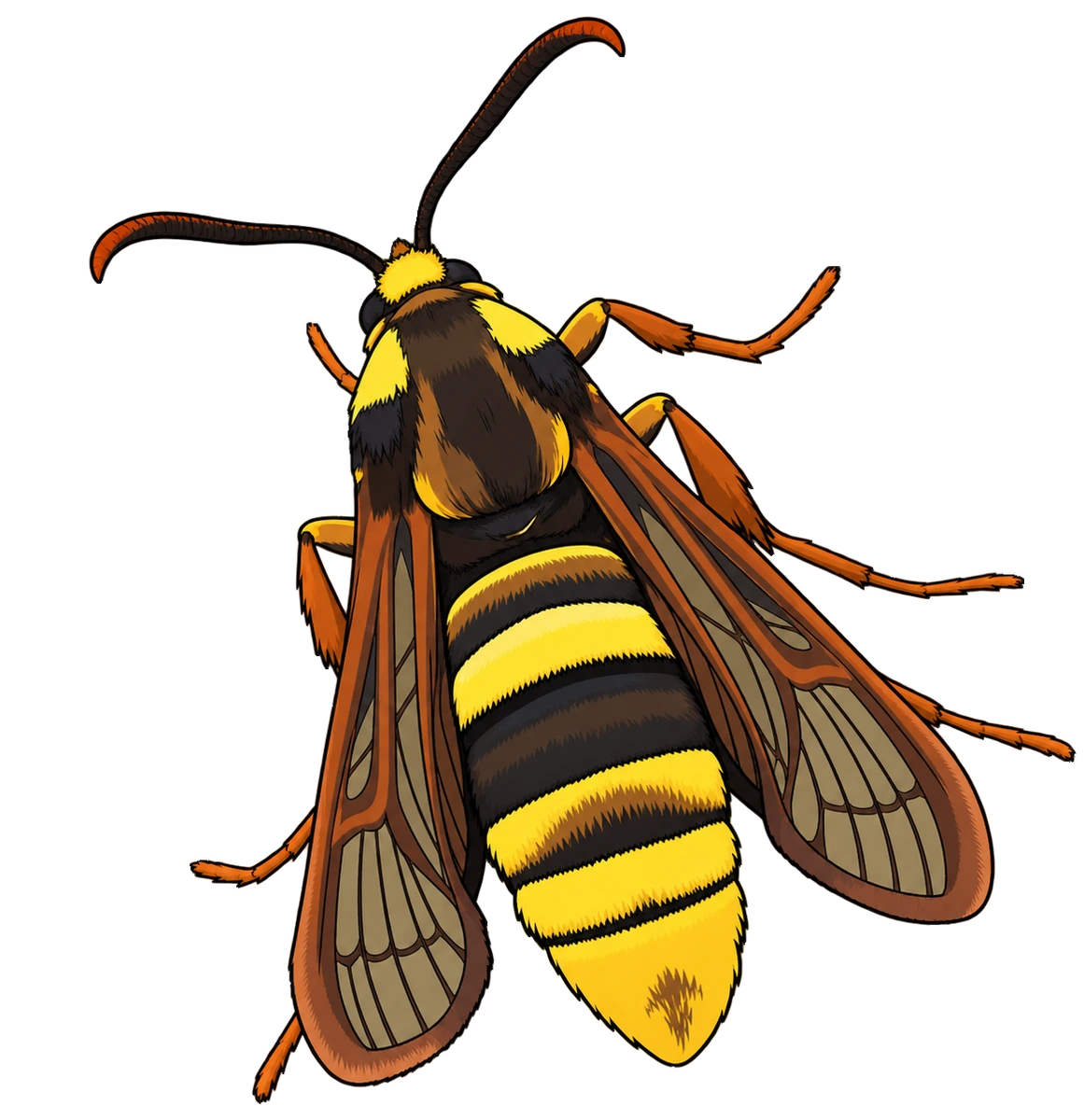
Sesia apiformis
Sesia apiformis is a day-flying clearwing moth with the yellow-and-black body pattern of a hornet. Its larvae spend several winters tunnelling through the bases and roots of poplar trees.
Explore the guide →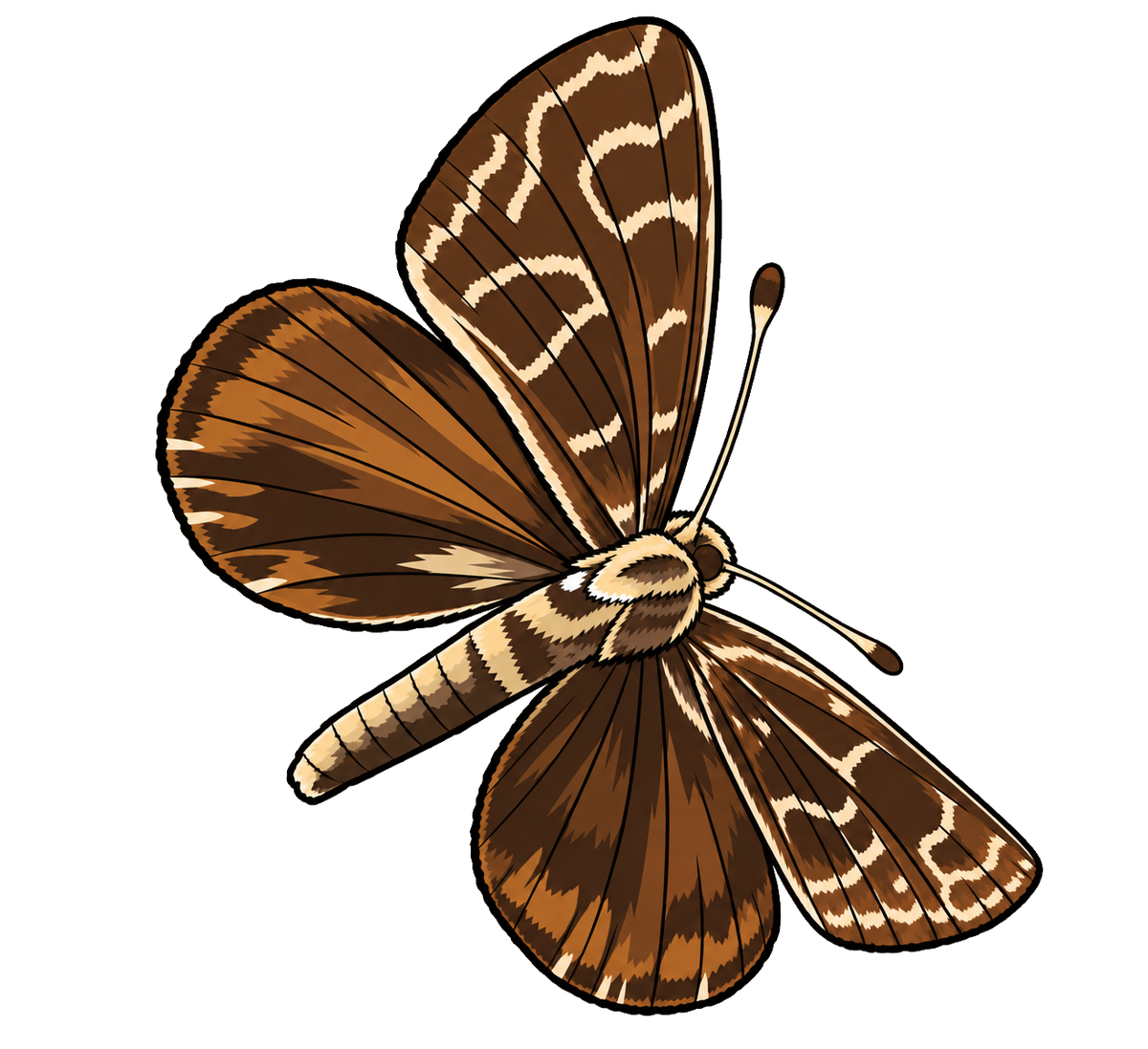
Synemon plana
Synemon plana is a day-flying Australian grassland moth; largely stationary females display orange hindwings to attract patrolling males.
Explore the guide →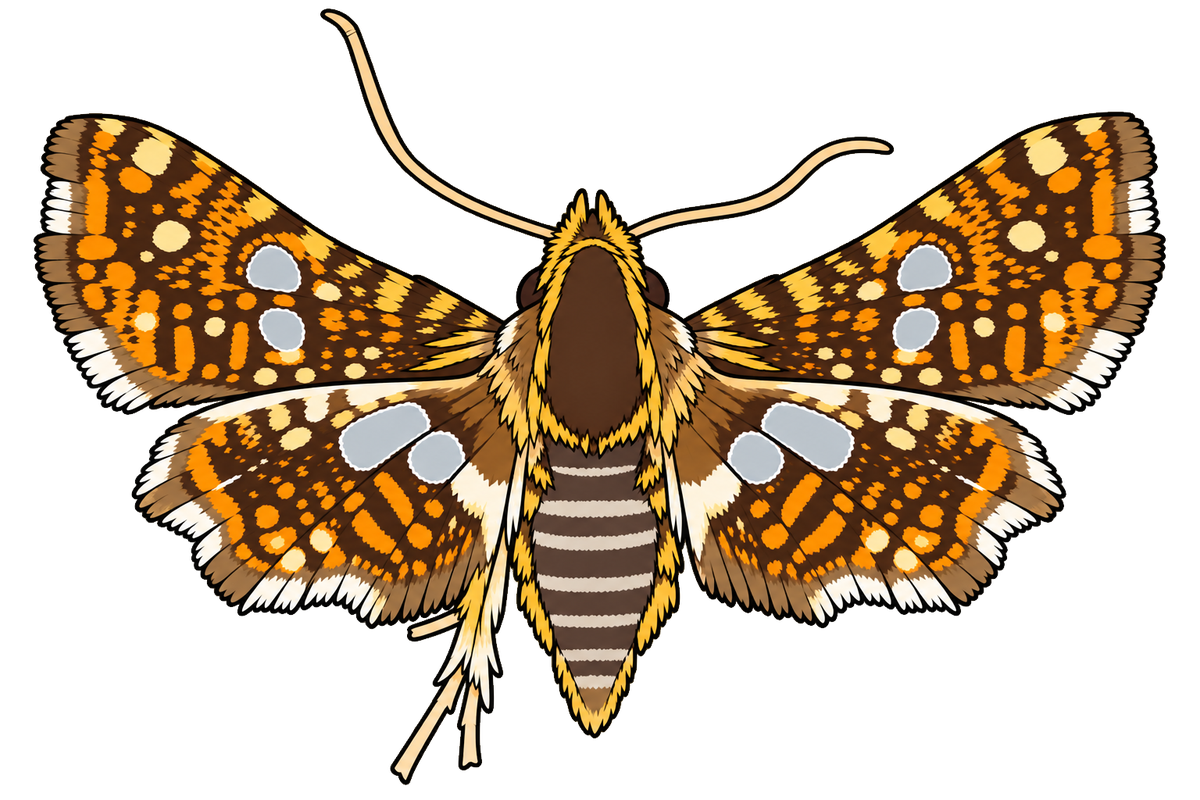
Thyris fenestrella
Thyris fenestrella is a small, day-flying moth with transparent windows in its dark wings. It inhabits warm, sunny clematis-covered slopes; its larvae shelter in folded leaf tips.
Explore the guide →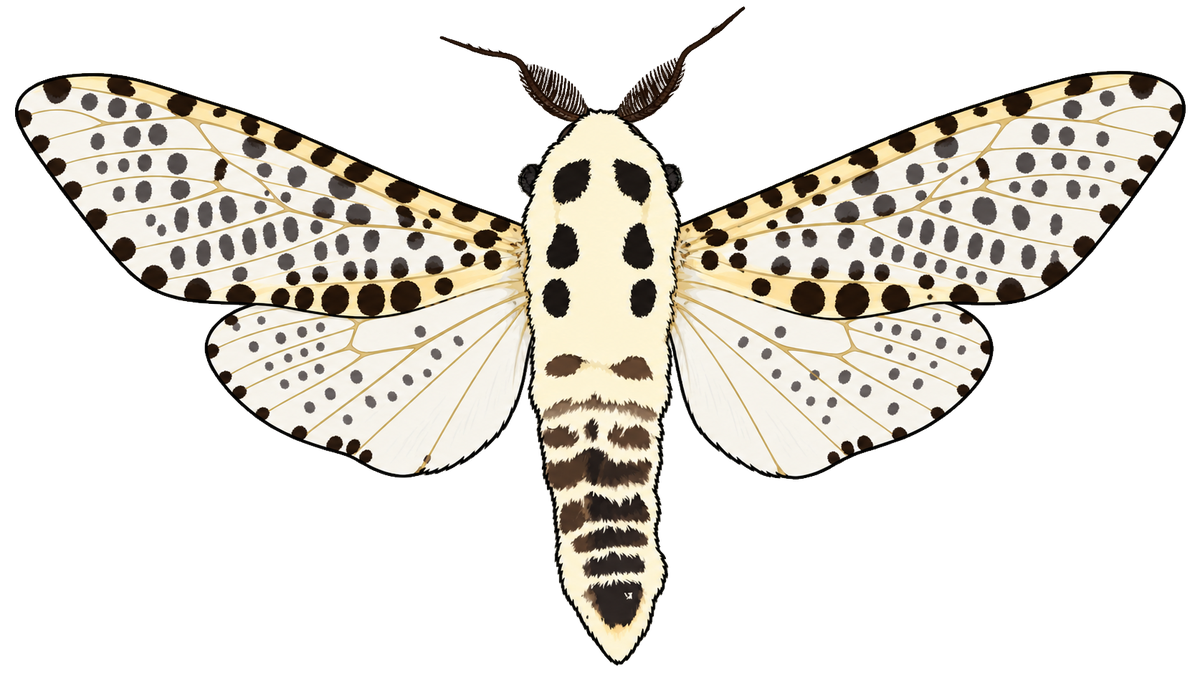
Zeuzera pyrina
Zeuzera pyrina is a white, dark-spotted wood-boring moth. Its larvae move from slender shoots into progressively larger branches and trunks, where their tunnels can weaken young trees.
Explore the guide →