Loading Luminary Oddities
Please wait while the next page arrives.
Loading this page…
Return homePlease wait while the next page arrives.


Natural history · Entomological Atlas
Species accounts of insect identification, distribution and natural history, with supporting references.
The Atlas combines specimen illustrations with documented natural history.
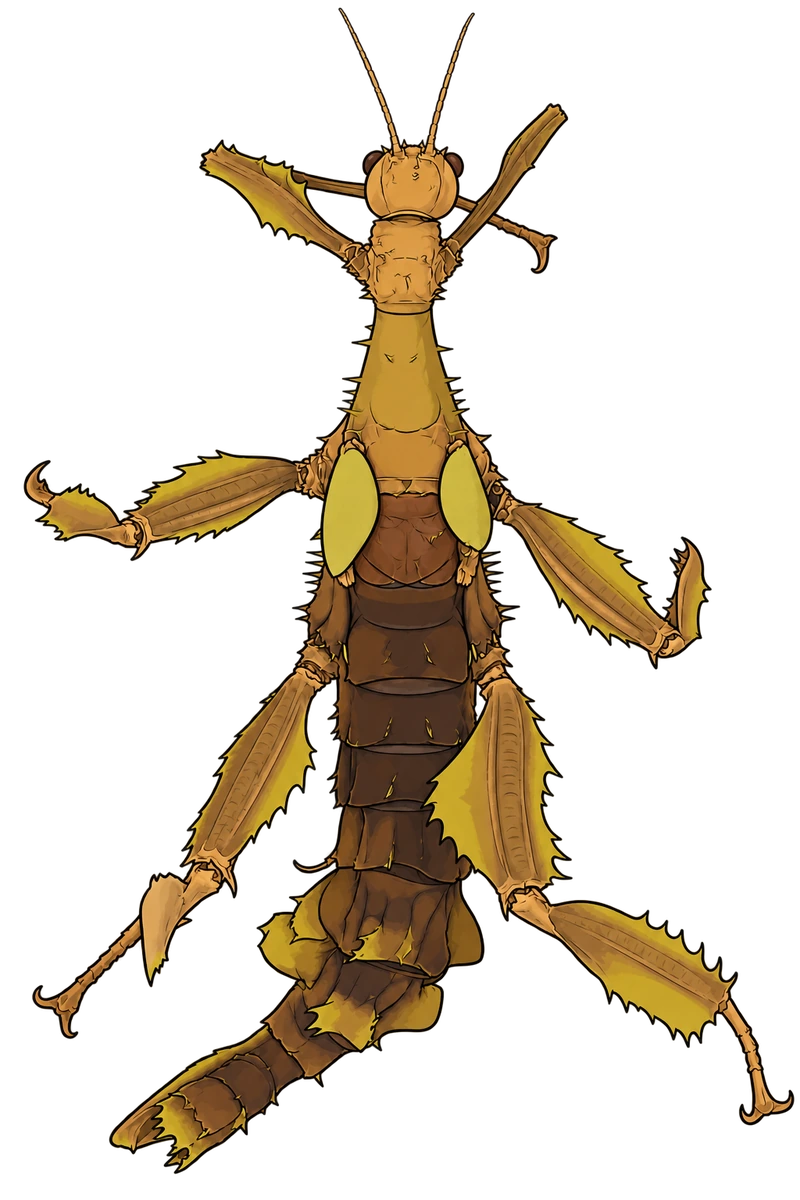
Extatosoma tiaratum
Extatosoma tiaratum is an Australian leaf-mimicking stick insect with a spiny body and pronounced differences between the sexes. Its seed-like eggs have an edible cap that can induce ants to carry them into their nests.
Explore the guide →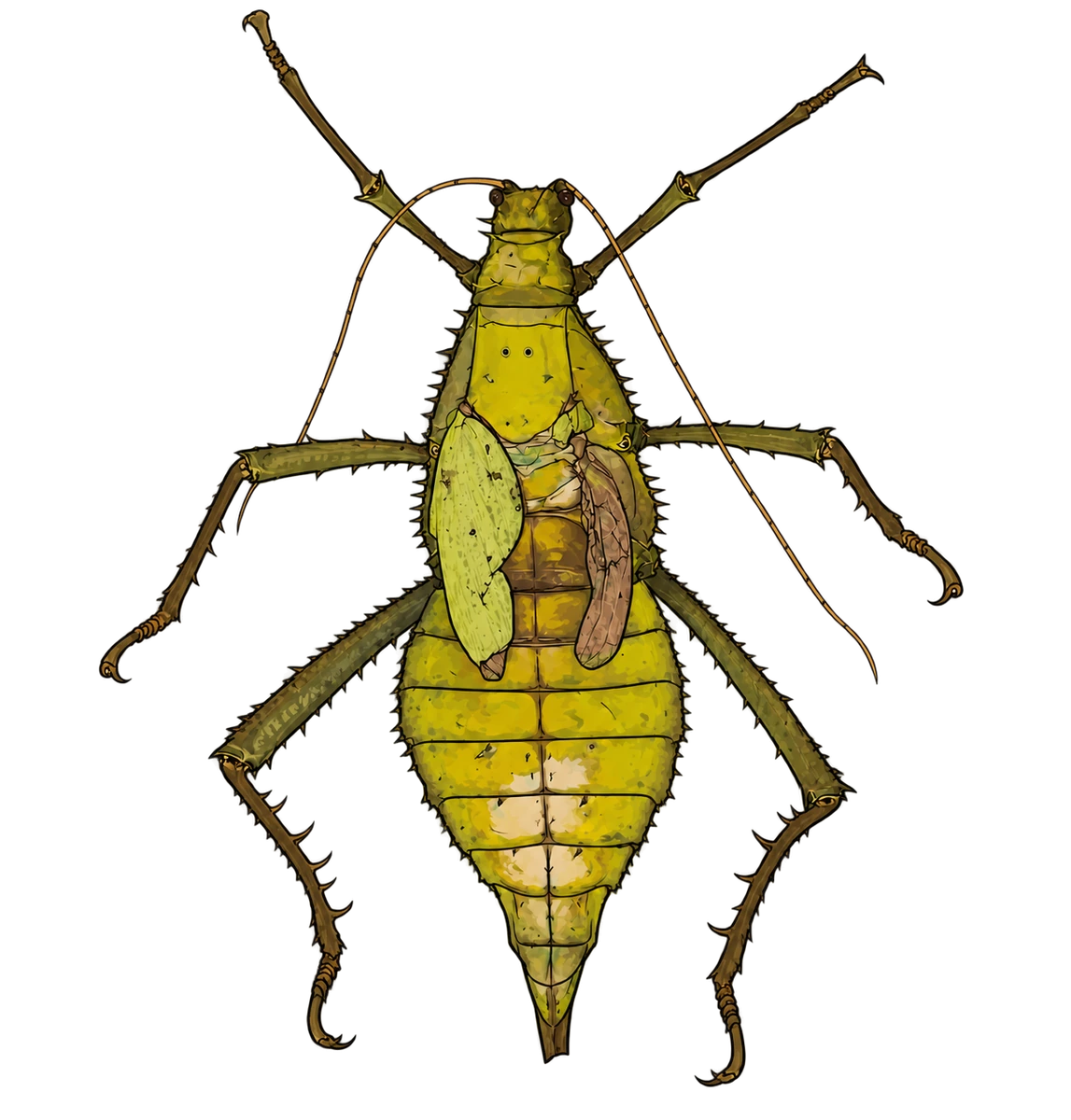
Heteropteryx dilatata
Heteropteryx dilatata is a robust Southeast Asian stick insect with sharply spined body surfaces. The broad female is green or yellow; the brown male resembles a curled dry leaf. Pink hindwings add a contrasting colour in both sexes.
Explore the guide →Hierodula membranacea
Hierodula membranacea is a large praying mantis with a visual system adapted to detecting prey and judging its distance. A single row of pale tubercles on the inner bases of its grasping forelegs is a useful identifying character.
Explore the guide →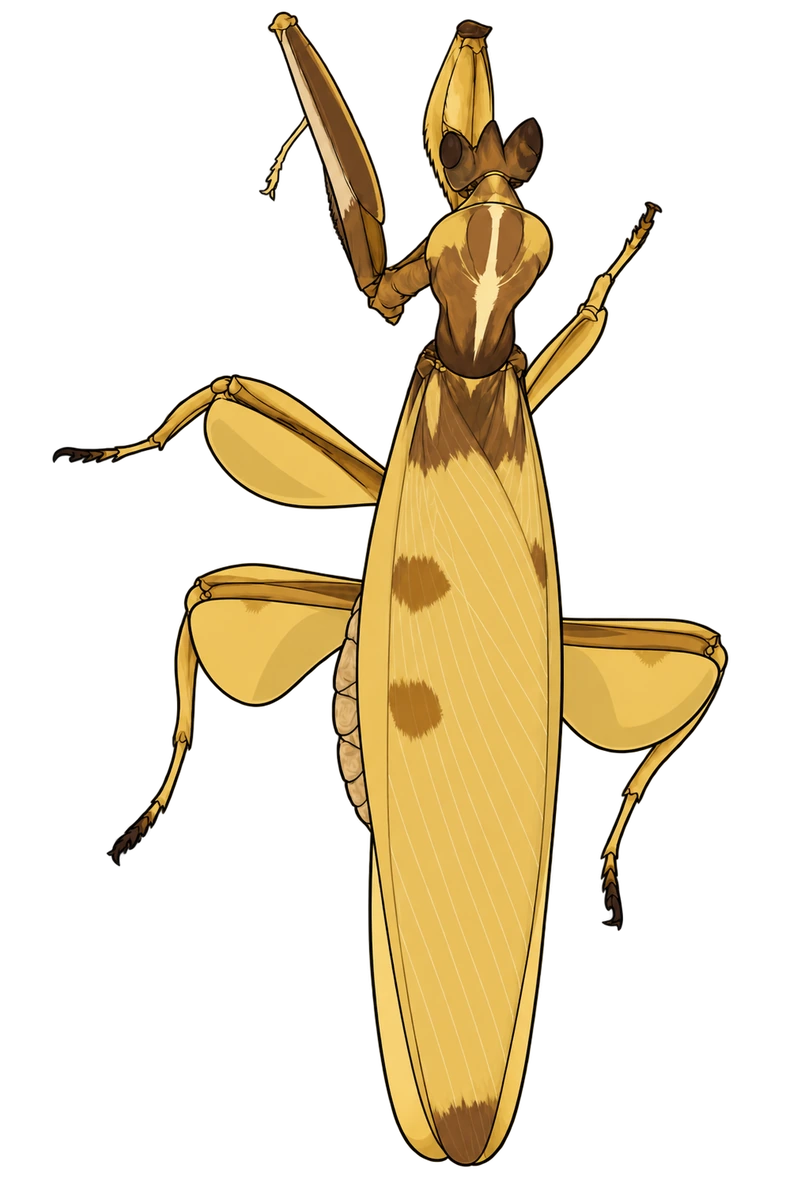
Hymenopus coronatus
Hymenopus coronatus is a Southeast Asian mantis whose pale body and expanded leg lobes resemble a flower. Juvenile females can attract pollinating insects while standing apart from blossoms, then seize visitors as prey.
Explore the guide →Megaloprepus caerulatus
Megaloprepus caerulatus is a tropical American damselfly with a long abdomen and broad wings marked in blue and white. Its aquatic larvae develop in water-filled tree holes, where predation and cannibalism shape survival.
Explore the guide →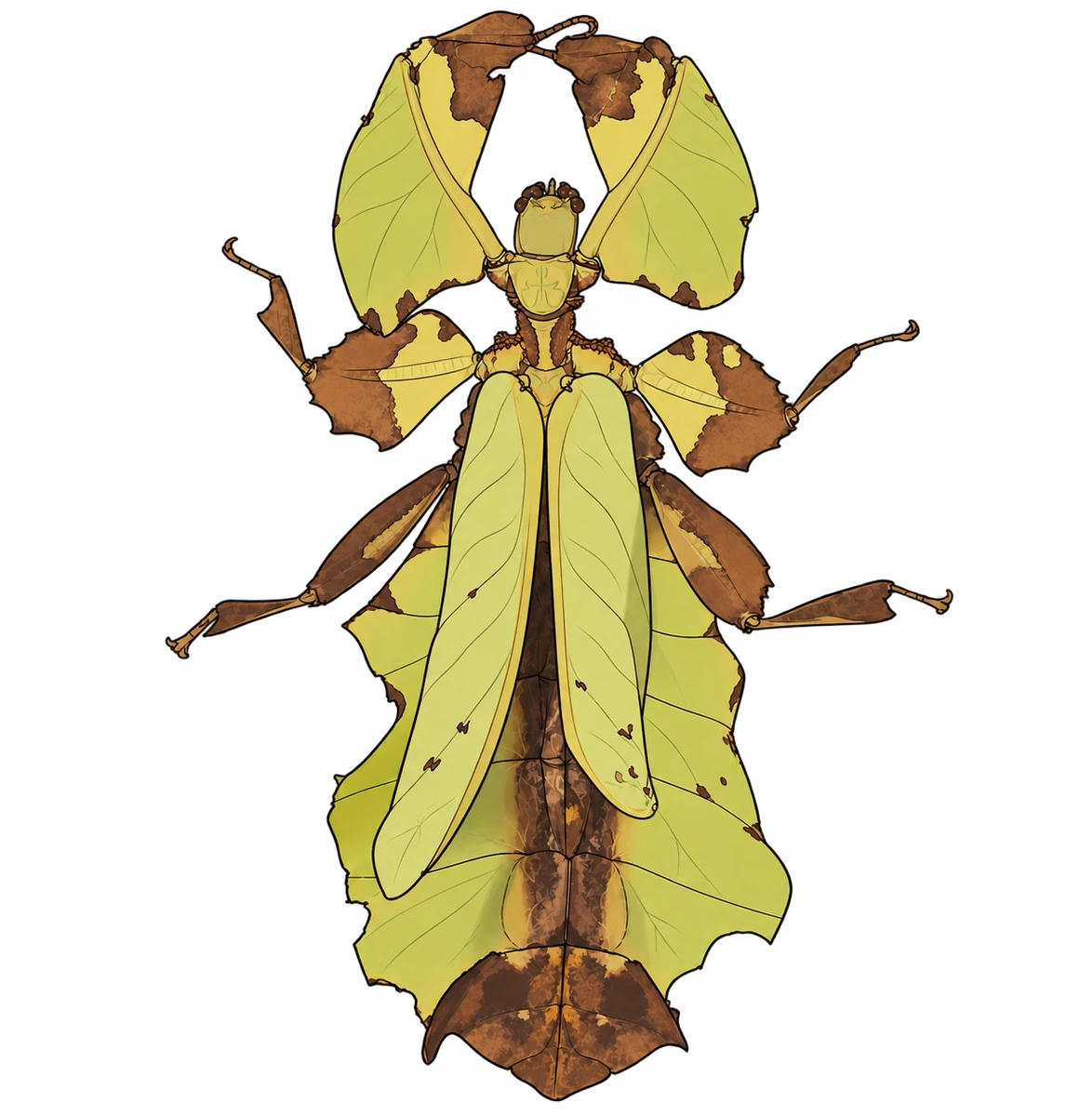
Pulchriphyllium giganteum
Pulchriphyllium giganteum is a large leaf insect of the Sunda region. Females have a broad green abdomen, leaf-veined wing covers and expanded limb margins that reproduce the outline of foliage.
Explore the guide →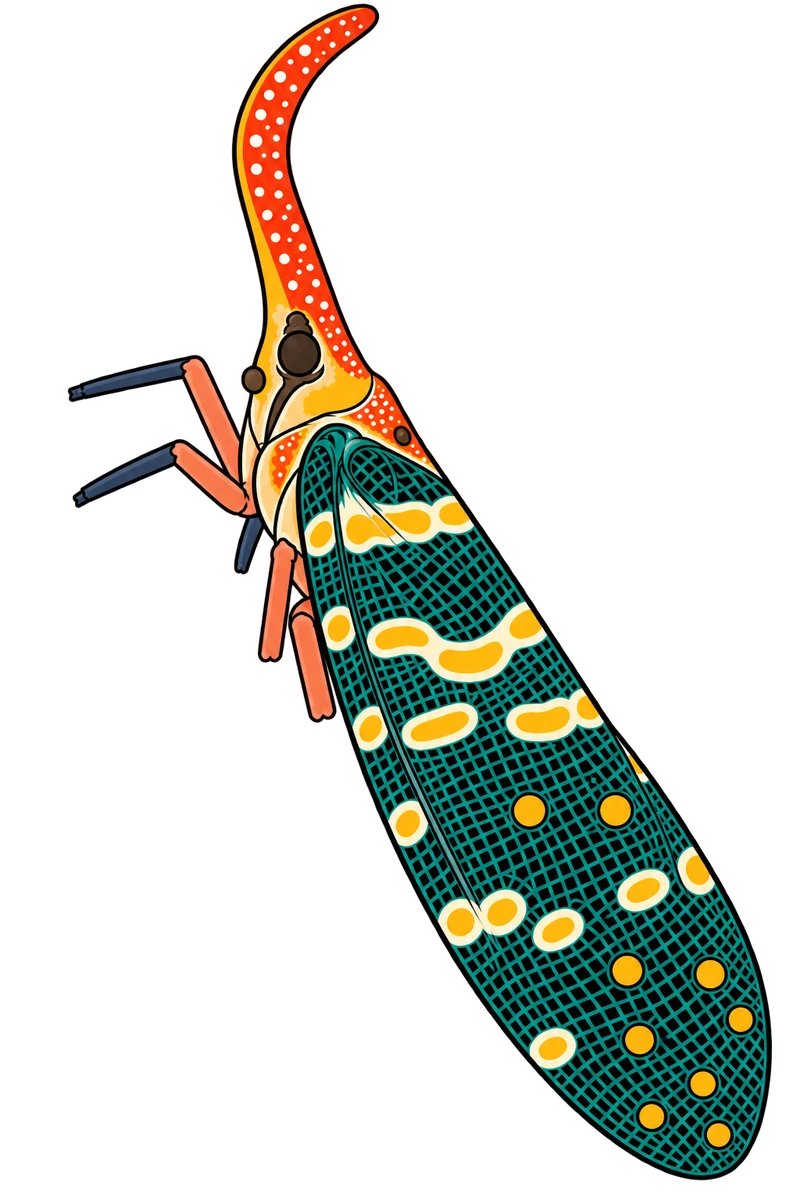
Pyrops candelaria
Pyrops candelaria is a sap-feeding lanternfly with an upward-curving head process and spotted forewings. Its yellow hindwings have dark tips; the ventral abdomen is grey with yellow segment margins.
Explore the guide →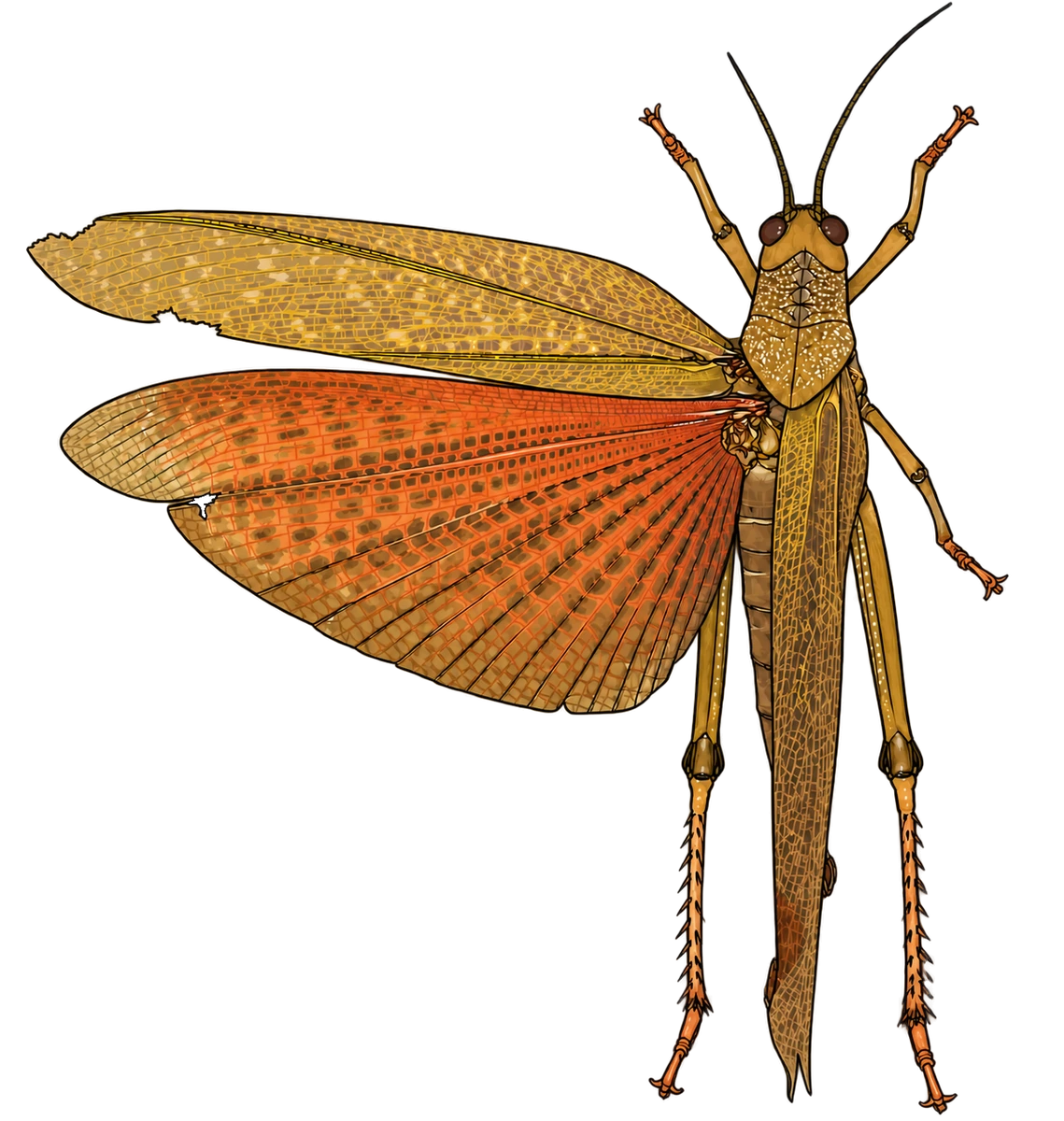
Tropidacris cristata
Tropidacris cristata is a large tropical American grasshopper with a crested pronotum and darkly spotted hindwings. The adults have dark blue-green upper surfaces; banded nymphs gather in groups on vegetation.
Explore the guide →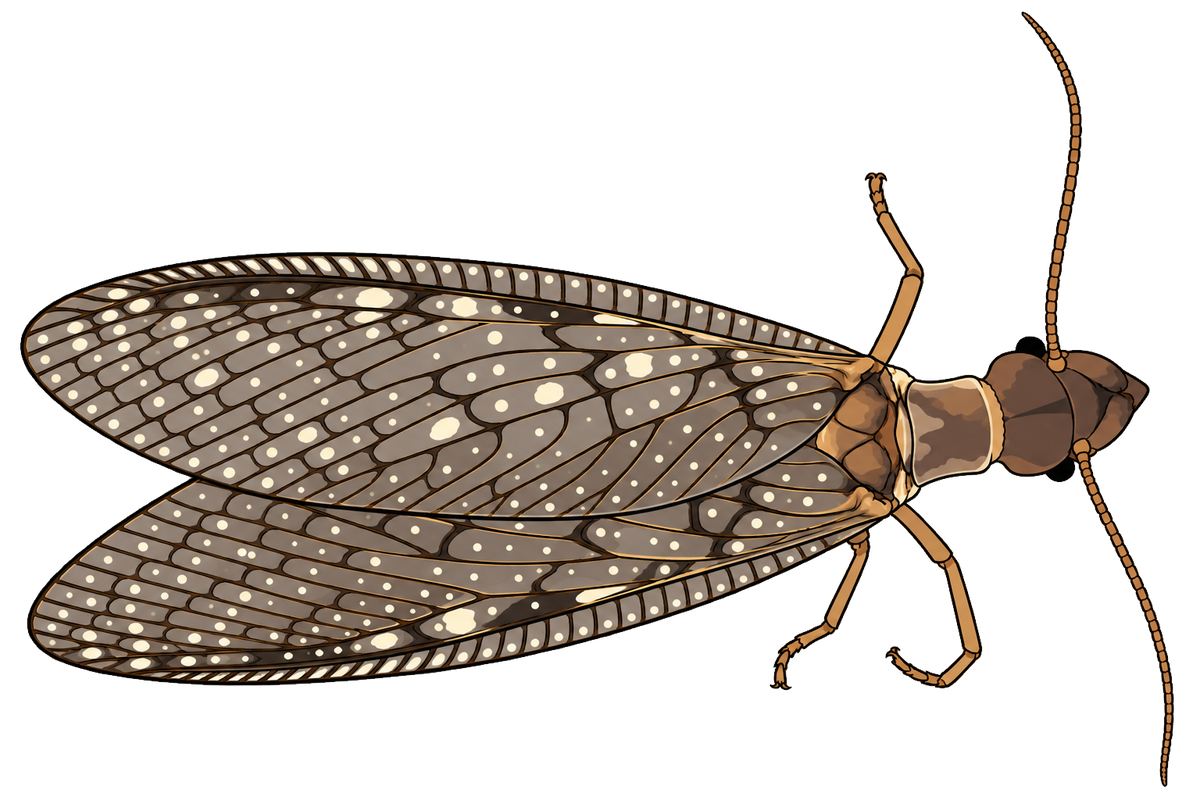
Corydalus cornutus
Corydalus cornutus develops as an aquatic hellgrammite before emerging as a large, net-winged adult. Male mandibles are dramatically elongated and take part in both contests with rivals and interactions with females.
Explore the guide →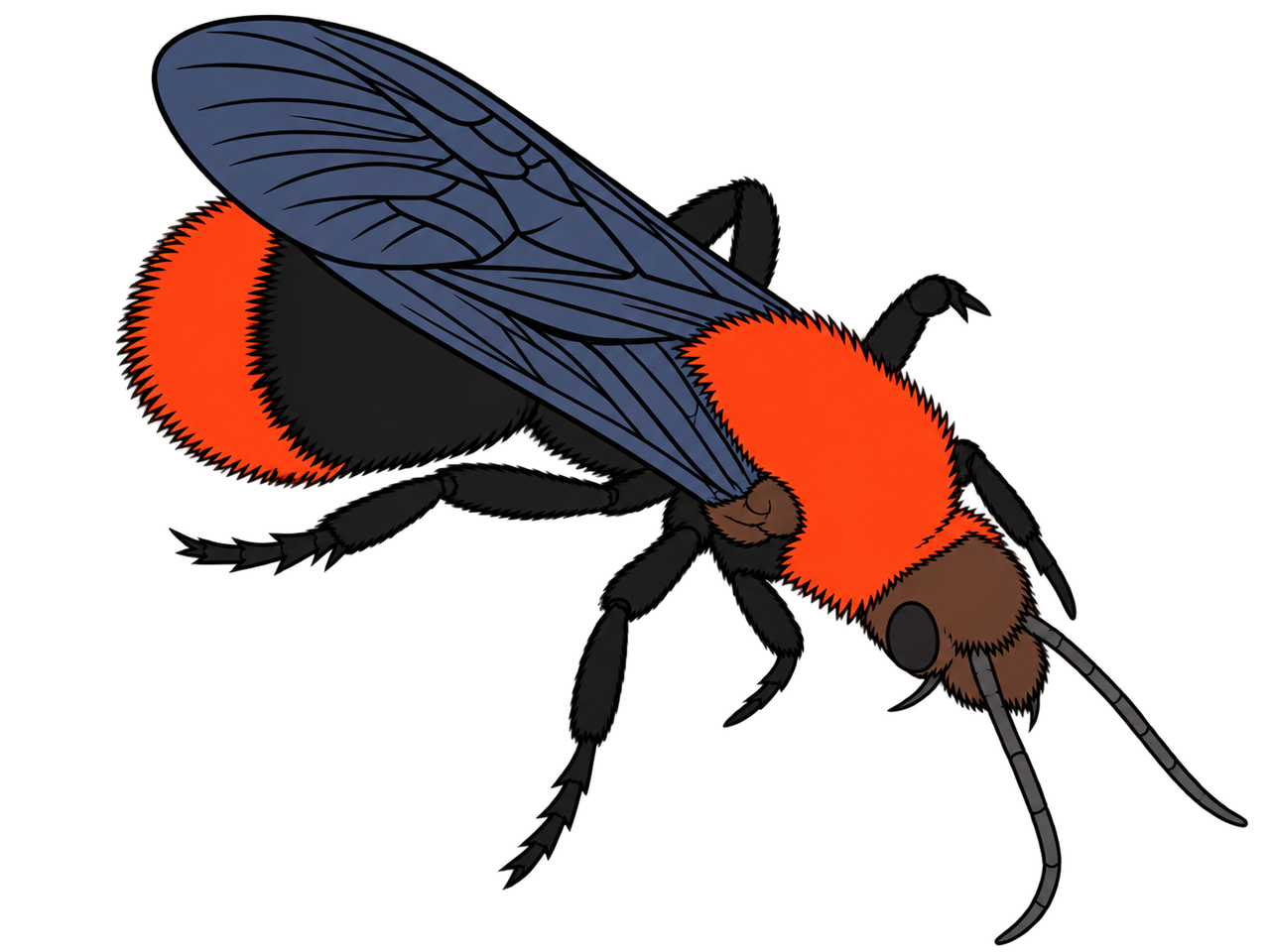
Dasymutilla occidentalis
Dasymutilla occidentalis is a solitary parasitoid wasp with contrasting red-orange hairs and black body regions. Wingless females and winged males differ markedly, and the female’s defensive venom acts through several distinct molecular components.
Explore the guide →Gasteruption jaculator
Gasteruption jaculator is a slender wasp whose female carries a long, pale-tipped ovipositor sheath. Its larvae develop in solitary bee nests.
Explore the guide →Gauromydas heros
Gauromydas heros is a giant Neotropical fly, with documented body lengths reaching approximately seven centimetres. Its immature stages develop in the waste chambers of leaf-cutting ant nests before moving upward through the soil to pupate.
Explore the guide →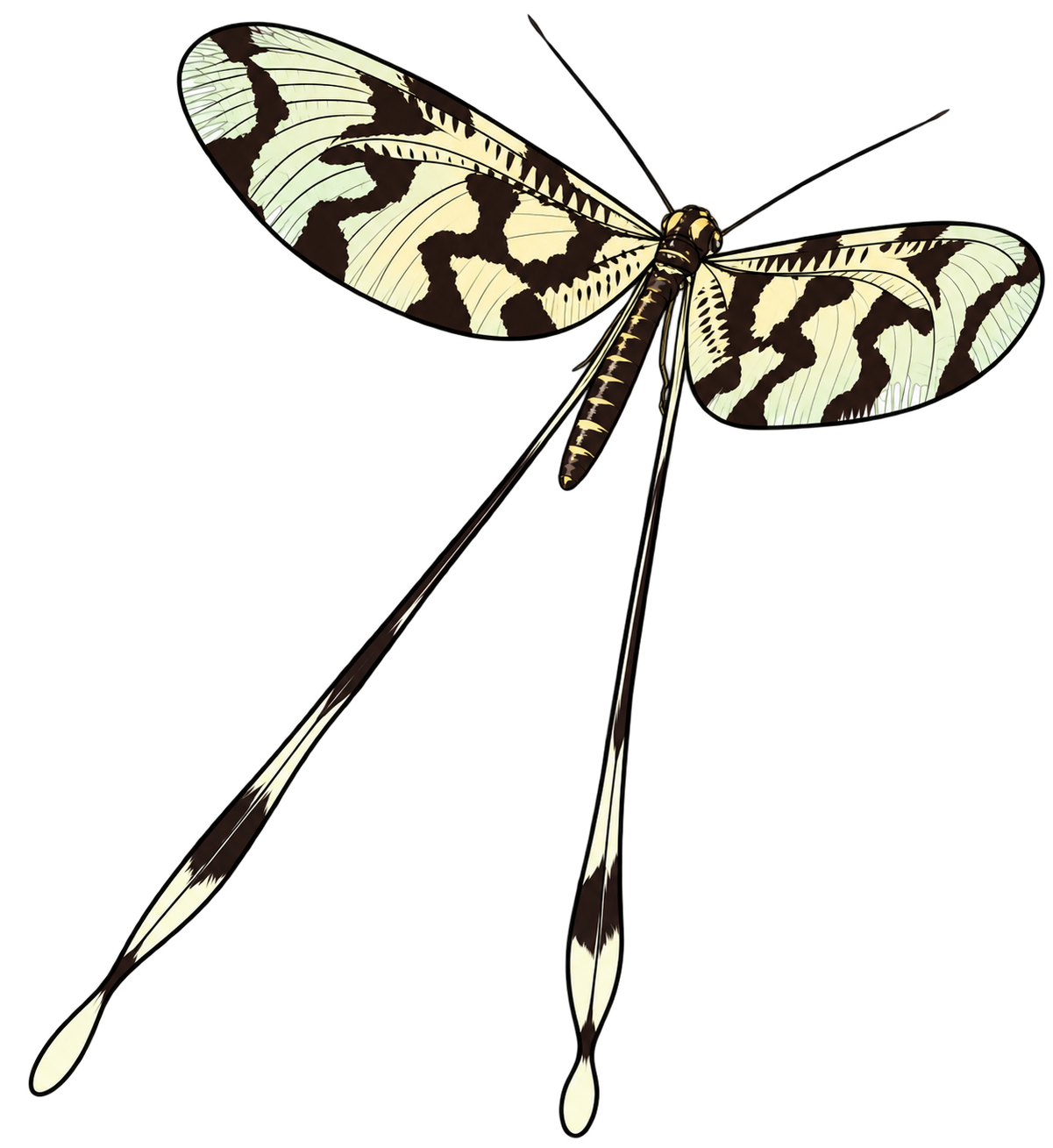
Nemoptera sinuata
Nemoptera sinuata carries a pair of exceptionally narrow, elongated hindwings behind its patterned forewings. In Bulgaria’s Struma Valley, adults feed on pollen and appear in sunny river-gorge habitats during late spring and early summer.
Explore the guide →Palpares libelluloides
Palpares libelluloides is a large antlion with pale yellow wings marked in black. Its larvae occupy coarse soil and plant debris, while pigment analysis has identified the compounds responsible for the contrasting wing regions.
Explore the guide →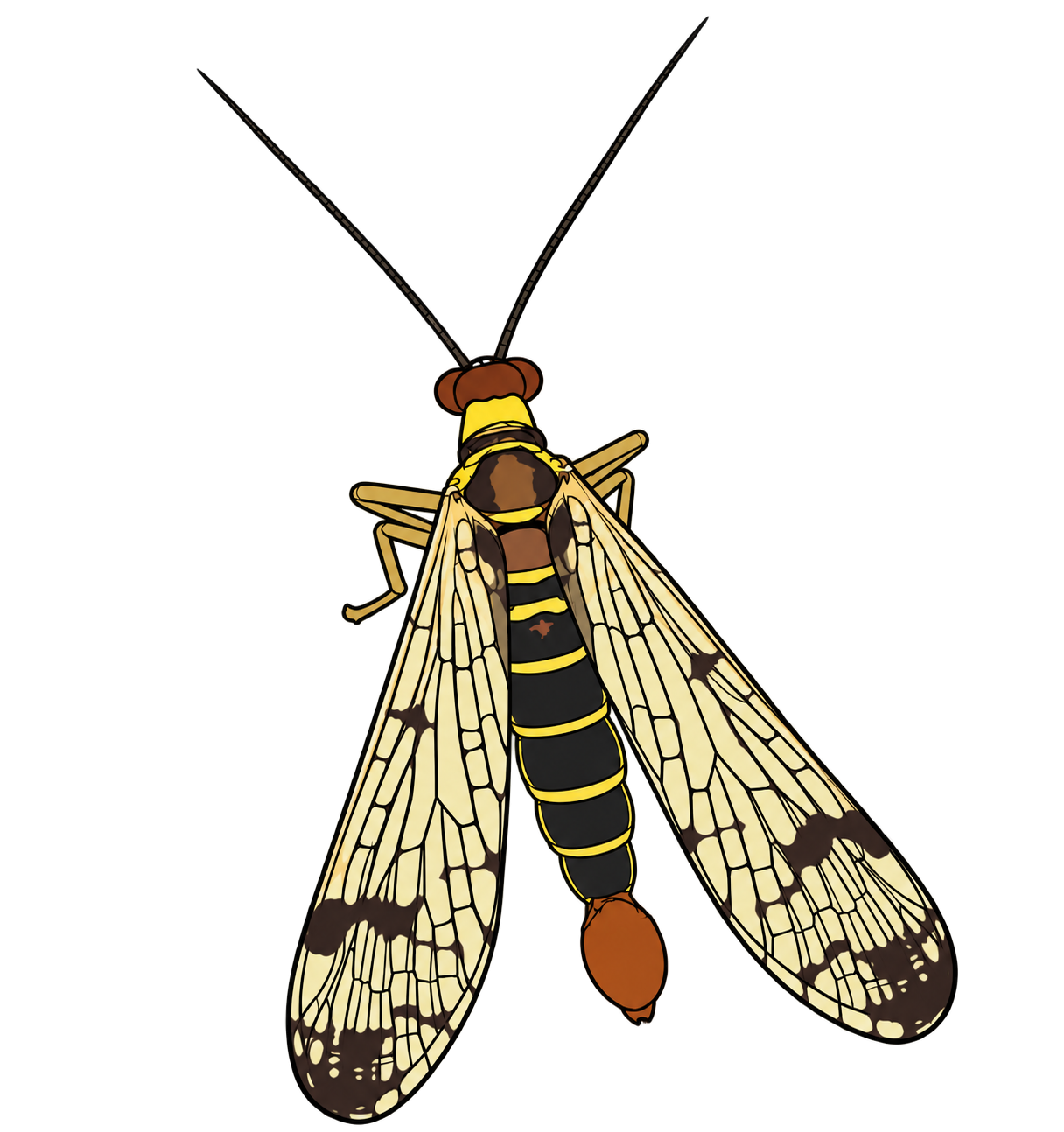
Panorpa communis
Panorpa communis combines a beak-like head, patterned wings and an upturned terminal appendage in the male. Its courtship includes food gifts and coordinated movements that generate vibrations through the supporting vegetation.
Explore the guide →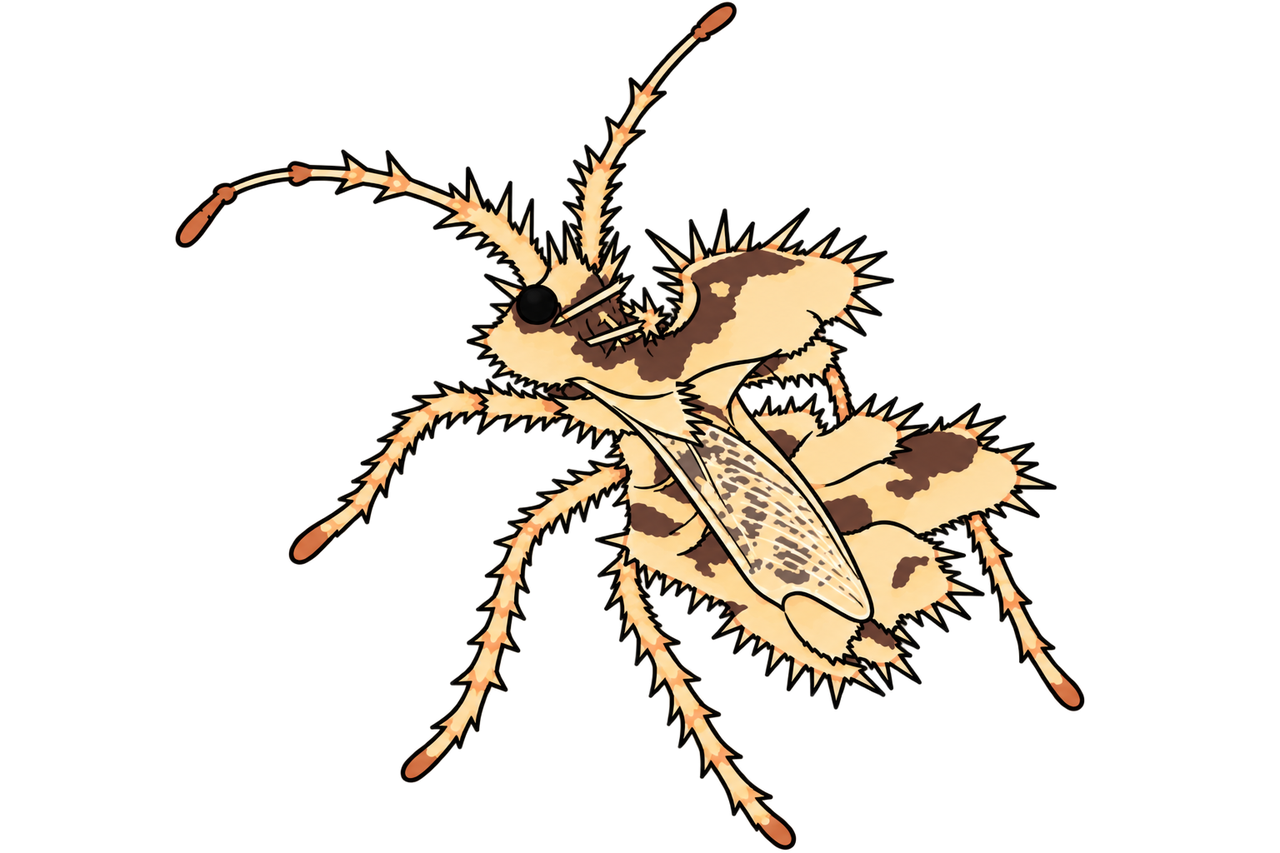
Phyllomorpha laciniata
Phyllomorpha laciniata is a finely spined Mediterranean bug whose females attach golden eggs to other adults. Both sexes carry these eggs.
Explore the guide →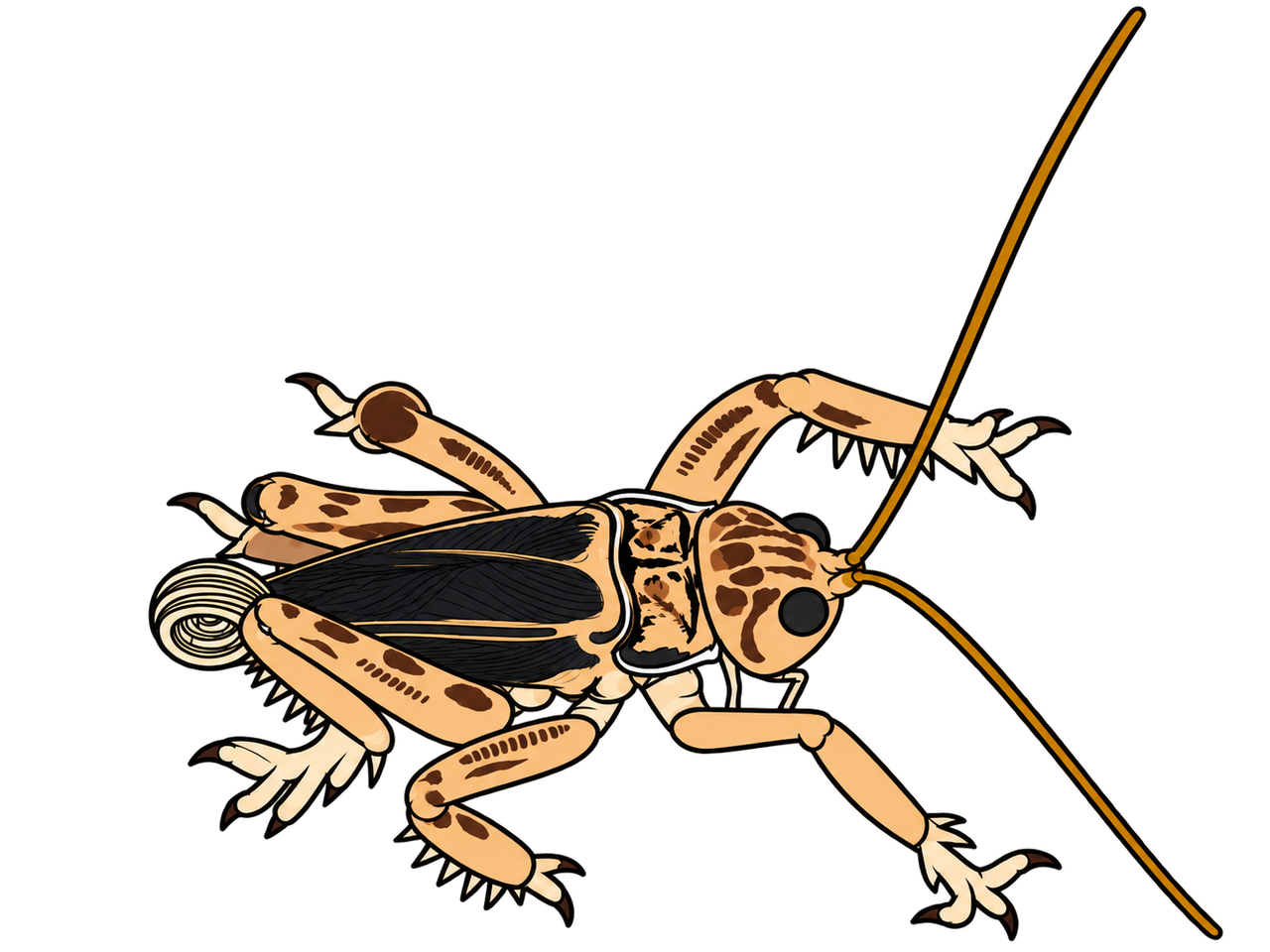
Schizodactylus monstrosus
Schizodactylus monstrosus is a robust, nocturnal cricket adapted to loose, moist sand. Broad feet and unusually rolled adult wings distinguish its body, while each individual occupies a deep burrow excavated with its jaws.
Explore the guide →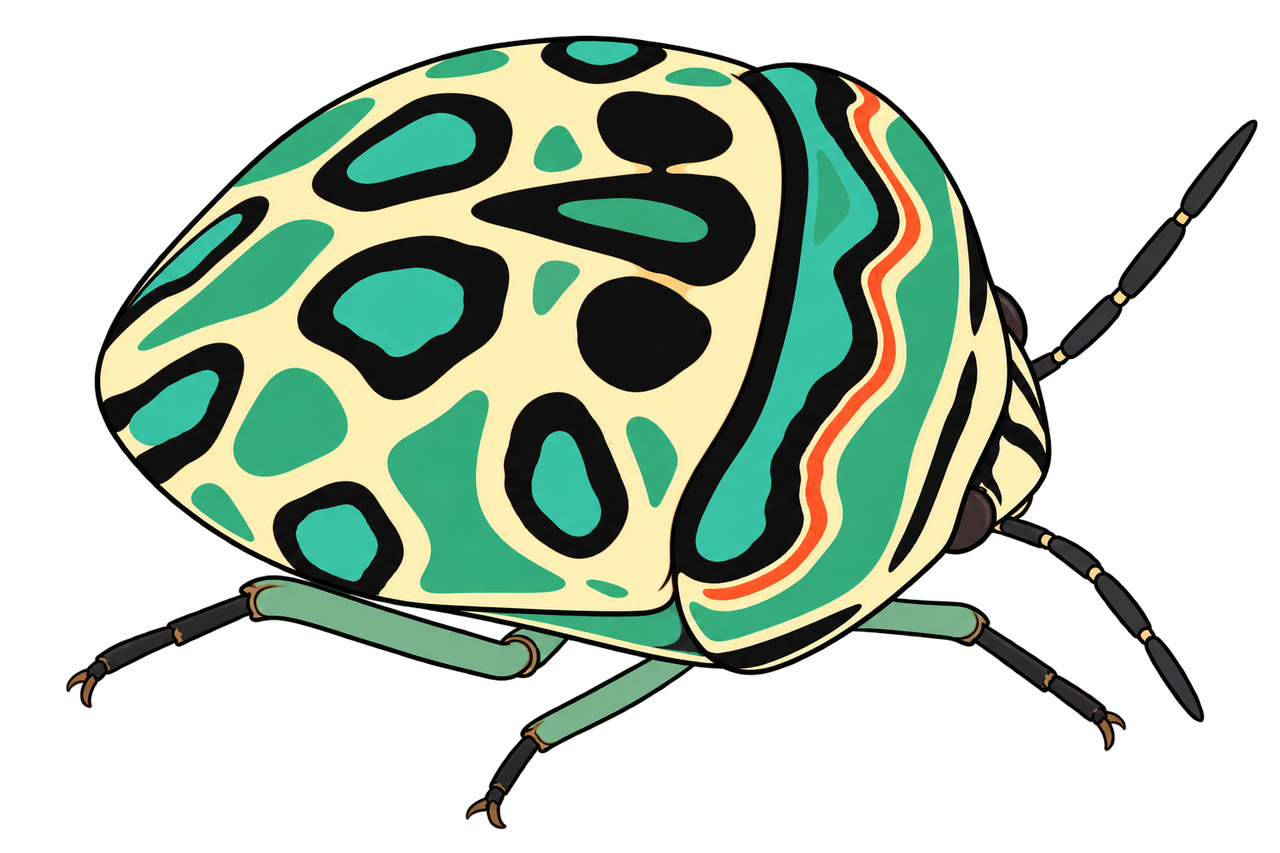
Sphaerocoris annulus
Sphaerocoris annulus is an African shield bug with a rounded body and a striking arrangement of dark-bordered markings. Its geometric pattern covers a domed shield extending over much of the abdomen.
Explore the guide →Teleopsis dalmanni
Teleopsis dalmanni bears eyes and antennae on elongated lateral head stalks. Males develop a much greater eyespan than females; this difference is associated with mate choice and reproductive traits.
Explore the guide →Umbonia crassicornis
Umbonia crassicornis combines a prominent thoracic horn with attentive maternal defence. Nymphs communicate through the host stem, and the mother’s signals help terminate false alarms after a predator has been removed.
Explore the guide →