The Night-Climbing Folio
Climbing Night-Blooming Cactus
Selenicereus setaceus
Loading this page…
Return homePlease wait while the next page arrives.


The Night-Climbing Folio
Selenicereus setaceus
Long searching stems and aerial roots make this cactus a natural climber. Give it a secure support, filtered brightness and an airy mix with regular growing-season moisture.
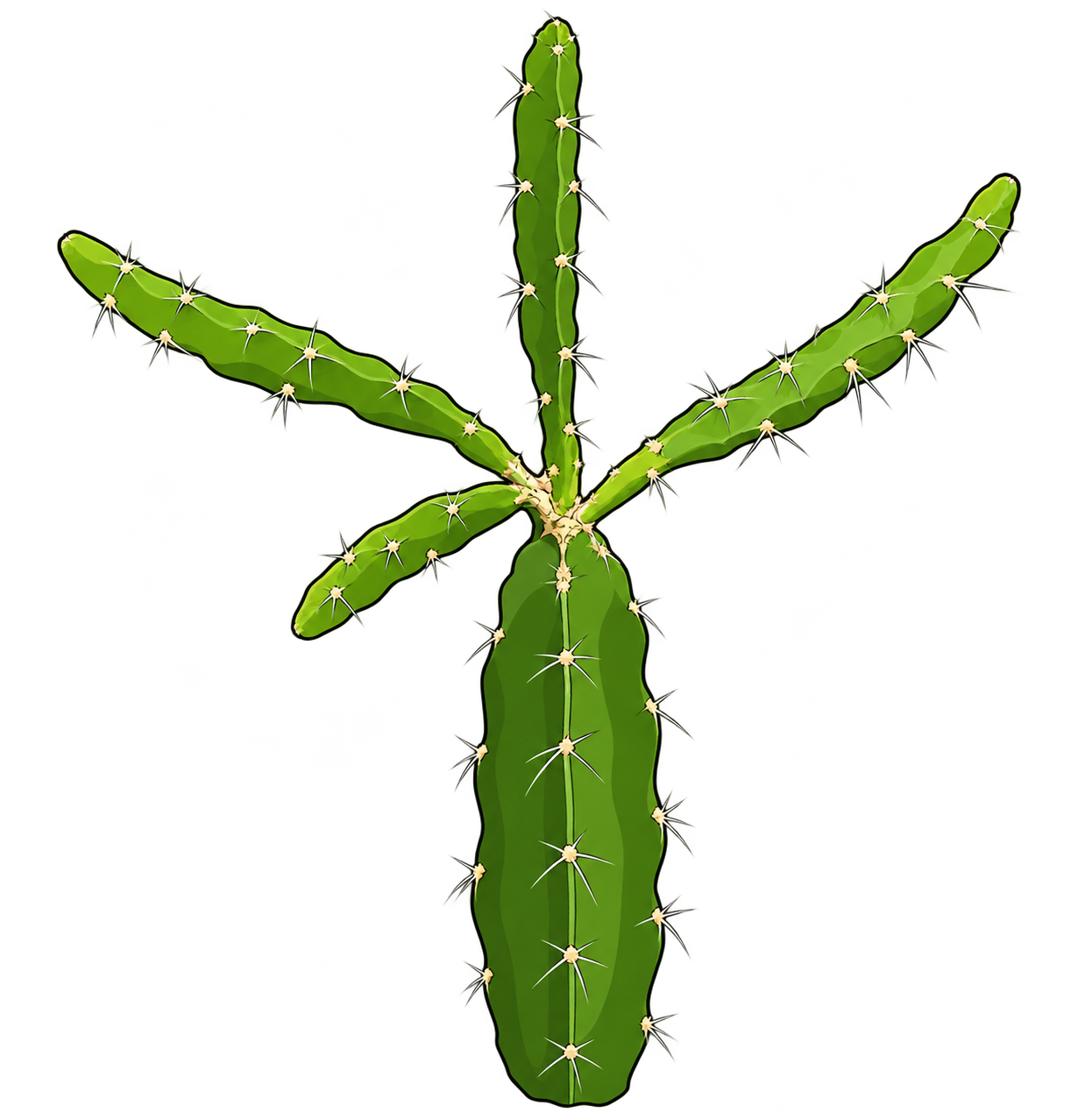
Source photograph · Mila’s Exotic Plants and Curiosities / Luminary Oddities; photographer not separately credited
Reference photograph from the owner’s shop listing; no public open license is stated.
Begin with bright filtered light indoors. This uses the gentler exposure approach for forest-growing cacti; introduce stronger light gradually while watching the stems. [4]
Place a firm trellis beside the pot and guide stems onto it loosely. Leave growing tips free to extend, and avoid forcing sharp bends. [2]
During active growth, water after the top of the mix dries, while avoiding prolonged complete dehydration. This is the container approach used for related forest cacti. [5]
Wet the root ball evenly and empty runoff. A damp outer pot is a reason to improve drainage, not to keep extending the watering interval indefinitely. [8]
Use an airy, organic potting mix opened with coarse drainage material. Forest cacti need more moisture retention than a very lean desert-cactus substrate. [4]
Choose a draining container that can carry the support securely. Keep the stem at its former soil level and avoid burying climbing stems unnecessarily. [9]
Grow in a warm, frost-protected room with ventilation. Keep the support away from cold glass and heating outlets that create abrupt local temperature changes. [10]
Forest-cactus guidance favors some humidity, but ventilation and a freely draining root zone remain essential. Do not create a constantly wet, enclosed root environment. [4]
Check for tightly circling roots or a pot that no longer supports the climbing framework. Repot during active growth rather than repeatedly disturbing a stable plant. [17]
Keep stems supported during transfer. Set the root ball into fresh airy mix at the same depth and reattach the support without constricting stems. [18]
Healthy stem sections can produce new plants; this method has been studied directly in Selenicereus setaceus. Keep track of the original base of each section. [3]
Use clean tools, let the wound dry, and insert the base into a small pot of airy medium. Keep it bright and lightly moist while it roots. [7]
Train sound stems before deciding to remove them. Long reaching shoots and aerial roots are part of the climbing habit, not automatic signs of illness. [2]
Shorten damaged or unmanageable stems with clean tools. Retain enough supported growth to keep the plant balanced and save sound sections for propagation. [6]
Waterlogged roots may lose function. [14]
Forest-cactus culture avoids prolonged growth-season drought. [4]
Reduce water and feed as growth slows, but continue checking for excessive drying. Return to regular moisture when active extension resumes; bloom timing varies with conditions. [5]
Small hooked spines can snag skin and fabric. Position climbing stems away from faces, walkways and pets. [2]
Keep detached pieces beyond children’s and animals’ reach. Treat this as an ornamental plant rather than food. [11]
Human poisoning (U.S.): 1-800-222-1222. Medical emergencies: 911. [12]
Pet poisoning: veterinarian; ASPCA 888-426-4435 (consultation fee). [13]
References checked October 5, 2026. Botanical identity, cultivation and handling guidance are linked to the sources below; general growing advice is adapted to container conditions.
Royal Botanic Gardens, Kew
Accessed October 5, 2026
Soffiatti and Rowe / Frontiers in Robotics and AI
Accessed October 5, 2026 · Publisher date: 2020-06-09
Rodrigo Ruths / Universidade Federal da Fronteira Sul
Accessed October 5, 2026 · Publisher date: 2016-09-06
Clemson Cooperative Extension
Accessed October 5, 2026
Royal Horticultural Society
Accessed October 5, 2026
Low light can elongate growth. [15]
Mealybugs produce wax and feed on sap. [16]
Aerial roots are part of this species’s climbing machinery. [2]
Royal Horticultural Society
Accessed October 5, 2026
University of Illinois Extension
Accessed October 5, 2026 · Publisher date: 2015-06-04
University of Illinois Extension
Accessed October 5, 2026
Virginia Cooperative Extension
Accessed October 5, 2026 · Publisher date: August 2018
Royal Horticultural Society
Accessed October 5, 2026
National Capital Poison Center
Accessed October 5, 2026
National Capital Poison Center
Accessed October 5, 2026
ASPCA Poison Control
Accessed October 5, 2026
University of Maryland Extension
Accessed October 5, 2026 · Updated: 2023-03-13
University of Maryland Extension
Accessed October 5, 2026 · Updated: 2023-03-13
University of Maryland Extension
Accessed October 5, 2026 · Updated: 2024-10-17
Penn State Extension
Accessed October 5, 2026 · Updated: 2026-02-23
University of Georgia Cooperative Extension
Accessed October 5, 2026 · Updated: 2022-07-21