

The Tubular Herbarium
Gollum Jade
Crassula ovata ‘Gollum’
Loading this page…
Return homePlease wait while the next page arrives.
Tubular foliage with rounded, cup-like tips gives Gollum its sculptural outline. Provide a sunny position and draining root conditions, then shape branches to suit the space.
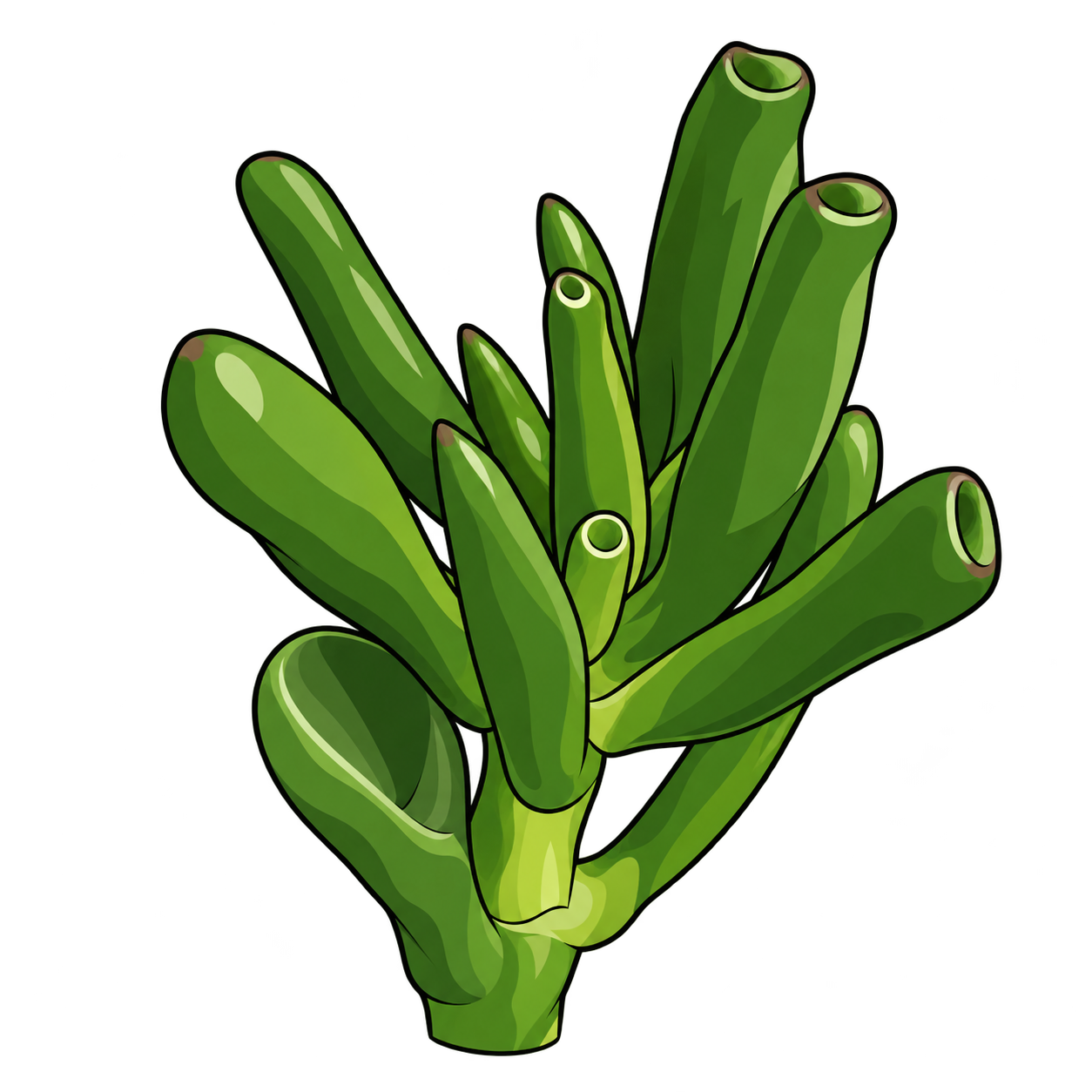
Source photograph · Mila’s Exotic Plants and Curiosities / Luminary Oddities; photographer not separately credited in listing
Reference photograph from the owner’s shop listing; no public open license is stated.
Gollum is a named cultivar of Crassula ovata. Its fleshy leaves are elongated and nearly tubular, with distinctive cup-like ends. [4][2]
The foliage sits on branching succulent stems that become woody with age. The plant combines the familiar jade-tree habit with an upright fan of finger-like leaves. [4]
An ordinary indoor room suits jade. A daytime range around 60–70°F / 16–21°C is a useful growing target, with cooler nights. Protect the plant from freezing. [7]
Ordinary dry indoor air suits succulent growing. Keep the plant in a ventilated position and care for the roots through drainage and measured watering. [8]
Check for crowded roots and an unstable, top-heavy plant before choosing a new container. Repot as fresh growth starts. [5]
Move to a slightly larger draining pot, support the plant upright, and settle fresh succulent mix around the root ball. [11]
Water sparingly while the repotted plant establishes, then return to a drying cycle suited to its pot and light. [5]
Persistently wet succulent roots can rot, and overwatering can lead to leaf loss. [10]
Underwatering and damaged roots can both leave succulent foliage shrivelled. [10]
Jade plant is toxic to cats and dogs. ASPCA lists it under the synonym Crassula argentea; signs include vomiting, depression and poor coordination. [13][1]
After suspected ingestion or signs of illness, contact your veterinarian or ASPCA Poison Control at 888-426-4435. Provide the plant’s botanical name. [14]
Keep the plant, cuttings and loose potting material beyond young children’s reach. Display it as an ornamental plant and keep plant material away from food and drinks. [15]
For a human plant ingestion in the United States, call Poison Control at 1-800-222-1222 or use webPOISONCONTROL. Elsewhere, contact your local poison service. [16]
Royal Botanic Gardens, Kew
Accessed October 5, 2026
NC State Extension
Accessed October 5, 2026
Royal Horticultural Society
Accessed October 5, 2026
Royal Horticultural Society
Accessed October 5, 2026
University of Wisconsin–Madison Extension — Susan Mahr
Accessed October 5, 2026 · Updated: Revised April 2025
Iowa State University Extension and Outreach — Richard Jauron
Accessed October 5, 2026 · Updated: Last updated June 2, 2025
Jade develops weak, stretched growth when light is insufficient. [2]
Succulent foliage can scorch after a sudden increase in sunlight. [10]
Mealybugs and scale can affect jade foliage and stems. [2]
University of Connecticut Home Garden Education Office
Accessed October 5, 2026
Iowa State University Extension and Outreach — Aaron Steil
Accessed October 5, 2026 · Updated: Last reviewed December 2024
Iowa State University Extension and Outreach — Aaron Steil
Accessed October 5, 2026 · Updated: Last reviewed August 2023
Iowa State University Extension and Outreach — Aaron Steil
Accessed October 5, 2026 · Updated: Last reviewed August 2023
Royal Horticultural Society
Accessed October 5, 2026
Royal Horticultural Society
Accessed October 5, 2026
ASPCA Poison Control
Accessed October 5, 2026
ASPCA Poison Control
Accessed October 5, 2026
National Capital Poison Center
Accessed October 5, 2026
National Capital Poison Center
Accessed October 5, 2026