

The Copper Bough
Elephant Bush
Portulacaria afra
Loading this page…
Return homePlease wait while the next page arrives.
Small rounded leaves and reddish young stems create a fine, branching silhouette. Give elephant bush bright light, free drainage and attentive seasonal watering.
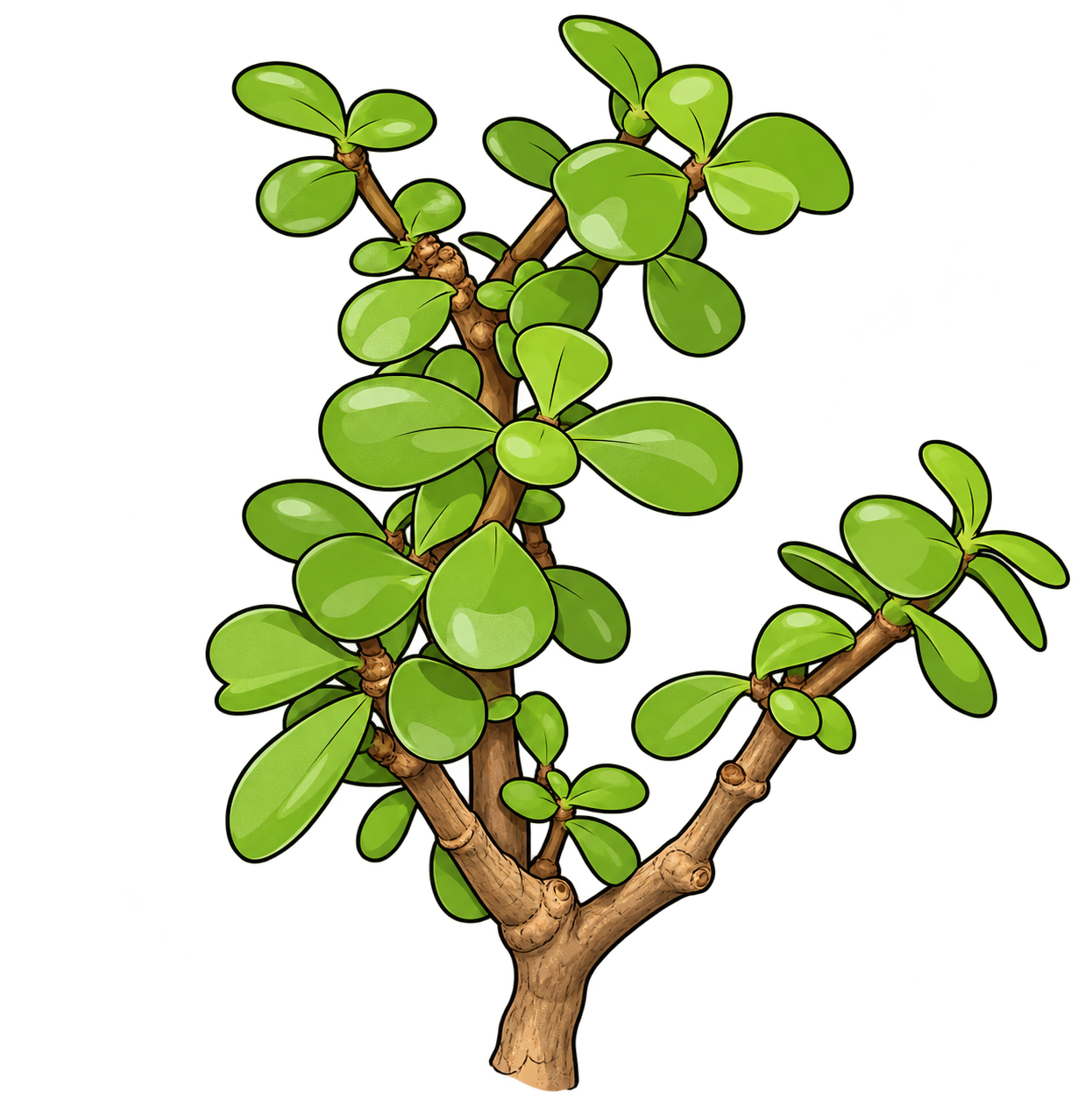
Source photograph · Mila’s Exotic Plants and Curiosities / Luminary Oddities; photographer not separately credited in listing
Reference photograph from the owner’s shop listing; no public open license is stated.
Elephant bush is Portulacaria afra, a succulent shrub in the Didiereaceae family. Its small fleshy leaves grow in opposite pairs on reddish young stems. [2][8]
Also called dwarf jade or spekboom, this plant has finer stems and smaller leaves than Crassula ovata. The branching habit suits a container display and responds well to tip pruning. [9]
During active growth, check the upper inch of potting mix and let that layer dry before the next thorough watering. [9]
Let excess water drain fully and empty the saucer or outer pot. Keep the root ball aerated in a freely draining mix. [7]
Reduce watering substantially as light and growth decline. Continue checking the mix and foliage through the cooler season. [8]
Persistently wet succulent roots can rot, and overwatering can lead to leaf loss. [6]
Underwatering and damaged roots can both leave succulent foliage shrivelled. [6]
Keep elephant bush, fallen leaves and cuttings beyond pets that chew plants. Eating plant material can upset a pet’s stomach. [10]
After suspected ingestion or signs of illness, contact your veterinarian or ASPCA Poison Control at 888-426-4435. Provide the plant’s botanical name. [11]
Keep the plant, cuttings and loose potting material beyond young children’s reach. Display it as an ornamental plant and keep plant material away from food and drinks. [12]
For a human plant ingestion in the United States, call Poison Control at 1-800-222-1222 or use webPOISONCONTROL. Elsewhere, contact your local poison service. [13]
Royal Botanic Gardens, Kew
Accessed October 5, 2026
Royal Botanic Gardens, Kew
Accessed October 5, 2026
Royal Horticultural Society
Accessed October 5, 2026
Royal Horticultural Society
Accessed October 5, 2026
Iowa State University Extension and Outreach — Aaron Steil
Accessed October 5, 2026 · Updated: Last reviewed December 2024
Iowa State University Extension and Outreach — Aaron Steil
Insufficient light leads to weak succulent growth. [7]
Succulent foliage can scorch after a sudden increase in sunlight. [6]
Accessed October 5, 2026 · Updated: Last reviewed August 2023
Royal Horticultural Society
Accessed October 5, 2026
Royal Horticultural Society
Accessed October 5, 2026
University of Wisconsin–Madison Extension — Susan Mahr
Accessed October 5, 2026
ASPCA Poison Control
Accessed October 5, 2026
ASPCA Poison Control
Accessed October 5, 2026
National Capital Poison Center
Accessed October 5, 2026
National Capital Poison Center
Accessed October 5, 2026