The Pale Branch Reliquary
White Ghost Euphorbia
Euphorbia lactea ‘White Ghost’
Loading this page…
Return homePlease wait while the next page arrives.


The Pale Branch Reliquary
Euphorbia lactea ‘White Ghost’
Pale angular stems and upward-curving branches create White Ghost’s candelabra shape. Give it filtered brightness, a drying cycle and protection from both strong afternoon sun and milky sap.
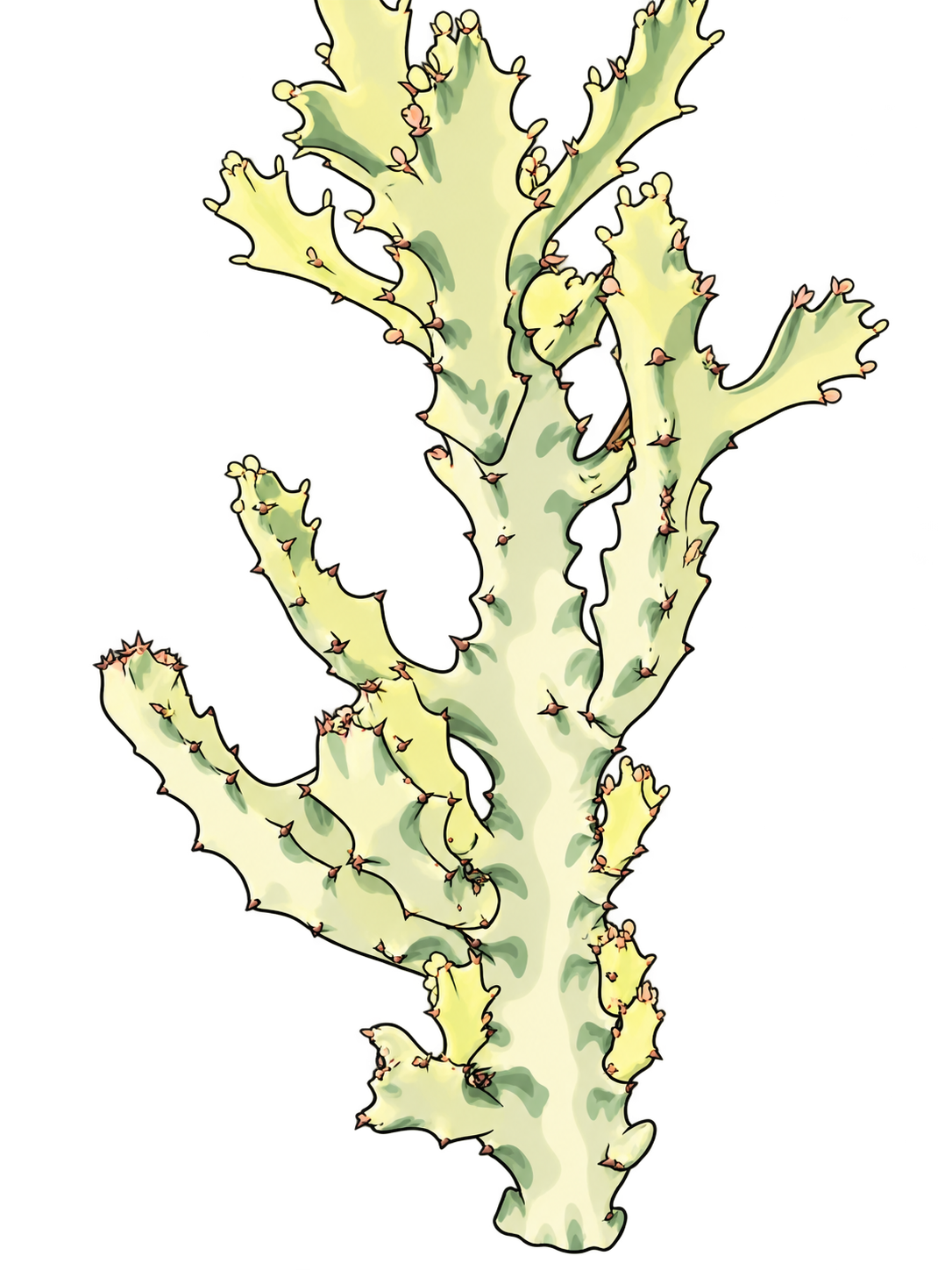
Source photograph · Mila’s Exotic Plants and Curiosities / Luminary Oddities; photographer not separately credited
Reference photograph from the owner’s shop listing; no public open license is stated.
White Ghost is a pale Euphorbia lactea selection. Angular, mostly white stems carry some green markings and short paired spines along their wavy edges. [2]
Small leaves may appear briefly and fall. The branching stems provide the lasting display; healthy leaflessness is part of the species habit. [1]
Prepare the pot and work area first. Wear gloves, covered sleeves and eye protection, then support the crown and root ball without breaking a branch. [4]
Choose a small increase in pot size when roots are crowded. Settle fresh mix at the original depth and keep the stem clear of piled-up compost. [16]
Waterlogged roots may lose function. [13]
Euphorbia lactea naturally loses its small leaves. [1]
Gradual exposure changes reduce scorch risk.
In a darker season, provide bright filtered light and longer drying intervals. Keep the plant warm; a cold, wet resting period is unsuitable. [3]
The milky sap can injure skin and eyes and is harmful if swallowed. Keep the plant, cuttings and debris away from children and pets. [1]
For sap on skin, wash with soap and water. For eyes, rinse with running water for 15–20 minutes and get poison-service advice promptly. [4]
Human poisoning (U.S.): 1-800-222-1222. Medical emergencies: 911. [11]
Pet poisoning: veterinarian; ASPCA 888-426-4435 (consultation fee). [12]
White Ghost has upright pale branches; crested Euphorbia lactea forms a fanlike crest. A crested or grafted specimen has a different structure and is not implied by this guide. [1]
References checked October 5, 2026. Botanical identity, cultivation and handling guidance are linked to the sources below; general growing advice is adapted to container conditions.
NC State Extension
Accessed October 5, 2026
National Parks Board, Singapore
Accessed October 5, 2026 · Updated: 2026-09-17
Royal Horticultural Society
Accessed October 5, 2026
National Capital Poison Center
Accessed October 5, 2026
Royal Horticultural Society
Accessed October 5, 2026
Mites can cause fine mottling and webbing. [15]
Iowa State University Extension
Accessed October 5, 2026
Iowa State University Extension
Accessed October 5, 2026
University of New Hampshire Extension
Accessed October 5, 2026 · Publisher date: 2019-01-17
University of Illinois Extension
Accessed October 5, 2026
Royal Horticultural Society
Accessed October 5, 2026
National Capital Poison Center
Accessed October 5, 2026
ASPCA Poison Control
Accessed October 5, 2026
University of Maryland Extension
Accessed October 5, 2026 · Updated: 2025-02-05
University of Maryland Extension
Accessed October 5, 2026 · Updated: 2023-03-13
Royal Horticultural Society
Accessed October 5, 2026
Penn State Extension
Accessed October 5, 2026 · Updated: 2026-02-23
University of Georgia Cooperative Extension
Accessed October 5, 2026 · Updated: 2022-07-21
Oklahoma State University Extension
Accessed October 5, 2026 · Publisher date: February 2017