The Mineral Spire
Mint Cream Euphorbia
Euphorbia trigona ‘Mint Cream’
Loading this page…
Return homePlease wait while the next page arrives.


The Mineral Spire
Euphorbia trigona ‘Mint Cream’
Pale marbling softens Mint Cream’s upright ribbed stems. Follow African Milk Tree care, protect new growth during light changes and handle every cut with latex precautions.
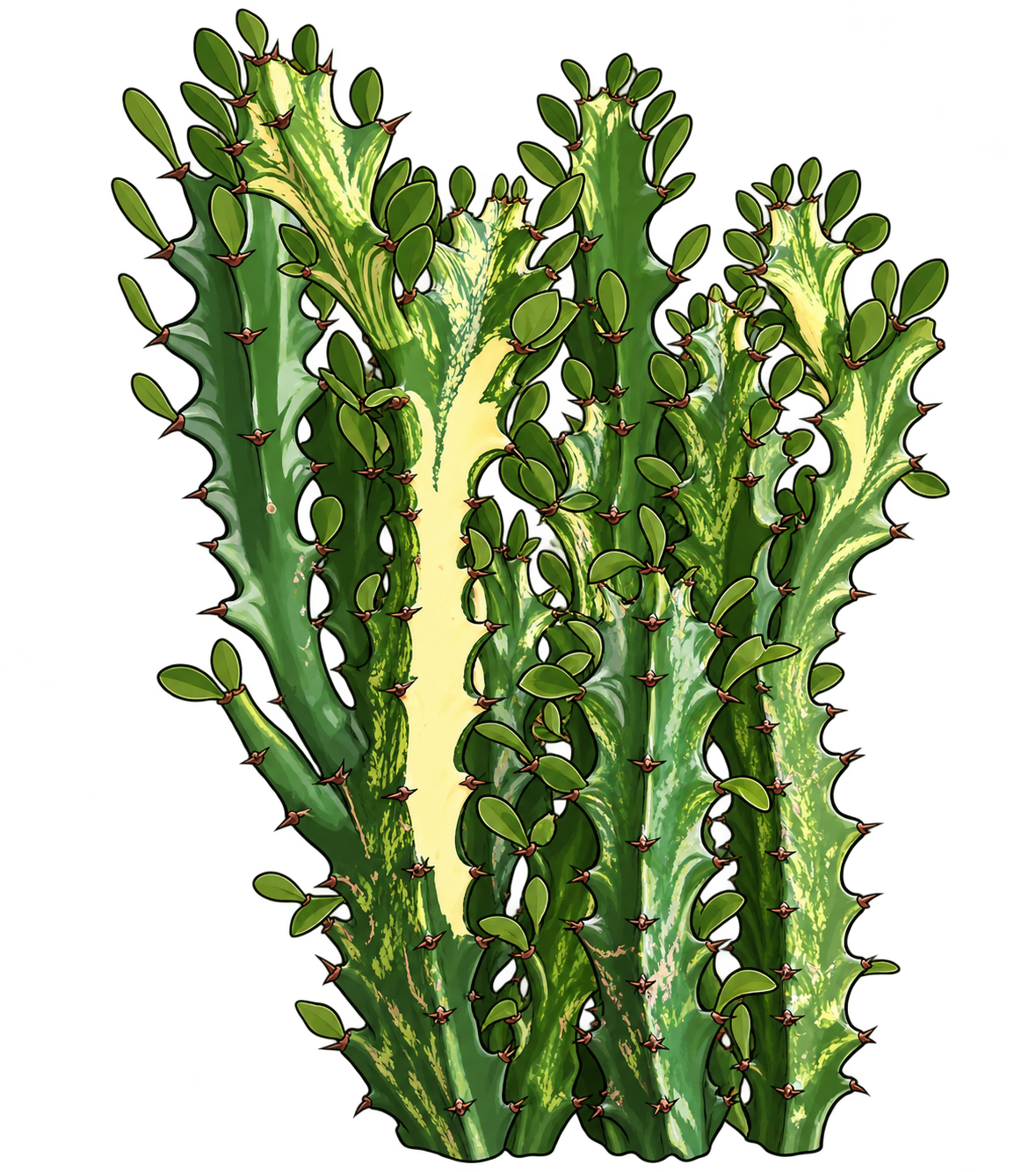
Source photograph · Mila’s Exotic Plants and Curiosities / Luminary Oddities; photographer not separately credited
Reference photograph from the owner’s shop listing; no public open license is stated.
Mint Cream belongs to the African Milk Tree group, Euphorbia trigona. The underlying form is an upright branching succulent with ridged stems, short spines and small leaves. [1]
It is a member of Euphorbiaceae. The plant’s sculptural outline shares the same core structure as green African Milk Tree. [3]
Begin with bright indirect light near a window. Introduce stronger sunlight gradually, checking exposed pale areas and the growing tips after each change. [11]
A bright room is preferable to a dim corner. Keep the crown evenly exposed and turn a small pot periodically if growth leans toward the light. [10]
Waterlogged roots may lose function. [16]
Appearance alone cannot determine watering need. [18]
Gradual exposure changes reduce scorch risk.
Maintain the brightest comfortable indoor position as days shorten. Water less frequently as drying slows and resume feeding only with active growth. [5]
The milky sap can injure skin and eyes and is harmful if swallowed. Keep the plant, cuttings and debris away from children and pets. [2]
For sap on skin, wash with soap and water. For eyes, rinse with running water for 15–20 minutes and get poison-service advice promptly. [6]
Human poisoning (U.S.): 1-800-222-1222. Medical emergencies: 911. [14]
Pet poisoning: veterinarian; ASPCA 888-426-4435 (consultation fee). [15]
Mint Cream follows African Milk Tree species care. White Ghost is a pale Euphorbia lactea selection with its own branching pattern and stronger protection from intense afternoon sun. [4]
References checked October 5, 2026. Botanical identity, cultivation and handling guidance are linked to the sources below; general growing advice is adapted to container conditions.
NC State Extension
Accessed October 5, 2026
Royal Horticultural Society
Accessed October 5, 2026
National Parks Board, Singapore
Accessed October 5, 2026 · Updated: 2026-09-17
National Parks Board, Singapore
Accessed October 5, 2026 · Updated: 2026-09-17
Royal Horticultural Society
Accessed October 5, 2026
Mites can cause fine mottling and webbing. [19]
National Capital Poison Center
Accessed October 5, 2026
Iowa State University Extension
Accessed October 5, 2026
Iowa State University Extension
Accessed October 5, 2026
UC Master Gardeners of Tulare and Kings County
Accessed October 5, 2026 · Publisher date: 2026-06-27
University of Illinois Extension
Accessed October 5, 2026 · Publisher date: 2024-01-08
University of Illinois Extension
Accessed October 5, 2026 · Publisher date: 2017-12-13
Royal Horticultural Society
Accessed October 5, 2026
Royal Horticultural Society
Accessed October 5, 2026
National Capital Poison Center
Accessed October 5, 2026
ASPCA Poison Control
Accessed October 5, 2026
University of Maryland Extension
Accessed October 5, 2026 · Updated: 2023-03-13
University of Maryland Extension
Accessed October 5, 2026 · Updated: 2023-03-13
University of Maryland Extension
Accessed October 5, 2026 · Updated: 2023-03-10
Royal Horticultural Society
Accessed October 5, 2026
Penn State Extension
Accessed October 5, 2026 · Updated: 2026-02-23
University of Georgia Cooperative Extension
Accessed October 5, 2026 · Updated: 2022-07-21
Oklahoma State University Extension
Accessed October 5, 2026 · Publisher date: February 2017