 Chapter
The Gift of Wisdom
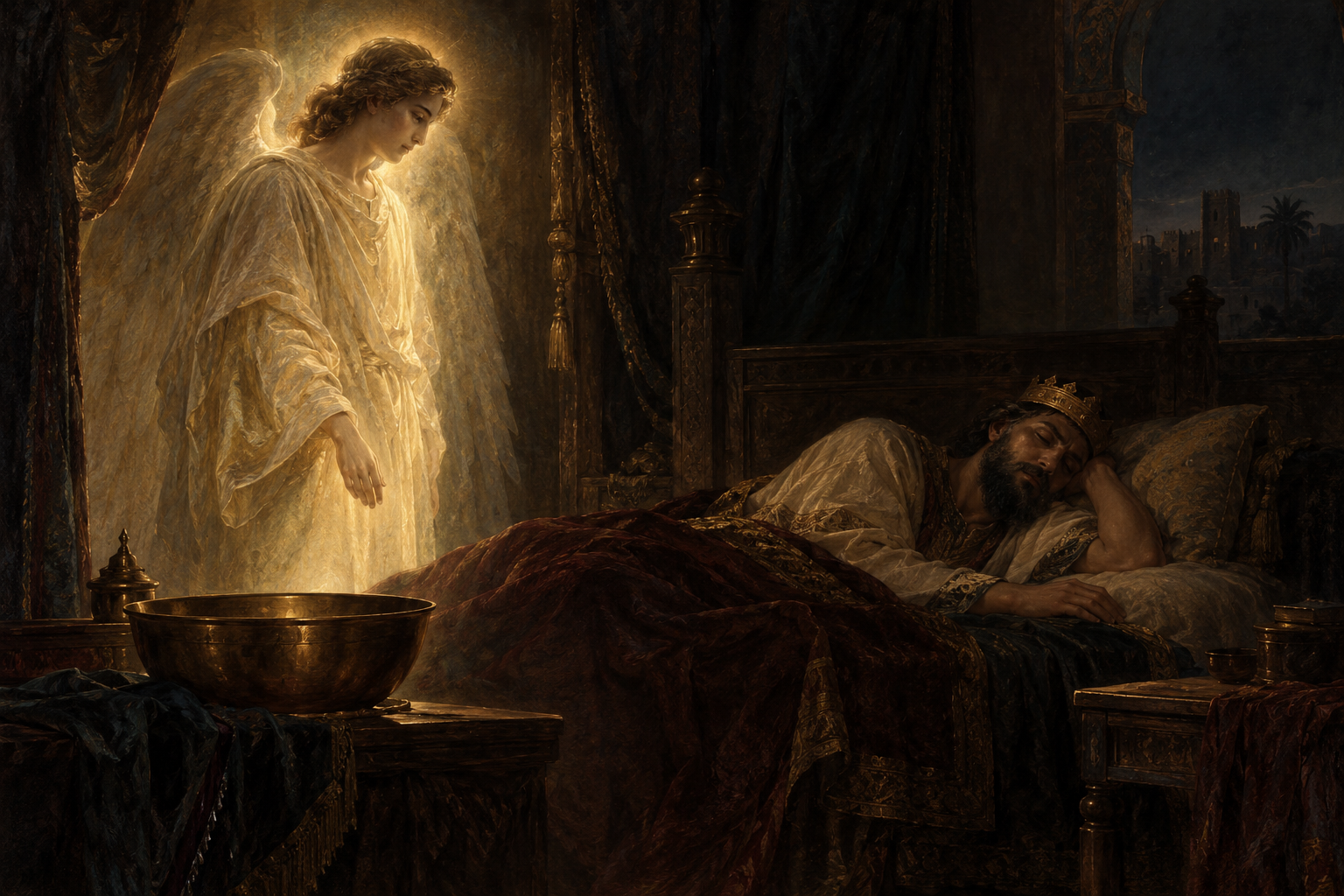
As Solomon lies down to sleep, he asks for wisdom. An angel answers him. Another introduction to the Greater Key places the revelation beneath the trees, in the light of a blazing star.
Loading this page…
Return homePlease wait while the next page arrives.


 The Brass Vessel
Lesser Key · Greater Key · Solomonic manuscripts
A king asks for wisdom; a hidden book awaits its interpreter; treasure-seekers open a sealed vessel and release spirits. The grimoires tell several stories in Solomon’s name. Follow their revelations, inheritances and discoveries through the Greater Key and the Lemegeton, from the knowledge of heaven and nature to the strange aftermath of the vessel’s opening.
8 entries
ChapterAs Solomon lies down to sleep, he asks for wisdom. An angel answers him. Another introduction to the Greater Key places the revelation beneath the trees, in the light of a blazing star.
 Chapter
In the Lansdowne introduction, Solomon explains a world inhabited by celestial, planetary and elemental spirits. Their duties reach from the motion of the stars to the preservation of human lives.
 Chapter
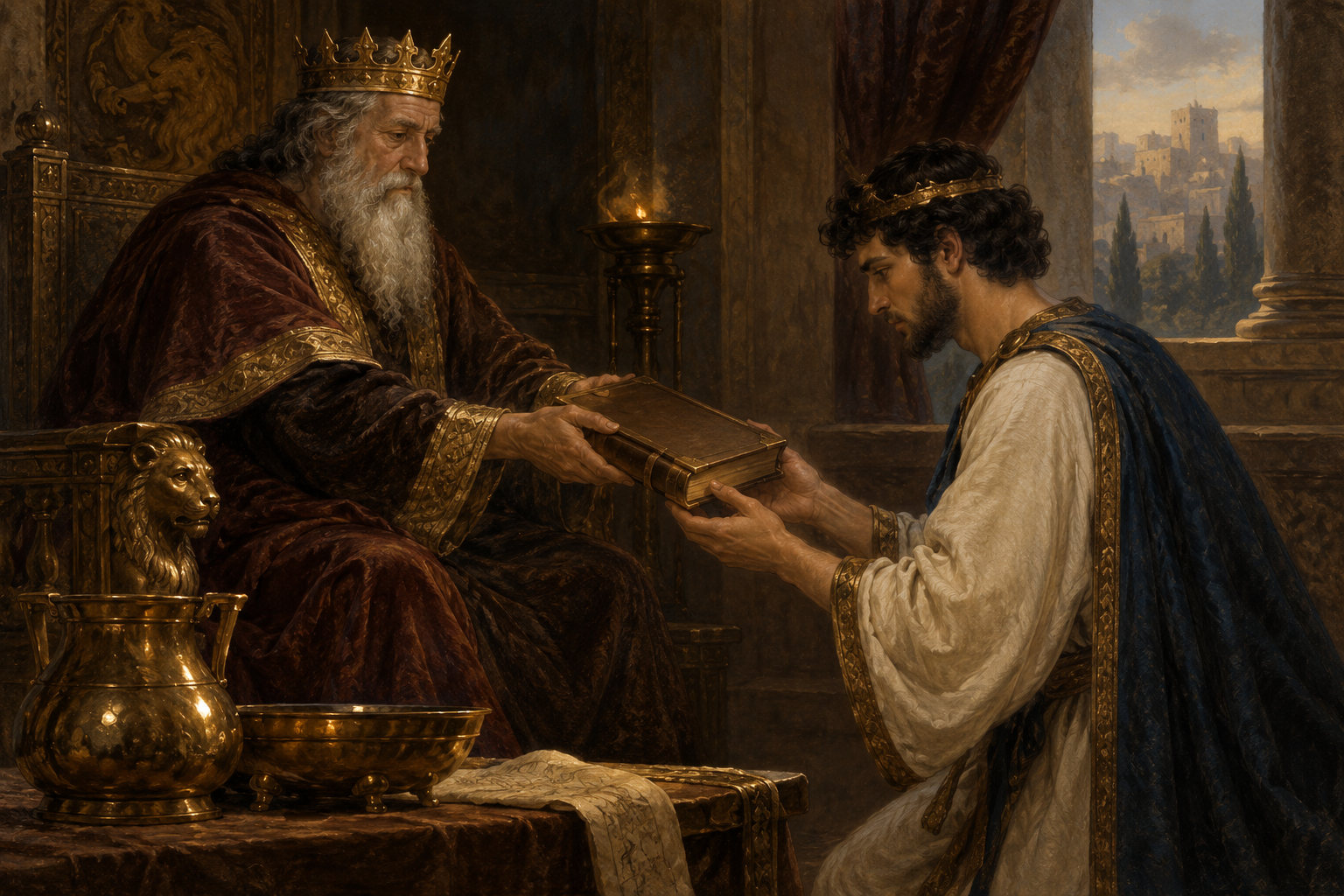
Solomon gives Roboam an inheritance more precious than riches: the knowledge gathered into the Key, with instructions for studying and preserving it.
 Chapter
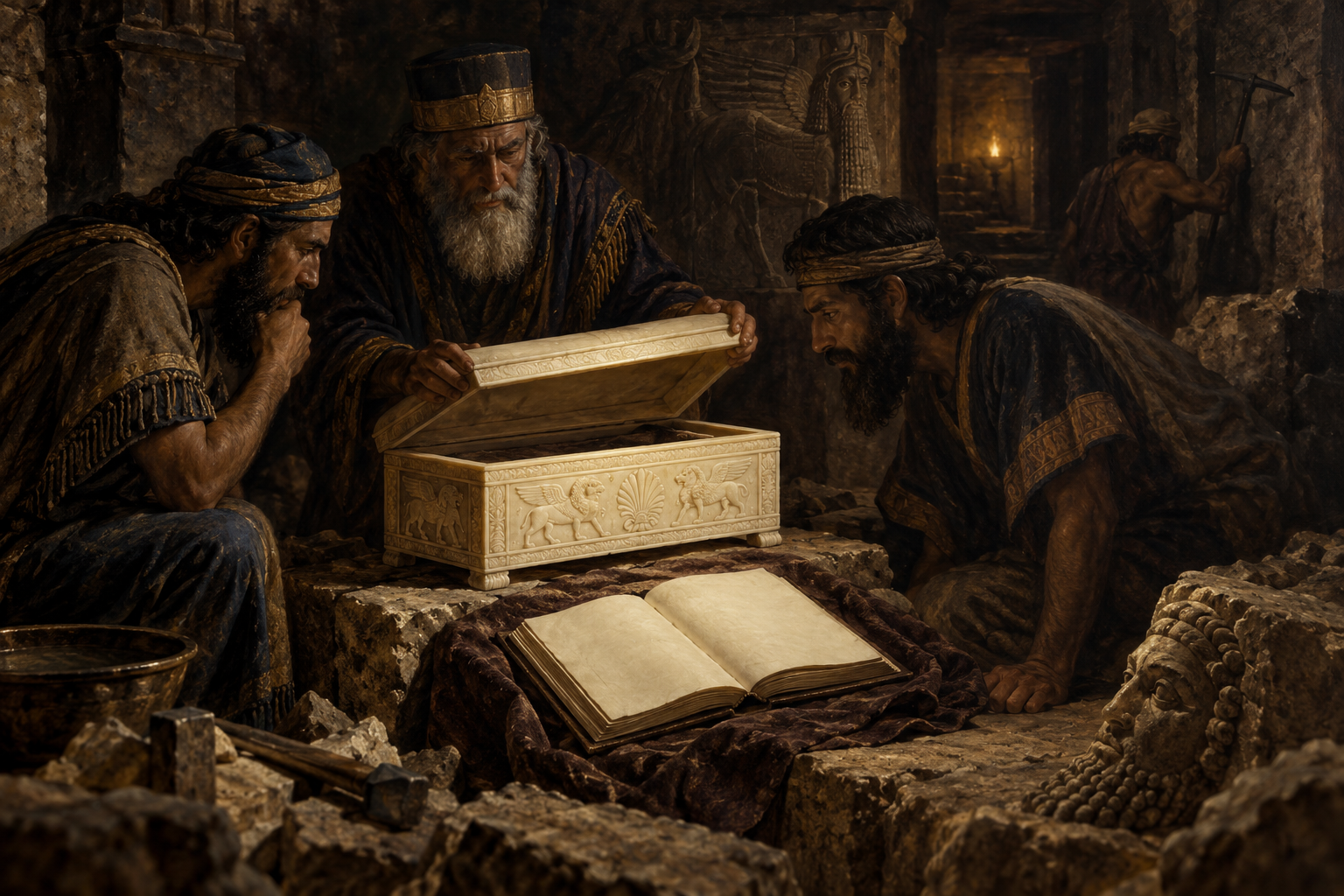
Babylonian philosophers find the Key in an ivory casket while repairing Solomon’s tomb. They possess the book, but cannot understand it until one of their company seeks divine help.
 Chapter
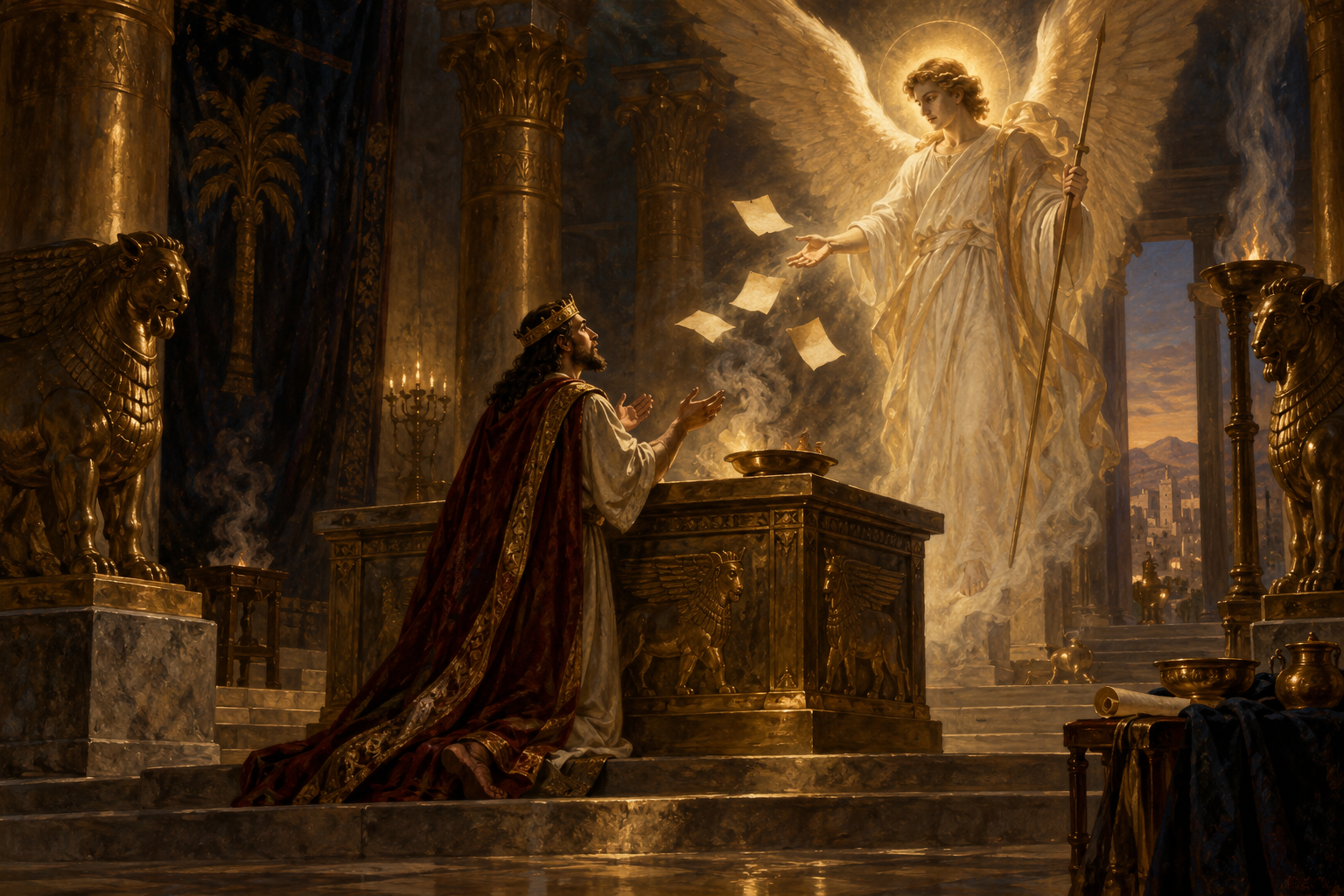
The Lemegeton introduces another account of Solomon’s learning: prayers at the Temple altar, Michael’s revelation and notes written by the divine hand or finger.
 Chapter
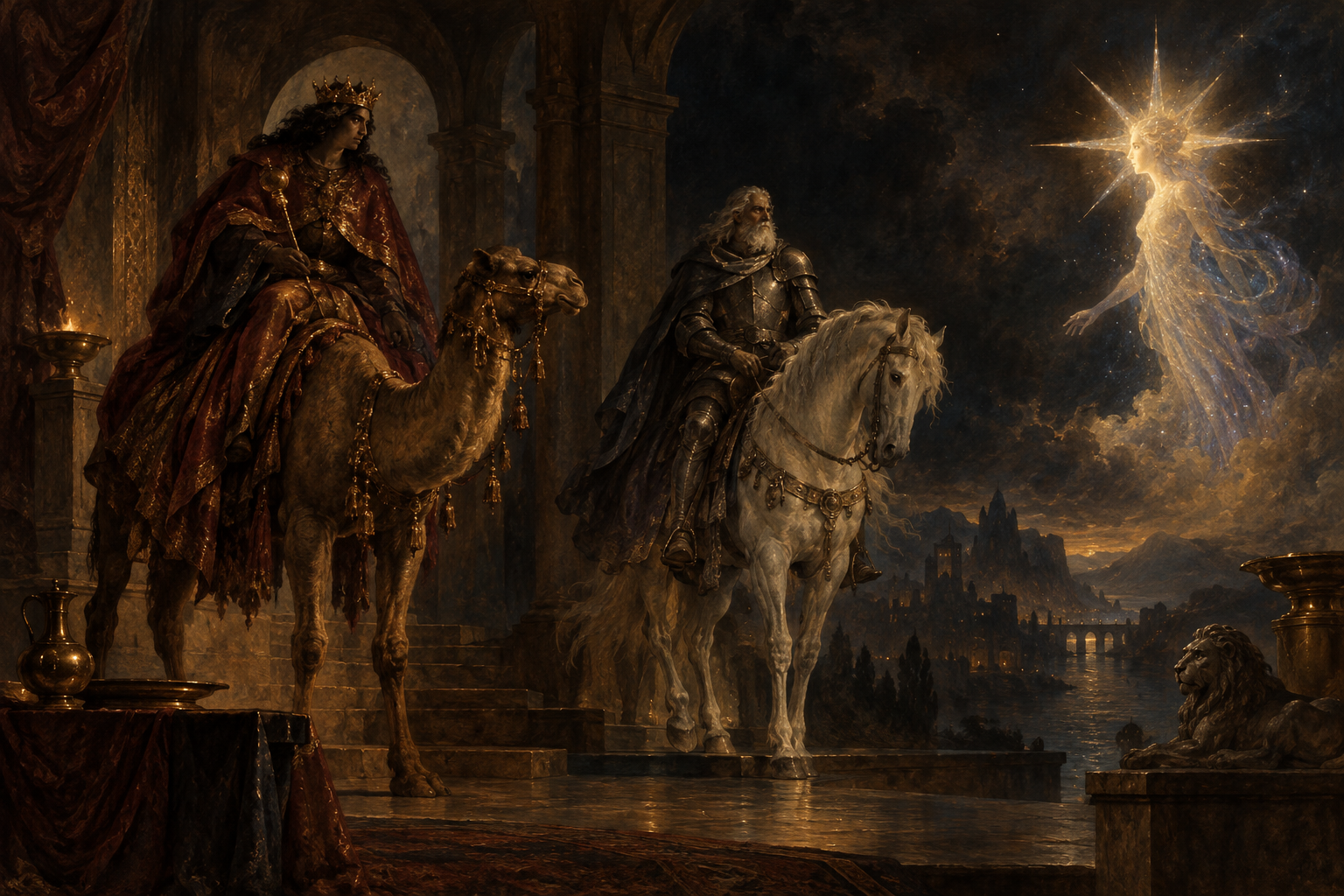
Crowned riders, changing beasts, teachers and treasure-finders fill the Goetia’s seventy-two notices. Their recorded forms, offices and companies of spirits differ from one name to the next.
 Chapter
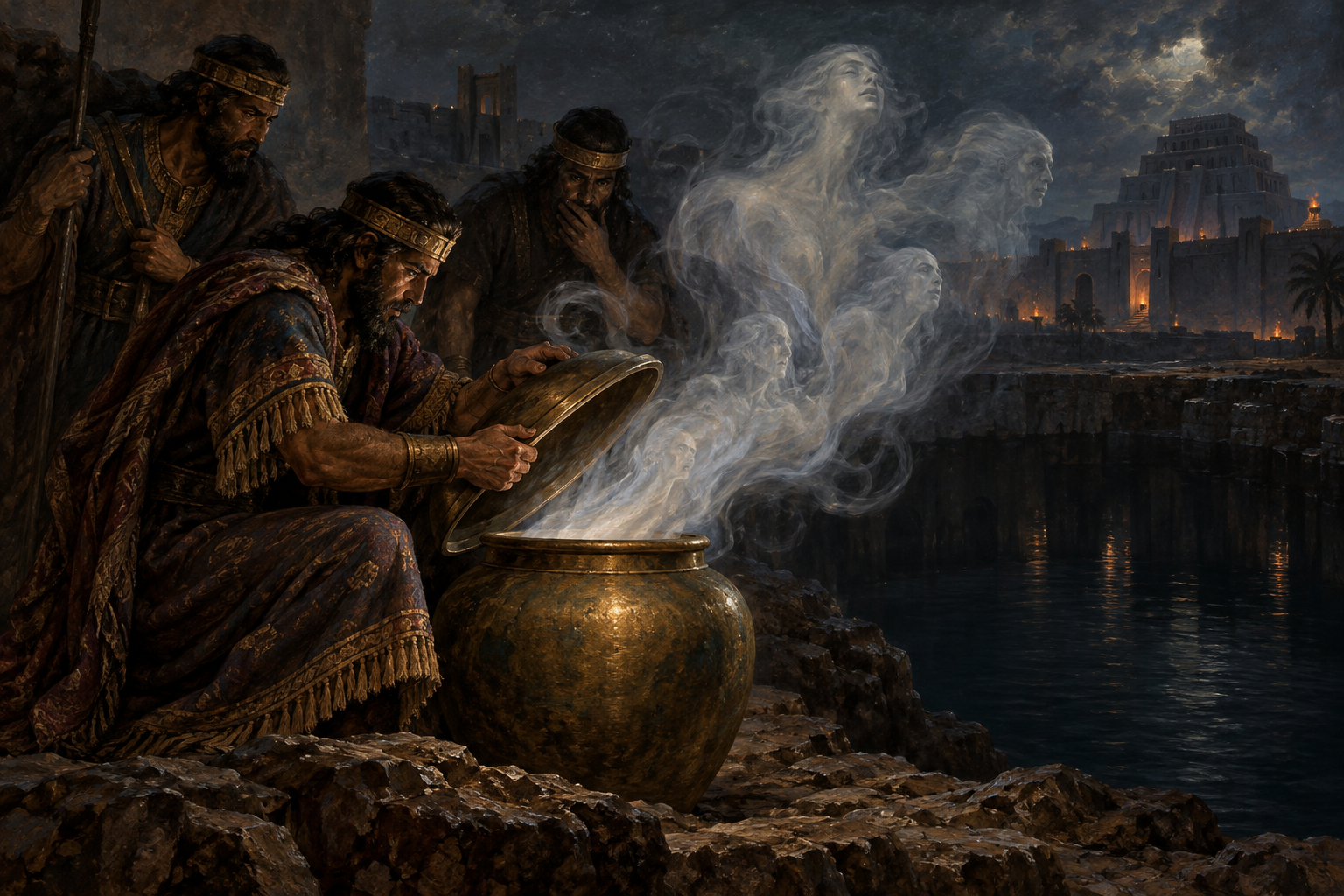
The people of Babylon opened a brass vessel expecting treasure. Inside were the seventy-two spirits and their legions, bound there by Solomon.
 Chapter
Solomon’s name travelled with books, languages and figures. Later manuscripts and printed editions preserved different accounts of his teaching, while translators and editors worked through uncertain names, words and drawings.