Luminary Oddities · Natural history & art
Delias blanca
Delias blanca
Lepidoptera / Pieridae
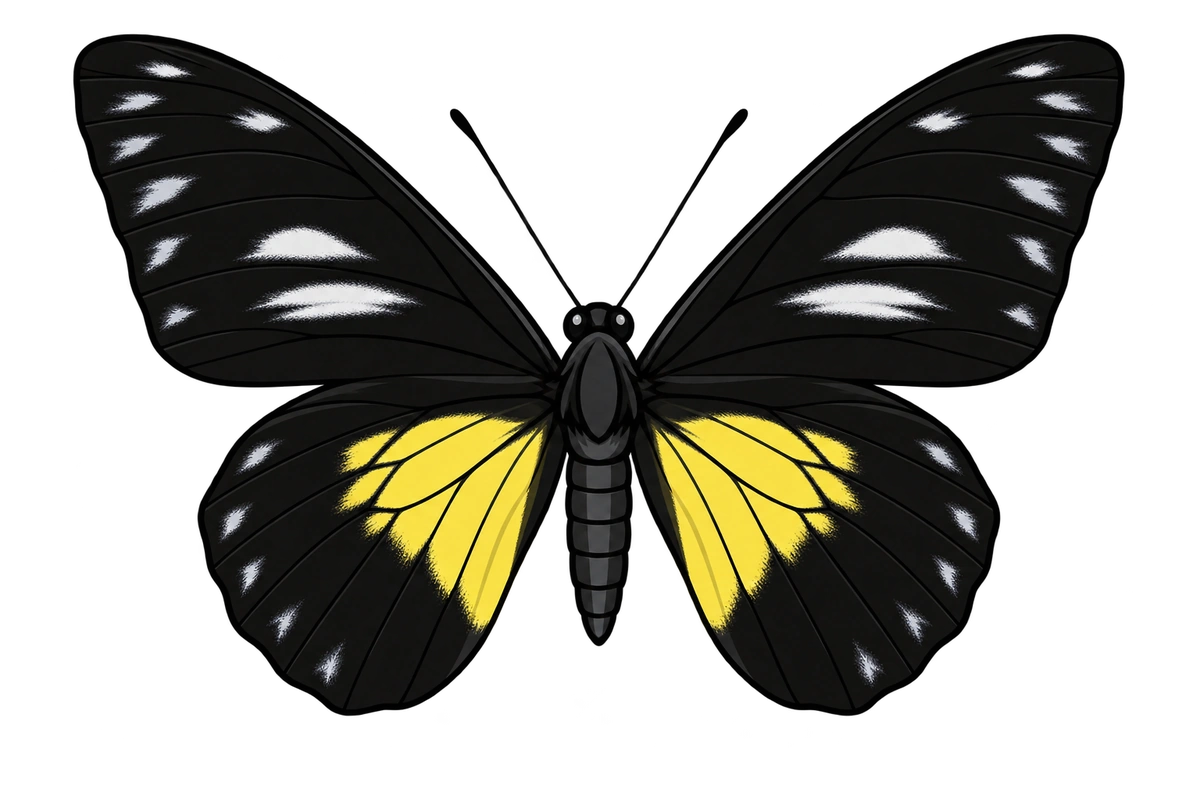
A Philippine and northern Bornean jezebel with pale forewing streaks and vein-divided lemon-yellow markings on the hindwings.
Read the species account
Loading this page…
Return homePlease wait while the next page arrives.


Luminary Oddities · Natural history & art
Delias blanca
Lepidoptera / Pieridae
A Philippine and northern Bornean jezebel with pale forewing streaks and vein-divided lemon-yellow markings on the hindwings.
Read the species accountIn the male, pale forewing streaks and spots contrast with a blackish-brown ground, with bluish-grey scaling over the white areas. Two elongated pale spots lie near the apex. The hindwing has lemon-yellow markings divided by dark veins and a row of rounded grey-white spots near the margin. [2]
Below, the forewing is whiter near its base and bears two short streaks inside the central cell. The hindwing’s outer pale spots are larger than those above. [2]
The nominate form occurs in northern Luzon. Other named populations include apameia on Mindanao, capcoi on Negros, uichancoi on Bohol and nausicaa in northern Borneo. [2]
C. and R. Felder described blanca in 1862. The names apameia, capcoi and uichancoi distinguish Philippine island populations in the specialist treatment. [2]
The illustrations emphasize the boundaries between pale wing fields and dark venation.
Keep the enclosure away from direct sunlight, dampness and large changes in temperature or humidity. Handle the frame, clean only its exterior, and inspect for loose fragments, moisture and pests. Retain the specimen’s original labels and follow the enclosure maker’s care instructions. [4]
University of Florida Lepiverse; Catalogue of Life 2026-08-26 XR · Accessed 2026-10-09
Delias of the World; international Delias specialists · Accessed 2026-10-09
Müller, Matos-Maraví and Beheregaray; Journal of Biogeography (2012) · Accessed 2026-10-09
Canadian Conservation Institute; Fiona Graham · Accessed 2026-10-09
Sources checked 2026-10-09. Illustrations · Luminary Oddities.
Return to the Entomological Atlas ↑