Luminary Oddities · Natural history & art
Delias berinda
Delias berinda
Lepidoptera / Pieridae
A Himalayan and mainland Asian jezebel with geographically variable markings, closely resembling Delias sanaca.
Read the species account
Loading this page…
Return homePlease wait while the next page arrives.


Luminary Oddities · Natural history & art
Delias berinda
Lepidoptera / Pieridae
A Himalayan and mainland Asian jezebel with geographically variable markings, closely resembling Delias sanaca.
Read the species accountMale berinda and sanaca can have closely similar wing patterns. Taxonomic comparison also uses the uncus, a structure of the male genitalia. [2]
A 2021 comparison illustrated Chinese berinda adelma females with a more rounded lamella postvaginalis, a genital plate, than the triangular plate described for sanaca bidoupa. [4]
Geographic forms occur from Nepal, Sikkim and Assam through southeastern Tibet, Myanmar and southern China to northern Thailand, Laos and Vietnam. A dated Bhutan record is from Shingkhar on 21 May 2021. [2]
Moore described berinda in 1872. Named forms include boyleae from the western Himalaya and yedanula from mainland Southeast Asia. In the historical form amarantha, brick-red markings replace the usual yellow. [2]
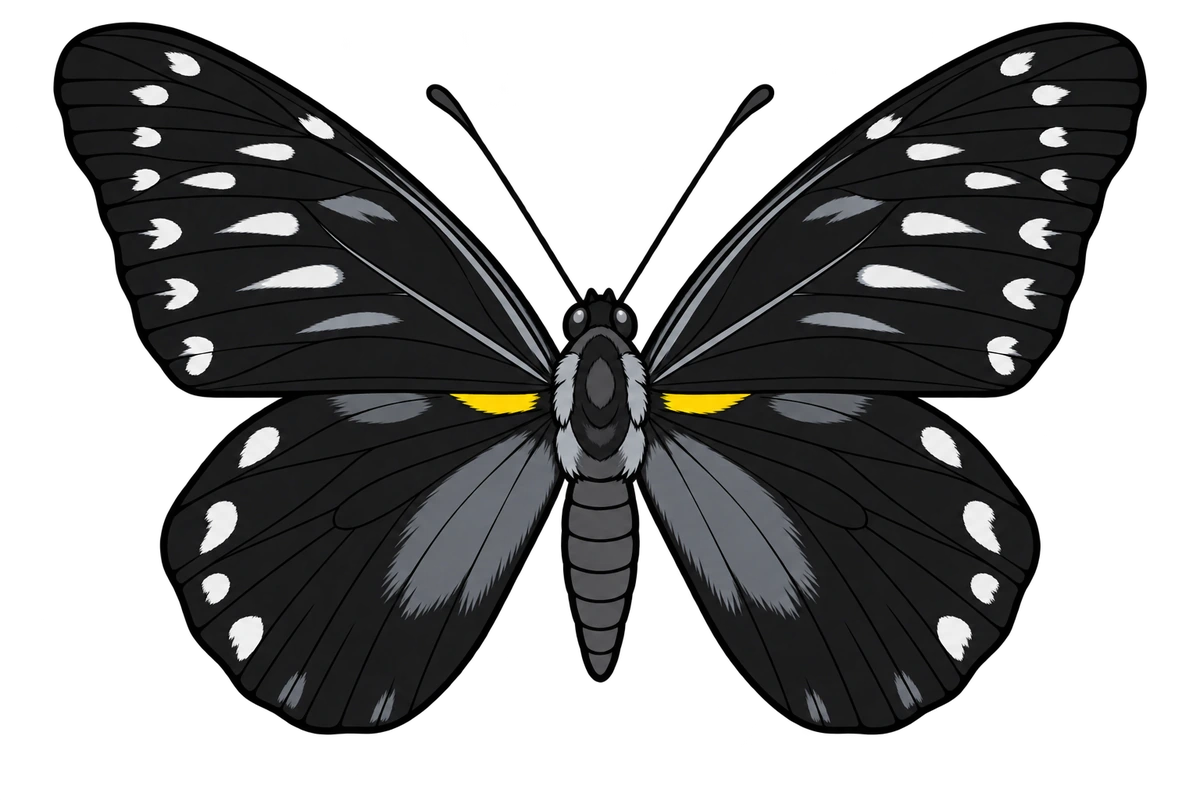
The illustrations depict external adult characters. The genital structures used in some taxonomic comparisons are not visible in these views.
Keep the enclosure away from direct sunlight, dampness and large changes in temperature or humidity. Handle the frame, clean only its exterior, and inspect for loose fragments, moisture and pests. Retain the specimen’s original labels and follow the enclosure maker’s care instructions. [3]
University of Florida Lepiverse; Catalogue of Life 2026-08-26 XR · Accessed 2026-10-09
Delias of the World; international Delias specialists · Accessed 2026-10-09
Canadian Conservation Institute; Fiona Graham · Accessed 2026-10-09
Alexander L. Monastyrskii and Vu Van Lien; Zootaxa 5048(4): 486–510 (2021) · Accessed 2026-10-11
Sources checked 2026-10-11. Illustrations · Luminary Oddities.
Return to the Entomological Atlas ↑