

The Riparian Twig
Peachleaf Willow
Salix amygdaloides
Loading this page…
Return homePlease wait while the next page arrives.
An airy, narrow-leaved willow for an outdoor growing cycle. Start cuttings in protected conditions, then give rooted plants sunlight and reliably moist roots.
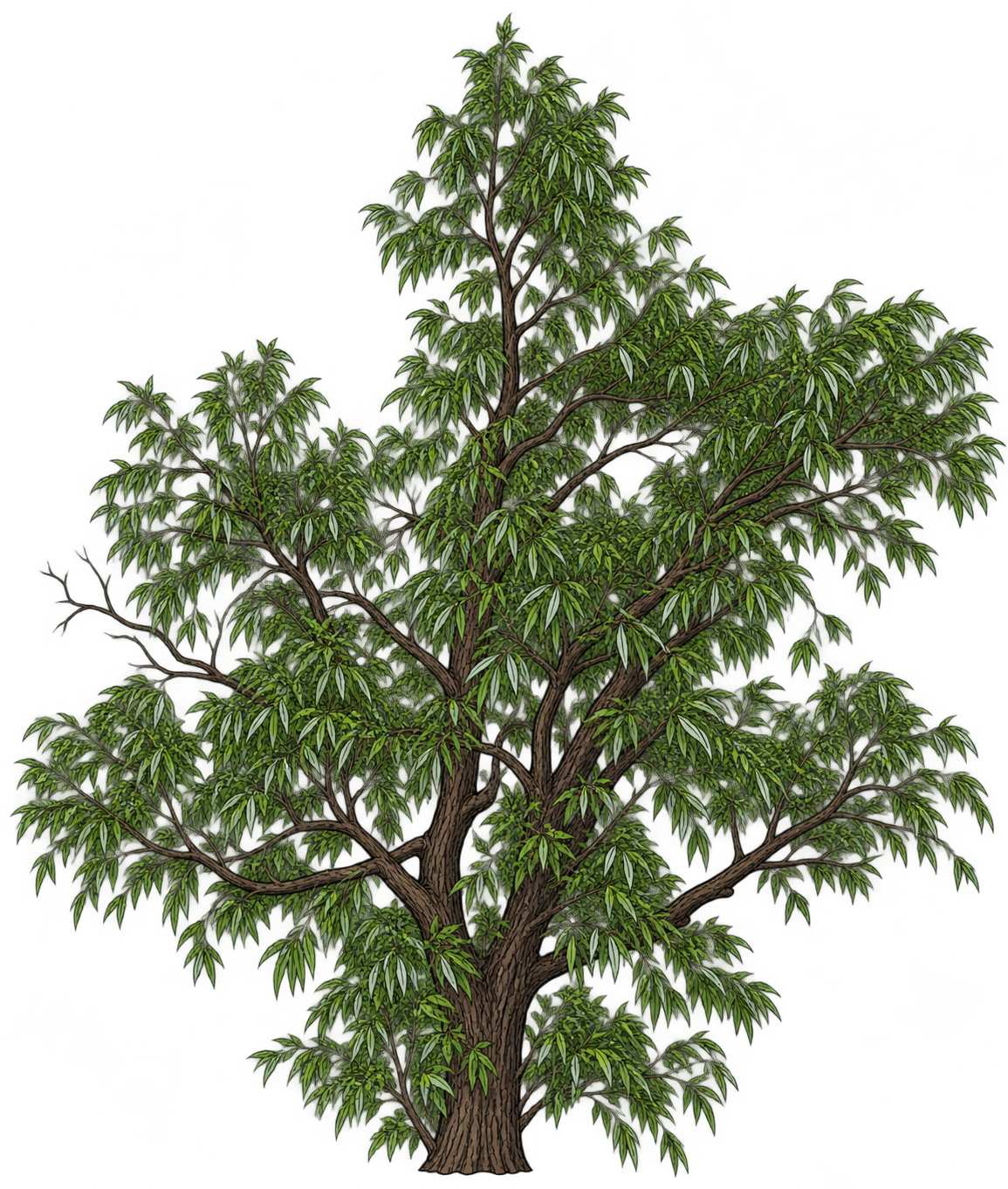
Source photograph · Mila’s Exotic Plants and Curiosities / Luminary Oddities; photographer not separately credited
Reference photograph from the owner’s shop listing; no public open license is stated.
Peachleaf willow is a deciduous North American tree of stream margins and other moist ground. Its narrow leaves have a paler underside, and its seasonal leaf fall is part of an outdoor tree cycle. [1]
Maintain moisture through establishment. Peachleaf seedlings and newly forming roots are vulnerable when their rooting zone dries; a riparian origin makes regular moisture checks especially important. [2]
Feel below the surface and water slowly across the mix. Brief rain may miss sheltered pots; stop once water reaches the drainage holes. [7]
Use a draining pot that fits the roots and a moisture-retentive, loam-based container mix. Choose a stable base; progressively enlarge the pot as roots fill it. [3]
Keep this deciduous tree outdoors through its growing season. For overwintering, protect the pot: roots above ground face more severe cold than roots insulated by garden soil. [8]
Do not fertilize an unrooted cutting or use feed to treat wilt. Newly planted landscape trees usually need careful watering rather than fertilizer; use a soil test before correcting a suspected deficiency. [9]
For established container growth, follow a complete container-feed label and account for fertilizer already in fresh mix. Pause routine feeding during dormancy. [10]
For dormant hardwood cuttings, select healthy woody growth after leaf fall. Keep track of the basal end, insert it downward in deep, draining rooting medium, and leave a few buds above the surface. [12]
Peachleaf can regenerate from stem pieces, but shoot growth alone does not establish a successful root system. Allow roots to develop before lifting or transferring a cutting. [2]
For fresh leafy tips, remove lower leaves and place the stem base in moist cutting mix. Maintain humid air with a ventilated cover; remove decaying material promptly. [6]
Begin with dead, damaged or rubbing twigs. Use sharp tools, preserve the branch collar and shape gradually. Large limbs and work overhead belong with a qualified arborist. [13]
A bonsai starter still needs an outdoor deciduous cycle. Establish vigorous roots before advanced root pruning or wiring; a small nursery pot alone does not create a finished bonsai. [13]
Wilt with dry mix: rewet the root ball and reduce drying wind while it recovers. Wilt with sodden mix: check blocked drainage and compacted medium before adding more water. [10]
Sticky growth or distorted young leaves: inspect stems for aphids. Rust-colored spots or galls need closer identification; photograph affected and healthy leaves before seeking local extension advice. [14]
Increase moisture checks as spring foliage expands, and inspect containers frequently during summer heat. In autumn, let leaves fall naturally as the tree rests. [14][7]
After dormancy, heel the pot into suitable garden soil or use a protected cold space suited to your climate. Check thawed mix for dryness; avoid moving it into a warm living room. [8]
USDA NRCS
Accessed October 5, 2026 · Updated: 2006-08-16
USDA Forest Service
Accessed October 5, 2026 · Publisher date: 2012
Royal Horticultural Society
Accessed October 5, 2026
Children’s Hospital of Philadelphia
Accessed October 5, 2026 · Publisher date: 2019-07-08
Pet Poison Helpline
Accessed October 5, 2026
Royal Horticultural Society
Accessed October 5, 2026
Royal Horticultural Society
Accessed October 5, 2026
Iowa State University Extension
Accessed October 5, 2026 · Updated: Reviewed February 2025
University of Maryland Extension
Accessed October 5, 2026 · Updated: 2023-02-17
Royal Horticultural Society
Accessed October 5, 2026
Royal Horticultural Society
Accessed October 5, 2026
Royal Horticultural Society
Accessed October 5, 2026
Royal Horticultural Society
Accessed October 5, 2026
NC State Extension
Accessed October 5, 2026
National Capital Poison Center
Accessed October 5, 2026
ASPCA Poison Control
Accessed October 5, 2026
NC State Extension
Accessed October 5, 2026