The Silver Interior
Silver Bay Aglaonema
Aglaonema - sold as Silver Bay
Loading this page…
Return homePlease wait while the next page arrives.


The Silver Interior
Aglaonema - sold as Silver Bay
Broad silvery-gray centers and green margins give the named Silver Bay hybrid its quiet contrast. Grow it in indirect light and let the potting mix dry slightly between waterings.
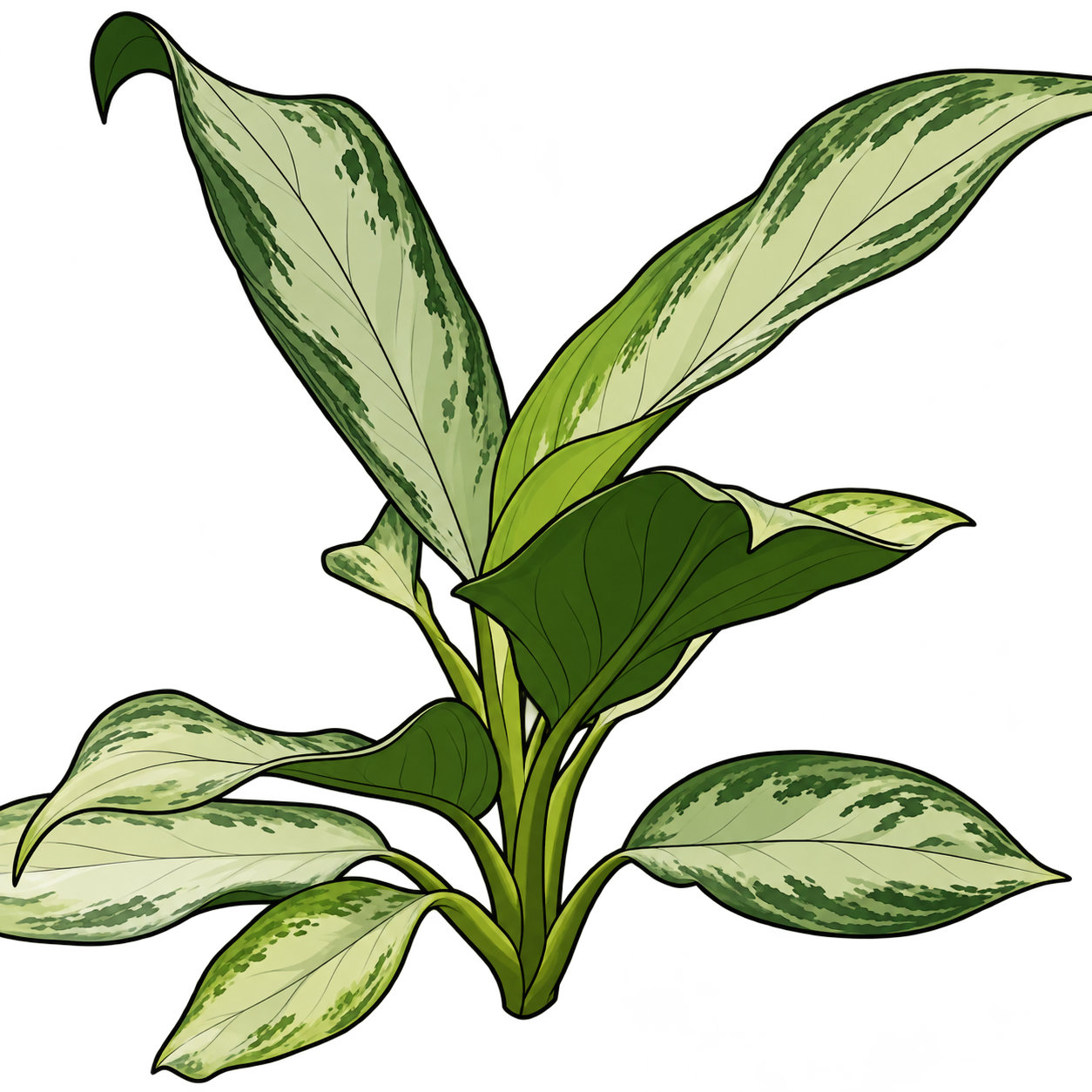
Source photograph · Mila’s Exotic Plants — owner listing image; individual photographer not reported
Reference photograph from the owner’s shop listing; no public open license is stated.
Provide indirect light, sheltered from scorching sun. Green and silver aglaonemas can grow in lower-light rooms. [12]
During active growth, use a houseplant fertilizer according to its label. Pause feeding when growth rests. [8]
Use fresh medium, keep the plant at its existing depth and water it in. Let excess drain. [2]
Remove dead or yellowing leaves. Wipe dusty foliage with a soft, damp cloth. [13]
Check moisture first. [3]
Review light exposure. [3]
Reduce watering frequency in winter, while continuing to check the mix. Aglaonemas require no winter dormancy. [14]
Aglaonemas are toxic to cats and dogs. Chewing can cause mouth irritation, drooling or vomiting. Keep plants, fallen leaves and cuttings away from pets that chew them. [16]
Take a pet with trouble breathing or swallowing directly to a veterinary hospital. [16]
Aglaonema is harmful if eaten; its sap can irritate skin and eyes. [17]
Wear gloves when cutting, and keep sap away from skin and eyes. [17]
For suspected poisoning or signs of illness, contact your veterinarian or ASPCA Poison Control at 888-426-4435. Provide the botanical name. [5]
Keep plants, cuttings and loose potting material beyond young children's reach. Keep the botanical name with the pot. [6]
For human plant ingestion in the United States, call Poison Control at 1-800-222-1222. Elsewhere, contact your local poison service. Call emergency services for breathing difficulty, seizures, collapse or inability to awaken.
University of Maryland Extension
Accessed October 5, 2026 · Updated: 2023-03-10
University of Illinois Extension
Accessed October 5, 2026
Iowa State University Extension and Outreach
Accessed October 5, 2026 · Updated: Last reviewed January 2024
Iowa State University Extension and Outreach
Accessed October 5, 2026 · Updated: Last reviewed January 2024
ASPCA Poison Control
Accessed October 5, 2026
National Capital Poison Center
Inspect pest signs closely. [4]
Accessed October 5, 2026
National Capital Poison Center
Accessed October 5, 2026
Iowa State University Extension and Outreach
Accessed October 5, 2026 · Updated: Last reviewed October 2023
Iowa State University Extension and Outreach - Aaron Steil
Accessed October 5, 2026 · Updated: Last reviewed January 2025
Royal Botanic Gardens, Kew
Accessed October 5, 2026
American Society for Horticultural Science - R. J. Henny, R. T. Poole, C. A. Conover
Accessed October 5, 2026 · Publisher date: 1992-11-01
University of Florida IFAS Extension - Keighly Graves, Wendy Wilber, Tom Wichman, Claire Lewis, Gail Hansen, Ryan Klein
Accessed October 5, 2026 · Publisher date: October 1999 · Updated: Revised August 2018 and November 2025
University of Florida IFAS Extension - Jianjun Chen, Kelly C. Everitt
Accessed October 5, 2026 · Publisher date: July 2003 · Updated: Revised March 2015; reviewed July 2018; Reviewed: 10/2024
NC State Extension
Accessed October 5, 2026
University of Arkansas Cooperative Extension Service - Gerald Klingaman, Janet Carson
Accessed October 5, 2026
ASPCA Poison Control
Accessed October 5, 2026 · Publisher date: 2025-10-13
Royal Horticultural Society
Accessed October 5, 2026