The Crimson Contour
Siam Aurora Aglaonema
Aglaonema - sold as Siam Aurora
Loading this page…
Return homePlease wait while the next page arrives.


The Crimson Contour
Aglaonema - sold as Siam Aurora
Crimson accents trace the veins and edges of green Siam Aurora foliage. Choose bright indirect light for this colorful Chinese evergreen, with slight drying between waterings.
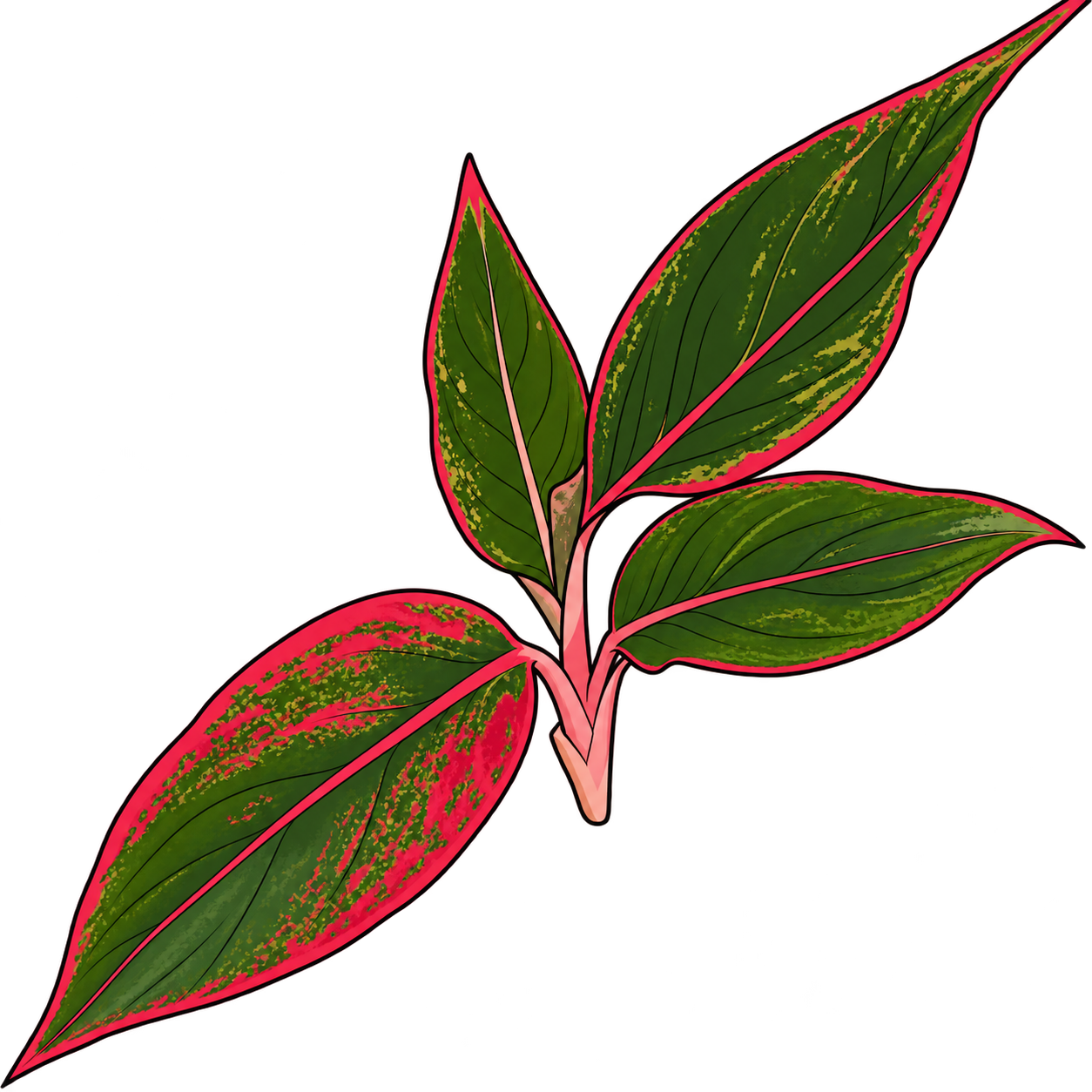
Source photograph · Mila’s Exotic Plants — owner listing image; individual photographer not reported
Reference photograph from the owner’s shop listing; no public open license is stated.
Provide bright indirect light, sheltered from scorching sun. Colorful aglaonemas benefit from this placement for their leaf color. [12]
During active growth, use a houseplant fertilizer according to its label. Pause feeding when growth rests. [8]
Use fresh medium, keep the plant at its existing depth and water it in. Let excess drain. [2]
Remove dead or yellowing leaves. Wipe dusty foliage with a soft, damp cloth. [13]
Check moisture first. [3]
Review light exposure. [3]
Reduce watering frequency in winter, while continuing to check the mix. Aglaonemas require no winter dormancy. [14]
Aglaonemas are toxic to cats and dogs. Chewing can cause mouth irritation, drooling or vomiting. Keep plants, fallen leaves and cuttings away from pets that chew them. [16]
Take a pet with trouble breathing or swallowing directly to a veterinary hospital. [16]
Aglaonema is harmful if eaten; its sap can irritate skin and eyes. [17]
Wear gloves when cutting, and keep sap away from skin and eyes. [17]
For suspected poisoning or signs of illness, contact your veterinarian or ASPCA Poison Control at 888-426-4435. Provide the botanical name. [5]
Keep plants, cuttings and loose potting material beyond young children's reach. Keep the botanical name with the pot. [6]
For human plant ingestion in the United States, call Poison Control at 1-800-222-1222. Elsewhere, contact your local poison service. Call emergency services for breathing difficulty, seizures, collapse or inability to awaken.
University of Maryland Extension
Accessed October 5, 2026 · Updated: 2023-03-10
University of Illinois Extension
Accessed October 5, 2026
Iowa State University Extension and Outreach
Accessed October 5, 2026 · Updated: Last reviewed January 2024
Iowa State University Extension and Outreach
Accessed October 5, 2026 · Updated: Last reviewed January 2024
ASPCA Poison Control
Accessed October 5, 2026
National Capital Poison Center
Inspect pest signs closely. [4]
Accessed October 5, 2026
National Capital Poison Center
Accessed October 5, 2026
Iowa State University Extension and Outreach
Accessed October 5, 2026 · Updated: Last reviewed October 2023
Iowa State University Extension and Outreach - Aaron Steil
Accessed October 5, 2026 · Updated: Last reviewed January 2025
Royal Botanic Gardens, Kew
Accessed October 5, 2026
American Society for Horticultural Science - R. J. Henny, R. T. Poole, C. A. Conover
Accessed October 5, 2026 · Publisher date: 1992-11-01
University of Florida IFAS Extension - Keighly Graves, Wendy Wilber, Tom Wichman, Claire Lewis, Gail Hansen, Ryan Klein
Accessed October 5, 2026 · Publisher date: October 1999 · Updated: Revised August 2018 and November 2025
University of Florida IFAS Extension - Jianjun Chen, Kelly C. Everitt
Accessed October 5, 2026 · Publisher date: July 2003 · Updated: Revised March 2015; reviewed July 2018; Reviewed: 10/2024
NC State Extension
Accessed October 5, 2026
University of Arkansas Cooperative Extension Service - Gerald Klingaman, Janet Carson
Accessed October 5, 2026
ASPCA Poison Control
Accessed October 5, 2026 · Publisher date: 2025-10-13
Royal Horticultural Society
Accessed October 5, 2026