The Canopy Orrery
Trinette Dwarf Umbrella Tree
Heptapleurum arboricola ‘Trinette’
Loading this page…
Return homePlease wait while the next page arrives.


The Canopy Orrery
Heptapleurum arboricola ‘Trinette’
Indoor care for Trinette Dwarf Umbrella Tree, from light and watering to propagation and safety.
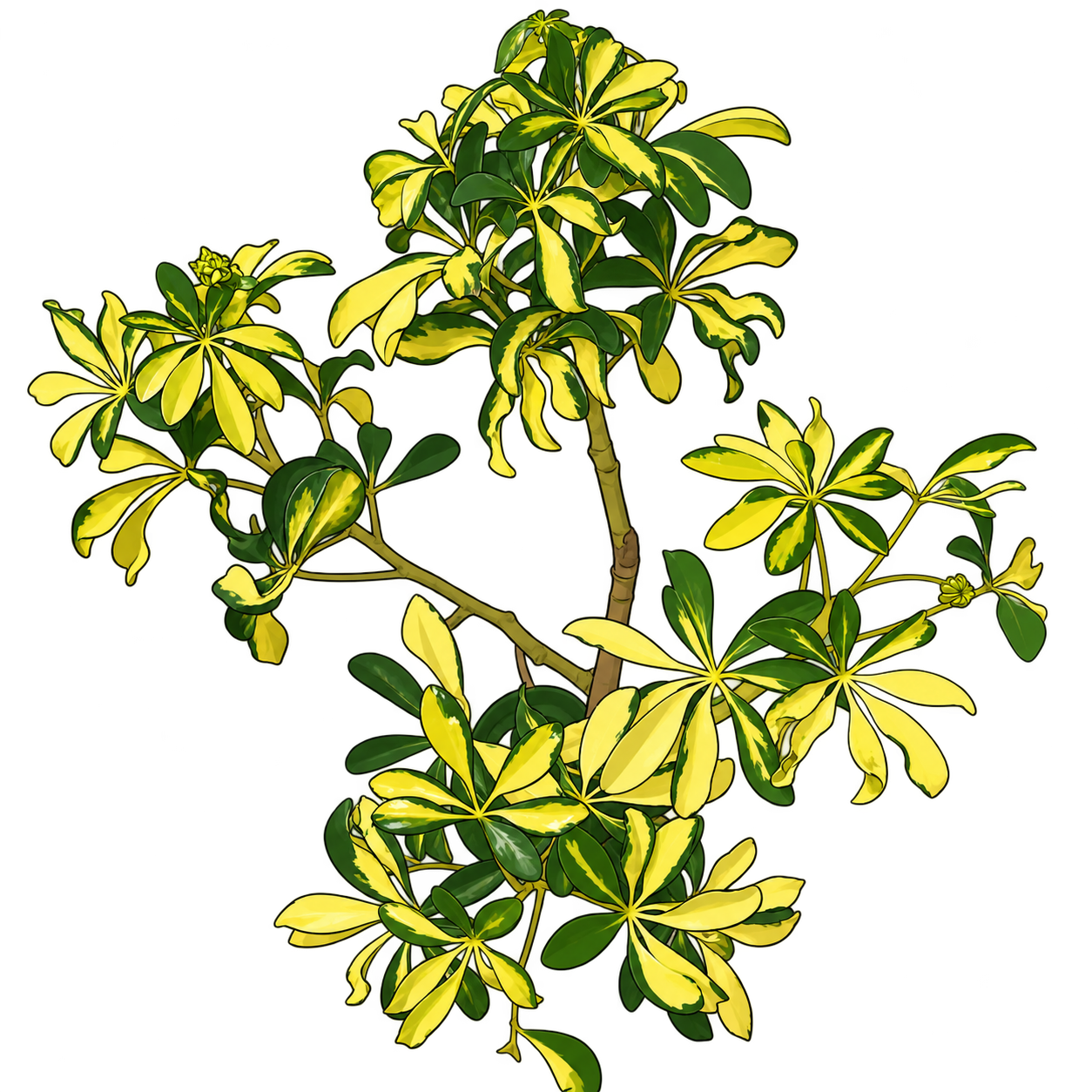
Source photograph · Mila’s Exotic Plants owner catalogue; individual photographer uncredited
Reference photograph from the owner’s shop listing; no public open license is stated.
Use bright filtered light indoors; curtain strong direct sun. Florida landscape sun tolerance is not an indoor placement prescription. [8]
Reassess the actual window each season, including buildings, blinds and trees. A grow light can supplement an inadequate site. Lower-light tolerance does not mean a plant can live indefinitely in a windowless dark room. [23]
Wipe dust gently with a damp cloth while supporting the leaf. Inspect both leaf surfaces and stem joints at the same time. [14][24]
When light strengthens, check for hotter sun on the leaves and faster drying. Adjust gradually; abruptly moving a shade-acclimated plant into strong sun can scorch it. [20]
Allow the upper layer of mix to dry, then water thoroughly and empty the saucer. Clemson’s general schefflera guide uses about 1.3 cm (½ in); still check deeper moisture and avoid both waterlogging and prolonged drought. [5]
Check the mix with a finger and lift the pot before reaching for the watering can. Compare with the weight after the previous watering. [21]
In a deep pot, check below the dry surface with a wooden probe. If deeper mix is still damp, do not assume the whole root zone is dry. [22]
Water the mix slowly and evenly until excess emerges from the drainage holes. Let it finish draining, then empty the saucer or decorative cover pot. [21]
If water immediately runs down the sides of a shrunken, very dry rootball, apply it in several passes to re-wet the mix; do not leave the pot permanently soaking. [22]
Use well-drained organic houseplant mix in a pot with drainage. [8]
Aim for 18–24°C (65–75°F) days; keep nights above approximately 16°C (60°F), away from drafts. Cold-injury thresholds are not preferred growing temperatures. [5]
If the room is very dry, a humidifier can improve humidity more dependably than occasional misting. [14]
Check the conditions beside the plant, not only the room thermostat. Cold glass, an opening door or hot vent can create a harsher microclimate than the room average. [14]
Use label-directed houseplant feed during active growth; reduce feeding in lower light. [5]
Feed during observable active growth. Reduce or pause feeding when low light slows growth. Increasing concentration is not a treatment for poor roots, cold stress or faded variegation. [14]
First inspect: check whether roots densely fill the container and whether the mix is compacted or the plant dries unusually quickly. A root at one hole is a cue to inspect, not an automatic demand for a large new pot. [16]
Prepare the suitable mix, a clean draining pot only modestly larger, and a tray or covered work surface. Use the same pot size if the remaining healthy root system does not need extra space. [19]
After repotting, keep the plant in its suitable light and warmth. Check moisture anew; a fresh mix and different container can dry at a different rate. Watch continuing wilt or rapid leaf decline rather than assuming every symptom is harmless transplant shock. [21]
Start with healthy material, clean containers and sharp, clean tools. Use an airy rooting medium and bright indirect light; enclosed cuttings need ventilation. [15]
Take a healthy stem-tip section about 8–15 cm (3–6 in) long with at least two nodes. Remove the lower leaves and place a lower node in moist, airy rooting mix. Keep it warm in bright indirect light with ventilated humidity protection. Pot up after roots develop; timing varies. [6]
Pinch growing tips for branching; shorten stems just above a leaf to control size. Dwarf describes its relative size, not a promise that it stays tabletop-sized. [13][5]
On a healthy variegated shrub, a repeatedly all-green branch can be pruned back to patterned growth. Investigate plant stress first; neither pruning, stronger light nor extra fertilizer guarantees restored yellow patterning. [12]
Color patterns can vary between leaves. Greener shoots can outgrow variegated shoots; pale sectors contain less chlorophyll. This is a general variegation principle, not proof that every named cultivar behaves identically. [12]
Inspect for spider mites, scale and mealybugs, particularly around leaf undersides and stem joints. Use the pest-identification checks below. [8][24]
Photograph the whole plant and close-ups, and note recent changes in watering, light, fertilizer and temperature. Compare new growth and the rate of spread rather than diagnosing from one yellow leaf. [18]
As available light and growth decrease, reassess drying speed and feeding. A plant under strong grow lights may continue growing even when an untreated windowsill plant slows. [17][23]
When light strengthens, check for hotter sun on the leaves and faster drying. Adjust gradually; abruptly moving a shade-acclimated plant into strong sun can scorch it. [20]
Before moving an outdoor-summering plant back among indoor plants, inspect for pests. Keep an infested plant separate and resolve the infestation before rejoining the collection. [24]
Keep the plant, fallen leaves and cuttings away from children who may chew them. For a suspected human exposure in the U.S., contact Poison Control at 1-800-222-1222 or poison.org; outside the U.S., use the local poison service. [9]
For suspected pet ingestion, contact a veterinarian or ASPCA Poison Control at 888-426-4435 in the U.S.; a consultation fee may apply. Keep the plant name and photographs available. [3][1]
For an exposure, contact the appropriate poison service or veterinarian for advice specific to the person or pet.
Trinette belongs to the dwarf umbrella-tree species, H. arboricola. Green and variegated forms of the dwarf species share much care, while larger plants also sold as umbrella trees can belong to another species. [5]
ASPCA
Accessed October 3, 2026
ASPCA
Accessed October 3, 2026
ASPCA
Accessed October 3, 2026
Chicago Botanic Garden
Accessed October 3, 2026 · Publisher date: Archived before February 2022; no longer updated · Updated: Archived before February 2022; no longer updated
Clemson Cooperative Extension
Accessed October 3, 2026 · Publisher date: 2015-12-15 · Updated: 2015-12-15
Inspect leaf undersides, crevices and pot rims for insects, cottony deposits, webbing or sticky residue. If pests are found, separate the plant from the collection while identifying the problem. [24]
If roots are dark and soft or decline continues after basic care corrections, seek a plant diagnostic service or local Extension advice. Do not expect a fertilizer to restore rotten roots. [18]
Check the mix with a finger and lift the pot before reaching for the watering can. Compare with the weight after the previous watering. [21]
In a deep pot, check below the dry surface with a wooden probe. If deeper mix is still damp, do not assume the whole root zone is dry. [22]
Yellowing or wilting can follow either drought or excessive moisture. Before adding water, check the mix, drainage, light and roots. Persistently wet mix with dark, soft roots points toward root damage; firm, light-colored roots are healthier. [18]
Excess moisture limits root oxygen, so a wet plant can wilt as if thirsty. Empty trapped water and correct drainage rather than repeatedly watering a wilted plant. [22]
If roots are dark and soft or decline continues after basic care corrections, seek a plant diagnostic service or local Extension advice. Do not expect a fertilizer to restore rotten roots. [18]
Inspect leaf undersides, crevices and pot rims for insects, cottony deposits, webbing or sticky residue. If pests are found, separate the plant from the collection while identifying the problem. [24]
Small, accessible infestations may be reduced by gentle wiping or rinsing. Keep removed material away from other plants. If pests recur or are hard to identify, ask local Extension for an identification before selecting treatment. [24]
Avoid homemade detergent sprays and automatic pesticide mixtures. If a pesticide is needed, it must be labeled for the pest, plant and indoor use; follow its precautions. [24]
Reassess the actual window each season, including buildings, blinds and trees. A grow light can supplement an inadequate site. Lower-light tolerance does not mean a plant can live indefinitely in a windowless dark room. [23]
Check the conditions beside the plant, not only the room thermostat. Cold glass, an opening door or hot vent can create a harsher microclimate than the room average. [14]
As available light and growth decrease, reassess drying speed and feeding. A plant under strong grow lights may continue growing even when an untreated windowsill plant slows. [17][23]
Feed during observable active growth. Reduce or pause feeding when low light slows growth. Increasing concentration is not a treatment for poor roots, cold stress or faded variegation. [14]
If roots are dark and soft or decline continues after basic care corrections, seek a plant diagnostic service or local Extension advice. Do not expect a fertilizer to restore rotten roots. [18]
Pale, bleached patches that later turn brittle after stronger sun may be scorch. Move out of harsh exposure and adjust light gradually; a leaf symptom alone does not establish its cause. [20]
When light strengthens, check for hotter sun on the leaves and faster drying. Adjust gradually; abruptly moving a shade-acclimated plant into strong sun can scorch it. [20]
Photograph the whole plant and close-ups, and note recent changes in watering, light, fertilizer and temperature. Compare new growth and the rate of spread rather than diagnosing from one yellow leaf. [18]
Iowa State University Extension
Accessed October 3, 2026 · Publisher date: 2025-01 reviewed · Updated: 2025-01 reviewed
Royal Botanic Gardens, Kew
Accessed October 3, 2026
NC State Extension
Accessed October 3, 2026
National Capital Poison Center
Accessed October 3, 2026
Royal Horticultural Society
Accessed October 3, 2026
Royal Horticultural Society
Accessed October 3, 2026
Royal Horticultural Society
Accessed October 3, 2026
University of Florida IFAS Extension
Accessed October 3, 2026 · Publisher date: 2025-08-27 · Updated: 2025-08-27
University of Illinois Extension
Accessed October 3, 2026
University of Illinois Extension
Accessed October 3, 2026
University of Illinois Extension
Accessed October 3, 2026
University of Illinois Extension
Accessed October 3, 2026 · Publisher date: 2022-02-07 · Updated: 2022-02-07
University of Maryland Extension
Accessed October 3, 2026 · Publisher date: 2025-02-05 · Updated: 2025-02-05
University of Maryland Extension
Accessed October 3, 2026 · Publisher date: 2023-03-10 · Updated: 2023-03-10
University of Maryland Extension
Accessed October 3, 2026 · Publisher date: 2023-03-13 · Updated: 2023-03-13
University of Maryland Extension
Accessed October 3, 2026 · Publisher date: 2023-03-10 · Updated: 2023-03-10
University of Maryland Extension
Accessed October 3, 2026 · Publisher date: 2023-03-13 · Updated: 2023-03-13
University of Minnesota Extension
Accessed October 3, 2026
University of Minnesota Extension
Accessed October 3, 2026
University of Wisconsin–Madison Extension
Accessed October 3, 2026 · Publisher date: 2025 revision · Updated: 2025 revision