The Striped Crown
Tricolor Oyster Plant
Tradescantia spathacea - sold as Tricolor
Loading this page…
Return homePlease wait while the next page arrives.


The Striped Crown
Tradescantia spathacea - sold as Tricolor
The Tricolor reference form combines green, cream and pink upper foliage with purple reverses. Give this upright rosette the same bright filtered light and draining container care as the green oyster plant.
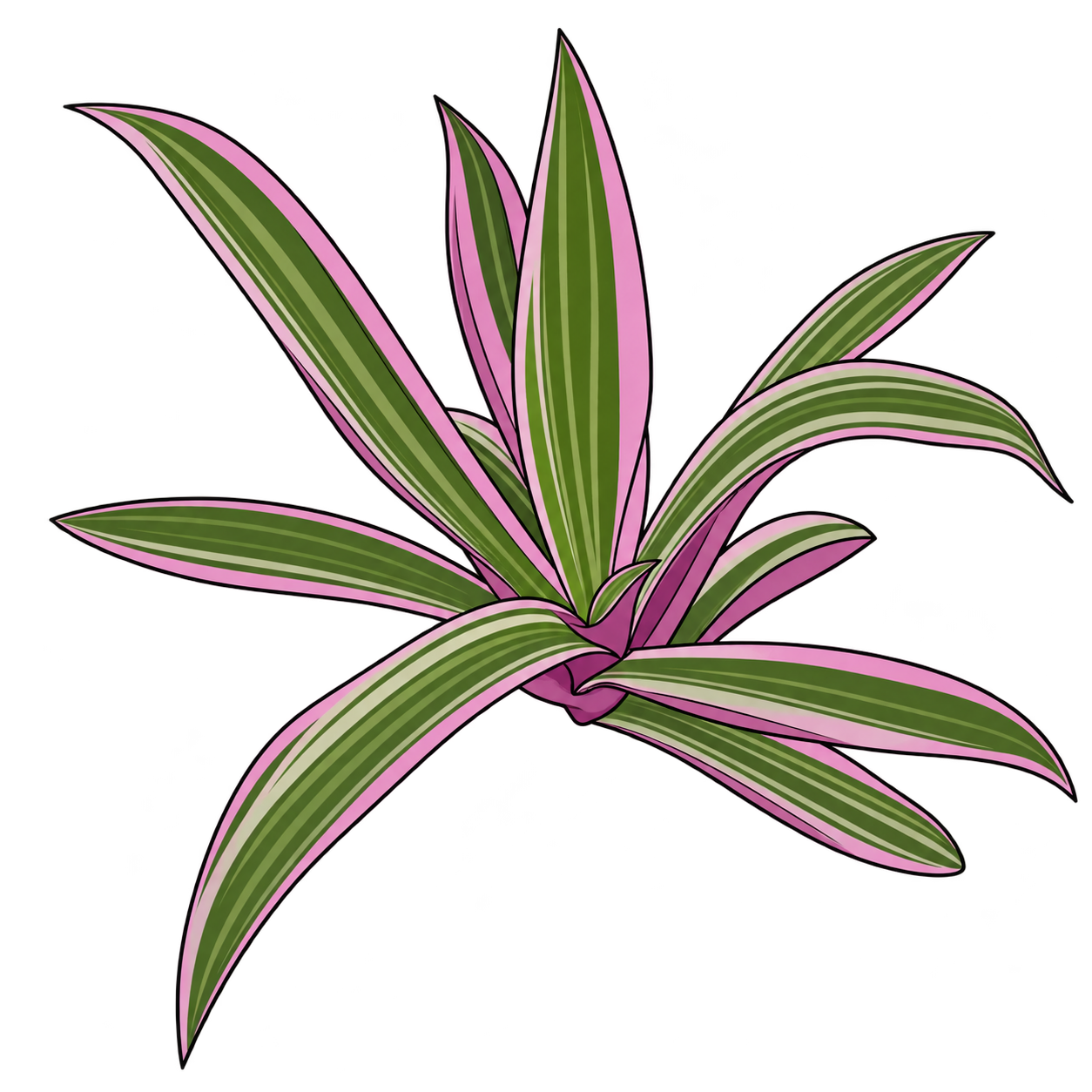
Source photograph · Mila’s Exotic Plants owner catalogue; individual photographer uncredited
Reference photograph from the owner’s shop listing; no public open license is stated.
Choose bright filtered light indoors. Protect the foliage from scorching direct sunshine. [11]
Use fresh medium, keep the plant at its existing depth and water it in. Let excess drain. [2]
An accessible stem tip offers another propagation method. [11]
Take a node-bearing stem tip and remove its lower leaves. Insert at least one node into moist rooting medium, keeping the remaining leaves above it. [16]
Keep the cutting warm in bright indirect light, with moist medium and humid air while roots develop. [16]
Remove stems after their flowers have faded. [11]
Check moisture first. [3]
Review light exposure. [3]
Reduce watering frequency in winter, while continuing to check the mix. [11]
NC State warns that eating oyster plant or contacting its sap can harm pets. [12]
Veterinary guidance lists Tradescantia species among causes of allergic contact dermatitis. Keep pets from chewing or rubbing against oyster plants. [17][12]
Keep plants, fallen leaves and cuttings away from pets that chew them. [12]
Eating oyster plant can irritate the mouth and throat. [12]
For suspected poisoning or signs of illness, contact your veterinarian or ASPCA Poison Control at 888-426-4435. Provide the botanical name.
University of Maryland Extension
Accessed October 5, 2026 · Updated: 2023-03-10
University of Illinois Extension
Accessed October 5, 2026
Iowa State University Extension and Outreach
Accessed October 5, 2026 · Updated: Last reviewed January 2024
Iowa State University Extension and Outreach
Accessed October 5, 2026 · Updated: Last reviewed January 2024
ASPCA Poison Control
Accessed October 5, 2026
National Capital Poison Center
Inspect pest signs closely. [4]
Keep plants, cuttings and loose potting material beyond young children's reach. Keep the botanical name with the pot. [6]
For human plant ingestion in the United States, call Poison Control at 1-800-222-1222. Elsewhere, contact your local poison service. Call emergency services for breathing difficulty, seizures, collapse or inability to awaken. [7]
Accessed October 5, 2026
National Capital Poison Center
Accessed October 5, 2026
Iowa State University Extension and Outreach
Accessed October 5, 2026 · Updated: Last reviewed October 2023
Iowa State University Extension and Outreach - Aaron Steil
Accessed October 5, 2026 · Updated: Last reviewed January 2025
Royal Botanic Gardens, Kew
Accessed October 5, 2026
Royal Horticultural Society
Accessed October 5, 2026
NC State Extension
Accessed October 5, 2026
National Parks Board, Singapore
Accessed October 5, 2026 · Updated: 2022-10-02
Mazhar Botanic Garden
Accessed October 5, 2026
Meise Botanic Garden and Royal Botanical Society of Belgium - Plant Ecology and Evolution 159(2):208-227
Accessed October 5, 2026 · Publisher date: 2026-04-16
Iowa State University Extension and Outreach - Aaron Steil
Accessed October 5, 2026 · Updated: Last reviewed January 2025
Melbourne Veterinary Specialist Centre - Animal Referral and Emergency Network
Accessed October 5, 2026