The Scattered Rose
Pink Splash Syngonium
Syngonium podophyllum - sold as Pink Splash
Loading this page…
Return homePlease wait while the next page arrives.


The Scattered Rose
Syngonium podophyllum - sold as Pink Splash
A practical guide to Pink Splash grown in potting mix: filtered indoor light, a draining container and room to trail or climb.
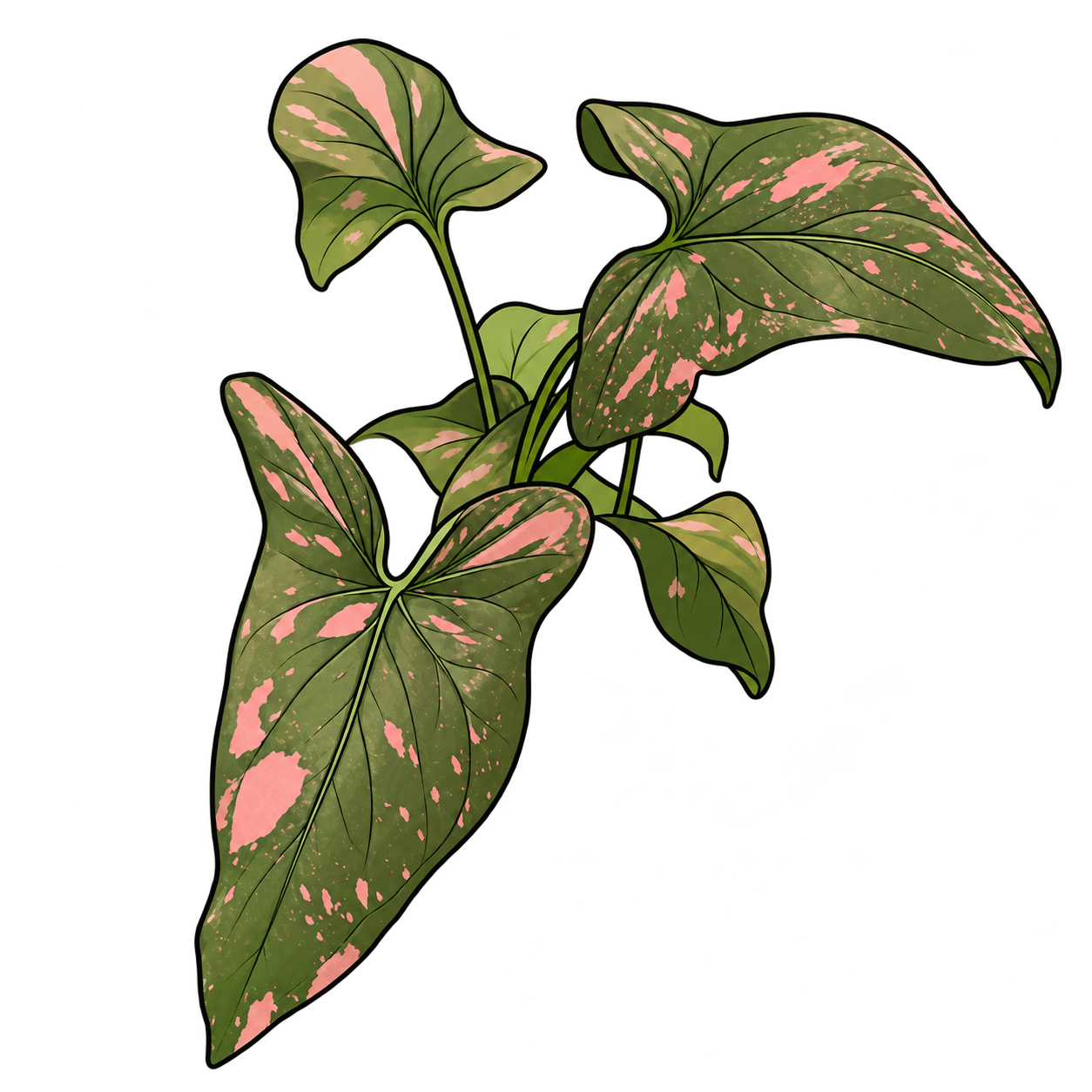
Source photograph · Mila’s Exotic Plants — owner listing image; individual photographer not reported
Reference photograph from the owner’s shop listing; no public open license is stated.
Syngonium podophyllum is an evergreen arrowhead vine in the Araceae family. Young arrow-shaped leaves can become divided as the plant matures. [9][10]
Mila's catalogue names this plant Syngonium podophyllum Pink Splash. [16]
Mila's exact-specimen Pink Splash description includes speckling, fine streaks and broader blush markings. [17]
The original Confetti breeder record describes its separate Pink Splash reference with green leaves and randomly scattered pink markings. [18]
During active growth, use a balanced liquid houseplant fertilizer according to its label. Avoid feeding a resting plant. [15]
Use fresh medium, keep the plant at its existing depth and water it in. Let excess drain. [2]
During active growth, use clean, sharp pruners to take a three- to four-inch stem tip. Cut below a node and remove lower leaves, leaving two nodes for insertion into rooting mix. [12]
Insert the exposed nodes into moist rooting medium. Keep the cutting warm, shaded and humid while roots develop. [12]
Check moisture first. [3]
Review the light exposure. [10]
Reduce watering as winter growth slows; continue checking the mix. [15]
Pink Splash Syngonium is toxic to cats and dogs. Chewing can cause oral irritation. Keep plants, fallen leaves and cuttings away from pets that chew them. [13]
Chewing Syngonium can irritate the mouth and throat. Seek urgent medical care for lip or tongue swelling or difficulty breathing or swallowing. [14]
For suspected poisoning or signs of illness, contact your veterinarian or ASPCA Poison Control at 888-426-4435. Provide the botanical name. [5]
Keep plants, cuttings and loose potting material beyond young children’s reach. Keep the botanical name with the pot. [6]
University of Maryland Extension
Accessed October 5, 2026 · Updated: 2023-03-10
University of Illinois Extension
Accessed October 5, 2026
Iowa State University Extension and Outreach
Accessed October 5, 2026 · Updated: Last reviewed January 2024
Iowa State University Extension and Outreach
Accessed October 5, 2026 · Updated: Last reviewed January 2024
ASPCA Poison Control
Accessed October 5, 2026
National Capital Poison Center
Inspect pest signs closely. [4]
Accessed October 5, 2026
National Capital Poison Center
Accessed October 5, 2026
Iowa State University Extension and Outreach
Accessed October 5, 2026 · Updated: Last reviewed October 2023
Royal Botanic Gardens, Kew
Accessed October 5, 2026
NC State Extension
Accessed October 5, 2026
UF/IFAS Extension - Jianjun Chen, Dennis B. McConnell, Kelly C. Everitt
Accessed October 5, 2026 · Publisher date: November 2004 · Updated: Revised June 2014
University of Nevada, Reno Extension - M. L. Robinson and A. Roberts
Accessed October 5, 2026 · Publisher date: 1998
ASPCA Poison Control
Accessed October 5, 2026
Queensland Poisons Information Centre
Accessed October 5, 2026 · Updated: July 2023
Royal Horticultural Society
Accessed October 5, 2026
Mila's Exotic Plants
Accessed October 5, 2026
Mila's Exotic Plants
Accessed October 5, 2026
Randall E. Strode / Agri-Starts (published patent)
Accessed October 5, 2026 · Publisher date: 2007-09-11
Gabriella Plants
Accessed October 5, 2026