The Ivory Fringe
White-Edged Spider Plant
Chlorophytum comosum, white-edged form
Loading this page…
Return homePlease wait while the next page arrives.


The Ivory Fringe
Chlorophytum comosum, white-edged form
Ivory edges trace a fountain of green leaves. Give this arching spider plant bright indirect light, a draining pot and a thorough drink as the mix begins to dry.
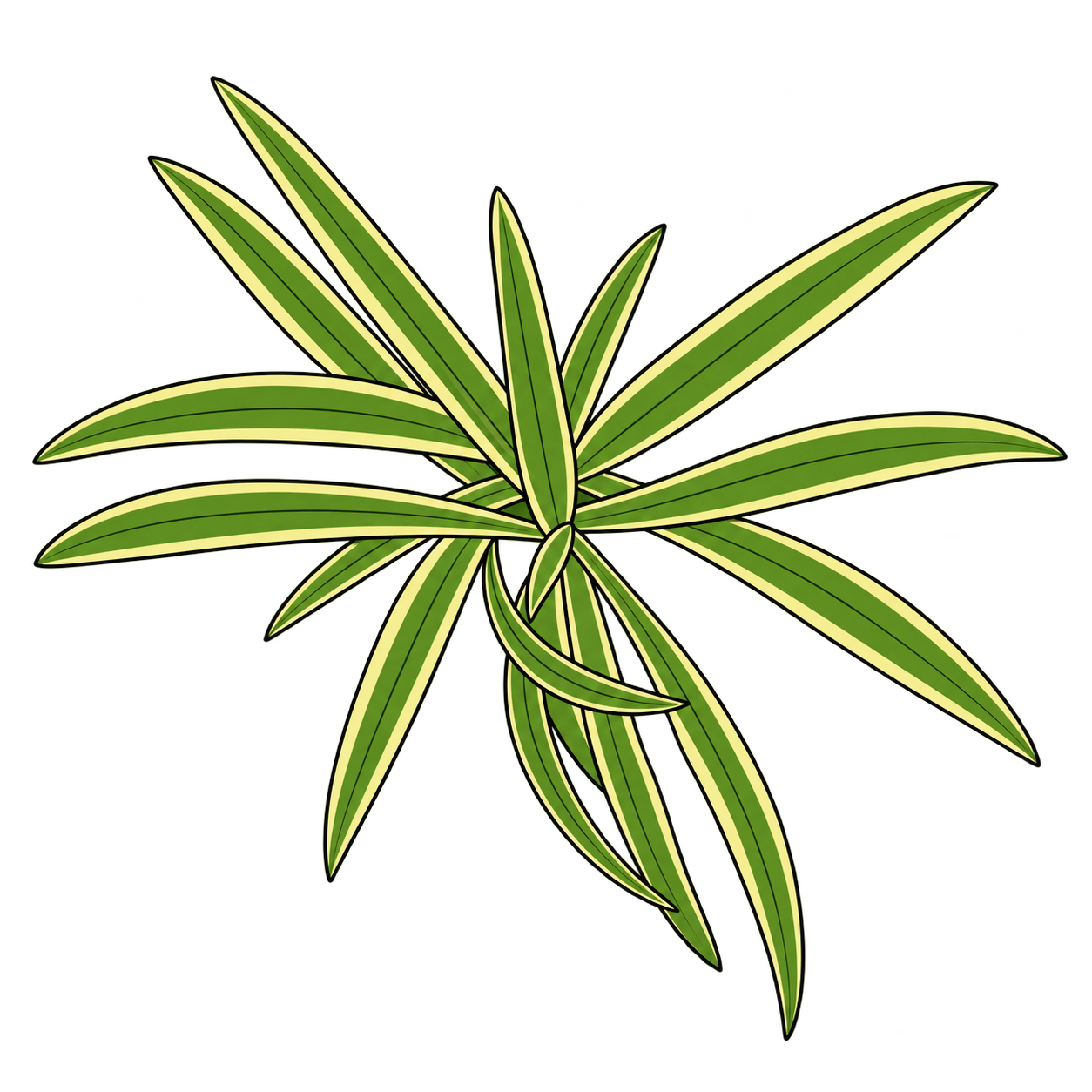
Source photograph · Mila’s Exotic Plants owner catalogue; individual photographer uncredited
Reference photograph from the owner’s shop listing; no public open license is stated.
Bright indirect light supports growth and striped foliage. Protect the leaves from strong direct sun, which can scorch or discolour them. In lower light, growth slows and the variegated display may become less distinct. [3]
Let the mix dry slightly between thorough waterings. Feel the surface and check the moisture beneath it before adding more water. A pot that remains wet needs more time; a plant in a warm, bright position may use water more quickly. [5][3]
Water the potting mix evenly, let excess water leave through the drainage holes and empty the saucer or outer pot. Keep the root zone lightly moist through active growth, with a little drying between drinks rather than prolonged soaking. [3][5]
If brown tips keep returning, review water quality along with watering consistency, humidity and feeding. Spider plants can be sensitive to fluoride and other dissolved constituents. Distilled water or suitable collected rainwater offers an alternative when the water source is contributing to tip damage. [5][6]
Use a general-purpose houseplant potting medium that drains freely. A peat-free multipurpose or houseplant compost is a suitable option. Choose a container with drainage holes and treat a decorative outer pot as a cover that must be emptied after watering. [3][5]
Spider plants have fleshy roots that fill their container as the clump grows. Select a pot that suits those roots, then check crowding as the plant develops. A slightly larger container gives a crowded root system fresh growing space. [3]
Inspect the roots when the plant becomes crowded or loses vigour. Dense fleshy roots filling the container are a useful reason to refresh the mix and move up to a slightly larger pot. An oversized mature clump can also be divided. [3]
Place a small pot of moist potting medium beside the parent. Rest the plantlet on the surface so its base touches the mix, and secure it gently with a bent wire or clip if needed. [5]
Enjoy the pale margins against the green centre of each leaf. Give the rosette useful indirect light and leave healthy foliage intact. Trim brown tips for a tidier outline while checking the growing conditions described below. [3][6]
As lower light slows growth, check the mix before watering and allow more time between drinks. Resume more frequent checks as the plant begins growing actively again; let the pot’s actual moisture guide the routine. [3][2]
ASPCA’s plant directory classifies Chlorophytum comosum as non-toxic to cats and dogs. Keep the leaves and plantlets beyond chewing reach: eating plant material can still upset a pet’s stomach. [9][12]
If a pet becomes unwell after chewing a plant, contact your veterinarian or ASPCA Poison Control at 888-426-4435. Keep the plant label available so the professional can identify what was eaten. A consultation fee may apply. [13][10]
Keep houseplants, cuttings and loose potting material beyond young children’s reach. Grow this plant as an ornamental display and keep plant material away from food and drinks. [11]
For a human plant ingestion in the United States, call Poison Control at 1-800-222-1222 or use webPOISONCONTROL for advice specific to the exposure. Elsewhere, contact your local poison service. Keep the supplied plant name available. [11]
Royal Botanic Gardens, Kew
Accessed October 5, 2026
NC State Extension
Accessed October 5, 2026
Royal Horticultural Society
Accessed October 5, 2026
Royal Horticultural Society
Accessed October 5, 2026
University of Wisconsin-Madison Extension - Susan Mahr
Accessed October 5, 2026 · Updated: Revised January 6, 2025
Iowa State University Extension and Outreach - Aaron Steil
Accessed October 5, 2026 · Updated: Last updated February 3, 2026
Iowa State University Extension and Outreach - Aaron Steil
Accessed October 5, 2026 · Updated: Last reviewed January 2025
University of Illinois Extension
Accessed October 5, 2026
ASPCA Poison Control
Accessed October 5, 2026
ASPCA
Accessed October 5, 2026 · Publisher date: February 27, 2019
National Capital Poison Center
Accessed October 5, 2026
ASPCA Poison Control
Accessed October 5, 2026
ASPCA Poison Control
Accessed October 5, 2026