The Turning Rosette
Twisted Sister Snake Plant
Dracaena trifasciata ‘Twisted Sister’
Loading this page…
Return homePlease wait while the next page arrives.


The Turning Rosette
Dracaena trifasciata ‘Twisted Sister’
Curving green-and-gold leaves give Twisted Sister its lively silhouette. Let the twists grow naturally, keep the mix freely draining and allow it to dry between waterings.
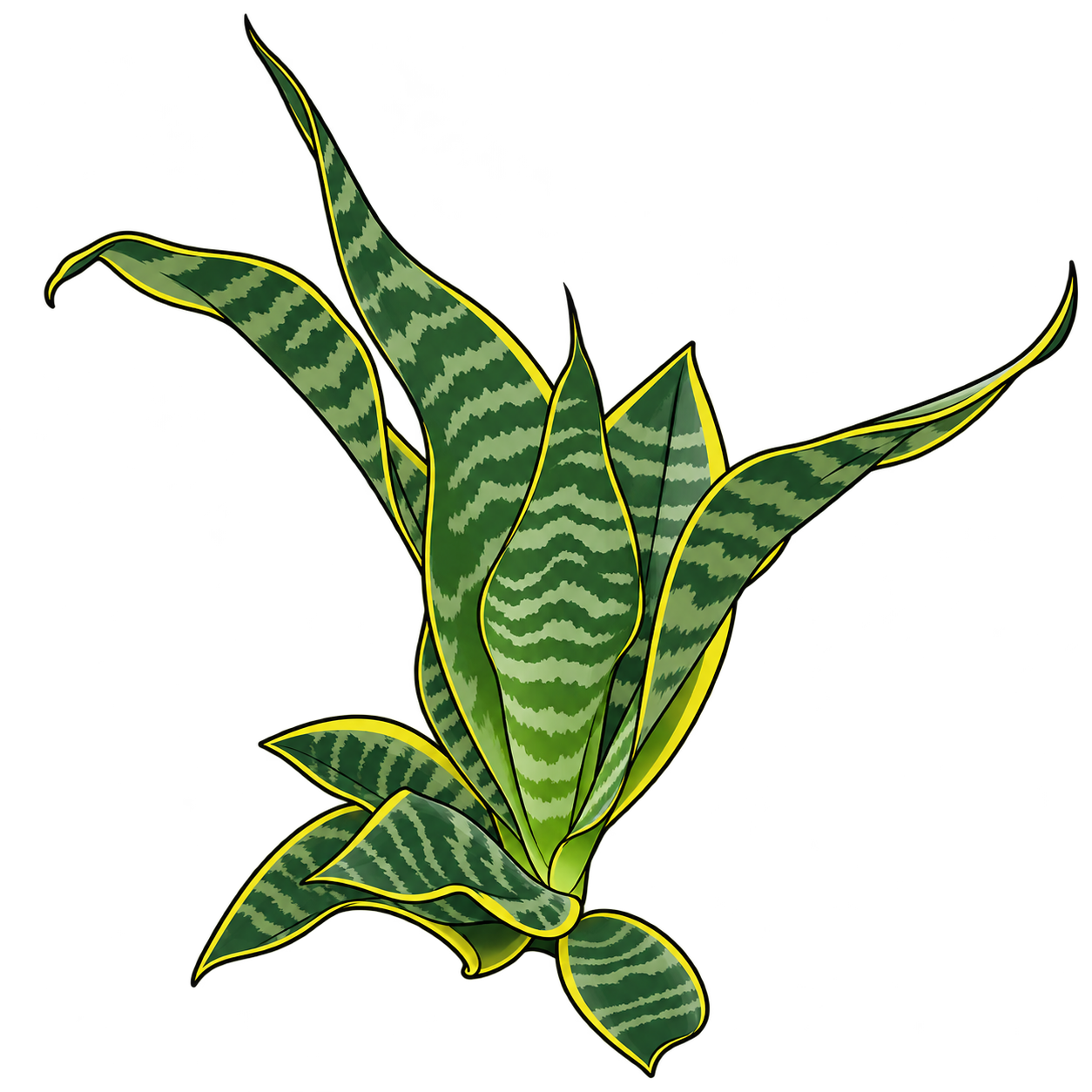
Source photograph · Mila’s Exotic Plants owner catalogue; individual photographer uncredited
Reference photograph from the owner’s shop listing; no public open license is stated.
Twisted Sister produces pointed green-and-gold leaves that twist along their length and grow from basal rosettes. The curved habit is part of this named selection’s appearance. [2][4]
The current botanical name is Dracaena trifasciata. Sansevieria trifasciata is an older name you will still see on plant labels and in care references. [1]
Give this snake plant a bright, lightly shaded place. Lower light is tolerated, but a brighter position supports better growth. Indoors, protect leaves from hot summer midday sun and make changes in exposure gradually. [3]
Let the potting mix dry between waterings. Push a finger into the mix to check it; for a deeper pot, inspect more than the surface before deciding. A light, dry pot and firm leaves are useful observations to record as you learn its rhythm. [5][3]
Use a freely draining cactus or succulent potting mix and a container with drainage holes. Keep the nursery pot inside a decorative cover if you like, but remove collected water after watering. [3]
Choose a pot that fits the root system rather than a large container to grow into. Extra unused mix can stay wet long after the roots have used their water. When moving up a size, choose a container only slightly larger than the previous one. [3]
Typical indoor temperatures of about 15–24°C (60–75°F) suit snake plants. Keep the pot away from cold draughts, radiator heat and frost. An indoor position with steady conditions is an easy year-round home. [3]
Set the plant at its previous growing depth and settle fresh mix around the roots without burying the leaf bases. Leave room below the rim for controlled watering. [6]
As daylight changes, reassess the plant’s position and the time its pot takes to dry. Keep windows clear enough for useful light and protect the plant from cold glass and draughts. [9][3]
Reduce watering and pause feeding when cooler conditions and lower light slow growth. Resume the growing-season routine as active growth returns, checking the mix before each watering. [5][9][3]
For a summer stay outdoors, acclimatise the plant gradually in a sheltered position. Bring it inside before frost or cold conditions arrive; keeping it indoors throughout the year is also suitable. [3]
Snake plants are toxic to cats and dogs. They contain saponins that can cause nausea, vomiting and diarrhoea after ingestion. Keep the plant, fallen leaves and propagation pieces out of their reach. [10]
For suspected pet ingestion, contact your veterinarian promptly or call ASPCA Poison Control at 888-426-4435. A consultation fee may apply. [10]
Keep this plant beyond children’s reach and do not eat it. For a human plant ingestion in the United States, call Poison Control at 1-800-222-1222 or use webPOISONCONTROL for case-specific advice. Elsewhere, contact your local poison service. [3][11]
Wear gloves when pruning or dividing the plant, as its sap can irritate skin. Keep cuttings away from food-preparation surfaces and clear them from your workspace after handling. [3]
Twisted Sister combines twisting leaves with green-and-gold colouring. Laurentii has upright yellow-edged blades, Hahnii forms a low nest of leaves, and Futura Robusta is marked with silver-green. Keep the cultivar name with the plant when comparing these different forms. [2]
Royal Botanic Gardens, Kew
Accessed October 5, 2026
NC State Extension
Accessed October 5, 2026
Royal Horticultural Society
Accessed October 5, 2026
Royal Horticultural Society
Accessed October 5, 2026
University of Illinois Extension
Accessed October 5, 2026
University of Illinois Extension
Accessed October 5, 2026
University of Illinois Extension
Accessed October 5, 2026
Iowa State University Extension and Outreach — Aaron Steil
Accessed October 5, 2026 · Updated: Last reviewed January 2025
University of Wisconsin–Madison Division of Extension — Bruce Spangenberg
Accessed October 5, 2026 · Publisher date: January 6, 2025
ASPCA Poison Control
Accessed October 5, 2026
National Capital Poison Center
Accessed October 5, 2026