

The Amber Caudex Folio
Ponytail Palm
Beaucarnea recurvata
Loading this page…
Return homePlease wait while the next page arrives.
A sculptural water-storing base carries long ribbons of foliage. Give ponytail palm strong light, an open cactus mix and time to dry between thorough waterings.
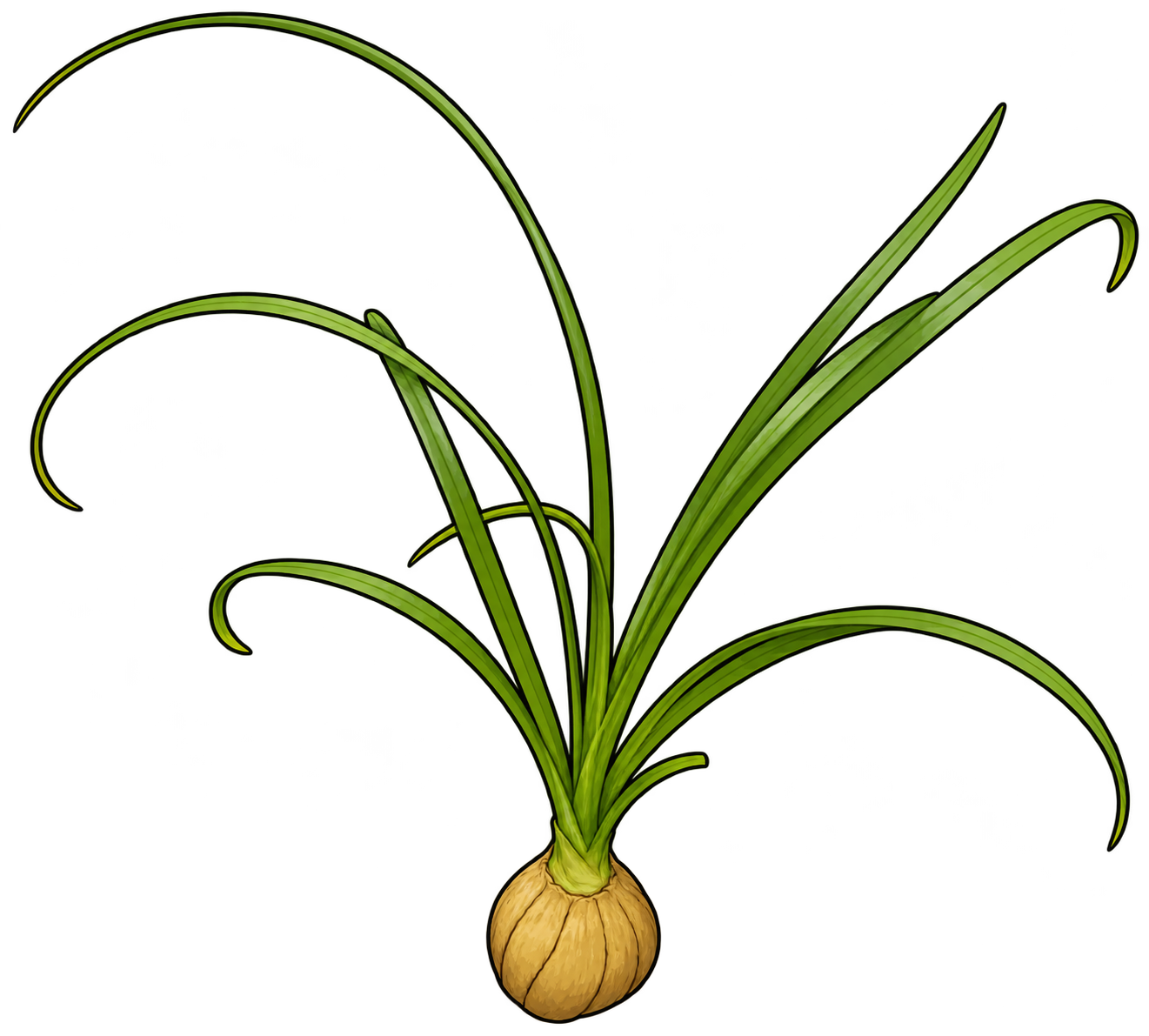
Source photograph · Mila’s Exotic Plants and Curiosities / Luminary Oddities; photographer not separately credited in listing
Reference photograph from the owner’s shop listing; no public open license is stated.
Ponytail palm is Beaucarnea recurvata, a succulent member of the asparagus family, not a true palm. The swollen stem base stores water, while narrow leaves curve downward from the crown. [1]
Give it the brightest suitable window available. When moving outside for summer, increase exposure gradually so foliage grown indoors can adjust without burning. [2]
Water deeply when the mix has dried, then let it drain fully. Its stored water supports a longer dry interval; a persistently wet pot is a greater concern than a missed calendar date. [1]
Check below the surface and compare pot weight before repeating water. Empty runoff instead of leaving the base standing in a full saucer. [4]
Normal indoor heated air suits ponytail palm; humid enclosures are unnecessary. Protect the plant from cold and return summer patio pots indoors before cold nights. [1]
Ponytail palm grows slowly. Feed only once or twice during the active growing season with a labeled houseplant or succulent fertilizer; more feed does not substitute for light. [6]
Measure the product dilution carefully. Avoid stacking slow-release fertilizer with repeated liquid feeds, and pause routine feeding when growth rests. [7]
Years may pass before repotting is needed. Check for a crowded root system or a pot that has become unstable rather than increasing the pot size automatically each year. [6]
Support the heavy base when lifting the plant, refresh compacted mix and use a slightly larger stable container. Preserve planting depth and inspect the drainage path before returning it to its bright position. [5]
Seed is the documented propagation method. Sow fresh viable seed in a draining seed mix in spring, maintaining warmth of at least 68°F (20°C). [6]
Keep emerging seedlings in bright light with carefully controlled moisture, then pot on as roots establish. Shoots on the caudex may develop into branches; removing them is not a dependable shortcut to a rooted new plant. [6]
Little structural pruning is required. Preserve the fountain of leaves and remove fully dry foliage without pulling against the crown. Cutting the main stem changes the plant’s shape and is unnecessary for routine care. [2]
Brown tips: check watering extremes and salt buildup before adding humidity or fertilizer. Trim only the dead portion if desired; already brown tissue will not become green again. [6]
Softness at the base with wet mix: suspect root or stem deterioration. Stop leaving runoff trapped and seek advice if softness spreads. Fine webbing, cottony deposits or attached bumps call for pest inspection. [1]
During the brighter growing season, check moisture more often and acclimate gradually if moving outdoors. In winter, retain good light and lengthen dry intervals as growth and water use slow. [6]
ASPCA lists Beaucarnea recurvata as non-toxic to cats, dogs and horses. This classification does not make leaves suitable food or remove the risk from chewing potting material. [3]
Handle the long leaf edges carefully; fine serrations can scratch skin. Keep trailing foliage away from faces and busy walkways. [6]
Prevent children chewing plants; label pots. [8]
Human poisoning (U.S.): 1-800-222-1222. Medical emergencies: 911. [9]
Pet poisoning: veterinarian; ASPCA 888-426-4435 (consultation fee). [10]
Unlike a true palm, ponytail palm carries a conspicuous water-storing base and tolerates a drying root zone. Keep its cactus-mix routine separate from that of moisture-loving tropical foliage plants. [1]
NC State Extension
Accessed October 5, 2026
University of Florida IFAS Extension
Accessed October 5, 2026 · Publisher date: November 1993 · Updated: Revised December 2018
ASPCA Poison Control
Accessed October 5, 2026
Purdue University Cooperative Extension Service
Accessed October 5, 2026 · Updated: Reviewed May 2001
Clemson Cooperative Extension
Accessed October 5, 2026 · Publisher date: 1999-09-21
University of Wisconsin-Madison Extension
Accessed October 5, 2026
University of New Hampshire Extension
Accessed October 5, 2026 · Publisher date: 2018-03-08
Children’s Hospital of Philadelphia
Accessed October 5, 2026 · Publisher date: 2019-07-08
National Capital Poison Center
Accessed October 5, 2026
ASPCA Poison Control
Accessed October 5, 2026