The Gilded Heart Trail
Brasil Philodendron
Philodendron hederaceum — sold as Brasil
Loading this page…
Return homePlease wait while the next page arrives.


The Gilded Heart Trail
Philodendron hederaceum — sold as Brasil
Dark green heart-shaped leaves carry irregular yellow-green central bands. Grow Brasil in bright filtered light and give its leafy stems room to trail or a support to climb.
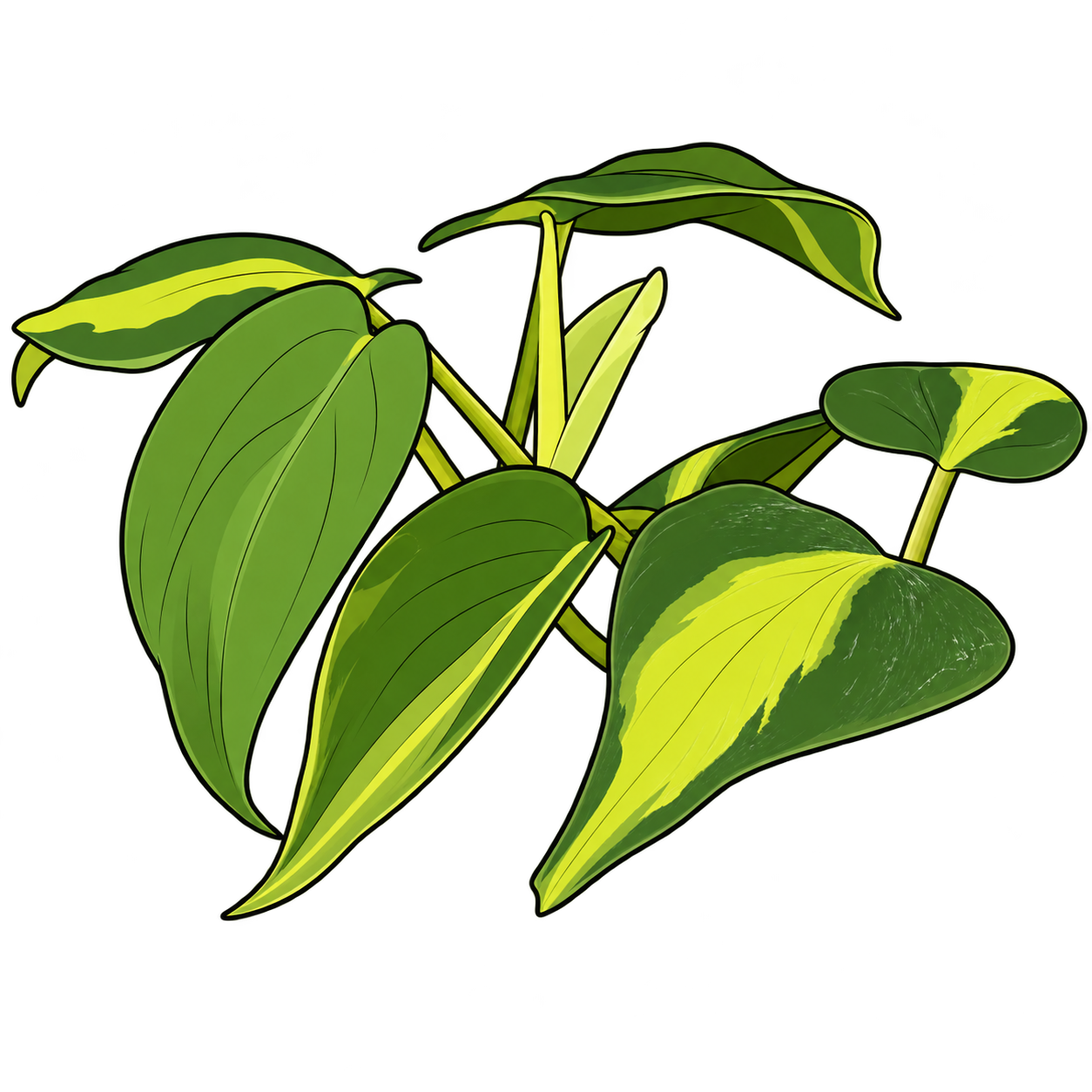
Source photograph · Mila’s Exotic Plants — owner listing image; individual photographer not reported
Reference photograph from the owner’s shop listing; no public open license is stated.
Choose bright filtered light, with shade from hot sun. [13]
During active growth, apply a balanced liquid houseplant fertilizer monthly, following its label directions. Pause feeding when growth rests. [13]
Use fresh medium, keep the plant at its existing depth and water it in. Let excess drain. [2]
Use a healthy, node-bearing stem tip for propagation. [16]
With clean, sharp pruners, take a three- to four-inch stem tip below a node. Remove lower leaves, leaving two nodes for insertion into moist rooting medium. [9]
Keep the cutting warm, shaded and humid, with moist rooting medium while roots develop. [9]
Check moisture first. [3]
Review light exposure. [3]
As winter growth slows, reduce watering frequency while continuing to check the mix. [13]
Philodendrons are toxic to cats and dogs. Chewing can cause painful mouth irritation and swelling. Keep plants, fallen leaves and cuttings away from pets that chew them. [17]
Chewing philodendron can irritate the mouth and throat. Seek urgent medical care for lip or tongue swelling or difficulty breathing or swallowing. [18]
For suspected poisoning or signs of illness, contact your veterinarian or ASPCA Poison Control at 888-426-4435. Provide the botanical name. [5]
Keep plants, cuttings and loose potting material beyond young children’s reach. Keep the botanical name with the pot. [6]
University of Maryland Extension
Accessed October 5, 2026 · Updated: 2023-03-10
University of Illinois Extension
Accessed October 5, 2026
Iowa State University Extension and Outreach
Accessed October 5, 2026 · Updated: Last reviewed January 2024
Iowa State University Extension and Outreach
Accessed October 5, 2026 · Updated: Last reviewed January 2024
ASPCA Poison Control
Accessed October 5, 2026
National Capital Poison Center
Inspect pest signs closely. [4]
Accessed October 5, 2026
National Capital Poison Center
Accessed October 5, 2026
Iowa State University Extension and Outreach
Accessed October 5, 2026 · Updated: Last reviewed October 2023
University of Nevada, Reno Extension - M. L. Robinson and A. Roberts
Accessed October 5, 2026 · Publisher date: 1998
Royal Botanic Gardens, Kew
Accessed October 5, 2026
NC State Extension
Accessed October 5, 2026
NC State Extension
Accessed October 5, 2026
Royal Horticultural Society
Accessed October 5, 2026
United States Patent and Trademark Office - Ruben Ernesto Acosta
Accessed October 5, 2026 · Publisher date: 2002-09-17
Royal Horticultural Society
Accessed October 5, 2026
Royal Horticultural Society
Accessed October 5, 2026
ASPCA Poison Control
Accessed October 5, 2026
Queensland Poisons Information Centre
Accessed October 5, 2026 · Updated: November 2024