The Rose Ring Nocturne
Dottie Prayer Plant
Goeppertia roseopicta ‘Dottie’
Loading this page…
Return homePlease wait while the next page arrives.


The Rose Ring Nocturne
Goeppertia roseopicta ‘Dottie’
Rounded dark foliage traced with a pink ring and midrib. Give Dottie gentle light, steady moisture and humid air, and enjoy the changing angle of its leaves through the day.
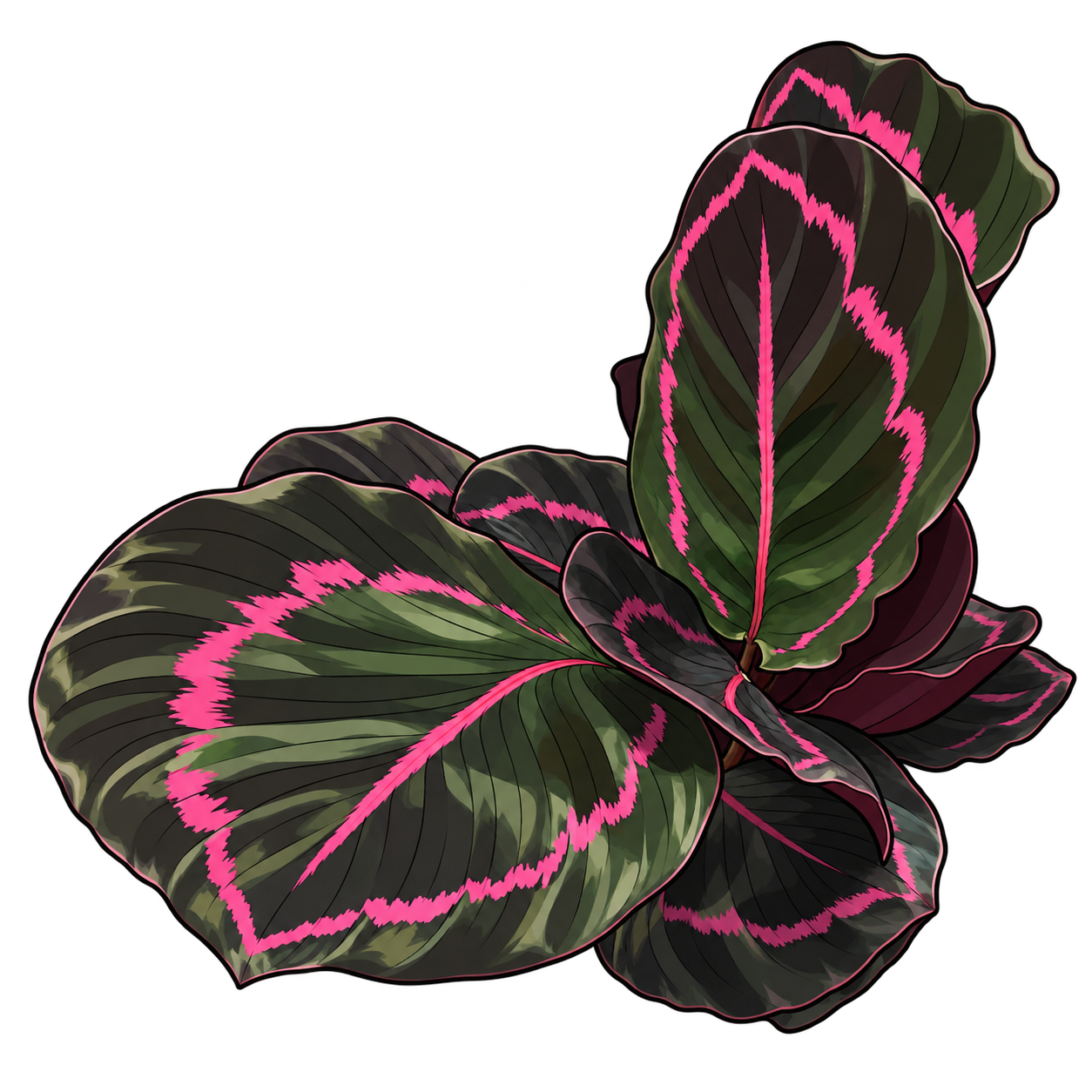
Source photograph · Mila’s Exotic Plants — owner listing image; individual photographer not reported
Reference photograph from the owner’s shop listing; no public open license is stated.
Dottie is Goeppertia roseopicta ‘Dottie’, also known as Calathea roseopicta ‘Dottie’. It belongs to the Marantaceae family. [2][1]
Its rounded leaves are extremely dark green, with a pink band set inside the margin and a pink midrib. [3]
The leaves lift during the night and change their angle through the day. Follow this natural movement alongside the plant’s moisture and growth. [3]
Check the potting mix before watering. Keep the root ball moderately moist, with air in the mix and free drainage. [4]
Water thoroughly enough to wet the root ball and let excess escape. Empty water collected in the saucer or decorative cover pot. [8]
In darker autumn and winter conditions, let the surface dry before rewatering while keeping the root ball from drying completely. [7]
Use rainwater or distilled water for Dottie. This species is sensitive to fluoride in tap water, which can brown the foliage. [4]
NC State recommends 65–75°F / about 18–24°C for Goeppertia roseopicta. Keep the plant in steady indoor warmth. [4]
Provide humid air. NC State recommends relative humidity above 60% for this species. [4]
In a dry room, use a humidifier and monitor humidity with a sensor. Keep the plant away from direct heat and drying drafts. [11]
Repot when the clump and roots fill their container. Choose spring or early summer for fresh root growth. [7]
Use a modestly larger draining pot and fresh houseplant medium. Settle the root ball carefully at its existing level. [18]
Water through after repotting and let excess drain away. Keep the plant in its gentle-light growing position. [9]
Dry indoor air can brown tropical houseplant leaf edges. [11]
Wet-root damage can cause wilting because impaired roots cannot take up water normally. [10]
ASPCA lists Calathea species as non-toxic to cats and dogs. Dottie’s familiar botanical name is Calathea roseopicta ‘Dottie’. [13][2]
Keep leaves, fallen foliage and cuttings beyond pets that chew plants. Eating plant material can upset a pet’s stomach. [14]
For suspected poisoning or signs of illness, contact your veterinarian or ASPCA Poison Control at 888-426-4435. Provide the botanical name. [15]
Keep the plant, cuttings and loose potting material beyond young children’s reach. Keep its botanical name with the pot. [16]
For a human plant ingestion in the United States, call Poison Control at 1-800-222-1222 or use webPOISONCONTROL. Elsewhere, contact your local poison service. [17]
Royal Botanic Gardens, Kew
Accessed October 5, 2026
Royal Horticultural Society
Accessed October 5, 2026
United States Patent and Trademark Office — Anne E. Lamb; original text via Google Patents
Accessed October 5, 2026 · Publisher date: 2002-07-02
NC State Extension
Accessed October 5, 2026
Royal Botanic Gardens, Kew
Accessed October 5, 2026
National Parks Board, Singapore
Direct sun can scorch the foliage. [4]
Monitor this species for spider mites and mealybugs. [4]
Accessed October 5, 2026 · Updated: 2021-10-14
Royal Horticultural Society
Accessed October 5, 2026
University of Maryland Extension
Accessed October 5, 2026 · Updated: 2023-03-10
University of Maryland Extension
Accessed October 5, 2026 · Updated: 2023-03-10
University of Maryland Extension
Accessed October 5, 2026 · Updated: 2023-12-12
University of New Hampshire Extension
Accessed October 5, 2026 · Publisher date: 2025-01-15
Iowa State University Extension and Outreach — Aaron Steil
Accessed October 5, 2026 · Updated: Last reviewed January 2025
ASPCA Poison Control
Accessed October 5, 2026
ASPCA Poison Control
Accessed October 5, 2026
ASPCA Poison Control
Accessed October 5, 2026
National Capital Poison Center
Accessed October 5, 2026
National Capital Poison Center
Accessed October 5, 2026
University of Illinois Extension
Accessed October 5, 2026