The Suspended Hearts
Dragon Heart Caladium
Caladium hybrid, Dragon Heart
Loading this page…
Return homePlease wait while the next page arrives.


The Suspended Hearts
Caladium hybrid, Dragon Heart
Colorful hearts rise on slender stalks. Give caladium warmth, filtered light and attentive seasonal care.
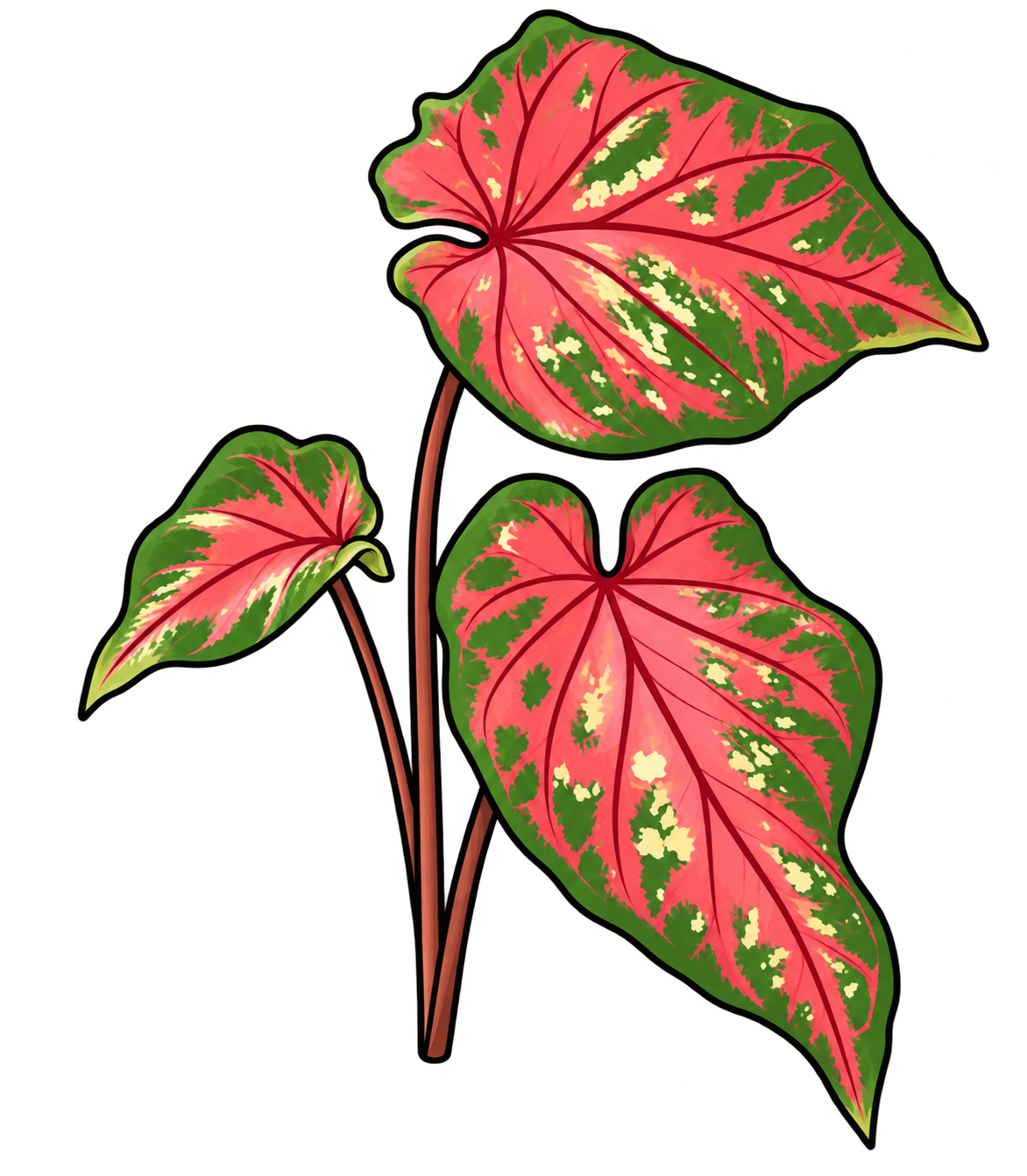
Source photograph · Mila’s Exotic Plants and Curiosities / Luminary Oddities; photographer not separately credited in listing
Reference photograph from the owner’s shop listing; no public open license is stated.
Dragon Heart is grown for colorful heart-shaped foliage. Garden caladiums alternate leafy growth from an underground storage organ with a resting period. [1]
Start in bright indirect light indoors or a sheltered, partly shaded outdoor position. Caladium sun tolerance varies by cultivar; a red or pink leaf does not by itself call for stronger sun. [1]
During active leafy growth, maintain even moisture. Check the surface and root zone before watering, then wet the mix and let it drain. Avoid both a dried-out root ball and a permanently saturated pot. [1]
When the plant gradually finishes its leafy season, reduce watering as the leaves fade. Once dormant, keep the resting pot dry; resume cautiously when new growth begins. Sudden collapse in wet soil needs inspection for rot. [2]
Use fertile, organic-rich potting mix that holds moisture while draining freely. Choose a container with holes, and shelter fragile leaves from strong wind or repeated handling. [3]
Warmth matters, particularly when restarting a tuber. Wait for warm conditions near 70°F (21°C) before starting growth; cold, wet mix encourages rot. Protect foliage from frost and cold drafts. [1]
Provide humid room air during growth. A clean humidifier can help in a dry room; maintain air movement rather than sealing a leafy plant in still, wet conditions. [5]
Feed regularly while producing leaves, using a balanced or low-nitrogen fertilizer at its labeled rate. Excess nitrogen can reduce the intended color display. [2]
For a dormant restart, use a firm, healthy tuber. Position the knobby bud side upward in fresh mix, cover lightly, and provide warmth. Add moisture cautiously until new growth begins. [2]
Divide a healthy dormant tuber before spring potting. Use a clean sharp blade and give each piece at least one viable eye; allow the cut faces to dry for several days before planting. [2]
Restart divisions warmly, avoiding saturated mix. A detached leaf without tuber and bud is not a viable division. [2]
Remove spent foliage carefully with clean tools. Preserve healthy leaves; pruning does not reliably create a chosen color pattern. [3]
Gradual seasonal yellowing can mark dormancy. Sudden drooping in cold, wet mix, especially with a soft tuber, points toward damage instead: correct conditions and seek advice if tissue continues to soften. [3]
A leafy caladium can rest indoors after its display. Let foliage finish, keep the dormant pot dry and above 55°F (13°C), and restart with warmth and new growth. Do not force watering merely because spring has arrived. [2]
Garden caladiums contain insoluble calcium oxalates. Chewing can cause intense mouth irritation, drooling, vomiting and difficulty swallowing in cats and dogs. Keep leaves, fallen material and tubers inaccessible to pets. [4]
Caladium is also harmful if eaten by people. Sap can irritate skin; wear gloves for division or pruning and wash hands afterwards. [3]
Prevent children chewing plants; label pots. [8]
Human poisoning (U.S.): 1-800-222-1222. Medical emergencies: 911. [9]
Pet poisoning: veterinarian; ASPCA 888-426-4435 (consultation fee). [10]
Fancy-leaved caladiums have broad hearts; lance-leaved types are narrower. Names such as elephant ear also cover other genera, so keep the botanical label. [1]
University of Florida IFAS
Accessed October 5, 2026
University of Wisconsin-Madison Extension
Accessed October 5, 2026
NC State Extension
Accessed October 5, 2026
ASPCA Poison Control
Accessed October 5, 2026
Purdue University Cooperative Extension Service
Accessed October 5, 2026 · Updated: Reviewed May 2001
University of Maryland Extension
Accessed October 5, 2026 · Updated: 2023-03-10
Clemson Cooperative Extension
Accessed October 5, 2026 · Publisher date: 1999-09-21
Children’s Hospital of Philadelphia
Accessed October 5, 2026 · Publisher date: 2019-07-08
National Capital Poison Center
Accessed October 5, 2026
ASPCA Poison Control
Accessed October 5, 2026