The Seedling Chronicle
Seed-Grown Avocado
Persea americana, seed-grown
Loading this page…
Return homePlease wait while the next page arrives.


The Seedling Chronicle
Persea americana, seed-grown
A young avocado makes a bright, leafy indoor tree. Grow it for its individual form, with warmth, steady root moisture and room for its developing canopy.
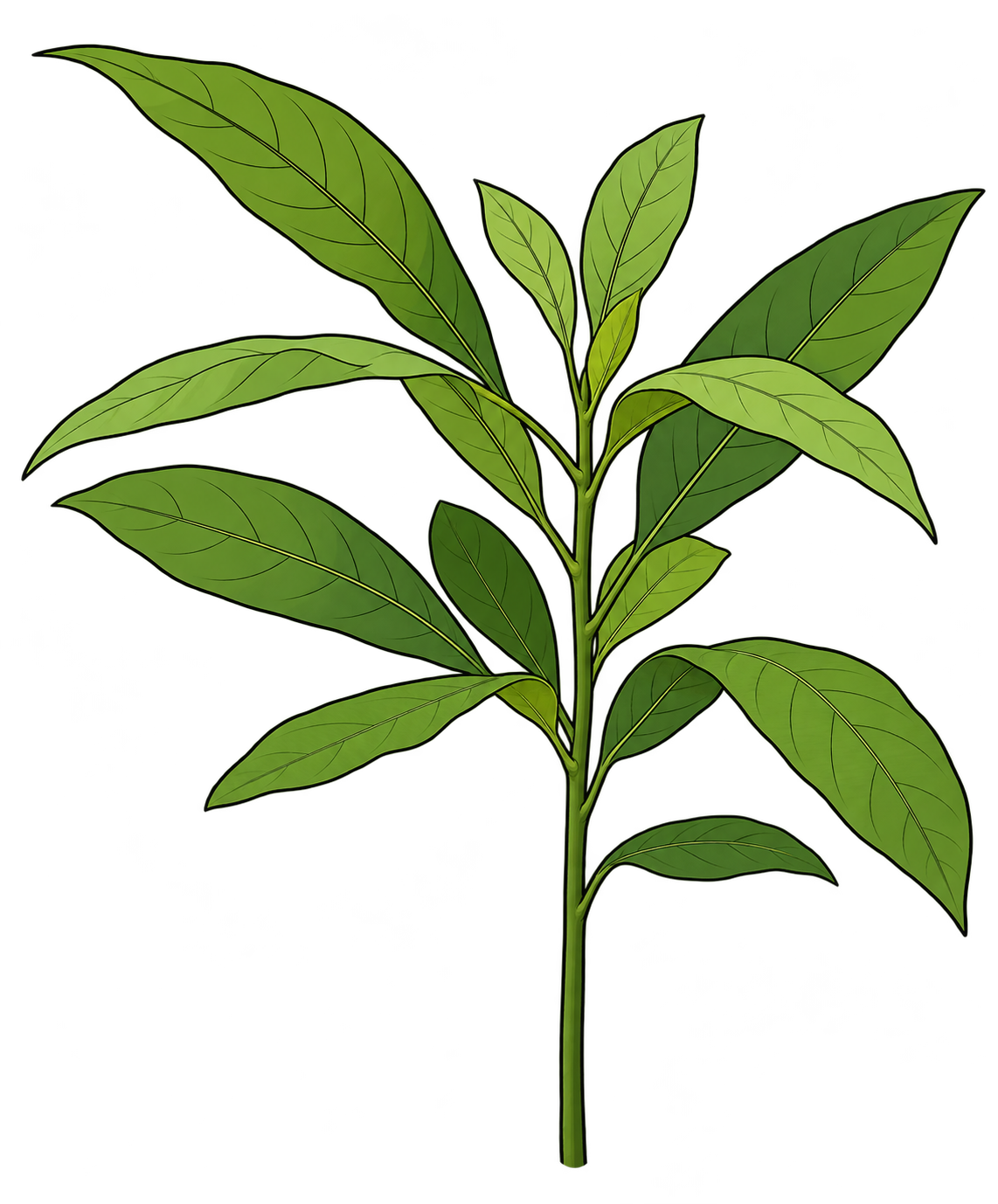
Source photograph · Mila’s Exotic Plants and Curiosities / Luminary Oddities; photographer not separately credited
Reference photograph from the owner’s shop listing; no public open license is stated.
This is a seed-grown Persea americana. A seed from a Hass fruit produces a genetically individual tree; it does not reproduce the named Hass cultivar. Enjoy its foliage and growth without planning on a particular harvest. [1]
Place the tree near a bright window where the whole canopy receives light. A healthy established plant can spend warm weather outside in a sheltered, dappled position; introduce the change gradually. [3]
Keep the root ball moist without saturating it continuously. Check the mix below the surface and water when it is beginning to dry, rather than allowing the whole pot to become hard and dry. [2]
Wet the root ball evenly and discard runoff. A large leaf canopy and a small pot may need more frequent checks, but cold or reduced light slows water use. [5]
Use a free-draining, soil-based container compost with an open structure. Give roots drainage holes and increase container size gradually rather than surrounding a small seedling with a large volume of wet mix. [3]
Keep this tender indoor tree above 55°F (13°C) in a bright room. Protect it from cold glass and chilly outdoor nights; a seedling’s cold tolerance cannot be inferred from its parent fruit. [2]
Humid air helps the foliage. In a very dry room, use a maintained humidifier while allowing air circulation around the canopy. [6]
During active spring and summer growth, use a dilute complete houseplant fertilizer according to its label. Follow the plant’s growth and reduce feeding during a dim, slow-growing winter. [7]
Look for roots at the drainage holes, a crowded root ball or unusually rapid drying. Move up only a modest size, preserving the old planting depth and avoiding unnecessary root breakage. [8]
After repotting, water thoroughly and let the pot drain. Return to good light, then judge subsequent watering from the new mix rather than the old schedule. [9]
To start another seedling, wash a fresh pit and keep its broad end downward. Suspend the lower quarter in water with the pointed end up; maintain the water level while roots and then a shoot develop. [9]
When roots are well developed, transfer carefully to commercial potting mix with the seed top level with the surface. Water in and provide bright light. Germination and establishment vary; use each plant’s roots rather than a promised date. [9]
Grafting a known cultivar onto suitable rootstock is a separate skilled process for reproducing fruiting varieties. It is not a feature automatically acquired by growing a seed. [1]
Pinch the growing tip of a vigorous young seedling to encourage branching. Thereafter, shorten selected long shoots during active growth while retaining enough leaves to support recovery. [3]
Wilt: check the root ball before watering. Dry mix needs careful rewetting; wet mix with persistent wilt needs drainage and root assessment. Adding fertilizer is not a remedy for injured roots. [1]
Keep the best available indoor light through the darker season and reduce watering frequency as the pot dries more slowly. Move outdoor summer plants under protection before nights cool; outdoor winter hardiness is not assumed. [2]
Avocado leaves, bark, seeds and fruit contain persin. Birds, horses and rodents are especially sensitive; dogs can develop vomiting and diarrhea. Keep the tree and fallen material away from animals. [4]
Keep loose pits away from small children. Grow this tree as an ornamental and do not offer its leaves or bark as food. [11]
Prevent children chewing plants; label pots. [12]
Human poisoning (U.S.): 1-800-222-1222. Medical emergencies: 911. [13]
Pet poisoning: veterinarian; ASPCA 888-426-4435 (consultation fee). [14]
University of California Cooperative Extension
Accessed October 5, 2026
Royal Horticultural Society
Accessed October 5, 2026
Royal Horticultural Society
Accessed October 5, 2026
ASPCA Poison Control
Accessed October 5, 2026 · Publisher date: 2019-05-02
University of Missouri Extension
Accessed October 5, 2026 · Publisher date: October 2017 · Updated: Reviewed July 2017
Purdue University Cooperative Extension Service
Accessed October 5, 2026 · Updated: Reviewed May 2001
University of New Hampshire Extension
Accessed October 5, 2026 · Publisher date: 2018-03-08
Clemson Cooperative Extension
Accessed October 5, 2026 · Publisher date: 1999-09-21
Iowa State University Extension
Accessed October 5, 2026 · Updated: 2025-11-06
University of Missouri Extension
Accessed October 5, 2026 · Publisher date: September 2017 · Updated: Reviewed April 2022
National Capital Poison Center
Accessed October 5, 2026
Children’s Hospital of Philadelphia
Accessed October 5, 2026 · Publisher date: 2019-07-08
National Capital Poison Center
Accessed October 5, 2026
ASPCA Poison Control
Accessed October 5, 2026