The Blush Mosaic Cabinet
Pink Lady Valentine Aglaonema
Aglaonema - sold as Pink Lady Valentine
Loading this page…
Return homePlease wait while the next page arrives.


The Blush Mosaic Cabinet
Aglaonema - sold as Pink Lady Valentine
Indoor care for Pink Lady Valentine Aglaonema: placement, watering, potting, propagation and practical problem checks.
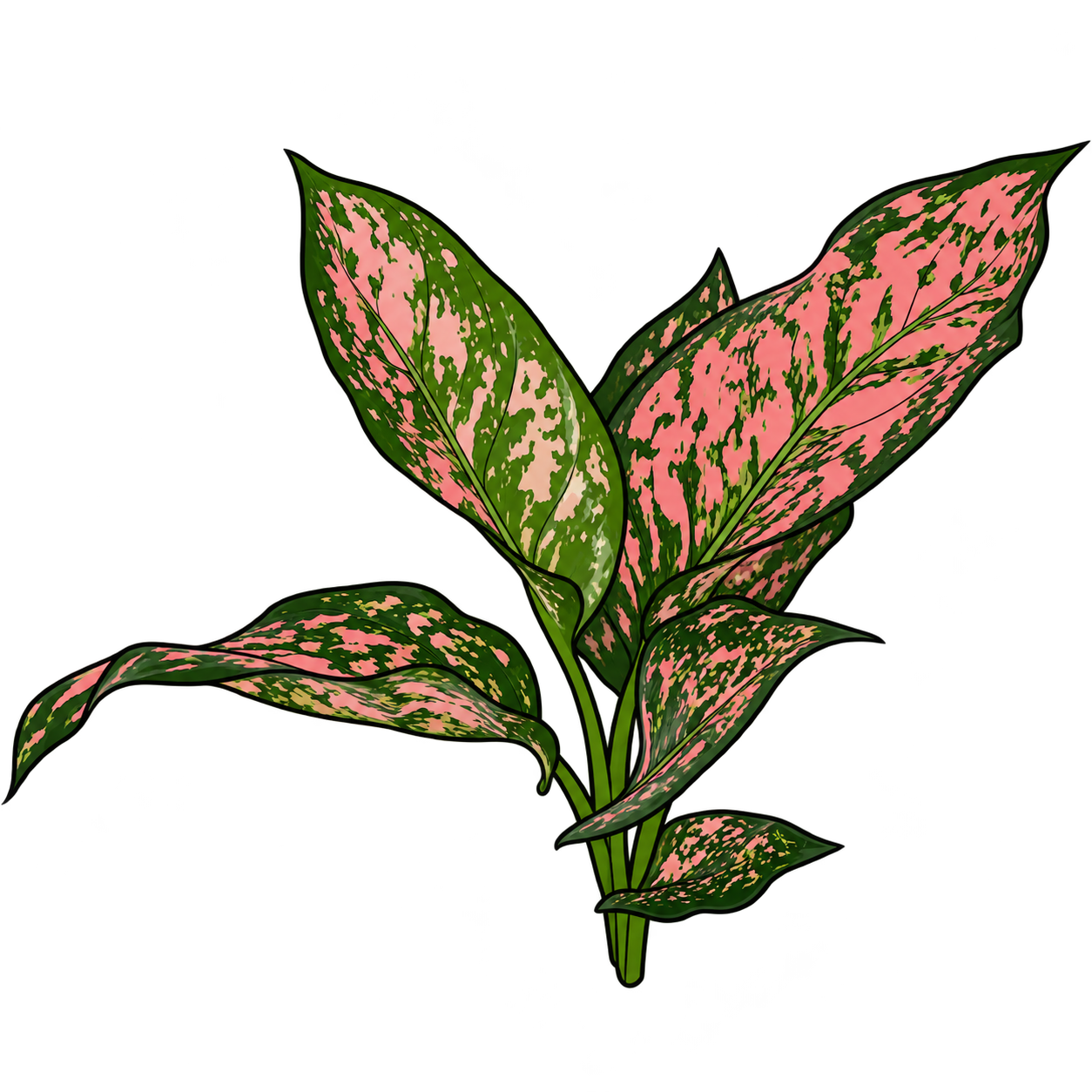
Source photograph · Mila’s Exotic Plants — owner listing image; individual photographer not reported
Reference photograph from the owner’s shop listing; no public open license is stated.
Give the colorful canopy good indirect light. Protect it from direct sun; lower-light tolerance does not make a dark corner ideal for vigorous growth. [3]
Keep the plant warm and out of drafts. Chinese evergreens are sensitive to chilling; protect them during cold-weather transport and away from a cold windowsill. [4]
Feed during active growth at the product label rate; pause when growth slows. [8]
Use a rooted basal shoot for a straightforward division. Aglaonema can produce shoots beside the main stem, but only divide one that already has roots. [4]
Ease out the rootball, separate the rooted section carefully with a clean tool, and pot it individually. Retain healthy roots and shoots rather than stripping the division bare. [11]
Set the divided plant in warm indirect light and keep the mix lightly moist as it establishes. [12]
Remove dead or yellow leaves and wipe dust gently from healthy foliage. Routine heavy pruning is unnecessary; the clump’s natural shape is part of its appeal. [4]
Use these checks before choosing a treatment. [4]
Use these checks before choosing a treatment. [3]
Chinese evergreens have no required winter dormancy. If growth slows with reduced daylight, water less frequently while continuing to check moisture. [3]
Aglaonema is harmful if eaten and can irritate skin and eyes. Wear gloves when pruning and keep it out of children’s reach. [5]
Aglaonema species contain calcium oxalate crystals that irritate a pet’s mouth when chewed; drooling, vomiting and swallowing difficulty warrant prompt veterinary advice. [13]
Human poisoning (U.S.): 1-800-222-1222. Medical emergencies: 911. [14]
Pet poisoning: veterinarian; ASPCA 888-426-4435 (consultation fee). [15]
Mila's Exotic Plants
Accessed October 5, 2026
University of Florida IFAS Extension - Keighly Graves, Wendy Wilber, Tom Wichman, Claire Lewis, Gail Hansen, Ryan Klein
Accessed October 5, 2026 · Publisher date: October 1999 · Updated: Revised August 2018 and November 2025
NC State Extension
Accessed October 5, 2026
University of Florida IFAS Extension - Jianjun Chen, Kelly C. Everitt
Accessed October 5, 2026 · Publisher date: July 2003 · Updated: Revised March 2015; reviewed July 2018; Reviewed: 10/2024
Royal Horticultural Society
Accessed October 5, 2026
University of Maryland Extension
Use these checks before choosing a treatment. [3]
Accessed October 5, 2026 · Updated: 2023-03-10
Iowa State University Extension and Outreach
Accessed October 5, 2026 · Updated: Last reviewed October 2023
University of Illinois Extension
Accessed October 5, 2026
University of Maryland Extension
Accessed October 5, 2026 · Updated: 2023-03-10
University of Illinois Extension
Accessed October 5, 2026
Iowa State University Extension and Outreach - Aaron Steil
Accessed October 5, 2026 · Updated: Last reviewed January 2025
University of Illinois Extension
Accessed October 5, 2026
ASPCA Poison Control
Accessed October 5, 2026 · Publisher date: 2025-10-13
National Capital Poison Center
Accessed October 5, 2026
ASPCA Poison Control
Accessed October 5, 2026